Arab Financial Services (AFS), a leading digital payment solutions provider in the Middle East and Africa, has launched its SoftPOS solution nationwide in Egypt. The rollout follows the granting of a license from the Central Bank of Egypt (CBE) to AFS’s Egyptian subsidiary, making it one of the first entities in the country to bring a fully licensed Tap-to-Phone solution to market.
The new solution is designed to transform any NFC-enabled Android smartphone into a secure, fully functional payment terminal. By eliminating the need for traditional and often expensive hardware, the technology offers businesses of all sizes a cost-effective and scalable method to accept contactless card payments.
Accelerating financial inclusion
The launch aligns with Egypt’s broader digital transformation goals and the rapid growth of mobile payment adoption in the region. AFS aims to simplify digital commerce and foster a more inclusive financial landscape by lowering the barriers to entry for merchants.
Samer Soliman, CEO of AFS, described the launch as a “transformative milestone” for both the company and the Egyptian market.
“This fully licensed solution allows us to instantly turn any NFC-enabled Android smartphone into a secure payment terminal, eliminating hardware costs and making digital acceptance accessible to businesses of all sizes,” Soliman said. “We view this launch as the foundation, and our immediate plan is to continuously expand its feature set and introduce innovative use cases that will further accelerate financial inclusion and power a digitally empowered economy”.
Regional footprint
Established in 1984, AFS is owned by 37 banks and financial institutions and serves over 60 clients across more than 20 countries. The company is regulated by the Central Bank of Bahrain and the Central Bank of Egypt, and licensed by the Central Bank of the UAE.
This latest expansion in Egypt adds to AFS’s portfolio of payment products, which includes open banking hubs, digital wallets, and merchant acquisition services. The company maintains offices and data centers in Bahrain, Egypt, Oman, and the UAE.
The stablecoin issuer’s previously undisclosed investment valued the lender at about $500 million, according to a person familiar with the transaction.
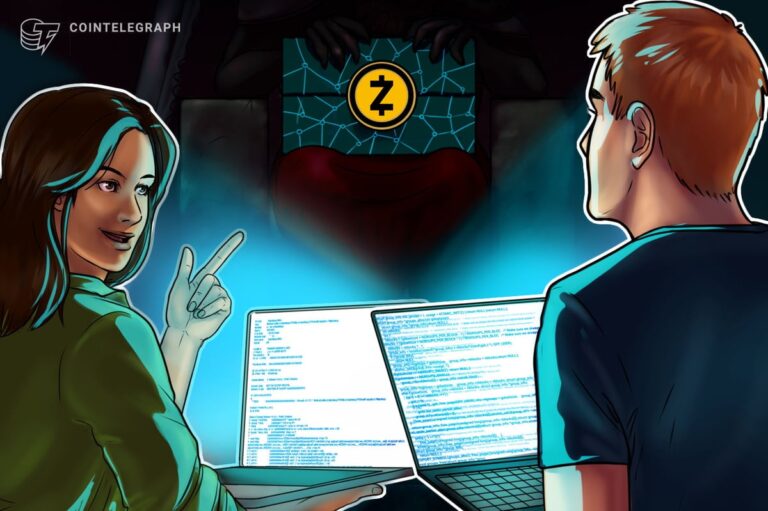
Developer activity linked to the privacy-focused cryptocurrency Zcash has fallen to its lowest level in years, as a governance dispute and a prolonged price decline weigh on the project’s ecosystem.
Data from market intelligence company Santiment shared in a Thursday X post showed that developer activity tied to Zcash dropped to its weakest level since November 2021. Over the same period, the Zcash (ZEC) token has fallen about 40% over the past two months.
“Historically, rising development activity leads to standout altcoins being able to emerge above the pack. The opposite result holds true for those that ‘let off the gas’ and decline in their efforts to consistently innovate and improve,” said Santiment.
Source: Santiment
Related: Zcash governance in turmoil: How low can ZEC price go?
The slowing developer activity comes amid an ongoing governance dispute between the Electric Coin Company, the main development team behind Zcash, and Bootstrap, the non-profit supporting the protocol.
The Electric Coin Company recently said it would separate from Bootstrap and form a new company, citing what it described as “malicious governance actions,” Cointelegraph reported Thursday.
In its official response, Bootstrap said the board members engaged in discussions regarding “external investment and alternative structures to privatize” Zashi, the self-custodial crypto wallet built for private Zcash transactions.
On Thursday, the ECC developers announced that they are working on a new wallet, cashZ, which is set to launch in a “few weeks.”
Related: 2025 crypto bear market was ‘repricing’ year for institutional capital: Analyst
Zcash protocol’s open-source nature unaffected by dispute: Zcash Foundation
In its response to the governance incident, the Zcash Foundation assured investors that the privacy-preserving protocol will not be affected by the governance dispute, thanks to Zcash’s open-source codebase, which was designed for “resilience” so that no single party can control the protocol.
“This structure ensures that changes within a single organization or across many of them, while meaningful, do not compromise the integrity or continuity of the Zcash blockchain,” wrote the foundation in the response published on Thursday.
ZEC/USD, one-week chart. Source: Nansen.ai
Despite the assurance, the Zcash token’s price fell 14% over the past week, and traded about $433 at the time of writing.
Still, whales were unfazed by the governance dispute, as they added a cumulative $1.17 million spot ZEC tokens across the past week, while fresh wallets added $2.14 million, according to crypto intelligence platform Nansen.
Privacy coin Zcash competitor Monero (XMR) surpassed ZEC’s market capitalization on Thursday, regaining its position as the leading privacy-preserving cryptocurrency, according to CoinMarketCap.
Magazine: 2026 is the year of pragmatic privacy in crypto — Canton, Zcash and more
Cointelegraph is committed to independent, transparent journalism. This news article is produced in accordance with Cointelegraph’s Editorial Policy and aims to provide accurate and timely information. Readers are encouraged to verify information independently. Read our Editorial Policy https://cointelegraph.com/editorial-policy
Florida lawmakers have revived a push to put bitcoin on the state’s balance sheet, filing new legislation for the 2026 session that would create a state-run cryptocurrency reserve after a similar effort stalled last year.
House Bill 1039, filed Jan. 7 by Republican Rep. John Snyder, would establish a Strategic Cryptocurrency Reserve Fund that sits outside Florida’s main treasury.
The proposal authorizes the state’s chief financial officer to invest public funds in digital assets under a set of guardrails that include audits, reporting requirements, and advisory oversight.
The bill marks a reset rather than a clean break. Florida lawmakers floated broader crypto investment proposals in 2025, but those measures were withdrawn after facing resistance over scope and risk.
The new framework narrows the focus and reflects a growing preference among Republican lawmakers for treating bitcoin as a reserve-style asset rather than a speculative trade.
Under HB 1039, the CFO would have discretion over whether and when to invest. The bill does not mandate a minimum allocation.
Earlier versions of Florida legislation proposed allowing up to 10% of certain state-managed funds to be invested in bitcoin. While the new bill revives that concept, it leaves deployment decisions to the CFO and places the reserve outside pension and retirement accounts.
The legislation includes requirements for independent audits and the creation of an advisory committee to guide investment strategy and risk management. Supporters say those provisions are meant to address concerns about volatility while still giving the state flexibility to act.
The renewed effort is closely tied to parallel legislation in the Senate. Republican Sen. Joe Gruters, a longtime bitcoin supporter and ally of President Donald Trump, has filed companion bills that lay out the trust structure and funding mechanics for the reserve.
Together, the House and Senate measures would govern how Florida acquires, holds, and manages any digital assets.
Bitcoin as a financial hedge for Florida
While the bills do not explicitly name bitcoin, they effectively limit eligibility to it. Only digital assets that maintained an average market capitalization of at least $500 billion over the past 24 months would qualify.
At present, bitcoin is the sole asset that meets that threshold, with a market cap above $1 trillion. Ethereum and other crypto fall well short.
Source: HB 1039
Backers frame the proposal as a hedge rather than a bet. Florida Chief Financial Officer Jimmy Patronis has publicly described bitcoin as “digital gold” and said limited exposure could help diversify state-managed funds over long time horizons. The bill states that the reserve is intended to help protect public assets against inflation and currency debasement.
Florida’s approach mirrors moves in other states that have narrowed their focus to bitcoin after initial attempts to authorize broader crypto exposure.
New Hampshire became the first state to explicitly allow public funds to be invested in crypto, granting its treasurer authority to allocate up to 5% of certain portfolios.
Texas approved a small bitcoin ETF purchase in late 2025 as part of its own reserve strategy.
Wyoming, meanwhile, has passed a slate of laws clarifying the legal status of digital assets without committing public funds.
The proposal also fits within Florida’s broader stance on digital money. In 2023, Gov. Ron DeSantis signed legislation blocking central bank digital currencies from recognition under the state’s commercial code.
The move positioned Florida as skeptical of federally issued digital money while remaining open to decentralized alternatives like bitcoin.
If passed, Florida would become one of the largest U.S. states to formally experiment with crypto as a reserve-class asset. Supporters argue that a tightly governed reserve could allow the state to gain exposure without putting core public funds at risk. Critics, however, point to bitcoin’s history of sharp price swings and question whether public money should be exposed at all.
HB 1039 and its Senate companions must clear committee hearings and floor votes during the 2026 legislative session.
The bills include a conditional effective date of July 1, 2026, meaning implementation would only begin if the full legislative package is approved and signed into law.
Cryptocurrency company Ripple is expanding its regulatory footprint after securing authorization from the United Kingdom’s Financial Conduct Authority (FCA).
The FCA granted Ripple’s UK subsidiary, Ripple Markets UK, an Electronic Money Institution (EMI) registration and registered it under the UK’s Money Laundering Regulations (MLRs), according to official records.
The EMI license allows companies to provide payment services and issue electronic money, a move that could potentially impact Ripple as it issues its stablecoin, Ripple USD (RLUSD).
The approval came as the FCA set a timeline for its new crypto licensing regime, requiring MLR-registered firms to apply for full authorization under the Financial Services and Markets Act (FSMA) by October 2027.
Certain Ripple products may require further FCA approval
Although Ripple Markets UK is now approved as an EMI and registered under the MLRs, it remains subject to restrictions pending further FCA approval.
“Ripple Markets UK will not, without the prior written consent of the authority,” provide services involving crypto ATMs, “offer or commence any services to retail clients,” or appoint any agents or distributors, according to FCA records.
Source: FCA
Additionally, the company is barred from issuing electronic money, or providing payment services to a “consumer, micro-enterprise or charity,” the records said.
Related: Why XRP is outperforming Bitcoin and Ether at the start of 2026
The news came shortly after Ripple Labs president Monica Long reiterated that the company will not pursue an initial public offering (IPO) in the near future.
“Currently, we still plan to remain private,” said Long, expanding on her comments in November after a fundraise that brought Ripple’s valuation to $40 billion.
Cointelegraph approached Ripple for comment regarding the FCA’s approval, but had not received a response at the time of publication.
Magazine: How crypto laws changed in 2025 — and how they’ll change in 2026
Cointelegraph is committed to independent, transparent journalism. This news article is produced in accordance with Cointelegraph’s Editorial Policy and aims to provide accurate and timely information. Readers are encouraged to verify information independently. Read our Editorial Policy https://cointelegraph.com/editorial-policy
Bitcoin traders’ risk sentiment turned bullish, with the proof being in this week’s futures-led advance to $95,000. Will bulls make another attempt after retesting a key underlying support level?
The start of 2026 saw Bitcoin and select altcoins rally back toward their weekly range highs, and the current situation across markets highlights improving investor sentiment and trading volumes. Since Jan. 1, Bitcoin continued to show improvement with tightening range consolidation clearly seen in its daily higher lows and higher highs, leading to the weekly high at $94,800.
7-day liquidation heatmap data from Hyblock shows long liquidation clusters between $89,000 to $87,000 and short positions sitting at the weekly range high near $95,000.
From a technical trader’s point of view, the start of year rally pulled the price above the 20-day moving average, which is currently converging with the 50-day moving average. After BTC failed to hold $95,000 and liquidate the short positions in that zone, it appears that some traders cut their positions to take profit in anticipation of a lower support retest of the 20-MA at $89,400.
If the current trend were to extend and volume permitting, over the coming days, another attack on the $95,000 level could occur. Such a move could lead to short covering and liquidations, allowing bulls to exploit a clear gap in the volume profile of the BTC/USDT (Binance) pair, setting Bitcoin up for a 13% rally to $101,500.
As shown in the chart below, the bulk of this week’s intra-day Bitcoin price action was driven by traders using perpetual futures to trigger liquidations. Note how a near $1.1 billion surge in futures buy volume took place as BTC rallied to $94,800 on Jan. 5, and $100 million in shorts were liquidated in the BTC/USDT pair at Binance, according to data from TRDR.io.
Example of perps traders driving Bitcoin price action. Source: TRDR.io
As detailed earlier, current liquidation heatmap data and orderbook structure suggest that a similar event could occur again if traders press BTC price to $94,000.
This article does not contain investment advice or recommendations. Every investment and trading move involves risk, and readers should conduct their own research when making a decision. While we strive to provide accurate and timely information, Cointelegraph does not guarantee the accuracy, completeness, or reliability of any information in this article. This article may contain forward-looking statements that are subject to risks and uncertainties. Cointelegraph will not be liable for any loss or damage arising from your reliance on this information.
Andreessen Horowitz raised more than $15 billion across five funds to propel future technologies in America.
The firm raised more than 18% of all venture capital funds in the country last year, it said.
Also a leading crypto VC, the firm has raised more than $7 billion to invest in crypto firms and protocols since 2018.
Leading American venture capital firm Andreessen Horowitz—a major crypto industry investor that also goes by a16z—announced Friday that it has raised over $15 billion across five separate venture funds to propel American technology.
The $15 billion represents more than 18% of all venture funds raised in the U.S. in 2025, according to firm co-founder Ben Horowitz.
“As the American leader in venture capital, the fate of new technology in the United States rests partly on our shoulders. Our mission is ensuring that America wins the next 100 years of technology,” Horowitz wrote in a post about the raise.
At Andreessen Horowitz, we just raised over $15B.
With these new funds including American Dynamism ($1.176B), Apps ($1.7B), Bio + Health ($700M), Infrastructure ($1.7B), Growth ($6.75B), and other venture strategies ($3B), we raised over 18% of all venture capital dollars… pic.twitter.com/KbtYvaH6Ed
“That starts with winning the key architectures of the future—AI and crypto. It continues with applying those technologies to the key areas that generate human flourishing: biology, health, defense, public safety, education, and entertainment,” he continued.
The raise netted funds for investments in American dynamism, apps, biology and health, infrastructure and growth, and “other venture strategies.”
Although crypto is not specifically allocated for in the fundraise announcement, the firm’s crypto arm—a16z crypto—has led some of the largest fundraises in the crypto space over the last few years. It maintains investments in a long list of noteworthy projects and brands in the space, including Coinbase, Solana, Uniswap, OpenSea, Phantom, among others.
In the last year, those investments have included participation in a $300 million fundraise from prediction market Kalshi, a $70 million investment in Ethereum restaking protocol EigenLayer, and a token investment in Solana DeFi protocol, Jito.
The firm’s investment in the crypto space dates back to at least 2018, when it built its first crypto fund with $350 million for investment into industry companies and protocols. In the years since then, the VC giant has raised at least three specific crypto funds, gathering more than $7 billion in total.
Andreessen Horowitz’s newest raise more than doubles that amount, stressing the “fundamental importance for humanity that America wins.”
“There is no other country that comes close to giving everyone a chance to grab that opportunity and build. If America fails to win technologically, it will lose economically, militarily, geopolitically, and culturally. And the entire world will lose, as well,” Horowitz wrote.
Daily Debrief Newsletter
Start every day with the top news stories right now, plus original features, a podcast, videos and more.
The exchange has overhauled its institutional business as part of a broader restructuring, with approximately one-third of its sales team exiting, according to one source.
Nant Global Finance (NANT) has launched a new capital markets platform designed to combine U.S. broker capabilities, exchange operations, transfer agency services, and blockchain technology into a single, integrated ecosystem.
The launch follows the completion of several strategic acquisitions on January 2, 2026. NANT has acquired 100 per cent ownership of GlobexUS Holdings Corp, the parent company of Horizon Globex GmbH and operator of the Upstream Exchange; BlockAgent, Inc., a U.S. transfer agent; and Equity Stock Transfer, LLC, a full-service U.S. transfer agent.
Additionally, the company has executed agreements to acquire full ownership of AOS, Inc. (dba TradingBlock, MoneyBlock, and My IPO), Digital Offering, LLC, and Arkonis Capital LLC, pending regulatory approval from FINRA.
A new standard for public markets
NANT aims to modernize public market infrastructure by leveraging blockchain to deliver transparency, efficiency, and real-time settlement. Unlike many digital asset initiatives that focus on private securities, NANT is targeting the public market, aiming to provide regulated, institutional-grade blockchain solutions for NASDAQ, NYSE, and other NMS securities.
Mark Elenowitz, CEO of Nant Global Finance, commented on the launch: “We believe that NANT is uniquely positioned to lead the transformation of U.S. capital markets through blockchain-enabled infrastructure that delivers unprecedented transparency, efficiency, and real-time settlement for publicly listed national market securities in tokenized form”.
Backed by significant IP and strategic partners
The company is supported by Dr. Patrick Soon-Shiong, owner of the Los Angeles Times Media Group, who brings a portfolio of 65 issued and pending blockchain patents covering ledgers, smart contracts, and digital securities.
Dr. Soon-Shiong stated: “The operating system of U.S. capital markets are being rebuilt to embrace tokenization. This infrastructure is needed so that the nearly $3trillion in securities trades per day settle in a nearly instantaneous and more cost-effective manner”.
The Los Angeles Times Media Group will also serve as a strategic marketing partner, intending to amplify NANT’s visibility through a partnership with the New York Stock Exchange (NYSE) for floor-based broadcasting.
Leadership Team
NANT’s leadership team includes industry veterans with experience across capital markets, software innovation, and regulatory technology. The new management team includes:
Mark Elenowitz, CEO and Board Member
Vincent Molinari, President and Board Member
Brian Collins, CTO and Board Member
Michael Boswell, CFO
Patrick Soon-Shiong, Advisory Board Member
Vincent Molinari, President of NANT, added: “Blockchain technology, new leadership of our current Administration and regulatory clarity has now positioned blockchain for its entry into public market securities. This is simply the next evolution, not revolution of our market infrastructure”.
Upon receiving final regulatory approvals for its pending broker-dealer acquisitions, NANT intends to operate a consolidated financial services group spanning brokerage, investment banking, ATS operations, digital asset custody, and blockchain settlement.