

Nikita Bier, X’s head of product, outlined plans for asset-aware Smart Cashtags a day after criticism from parts of the crypto community over a now-deleted post.
Sensormatic Solutions Enhances Storefront Design, Supports Retail Media Efforts and Delivers Shrink Insights With Flexible Loss-prevention & Engagement Experience System (FLEX)

NEUHAUSEN, Switzerland–(BUSINESS WIRE)–Sensormatic Solutions, the leading global retail solutions portfolio of Johnson Controls (NYSE: JCI), has added a new, highly customizable and retail-media-ready electronic article surveillance (EAS) system to its portfolio. The Sensormatic Solutions Flexible Loss-prevention & Engagement Experience (FLEX) platform is designed to enhance front-of-store real estate by combining visual merchandising, digital content management tools, and a full suite of loss prevention (LP) technology. FLEX blends seamlessly into the store design, while helping deliver a gateway for the shopper experience. Those in attendance at the 2026 NRF Big Show will have the opportunity to see the solution in person at booth (#5321), Jan. 11-13.
“EAS equipment can and should do so much more than detect merchandise and alert associates to incidents,” said Myron Burke, solutions management leader at Sensormatic Solutions. “They’re the first thing many shoppers see when entering a store, and they can be used to set the tone for the customer journey. With a sleek design, customizable sensors and alerts and enhanced visual merchandising capabilities, our new platform can help retailers and their brand partners make better use of valuable, engaging storefront space to extend branded experiences throughout shopper journeys.”
Sensormatic FLEX can enable a store-as-a-media-business model, meeting growing demand for solutions that support retail media network (RMN) success. The modular design strategy helps offer digital advertising, marketing, store design and merchandising teams ample opportunity to create dynamic storefront displays that align with brand aesthetics and customer expectations, while optional AM, RF and Gen2X RFID capabilities, as well as alarm options, help ensure LP teams still have what they need to help deter crime. This flexible, fully customizable approach can help retailers:
- Increase foot traffic and sales. Sensormatic FLEX is designed to help improve retail operations and enhance front-of-store displays, entice passersby and help retailers draw in more visitors to drive conversion and profitability by improving customer engagement and on-shelf availability while minimizing shrink.
- Maintain brand experiences. The modular, customizable design of Sensormatic FLEX can help empower floor designers with more control over the direction of stores’ look and feel.
- Adjust to trends. Sensormatic FLEX is designed to empower teams pivot campaigns when circumstances change, while optional RFID capabilities help track merchandise and shrink trends in motion, helping to ensure messaging is always relevant and engaging.
- Improve RMN performance. Flexible, high-quality displays in Sensormatic FLEX systems can help retailers and partners to take advantage of high-demand storefront space to capture shopper attention and open new revenue streams for retailers.
The 2026 NRF Big Show will be held at the Jacob K. Javits Convention Center in New York City from Jan. 11-13. Attendees can stop by booth #5321 to explore Sensormatic Solutions vision for the next generation of sales floors and learn more about its other recent innovations.
To request a booth tour or a meeting with an account manager, visit the Sensormatic Solutions scheduling page. Stay up to date on all things Sensormatic Solutions during the show by searching #SensormaticNRF on LinkedIn and X.
About Johnson Controls:
At Johnson Controls (NYSE:JCI), we transform the environments where people live, work, learn and play. As the global leader in smart, healthy and sustainable buildings, our mission is to reimagine the performance of buildings to serve people, places and the planet.
Building on a proud history of 140 years of innovation, we deliver the blueprint of the future for industries such as healthcare, schools, data centers, airports, stadiums, manufacturing and beyond through OpenBlue, our comprehensive digital offering.
Today, Johnson Controls offers the world’s largest portfolio of building technology and software as well as service solutions from some of the most trusted names in the industry.
Visit www.johnsoncontrols.com for more information and follow @johnsoncontrols on social platforms.
XMR Price Reaches $500 for the First Time Since 2021 After Zcash Falls
Key takeaways:
Monero (XMR) surged past the $500 mark for the first time since its peak in May 2021.
The privacy-focused cryptocurrency briefly touched $500.66 after rising more than 6% on Sunday and 20% over the past week. That brought it closer to its record high of around $517.50, established in April 2021.
Zcash fiasco stirs XMR price rally
Monero’s ascent contrasted sharply with the turmoil engulfing its privacy coin rival, Zcash (ZEC).
On Wednesday, the Electric Coin Company (ECC) team behind Zcash resigned en masse, citing intolerable working conditions and board disputes over the project’s assets and direction.
The fallout exposed deep rifts in Zcash’s leadership, particularly involving the Bootstrap Project and funding allocations. ZEC’s price plummeted by over 20% days after the mass resignation, reaching a weekly low of around $360 over the weekend.

Monero also drew support from a wave of bullish institutional commentary.
In their latest reports, firms such as Grayscale and Coinbase highlighted privacy coins as a key growth theme, citing rising demand for financial confidentiality in an increasingly regulated crypto landscape.
Related: Crypto privacy in 2026: Compliance-friendly tools take center stage
With Zcash in flux, traders appeared to favor Monero as the cleaner privacy exposure.
Monero fractal indicates rally won’t last
As of January, XMR was on the cusp of price discovery while eyeing a breakout above its record high of around $517.50.
Similar breakout attempts occurred seven times in the past, each failing and followed by sharp corrections, ranging from roughly 40% to as much as 95%, toward an ascending trendline support.

XMR will risk entering a prolonged correction phase if history repeats, taking its price toward $200-270, an area aligning with the lower trendline support and prevailing Fibonacci retracement lines.
Conversely, a sustained breakout above the $500–$520 resistance would invalidate the bearish fractal.
In that scenario, XMR could follow the path of cryptocurrencies that broke out after multi-year consolidations in 2025, opening the door for a rally toward $775, a Fibonacci retracement line, and a new all-time high this year.
This article does not contain investment advice or recommendations. Every investment and trading move involves risk, and readers should conduct their own research when making a decision. While we strive to provide accurate and timely information, Cointelegraph does not guarantee the accuracy, completeness, or reliability of any information in this article. This article may contain forward-looking statements that are subject to risks and uncertainties. Cointelegraph will not be liable for any loss or damage arising from your reliance on this information.
This article does not contain investment advice or recommendations. Every investment and trading move involves risk, and readers should conduct their own research when making a decision. While we strive to provide accurate and timely information, Cointelegraph does not guarantee the accuracy, completeness, or reliability of any information in this article. This article may contain forward-looking statements that are subject to risks and uncertainties. Cointelegraph will not be liable for any loss or damage arising from your reliance on this information.
JPMorgan downplays stablecoin threat as local bankers warn of $6.6 trillion risk

The ABA sent a letter to the U.S. Senate, saying stablecoins that offer yields will affect its banking members ability to grant loans, but JPMorgan disagrees.
Ripple acquires UK approvals to expand payments business – DL News

- Ripple secured two key approvals from the UK’s top financial regulator.
- That will allow the company behind the XRP cryptocurrency to expand its payments business in the county.
- The approvals come as the UK begins the process of revamping its crypto regulations.
Ripple will expand its payments business in the UK after securing key approvals from the country’s top financial regulator.
The company behind the XRP cryptocurrency said on Friday it had secured an Electronic Money Institution licence and Cryptoasset Registration from the UK’s Financial Conduct Authority.
“These permissions allow Ripple to expand its licenced payments platform, giving UK institutions the ability to send cross-border payments,” the company said in a news release.
London has long been home to Ripple’s largest office outside the US, and the company grew its headcount there over the past year, it said.
“Extending Ripple’s licensing portfolio and payments solution is about more than just efficiency,” Ripple President Monica Long said in a statement. “It is about unlocking trillions in dormant capital and realising a world where value moves instantaneously.”
The approvals come as the UK begins the process of revamping its crypto regulations.
Crypto companies have long had to register directly with the FCA before operating in the country. But a new regulatory regime proposed in December would largely treat crypto like the asset classes that preceded it.
“We want the UK to be at the top of the list for cryptoassets firms looking to grow,” Lucy Rigby, economic secretary to the Treasury, said in December.
The rules are expected to be ready by the middle of next year and enacted by 2027, and will likely follow the outlines of a government memo issued in April.
The UK has historically been highly cautious of the volatile industry. That changed in 2025 as the US warmed to the sector and lobbied UK politicians to do the same.
In September, UK finance minister Rachel Reeves and US Treasury Secretary Scott Bessent established the Transatlantic Taskforce for Markets of the Future, which aims to enhance collaboration on capital markets, digital assets, and other financial activities.
Ripple had a banner year in 2025. The company announced a $500 million strategic investment that valued it at $40 billion, and it went on a buying spree, spending more than $2.4 billion billion to purchase at least four companies.
But CEO Brad Garlinghouse said Ripple would likely slow its “acquisition binge” in 2026.
Aleks Gilbert is DL News’ New York-based DeFi correspondent. You can reach him at aleks@dlnews.com.
Engineering Impact Amid Rising Financial Crime Risks

- What financial crime trends are emerging across Asia, and how are they impacting fintech infrastructure?
- How are APIs, AI, and blockchain being deployed to detect and prevent scams such as pig butchering and hostage-driven fraud operations?
- What role does hyperlocal tech design play in closing regulatory gaps and reducing cross-border vulnerabilities?
- How can hybrid ecosystems—traditional and decentralised—be fortified against exploitation by criminal networks?
- What frameworks and metrics are evolving to measure resilience, security, and consumer protection in next-gen financial systems?
Asia is rapidly becoming the world’s most dynamic fintech laboratory, but innovation is shadowed by escalating financial crime. From pig butchering scams to shocking cases where victims are coerced into running fraud operations, criminal syndicates exploit digital platforms and fragmented regulations to operate at scale. Understanding these threats, and the infrastructure designed to counter them, is critical.
Technology is central to this fight. AI-powered risk engines, blockchain-based identity frameworks, and secure API integrations are being engineered to detect anomalies and prevent fraud without compromising speed or scalability. These tools are not just technical upgrades, they are the building blocks of a secure financial paradigm where resilience is as important as innovation.
Traditional finance is being re-engineered to integrate with decentralised systems, creating hybrid ecosystems that balance trust, efficiency, and security. Open APIs, tokenisation, and smart contracts enable new business models, but also introduce new attack surfaces. Technical governance and proactive fraud prevention strategies must evolve in tandem with innovation.
Register for this PREDICT Finextra Research webinar to join our panel of experts as they explore how Asia’s fintech leaders are engineering infrastructure that can withstand the dual pressures of rapid growth and rising financial crime.
Crypto Scam: Louisiana Bitcoin ATM Protections Help Recover $200,000 – Details
Trusted Editorial content, reviewed by leading industry experts and seasoned editors. Ad Disclosure
A recently ratified law in the state of Louisiana has helped seniors recover $200,000 following a Bitcoin ATM-related scam operation. This development represents a fine example of government protecting users’ interests even while encouraging digital asset adoption.
Louisiana Law Presents Major Hurdle For Crypto Scammers
According to a report by local media 7KPLC, a group of scammers recently targeted senior citizens in Louisiana and Texas in a sophisticated scheme resulting in at least four known victims. It was gathered that the scammers usually deceived the unsuspecting seniors into believing their bank accounts had been compromised and falsely implicated them in child pornography charges.
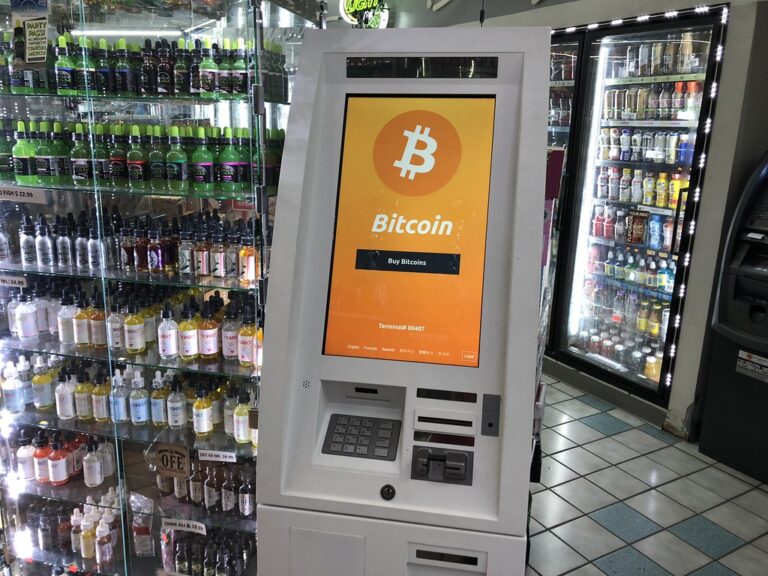
Thereafter, these bad actors would proceed to threaten the elderly citizens with arrest unless they were obliged to pay lump sums of money. Eventual victims were guided to Bitcoin ATMs, which allow users to swap cash for cryptocurrency, to process these fraudulent transactions to anonymously owned wallets.
According to data from Bitcoin ATM Map, there are 288 resident Bitcoin ATM/Tellers in Louisiana, representing the Southeastern state’s friendliness towards the crypto industry. However, a recently passed legislation in Louisiana introduced several measures to combat crypto scams. These include mandatory signage on all Bitcoin ATMs, which states that no government-affiliated person or entity would ever demand cash deposits into these machines.
Furthermore, the machines are also programmed to display warning messages to users during transactions. In particular, users are advised to stay alert to scams, especially when provided with a QR code or wallet ID by someone else. In addition, the new regulations include a $3,000 daily limit on deposits and a 72-hour waiting period for all transactions to potentially detect all malicious fund transfers and scams.
According to KPLC, these new regulations allowed authorities to recover $200,000 for four targeted senior citizens. Other victims of this scam are admonished to reach out to the AARP Louisiana branch, a large nonprofit, nonpartisan US organization focused on supporting and advocating for people 50 years and older and their families.
Bitcoin ATM Scam: The Next Menace?
While Louisiana has recently formulated laws to tackle scams involving the Bitcoin ATMs, Bitcoinist reported that the Missouri Attorney General Catherine Hanaway had recently started an investigation into companies operating these machines, citing concerns around deceptive fee structure and fraudulent use by bad actors.
As seen in Louisiana, Hanaway claimed to have received reports of new scam operations involving the key use of Bitcoin ATMs, thus resulting in the statewide probe. Notably, companies under the AG’s investigation include GPD Holdings, Rockitcoin, Bitcoin Depot, Athena Bitcoin, and Byte Federal.
Featured image from Flickr, chart from Tradingview

Editorial Process for bitcoinist is centered on delivering thoroughly researched, accurate, and unbiased content. We uphold strict sourcing standards, and each page undergoes diligent review by our team of top technology experts and seasoned editors. This process ensures the integrity, relevance, and value of our content for our readers.
Bitcoin miner moves $181 million, as expert speaks of ‘key inflection point’ – DL News

- Miner active in the days of Bitcoin founder Satoshi Nakamoto, says expert.
- Two early “Bitcoin whales” moved coins worth $181 million late last year.
- VanEck predicts big Bitcoin price rises by 2050.
A miner who was active in the early days of crypto has moved over $181 million worth of Bitcoin.
The miner was active in the “Satoshi era,” Julio Moreno of the blockchain analysis provider CryptoQuant wrote on X. Satoshi Nakamoto is the pseudonymous founder of Bitcoin. Nakamoto authored the Bitcoin white paper in 2008 and launched the Bitcoin network the following year – before disappearing without a trace in 2010.
“[This is] the first time this has happened since November 2024, when Bitcoin was at around $91,000,” Moreno said. “Historically, Satoshi-era miners move their Bitcoin at key inflection points.”
The move comes a month after two so-called Bitcoin whales who had not touched their wallets since 2011 and 2012 moved their entire balances to unknown wallets.
Whales make moves
The crypto transaction monitoring platform Whale Alert noted on December 5 that one of the wallets had sat dormant for over 13 years. The other had been inactive for 14 years.
The latest transaction has generated much speculation online, with some X users commenting that Bitcoin whales tend to sell their coins when they think markets are rallying.
Sani, the founder of the Bitcoin transaction analysis site TimechainIndex, took to X to post blockchain data showing that a miner with funds in 40 Pay-to-Public-Key wallets had sent $181 million worth of Bitcoin to Coinbase crypto exchange wallets.
Pay-to-Public-Key wallets were popular in the early days of Bitcoin, but have since become largely obsolete, with modern users favoring more private alternatives.
“A miner just sold 2,000 Bitcoin from block rewards dormant since 2010,” Sani wrote.
Bullish predictions
Bitcoin prices have held steady just above $90,000 for most of the weekend, despite bullish predictions from the investment firm heavyweight VanEck.
VanEck last week said Bitcoin prices could reach the $2.9 million mark by 2050.
The company said big business and government adoption would likely spur Bitcoin growth in the years ahead.
It also outlined a “bull case scenario” that could see Bitcoin prices rise to a whopping $53.4 million.
“In a hyper-Bitcoinisation scenario where Bitcoin captures 20% of international trade and 10% of domestic GDP, the implied value per coin could reach $53.4 million,” wrote researchers Matthew Sigel and Patrick Bush.
Sigel and Bush explained that this scenario “requires Bitcoin to achieve parity with or surpass gold as a primary global reserve asset, constituting nearly 30% of world financial assets.”
In November, Galaxy Digital said Bitcoin was maturing and warned that the days of traders making “1,000x, 100x, or even possibly 10x gains” were over.
Tim Alper is a News Correspondent at DL News. Got a tip? Email him at tdalper@dlnews.com.
A Satoshi-Era Bitcoin Miner Just Moved For The First Time Since 2024: Here’s How Much

Trusted Editorial content, reviewed by leading industry experts and seasoned editors. Ad Disclosure
The price of Bitcoin is infamous for its inactivity during the weekends, and it has not disappointed in the past day. The premier cryptocurrency continues to hover around the psychological $90,000 mark, with no significant movement observed over the past 24 hours.
While the Bitcoin price action — or lack thereof — has lulled most investors to sleep, a particular market participant has just woken from their slumber. According to the latest on-chain data, a Satoshi-era miner just moved a significant amount of Bitcoin over the weekend.
Satoshi-Era Miner Moves 2,000 BTC On Saturday
In a post on the social media platform X, CryptoQuant’s head of research, Julio Moreno, revealed that a Bitcoin miner from the Satoshi era moved 2,000 coins on Saturday, January 10. This would represent the first time such movement would be occurring from this group of network participants since November 2024.
The Satoshi-era miners refer to entities that mined BTC during its earlier years, typically between 2009 and 2011, when the flagship cryptocurrency’s pseudonymous creator, Satoshi Nakamoto, was still active. At the time, mining BTC was a less competitive sport (could be done with a consumer CPU), with greater rewards.

Source: @jjc_moreno on X
Moreno noted that, historically, the Satoshi-era miners have only ever moved their coins at key inflection points. In November 2024, when the last miner from this group made a transaction, the price of Bitcoin was around $91,000.
The premier cryptocurrency has since gone on to set multiple all-time highs before reaching the current cycle peak of $126,080. While it is difficult to say what the Satoshi-era miner saw before its latest move, the pattern-like nature of these coin movements makes them too relevant to ignore.
Why Bitcoin Investors Should Watch Out For $84,500
As earlier inferred, indecisiveness seems to be returning to the Bitcoin market, as the bulls and bears continue their battle around the $90,000 level. While this region has gained relevance in recent weeks, recent on-chain data has identified another crucial level beneath it.
According to Alphractal’s CEO and founder, Joao Wedson, this level is the 2-year moving average (2Y MA) of Bitcoin. The on-chain expert highlighted that this level represents the last major support cushion for the market leader.
From a historical perspective, the loss of the 2Y MA, which is currently around $84,500, could increase the probability of capitulation significantly. In essence, the premier cryptocurrency faces the risk of extended downward movement once it crosses below $84,500.
As of this writing, the price of BTC stands at around $90,435, reflecting no change in the past 24 hours.
The price of BTC on the daily timeframe | Source: BTCUSDT chart on TradingView
Featured image from iStock, chart from TradingView
Editorial Process for bitcoinist is centered on delivering thoroughly researched, accurate, and unbiased content. We uphold strict sourcing standards, and each page undergoes diligent review by our team of top technology experts and seasoned editors. This process ensures the integrity, relevance, and value of our content for our readers.
BitMine’s Total Staked ETH Holdings Surpass 1 Million

Crypto treasury company BitMine Immersion Technologies (BMNR) staked an additional 86,400 Ether (ETH) on Saturday, valued at about $268.7 million at the time of this writing, crossing the 1 million staked ETH milestone.
The 86,400 ETH was staked in four separate transactions, according to data from crypto market analytics platform Arkham Intelligence; this brings BitMine’s total to 1,080,512 staked ETH, onchain analysis platform Lookonchain said.
Staking is the process of pledging or locking up crypto tokens by validators or third-party staking service providers to secure proof-of-stake blockchain networks.
Staking in crypto produces yield for the validator or investor, who has delegated stake via a third-party provider, paid in the native token of the blockchain network being secured.
“BitMine has now staked about $3.3 billion worth of ETH. At the current 2.81% yield, that generates roughly $94.4 million per year in ETH,” market analyst Nic Puckrin said.
“Obviously, Bitcoin doesn’t produce cash flow, Puckrin added, and asked, “If another crypto winter hits and debt comes due, does holding a stakeable asset change who weathers it better?”
The milestone was crossed following a turbulent year for crypto treasury companies, with some shedding over 90% of their value from their all-time highs.

BitMine’s stock is down over 80% from its all-time high of $161 per share, reached in July 2025, and is trading at $30.06 per share at the time of publication.
Related: BitMine buys $105M Ether to kick off 2026, still holds $915M in cash
BitMine chairman asks shareholders to approve a 1000x increase in authorized shares
In early January 2026, BitMine chairman Tom Lee urged shareholders to vote yes on a proposal to increase the authorized share limit to 50 billion shares.
The proposal would raise the number of shares BitMine is allowed to issue from 50 million to 50 billion — a 1000x increase.

Increasing the authorized share limit does not necessarily mean the company will issue those shares, Lee clarified.
Raising the authorized share limit will accommodate future stock splits to keep Bitmine’s price-per-share affordable at about $25 per share, he said.
Magazine: Sharplink exec shocked by level of BTC and ETH ETF hodling: Joseph Chalom
Cointelegraph is committed to independent, transparent journalism. This news article is produced in accordance with Cointelegraph’s Editorial Policy and aims to provide accurate and timely information. Readers are encouraged to verify information independently. Read our Editorial Policy https://cointelegraph.com/editorial-policy