Home Blog Page 1229

Best Amazon Seller Tools to Boost Sales & Efficiency

0

Selling on Amazon isn’t just about listing products and hoping for clicks anymore. The marketplace moves fast, competition is fierce, and even small mistakes can cost you big. That’s where the right tools come in. From tracking sales and analyzing trends to optimizing ads and inventory, the best Amazon seller tools give you the edge – helping you work smarter, spot opportunities before they slip away, and actually enjoy the process of growing your business instead of drowning in spreadsheets. Let’s take a look at the tools that make sellers’ lives a whole lot easier.


1. WisePPC

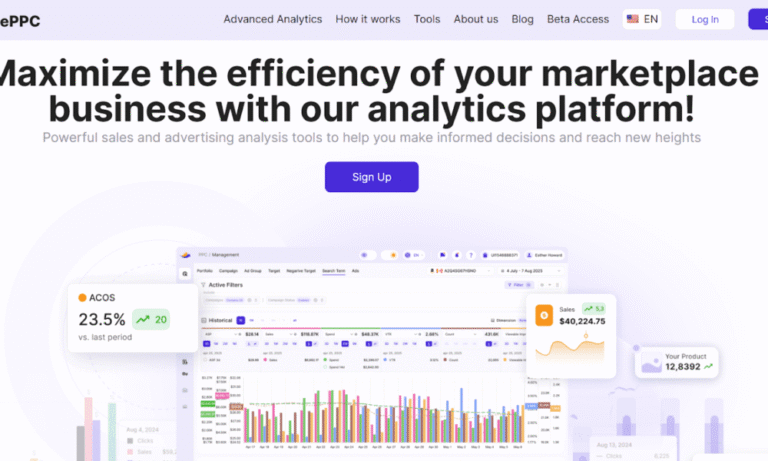
WisePPC provides a set of tools designed to help sellers manage and understand their performance across multiple marketplaces like Amazon and Shopify. It focuses on making data more accessible, so sellers can see trends, monitor campaigns, and adjust strategies without digging through spreadsheets or switching between platforms. The platform organizes complex metrics in a way that’s easier to interpret and act on, allowing users to track sales, ad performance, and other key indicators over time.

The platform also includes features for editing and managing campaigns directly within the system. Sellers can adjust budgets, bids, and settings in bulk, analyze placement performance, and explore historical trends with charts and tables that support multiple metrics. This setup helps streamline daily operations and provides insights that inform decisions about ad spending, product promotion, and overall marketplace strategy.


Key Highlights:

  • Tracks multiple metrics across campaigns and products
  • Provides historical and real-time performance data
  • Supports bulk edits for campaigns, ad groups, and targets
  • Allows detailed filtering and segmentation of data
  • Visualizes trends with charts and gradient-based highlights
  • Stores long-term historical data for ongoing analysis


Services:

  • Centralized analytics for multiple marketplaces
  • Real-time campaign monitoring and reporting
  • Bulk campaign management and adjustments
  • Placement performance tracking
  • Historical trend analysis with flexible charting
  • Multi-account dashboard for cross-platform insights


Contact and Social Media Information:


2. Helium 10

Helium 10 provides a set of tools aimed at helping Amazon sellers manage different aspects of their business. It focuses on making product research, keyword analysis, and listing management more manageable so sellers can make sense of the data without getting overwhelmed. The platform brings together multiple functions in one place, helping sellers track product trends, monitor keywords, and organize listings more effectively.

The tools also cover operations like inventory management, review monitoring, and advertising campaign oversight. Users can access analytics to understand performance over time, monitor competitors, and make adjustments based on real-time insights. By combining these capabilities, Helium 10 provides a framework for sellers to handle day-to-day tasks while keeping an eye on growth opportunities and operational efficiency.


Key Highlights:

  • Offers product and keyword research tools
  • Provides listing optimization assistance
  • Supports inventory and operations management
  • Includes analytics and competitive tracking
  • Provides tools for advertising and PPC management
  • Offers some free tools for research and monitoring


Services:

  • Product research with filtering and trend analysis
  • Keyword research and tracking
  • Listing optimization tools
  • Inventory monitoring and alerts
  • PPC management and advertising tools
  • Review management and follow-up tools
  • Analytics dashboards for sales and market trends


3. Jungle Scout

Jungle Scout offers a set of tools that help Amazon sellers understand their market and manage key aspects of their business. The platform focuses on product research, keyword tracking, and listing support, giving sellers the ability to spot trends and organize their workflow without juggling multiple applications. Users can analyze competitors, evaluate demand for different products, and keep an eye on how their own listings are performing over time.

The platform also includes tools for managing growth and operations. Sellers can monitor sales data, track product rankings, and handle customer feedback more efficiently. By combining insights from product research, keyword performance, and competitive intelligence, Jungle Scout helps sellers make informed decisions about their listings, advertising strategies, and inventory planning.


Key Highlights:

  • Provides product and keyword research tools
  • Tracks competitor activity and market trends
  • Supports listing optimization and grading
  • Includes historical data for analysis
  • Offers review and feedback management
  • Enables tracking of product rankings and PPC performance


Services:

  • Product research and opportunity finding
  • Keyword research and tracking
  • Listing optimization and grading
  • Competitive intelligence and market analysis
  • Review management automation
  • Sales and PPC analytics dashboards
  • Historical data insights for planning


4. SellerApp

SellerApp provides a suite of tools designed to help Amazon sellers navigate the complexity of managing products, ads, and operations across multiple marketplaces. It focuses on giving sellers actionable insights into product performance, pricing trends, and listing quality. Users can track ASINs over time to see what’s actually selling and understand sales patterns beyond surface-level metrics. The platform combines data with automation to make day-to-day tasks more manageable, especially when scaling operations across multiple channels.

Beyond product tracking, SellerApp includes features that help sellers analyze advertising campaigns and operational efficiency. Sellers can monitor ad performance, automate rule-based campaigns, and generate customized reports to understand which actions impact their bottom line. By centralizing marketplace data, the platform allows sellers to spot trends, identify opportunities, and make informed decisions without juggling separate tools.


Key Highlights:

  • Tracks ASINs and product performance over time
  • Monitors pricing trends and revenue estimates
  • Supports ad campaign management and automation
  • Provides listing quality insights and optimization
  • Centralizes multi-marketplace data
  • Offers customizable reporting


Services:

  • Product intelligence and research
  • Amazon PPC automation and analysis
  • Listing optimization and quality checks
  • Multi-account dashboard and reporting
  • Managed services for ad campaigns
  • Enterprise solutions for marketplace intelligence


5. CamelCamelCamel

CamelCamelCamel is a tool focused on tracking Amazon product prices over time. It allows sellers and shoppers alike to see the history of pricing on millions of products, helping them identify trends and patterns. By providing detailed price history charts, users can better understand the fluctuations of products and plan their purchasing or sales strategies accordingly. The platform is especially handy for sellers who want to monitor competitors’ pricing and market trends without manually checking each product.

The service also includes customizable price alerts that notify users when a product reaches a desired price point. With browser extensions like The Camelizer, tracking and viewing price history becomes more seamless, integrating directly into the Amazon shopping experience. While primarily known for price monitoring, CamelCamelCamel provides insights that can assist sellers in decision-making regarding inventory, promotions, and competitive pricing strategies.


Key Highlights:

  • Tracks Amazon product prices over time
  • Provides detailed price history charts
  • Offers customizable price drop alerts
  • Browser extension for easy access and tracking
  • Supports multiple Amazon marketplaces


Services:

  • Price history tracking
  • Price drop notifications
  • Browser-based chart display
  • Popular product tracking
  • Category-based deal listings


6. ZonGuru

ZonGuru is a platform that provides a range of tools to support Amazon sellers at different stages of their business. The software focuses on giving sellers access to actionable data, whether they’re looking to identify promising products, optimize their listings, or monitor customer engagement. With tools that track product performance and alert sellers to important changes like reviews or listing hijacks, it aims to help sellers stay on top of their Amazon operations without having to manually check everything. The platform also incorporates AI-based features to assist with listing optimization, adapting to shifts in Amazon’s algorithms.

In addition to product and listing insights, ZonGuru provides features to manage customer communication and uncover growth opportunities. Sellers can generate reports that highlight potential improvements, track competitors, and make more informed decisions about product strategy. The interface is designed to simplify complex data, making it easier to interpret and apply. Overall, ZonGuru combines research, monitoring, and optimization functions into a single workflow for those managing Amazon businesses.


Key Highlights:

  • AI-assisted listing optimization
  • Product performance tracking
  • Alerts for reviews and listing changes
  • Tools for customer communication
  • Market research and growth opportunity reports


Services:

  • Product research and niche identification
  • Listing optimizer tools
  • Review and listing monitoring
  • Growth reports and analytics
  • Customer engagement tools


7. Keepa

Keepa is a tool that focuses on tracking price history and monitoring products on Amazon. It provides sellers with detailed charts showing how prices have changed over time, which can be useful for spotting trends or planning pricing strategies. The platform covers a huge number of products across multiple categories and offers the ability to set alerts for price drops, making it easier to keep track of items that matter for your business. Many sellers find the historical data helpful for understanding the market behavior of different products before making decisions on sourcing or promotion.

Beyond tracking prices, Keepa also includes browser extensions and mobile apps to give sellers access to data wherever they are. Alerts can be customized to notify users of changes in price or availability, which can support timely adjustments in selling strategy. While Keepa is largely centered on data and monitoring, it can serve as a reference point for evaluating product performance over time and spotting opportunities in the marketplace.


Key Highlights:

  • Price history tracking for Amazon products
  • Price drop alerts via email or notifications
  • Monitoring of millions of products across categories
  • Browser extensions for quick access
  • Mobile apps for Android and iOS


Services:

  • Product price tracking and monitoring
  • Historical price charts
  • Custom alerts for price and availability changes
  • Integration with browsers for easy reference
  • Mobile application for on-the-go monitoring


8. Viral Launch

Viral Launch offers a suite of tools aimed at helping Amazon sellers with various stages of their business, from finding products to optimizing listings. The platform focuses on providing insights that can guide decisions on product selection, keyword strategy, and overall market opportunities. Sellers can use the data to better understand demand, competition, and potential gaps in the marketplace, which can influence both what products to sell and how to position them effectively. The interface is designed to let users explore product ideas and track performance without needing multiple separate tools.

In addition to research capabilities, Viral Launch provides features for listing optimization and tracking keywords over time. This helps sellers adjust their content and strategies based on what is performing well and what the market is searching for. The platform also supports monitoring competitors and assessing trends, which can inform pricing, inventory, and marketing decisions. Overall, it serves as a resource for sellers who want to combine product data, keyword insights, and performance tracking in one place.


Key Highlights:

  • Product research tools for idea generation
  • Keyword tracking and analysis
  • Competitor monitoring features
  • Listing optimization support
  • Market trend insights


Services:

  • Product discovery and validation
  • Keyword research and tracking
  • Listing performance analysis
  • Competitor intelligence
  • Trend monitoring and market insights


9. Keyword Tool

Keyword Tool provides a way for Amazon sellers to explore what buyers are actually searching for online. Instead of relying on assumptions, sellers can see long-tail keyword suggestions that reflect real user queries. The tool pulls data from multiple platforms, including Amazon, and allows users to filter by language and country. This helps sellers identify terms that might be relevant for product listings, descriptions, and advertising campaigns. The interface is designed to make it easy to generate hundreds of keyword ideas quickly, giving sellers a foundation for content and marketing strategies.

Beyond just keyword generation, the platform supports tracking and analyzing keyword trends over time. This can inform how sellers adjust their listings or ad campaigns to better match current demand. Users can also compare keywords and see variations that might be more effective in reaching potential customers. It’s a practical tool for anyone looking to align their product information with the actual search behavior of Amazon shoppers.


Key Highlights:

  • Generates long-tail keywords from Amazon and other platforms
  • Supports multiple languages and countries
  • Provides keyword suggestions based on real user search behavior
  • Tracks keyword trends over time
  • Offers a straightforward interface for fast research


Services:

  • Keyword research for product listings
  • Content optimization guidance
  • Search trend tracking
  • Keyword comparison and analysis
  • API access for automated keyword data retrieval


10. FeedbackWhiz

FeedbackWhiz focuses on helping Amazon sellers manage their customer feedback and product reviews efficiently. The platform provides tools to monitor reviews, track seller metrics, and set up automated email campaigns that engage buyers after a purchase. By keeping track of feedback in one place, sellers can quickly respond to issues, understand customer sentiment, and maintain a clear picture of their store’s performance. The system also supports tracking important metrics like order defects and late shipments, helping sellers stay on top of Amazon’s performance standards.

The platform goes beyond feedback management by offering insights into overall business performance. Sellers can analyze patterns in reviews and ratings to identify potential product improvements or trends in buyer behavior. This kind of data can help inform listing adjustments, marketing strategies, and operational decisions, making it a useful tool for maintaining consistency and improving customer experience.


Key Highlights:

  • Centralized dashboard for customer feedback and reviews
  • Automated email campaigns for post-purchase engagement
  • Performance tracking of seller metrics
  • Review monitoring to identify trends and potential issues
  • Insight into customer sentiment and satisfaction


Services:

  • Feedback and review management
  • Automated buyer email follow-ups
  • Order and performance metric tracking
  • Analytics on review trends
  • Reporting tools for store performance


11. SellerSprite

SellerSprite is a platform that helps Amazon sellers make sense of market data and turn it into actionable insights. The tool combines product research, keyword intelligence, and competitor analysis in one place, aiming to simplify the decision-making process. Sellers can explore niches, track sales trends, and identify potential opportunities with detailed data on pricing, reviews, and best-seller rankings. The platform also allows for multi-dimensional product analysis, so sellers can compare variations, evaluate competitors, and model potential profits before committing to inventory.

Beyond research, SellerSprite offers tools to monitor listings and market signals in real time. Alerts for rank changes, stock issues, and listing suppressions help sellers act quickly to maintain performance. The browser extension brings much of the platform’s functionality directly to Amazon pages, providing instant context for keywords, trends, and competitor activity. By keeping both high-level trends and granular details accessible, SellerSprite gives sellers a structured way to manage operations and respond to the market efficiently.


Key Highlights:

  • Multi-dimensional product research and category insights
  • Keyword intelligence and reverse ASIN analysis
  • Competitor tracking and market trend monitoring
  • Real-time alerts for listing changes and performance shifts
  • Browser extension for on-page Amazon insights


Services:

  • Product research and opportunity analysis
  • Keyword research and ranking tracking
  • Competitor performance evaluation
  • Listing monitoring and alerts
  • Profitability modeling and pricing guidance


12. RepricerExpress

RepricerExpress is a tool designed to help Amazon sellers manage pricing across their inventory automatically. It monitors competitor prices and adjusts your listings based on rules you set, aiming to keep products competitive while staying within your target profit range. The platform works across multiple Amazon marketplaces, making it flexible for sellers who operate internationally. It also provides safeguards to prevent prices from going outside pre-set boundaries or Amazon’s limits, helping to avoid accidental losses or de-listings.

The software offers features like Safe Mode for testing repricing rules without affecting live listings, and real-time updates to respond quickly to market changes. Sellers can set minimum and maximum prices for each product and choose automated strategies for different situations, such as clearing slow-moving stock or reacting to Buy Box opportunities. By automating these adjustments, sellers can maintain more consistent pricing and reduce the manual effort required to stay competitive on Amazon.


Key Highlights:

  • Automated repricing based on competitor tracking
  • Supports multiple Amazon marketplaces
  • Minimum and maximum price boundaries per product
  • Safe Mode for testing pricing rules
  • Real-time updates and alerts for price changes


Services:

  • Price monitoring and automated adjustments
  • Buy Box strategy and tracking
  • Profit margin management
  • Marketplace-specific repricing
  • Account setup assistance and support


13. ProfitGuru

ProfitGuru is a research and analytics platform aimed at helping Amazon sellers make informed decisions about products, keywords, and competitors. It allows sellers to explore product databases, analyze market demand, and track keywords to uncover potential opportunities for growth. The platform also offers insights into brands, suppliers, and competitor strategies, which can help sellers refine their sourcing and marketing plans. Whether you are testing a new niche or managing an existing portfolio, ProfitGuru provides tools to support a data-driven approach to selling on Amazon.

The platform covers different selling models including wholesale, private label, and online arbitrage. Sellers can use features like sales estimators, bulk analysis, and FBA calculators to assess profitability and plan inventory. Other tools, such as Reverse ASIN Lookup and Suggested Keywords, help identify the terms competitors rank for and expand keyword strategies. With these capabilities, sellers can research efficiently and make operational decisions with clearer insights rather than relying on guesswork.


Key Highlights:

  • Product database for discovering opportunities
  • Brand and supplier insights
  • Keyword tracking and Reverse ASIN lookup
  • Sales estimation and FBA calculations
  • Bulk analysis for multiple products


Services:

  • Product research and market analysis
  • Competitor insights and keyword intelligence
  • Inventory and pricing assessment
  • Wholesale and private label support
  • AI-driven suggestions for product and keyword strategy


14. Seller Snap

Seller Snap is all about taking the stress out of pricing on Amazon (and Walmart, too). Instead of manually adjusting prices every time a competitor changes theirs, this tool uses AI to do it for you. It looks at things like competitor behavior, sales trends, fees, and your profit goals, and then tweaks your prices in real time. It’s like having a pricing assistant that never sleeps.

But it’s not just about repricing. Seller Snap also gives you insights into your inventory and ads, so you can make smarter decisions about restocking or running promotions. You can even manage multiple stores from one dashboard, which is a huge time-saver if you’re juggling more than one account. The system lets you customize strategies too – so whether you’re trying to win the Buy Box, protect your margins, or just keep everything running smoothly, you’ve got control. And because it tracks key metrics like CTR, ACOS, and RoAS alongside your pricing, you can actually see what’s working and where you might need to tweak things.


Key Highlights:

  • AI-powered repricing for Amazon and Walmart
  • Real-time competitor and market analysis
  • Inventory and replenishment insights
  • Multi-store management
  • Advertising performance tracking


Services:

  • Automated pricing adjustments
  • Custom repricing strategy creation
  • Profit margin protection and monitoring
  • Store and SKU performance analytics
  • Integration with Amazon and Walmart marketplaces


Conclusion

Wrapping up, navigating the world of Amazon selling can feel like juggling a dozen things at once – inventory, pricing, listings, ads, and all the little details in between. The tools we’ve looked at aren’t magic wands, but they do take a lot of the busywork off your plate. From repricing tools that respond in real time to AI assistants that help spot trends and opportunities, these platforms let you focus on the parts of your business that actually need your attention.

The key takeaway is that having the right tools doesn’t replace strategy – it enhances it. Each seller will have different needs, whether you’re running a small private label operation or managing a large-scale wholesale business. Experimenting with a few of these tools, understanding how they fit into your workflow, and tweaking your approach along the way can make the day-to-day grind a lot smoother. In the end, it’s about working smarter, not harder, and keeping a little breathing room in a marketplace that’s constantly moving.







Crypto Gets A Wall Street Upgrade As Nasdaq And CME Deepen Ties

0

Trusted Editorial content, reviewed by leading industry experts and seasoned editors. Ad Disclosure

Nasdaq and the CME Group have stepped up a joint effort to give big investors a single, regulated way to measure crypto markets. According to Nasdaq, the firms have reintroduced the Nasdaq Crypto Index as the Nasdaq-CME Crypto Index (NCI), a benchmark built to support products like ETFs and structured funds. The announcement was made early this month and is presented as a move to bring clearer rules and governance to index-based crypto exposure.

Nasdaq And CME Combine Index Expertise

Reports have disclosed the NCI will be calculated by CF Benchmarks and overseen by joint committees that include representatives from both exchanges. That arrangement is intended to mirror traditional index practices used in equities and derivatives, with regular reconstitution and transparent methodology. CF Benchmarks has already handled Nasdaq Crypto Index reconstitutions, including the reconstitution on December 1, 2025, which is part of the index family’s work ahead of the rebrand.

Total crypto market cap currently at $3.07 trillion. Chart: TradingView

What The Exchanges Say

CME’s public materials describe the move as part of an expanded collaboration that links Nasdaq’s indexing work with CME’s regulated trading platform. The CME website also highlights plans for more product and contract activity tied to crypto, and it points to the ability to support markets that operate around the clock. Based on those reports, the aim is to give institutional managers a benchmark they can use when building regulated products.

Index For Diversified Crypto Exposure

According to news releases and market reporting, the Nasdaq-CME Index is not limited to a single token. The index tracks a basket of major coins so that a product tied to it would offer diversified exposure rather than a single-asset bet. Market outlets picked up the story quickly; several trading and financial news sites published pieces within days of the announcement, noting the index name change and the partners’ shared governance approach.

Operational And Timing Details

Nasdaq has also updated its market data listings to reflect name changes tied to the index family, with some effective dates scheduled later in January 2026. That timing suggests the firms plan a phased rollout: first the naming and governance alignment, then data and product support for issuers and market makers. The reconstitution timetable from CF Benchmarks shows the operational work has already been underway since December 2025.

Featured image from Unsplash, chart from TradingView

Editorial Process for bitcoinist is centered on delivering thoroughly researched, accurate, and unbiased content. We uphold strict sourcing standards, and each page undergoes diligent review by our team of top technology experts and seasoned editors. This process ensures the integrity, relevance, and value of our content for our readers.

Elon Musk’s X to launch Smart Cashtags for accurate asset tracking and live pricing

0

Key Takeaways

  • X is developing Smart Cashtags for real-time asset pricing and tracking.
  • The feature allows users to specify assets or smart contracts when posting tickers.

Share this article

Elon Musk’s X plans to introduce Smart Cashtags, a new feature aimed at improving how financial assets such as stocks and cryptocurrencies are referenced on the platform, Nikita Bier, X’s Head of Product, said Sunday.

The feature allows users to specify the exact asset or smart contract when tagging a ticker, reducing ambiguity across crypto, equities, and other financial instruments. Tapping on a Smart Cashtag will show real-time price data alongside posts referencing the same asset.

The latest development reflects X’s growing importance as a real-time hub for financial information, with platform activity influencing hundreds of billions of dollars.

X will collect user feedback while testing Smart Cashtags ahead of a wider public rollout expected next month.

Monero Blows Past Its All-Time Price High as It Eyes a Top 10 Position

0

The privacy-focused crypto asset monero ( XMR) has been on a tear lately, with the digital currency clocking a new all-time high on Sunday, Jan. 11, 2026. Monero Breaks Free of Its Previous Price Ceiling According to market data from Bitfinex, the leading privacy coin by market cap, monero ( XMR) has rocketed to a […]

Top Amazon Marketing Tools for Sellers in 2026

0

Selling on Amazon can feel pretty straightforward in the beginning, but it doesn’t stay that way for long. Once the orders pile up or your ad spend starts creeping higher than you expected, you suddenly realise you’re missing a clearer picture of what’s going on. And that’s usually the moment people start searching for tools that actually make their routine easier instead of more chaotic.

This guide pulls together a handful of Amazon marketing tools that genuinely help you navigate the day to day – the messy bits included. No buzzwords, no dramatic promises. Just a grounded look at what these platforms do, how they clean up your data, and where they quietly save you time. Whether you’re managing a small catalog or juggling several brands, the point is simple: help you figure out which tools are actually worth keeping in your workflow.


1. WisePPC

WisePPC is an Amazon marketing tool for sellers who want a clearer view of how their ads and overall marketplace activity are actually performing. Instead of jumping between spreadsheets or separate dashboards, the platform brings analytics, real-time metrics, and bulk editing tools into one place. Sellers can look at long-term trends, filter data down to very specific segments, and make changes without switching screens. WisePPC also supports deeper analysis, like comparing placements, tracking performance across multiple accounts, or reviewing years of historical data that Amazon normally overwrites. It’s built for teams that want more control over their PPC setup but also want the process to feel simpler and more connected.


Key Highlights:

  • Unified analytics that combine sales, ads, and organic performance
  • Bulk actions for editing campaigns, bids, and targets at scale
  • Advanced filtering for detailed performance analysis
  • Historical data stored for years instead of Amazon’s short retention window
  • Inline editing for quick adjustments without extra navigation
  • Placement-level analysis to refine bidding strategies
  • Metric highlighting to spot unusual performance patterns fast


Good Choice For:

  • Sellers who want deeper visibility into their Amazon advertising activity
  • Teams managing many campaigns or multiple accounts
  • Users who rely heavily on data for strategy decisions
  • Sellers looking for a more flexible and analytical PPC environment


Contacts:


2. Keepa

Keepa gives sellers a straightforward way to look at how products behave over time. Instead of checking a listing and guessing whether the price is steady or jumping around, they can pull up long-running charts and see the bigger picture. The extension and mobile apps make it easy to check this information while browsing or doing quick research, so it fits naturally into a seller’s routine. It’s mostly about understanding patterns rather than chasing short-term changes, which can help calm some of the guesswork that comes with sourcing.


Key Highlights:

  • Tracks long-term price and product behavior on Amazon
  • Works through a browser extension and mobile apps
  • Available on Google Play and the Apple App Store
  • Extra features unlocked with a subscription


Good Choice For:

  • Sellers who want a clearer sense of how stable or unpredictable a product has been
  • People checking items before adding them to their catalog
  • Anyone comparing competing listings without digging through scattered data


3. Jungle Scout

Jungle Scout brings together a wide set of tools that help sellers understand what’s happening across Amazon, whether they’re running a small shop or managing a larger brand. They focus a lot on market research, brand visibility, and how campaigns perform, so users can see where they stand and where there might be room to adjust. Their platform is split into solutions that fit different types of teams, but the general idea stays pretty practical: make Amazon activity easier to interpret and a bit less overwhelming.


Key Highlights:

  • Covers market research, brand tracking, and campaign insights
  • Built for both smaller sellers and established brands
  • Includes a browser extension and product research tools
  • Offers options for structured reporting and consulting


Good Choice For:

  • Sellers who need a broader view of how their products compete in the market
  • Teams thinking about new product directions or category shifts
  • Agencies or brands juggling multiple accounts or product lines


4. Helium 10

Helium 10 brings together tools that help sellers with product research, keywords, listing work, and general account management. They also support marketplaces beyond Amazon, which is helpful if someone wants to test Walmart or TikTok Shop without switching platforms. Their Chrome extension makes quick checks simple while browsing, and the rest of the tools fit into everyday tasks like building listings, tracking performance, or sorting out advertising. It’s meant to be an all-in-one setup for sellers who prefer keeping things in one place.


Key Highlights:

  • Tools for product and keyword research, supported by a Chrome extension
  • Features for listing creation and refinement
  • Advertising and automation options
  • Support for Amazon, Walmart, and TikTok Shop


Good Choice For:

  • Sellers exploring new product ideas or improving existing listings
  • People who prefer managing most tasks from a single platform
  • Users branching out beyond Amazon into other marketplaces


5. SellerApp

SellerApp offers a set of tools that help sellers follow their Amazon activity from different angles, bringing ads, product insights, and performance tracking into one place. Their platform focuses on showing how various parts of a seller’s workflow connect, whether someone is reviewing their campaigns, looking at product trends, or checking how their sales affect profitability. They also provide options for teams that handle multiple accounts or need more structured reporting, so the system adapts to different levels of complexity without forcing a single way of working.


Key Highlights:

  • Unified dashboard for tracking performance across marketplaces
  • Tools for ad automation and rule-based adjustments
  • Customizable reporting options for teams and clients
  • Product Intelligence features for reviewing ASIN history and listing quality


Good Choice For:

  • Sellers who want one place to review ads, products, and general performance
  • Teams handling multiple accounts or brands
  • Users interested in a mix of automation and manual control
  • Sellers who need clearer reporting for clients or internal teams


6. Perpetua

Perpetua provides software that helps sellers manage their advertising across Amazon and other marketplaces by automating much of the setup and optimization work. Instead of building every campaign manually, users can set overall goals and let the system handle the smaller adjustments. The platform also includes tools for monitoring how ads perform across different formats, like search, display, and video, along with reporting features that give sellers a broader view of how their budget is being used.


Key Highlights:

  • Automation engine for creating and optimizing ad campaigns
  • Support for Amazon, Walmart, and other major marketplaces
  • Reporting tools that show how ads perform across formats
  • Recommendations and bidding adjustments that respond to context


Good Choice For:

  • Sellers who prefer automated ad execution instead of building everything manually
  • Teams that run ads across several marketplaces
  • Users who want clearer visibility into how campaigns influence performance
  • Sellers managing higher ad volumes or multiple product lines


7. Quartile

Quartile offers a platform that helps sellers run and refine retail media campaigns across major marketplaces. They organize advertising around individual products, breaking campaigns into detailed structures that make it easier to see what works and where budgets should shift. Their system brings in signals from different channels, turning them into insights that guide bidding and broader strategy. Quartile also pairs their software with hands-on support, which can be useful for sellers who want an extra layer of guidance as they scale.


Key Highlights:

  • Granular, per-ASIN campaign structure for detailed advertising control
  • Automated bidding based on real-time signals
  • Reporting that covers both performance and category insights
  • Access to a support team for ongoing strategy work


Good Choice For:

  • Sellers who want a structured and detailed approach to advertising
  • Brands running campaigns across multiple channels or marketplaces
  • Users looking for both software and strategic input


8. Sellozo

Sellozo gives sellers a way to manage Amazon PPC without feeling buried under settings and constant bid changes. Their tools lean on automation to take care of the repetitive parts, while the visual Campaign Studio helps you sketch out how everything should work. The platform is built for people who want to stay in control but not spend every day tweaking keywords. And for sellers who’d rather hand things off, there’s a managed option where their team steps in and handles most of the heavy lifting.


Key Highlights:

  • Automation that handles day to day bidding and campaign adjustments
  • Visual Campaign Studio for mapping out strategies more easily
  • Managed PPC service available when hands-on help is needed
  • Flat-fee setup without long contract pressure
  • Tools that help organize keywords and shape campaign structure


Good Choice For:

  • Sellers who want PPC work to feel less overwhelming
  • People who prefer visual tools when planning campaigns
  • Users looking for automation that still leaves room for direction
  • Sellers who might benefit from outside support on PPC tasks


9. Teikametrics

Teikametrics offers an AI-driven system for handling advertising across Amazon, Walmart, TikTok, and a few other marketplaces. Instead of adjusting bids by hand, sellers can rely on the platform’s predictive models, which look at different signals and try to set smarter bids automatically. It’s basically a way to keep campaigns moving without constantly checking spreadsheets. The platform also brings together performance reports, making it easier to spot shifts and figure out what’s worth paying attention to.


Key Highlights:

  • Predictive AI that adjusts keyword and target bids automatically
  • Works across multiple marketplaces in one place
  • Reporting tools to track progress and monitor performance
  • Ability to set goals and constraints that shape bidding behavior
  • Real-time adjustments handled by the platform’s automation


Good Choice For:

  • Sellers tired of manually tuning bids across dozens of campaigns
  • Teams advertising on more than one marketplace
  • Users who want analytics and ad management under one roof
  • Sellers trying to save time while still keeping a sense of control


10. DataHawk

DataHawk pulls marketplace data from Amazon, Walmart, and other channels into one platform, which makes it easier for teams to see what’s happening without juggling multiple dashboards. The tool sends alerts, highlights trends, and uses AI to point out things you might miss when the volume gets too big to track manually. For teams that already work with their own BI tools, DataHawk can plug into those systems too, so the data doesn’t feel locked in or hard to reuse.


Key Highlights:

  • Central hub for analytics across different marketplaces
  • Dashboards and alerts designed for everyday monitoring
  • AI tools that help flag issues, opportunities, and potential next steps
  • Integrations with external BI and analytics tools
  • Flexible data access for teams that build their own reports


Good Choice For:

  • Sellers who want a single place to check performance across channels
  • Teams that rely heavily on analytics to guide decisions
  • Agencies or enterprises managing multiple brands
  • Users who need flexible data handling for custom workflows


11. Ad Badger

Ad Badger focuses on helping sellers manage Amazon PPC without needing deep advertising knowledge. Their platform handles a lot of the repetitive work, like adjusting bids and scanning for weak keywords, so sellers can keep campaigns running without constant micromanagement. The toolset brings together bidding, keyword cleanup, and simple monitoring features, which makes it easier to stay organized and avoid wasting spend. It’s built for sellers who want support in managing ads but still want to understand what’s going on inside their campaigns.


Key Highlights:

  • Automated bidding that adjusts daily based on conversion behavior
  • Negative keyword tool that removes underperforming terms
  • Keyword and campaign tools designed for simpler PPC management
  • Platform monitors campaigns continuously and makes small adjustments
  • Includes access to educational resources for sellers learning PPC


Good Choice For:

  • Sellers who want PPC help without needing advanced advertising skills
  • Users trying to cut wasted ad spend and tighten their keyword lists
  • People who prefer automation but still want visibility into their campaigns
  • Sellers who appreciate having both software and educational guidance


12. Viral Launch

Viral Launch offers a collection of tools that help sellers research products, keep an eye on competition, and manage their Amazon listings. Their platform brings together product discovery, keyword tools, listing builders, and PPC automation in one place, which makes it easier for sellers to move between research and day to day operations. Instead of switching between separate services, users can explore markets, update listings, and track how their products are doing without breaking their workflow.


Key Highlights:

  • Tools for product research, competition tracking, and market insights
  • Keyword research and listing-building features in one platform
  • PPC automation available through AdSprout
  • Centralized dashboard for managing multiple parts of the Amazon workflow


Good Choice For:

  • Sellers who want research and operational tools under one roof
  • People exploring new product ideas or checking competitive trends
  • Users managing listings and ads in the same workspace
  • Sellers who like having extra optional services when needed


13. Sellerboard

Sellerboard provides a profit-focused dashboard that helps sellers understand how their Amazon business performs across sales, costs, and advertising. Instead of guessing margins or digging through scattered reports, users can see their profit breakdown in real time and track how each product is doing. On top of the analytics, sellerboard includes tools for PPC optimization, inventory planning, review requests, and detecting listing changes, making it a practical option for sellers who want everything tied back to profitability.


Key Highlights:

  • Real-time profit dashboard with detailed cost and fee tracking
  • Inventory management and alerts for low stock
  • PPC analytics and automated bid optimization options
  • Tools for requesting reviews and monitoring listing changes
  • Supports refunds for lost or damaged FBA inventory


Good Choice For:

  • Sellers who want clearer visibility into their true profit
  • Users who prefer tying PPC decisions to actual financial impact
  • Teams that manage inventory and ads together
  • Sellers who need alerts for listing updates, returns, or account changes


14. MerchantWords

MerchantWords gives sellers a way to explore how shoppers search on Amazon by pulling together keyword data, trends, and competitive insights. Instead of guessing what people type into the search bar, sellers can dig into real terms, see what competitors rank for, and spot new niches that might be worth testing. The platform also includes tools for tracking keyword lists, checking page one results, and reviewing broader market patterns, so it ends up being a workspace where you can slowly piece together what demand actually looks like.


Key Highlights:

  • Tools for finding and tracking Amazon shopper keywords
  • Trend features that show new searches and emerging product interest
  • Reverse ASIN lookup to review competitor ranking terms
  • Digital Shelf insights for understanding how products compete
  • Collections for organizing keyword lists and ongoing research


Good Choice For:

  • Sellers researching new product ideas or market gaps
  • Users who rely heavily on keyword visibility to guide decisions
  • People comparing competitor rankings and search behavior
  • Sellers building or refining listings based on search intent


15. Nozzle

Nozzle focuses on helping sellers understand their customers more deeply rather than looking only at single orders or ad metrics. Their platform breaks down things like customer lifetime value, repeat purchase behavior, and acquisition costs, which gives sellers a clearer sense of which products bring in long-term buyers. It also highlights retention patterns and purchase intervals, helping teams figure out when customers tend to return and what products connect well with each other. The goal is to make Amazon performance feel less like isolated numbers and more like something tied to real customer behavior.


Key Highlights:

  • Customer lifetime value insights across products and timeframes
  • Tools for reviewing acquisition costs and ad efficiency
  • Cohort and purchase-interval reporting
  • Managed service option for teams that want extra analytical support


Good Choice For:

  • Sellers who want to move beyond surface-level ad metrics
  • Users exploring which products drive follow-up purchases
  • Sellers trying to shape a more strategic advertising approach


16. Scale Insights

Scale Insights is built for sellers who want highly customizable PPC automation and prefer having fine-grained control over how their rules run. Instead of relying on one-size-fits-all automation, the platform lets users stack conditions, build workflows, and shape traffic based on very specific performance patterns. It’s the kind of system that appeals to sellers who already have a sense of how they want campaigns to behave but need a tool that can execute those ideas at scale. Transparency is a big part of it too, since every calculation and scheduled change can be previewed and reviewed.


Key Highlights:

  • Detailed rule-based automation with layered conditions
  • Control over keywords, bids, and campaign behavior at a granular level
  • Tools to preview algorithm decisions before they run
  • Insights into ads, sales patterns, and traffic behavior


Good Choice For:

  • Sellers who want deep control over PPC automations
  • Users managing large campaign structures or many ASINs
  • Teams comfortable building their own bidding and workflow rules
  • Sellers looking for transparency in how automation makes decisions


17. BidX

BidX gives sellers a place to manage and automate their marketplace advertising without digging through multiple dashboards. Their platform handles campaign creation, adjusts bids, and offers ways to run both search and display ads, so sellers can keep everything organized while still nudging performance in the right direction. It also integrates insights from tools like Amazon Marketing Cloud, which helps users understand how shoppers move from awareness to purchase. BidX works for both hands-on users who want to tweak things themselves and those who prefer a team to manage the setup.


Key Highlights:

  • Automates keyword, bid, and budget adjustments for Amazon and Walmart ads
  • Supports search, display, and video ad formats
  • Uses audience and analytics tools to map parts of the customer journey
  • Options for self-service or managed campaign support
  • Integrates external traffic sources like Google, TikTok, and Facebook


Good Choice For:

  • Sellers who want to automate large parts of their PPC routine
  • Users who run ads across Amazon and Walmart
  • Teams interested in fuller funnel visibility, not just search ads


18. Seller Labs Ad Genius

Seller Labs Ad Genius helps sellers automate everyday Amazon PPC decisions so they’re not constantly adjusting bids or reviewing keywords. The system analyzes campaigns, suggests changes, and lets users approve updates manually or set up rules to handle everything automatically. The setup process is kept simple, which makes it easier for people who don’t want to spend hours configuring campaigns. A refreshed dashboard gives a clearer view of performance trends, so sellers can quickly see what’s improving and what might need more attention.


Key Highlights:

  • Automated bid adjustments and suggestion-based optimizations
  • Simple onboarding process with quick setup
  • Dashboard that highlights performance, ROAS, and keyword behavior
  • Manual approval or automated approval based on confidence scores
  • No required ad spend minimums to start using the platform


Good Choice For:

  • Sellers who want PPC automation without a steep learning curve
  • Users who prefer reviewing suggestions before applying changes
  • People who want a cleaner view of how their ads are performing
  • Sellers trying to save time without giving up control completely


19. Aura

Aura focuses on repricing, giving Amazon and Walmart sellers a way to adjust prices automatically based on real-time market shifts. Instead of checking listings throughout the day, sellers can rely on Aura’s AI to keep prices competitive while still respecting their profit ranges. The tool shows logs of every price change, supports bulk uploads, and connects with other systems to pull in costs or product details. It’s a straightforward option for sellers who want pricing handled in the background so they can spend more time on sourcing or other daily work.


Key Highlights:

  • AI repricing that reacts instantly to market changes
  • Supports automated rules and workflows for listing management
  • Price change history available for clarity and review
  • Bulk updates via Excel or Google Sheets
  • Integrations for pulling cost data from external tools


Good Choice For:

  • Sellers who want hands-off, real-time repricing
  • Users looking to maintain margins while staying competitive
  • Teams managing a large number of active listings
  • Sellers who prefer having full visibility into why prices change


Final Word

With so many Amazon marketing tools available in 2026, the challenge isn’t finding options but figuring out which ones actually make your daily work easier. Each tool covers a different piece of the puzzle: keywords, ads, pricing, analytics, and the right mix depends on what you need most. Smaller teams might rely on simple automation, while larger brands often benefit from deeper reporting and long-term data.

What matters is choosing tools that cut down guesswork and help you respond faster to changes in the marketplace. If a platform gives you clearer insights and saves you time, it’s usually worth keeping in your workflow. Pick the tools that match your current goals, and you’ll have a solid foundation to grow through 2026 and beyond.


Bitcoin Traders Are Hands-Off Ahead of US Tariff Ruling

0

Bitcoin (BTC) hovered at $90,000 around Friday’s Wall Street open as markets braced for US trade tariff news.

Key points:

  • Risk-asset traders await news over US trade tariffs, as bets see the Supreme Court striking down the measures.

  • US unemployment data misses expectations, with the Federal Reserve seen holding rates this month.

  • Bitcoin traders demand clearer signals to end the rangebound price deadlock.

US tariff ruling could come Friday

Data from TradingView showed indecisive BTC price action ahead of a potential Supreme Court ruling over the tariffs, known as a risk-asset volatility catalyst.

BTC/USD one-hour chart. Source: Cointelegraph/TradingView

Commenting, trading resource The Kobeissi Letter noted that bets favored US President Donald Trump’s trade measures being ruled illegal.

“The decision could reshape trade policy and ripple across global markets, including crypto,” crypto education platform Coin Bureau wrote in a post on X.

The forthcoming news meant that US unemployment data, which came in lower than expected, took a backseat.

As Cointelegraph reported, the Federal Reserve was already expected to hold interest rates at current levels at its January meeting.

“The Fed is set to pause interest rate cuts,” Kobeissi said on the back of the data.

Fed target rate probabilities for Jan. 28 FOMC meeting (screenshot). Source: CME Group FedWatch Tool

Bitcoin price inertia keeps traders away

Among traders, BTC/USD remained a “no trade” pair amid a lack of a clear trend.

Related: Bitcoin RSI hints at $105K BTC price rebound as bull signals multiply

“Still ranging as has been the case for the past ~2 months. I am not interested in trying to trade the next 5% move on this at all,” Daan Crypto Trades told X followers on the day. 

“Just chilling until the start of the year chop is over and we see a decisive breakout to either side.”

BTC/USDT perpetual contract four-hour chart. Source: Daan Crypto Trades/X

An accompanying chart showed price interacted with its 200-period moving average (MA) cloud on four-hour timeframes.

Trading account Deadline flagged $88,000 and $92,000 as key points of interest while referencing an unfilled “gap” in CME Group’s Bitcoin futures market from the new year.

Little tricky market circumstances here, as Bitcoin is correcting again,” crypto trader, analyst and entrepreneur Michaël van de Poppe added.

“However, holding the 21-Day MA would be great, as that would prevent a further cascade.”

BTC/USD one-day chart with RSI, volume data. Source: Michaël van de Poppe/X