

Cardano founder says Trump’s actions have politicized crypto and alienated half the country.
NVIDIA and Lilly launch $1B AI lab to transform drug discovery and manufacturing
Key Takeaways
- NVIDIA and Lilly will co-invest up to $1B in an AI lab to develop biomedical foundation models and scale AI across pharma operations.
- The lab will link wet and dry labs in a continuous AI learning loop, accelerating experimentation and molecule discovery.
Share this article
NVIDIA and Eli Lilly have announced a joint AI co-innovation lab to accelerate drug discovery and pharma innovation, committing up to $1 billion over five years.
The lab, based in South San Francisco, brings together Lilly’s pharmaceutical R&D expertise and NVIDIA’s AI and compute infrastructure to build next-generation foundation models using NVIDIA BioNeMo™.
The initiative will co-locate domain scientists and AI engineers to create a continuous learning system linking Lilly’s wet labs and dry labs for 24/7 AI-assisted experimentation. The goal is to use large-scale data and compute to shorten the drug development cycle and improve molecule identification and validation.
NVIDIA founder Jensen Huang called the lab a “blueprint for drug discovery”, enabling scientists to explore vast chemical spaces in silico. Lilly CEO David Ricks said the partnership could “reinvent drug discovery” by combining Lilly’s proprietary data with NVIDIA’s model-building capabilities.
The collaboration expands Lilly’s prior investments in AI, including the launch of its AI factory and supercomputer. The lab will leverage NVIDIA Vera Rubin architecture and use digital twins, robotics, and agentic AI to optimize manufacturing, supply chains, and clinical operations.
Lilly’s TuneLab platform will integrate NVIDIA Clara™ open foundation models for biotech partners, while NVIDIA’s Inception program will support ecosystem startups with access to compute and technical guidance.
From obligation to opportunity: Making payments modernisation work
- What’s really holding banks back from successful payments modernisation? And why does it keep happening?
- How can payment leaders keep pace with constant regulatory and technological change, without burning through budgets and teams?
- Where can applied AI and next-generation tooling help accelerate modernisation?
The payments landscape has never been more demanding. To stay competitive, banks must continuously update their payments capabilities, while keeping complex legacy environments running at scale. This is a perfect storm – with ageing infrastructure, limited budgets, scarce payments expertise, and tight compliance deadlines making modernisation more challenging than ever.
According to RedCompass Labs’ research, 83% of payments modernisation programs exceed budget, 87% run over schedule, and some even lead to payments outages. So, why do so many payments initiatives struggle to deliver?
There are four persistent challenges:
- Regulatory and technological change is relentless
- Payments expertise is in short supply
- Smaller and mid-tier banks often lack the necessary resources
- A gap persists between banks’ modernisation goals and what their platforms deliver
Sign up for this Finextra webinar, hosted in association with RedCompass Labs, to hear our panel of experts explore how banks can modernise payments more effectively, using the resources they already have. The panel will consider strategies to scale in-house capabilities while maintaining control, resilience, and delivery confidence – and analyse where applied AI and automation can genuinely accelerate progress.
Shardeum Partners with Tokenscape to Launch Interactive Gameplay for Token Discovery
Shardeum has announced a partnership with Tokenscape, bringing interactive, game-based token discovery to the Shardeum network. Designed to make Web3 more approachable, this collaboration introduces a limited-time gameplay campaign that allows users to experience tokens firsthand by using them before ever needing to buy them, turning learning into an engaging, hands-on journey rather than a speculative leap.
For many users, the most complex part of Web3 is not wallets or transactions, but understanding the real utility of a token. Tokenscape addresses this challenge by flipping the traditional discovery flow. Users begin by playing, completing simple games and guided on-chain actions for participation rewards. This learn-by-doing approach lowers the barrier to entry, builds confidence organically, and makes token discovery intuitive and welcoming, especially for those who are new to Web3 or exploring it for the first time.
Through the Tokenscape platform on Shardeum, participants can join a limited-time, first-come-first-serve campaign with seamless onboarding via email-based sign-in and OTP verification. As users complete interactive challenges, they collect in-game Gems that represent their progress through the experience. Upon reaching a milestone of 250 Gems, eligible participants unlock participation rewards, with SHM distributed programmatically by the Tokenscape team. To support this launch, Shardeum has allocated approximately 3.2 million SHM in total rewards, which will be distributed across around 5,000 participants.
Commenting on the launch, Nischal Shetty, Cofounder, Shardeum said, “At Shardeum, our focus has always been on making Web3 practical and accessible for everyday users. Partnering with Tokenscape allows us to introduce token discovery in a way that feels natural, wherein users learn by interacting, not by speculating. This is exactly the kind of real, experience-driven adoption we want to enable on Shardeum and help everyone get an understanding of on-chain”
“Tokenscape was built around the idea that the best way to understand a token is to actually use it. By launching on Shardeum, we’re able to combine interactive gameplay with fast, low-cost on-chain experiences, helping users build confidence and curiosity without friction.” Nixxter, Co-Founder, Tokenscape
This launch represents a meaningful step forward for the Shardeum ecosystem by creating more informed and engaged users, encouraging real on-chain activity instead of passive airdrop participation, and fostering token discovery driven by experience rather than hype. With no entry fees and a guided, beginner-friendly flow, the Tokenscape gameplay campaign offers a seamless way for users to explore Web3, build hands-on knowledge, and take their first steps deeper into the decentralized ecosystem.
Users can get started today by joining the Tokenscape gameplay campaign on Shardeum and following the available video tutorial to begin their interactive token discovery journey.
Link here: https://shm.gg/tokenscape
Video link here: https://www.youtube.com/watch?v=D4YT77QwXn0&t=1s
About Shardeum
Shardeum is a Layer 1 blockchain that is building the foundation for a homegrown on-chain ecosystem. Let’s build dApps for India, applications that are affordable, accessible, and designed for the needs of a digital-first population. By enabling developers and users to move beyond exchanges and onto decentralized networks, Shardeum aims to unlock the next phase of Web3 adoption in India. For more information, visit https://shardeum.org/.
Source: Shardeum
Submit Your Blockchain and Crypto Press Release here.
Disclaimer: This is a press release, provided by the company/ company representative. AlexaBlockchain does not endorse, guarantee, or accept responsibility for the content, accuracy, quality, advertising, products, or other materials presented in this publication. Readers are advised to conduct their own due diligence before taking any actions related to the company mentioned herein. AlexaBlockchain expressly disclaims any liability for damages or losses, whether direct or indirect, arising from or related to the use of or reliance on any content, goods, or services referenced in this press release.
Senator Lummis offers DeFi protections bill as broader market structure draft nears

Senator Cynthia Lummis introduced a standalone bill to press a key point on how blockchain software developers are treated, though crypto market structure observers await the big show.
Bitcoin Price Nears $92,000 As Fed-DOJ Clash
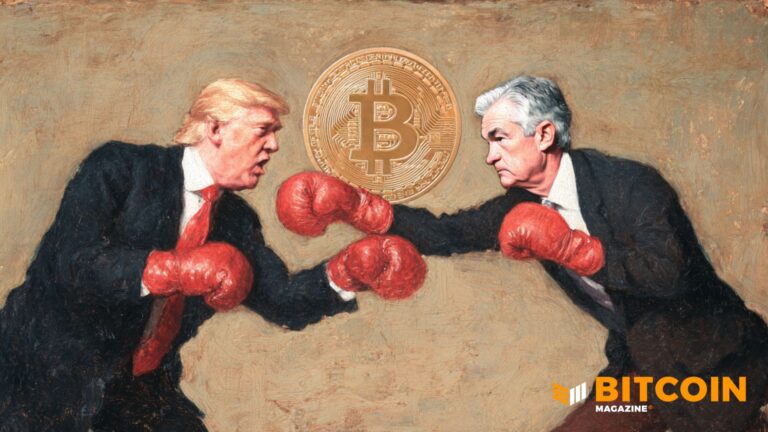
The Department of Justice has opened a criminal investigation into Federal Reserve Chair Jerome Powell — and the bitcoin price is reacting. The investigation is intensifying a months‑long feud between the White House and the U.S. central bank
According to Powell, the DOJ served the Federal Reserve with grand jury subpoenas and threatened a criminal indictment tied to his June 2025 testimony about a $2.5 billion plus renovation of Fed office buildings.
Powell characterized the move as politically motivated, claiming it reflected pressure from the Trump administration to cut interest rates more sharply than the Fed’s data‑dependent stance.
President Donald Trump has publicly criticized Powell’s performance and denied direct involvement in the DOJ action, though he has reiterated his dissatisfaction with the Fed’s monetary policy. The widening dispute has rattled traditional markets, with U.S. stock futures sliding and safe‑haven assets like gold and silver surging to record levels.
This episode represents somewhat of an escalation in institutional tensions. Powell’s critics argue the DOJ’s action is valid and undermines the Federal Reserve’s independence, while defenders of the Fed emphasize the importance of insulating monetary policy from politcs.
Bitcoin price reaction
Bitcoin’s price showed notable movement over the past 48 hours following the news. Over the weekend and into Monday, the bitcoin price was fairly stale but jumped to the $91,000–$92,000 range, at the time of writing.
Bitcoin Magazine Pro data indicates the Bitcoin price reached an intraday high of roughly $92,400 between Sunday and Monday.
Across January 11–12, the Bitcoin price posted intraday gains of more than 0.5% on both days, signaling a gradual upward trend amid growing macroeconomic uncertainty.
Following the news, the bitcoin price appeared to be behaving more like safe-haven assets than typical risk instruments, with Bitcoin’s price moving independently of broader market weakness, suggesting traders were positioning the asset as a hedge amid concerns over the Fed’s independence and U.S. monetary policy shifts.
From a longer-term perspective, Bitcoin remains well below its record highs above $126,000 reached in early October 2025, having retraced significantly in recent months.
During the first week of January 2026, BTC mostly traded between $88,000 and $94,000, marking a consolidation range following late‑2025 weakness.
Where does the bitcoin price go from here?
Fresh Bitcoin Magazine analysis shows that Bitcoin’s price faced resistance at $94,000 last week, failing to sustain gains and closing at $90,891. Sunday’s doji candle signals indecision and a potential bearish reversal. Bulls appear weak, lacking the momentum to break through resistance, while bears have gained a slight edge heading into this week.
Key support levels are now at $87,000 and $84,000. Bears will attempt to push the Bitcoin price below $87,000, testing $84,000, and a break below could accelerate a decline toward the low $70,000 range.
Bulls may seek strength around the 0.618 Fibonacci retracement at $58,000 if supports fail. Resistance remains at $91,400 short-term and $94,000 long-term, with higher zones at $98,000–$103,500 and $106,000–$109,000.
This week, bears may pressure Bitcoin toward $87,000, while bulls will fight to maintain this support. A daily close below $87,000 would endanger $84,000 support, requiring significant buying to hold.
Looking ahead, price may remain range-bound between $84,000 and $94,000, with neither bulls nor bears in firm control. A close above $94,000 could trigger upward momentum, while a close below $84,000 could signal a deeper correction.
Overall, market sentiment leans bearish, with volatility likely in the near term, according to analysts.
The Bitcoin price right now is $91,749, with a 24-hour trading volume of 48 B. BTC is 1% in the last 24 hours. It is currently -1% from its 7-day all-time high of $92,356, and 2% from its 7-day all-time low of $90,129.
BTC has a circulating supply of 19,975,018 BTC and a max supply of 21,000,000 BTC. The global Bitcoin market cap today is $1,832,317,782,220, a 1% change from 24 hours ago.
Crypto Market Structure Bill Heads to Key Senate Votes This Week
Two Senate committees are set to mark up competing crypto bills that would clarify SEC and CFTC oversight.
Momentum is building in Washington around legislation on crypto market structure, as two U.S. Senate committees prepare for votes this week that could mark a pivotal moment for crypto regulation.
The Senate Agriculture Committee and the Senate Banking Committee are expected to hold markup hearings on Jan. 15, during which lawmakers can amend the bills and vote on whether to advance them.
The legislation aims to clarify how crypto markets are regulated in the U.S., including how oversight would be split between the Commodity Futures Trading Commission (CFTC) and the Securities and Exchange Commission (SEC).
“This is an important step for the crypto industry to show bipartisan support for reform legislation, but the text of the final bill will be key,” Eli Cohen, Chief Legal Officer at Centrifuge, told The Defiant. “Will the bill ban third-party yield on stablecoins? If so, it would likely be better for the market if it fails.”
Cohen added that if the bill fails in either committee, market structure legislation is “likely to be dead for this session.” If the markups are successful, however, the two bills would be unified into a single text for a full Senate vote.
Some issues, including how yield-bearing stablecoins should be treated, are expected to be debated during the hearings, experts told The Defiant.
“Stablecoins that pay interest could be eliminated if Congress closes the current loophole preventing them from doing so,” Maghnus Mareneck, CEO and co-founder of Cosmos Labs, told The Defiant. “Crypto exchanges might be less favored in legislation over banks to operate, and privacy protocols will face more pressure with increased tracking activity.”
Mareneck noted that on the registration and licensing front, digital commodity exchanges, brokers and dealers would need to register with the CFTC, follow basic trade monitoring and reporting rules, and keep customer funds segregated – a requirement meant to prevent the kind of commingling seen in failures like FTX.
“Some areas remain unaffected, or slightly on the upwards trend like Layer 1 and infrastructure protocols, who will benefit from the demand driven by new TradFi adoption, but [it] will reshape competitive dynamics across the industry,” he added.
Hedy Wang, CEO and co-founder of Block Street, said that while the proposed rules would increase compliance burdens, they would also provide greater certainty. “[It may mean] more paperwork, reporting, risk controls, but it also gives legit projects confidence they’re not going to get reprimanded later.”
Wang also noted that there is a major debate over whether stricter rules will help or hinder innovation, particularly in decentralized finance (DeFi). “Personally, I think sensible clarity helps more than it hurts, because uncertainty has been the real limiting factor,” she said.
Bakkt to Acquire Distributed Technologies Research in Stock-Based Transaction
Bakkt Holdings Inc. has agreed to acquire Distributed Technologies Research Ltd. (DTR) in a stock-based transaction aimed at expanding its stablecoin settlement and programmable payments capabilities. Bakkt’s Board Approves DTR Acquisition After Special Committee Review Under the definitive agreement, Bakkt Holdings Inc. will issue Class A common stock equal to 31.5% of the “Bakkt Share […]
How PSPs and acquirers are accelerating global merchant growth

- What do global merchants expect from their PSP, acquirer and fintech partners?
- Which local or alternative payment methods are most in demand?
- What are the key challenges around market penetration?
- How can payments orchestration, data intelligence, and platform connectivity drive conversion and customer trust?
For payment service providers (PSPs), acquirers and fintechs, helping merchants expand into new markets is one of the most powerful growth strategies. But success requires more than transaction processing – it demands a connected ecosystem that simplifies complexity and accelerates market entry.
By offering the right mix of local, global and alternative payment methods – combined with plug-ins to leading e-commerce platforms and integrated technology ecosystems – PSPs can create a frictionless experience for merchants and their customers. From traditional payments to stablecoins, global merchants need partners who deliver flexibility, scalability, and innovation.
Sign up for this Finextra webinar, hosted in association with ACI Worldwide, to hear our panel of experts explore how PSPs are helping global merchants meet their growth ambitions.
Iran’s Rial Just Collapsed. Is It Time For Bitcoin?
Iran’s national currency, the rial, has completely collapsed against the U.S. dollar as the country’s economic crisis worsens. The value of one rial is now worth $0.00 right now.
On the open market, one U.S. dollar now trades for roughly 1.4 million rials, a collapse that has erased decades of purchasing power and fueled widespread unrest.
The currency’s plunge isn’t new, but the pace of decline in 2025 and early 2026 has been dramatic. Sanctions remain severe, oil revenues have shrunk, and political instability has driven investors and ordinary Iranians to seek alternatives to the rial and even to the U.S. dollar.
Inflation is soaring. Prices on food, medicine and basic goods have jumped sharply, forcing many families to spend a larger share of income just to survive. The official inflation rate climbed above 42% late last year, though actual costs for staples may be higher at this point.
The economic strain has spilled into the streets. Bazaar merchants and students have taken part in protests across cities from Tehran to Isfahan and Shiraz, condemning both economic mismanagement and political repression.
In the capital of Tehran, traditional supporters of the theocratic government have openly turned against clerical leadership as conditions worsen.
These protests have led Iran to impose telecom blackouts and jam satellite services, prompting citizens to turn to offline communication tools. Bitcoin focused apps like Bitchat and Noghteha enable secure messaging via Bluetooth and mesh networks without internet access, with Noghteha specifically adapted for Iranian users.
Iran needs Bitcoin
Against this backdrop, Bitcoin’s profile in Iran has quietly risen. Long before the latest collapse, crypto adoption in the Middle East and North Africa was accelerating, partly as a hedge against unstable local currencies and restrictive financial systems.
In the past weeks, reports, mainly those from blockchain analysis company Chainalysis, have highlighted Bitcoin and crypto’s role in the unrest. State actors and private citizens alike have moved value through crypto channels, both to preserve savings and to evade the limitations of the rial and sanctioned banking system.
Chainalysis data shows Iranian‑linked services moved more than $4 billion out in 2024, a jump of about 70% year over year. Iranian centralized exchanges swelled with users looking to swap rials for any asset that holds value beyond the border
Industry voices are framing Bitcoin as more than a financial curiosity. Some analysts and executives point to Bitcoin as an “exit option” for Iranians who see the rial’s collapse as a failure of traditional money. These narratives emphasize Bitcoin’s fixed supply and global liquidity as shields against inflationary policies and external pressure.
Even so, obstacles remain. Iran’s government has maintained strict controls on digital finance, cracking down on unregistered mining and monitoring crypto platforms. Official policies often contradict private behavior, creating legal uncertainty for Iranians trying to use crypto as a safe haven.
It’s times like these that point to why we need bitcoin as a race. Bitcoin stands out as the tool it was created to be: resilient, borderless, free and censorship-resistant.