
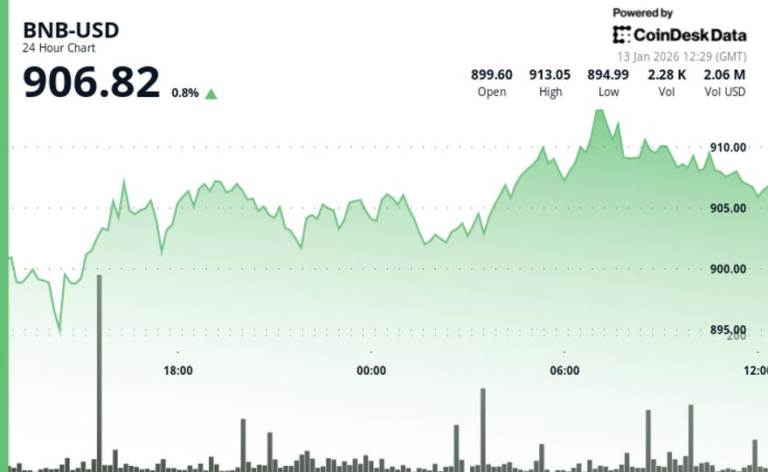
The Fermi hard fork upgrade has improved BNB Smart Chain’s throughput and finality, and Grayscale has filed for a BNB ETF.
Spark Explained Like You’re Five

Some of you may remember an article I published years ago, Understanding Lightning Network Using an Abacus, which I wrote after it became clear to me that many people didn’t fully understand how Lightning works. At the time, my goal wasn’t to explain Lightning’s cryptography or implementation details, but to demystify the core idea behind payment channels. I used the analogy of the abacus to focus on the concept rather than the mechanics. It worked extremely well and people later adopted the abacus analogy to explain Lightning to noobs.
Lately, I’ve been feeling a strong sense of déjà vu.
When discussing Spark, I notice a similar pattern. Some know to say “statechain”, but for most, that’s where the understanding ends. And as with Lightning back then, the problem isn’t a lack of intelligence or effort, it’s simply that the underlying mental model isn’t clear. So I’ll try the same approach again: explain how Spark works conceptually, without getting into cryptographic terminology.
At its core, Spark allows users to send and receive bitcoin without broadcasting on-chain transactions. The bitcoin doesn’t move on-chain when ownership changes. Instead, what changes is who can jointly authorize their spend. This joint authorization is shared between the user and a group of operators called a Spark Entity (SE).
To explain how this works, imagine that spending a given set of bitcoin on Spark requires completing a simple two-piece puzzle:
- One piece of the puzzle is held by the user.
- The other piece is held by the SE.
Only when both matching pieces come together can the bitcoin be spent. A different set of bitcoin will require the completion of a different puzzle.
Now let’s walk through what happens when ownership changes.
Initially, Alice holds a puzzle piece that matches the piece held by the SE. She can spend her bitcoins by combining the pieces and completing the puzzle. When Alice wants to send her bitcoins to Bob, she allows Bob to create a new puzzle together with the SE. Importantly, the puzzle itself doesn’t change: the old and new puzzle have the same shape, but the pieces that compose it change. The new puzzle is designated for Bob: one side is associated with Bob and the other with the SE. From that point on, only Bob’s piece matches the SE’s piece. Alice may still retain her old puzzle piece, but it’s now useless. Since the SE destroyed its matching piece, Alice’s piece no longer fits any other piece and cannot be used to spend the bitcoin. Ownership has effectively moved to Bob, even though the bitcoin in question never moved on-chain.
Bob can later repeat the same process to send the same set of bitcoin to Carol and so on. Each transfer works by replacing the puzzle pieces, not by moving the funds on-chain.
At this point, a question naturally arises: what if the SE simply doesn’t discard its old puzzle piece? In that case, the SE could collude with the previous owner, Alice, and spend Bob’s bitcoin. We need to trust the SE that, when ownership moved from Alice to Bob, it also destroyed its piece of the puzzle. However, it’s important to understand that an SE is not a single party. It consists of a group of operators, and the SE’s side of the puzzle is never held by one operator alone. Replacing the puzzle requires cooperation among multiple operators. No single party can secretly keep an old puzzle active or recreate it later. It’s enough for one operator to act honestly during a transfer to prevent an old puzzle from ever being reactivated.

The key idea is simple: Spark doesn’t move bitcoin on-chain between users. It replaces who holds the valid authorization to spend them. The on-chain bitcoin doesn’t move. What changes is which two puzzle pieces fit together.
To keep this explanation focused, I intentionally didn’t get into Spark’s unilateral exit mechanism. It’s an important part of Spark’s security model, but it would distract from the core idea I want to convey here. What matters is that Spark is not a system where users are permanently dependent on the SE. While everyday transfers rely on joint authorization, Spark also provides users with a way to spend their funds on-chain without requiring the cooperation of the SE. That escape hatch exists by design, it’s just outside the scope of this explanation.
Optalitix partners with Dutch MGA Intermont to drive its digital transformation

London, UK – 13 January 2026 – Leading underwriting and pricing Insurtech, Optalitix, has announced a strategic partnership with Intermont, a Dutch MGA and part of the Acrisure group, to accelerate its digital transformation and establish a flagship Optalitix use case in the Netherlands.
The partnership will upgrade Intermont’s core pricing and underwriting operations while creating a strong foundation for Optalitix’s expansion into the Dutch market.
As part of the project, Intermont is implementing Optalitix Quote and Optalitix Models to transform existing Excel-based pricing and underwriting models into cloud-based, end-to-end pricing and underwriting systems. The project will begin in Q1 2026, with full go-live planned in Q2/Q3 2026.
The platform will replace manual, fragmented workflows with a fully digital, integrated process. This includes centralised model management, automated workflows, faster quote delivery, reduced human error, and real-time portfolio data capture to improve risk selection and decision-making.
Dino Mantovani, Enterprise Sales Executive at Optalitix, said: “This partnership with Intermont is a landmark moment for Optalitix in the Netherlands. Intermont will benefit from increased agility and flexibility without the need for costly, bespoke system builds, while gaining the scalability required to expand across new products, regions, and growing business volumes. The partnership will also accelerate speed-to-market and significantly improve operational efficiency, strengthening Intermont’s competitive position.”
Jeroen Baart, Managing Director at Intermont, said: “By working with Optalitix we are improving our commercial underwriting and strengthening how we present our portfolio to capacity providers. The platform helps us demonstrate control, transparency, and granular insight in our book of business.”
Pascal Durant, Head of Business Development & Underwriting Director Casualty & Marine at Intermont, added: “The partnership with Optalitix enables us to take the next step towards becoming a data-driven MGA. It allows us to analyse and process data more efficiently to develop stronger underwriting models and propositions.”
Ognjen Jovanovic, Operations Director at Intermont, said: “Optalitix understands how an MGA works in practice. This partnership is about giving our brokers a smoother experience, our underwriters better tools, and our carriers a deeper, data-driven view of the portfolio.”
Intermont is a Dutch MGA managing delegated authority for multiple insurers and writing a commercial portfolio of over €120 million. It specialises in tailored insurance solutions for public and institutional clients and manages more than 200 public tenders each year.
Credit unions reject stablecoin rewards, bitcoin traders look to inflation data: Crypto Daybook Americas

Your day-ahead look for Jan. 13, 2026
AllDomains Launches .com on Solana – onboarding the internet’s largest namespace into Web3

United States, 12/1/2026 — Following the successful launch of .id on Solana in 2024, AllDomains is now expanding its hybrid domain architecture with the introduction of .com on-chain — bringing the world’s most recognisable Web2 TLD into a Web3-enabled environment.
This next step transforms .com into a fully interoperable identity primitive, combining:
Web2 nameserver compatibility (ICANN-rooted, globally resolvable domains)
Web3 ownership, portability, and programmability
Solana’s fast, affordable, and composable infrastructure
The result is the first at-scale bridge between the internet’s dominant namespace and the next generation of on-chain identity.
Why This Is Huge for the Future of Domains in Web3
.com is the largest digital namespace on Earth
Over 160M .com domains exist today. No Web3 TLD even comes close.
By bringing .com on-chain, AllDomains is not creating a new niche — it’s onboarding the original Internet RWA and a secondary market with $2 billion in annual trade.
This positions AllDomains as the first project capable of introducing millions of users to on-chain identity without requiring them to “switch” to Web3 domains.
Why Domain Owners Should Bring Their .com On-Chain
For existing .com owners, bringing a domain on-chain unlocks new functionality without disrupting anything that already works. Websites, DNS, hosting, and email remain unchanged, while ownership gains a secure, verifiable on-chain layer on Solana. This enables instant transfers, transparent ownership records, and access to global marketplaces—eliminating the delays, escrow costs, and friction associated with traditional domain transactions. Beyond trading, on-chain .com domains can also function as portable digital identities, supporting wallet-based login, payments, and profile discovery across modern applications. The result is a future-proof upgrade to a domain owners already trust, not a replacement.
“AllDomains has consistently shipped product and pushed Web3 domains forward,” said Tom Osborne, Head of Marketing at AllDomains. “We’re excited to introduce .com into our existing hybrid infrastructure, which has already been adopted and supported by the Solana community. With this addition, we’re expanding into one of the most established and valuable digital asset classes in the world — bringing .com domains onto the new internet.”
Summary
AllDomains’ launch of .com on Solana is a watershed moment for Web3 identity:
The world’s most valuable namespace
Fully interoperable across Web2 and Web3
Backed by Solana’s performance and composability
Usable by businesses, developers, creators, and everyday users
This is not just another TLD launch — it’s the unification of the internet’s largest naming system with the next generation of digital identity.
It is the biggest Web3 domain milestone to date.
To buy a hybrid .com domain visit the AllDomains website https://alldomains.id/domains/com
About AllDomains
AllDomains is one of the most advanced and widely adopted domain and identity platforms in Web3, already partnered with some of the ecosystem’s biggest brands, powering Solana Mobile’s Seeker IDs and delivering TLD partnerships with leading communities such as BONK, MonkeDAO, SuperTeam, and many more. Beyond scale, AllDomains continues to push the domain space forward through constant innovation, pioneering hybrid Web2/Web3 TLDs with on-chain .id and now .com, expanding domain utility beyond crypto-native namespaces. The protocol today supports all major SVM blockchains and has recently deployed EVM capabilities, positioning AllDomains as a truly cross-ecosystem identity layer bridging traditional internet domains with next-generation on-chain ownership and programmability.
Media Contact
Tom Osborne
Email: tom@alldomains.id
Website: www.alldomains.id
Source: AllDomains
Submit Your Blockchain and Crypto Press Release here.
Disclaimer: This is a press release, provided by the company/ company representative. AlexaBlockchain does not endorse, guarantee, or accept responsibility for the content, accuracy, quality, advertising, products, or other materials presented in this publication. Readers are advised to conduct their own due diligence before taking any actions related to the company mentioned herein. AlexaBlockchain expressly disclaims any liability for damages or losses, whether direct or indirect, arising from or related to the use of or reliance on any content, goods, or services referenced in this press release.
Another Dogecoin ETF Just Dropped: When Will It Begin Trading?

Trusted Editorial content, reviewed by leading industry experts and seasoned editors. Ad Disclosure
21Shares is set to launch its Dogecoin ETF after gaining approval from the U.S. Securities and Exchange Commission (SEC) and Nasdaq. This is expected to provide some bullish momentum for the meme coin even as DOGE funds see muted interest from institutional investors.
21Shares To Launch Dogecoin ETF After Filing Final Prospectus
Crypto ETF issuer 21Shares has filed the prospectus for its Dogecoin ETF, signaling plans to launch this fund this week. However, the asset manager has yet to announce a specific launch date. This will be the third spot DOGE fund to launch after Grayscale and Bitwise’s DOGE ETF, which launched last year.
21Shares Dogecoin ETF will launch on the Nasdaq under the ticker ‘TDOG.’ Crypto exchange Coinbase is listed among the Trust’s custodians alongside BitGo and Anchorage. Meanwhile, the fund will offer in-kind creations and redemptions, similar to other existing spot crypto ETFs. 21shares will charge a 0.50% management fee for the fund.
The Dogecoin ETF will be 21Shares’ fifth spot U.S. crypto ETF, as the asset manager already offers Bitcoin, Ethereum, Solana, and XRP ETFs. The DOGE fund’s launch is bullish for the foremost meme coin as it could attract more institutional flows into its ecosystem. However, it is worth noting that the other existing spot U.S. DOGE funds have only seen moderate demand so far.
SoSoValue data shows that the inflows into these Dogecoin ETFs have been minimal, with these funds currently boasting net assets of just under $10 million, which is less than 1% of the meme coin’s market cap. They have also mostly recorded zero-flow days since launching, with most inflow days below $1 million. However, it is worth noting that these funds saw greater demand at the start of the year, when DOGE rose to around $0.15. As such, they could attract more inflows as the market recovers.
A Generational Buying Opportunity
Crypto analyst Hokage described the current DOGE price level as a generational buying opportunity amid the imminent launch of the Dogecoin ETF. This came as the analyst remarked that while the short-term is extremely hard to figure out, the long-term support will eventually get hit. His accompanying chart showed that the leading meme coin could rally to as high as $1.6 in the long term.
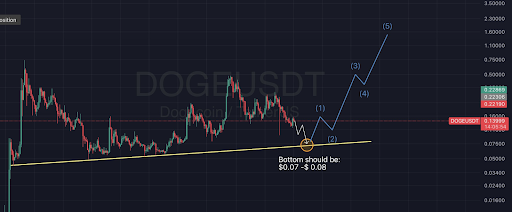
The crypto analyst highlighted the potential integration of Dogecoin into Elon Musk’s X as one catalyst that could spark this run. He opined that the meme coin will eventually get integrated into X as a payment and tips feature. Hokage added that it is just a matter of time and not if.
Related Reading: Dogecoin Is Breakout Ready: Analyst Shows Major Target For The Meme Coin King
At the time of writing, the Dogecoin price is trading at around $0.137, down over 2% in the last 24 hours, according to data from CoinMarketCap.
Featured image from Pngtree, chart from Tradingview.com

Editorial Process for bitcoinist is centered on delivering thoroughly researched, accurate, and unbiased content. We uphold strict sourcing standards, and each page undergoes diligent review by our team of top technology experts and seasoned editors. This process ensures the integrity, relevance, and value of our content for our readers.
Kraken-backed SPAC files for $250 million initial public offering

The SPAC will focus on cryptocurrency ecosystem businesses, expanding Kraken’s presence in public markets.
Altcoins, led by dash, heat up as bitcoin nears breakout: Crypto Markets Today

Bitcoin pushed above $92,000 with rising volume; altcoins outperformed as traders rotated into privacy coins and memecoins.
Best Technology Stack for Lead Generation and Sales Automation

A Clear, Practical Blueprint for Predictable Growth
Lead generation and sales automation are no longer optional for modern businesses. Teams that rely on manual follow ups, scattered tools, and disconnected data often struggle to grow. The right technology stack brings structure to this chaos. It captures leads, qualifies them, and moves them through the sales process with speed and consistency. When done right, the system feels simple. It works quietly in the background while sales teams focus on real conversations and closing deals.
A strong stack starts with clarity. Businesses must know where leads come from, how they behave, and when a human should step in. This usually begins with ads, content, referrals, or inbound calls. Those leads then move through landing pages, forms, or call tracking tools. Every action should be recorded in one central place. Companies that centralize lead data gain instant visibility into what works and what does not. Industry studies show that companies with aligned sales and marketing systems close more deals and shorten their sales cycles.
Automation adds speed and reliability. Responding to a lead within minutes instead of hours can increase conversions by over 40 percent. Automation tools make this possible without hiring more staff. Emails, texts, and scheduling links can run automatically while still feeling personal. The result is a smoother experience for leads and less stress for sales teams. A strong stack turns lead generation from guesswork into a repeatable growth engine.
Core Components of a High Performing Sales Automation Stack
Every effective sales automation system starts with a customer relationship management platform. A CRM stores lead details, tracks interactions, and shows exactly where each prospect sits in the pipeline. Without a CRM, automation breaks quickly. All other tools should connect back to this central system. Marketing automation tools then handle follow ups like emails, text messages, and reminders. These systems ensure that no lead is forgotten and every prospect receives timely communication.
Communication tools are another key layer. Email is still essential, but text messaging and voice systems now play a major role in response rates. Many leads prefer quick texts or calls instead of long email threads. Automated scheduling tools remove friction by allowing prospects to book meetings instantly. Businesses that add scheduling often see a 20 to 30 percent increase in booked calls. When communication tools work together, the sales journey feels smooth and respectful.
Ralph Pieczonka, Founder, Simple Is Good Inc, explains:
“I focus on building systems that actually replace manual work. When we added voice AI to qualify leads and book appointments, one client doubled conversions without hiring more staff. I believe automation should work nonstop in the background. When complexity disappears, teams can focus on results instead of processes.”
Analytics and reporting tools complete the core stack. These tools show which campaigns perform best and where leads drop off. With clear data, teams can adjust messaging and timing quickly. Over time, small improvements compound into major gains. The best stacks are reviewed often and refined with purpose.
Turning Lead Data Into Better Sales Conversations
A strong technology stack does more than automate tasks. It improves the quality of sales conversations. When sales teams see a full lead history, they enter calls prepared. They know what content the lead viewed, which messages they opened, and what problems they are trying to solve. This context changes the tone of the conversation. Instead of pitching, sales teams guide prospects toward solutions. This builds trust and speeds up decisions.
Content plays a major role in this process. Educational blogs, guides, and comparison tools attract informed leads. When content tools connect directly to the CRM, leads are scored based on behavior. High intent prospects rise to the top of the list. Sales teams spend time where it matters most. Companies that align content with automation often report higher close rates and lower acquisition costs.
Branden Shortt, Founder, Cellphones.ca, shares:
“I have spent years watching people struggle with confusing choices. We built tools that explain options clearly and guide users step by step. Once we aligned content with our lead systems, completed applications rose by more than 35 percent. Clear information builds confidence, and confident buyers move faster.”
Automation also supports long term nurturing. Not every lead is ready to buy right away. Smart systems use timed follow ups and helpful content to stay relevant without being pushy. Over time, trust grows. When the lead is ready, the system routes them to the right person at the right moment. This balance between automation and human touch defines high performing sales teams.
Scaling Revenue With Content and Infrastructure
As lead volume grows, content and infrastructure become even more important. Content engines help teams publish consistently without burning out writers or marketers. When content creation connects directly to sales data, teams know which topics drive revenue instead of just traffic. This turns content into a measurable sales asset.
Daniel Hebert, Founder, Oleno by SalesMVP Lab Inc, explains:
“I built Oleno to remove guesswork from content and growth. When we linked autonomous content directly to pipeline data, one B2B team grew inbound leads by 48 percent in ninety days. I love seeing content drive real revenue. When writing and sales data connect, scaling feels controlled instead of chaotic.”
Behind the scenes, infrastructure holds everything together. As companies grow, disconnected systems create reporting issues and wasted time. Integrated backend systems ensure sales data aligns with finance and operations. This alignment improves forecasting and decision making. Businesses with clean infrastructure move faster and avoid costly rebuilds later.
Karl Threadgold, Managing Director, Threadgold Consulting, says:
“We help businesses unify sales, finance, and operations into one system. I have seen teams save hundreds of hours each year once their data flows correctly. When leaders trust their numbers, decisions improve across the board. A strong backend turns automation into a long term advantage.”
Conclusion
The best technology stack for lead generation and sales automation is focused, connected, and built for growth. It captures leads clearly, responds quickly, and supports strong human conversations. Automation handles repetitive work while people build relationships. When systems stay simple and data stays visible, revenue becomes predictable.
The key takeaway is precision. Choose tools that work well together, remove anything that adds friction, and review the stack often. A well designed system does not just support sales. It becomes a strategic asset that drives clarity, confidence, and long term business success.
TheCharlatan Joins The Inner Circle

Trusted Editorial content, reviewed by leading industry experts and seasoned editors. Ad Disclosure
Bitcoin Core’s maintainer set has expanded for the first time in nearly three years, with pseudonymous contributor TheCharlatan (also known online as “sedited”) added to the project’s small group of “Trusted Keys” holders, an operational role that carries commit authority to Bitcoin Core’s master branch.
The move matters because it touches the narrowest choke point in Bitcoin’s most widely used node implementation: who can cryptographically sign and merge the code that ultimately ships to users. TheCharlatan was added on January 8, 2026, according to the project’s trusted-keys history on GitHub, which shows a new entry committed under the “sedited” account.
Bitcoin Core developers sign software updates with their PGP keys, but only a small subset of keys are recognized for commit access in the project’s verification tooling, a practical constraint designed to keep release signing and merge authority legible, auditable, and socially accountable.
With TheCharlatan’s addition, the Trusted Keys group now includes Marco Falke, Gloria Zhao, Ryan Ofsky, Hennadii Stepanov, Ava Chow, and TheCharlatan. The prior addition to the trusted-keys list was in May 2023, when Ofsky was added.
Protos reported the promotion as having broad support among Core contributors, citing a group chat in which at least 20 members agreed and no one objected to the nomination language. The nomination framed the decision in terms of review quality and judgment about what should ship. “He is a reliable reviewer… worked extensively in critical areas. He thinks carefully about what we ship… . He understands the technical consensus process well.”
Who Is The New Bitcoin Core Key Holder?
Protos identified TheCharlatan as a University of Zurich computer science graduate from South Africa, with a focus on reproducibility and Bitcoin Core’s validation logic.
In practice, that points to two areas that Core contributors tend to treat as release-critical. First, reproducible builds aim to make the path from source to binaries independently verifiable, an important property for a security-sensitive client where users want assurance they’re running what maintainers reviewed.
Second, Protos said TheCharlatan has worked on validation logic in ways that build on Carl Dong’s kernel library effort, separating validating from non-validating logic used to determine whether a block extends the best-work chain.
While Bitcoin’s development process is intentionally consensus-driven and diffuse, commit keys remain a concrete locus of responsibility. Protos situated the current model historically, noting that early Bitcoin development concentrated commit access in Satoshi Nakamoto’s hands before moving to a succession of maintainers. “Only Satoshi Nakamoto possessed Commit-level access… . Nakamoto first passed his key privilege to Gavin Andresen…”
Protos also referenced the later push to decentralize commit-key control into a group under Wladimir van der Laan, in the shadow of legal threats tied to Craig Wright’s claims, part of a broader effort to avoid any single maintainer becoming a practical or legal single point of failure.
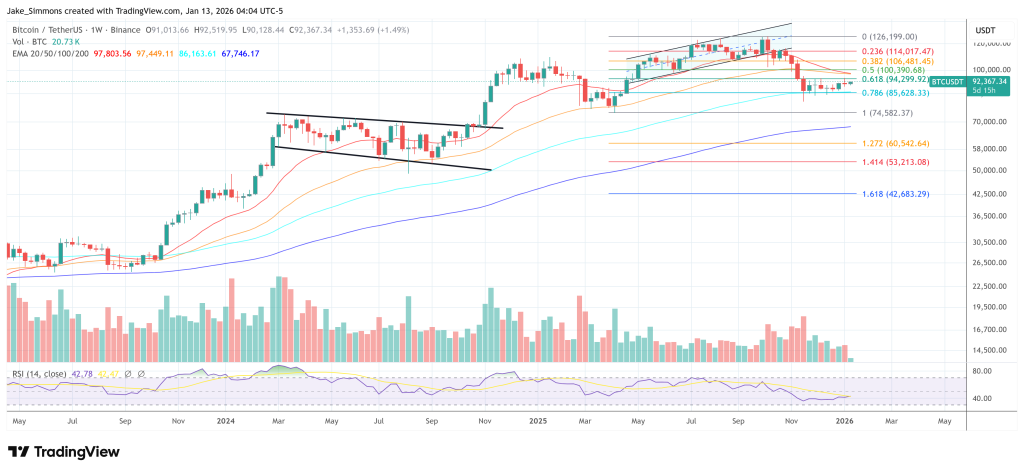
At press time, BTC traded at $92,367.
Featured image created with DALL.E, chart from TradingView.com
Editorial Process for bitcoinist is centered on delivering thoroughly researched, accurate, and unbiased content. We uphold strict sourcing standards, and each page undergoes diligent review by our team of top technology experts and seasoned editors. This process ensures the integrity, relevance, and value of our content for our readers.