
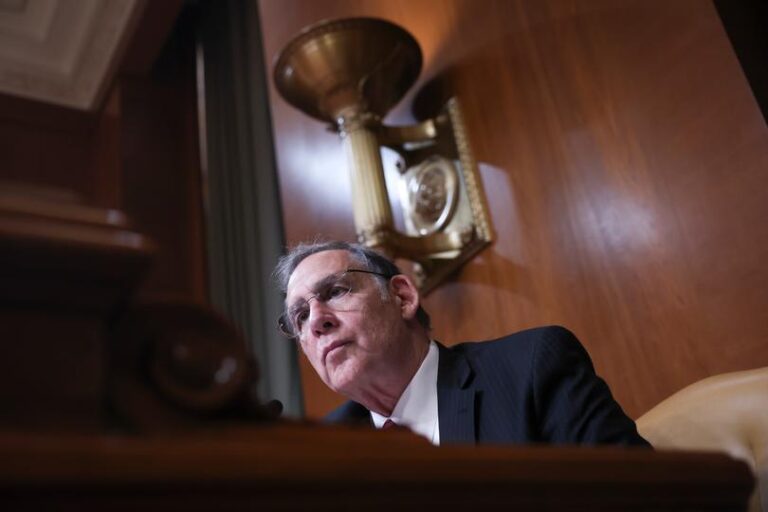
The Senate Agriculture Committee said Tuesday its postponed crypto market structure bill would drop on Jan. 21 and be debated six days later.
Strive tumbles 12% as reverse stock split stumps investors despite Semler acquisition

Upon completion, the combined firm would hold nearly 13,000 BTC, surpassing the holdings of Tesla and Trump Media & Technology Group.
Zodia Custody Becomes First Global Custodian to Support Australia’s AUDM Stablecoin

Zodia Custody, an institution-first digital asset custodian, will provide custody support for AUDM, an Australian dollar-backed stablecoin issued by Macropod.
The move makes Zodia the first global custodian to support the asset, signaling a significant step in the maturation of Australia’s digital asset ecosystem. The partnership enables institutional clients to access AUDM within Zodia’s cold-storage infrastructure, ensuring the asset meets rigorous security and regulatory standards required for large-scale adoption.
Unlocking institutional access

AUDM is issued by Macropod, which holds the distinction of being Australia’s first licensed stablecoin issuer. The stablecoin is designed as a programmable settlement asset capable of powering tokenised payments, on-chain financial instruments, and cross-border transactions.
By integrating AUDM, Zodia Custody aims to provide institutions with the infrastructure necessary to participate in programmable finance. This includes enabling real-time settlement and capital-efficient treasury operations.
Ryan Hodges, managing director, Australia at Zodia Custody, commented: “Our clients demand secure access to the most significant innovations in digital assets, and our support for AUDM delivers directly on that promise. By becoming the first custodian to support Australia’s first regulated stablecoin, we are providing institutions with the infrastructure they need to confidently participate in the evolution of programmable finance.”
A pivotal year for stablecoins

The announcement describes 2025 as a “pivotal year” for stablecoins in the region. Macropod recently secured an Australian Financial Services License (AFSL) and announced its first exchange listing on Independent Reserve following its participation in the Reserve Bank of Australia’s (RBA) Project Acacia.
Drew Bradford, CEO of Macropod/Catena Digital, highlighted this connection: “We’re pleased to see AUDM supported by Zodia Custody, following the successful development of use cases through the Reserve Bank of Australia’s Project Acacia. This integration reinforces the importance of institutional-grade custody especially as stablecoins move into mainstream financial infrastructure.”
Zodia Custody is backed by major financial institutions including Standard Chartered, Northern Trust, SBI Holdings, National Australia Bank, and Emirates NBD. The custodian is registered with multiple global regulators, including the UK’s FCA and Ireland’s Central Bank, positioning it as a compliant gateway for traditional finance to enter the digital asset space.
Bitcoin Price Roars Past $94,000 As Bulls Claim A Win

Bitcoin price surged above the $94,000 level this afternoon, breaking through a key resistance zone and signaling renewed bullish momentum after weeks of range-bound trading.
At the time of writing, the bitcoin price is trading at $94,435, up roughly 3% over the past 24 hours, according to market data.
The move marks a decisive reclaim of the upper end of January’s consolidation range, with the bitcoin price now sitting effectively flat relative to its seven-day high of $94,040 and roughly 4% above its seven-day low of $90,897.
Trading volume over the past 24 hours totaled approximately $52 billion, reflecting heightened market participation as price pushed higher.
Bitcoin’s total market capitalization rose to $1.88 trillion, also up about 3% on the day, as the asset continues to assert its position as the dominant cryptocurrency.
Bitcoin’s circulating supply currently stands at 19,975,465 BTC, just under the protocol’s hard-capped maximum of 21 million coins.
Is Powell getting pushed out of the Fed?
Over the weekend, the U.S. Department of Justice opened a criminal investigation into Federal Reserve Chair Jerome Powell, a development that rippled through financial markets and coincided with renewed volatility in the bitcoin price.
The probe marks a sharp escalation in a months-long standoff between the White House and the U.S. central bank and its Chair.
Powell disclosed via a social media post that the DOJ served the Federal Reserve with grand jury subpoenas and raised the possibility of criminal charges tied to his June 2025 congressional testimony regarding the more than $2.5 billion renovation of Fed office buildings.
The Fed chair characterized the investigation as politically motivated, arguing it reflects mounting pressure from the Trump administration to push through deeper interest rate cuts rather than maintain the central bank’s data-dependent policy framework.
President Donald Trump has repeatedly criticized Powell’s leadership and the broader Fed monetary policy. Trump has somewhat denied direct involvement in the DOJ action, but he has continued to publicly express frustration with the central bank’s reluctance to ease policy (mainly interest rates) more aggressively.
The widening dispute unsettled traditional markets over the last two days. U.S. stock futures slid, while investors rotated into perceived safe-haven assets, driving gold and silver prices to fresh record highs. Bitcoin, often framed as an alternative hedge against political and monetary uncertainty, is reacting to this tension.
Bitcoin price analysis
Tuesday’s rally follows a period of technical indecision earlier in the week, when bitcoin repeatedly tested resistance near $94,000 but failed to hold above it.
Market structure over the past several weeks had been defined by choppy price action between roughly $84,000 and $94,000, with analysts warning that bulls needed a clean breakout above resistance to regain control.
That breakout now appears to be materializing. A sustained move above a bitcoin price of $94,000 could open the door to higher resistance zones between $98,000 and $103,500, levels that previously capped upside attempts.
Failure to hold above this threshold, however, could see bitcoin slip back into its prior trading range.
The price surge comes amid continued macro uncertainty, with investors closely monitoring inflation trends, interest-rate expectations, and broader political developments tied to monetary policy.
In recent months, bitcoin has increasingly traded in tandem with macro narratives, with some market participants viewing the asset as a hedge against policy instability and long-term currency debasement.
While near-term volatility remains likely, bitcoin’s ability to reclaim and hold the $94,000 level marks a notable shift in market sentiment. Traders and analysts alike are now watching whether bulls can build follow-through and convert former resistance into support in the days ahead.
At the time of writing, the bitcoin price is $94,323.
New NYC Mayor Mamdani Says He Holds No Crypto, Will Not Buy Adams’ Memecoin

New York City Mayor Zohran Mamdani said Monday that he does not own cryptocurrency and has no plans to invest in digital assets, distancing himself from crypto-related initiatives promoted by his predecessor.
Speaking to the press at Samson Stages, Mamdani responded “no” when asked whether he held any cryptocurrency, adding that he also had no interest in buying the NYC Token launched earlier this week by former mayor Eric Adams.
Adams launched a new memecoin, the NYC Token, on Monday in his first major public move since leaving office. He said proceeds from the token would support education initiatives and other social causes. However, the token faced “rug pull” allegations after unverified reports that the team intentionally removed liquidity, causing investors to lose millions of dollars. The details were not publicly known at the time of Mamdani’s remarks.
“Based on the behavior of removing liquidity, it does seem to fit the umbrella term that is ‘rug pulls,’” said Nansen research analyst Nicolai Sondergaard on Adams’ project, adding:
“What they did effectively trapped traders, forcing many to sell at a loss in a lower liquidity environment, and adding liquidity back in does not undo the damage done.”
Mamdani, who campaigned on an affordability message for New York residents, was largely silent on crypto policies ahead of the November election, which he won with 50.8% of the vote. As a member of the New York City Assembly in 2023, he supported a bill to provide stronger consumer protections related to stablecoin issuers.
Related: Is Zohran Mamdani really that bad for New York’s crypto industry?
He faced opposition from many in the crypto industry, including Gemini co-founder Tyler Winklevoss and David Sacks, US President Donald Trump’s AI and crypto czar.
What will happen to crypto in NYC under Mamdani?
Less than two weeks into office, Mamdani used his first address as mayor to say the local government will “deliver an agenda of safety, affordability, and abundance,” and would pursue policies he described as “walking a different path” from previous administrations.
In contrast, before leaving office and amid growing support for Mamdani, Adams said he would advocate for policies and laws favoring the crypto industry. The former mayor is known for accepting his first three paychecks as mayor in Bitcoin (BTC) in 2022 — a campaign promise he later said he didn’t regret.
Magazine: How crypto laws changed in 2025 — and how they’ll change in 2026
Cointelegraph is committed to independent, transparent journalism. This news article is produced in accordance with Cointelegraph’s Editorial Policy and aims to provide accurate and timely information. Readers are encouraged to verify information independently. Read our Editorial Policy https://cointelegraph.com/editorial-policy
XRP Saw 4 Major Developments In One Week, So Why Is The Price Still Falling?

Trusted Editorial content, reviewed by leading industry experts and seasoned editors. Ad Disclosure
XRP has racked up major wins recently, from regulatory breakthroughs to network upgrades, yet its price continues to slide. A crypto analyst has shared insights into why this is happening, outlining several developments this week that would typically act as bullish catalysts for the XRP price, but have so far failed to push the token out of its downtrend and propel its value to new highs.
XRP Sees Four Major Developments In One Week
Despite experiencing four major developments in just one week, the XRP price has shown little reaction. Crypto market expert Chain Cartel has pointed out that while many traders focus on immediate price movements, Ripple Labs, the developer of XRP, is quietly building the infrastructure that could position it as a key system of record for digital settlements.
The analyst suggested that the market overlooks structural developments, underestimating their impact on long-term growth. He highlighted rumors of Ripple’s collaboration with Amazon Web Services (AWS) as one of this week’s major events, noting that the alleged partnership explores the use of Amazon Bedrock AI for the XRP Ledger (XRPL).
With this integration, XRPL system logs that used to take days to process can be analyzed in just minutes. According to Cartel, this is not an “hype AI,” but a development focused on improving security and scalability, and on giving institutions better visibility into XRP.
In his post, Cartel also highlighted Ripple’s regulatory progress in the UK. He announced that the UK subsidiary of the crypto company has not been registered with the Financial Conduct Authority, which is known as one of the world’s strictest financial regulators. He stressed that this approval is a significant milestone for Ripple, boosting its compliance credentials and international credibility.
In addition to achieving even greater regulatory clarity, Cartel highlighted Ripple’s partnership with The Bank of New York Mellon (BNY Mellon) as another key development. BNY Mellon recently launched tokenized deposit services for institutional clients, and Ripple Prime, a digital asset prime brokerage platform created after Ripple acquired Hidden Road, is among the first users. Even more important, the analyst said that BNY Mellon remains the primary reserve custodian for RLUSD, showing a direct integration between traditional banking and digital settlement rails.
Finally, Cartel mentioned the upcoming vote on the CLARITY Act by the US Senate Banking Committee scheduled for January 15. This bill will decide how crypto trading, settlements, and connections to financial systems are regulated in the future. The analyst said that if the bill is passed, it could affect how institutions interact with XRP and the broader crypto market.
Why The XRP Price Is Still In A Downtrend
Despite all these developments and milestones, Cartel noted that XRP’s price has barely moved over the week, still trading around $2.0. The analyst stated that the reason the cryptocurrency keeps moving lower is that it reacts less to hype and more to the completion of key infrastructure.
According to Cartel, these developments are building significant pressure in the market. He described XRP’s situation as a compression before a violent release, suggesting that the cryptocurrency could experience a sharp price rally once the foundational systems are fully in place.
Featured image from Getty Images, chart from Tradingview.com

Editorial Process for bitcoinist is centered on delivering thoroughly researched, accurate, and unbiased content. We uphold strict sourcing standards, and each page undergoes diligent review by our team of top technology experts and seasoned editors. This process ensures the integrity, relevance, and value of our content for our readers.
ETH Tests $3.2K But US Macro And Other Hurdles Remain

Key takeaways:
-
Ether trades near $3,200 as weaker network usage and US economic uncertainty limit its price upside.
-
Layer-2 networks drive most Ethereum activity, but cheaper rival blockchains reduce the chance of Ether reclaiming $4,000 soon.
Ether (ETH) price has repeatedly failed to sustain levels above $3,300 over the past 60 days, leading traders to question whether a durable bullish momentum is still achievable in 2026. Despite the Ethereum network rolling out important upgrades and maintaining its leading position in terms of deposits, investors worry that the chances of reclaiming the $4,000 level remain low.
Ether’s performance since November has closely tracked the broader cryptocurrency market capitalization. As a result, the lack of optimism appears to be driven more by weaker overall decentralized application (DApps) usage than by issues specific to the Ethereum ecosystem. Regardless of whether traders’ concerns stem from broader economic risks, ETH price upside in the short term seems limited.
Ether tracks broader crypto market amid weaker application usage
Irrespective of the factors influencing bullish crypto investors, traders have shown less interest in DApps, as reflected by declining activity on decentralized exchanges (DEX). According to DefiLlama, aggregate DEX volumes over the past two weeks totaled $150.4 billion, down 55% from the $340 billion all-time high recorded in January 2025.

Ethereum 7-day DEX volumes have hung near $9 billion after peaking at $27.8 billion in October 2025. This 65% pullback pushed Ethereum network fees down 87% to $2.6 million, from $21.3 million three months earlier. Even so, the Ethereum ecosystem continues to dominate, holding roughly a 50% share of DEX activity when combining data from Base, Arbitrum, Polygon and other layer-2 solutions.

Ethereum’s lead in total value locked (TVL) is strong evidence of institutional investor preference, even as competitors such as Tron, Solana and BNB Chain generate higher network fees. While some market participants argue that Ethereum has failed to fully monetize its dominance in smart contract deposits, this outcome is largely intentional and stems from its scalability strategy built around rollups.
Related: VanEck says policy clarity could make Q1 a ‘risk-on’ quarter

The number of transactions on Solana exceeds the combined total of its top 10 competitors, highlighting the network’s reliance on intensive validation processes and a semi-centralized development structure led by Solana Labs. According to Nansen data, Ethereum processed 54.4 million transactions over a 30-day period, while its layer-2 network Base recorded more than 600 million transactions over the same timeframe.
Ether’s two-month stretch trading below $3,200 has been particularly challenging for companies that raised debt or equity to build ETH reserves. Bitmine Immersion (BMNR US), for example, currently holds $13.2 billion worth of Ether, while its shares trade at a 9% discount to the value of those holdings, based on CoinGecko data.
It remains unclear what catalyst could shift momentum back in ETH’s favor, especially as rival networks provide comparable DApps and functionality for average users, often with lower friction due to base-layer scalability. Ether’s path back to $4,000 and beyond depends heavily on renewed demand for blockchain applications and broader cryptocurrency risk appetite amid ongoing uncertainty in the US economy.
This article does not contain investment advice or recommendations. Every investment and trading move involves risk, and readers should conduct their own research when making a decision. While we strive to provide accurate and timely information, Cointelegraph does not guarantee the accuracy, completeness, or reliability of any information in this article. This article may contain forward-looking statements that are subject to risks and uncertainties. Cointelegraph will not be liable for any loss or damage arising from your reliance on this information.
Emirates NBD Issues World’s Largest Dual-Tranche Blue-Green Bond by a Financial Institution

Emirates NBD, a prominent banking group in the Middle East, North Africa, and Türkiye (MENAT) region, has completed a record-breaking $1billion sustainable bond issuance. The transaction marks a significant milestone as the largest dual-tranche Blue-Green bond ever issued by a financial institution globally.
The issuance, conducted under the bank’s Euro Medium Term Note (EMTN) Programme, consists of two tranches tailored to specific environmental objectives:
- Blue Tranche: A USD 300million tranche with a 3-year tenor.
- Green Tranche: A USD 700million tranche with a 5-year tenor.
With this deal, Emirates NBD secures its position as a “first mover” in the public markets for Blue Bonds among GCC banking institutions. While First Abu Dhabi Bank (FAB) issued the region’s first Blue Bond by a financial institution in August 2025, that was a smaller private placement. Emirates NBD’s issuance is the first of its kind to be offered publicly in the region.
Financing the blue and green economies
The proceeds from this dual-tranche bond are strategically aligned with the United Nations Sustainable Development Goals (SDGs), specifically SDG 14 (Life Below Water) and SDG 13 (Climate Action).
In accordance with Emirates NBD’s Sustainable Finance Framework—which was updated in November 2025—the capital will be channeled into several key environmental priorities:
- Marine Conservation: Projects aimed at preserving marine ecosystems and ocean health.
- Sustainable Water Projects: Promoting efficient water consumption and sustainable water infrastructure.
- Green Initiatives: Accelerating the regional energy transition and other climate-focused projects.
Global investor confidence and strategic partnerships

The offering saw robust demand from global ESG-focused investors, reflecting strong market confidence in the bank’s credit strength and sustainability roadmap. A notable participant was T. Rowe Price, a global asset manager and leader in blue investments, which subscribed to the Blue tranche.
Ahmed Al Qassim, group head of wholesale banking at Emirates NBD, stated: “We continue to mobilise capital to stimulate and safeguard our region’s environmental priorities… This transaction strengthens our foundational role in executing the UAE’s broader sustainability agenda”.
Vijay Bains, chief sustainability officer at Emirates NBD, added: “Through structuring the transaction under our EMTN Programme with clear use-of-proceeds, rigorous governance, and alignment to the ICMA principles, we ensure the Bonds’ ultimate transparency and impact”.
The bonds are dual-listed on Euronext Dublin and Nasdaq Dubai, following a joint lead management effort by Emirates NBD Capital, Citibank, HSBC, Mizuho, Standard Chartered, and Société Générale.
Crypto Privacy Coins Are Going Nuts: Will It Last?

In brief
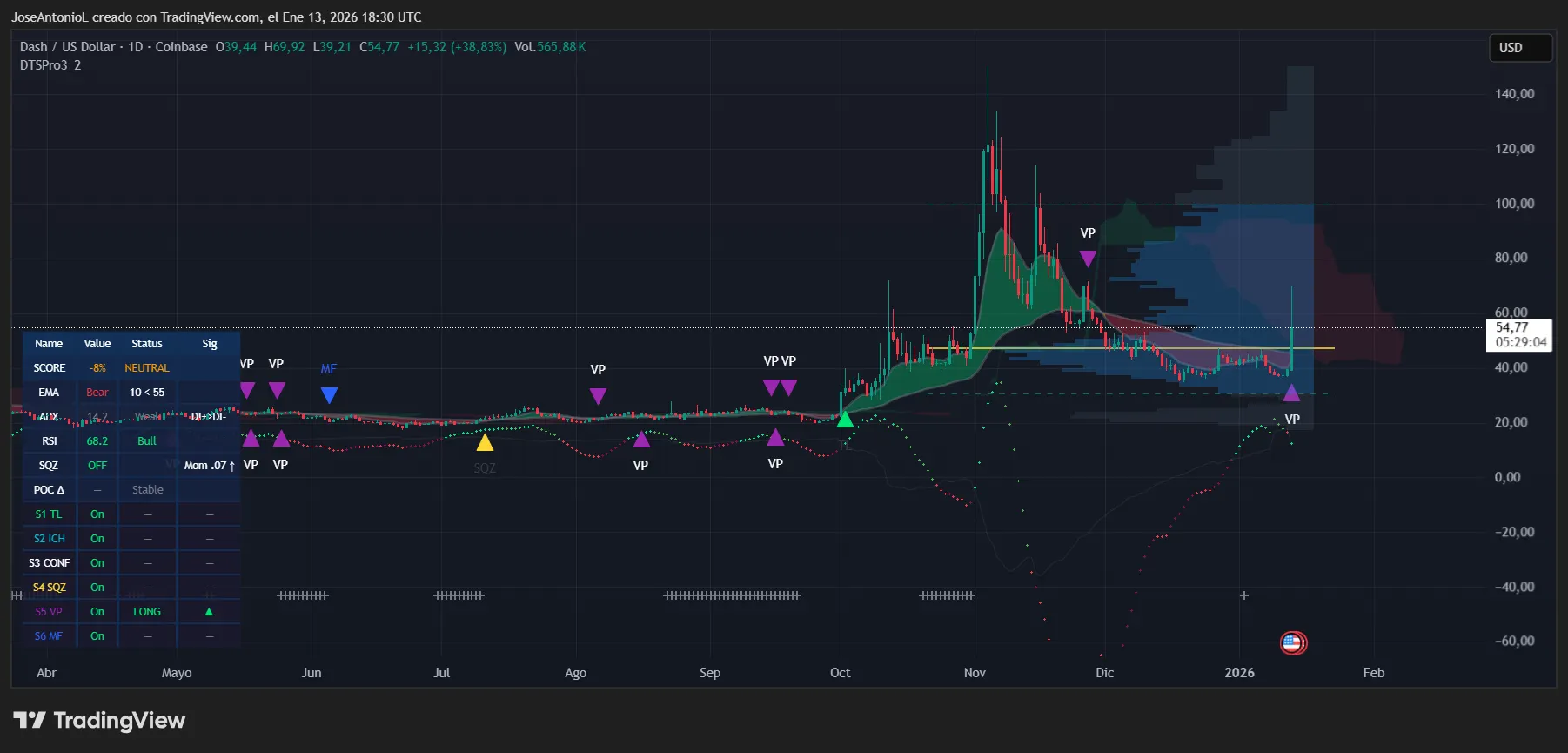
Dash: The short squeeze special
We’re thrilled to be supported by Alchemy Pay!
Thanks for the partnership, this will help us get Dash in the hands of even more people around the world🤝 https://t.co/Ke9MkOady7
— Dash (@Dashpay) January 13, 2026
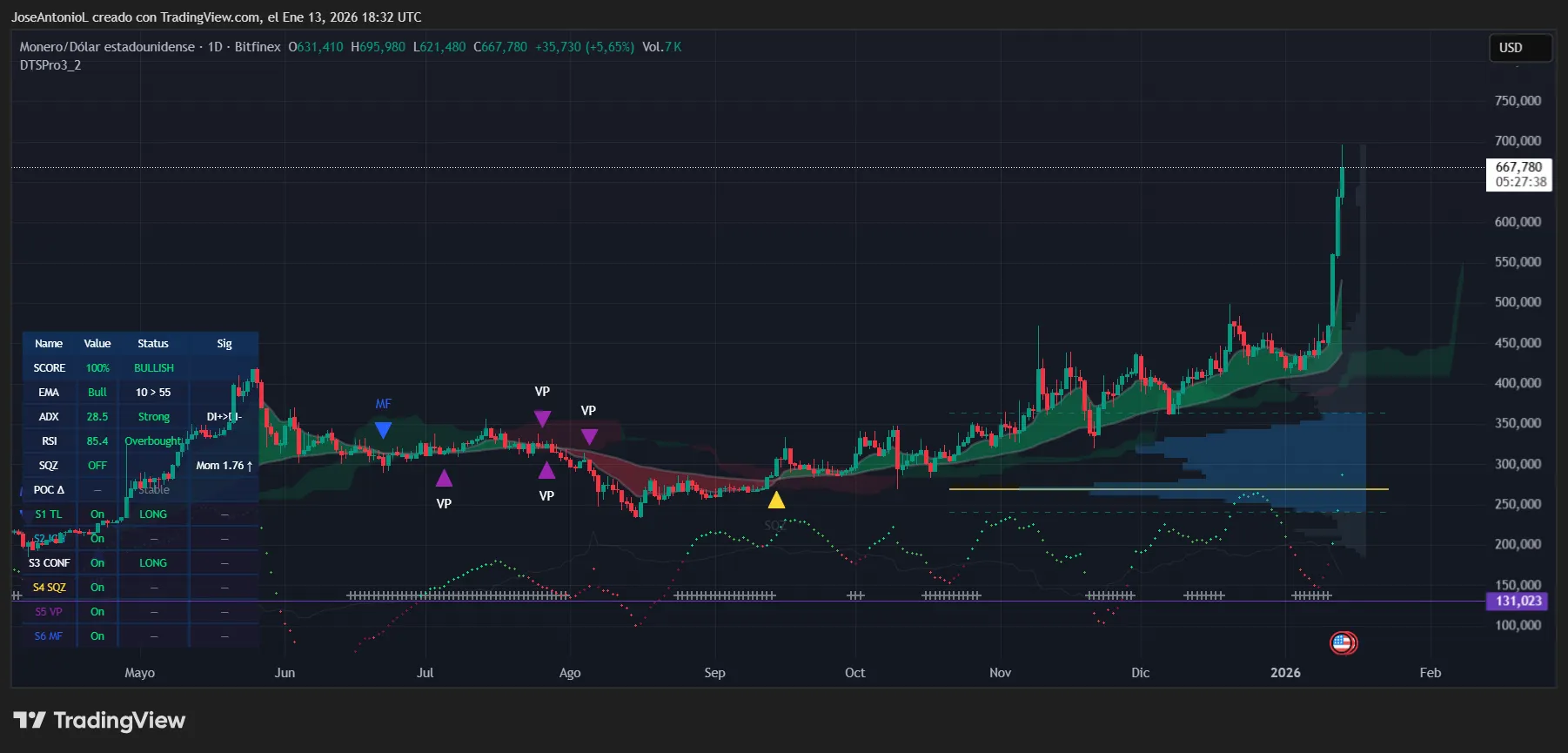
Monero (XMR): Price discovery mode
Disclaimer
The views and opinions expressed by the author are for informational purposes only and do not constitute financial, investment, or other advice.
Daily Debrief Newsletter
Start every day with the top news stories right now, plus original features, a podcast, videos and more.
YZi Labs Backs Genius as Trading Shifts Onchain

YZi Labs, an independent investment firm led by Binance founder Changpeng Zhao, has invested in onchain trading terminal Genius Trading, highlighting growing investor attention on cross-chain trading infrastructure.
While financial terms were not disclosed, YZi Labs said Tuesday that it made an eight-figure investment in the company. Zhao is also joining Genius Trading as an advisor, according to the announcement.
The investment suggests that cross-chain trading terminals are increasingly being viewed as core market infrastructure rather than purely user-facing tools, as activity continues to spread across multiple blockchains and liquidity venues.
Genius Trading is not a decentralized exchange, but a trading interface designed to aggregate execution across blockchains and decentralized venues. The investment points to increasing emphasis on execution-focused infrastructure, such as routing, performance and workflow tools for large traders, rather than liquidity alone.
Genius said it has processed more than $160 million in trading volume across ten blockchains prior to launch. Tuesday’s announcement also marked the platform’s public debut, with support for spot trading, perpetual futures and copy trading.
YZi Labs manages approximately $10 billion in assets and focuses on venture-stage investments across Web3, artificial intelligence and biotechnology. The firm operates as Zhao’s family office and evolved from Binance’s former venture arm.
Related: Binance expands into precious metals with gold, silver futures settled in USDT
The emergence of trading terminals in DeFi
As decentralized finance has expanded across multiple blockchains, cross-chain trading has become increasingly important, enabling traders to move and manage assets across different networks.
Much of the focus to date has been on cross-chain functionality within decentralized exchanges (DEXs), while trading terminals have emerged as a separate category — software interfaces that connect to multiple venues and chains to support more advanced trading workflows.
YZi Labs highlighted this shift in its announcement, noting that a growing share of trading activity is moving from centralized exchanges (CEXs) to decentralized venues. While this transition offers greater transparency and self-custody, the firm said it also introduces what it described as a “transparency bug,” referring to the difficulty of executing large trades on public blockchains without signaling intent to the broader market.

YZi Labs cited this dynamic as one of the reasons it backed Genius Trading, which aims to consolidate trading across major blockchain networks while prioritizing execution quality and privacy for professional traders.
Related: Crypto enters round 2 of institutional adoption, led by Morgan Stanley: Binance
Cointelegraph is committed to independent, transparent journalism. This news article is produced in accordance with Cointelegraph’s Editorial Policy and aims to provide accurate and timely information. Readers are encouraged to verify information independently. Read our Editorial Policy https://cointelegraph.com/editorial-policy