

Binance founder Changpeng Zhao (CZ) warned traders that his casual X posts are not meme coin buy signals, highlighting how hype-driven speculation, bot trading, and FOMO repeatedly trigger rapid token launches and losses across crypto markets. CZ Clarifies His Tweets Aren’t Meme Coin Signals Changpeng Zhao (CZ), founder and former CEO of Binance, shared on […]
Bitcoin rose above $92,000 as BlackRock ETF moved $300 million to Coinbase Prime
The asset manager sent 3,290 bitcoin, worth about $298 million, along with 5,692 ether valued near $17.8 million.
Revolut to tackle impersonation scams

Challenger bank Revolut has introduced a new security measure designed to thwart the rising threat of impersonation scams.
Editorial
This content has been selected, created and edited by the Finextra editorial team based upon its relevance and interest to our community.
The in-app call identification feature will detect in real-time when users are on a call and verify if callers are genuine Revolut agents or scammers.
According to Revolut, the increased use of AI deepfakes has made impersonation scams much more effective – only 25% of people can accurately detect a deepfake voice, making live phone calls a “critical vulnerability”.
Rami Kalai, product owner at Revolut, says: “As fraudsters adopt AI and advanced deepfake tools, we need to innovate fast to defend our customers and stay ahead of rapidly evolving fraud threats. This new feature not only gives users real-time, contextual warnings in the moment they need them most but also guides them to identify impersonation scams providing clear, actionable steps to keep their money safe while the fraud attempt is happening.”
The new security feature adds to other product relases made by Revolut to address financial scams over the last two years, including biometric verification to protect users from transfer mugging and greater use of machine learning to detect risky transactions.
Bitcoin 5% Surge Driven By Spot Buys, $100K On Horizon: Analysts
Bitcoin’s price could be heading for the psychological $100,000 level after breaking above $95,000 on Tuesday, with analysts attributing the recent rally to a surge in spot buying.
“Seems like this rally on Bitcoin is led by spot buying,” crypto analyst Will Clemente said in an X post on Tuesday. Over the past 24 hours, Bitcoin (BTC) has rallied 4.65%, trading at $95,190 at the time of publication, according to CoinMarketCap.
Traders shorting the asset were caught offside, with $269.21 million in Bitcoin short positions liquidated, according to CoinGlass data.
It is a bullish sign for Bitcoin (BTC) holders as spot buying means investors are buying the underlying asset itself, rather than paper contracts like Bitcoin futures or options, which can inflate prices without real demand.
“Quite clear” Bitcoin is going to run to $100,000
MN Trading Capital Michaël van de Poppe said in an X post on Tuesday that it is “quite clear that this is going to run to $100K in the coming week and that dips are for buying.”
Bitcoin has failed to reclaim the $100,000 level after falling below it on Nov. 13 last year.
According to crypto prediction markets platform Polymarket, Bitcoin has 51% odds of reclaiming $100,000 by Feb. 1 and a 23% chance of reaching $105,000.
Historically, January has been a modest month for Bitcoin, averaging a 4.18% gain since 2013, while February has typically been much stronger, delivering an average return of 13.12%.
Van de Poppe added, “the bull market hasn’t died, it’s about to start.”
Crypto sentiment at extreme lows for over two months
If Bitcoin returns to the six-figure price level, it could spark new excitement across the market, according to crypto sentiment platform Santiment.
“There will likely be retail FOMO creeping in if crypto’s top asset begins teasing $100K in the next few days, ” Santiment said in an X post on Tuesday.
Related: Bitcoin shrugs off CLARITY Act delay by rallying above $93K
Crypto sentiment has been largely negative since early November, following the significant $19 billion market liquidation on Oct. 10.
The Crypto Fear & Greed Index has bounced between “fear” and “extreme fear” over this period. On Wednesday, the index posted a “fear“ score of 26.
Magazine: Big questions: Would Bitcoin survive a 10-year power outage?
Cointelegraph is committed to independent, transparent journalism. This news article is produced in accordance with Cointelegraph’s Editorial Policy and aims to provide accurate and timely information. Readers are encouraged to verify information independently. Read our Editorial Policy https://cointelegraph.com/editorial-policy
Galaxy Compares DeFi Provisions in Crypto Bill to Patriot Act Surveillance

In brief
Some gaps and risks
Daily Debrief Newsletter
Start every day with the top news stories right now, plus original features, a podcast, videos and more.
Senators pitch more than 75 amendments for crypto bill, including on yield, DeFi sections
A list of amendments — some of them far afield — is circulating for the planned markup hearing of the crypto market structure bill.
Ethereum Adoption Grows as New Wallets Surge

A combination of protocol-level upgrades, stablecoin activity, and a shift in crypto sentiment has helped push Ether wallet creation to its highest levels in history.
Over the last week, an average of 327,000 new wallets have been created per day, with Sunday recording the highest number ever for a single day at over 393,000, Santiment analysts said in an X post on Tuesday.
New wallets can signal that fresh users, developers, or institutions are entering the ecosystem.
Data also shows that non-empty Ether wallets are now at 172.9 million, which is also at an all-time high.
Ether (ETH) is currently $3,330, up 7.5% in the last 24 hours after moving between $3,068 and $3,292 in the last week, according to CoinGecko.
Santiment analysts suggest the surge in new wallets could partly be because of the Fusaka upgrade in December, which “made using Ethereum cheaper and easier,” by improving data handling on-chain and cutting the cost of posting information from L2 networks back to Ethereum.
“This reduced fees and made interacting with apps and rollups smoother, encouraging many new users to open wallets and start using the network,” they said.
Crypto sentiment shift and stablecoins
Along with the major protocol upgrade, Ethereum may also be benefiting from general sentiment improvement as investors and developers reset their strategies in the new year.
Santiment analysts said holder sentiment shifted from negative to neutral and positive in mid-December, “which often coincides with more retail users signing up and creating addresses.”
There was also more interest from new users to enter the ecosystem to explore DeFi, non-fungible tokens and other apps toward the end of the year.
Related: Crypto’s 2026 comeback hinges on three outcomes, Wintermute says
A spike in stablecoin transfers on Ethereum in late 2025 could also be a factor, as it showed the “network was being actively used for payments and settlements,” according to Santiment.
“This kind of real financial activity tends to bring in new participants who create wallets to send, receive, or hold stablecoins and other tokens.”
More than half of all Ether is in staking
More than half of the total supply of Ether is in staking contracts, according to on-chain analytics platform Nansen. The ETH2 Beacon Deposit Contract holds over 77 million tokens, representing the total of validator stake deposits used to secure the network.
Crypto exchange Binance holds nearly 4 million Ether in its wallets on behalf of users, while fellow exchange Coinbase has around 2.3 million.
Magazine: One metric shows crypto is now in a bear market: Carl ‘The Moon’
Cointelegraph is committed to independent, transparent journalism. This news article is produced in accordance with Cointelegraph’s Editorial Policy and aims to provide accurate and timely information. Readers are encouraged to verify information independently. Read our Editorial Policy https://cointelegraph.com/editorial-policy
ETH, SOL, AVAX Are Priced In – Zero Knowledge Proof’s Live Presale Auction Is Where 10,000x Asymmetry Still Exists
Investors searching for the top crypto to buy often focus on established tokens like Ethereum, Solana, and Avalanche. These chains have dominated headlines, attracted developer activity, and been central to multiple bull runs.
But their growth is now closely tied to macro events, institutional flows, and software upgrades. Zero Knowledge Proof (ZKP), by contrast, is running a live presale auction that operates with structural fundamentals that older networks no longer offer.
With no VC funding, no private discounts, and a daily token distribution based purely on real-time demand, ZKP is offering what the others cannot: asymmetric early-stage positioning.
Zero Knowledge Proof (ZKP): Live Price Discovery Without Venture Capital
The project was self-funded with over $100 million spent before the first token entered the market, including infrastructure, hardware inventory, and partnerships. This matters because there is no supply overhang from early investors looking to exit. The pricing today reflects real market interest, not seed round expectations.
Unlike other launches, ZKP is not using hype or gated access to drive demand. The structure of the auction incentivizes organic price discovery and long-term positioning. Daily participants face rising pricing windows, and tokens are issued proportionally based on contribution size. This limits whale dominance and pushes natural pricing pressure upward. For investors looking for the top crypto to buy before listings, ZKP’s model offers a rare exposure window where demand, not allocation size, sets the floor.
The architecture already live includes a four-layer system: compute, storage, execution, and consensus, all running without the need to wait for future upgrades. Proof-of-Intelligence (PoI) and Proof-of-Space (PoSp) drive network operations instead of energy-heavy mining. With token issuance tied directly to real use (not just speculation), ZKP positions itself structurally for what older chains achieved in their earliest days. That’s where the 10,000x upside conversation begins: structural asymmetry, not marketing narrative.
Ethereum (ETH): Growth With Limits
Ethereum remains the benchmark for smart contracts and decentralized applications. It has active development, the strongest Layer 2 ecosystem, and deep institutional exposure. But at current price levels, its upside is tied to marginal improvements. Ethereum is no longer early-stage. Much of its value growth now hinges on ETF approvals, Layer 2 adoption, and long-term staking expansion. These are important, but they are not price-multiplying catalysts anymore; they are maturity stabilizers.
The most recent network upgrades have improved scalability and lowered fees. However, gas spikes and MEV extraction issues persist, and Ethereum’s roadmap still spans years. ETH’s valuation today is already built on these forward-looking assumptions. While it remains a strong holding for long-term exposure, it no longer fits the structure of a 10,000x investment opportunity. The explosive upside has already happened. What’s left is managed growth, not asymmetry.
Solana (SOL): Speed Comes with Fragility
Solana is one of the most actively used blockchains in terms of transaction volume. Its fee model and speed have attracted developers and meme coins alike. But its track record of outages and network resets introduces a layer of volatility that impacts investor confidence. SOL saw significant price appreciation in past cycles, but its corrections have been equally severe.
Solana’s resurgence has been driven by community narrative and user migration from Ethereum-based projects, especially during fee spikes. Still, concerns around validator centralization and chain stability remain. Its upside is real but reactive — tied to Ethereum’s bottlenecks more than its own fundamentals. The token has not completely decoupled from this comparative narrative. As a result, it’s no longer functioning from a “create-value-from-zero” position. It’s a second-generation chain optimizing legacy gaps, not a new structure writing its own economics.
Avalanche (AVAX): Active, But Supply Heavy
Avalanche has built an ecosystem of subnets and DeFi applications and maintains a steady development pace. Its consensus system provides scalability and finality advantages. However, its tokenomics present a limitation. AVAX still holds large portions of its supply off-market, which can weigh on upside expectations. Investors tracking long-term ROI potential often question how token release schedules will impact price action over time.
Unlike ZKP’s fixed daily release with transparent distribution mechanics, AVAX’s model leaves room for strategic unlocks that affect float and sentiment. This difference in structure matters when discussing the top crypto to buy. ZKP’s price rises with each auction based on transparent inputs. Avalanche, on the other hand, carries the overhead of prior allocations. That limits the room for compounding demand, particularly in speculative cycles.

Ending Section: Why Structure Determines ROI
Ethereum, Solana, and Avalanche are known quantities. They reflect value, but they don’t create it in the same way anymore. Each has built a user base and developer footprint, but the phase of exponential returns 100x, 1000x, or 10,000x came when they were structurally mispriced. ZKP today is operating inside that early-stage window with price still discovering, demand compounding, and no prior sell pressure.
For anyone scanning the market for the top crypto to buy, timing matters less than structure. Zero Knowledge Proof (ZKP) offers the structural asymmetry older chains used to have, and that’s the foundation for any 10,000x setup

SGB Taps JPMorgan to Credit USD Wires Beyond Cutoff Times

- Bahrain-based digital bank SGB opened a correspondent banking account with J.P. Morgan.
- It improves cross-border payment speed, security, and reliability for SGB’s clients.
- With Wire 365, SGB can now receive and credit incoming funds outside traditional cut-off times.
Singapore Gulf Bank, a Bahrain-licensed digital lender that has positioned itself as a bridge between Gulf and Asian capital flows, opened a correspondent banking account with JPMorgan Chase & Co.. The arrangement provides the bank direct access to one of the largest U.S. dollar clearing networks and extends its ability to process cross-border payments outside traditional banking hours.
The arrangement plugs Singapore Gulf Bank (SGB) into J.P. Morgan Payments’ infrastructure at a time when corporate treasurers and digital-asset firms are pushing for “always-on” settlement—reducing delays created by weekend and holiday cutoffs that can trap liquidity in transit. SGB said the relationship expands a broader mix of correspondent links and payment systems that also includes its own real-time settlement network, SGB Net, which it launched last year to support multi-currency transfers.
A key feature of the new setup is SGB’s rollout of J.P. Morgan Payments’ Wire 365 service, which is designed to enable U.S. dollar clearing 365 days a year, including weekends and public holidays. SGB said that would allow it to receive and credit incoming client funds beyond the traditional cutoff windows used across much of the global banking system.
The collaboration was formalized at a signing ceremony at SGB’s headquarters in Bahrain. J.P. Morgan Payments—JPMorgan’s unit that provides services spanning treasury, trade and working capital, and merchant and card capabilities—typically processes more than US$10 trillion of payments per day across more than 160 countries and over 120 currencies.
While large banks have long provided correspondent banking services for regional lenders, the move highlights how newer “digital-first” banks in the Gulf are increasingly leaning on the established U.S. dollar clearing system while building parallel rails aimed at faster settlement for institutional clients.
Wire 365 is part of J.P. Morgan’s broader push toward what it has described as “always-on” clearing. A Global Finance Magazine report on Wire365 said the product is built to support U.S. dollar wire activity beyond traditional processing cutoffs, with extended clearing windows intended to help institutions in time zones across Asia-Pacific and the Middle East manage working capital and liquidity even on weekends and holidays.
SGB said it is among the first digital banks in the Middle East and North Africa to implement Wire 365, framing the service as a way to provide near real-time access to cross-border payments throughout the year. In the region, other lenders have also moved to adopt similar capabilities: Bahrain’s National Bank of Bahrain Group said in mid-2025 that it had activated Wire 365 and described itself as the first in the Middle East and Africa region to use the solution.
SGB’s announcement builds on a series of initiatives aimed at expanding its corporate and transaction banking footprint. The bank launched corporate banking services in late 2024 under regulatory approval from the Central Bank of Bahrain, pitching a platform for companies managing both traditional finance and digital-asset activity. In May 2025, it launched SGB Net, which it said enables real-time, multi-currency clearing designed for the operational needs of digital-asset participants.
More recently, SGB said it partnered with Fireblocks, a digital-asset infrastructure provider, to support secure treasury management and digital-asset custody—an indication that it is targeting institutional workflows that move between fiat and tokenized markets.
The bank has also sought to raise its profile internationally. In May 2025, SGB named former Federal Reserve vice chair Randal Quarles as vice chairman of a newly formed global advisory board as it pursued international expansion. SGB is backed by Bahrain’s sovereign wealth fund Mumtalakat and Singapore-based Whampoa Group. Moreover, SGB has positioned itself as the first fully licensed digital bank in the MENA region.
In a statement shared with AlexaBlockchain, SGB Executive Vice Chairman Ali Moosa said joining J.P. Morgan’s network strengthened the bank’s role in linking Asia and the Gulf and would provide clients with a route for U.S. dollar clearing with speed and certainty.
J.P. Morgan Payments’ Nawaf Humood said the collaboration highlighted SGB’s expanding position and highlighted Bahrain’s support for financial innovation.
For corporate clients, the implication is that dollar flows—still the dominant currency for trade, investment and commodities pricing—can increasingly be managed on a near-continuous basis. That can be particularly relevant for firms operating across multiple time zones or managing collateral and settlement obligations that don’t pause for weekends, including market participants active in digital assets.
The deal also shows a broader shift in payments: rather than replacing the existing correspondent banking system outright, digital banks are increasingly layering new real-time capabilities on top of legacy rails, using major global banks’ clearing networks for reach and resilience while building proprietary infrastructure for speed and integration with modern treasury stacks.
Read Also:
Disclaimer: The information provided on AlexaBlockchain is for informational purposes only and does not constitute financial advice. Read complete disclaimer here.
Senator Seeks World Liberty’s Bank Charter Bid Delay
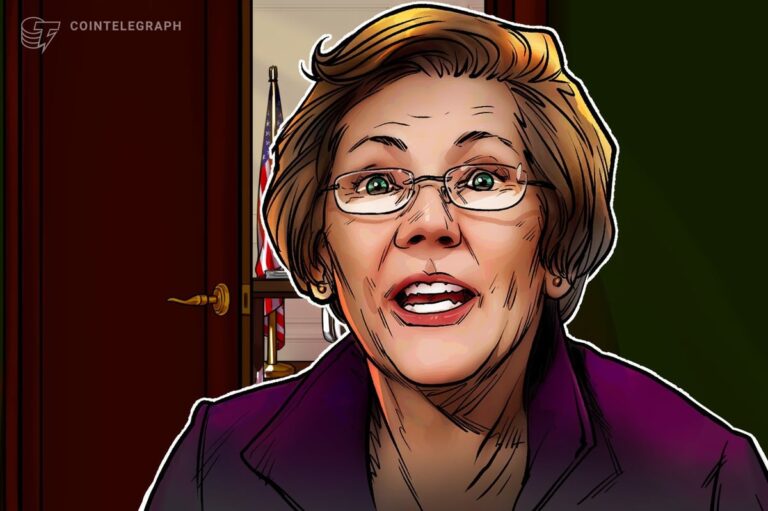
US Senator Elizabeth Warren is pressuring the country’s banking regulator to hold off on considering World Liberty Financial’s bid for a bank charter until US President Donald Trump divests his interest in the crypto platform.
In a letter on Tuesday, Warren asked Comptroller of the Currency, Jonathan Gould, to delay reviewing World Liberty’s application for a national trust bank until Trump “eliminates all financial conflicts of interest involving himself or his family and the company.”
“We have never seen financial conflicts or corruption of this magnitude,” Warren said. “The United States Congress failed to address them when it passed the GENIUS Act into law—so it is incumbent for the Senate to address these real and serious conflicts of interest as it considers crypto market structure legislation.”
A World Liberty subsidiary, WLTC Holdings, filed with the Office of the Comptroller of the Currency earlier this month for a bank charter allowing it to issue, custody and convert its stablecoin, USD1.
President Trump and his sons Barron, Eric and Donald Trump Jr. are listed as World Liberty’s co-founders, and the platform has generated billions of dollars in paper wealth for the family.
Warren has “no confidence” in OCC’s Gould
The stablecoin-regulating GENIUS Act, which Trump signed into law last year, set up the OCC as the main regulator for stablecoin issuers, and the bureau is responsible for approving applications and supervising such companies.
Warren told Gould she had “no confidence that you will fairly assess the application pursuant to the legal standard for approval” due to his past dismissal of questions asking how he would ensure Trump would not influence the OCC.
She added that Gould would be in charge of rules that influence the profits of World Liberty and would be responsible for enforcing laws against it and the company’s competitors.
“You would be in charge of these functions while serving at the pleasure of the President,” Warren said. “In effect, for the first time in history, the President of the United States would be in charge of overseeing his own financial company.”

Related: Bitwise CIO calls Bitcoin 401(k) restrictions ‘ridiculous’ as Warren presses SEC
Warren is the most senior Democrat on the Senate Banking Committee, which is set to debate a crypto market structure bill on Thursday.
The Senate Agriculture Committee was originally set to debate the bill at the same time, but the committee’s Republicans on Monday delayed that until later this month to garner more bipartisan support, as some lawmakers had pushed for the bill to include conflict-of-interest guardrails.
A Banking Committee draft of the bill released on Monday showed there was no inclusion of ethics provisions as requested by Democrats, but further negotiations and amendments are expected before it advances.
Magazine: Quitting Trump’s top crypto job wasn’t easy: Bo Hines
Cointelegraph is committed to independent, transparent journalism. This news article is produced in accordance with Cointelegraph’s Editorial Policy and aims to provide accurate and timely information. Readers are encouraged to verify information independently. Read our Editorial Policy https://cointelegraph.com/editorial-policy