

Based on the latest figures, the stablecoin economy has edged beyond its mid-December all-time high (ATH), clearing the previous record by $364 million and gliding well above the $310 billion threshold. Stablecoins Enter the New Year With a New All-Time High After a few weeks of mild pullbacks following the fiat-pegged crypto token economy’s peak […]
XRP Beats Bitcoin, Ethereum, And Dogecoin In This Metric

Trusted Editorial content, reviewed by leading industry experts and seasoned editors. Ad Disclosure
XRP has just achieved a major milestone, officially surpassing Bitcoin (BTC), Ethereum (ETH), and Dogecoin (DOGE) in terms of trading volume. According to a new report, the altcoin has become the most traded asset in all of South Korea, highlighting strong adoption, demand, and liquidity. This latest development underscores the token’s growing dominance in one of the world’s most active crypto markets, even as broader conditions remain volatile.
XRP Outpaces Bitcoin, Ethereum, And Dogecoin As Most Traded Asset
XRP has posted a notable win in one of the world’s most active crypto markets. New data from Upbit, one of South Korea’s largest crypto exchanges, shows the asset outpacing Bitcoin, Ethereum, and Dogecoin in trading volume throughout 2025. Market analyst XFinanceBull highlighted this new achievement in a recent X post after reviewing Upbit’s trading data for 2025.
According to the analyst, the altcoin was confirmed as the most traded digital asset on Upbit. The ranking was based on volume, liquidity, and actual usage rather than price movement. XRP trading pairs consistently led the platform, with the XRP/KRW pair taking the number one position for most of the year. Bitcoin followed in second place, Ethereum ranked third, USDT came fourth, and Dogecoin placed fifth by trading volume.
Notably, the figures were officially verified by Dunamu, the operator of Upbit, on January 2, 2026. On a year-over-year basis, Upbit processes more than $1 trillion in trading volume and accounts for more than 70% of South Korea’s total crypto market. This positions Upbit as the country’s largest crypto exchange and makes it a reliable indicator of usage trends and real retail and institutional demand.
XFinanceBull emphasized that South Korea tends to trade assets with clear real-world use cases and strong liquidity. Because of this, steady trading volume indicates a cryptocurrency is actively being used in the market, not just driven by short-term speculation. The analyst added that XRP’s continued use creates a pull effect, drawing in more capital as liquidity improves.
In established markets like South Korea, assets that perform well are more likely to attract consistent, long-term participation, which can positively impact prices. Following the recent development, XFinanceBull reinforced his bullish stance on the altcoin and stated he plans to accumulate even more of the cryptocurrency.
Upbit’s Report On XRP’s Performance
Upbit’s 2025 data shows that the altcoin consistently accounted for between 15% and 22% of the exchange’s daily trading activity, across a total annual trading volume of $1 trillion. As mentioned before, XRP/KRW was ranked the top trading pair for that year. Its daily volume peaked at $1.22 billion in July 2025, demonstrating sustained retail-driven liquidity and stable support.
In terms of liquidity, XRP outperformed BTC and ETH multiple times. By year-end, Korean exchanges had accumulated around 570 million XRP, reinforcing the token’s role as a primary transactional and economic asset in the country. User data also shows Upbit serves about 13.26 million users, almost one in four people in South Korea. The largest age group is users in their 30s, making up approximately 28.7% of the exchange.
Featured image from Freepik, chart from Tradingview.com

Editorial Process for bitcoinist is centered on delivering thoroughly researched, accurate, and unbiased content. We uphold strict sourcing standards, and each page undergoes diligent review by our team of top technology experts and seasoned editors. This process ensures the integrity, relevance, and value of our content for our readers.
Massive Coinbase News! Bitcoin Rips to $96,750! Football.Fun TGE Interview with Founder!

Massive Coinbase News! Bitcoin Rips to $96,750! Football.Fun TGE Interview with Founder!
Lack of liquidity is a growing concern in crypto, says Auros' Jason Atkins

Ahead of Consensus Hong Kong, Auros’ Jason Atkins says market depth, not hype, will determine crypto’s next phase.
2016-Era Bitcoin Whale Suddenly Shifts 1,087 BTC in Onchain Awakening

With bitcoin hovering tantalizingly near the $100,000 mark, long-silent, old-school bitcoin wallets are suddenly stirring, reappearing with a noticeable uptick in activity. On Jan. 16, two wallets dating back to 2016 sprang to life, moving 1,087 BTC—valued at more than $103 million—for the first time in 9 years and 9 months. From Cold Storage to […]
Btcusa Price Drops as Whales Move BTC to Exchanges: What It Means
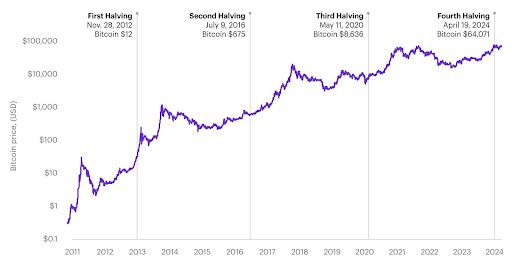
Bitcoin’s price saw a noticeable dip recently after large holders, often called “whales,” moved significant amounts of BTC to cryptocurrency exchanges. This shift caught the market’s attention and led to cautious trading across the broader crypto space. According to coverage on BTCUSA, the move didn’t come with dramatic headlines or sudden policy changes, but it still influenced short-term price action. For readers following the latest bitcoin news, understanding why these transfers matter can help make sense of market reactions without assuming extreme outcomes.
Market Overview
At the time of the move, Bitcoin was trading within a relatively tight range, reflecting a market that had been balancing optimism with uncertainty. When the whale transfers appeared on public blockchain trackers, the price slid modestly rather than collapsing, suggesting measured reactions rather than panic.
Across the wider crypto market, sentiment leaned cautious. Many altcoins mirrored Bitcoin’s movement, slipping slightly as traders reduced risk. Stablecoin volumes rose, indicating that some participants preferred to wait on the sidelines. Overall, the market tone remained neutral to slightly bearish, driven more by observation than fear.
Key Reasons Behind the Price Movement
Several factors combined to explain why Bitcoin’s price reacted the way it did:
Whale Activity and Exchange Flows
Blockchain data showed large BTC amounts moving from private wallets to centralized exchanges. Historically, this pattern is closely watched because exchanges are where assets can be sold. While not every transfer leads to selling, the possibility alone can influence sentiment.
Common interpretations include:
- Whales are preparing to sell part of their holdings
- Funds are being moved for liquidity or portfolio rebalancing
- Internal transfers by exchanges or custodians
The market usually responds to the potential of selling pressure, not confirmation of it.
Market Sentiment and Caution
The crypto market often reacts quickly to signals, even when those signals are ambiguous. Recent weeks have already seen traders acting carefully due to mixed global economic data and uneven risk appetite across financial markets. In that context, whale transfers added another reason to pause.
Instead of aggressive buying, many traders reduced positions or waited for clearer signals, contributing to the price dip.
Trading Volume and On-Chain Signals
Trading volume increased slightly during the price decline, but not to extreme levels. This suggests orderly selling rather than panic-driven exits. On-chain indicators showed that while exchange inflows rose, long-term holder activity remained relatively stable.
This balance hints that:
- Short-term traders were more active
- Long-term holders did not rush to exit
- The move was more about adjustment than reversal
Regulatory or Industry Context
No major regulatory announcements occurred at the same time as the price drop. However, ongoing discussions around crypto oversight in several regions continue to shape long-term sentiment. Even without direct news, the background awareness of regulatory developments can make traders more sensitive to on-chain signals like whale movements.
What Market Observers Are Saying
Market observers and analysts generally described the move as a routine reaction rather than a major shift. Many pointed out that whale transfers to exchanges happen regularly and only sometimes lead to extended price declines.
Common observations included:
- The move reflects short-term uncertainty, not a structural change
- Price reactions were consistent with past similar events
- Market participants are watching follow-up activity more than the initial transfer
Rather than focusing on predictions, observers emphasized monitoring data such as whether BTC actually leaves exchanges or stays put.
Beginner-Friendly Explanation: What Is “Whale Activity”?
In crypto, a “whale” is simply someone or an entity that holds a large amount of a cryptocurrency. Because their holdings are large, their actions can attract attention.
Whale activity usually refers to:
- Large transfers between wallets
- Movements to or from exchanges
- Changes in long-held positions
Why it matters:
- Big transfers can signal potential selling or buying
- Markets react to the possibility of impact
- Not all whale moves mean the same thing
For beginners, it’s important to remember that whale activity is a signal, not a conclusion. Context always matters.
Why Exchange Inflows Get Attention
When BTC moves to an exchange, it becomes easier to trade. That’s why exchange inflows are closely tracked. However, there are multiple reasons for such transfers beyond selling.
Possible explanations include:
- Preparing funds for trading pairs
- Moving assets for custody or security reasons
- Operational transfers by exchanges themselves
Because blockchain data is transparent but not always explanatory, the market often reacts cautiously until more clarity appears.
How This Fits Into the Bigger Picture
Bitcoin has experienced many similar moments in the past. Price dips tied to on-chain activity are common in a market that operates 24/7 and reacts quickly to new data.
In the broader trend:
- Bitcoin remains sensitive to sentiment shifts
- Short-term moves often reflect uncertainty rather than direction
- Long-term structure depends on multiple factors, not one event
For readers of BTC USA, this context helps explain why a single data point can move prices without defining the overall market outlook.
Conclusion
Bitcoin’s recent price drop followed visible whale transfers to exchanges, a development that often draws attention in crypto markets. The reaction was measured, shaped by cautious sentiment, moderate trading volume, and the usual uncertainty that comes with interpreting on-chain data. As covered by BTCUSA, this event fits a familiar pattern seen many times before, one where the market responds to signals without assuming outcomes. For beginners and general readers alike, the key takeaway is simple: on-chain movements can influence short-term prices, but they are only one part of a much larger market story.
Michael Saylor Pushes Back on Criticism of Bitcoin Treasury Companies

Strategy chairman Michael Saylor defended Bitcoin treasury companies against criticism during a recent appearance on the What Bitcoin Did podcast.
Responding to questions about smaller companies that issue equity or debt to buy Bitcoin (BTC), Saylor said the decision ultimately comes down to capital allocation, arguing that companies with excess cash are better off allocating it to Bitcoin than holding it in Treasurys or returning it to shareholders.
He compared corporate treasury strategies to individual investing, arguing that ownership levels vary but the underlying decision to hold BTC is rational regardless of company size or business model.
Saylor also pushed back on the idea that unprofitable companies should be singled out for criticism, arguing that Bitcoin holdings can help offset weak operating results.
He said a company running at a loss could still improve its overall financial position if the value of its Bitcoin holdings rises faster than its operating losses. “If you’re losing $10 million a year but making $30 million in Bitcoin gains, didn’t I just save the company?” Saylor said.
Saylor contrasted Bitcoin purchases with other uses of excess cash, arguing that buybacks and low-yield Treasurys can worsen outcomes for struggling companies. Buying back shares in a money-losing business “just amplifies your losses faster,” he said, adding that Bitcoin offers a materially different risk-reward profile for corporate balance sheets.
Saylor said companies that hold Bitcoin are often held to a different standard than those that avoid the asset altogether. “The Bitcoin community tends to eat its young,” he said, adding:
You somehow think that it’s OK for 400 million companies to not buy Bitcoin, and somehow that’s okay, and you’re going to criticize the 200 companies that bought Bitcoin.”
Strategy began accumulating Bitcoin in 2020 and is the largest crypto corporate holder. According to BitcoinTreasuries.NET data, the company held 687,410 BTC at time of writing.
Related: Strategy makes biggest Bitcoin purchase since July 2025, adds $1.25B in BTC
More public companies turn to Bitcoin as a treasury asset
Corporate adoption of Bitcoin treasury strategies accelerated in 2025, with a growing number of publicly traded companies adding Bitcoin to their balance sheets as a long-term asset.
At the time of writing, publicly listed companies collectively held about 1.1 million BTC, representing about 5.5% of the 19.97 million coins in circulation.

Companies that adopted treasury strategies over the past year have done so amid less favorable market conditions.
According to Markus Thiele, founder of 10x Research, many digital asset treasuries saw their net asset values fall in November, constraining capital raising and leaving existing shareholders stuck with mounting paper losses.
Cointelegraph reported that Bitcoin treasury adoption slowed in late 2025, with a total of 117 companies adopting BTC reserves over the year.
However, corporate ownership remains highly concentrated, with MARA Holdings having 53,250 BTC on its balance sheet and Twenty One Capital holding 43,514 BTC, second only to Strategy.

Magazine: Davinci Jeremie bought Bitcoin at $1… but $100K BTC doesn’t excite him
Cointelegraph is committed to independent, transparent journalism. This news article is produced in accordance with Cointelegraph’s Editorial Policy and aims to provide accurate and timely information. Readers are encouraged to verify information independently. Read our Editorial Policy https://cointelegraph.com/editorial-policy
Crypto User Loses $282M in Bitcoin, Litecoin in Social Engineering Attack

A crypto user has lost more than $282 million worth of Bitcoin and Litecoin in one of the largest social engineering attacks ever recorded in the crypto sector.
The theft occurred on Jan. 10, 2026, at around 11:00 pm UTC, after the victim was tricked into revealing their seed phrase linked to a hardware wallet, according to blockchain investigator ZachXBT. The attacker gained full control of the wallet and rapidly moved the funds across multiple networks to obscure the trail.
According to ZachXBT, 2.05 million Litecoin (LTC), currently worth $153 million, and 1,459 Bitcoin (BTC), now worth around $139 million, were drained. The attacker immediately began converting the stolen assets into Monero (XMR) through several instant exchange services, triggering a sharp spike in XMR’s price as well.
In parallel, large portions of the Bitcoin were bridged across Ethereum (ETH), Ripple (XRP) and Litecoin using THORChain, a move that allowed the attacker to shift value between blockchains without relying on centralized exchanges. The activity reignited debate around how decentralized cross-chain infrastructure can be abused during large-scale thefts.
Related: Truebit exploit exposes smart-contract flaw behind $26M token mint
$700K of stolen funds frozen
In a Friday post on LinkedIn, security firm ZeroShadow said it was able to trace and flag parts of the stolen flow in real time after being alerted by blockchain monitoring teams. Within roughly 20 minutes, about $700,000 worth of funds were reportedly frozen before they could be fully swapped into privacy-focused assets.
ZeroShadow claimed it identified the victim as a Bitcoin address “belonging to an individual who had been tricked into sharing their seed phrase by an actor impersonating Trezor “Value Wallet” support.”
ZachXBT also rejected claims that the attack might be linked to a state-sponsored hacking group. “It’s not North Korea,” he wrote.
Related: The hidden risk of public WiFi: How a single approval wiped a crypto wallet
Elderly US Bitcoin holder loses $330 million
Last year, an elderly US individual reportedly fell victim to a $330 million Bitcoin theft in another major social engineering scam. The victim had held more than 3,000 BTC since 2017 with little prior activity, according to blockchain data.
After the funds were moved, the attacker rapidly laundered the Bitcoin using peel chains and multiple instant exchanges, ultimately swapping much of the stolen BTC into Monero to obscure its trail.
Magazine: How crypto laws changed in 2025 — and how they’ll change in 2026
Cointelegraph is committed to independent, transparent journalism. This news article is produced in accordance with Cointelegraph’s Editorial Policy and aims to provide accurate and timely information. Readers are encouraged to verify information independently. Read our Editorial Policy https://cointelegraph.com/editorial-policy
Crypto trading platform with CZ as advisor sees sudden $2 billion volume surge on 'airdrop' hype

Users are actively trading in hopes of qualifying for future perks, with the platform hinting at an airdrop in 2026 and receiving a multi-8-figure investment from YZi Labs.
How One High-Profile Defamation Suit Could Shape Social Media Accountability

MIAMI — A new lawsuit filed in Florida may set an important precedent in how defamation cases involving social media reach and online influence are handled in U.S. courts. On December 11, 2025, Chealse Sophia Howell — a former Miss Universe Canada delegate, model, and business owner — filed a civil complaint against Grant Cardone and Cardone Capital, LLC, alleging defamation and tortious interference.
The complaint, filed in the Eleventh Judicial Circuit Court of Miami-Dade County, claims that the defendants distributed false, reputation-damaging statements about Ms. Howell across major platforms including Instagram, X, LinkedIn, and Facebook — reaching wide audiences and resulting in alleged professional and emotional harm.
Plaintiff’s counsel argues that such widespread digital publication by individuals with large followings raises critical questions about responsibility and accountability in the age of social media.
The lawsuit seeks $500 million in combined compensatory and punitive damages, as well as injunctive relief to prevent further alleged wrongdoing, attorneys’ fees, and costs, and Ms. Howell has requested a jury trial.
Experts in digital law say the case may be closely watched by legal scholars and influencers alike, as courts grapple with balancing free speech rights and protections against reputational harm in the digital era.
The case highlights the growing complexity of social media interactions in legal contexts. Unlike traditional print or broadcast media, online platforms enable posts to go viral within hours, potentially multiplying the impact of false statements exponentially. Legal experts note that the challenge for courts is not only assessing whether defamation occurred, but also determining the extent of the reach and influence that these posts carry.
For social media personalities, business owners, and public figures, this lawsuit serves as a reminder that online communications carry real-world consequences. While users often operate under the assumption that social media posts are informal or protected under free speech, the law may increasingly hold influential individuals and entities accountable for statements that damage others’ reputations.
Digital platforms themselves are also under scrutiny. While the lawsuit names specific individuals and companies, questions linger about the role of algorithms and platform moderation in amplifying content that may be harmful. Legal analysts speculate that future cases could expand liability discussions to include how platforms manage and promote potentially defamatory material.
The potential implications extend beyond the courtroom. Public figures, brands, and influencers are likely watching closely, understanding that reputational harm in the digital sphere can translate into significant financial and professional losses. Ms. Howell’s case underscores the need for careful messaging, fact-checking, and legal awareness when posting online, particularly when engaging with controversial or competitive topics.
Some commentators have also raised questions about the amount of damages sought in the lawsuit. While $500 million may seem extraordinary, it reflects the combination of reputational, emotional, and financial harm alleged by Ms. Howell’s team. This figure may influence how courts approach claims in similar high-profile defamation suits, potentially setting new benchmarks for damages in cases involving social media influence.
In addition to its legal ramifications, the lawsuit may also spark broader public discussion about the ethics of online speech. Social media users, from everyday individuals to high-profile influencers, may reconsider how their words impact others. For many legal observers, the case represents a crossroads where technology, personal accountability, and the law intersect.
As the legal process unfolds, observers will be watching whether the case reaches a settlement or proceeds to trial, and how judges and juries interpret defamation in the context of widespread digital distribution. Scholars suggest that the outcome could have a lasting influence on both the legal landscape and social media behavior, potentially encouraging more responsible online discourse.
Ultimately, the lawsuit filed by Chealse Sophia Howell against Grant Cardone and Cardone Capital, LLC may serve as a benchmark for how U.S. courts approach defamation in the digital age. It is a case that combines celebrity, business, and social media influence with complex legal principles, and its outcome could reshape expectations of accountability for online conduct. Whether the courts uphold traditional protections or adapt them to new realities, the proceedings are certain to be closely analyzed by legal experts, media outlets, and social media users worldwide.
Also Check:
Drive.Google.com/file/d/1Uyk_ZHhL84JKT_v2_UdsSYS_XgD7TR-t/view?usp=drivesdk
Drive.Google.com/file/d/1crUZMoULb3sVNaSAXn_amXsl_B_bMFO0/view?usp=drivesdk
Important Note: The lawsuit allegations have not yet been adjudicated; no finding of wrongdoing has been made by a court.
News Source: PrNewswire.com/news-releases/former-miss-universe-canada-delegate-sues-grant-cardone-and-cardone-capital-seeking-500-million-in-florida-defamation-case-302663547.html
