Home Blog Page 1169

Why Bitcoin is primed to rally to $110,000 price and beyond – DL News

0

  • Bitcoin lost nearly 8% of its value in 2025.
  • That should change this year, said Arthur Hayes.
  • Three channels will turn on flows into Bitcoin in 2026, Hayes says.

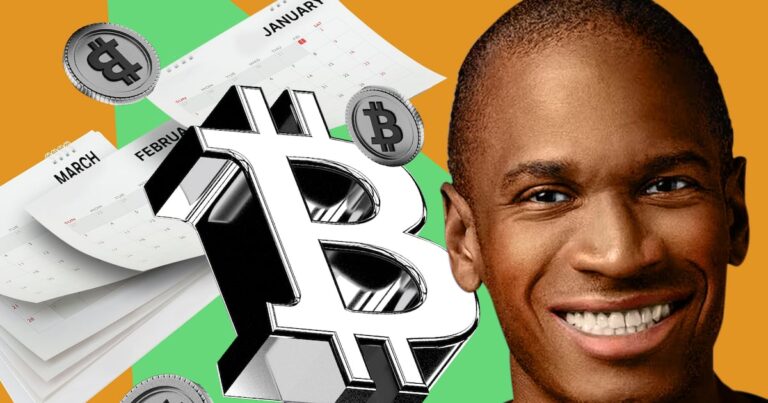
Bitcoin’s lousy 2025 was actually a win in Arthur Hayes’s book — and the price is about to pump.

The BitMEX co-founder and crypto angel investor published a new essay on January 14, arguing that the top cryptocurrency did exactly what it should have done last year: track dollar liquidity lower.

“Bitcoin performed as to be expected, like utter dog shit,” Hayes wrote. ”Let’s not draw the wrong conclusions from Bitcoin’s 2025 underperformance. It was as it always is, a liquidity story.”

Things are about to change, however.

Now Hayes sees liquidity returning through three channels: the Federal Reserve’s new Reserve Management Purchases programme that will bring money printing; commercial banks that will start lending to strategic industries; and mortgage rates will fall.

Bitcoin’s bad 2025

Many Bitcoin investors were expecting the top crypto to jump aboard a never-ending flight to the moon in 2025. That didn’t happen — despite all the elements for such a scenario already present.

Bitcoin exchange-trade funds accumulated coins like they were going out of fashion. Donald Trump won the presidential election, promising to make the US the crypto capital of the world, and institutional adoption accelerated.

Yet Bitcoin finished the year as one of the worst-performing major assets, lagging both gold and tech stocks.

Hayes argues most investors are drawing the wrong conclusion from this. They assume the digital gold thesis is broken, but Hayes says the opposite.

Bitcoin proved it works exactly as advertised — as a pure liquidity gauge uncorrupted by geopolitical flight-to-safety like gold, or government industrial policy like artificial-intelligence stocks.

That validation sets up 2026.

Liquidity comes back

Hayes identifies three mechanisms driving dollar liquidity higher in 2026.

First, the Fed’s balance sheet bottomed in December when quantitative tightening ended. But now, with the agency’s new RMP, set up in December, adds at least $40 billion monthly.

Second, commercial banks are lending again. JPMorgan launched a $1.5 trillion loan facility for government-backed businesses.

“When a bank issues a loan, it creates a deposit, which creates money ex nihilo,” Hayes wrote.

Third, Trump is pumping housing. Fannie Mae and Freddie Mac will deploy $200 billion to buy mortgage-backed securities, dropping mortgage rates. Americans can then borrow against home equity, creating a wealth effect before November elections.

Even without these factors, Hayes has already predicted that Bitcoin will topple $200,000 by March.

Onward and upward

Hayes is so bullish that he’s adding leveraged Bitcoin exposure through Strategy and Metaplanet positions.

Both trade near two-year lows relative to Bitcoin.

“If Bitcoin can retake $110,000, investors will get the itch to go long Bitcoin through these vehicles,” Hayes wrote. “Given the leverage embedded in the capital structure of these businesses, they will outperform Bitcoin on the upside.”

His thesis isn’t very complicated. Bitcoin bottomed with dollar liquidity. Now that liquidity is expanding, Bitcoin will follow suit.

“Onward and upward, degens,” Hayes concluded.

Pedro Solimano is DL News’ markets correspondent. Got a tip? Email him atpsolimano@dlnews.com.
Coinbase denies White House split claims as Clarity Act divisions deepen – DL News

0

  • CEO Brian Armstrong denies reports White House officials are angry with Coinbase.
  • Exchange pulled its support for Clarity last week.
  • Industry and banks divided over the question of whether stablecoins should pay yields.

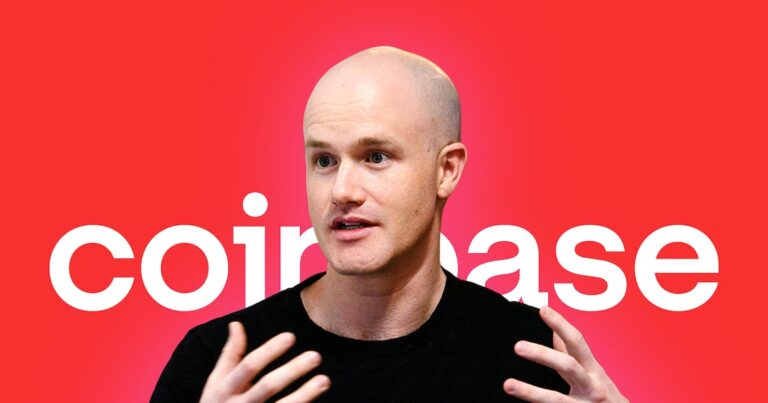
There’s been no split between Coinbase and the White House over new landmark crypto legislation, says the exchange’s Chief Executive Brian Armstrong.

Armstrong took to X to dismiss reports that the government is on the verge of abandoning its support for the bill, insisting White House officials have been “super constructive” in talks.

“They did ask us to see if we can go figure out a deal with the banks, which we’re currently working on,” Armstrong wrote. “Actually, we’ve been cooking up some good ideas on how we can help the community banks specifically in this bill, since that’s what this is about.”

The comments come at the end of a rough week for proponents of the bill, which proposes a qualified shift of regulatory control and bans on passive yields from stablecoin holdings.

Coinbase pulled support for the bill the day before the Senate was due to debate the draft law. And experts told DL News that market players are set to “expand their wish lists” for changes to the bill, a move that will “just create more friction.”

Deep divisions

Armstrong was speaking in response to allegations that the White House was “furious” with Coinbase’s “unilateral” decision to withdraw support for the Clarity Bill. The Coinbase chief said rift claims were “not accurate.”

“The White House is considering pulling its support for the crypto market structure bill entirely if Coinbase does not come back to the table with a yield agreement that satisfies the banks and gets everyone to a deal,” the crypto podcaster Eleanor Terrett wrote on X.

Quoting an unnamed “source close to the Trump administration,” Terrett said the White House “was not notified” of Coinbase’s decision in advance, “calling it a rug pull against the White House and the rest of the industry.”

“The White House does not believe that one company speaks for the entire industry, the source continued,” she wrote.

“This is President Trump’s bill at the end of the day, not Brian Armstrong’s,” the source reportedly said.

Stablecoin controversy

The bill’s lukewarm reception is indicative of deep divisions in the US crypto industry. Some have welcomed attempts to establish firm regulatory guidelines.

But others claim it amounts to a capitulation to the world of traditional finance, particularly on the stablecoin yields question.

“We can’t really have banks come in and try to kill their competition at the expense of the American consumer,” Armstrong told CNBC. “People should be able to earn more money on their money.”

Banks say stablecoin yields could dent their own ability to provide loans to businesses and homebuyers.

However, many crypto industry figures say banks are engaging in fear-mongering to keep the crypto sector at bay.

Stablecoins are digital tokens, issued on blockchain networks, that are tied to the value of a currency such as the US dollar.

Tim Alper is a News Correspondent at DL News. Got a tip? Email him at tdalper@dlnews.com.

BlockDAG’s $0.001 Pricing Signals a Crucial Moment in Its Crypto Presale

0

In crypto cycles, the most pivotal phases rarely appear dramatic. The visible volatility, sudden price spikes, and emotional trading all tend to arrive later, after markets open. Before that, there’s often a short period of predictability: fixed pricing, structured access, and minimal trading noise. BlockDAG currently occupies that space.

With its presale set to close on January 26 at $0.001, BlockDAG (BDAG)  approaches a structural change that transforms how value is accessed. For those studying timing, data, and past cycles, this brief period of calm is considered both the most overlooked and the most valuable, especially when evaluating the best presale crypto to buy now.

Structured Calm Exists Only Before the Market Responds

Presale periods are rare in how they suspend market mechanics. During this time, pricing is stable, supply is controlled, and participation occurs without direct competition. This phase offers a level of clarity that live trading never provides.

However, this structure is temporary. Once BDAG reaches public exchanges, market forces activate immediately. Pricing turns dynamic. Emotional reactions and speculative behavior begin. This transition doesn’t unfold slowly; it happens the moment trading opens.

This is why experienced participants place high importance on the final presale window. The exit from calm is not theoretical. It is scheduled, and once passed, the original terms cannot return.

Price Discovery Shifts Buyer Behavior, Not Just Value

The term “price discovery” is often associated with volatility, but its deeper impact lies in the way it reshapes market behavior.

Before listing, entries are made with full knowledge of the price and total available supply. These conditions support rational planning. After listing, other forces emerge, speculation, momentum, and crowd psychology.

At $0.001, BDAG remains in the stage where pricing is disconnected from demand. Once the presale closes, that relationship corrects itself.

Final Calm Before the Big Shift BlockDAG’s $0.001 Pricing Signals a Crucial Moment in Its Crypto Presale_2

This is one of the core reasons BlockDAG is frequently highlighted as the best presale crypto to buy now. The asset is not expected to change, but the pricing structure will.

Operational Readiness Reduces Uncertainty Before Listing

What makes this calm phase especially significant is that BlockDAG does not rely on future projections. The project’s infrastructure is fully active.

BlockDAG operates on a hybrid DAG and Proof-of-Work system that allows simultaneous transaction processing without compromising decentralization. It can support up to 1,400 transactions per second and remains compatible with the Ethereum Virtual Machine, allowing seamless deployment for developers.

Mining is already operational across mobile and hardware devices. Developer tools and no-code deployment features are available prior to public listing.

These factors contribute to a reduced risk profile. When adoption, usage, and tools are live ahead of market entry, valuation becomes a matter of access, not speculation.

Flat Pricing Does Not Indicate Flat Demand

Presales are often misunderstood. Flat pricing is sometimes seen as lack of interest, when in fact, it is a structural choice.

BlockDAG has raised $442 million, onboarded over 312,000 holders, and attracted more than 3.5 million users through its X1 mining app, all before exchange trading begins. Demand is already present. What is missing is the price flexibility that only open trading provides.

Once the presale ends, and that constraint is lifted, price responds directly to market interest. In past cycles, such adjustments have occurred rapidly when participation levels were already high at launch.

From an analytical standpoint, this alignment of user activity with fixed pricing is a frequent precursor to significant repricing, especially for those reviewing candidates for the best presale crypto to buy now.

January 26 Marks a Clear Shift From Controlled Entry to Competitive Access

BlockDAG’s timeline is non-negotiable. The presale ends on January 26. Exchange listings begin on February 16. There are no delays, extensions, or resets built into the system.

After the presale, three key changes occur:

  • Fixed pricing is removed
  • Supply becomes reactive
  • Volatility begins

Controlled environments offer stability. Open markets do not. That is the defining line between early access and public entry.

Final Calm Before the Big Shift BlockDAG’s $0.001 Pricing Signals a Crucial Moment in Its Crypto Presale_4

This is why late-stage presales with real infrastructure are often seen as the most strategic entry points. They offer visibility into adoption and tech readiness, without the price volatility that arrives after launch.

Final Thoughts

BlockDAG is nearing the end of its stable phase. The presale at $0.001 provides rare clarity in a market that typically rewards early structure and punishes late reaction.

Once trading begins, the calm is replaced with live pricing, sentiment-driven movement, and competition. The asset remains the same, but the pathway to exposure changes.

For those conducting due diligence on the best presale crypto to buy now, this phase is unique. It offers fixed pricing, proven adoption, and a countdown that cannot be paused.

When the final day arrives, the market responds immediately. That shift doesn’t signal failure or doubt, it signals a system moving into its next stage.

Final Calm Before the Big Shift BlockDAG’s $0.001 Pricing Signals a Crucial Moment in Its Crypto Presale_5

Presale: https://purchase.blockdag.network

Website: https://blockdag.network

Telegram: https://t.me/blockDAGnetworkOfficial

Discord: https://discord.gg/Q7BxghMVyu


Animoca’s Yat Siu says crypto’s Trump moment is over

0

With the political hype fading, Siu argues crypto’s next phase will be shaped less by personalities and more by infrastructure, regulation and who actually uses the technology.

White House Rift With Coinbase Puts Crypto Clarity Act On Shaky Ground

0

Trusted Editorial content, reviewed by leading industry experts and seasoned editors. Ad Disclosure

The Clarity Act is meant to give the US crypto market something it has lacked for years: a clear legal framework defining how digital assets are regulated, who oversees them, and how crypto companies can operate without constant regulatory uncertainty. That goal is now reportedly under pressure. 

Rumors are that a growing rift between the White House and Coinbase has raised the possibility that the administration could pull its support for the bill, putting one of the most closely watched pieces of crypto legislation at risk.

White House Frustration With Coinbase

According to reporting shared on X by Eleanor Terrett, sources close to the White House say the administration is considering pulling its support for the Clarity Act if Coinbase does not return to negotiations over stablecoin yield provisions. The issue centers on finding an arrangement that satisfies both crypto firms and traditional banks, particularly community banks that lawmakers see as a core stakeholder in the bill.

BTCUSD currently trading at $95.066. Chart: TradingView

The source described Coinbase’s recent move as a unilateral action that caught the White House off guard, characterizing it as a rug pull against both the administration and the entire crypto industry. Officials reportedly pushed back against the idea that a single company could speak for the entire sector, stressing that the legislation reflects the policy agenda of US President Donald Trump and not the priorities of Coinbase CEO Brian Armstrong.

The Clarity Act is designed to define regulatory boundaries between US agencies and provide clearer rules for crypto markets, including how stablecoins and yield-bearing products are treated. 

Behind the dispute is a broader struggle between the White House and Coinbase over how crypto yield products should coexist with banking regulations. The White House’s position, as described by Terrett, is that reaching consensus with banks is essential for the bill to move forward.

Brian Armstrong Pushes Back On Rug Pull Claims

Coinbase is the largest crypto exchange and crypto custodian in the US, and this has naturally placed the company at the center of negotiations with the Trump administration. The scoop from Eleanor Terrett’s source is that White House officials think Coinbase CEO Brian Armstrong is not cooperating, as the bill is President Trump’s bill at the end of the day, not Armstrong’s.

However, the Coinbase CEO publicly rejected the notion that relations with the White House have soured. Responding directly to the report on X, Armstrong said the administration has been super constructive and confirmed that Coinbase is actively working to find common ground with banks on yield-related issues.

He added that the company is in the process of figuring out a deal with community banks, which is the important focus of the bill. Negotiations are currently open, and Armstrong noted that further details would be shared soon. 

Nonetheless, the standoff leaves the Clarity Act in a delicate position, as both sides attempt to shape the future of US crypto regulation without fracturing industry-wide support.

Featured image from Coinbase, chart from TradingView

Editorial Process for bitcoinist is centered on delivering thoroughly researched, accurate, and unbiased content. We uphold strict sourcing standards, and each page undergoes diligent review by our team of top technology experts and seasoned editors. This process ensures the integrity, relevance, and value of our content for our readers.

Saylor’s ‘Bigger Orange’ Hint Has Strategy Closing in on 700,000 BTC

0

Strategy’s founder dropped another breadcrumb on Sunday, posting an image of the company’s purchase tracker and offering only a knowing nod with the words “₿igger Orange.” ‘₿igger Orange’ Points to a Major Strategy Buy as 700,000 BTC Milestone Comes Into View Just seven days earlier, on Sunday, Strategy’s Michael Saylor hopped onto X to share […]

ETH Validator Exit Queue Hits Zero as Staking Demand Soars

0

The massive staking inflows are strengthening ETH’s supply-demand dynamic, potentially setting the stage for upward price momentum this year.

The Ethereum staking validator exit queue has dropped to zero — signaling a dramatic fall in selling pressure and strengthening confidence in Ether (ETH) as a yield-bearing asset.

Data from Ethereum Validator Queue shows the exit queue has fallen from its September 2025 peak of 2.67 million Ether (ETH) to 0 ETH, while the entry queue has risen more than fivefold over the last month to 2.6 million ETH, the highest since July 2023.

Wait times for the entry queue have now stretched out to 45 days, while exiting ETH is being processed in a matter of minutes.

Ethereum staking entry and exit queue data. Ethereum Validator Queue

Industry analysts said the massive staking inflows strengthen ETH’s supply-demand dynamic, potentially setting the stage for sustained upward price momentum in the coming months.

“Once the entry queue converts into active validators, the staking rate moves higher and pushes toward new all-time highs,” Onchain Foundation’s head of research Leon Waitmann said on Monday. 

“Bullish set-up for the coming months.”

The massive inflows have been partly pushed by institutional demand for ETH staking yields, which is currently around 2.8% Annual Percentage Rate.