Home Blog Page 1134

Bitcoin Startup ZBD Raises $40M To Build Gaming Pay Rails

0

Bitcoin payments startup ZBD has raised $40 million in a Series C funding round as it looks to expand blockchain-based payment infrastructure for the video game industry, Fortune reported.

The New Jersey–based company, which provides payments software for game developers, was led in the round by Blockstream Capital. The crypto investment firm contributed $36 million, according to cofounder and CEO Simon Cowell, who spoke with Fortune

Cowell declined to disclose the company’s valuation or name the other investors involved.

The platform allows video game developers to integrate payments directly into games, enabling transactions such as peer-to-peer transfers, loyalty rewards, and Bitcoin payouts without relying on third-party fintech providers.

 “We’re talking about a payment solution for the entire industry that actually really enables them to have a direct financial relationship to the player,” Cowell said.

The fundraise comes at a time when enthusiasm for crypto gaming has cooled. 

Once touted as a major use case for blockchain technology, crypto-based gaming — particularly NFT-driven models — has struggled to gain mainstream traction since the 2021–2022 bull market. 

ZBD has deliberately avoided NFTs and crypto-native gameplay, instead focusing on payments, an area that has seen more concrete adoption, especially as stablecoins gain attention from firms like Stripe and banks including JPMorgan Chase, according to Fortune.

Founded by Cowell alongside André Neves and Christian Moss, ZBD centers its technology on Bitcoin rather than stablecoins. 

However, the company positions itself as a broader payments provider, allowing developers to keep users within their ecosystems rather than routing transactions through external services.

While the startup is not yet profitable and declined to share revenue figures, Cowell said the company worked with 55 games in 2025 and currently employs about 70 people. 

The newly raised capital will be used to expand ZBD’s payments product suite over the coming year, Fortune reported.

ZBD’s bitcoin rewards

ZBD integrated Bitcoin rewards into TapNation’s mobile game Idle Bank last year, marking the first mainstream mobile game to deliver Lightning Network payouts, which boosted 30-day player retention by 355% and revenue per player by 124%. 

The company, originally testing Bitcoin rewards with a modded Counter-Strike server, developed an SDK and API that allow game developers to seamlessly add Bitcoin rewards while addressing cybersecurity and fraud concerns. 

ZBD’s model turns ad revenue into Bitcoin payouts for players, increasing engagement and monetization, and has already driven significant growth for games like Bitcoin Miner.

Coinbase VP says ‘fatal flaws’ in Senate crypto bill forced sudden withdrawal of support

0

Coinbase VP of US Policy Kara Calvert explains what tipped the scales for Coinbase against the legislation just hours before a scheduled markup.

Bitget Ignites Global Stock Futures Championship with $1.55 Million Prize Pool

0

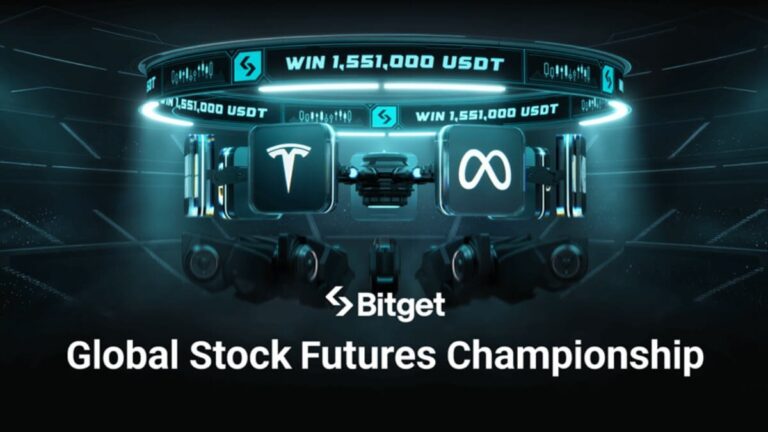
Bitget, the world’s largest Universal Exchange (UEX), is turning global markets into an arena with the launch of its first-ever Global Stock Futures Championship, unveiling a headline prize pool of 1,551,000 USDT. Kicking off on January 23, 2026 at 00:00 (UTC+8) and running till February 11, 2026 (UTC+8), the championship is Bitget’s boldest competitive event yet. Built to unite elite traders, rising stars, and global communities in a single, high-stakes battleground.

The centerpiece is the Team Battle, where collaboration meets competition for 940,000 USDT in rewards. A main pool of 700,000 USDT will be shared among the top 30 teams ranked by profit and loss, while 200,000 USDT in Early Bird Perks rewards the first 10,000 participants who join teams and complete qualifying trades between January 26 and 28. Leadership takes the spotlight through 40,000 USDT in Team Captain Awards, honoring those who rally and guide winning squads.

For traders who thrive solo, the Individual PnL Challenge offers 300,000 USDT to the top 100 performers worldwide, leaving an open stage for precision, timing, and confidence under pressure.

Influence enters the arena through the Star Trader Challenge, where global crypto creators compete for 101,000 USDT. The top three will claim a 100,000 USDT pool, while a 1,000 USDT community voting fund lets users predict and back the ultimate champion, turning spectators into participants.

The Challenge Center completes the championship ecosystem, distributing 100,000 USDT through daily and full-period missions. By completing tasks, traders unlock Mystery Boxes containing tokenized stocks, vouchers, merchandise, and premium rewards, making every trade part of a larger game.

For first timers, Bitget introduces a welcome airdrop totaling 110,000 USDT. All participants receive a 50,000 USDT welcome gift upon registration, while new users who complete signup and achieve at least 100 USDT in stock futures trading volume qualify for an additional 60,000 USDT airdrop with guaranteed tokenized stock rewards.

The championship launches alongside peak earnings season, transforming market volatility into a proving ground for skill. More than a competition, it marks a new chapter in how traders engage global equities through a crypto-native lens. With this debut, Bitget brings stock markets into the rhythm of real-time, borderless trading. Where teams form, reputations rise, and every move counts.

To be part of the championship, visit here. 

About Bitget

Bitget is the world’s largest Universal Exchange (UEX), serving over 125 million users and offering access to over 2M crypto tokens, 100+ tokenized stocks, ETFs, commodities, FX, and precious metals such as gold. The ecosystem is committed to helping users trade smarter with its AI agent, which co-pilots trade execution. Bitget is driving crypto adoption through strategic partnerships with LALIGA and MotoGP™. Aligned with its global impact strategy, Bitget has joined hands with UNICEF to support blockchain education for 1.1 million people by 2027. Bitget currently leads in the tokenized TradFi market, providing the industry’s lowest fees and highest liquidity across 150 regions worldwide.

Source: Bitget

This article “Bitget Ignites Global Stock Futures Championship with $1.55 Million Prize Pool” was first published on AlexaBlockchain. Read the complete article here: https://alexablockchain.com/bitget-global-stock-futures-championship/

Submit Your Blockchain and Crypto Press Release here.

Disclaimer: This is a press releaseprovided by the company/ company representative. AlexaBlockchain does not endorse, guarantee, or accept responsibility for the content, accuracy, quality, advertising, products, or other materials presented in this publication. Readers are advised to conduct their own due diligence before taking any actions related to the company mentioned herein. AlexaBlockchain expressly disclaims any liability for damages or losses, whether direct or indirect, arising from or related to the use of or reliance on any content, goods, or services referenced in this press release.

Image Credits: Bitget, Shutterstock, Canva, Wiki Commons

Gold surges to doorstep of $5,000 as experts debate bitcoin's underperformance

0

“The [BTC] adoption announcements are not working anymore,” said Jim Bianco, while Bloomberg’s Eric Balchunas urged taking a longer-term view.

Kansas Introduce Bill To Establish Strategic Bitcoin Reserve

0

Kansas has become the latest U.S. state to explore a formal role for Bitcoin and digital assets in public finance, with lawmakers introducing legislation that would create a state-managed Bitcoin and Digital Assets Reserve Fund.

The bill, introduced by State Senator Craig Bowser, proposes amending Kansas’ unclaimed property laws to explicitly recognize digital assets, including cryptocurrencies and virtual currencies, and to establish a framework for their custody, management, and potential sale.

If passed, the legislation would place oversight of the reserve with the Kansas State Treasurer.

Under the proposal, unclaimed digital assets, like Bitcoin, would be transferred to the state after three years of inactivity following undeliverable written or electronic communication to the owner. 

There is some ambiguity around what an ‘unclaimed digital asset’ is but the bill appears to apply only to custodial digital assets held by a legally defined “holder,” such as exchanges, banks, trust companies, or other licensed custodians, not to self-custodied wallets. 

Per the bill, the three-year abandonment clock begins only after written or electronic communication to the owner is returned as undeliverable, and it stops immediately if the owner shows any sign of activity, including logging in or accessing another account with the same custodian.

Unlike many traditional forms of unclaimed property, the bill allows these assets to be delivered and held in their native digital form, rather than being immediately liquidated.

The legislation also permits the state’s designated qualified custodian to stake digital assets and receive airdrops, subject to direction from the treasurer. 

Any staking rewards or airdropped assets generated after three years would be transferred into the BTC and Digital Assets Reserve Fund, creating a mechanism for the state to accumulate digital assets over time.

In a notable provision, the bill prohibits BTC from being deposited into the state’s general fund.

Instead, Kansas would retain Bitcoin as part of its reserve, while directing 10% of deposits of non-bitcoin digital assets into the general fund, contingent on legislative appropriations. Supporters argue this structure treats BTC as a long-term reserve asset rather than a short-term revenue source.

States are actively pushing for bitcoin reserves 

The bill also lays out how the state would handle the sale of digital assets. Cryptocurrencies that trade on established exchanges would have to be sold at market prices, while assets without active exchange listings could be sold using other commercially reasonable methods. 

The goal of all this is to minimize market disruption while adding clearer guardrails around how state-held digital assets are managed.

If passed, the legislation would put Kansas alongside a growing number of U.S. states exploring how Bitcoin and other digital assets might fit into long-term financial and custodial strategies. 

In recent years, state lawmakers across the country have debated whether Bitcoin could serve as a hedge against inflation, a diversification tool, or a way to modernize public finance infrastructure.

$100K Bitcoin Setup Strengthens as Macro Data Clears the Way

0

Bitcoin steadied near key support as inflation data clarified policy expectations, reinforcing higher-for-longer rates while strengthening the case for crypto as a macro hedge amid geopolitical shifts and renewed ETF-driven demand. PCE Comes in Line and a Strategist Sees Bitcoin Gearing up for $100K A fresh set of macroeconomic signals sharpened market expectations as investors […]

IXOPAY Launches ‘Token-First’ Packages to Tackle Payment Stack Fragmentation

0

IXOPAY has launched three new TokenEx tokenization packages designed to make “token-first” payments the default standard for enterprise merchants.

The move aims to address the growing challenge of payment stack fragmentation, offering businesses a faster path to securing data, reducing PCI scope, and achieving processor independence.

Breaking processor lock-in

According to IXOPAY, many merchants currently remain constrained by “processor-owned tokens” and brittle integrations that are costly to change. The new packaged options are intended to remove the “build-it-yourself” burden, providing payments teams with a standardized starting point that scales as they add new processors, geographies, and payment methods.

The three new packages include:

  • TokenEx Core: Focuses on network and universal tokens to keep credentials portable, effectively reducing vendor lock-in and minimizing PCI compliance scope.
  • TokenEx Connect: Includes the Core features plus access to over 20 pre-built PSP integrations, allowing for faster multi-processor strategies without the need for re-vaulting data.
  • Alternative Payments: Offers out-of-the-box access to Alternative Payment Methods (APMs) such as PayPal, Venmo, and BNPL services, simplifying the complexity of expanding acceptance.

In parallel with the new packaging structure, IXOPAY is expanding its global coverage by adding support for PIX, Brazil’s instant payment system, via dLocal. This integration is designed to facilitate faster market entry and expansion for merchants targeting the Latin American region without the need to build complex local integrations from scratch.

The company’s leadership, including Interim CEO Suzanne Rudnitzki and CPO Peter Papaioannou, is positioning these updates as a strategic response to the need for greater flexibility and security in the enterprise payments landscape.

17K BTC Inflows Anomaly Puts Bitcoin Recovery at Risk

0

The Bitcoin price rally to $90,000 failed to hold after 17,000 BTC were sent to exchanges, but an improving spot market suggests that traders view BTC’s current pricing as discounted.

Crypto exchanges saw a surge in Bitcoin (BTC) flows over the past two days, emulating a pattern seen when the market topped in July and August 2025. More than 17,000 BTC was sent to exchanges, potentially a sign that the current sell-off could deepen.

Bitcoin researcher Axel Adler Jr. said that the atypical 17,000 BTC exchange inflow occurred between Jan. 20 and 21, including 9,867 BTC on Jan. 20 and 6,786 BTC on Jan. 21. This sharply contrasts with January’s average daily netflow range of -2,000 to +2,000 BTC.

Bitcoin exchange netflows. Source: CryptoQuant/Axel Adler Jr.

Although the netflow has since normalized (+296 BTC), the accumulated inflows create a supply overhang near current levels. As a result, the current move towards $89,000 to $90,000 is viewed as a key resistance test.

This aligns with Bitcoin’s short-term holder SOPR, which tracks whether recent buyers are selling at a profit or a loss. The seven-day SMA sits at 0.996, below the key 1.0 break-even level. At the recent price low near $87,500, the SOPR dropped to 0.965, implying an average 3.5% loss for short-term holders.

Related: Bitcoin diamond hand BTC selling not ‘repeat of 2017, 2021,’ research warns

Data points to an improving market

Glassnode data shows improvement in Bitcoin’s spot markets. Binance and aggregate exchange cumulative volume delta (CVD) also have rotated back toward buy-dominant conditions, while selling pressure on Coinbase has stabilized. This reduction in overhead supply should technically stabilize prices, but the current level of buying is insufficient.

Coinbase, Cryptocurrencies, Bitcoin Price, Adoption, Markets, United States, Cryptocurrency Exchange, Binance, Price Analysis, Market Analysis
Spot CVD bias for all exchanges. Source: Glassnode

Notably, the aggregated exchange spot CVD level has reached highs last seen in April 2025, a period that previously preceded range expansion.

Crypto analyst Darkfost added that the stablecoin metrics support a potential bottoming process. Following Bitcoin’s correction, the Stablecoin Supply Ratio (SSR) saw its sharpest drop of the cycle, indicating Bitcoin’s market cap fell faster than stablecoin liquidity.

Coinbase, Cryptocurrencies, Bitcoin Price, Adoption, Markets, United States, Cryptocurrency Exchange, Binance, Price Analysis, Market Analysis
Stablecoin supply ratio oscillator. Source: CryptoQuant

Related: Bitcoin analysts predict ‘prolonged consolidation’ for BTC price