

The crypto custodian priced its initial public offering at $18 per share late Wednesday.
Interview with Gaurav Shah, Managing Partner, Arete Ventures

This is an interview with Gaurav Shah, Managing Partner, Arete Ventures
Can you introduce yourself and tell our readers about your background in private equity? What specific areas within PE do you focus on, and what makes your approach distinctive?
I entered private equity through the operational side of renewable energy, which differed from the banking/strategy consulting backgrounds that professionals typically come from. Around 2008, just months before the subprime crisis unfolded, I joined as an operating partner, buying distressed and foreclosed renewable energy and chemical assets across the US.
These projects looked broken or less viable on paper but held real value underneath if you were willing to be hands-on and link strategy with operations in a way that drives transformation and growth. I spent more than a decade across several assets, fixing or upgrading technology, renegotiating offtake agreements, rebuilding stronger teams, and stabilizing the businesses so they could return to sustainable margins. It shaped my perspectives and stays with me even today. Value is rarely visible on the first attempt and only surfaces once you’re close to the ground.
As my experience evolved, the focus widened from energy to the technology sector, concentrating on opportunities where capital alone cannot move the needle. During due diligence, I used to focus on companies or assets that require a mix of technical understanding, operational expertise, and anticipating issues before they become visible in the numbers. I try to recognize shifts before the market does. It’s a niche that has helped me bridge what General Partners (GPs) expect (tangible improvements in revenues, margins, and scalability) and what operators know is actually possible.
Operating bias and navigating uncertainties make my approach distinctive, I think. Financial engineering cannot guarantee outsized returns always, and I try not to evaluate companies as financial instruments either. I tend to think of them as living entities that could either compound or fall apart (high-risk environment), depending on how well the pieces fit together. Over time, I have learned to look for signals that don’t necessarily appear in the data room – founder resilience and adaptability, what a business feels like during routine weekdays, real bottlenecks in the growth plan, how fast an idea can go obsolete due to regulatory shifts, AI disruption, or sociopolitical backlash. The velocity of irrelevance in GenAI era is a risk that needs to be priced in as well, I think.
What pivotal moments or decisions in your career led you to where you are today in private equity? Were there any mentors, deals, or turning points that fundamentally shaped your investment philosophy?
Most of the pivotal moments didn’t feel pivotal at the time, now when I look back. They felt like uncomfortable decisions that I might not even be qualified to make. Early in my career, I was thrown into situations where businesses were either failing, margins were compressed or investors had lost patience. There were no established playbooks for these kinds of situations; instead, I had to understand the constraints and figure them out on my own ensuring that the decisions I made wouldn’t backfire. I have personally learned more about a company from the way it breaks than from the way it could have grown. I look for fault lines because that’s where the real story is hidden.
Private equity wasn’t something I confidently pursued at first. My GP at the time advised me to consider it, despite my lack of an MBA or investment experience in any capacity. Distressed investing involves courts, lawyers, regulatory complexity, and a different level of accountability. He told me that the way I paid attention to efficiencies, margins, and sustainable growth was exactly what many investment teams lacked and often ended up with failures. He believed that the finance and legal aspects could be learned with time but the ability to understand how a business actually performs on an ordinary day is much harder to teach.
Those deep conversations ended up changing the trajectory of my career. Investment philosophy plays a bigger role and is shaped long before you ever do your first deal. Some people learn private equity through a financial perspective; I earned it by walking into facilities that shouldn’t have survived and figuring out why some did. That became my compass, and it continues to be so to this day.
When you’re evaluating a potential private equity investment, what are the top three red flags that make you walk away from a deal, and how did you learn to recognize them early in the diligence process?
The biggest red flags aren’t found in spreadsheets or data rooms. They emerge when numbers go silent or the operating realities start painting a different story than what you would have hoped for.
When a founder or leadership team refuses to engage with inconvenient data and quietly dismisses it, that’s your first red flag. I can handle disagreements, but when someone doesn’t want to own their decisions, live in denial, and insists that the market “just doesn’t get it yet” or “I wouldn’t worry about the unit economics turning brittle,”
I tend to walk away. Fragility that hides behind growth is the second red flag. With AI rewriting the cost curves in today’s environment, some companies grow fast for reasons that might not hold up sustainably in the long run. If a business looks impressive on the surface but every operational metric underneath is relying on perfect conditions, that’s concerning and a sign to step back. The third red flag is aging in relevance, where the company’s core idea is drifting toward irrelevance faster than the team can adapt. We’re in a period where the half-life of a competitive advantage is shrinking. Generative AI can neutralize the once-perceived and widely acknowledged defensible moats in months, and consumer sentiment can shift overnight. When the business model feels slower than the world around it, that’s when I decide to walk away, even if everything looks “fine” on paper.
These red flags are grounded in experience, and they typically whisper (instead of shouting) when they occur. The key here is learning to hear them early, before the deal turns into a post-mortem.
Private equity has historically focused on financial returns, but there’s growing pressure to integrate ESG and impact considerations. How do you balance generating strong returns for LPs while addressing sustainability and social impact in your portfolio companies?
I don’t think of sustainability as a separate lane from returns anymore. In the sectors (energy and frontier technologies) I work in, environmental and social risks appear either through compliance costs, supply-chain pressures, customer requirements, or regulatory shifts. Hence, instead of treating ESG as a separate framework, I treat it as part of my operational risks.I balance it today by focusing on what is material to the business. If sustainability issues can impact margins, asset life, or the ability to win contracts, then it undoubtedly becomes a core part of my investment thesis.
Most Limited Partners (LPs) I work with prefer transparency over perfection. A company might be behind on ESG performance, but if they have a credible path forward, that’s more investable for LPs than a polished slide deck with no operational depth. Foresight and risk-adjusted resilience hold the key for LPs. Strong returns and sustainability can align when companies start preparing in the direction the markets are moving before they’re forced into it under pressure.
Can you walk us through a particularly challenging deal negotiation you’ve been part of? What lessons did you learn about managing competing interests between founders, management teams, and investors?
Deal negotiations are more complex in distressed assets than those of operating assets. It involved a distressed asset where the founder, management team, and investors wanted to close the deal, but for different reasons. The founder was emotionally attached to the original mission, the management team wanted stability after months of uncertainty, and the investors wanted a clean reset of the liabilities so the business could be rebuilt without legacy issues. They all wanted the company to survive, but no one agreed on what survival actually meant.
We then stopped debating term sheets and shifted the focus to discussing the non-negotiables for each group. The founder wanted to retain legitimacy in the new structure, the management team wanted clarity around roles, and the investors wanted to secure the operational changes they needed. It wasn’t smooth, but eventually, worked out well because everyone was heard without being sidelined.
What I learned and realized from this situation was that tough negotiations are more about emotional dynamics, such as identity, trust, and loss aversion, and rarely about economics. People tend to fight hardest on parts of the deal that threaten how they see themselves. Surfacing these deadlocks early can avoid the pain that could become difficult to solve at later stages.
Technology is rapidly changing how PE firms source deals, conduct due diligence, and create value post-acquisition. How are you and your firm adapting to this shift, and what tools or methodologies have proven most valuable in your practice?
Technology is significantly influencing how PE firms operate today, but what I like more is the way these tools are compressing the time it takes to make a decision. Five or seven years ago, it would have taken weeks to research data and build a consensus of the market or sector. AI tools and platforms now surface those same patterns in a matter of hours. These tools are helpful in decoding large operational datasets, comparing them with sector benchmarks, and modeling downside scenarios in minutes.
However, they cannot make a judgment though. Tech has shortened the analytical cycle, but it hasn’t replaced the need to walk the floor, talk to customers, or understand why unit economics aren’t working.
From my own practice, tools that reduce noise and dashboards are more valuable. For sourcing, we use a combination of automated signal detection and operator networks, which has worked out well for us. We track regulatory changes, supply-chain movements, and early shifts in customer demand as key detection signals.
Post-acquisition is where we have benefited more from the technology impact. Predictive maintenance tools, demand-forecasting algorithms, and workflow analytics proactively helped us identify operational bottlenecks. Detecting them early allowed our teams to make small corrections before they became bigger problems.
Technology has reduced the time required, but still hasn’t altered the fundamentals of PE investments. The real edge is in combining digital tools with your direct operational experience. You have to see what the data wasn’t able to articulate and try to understand which signals actually matter.
Portfolio management after the acquisition is where real value creation happens. What’s one operational improvement strategy you’ve successfully implemented across portfolio companies, and what advice would you give to other PE professionals looking to drive performance post-close?
Rebuilding the information flow within a business is a key operational strategy that I have had repeated success with multiple portfolio companies. In underperforming companies, the key issues do not reach the people who should actually act on them. Bad news travels last and teams operate in silos which complicates the situation further. Post-acquisition, the first change I bring in is establishing weekly dashboards around a few non-negotiable metrics, including unit economics, customer retention signals, production bottlenecks, and early-warning signals. Relevant teams and people are assigned the responsibilities of overseeing and managing it so that there are no surprises later on. Once they start seeing the results, the organization’s speed and accountability increase, and optimism is no longer the core strategy that it used to be in the past.
My advice to fellow PE professionals would be to resist the urge to overdo the post-close playbooks. You do not need a 90-page value creation blueprint. You need clarity, implementation, and alignment. Remove the ambiguity in the first 60 days, and you end up unlocking nearly 75% of the performance upside. Simplify how information moves.
Value creation is less likely to come from one big initiative and most often comes from a lot of small operational corrections. Also, establish a work culture that allows people to confront problems before they are fully formed.
The current market environment presents unique challenges with interest rates, valuation compression, and exit uncertainty. How are you adjusting your investment strategy and portfolio approach to navigate these headwinds while still delivering returns?
Higher rates and valuation compression are forcing a return to fundamentals, which, to me, is actually clarifying the investment strategy rather than complicating it. Post-COVID, we stretched the growth stories a bit more than desired. We are now in an environment where durability matters more than acceleration, which is how it has been and should be moving forward. I am more interested in businesses that have recurring demand, reasonable pricing power, and operational resilience. Relying on cheap capital or optimistic exit assumptions may have worked for a while in a zero-rate world, but not anymore.
We also spend considerable time understanding the downside protection. How the company behaves under stress, what costs are truly variable, and business performance when capital availability is tight. This kind of stress profile testing tells me more about realistic returns and works better than the growth case scenarios. Exit uncertainties prevent me from underwriting a bad operating model.
Being able to extend the runway and improve cash conversion early remains a priority for us on the portfolio side. We push companies to renegotiate vendor terms, build forward visibility with customers, and execute initiatives with more discipline. The compounding effect of small performance improvements has added more value than the large strategic bets, and this progressive learning has delivered better returns and also helped tackle the headwinds effectively.
Exits are messy, can get delayed, or constrained by valuation. They are never easy, in spite of the best efforts and discipline. Being cognizant of this fact allows me to sharply focus on intrinsic value creation. If you build businesses that can sustain bad markets or economic cycles, they typically tend to outperform in good ones. Discipline becomes a competitive advantage in uncertain environments.
Looking ahead, what emerging trends in private equity do you believe will fundamentally reshape the industry in the next five years, and how are you positioning yourself and your investments to capitalize on or adapt to these changes?
I see three emerging trends here.
1) Technology, regulation, and customer behavior are moving faster than the holding periods, which compels us to monitor these trends closely. The half-life of an investment thesis is shrinking, and this indicator keeps me alert. As I mentioned earlier, GenAI, policy changes, and other frontier technologies can neutralize a company’s edge fairly quickly with little to no chance for recourse. PE investors will have to underwrite adaptability and cannot just rely on current advantages or growth potential. We are positioning ourselves by assessing how quickly a team can reallocate resources, kill weak ideas if they no longer hold merit, and create new ones that compete with evolving market dynamics.
2) The boundaries between classic buyouts, private credit, and infrastructure-style deals are increasingly getting blurred. In this high-rate and tight exit environment, value will emerge from convertible features, revenue-linked terms, continuation vehicles, and capital stacks that match the asset’s real risk profile. We no longer rely on multiple expansions. Instead, we emphasize combining operational improvement with downside-aware structures.
3) Climate and sustainability are transitioning from “ESG slide decks” to real economic plays. Transition risk and carbon policies are influencing asset values, insurance, and permitting timelines already. For the sectors I focus on, you can’t ignore these forces without mispricing risk. I treat them as part of core underwriting inputs and ask, “How exposed is this business to regulatory tightening? What could potentially happen is customers ask for a stronger climate commitment? How will the asset perform when those promises turn into procurement requirements?
Private equity is set to become more like long-term operational stewardship with changing dynamics compared to the old financial engineering strategy around a static and more predictable asset. I am constantly endeavoring to deepen my operating lens, monitor real-time signals, and be brutally honest about how quickly a great business can become misaligned with its customers
Optimism community begins vote on OP token buybacks

The Optimism Foundation’s proposal would link the value of the OP token more directly to the economic performance of the Superchain.
Ark Invest sees bitcoin and tokenization driving the next phase of digital asset growth

The asset manager said bitcoin’s institutional adoption and asset tokenization are pushing digital assets toward scale, potentially reaching tens of trillions by decade’s end.
BitGo stock jumps on NYSE debut as Ondo brings the stock onchain

BitGo, a digital asset custody and security firm serving institutional clients, began trading on the New York Stock Exchange on Thursday after pricing its IPO at $18. The stock opened near $22.4 and briefly surged to $24.1.
Shares later pared gains into the close, ending the session near $20.1, still up roughly 13% from the IPO price on its first day of trading.
Within hours of the debut, Ondo Finance made tokenized BitGo shares available through Ondo Global Markets, allowing users to access the newly listed equity onchain.
The tokenized stock launched across Solana, Ethereum, and BNB Chain, marking one of the first cases where a newly public US company became globally accessible on-chain in near real time.
The rollout follows Ondo Global Markets’ expansion to Solana earlier this week, making BitGo the 205th stock available to users on-chain.
Since launching in September 2025, Ondo Global Markets has grown into the largest tokenized securities platform by total value locked, with about $466 million in TVL and more than $6.4 billion in cumulative trading volume.
SEC, CFTC to push united crypto work now that they both have Trump-appointed heads

The two U.S. markets regulators will have a joint event to highlight their unified crypto agenda, following the arrival of permanent CFTC chief Mike Selig.
Capital One agrees to acquire credit card, stablecoin payment enabler Brex

In a press release from September, Brex said it was planning to launch native stablecoin payments as part of its business.
UK Fintech Funding Rebounds 10% in 2025 as Investors Flock to Late-Stage Giants

UK fintech investment surged by 10 per cent in 2025, reaching a total of $5.3billion, according to the latest data from Tracxn. The findings signal a decisive return to market stability, driven largely by high-conviction bets on established players rather than broad ecosystem expansion.
The UK FinTech Annual Funding Report 2025 reveals a market in transition, characterized by a massive 101 per cent spike in late-stage funding, which hit $3.9billion. This influx of capital into mature companies stands in stark contrast to the earlier stages of the lifecycle, where investment contracted significantly.
A tale of two markets
While the headline figure paints a picture of recovery, the underlying data highlights a strategic retreat from risk. Seed-stage funding plummeted by 39 per cent to $202million, while Early-stage funding more than halved, dropping 54 per cent to $1. billion.
Conversely, the market demonstrated a robust appetite for large-scale dealmaking. There were 11 mega-rounds exceeding $100million in 2025, compared to 10 the previous year. Notable raises included FNZ, which secured $1.2billion, and DRML Miner, which raised $1billion in a Series D round. Rapyd also featured prominently with a $250million Series F raise.
Exit activity matures
The year was also defined by significant liquidity events. M&A activity accelerated, with 116 acquisitions recorded—a 25 per cent increase from 2024. The standout deal of the year was undoubtedly Global Payments’ acquisition of Worldpay for a staggering $24.3billion, validating the scale and maturity of the UK sector.
Public market exits remained steady but subdued, with just two IPOs recorded (RedCloud and Diginex), consistent with figures from the previous two years. Unicorn creation also slowed, with only one new company reaching the billion-dollar valuation milestone in 2025.
Geographically, London maintained its dominance, capturing 75 per cent of total funding. However, the data suggests the beginnings of a “hub-centric expansion,” with Derby emerging as a significant secondary node, securing 19 per cent of the total capital raised.
Investor landscape
The investor ecosystem remained active despite the shifting focus. Y Combinator, Haatch, and Project A were the top investors at the seed stage, while Sequoia Capital, DN Capital, and AlbionVC led early-stage activity. The surge in late-stage funding was driven by firms such as Hedosophia, Latitude Venture Partners, and Georgian.
The report concludes that while the funding landscape has re-concentrated around mature assets, the overall increase in capital inflows and acquisition momentum points to a sector that has successfully navigated the post-2023 correction.
Nasdaq Seeks to Remove Position Limits on Bitcoin and Ether ETF options
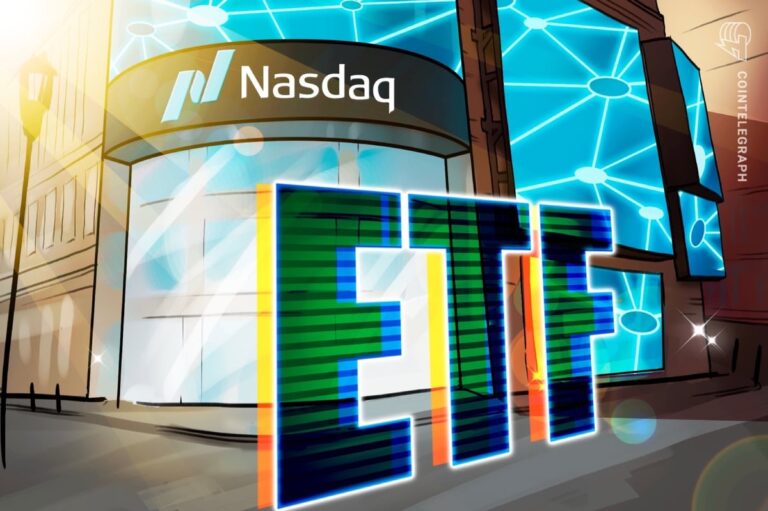
US exchange Nasdaq has filed a rule change with the Securities and Exchange Commission to remove limits on options tied to spot Bitcoin and Ether exchange-traded funds, in a move to align crypto ETF options with rules applied to other commodity-based funds.
The proposal, filed on Jan. 7 and made effective on Wednesday, lifts the existing 25,000-contract limits on options linked to a range of Bitcoin (BTC) and Ether (ETH) ETFs listed on Nasdaq, including products from BlackRock, Fidelity, Bitwise, Grayscale, ARK/21Shares and VanEck, according to the filing.
The SEC waived its standard 30-day waiting period, allowing the rule change to take effect immediately, while retaining the authority to suspend the change within 60 days if it determines further review is warranted.
Options are financial contracts that give traders the right, but not the obligation, to buy or sell an underlying asset at a set price before a certain date. Exchanges and regulators typically impose limits on options trading to reduce the risk of excessive speculation, market manipulation and concentrated positions that could amplify volatility or threaten market stability.
Nasdaq said the change would allow the exchange to treat digital assets “in the same manner as all other options that qualify for listing,” arguing that the proposal would eliminate unequal treatment without compromising investor protection.
The SEC has opened a comment period on the proposal, with a final determination expected by late February unless the rule is suspended for further review.
The filing builds on Nasdaq’s approval late in 2025 to list options on single-asset crypto ETFs as commodity-based trusts, a move that allowed Bitcoin and Ether ETF options to trade on the exchange but left existing position and exercise limits in place.
Related: BitGo sets IPO price at $18 as shares to begin trading on NYSE
Nasdaq expands its role in crypto markets
Nasdaq has been steadily expanding its role in crypto markets, from pushing tokenized equities and unifying crypto indexes to loosening derivatives rules around Bitcoin ETFs.
In November, Nasdaq filed a proposal with the SEC to raise position limits on options tied to BlackRock’s iShares Bitcoin Trust (IBIT) from 250,000 contracts to 1 million, citing growing demand and arguing that the existing cap constrained hedging and other trading strategies.
The same month, Nasdaq’s head of digital assets strategy, Matt Savarese, told CNBC the exchange was prioritizing regulatory approval to offer tokenized versions of its listed stocks, pledging to move quickly through the SEC’s review process as public comments and agency feedback are addressed.

In January, Nasdaq and CME Group announced plans to unify their crypto benchmarks, rebranding the Nasdaq Crypto Index as the Nasdaq-CME Crypto Index, a multi-asset index that tracks major cryptocurrencies including BTC, ETH, XRP (XRP), Solana (SOL), Chainlink (LINK), Cardano (ADA) and Avalanche (AVAX).
Nasdaq is a US stock exchange operator that runs electronic markets for equities, derivatives and exchange-traded products and is a major listing venue for technology and growth-oriented companies.
Magazine: ‘If you want to be great, make enemies’: Solana economist Max Resnick
Cointelegraph is committed to independent, transparent journalism. This news article is produced in accordance with Cointelegraph’s Editorial Policy and aims to provide accurate and timely information. Readers are encouraged to verify information independently. Read our Editorial Policy https://cointelegraph.com/editorial-policy
Expert Explains Why The Market Cap Theory Doesn’t Apply To XRP
Trusted Editorial content, reviewed by leading industry experts and seasoned editors. Ad Disclosure
Market cap arguments always dominate debates around XRP’s long-term price potential, especially when double-digit and triple-digit targets are mentioned. Critics point to the altcoin’s large circulating supply and compare its implied valuation to banks and major corporations, using that comparison as a reason to dismiss higher price scenarios.
However, a few analysts also contend that this framework misunderstands what the token is designed to do. According to one such expert, the problem is not the math itself, but the model being used to interpret it.
Why Bank Market Cap Comparisons Miss The Point
Crypto analyst Crypto Luke recently pushed back against the idea that XRP should be valued using the same logic applied to banks and financial institutions. The idea is that banks process enormous volumes of money every day, often in the trillions, but they do not hold that money on their balance sheets. The market capitalizations of banks are based on earnings, risk exposure, regulatory burdens, and operational efficiency, not the total value that flows through their systems.
Comparing XRP to financial institutions such as BNY Mellon mixes two very different concepts. Banks act as intermediaries that move other people’s money and earn fees along the way. The altcoin, on the other hand, is not a company but a liquidity bridge. It is designed to be the asset that actually settles value. Therefore, using equity-style market cap comparisons to judge a settlement asset like XRP leads to conclusions that are incomplete.
What This Means For XRP Price Debates
As noted by the expert, the design question isn’t how much volume moves; it’s how much capital must exist to support that movement without pre-funding.
It is important to note that the claim that market cap theory doesn’t apply to XRP is not a denial of basic math. Price multiplied by supply will always equal market capitalization. However, what Crypto Luke and others are challenging is the assumption that its market cap must be interpreted the same way as that of a bank or a traditional company.
Related Reading: XRP Price At $10 Too Low? Pundit Says That’s For Retail, Reveals Institutional Targets
Another analyst, Pantoja, dismissed the idea that market cap is a hindrance for the altcoin to reach $1,000. The analyst noted that long-term XRP valuation will hinge on the real-world adoption of its underlying technology. Speaking of adoption, the adoption is talking about the token and the XRP Ledger being used by banks for cross-border settlements.
At the time of writing, XRP has a circulating supply of 60.7 billion XRP tokens. If the cryptocurrency were to reach a double-digit price, such as $10, based on the current supply, the implied market capitalization would be about $607 billion. That sounds extreme at first glance, but it is not automatically impossible. For context, Bitcoin’s market cap is about $1.79 trillion, so this is possible for a cryptocurrency.
This perspective weakens blanket statements that the token cannot reach certain price levels simply because the implied valuation looks large when placed next to corporate balance sheets. At the same time, it does not automatically validate extreme price targets. One crypto analyst, Mason Versluis, noted $10 is a much more realistic price target than $10,000 predictions.
Featured image from Adobe Stock, chart from Tradingview.com

Editorial Process for bitcoinist is centered on delivering thoroughly researched, accurate, and unbiased content. We uphold strict sourcing standards, and each page undergoes diligent review by our team of top technology experts and seasoned editors. This process ensures the integrity, relevance, and value of our content for our readers.