Home Blog Page 1117

GameStop’s $420 million bitcoin (BTC) move sparks speculation of selling

0

Crypto watchers are speculating that video game retailer GameStop (GME) might be the latest firm to abandon its bitcoin treasury after moving all its coins to Coinbase this week.

Blockchain analytics firm CryptoQuant spotted on Friday that a wallet labeled GameStop had transferred all its stash – some 4,710 BTC, worth about $420 million at current prices – to Coinbase Prime, the U.S.-based crypto exchange’s institutional arm. Blockchain data by Arkham Intelligence confirms the transfers.

GameStop bitcoin holdings (Arkham Intelligence)

GameStop announced the bitcoin purchase in May. While the company did not disclose how much it spent on the stash, CryptoQuant estimated it invested roughly $504 million at an average price of $107,900 per coin. If sold today at roughly $89,000 BTC price, the company would likely take a loss of around $84 million.

Is GameStop selling?

The maneuver has sparked speculation in crypto circles that GameStop may be exiting its bitcoin position. Especially so that it happened at a time when digital asset treasury firms are under increasing pressure as crypto markets tumbled over the past months, leaving them sitting on steep unrealized losses on their holdings. Some of them, like Ethereum-focused ETHZilla (ETHZ), already sold a significant chunk of their ether stash to trim their debt load.

While moving funds to Coinbase Prime, a platform catering to institutional clients, often signals an intent to sell, not all large transfers necessarily imply an imminent liquidation.

Coinbase Prime also offers custodial services for institutions through its regulated trust company, which could, in theory, mean internal transfers and wallet management.

GameStop has not commented on the transfer yet.

XRP Dev Shares How To Retire In A Few Years

0

Trusted Editorial content, reviewed by leading industry experts and seasoned editors. Ad Disclosure

A recent statement from an XRP Ledger (XRPL) developer suggests that XRP could be the key to an early retirement shortcut. Unlike steady paychecks or slow-growing investments in traditional assets, cryptocurrencies have the ability to create generational wealth rapidly, due to their penchant for sudden and explosive price moves. Among the thousands of digital assets on the market, the developer highlighted the token as his primary choice for investors seeking substantial returns, even sharing strategies for how the coin can help them retire in a few years. 

XRP Emerges As Shortcut To Early Retirement

A DropCoin XRPL developer, identified as ‘Bird’ on X, announced on Thursday, January 22, that buying and holding XRP at current prices could help investors retire within a few years. The bold claim quickly caught the attention of many in the crypto community, with some asking the developers to elaborate on the strategies involved and the expected timeline for achieving such wealth. 

Related Reading: XRP Price Obliteration Is Not A Matter Of If, New All-Time Highs Are Coming

Not stopping there, Bird claimed that investing in the token could eliminate the need for a job, suggesting that long-term investors may eventually rely on the potential profits from their holdings as a primary source of income. His statements were in response to a post by Watcher.Guru, which the developer directly referenced to support his optimistic long-term outlook. 

In that post, Watcher Guru quoted a statement reportedly made by Binance’s founder ChangPeng Zhao, who also agreed that holding crypto assets over time could make jobs unnecessary and allow investors to retire sooner than planned. The Ledger developer shared a screenshot of Zhao making similar remarks about Artificial Intelligence, suggesting that the Binance founder views both crypto and AI as powerful tools for achieving long-term financial freedom

A crypto community member who responded to Bird’s post questioned how long an investor has to hold XRP before retiring early. The developer answered humorously that it could be held indefinitely, adding that some investors could reach early retirement this year, while others may need a few more years. He emphasized that the timeline ultimately depends on how many tokens an investor holds.  

How High The Altcoin Could Rise To Enable Early Retirement

Addressing questions from the crypto community members, Bird shared his outlook on how high he believes XRP’s price could rise, helping investors achieve early retirement. He predicted that within the next few years, the cryptocurrency could rise to $100 and beyond—a significant jump from its current market price of around $1.90. 

Related Reading: How Donald Trump’s Latest Crypto Move Will Boost Demand For XRP

The Ledger developer suggested that reaching $100 could be a gradual process for the altcoin, forecasting an initial rally to $10 in the First Quarter (Q1) of 2026. Notably, Bird’s remarks reflect a classic buy-the-dip and hold strategy, where investors accumulate during downtrends and patiently wait for the price to rally explosively before taking profits.

XRP
XRP trading at $1.92 on the 1D chart | Source: XRPUSDT on Tradingview.com

Featured image from Getty Images, chart from Tradingview.com

Editorial Process for bitcoinist is centered on delivering thoroughly researched, accurate, and unbiased content. We uphold strict sourcing standards, and each page undergoes diligent review by our team of top technology experts and seasoned editors. This process ensures the integrity, relevance, and value of our content for our readers.

BTC bulls mull price weakness as gold soars near $5,000

0

It’s no secret that bitcoin is currently failing its many narratives, including the claim that it can serve as an inflation hedge or a safe-haven asset amid uncertainty.

While gold has climbed more than 80% during this period of high inflation, geopolitical skirmishes, and interest rate uncertainty, bitcoin has dropped 14% year over year.

In theory, assets that protect against inflation should rise when the value of money falls. For gold and the rest of the precious metals complex, that theory has worked. For digital gold, not so much.

That divergence has raised fresh questions: why would anyone buy bitcoin now when precious metals and equities give better returns?

CoinDesk has asked a group of longtime bitcoin bulls, and this is how they are defending buying bitcoin:

Comfort in the known (Jessy Gilger, senior advisor at Gannett Wealth Advisors, a bitcoin-native wealth management firm)

“Gold’s current surge is a temporary political distraction. In times of fear, institutions tend to retreat to what they know because they often lack the foresight to embrace a genuine phase shift in technology. We are currently seeing a historical standard deviation move in the GLD/BTC power law ratio, but hard assets are a long game.

While gold has the heritage, bitcoin has shown itself to be technically steady at a protocol level for over fifteen years. Expect a regression to the mean where bitcoin eventually catches up as the market realizes digital scarcity is more efficient than physical legacy.”

Transfer of ownership (Mark Connors, chief investment officer at Risk Dimensions)

“Zooming Out is so 2025. The signal is provided if you zoom in.” If you “zoom in,” Bitcoin isn’t failing the macro test versus Gold. It is currently capped by three internal forces that most observers miss.

“It is not a demand problem; it is a supply distribution event. Institutional ETF inflows are massive, but they aren’t pushing the price up; they are simply absorbing a decade’s worth of supply being dumped by early adopters. We are witnessing a transfer of ownership, not a failure of interest.”

Tech stock problem (Charlie Morris, CIO ByteTree)

“The curious thing is that the gold bugs and the bitcoin maxis use the same narratives: limited supply, money printing, inflation, war, chaos and so on. Yet I believe gold is the reserve asset for the real world, and bitcoin for the digital world. Today’s problems are in the real world. Bitcoin is not failing, it is merely retreating in line with internet stocks, which it has always been closely correlated with since it came to be.”

Delayed rotation coming? (Peter Lane, CEO Jacobi Asset Management)

“The ‘digital gold’ narrative hasn’t really shown up when it’s been tested. Bitcoin hasn’t behaved like a true inflation hedge or safe haven during periods of geopolitical stress and monetary uncertainty. Instead, gold and silver have been the overwhelming winners in 2025.

There’s a long-standing, mass-market comfort with precious metals that Bitcoin simply hasn’t earned yet. I still think we eventually see a delayed rotation into BTC, but for now investors are gravitating toward what they know and trust.”

Need another demand driver (Anthony Pompliano, Chairman & CEO of ProCap Financial)

“Bitcoin has largely been an inflation hedge for the last half decade, but with deflation likely on the horizon, bitcoin will need to find other demand to continue driving the asset higher. I remain optimistic about bitcoin’s future prospects, but recognize that the macro environment and bitcoin market participants are rapidly evolving.”

A permanent solution to inflation? (David Parkinson – CEO Musquet, BtC lightning)

The ‘digital gold has failed’ take is premature noise. Bitcoin’s fixed supply and network growth keep delivering outsized returns vs. inflation and indeed over gold over a multi-year horizon. Bitcoin is now emerging as the Internet’s native monetary asset. It isn’t a ‘hedge’ against inflation – it’s a permanent solution to it. Gold and other traditional inflation hedge assets are enjoying their moment, ultimately, Bitcoin outlives and outshines them all.

Bitcoin’s time is coming (Andre Dragosch – Bitwise)

“Think the precious metals rally is ultimately due to something that you could call “muscle memory” – in times of uncertainty, investors resort to those assets that they are familiar with first – and that appears to be gold and silver right now.

To be fair, bitcoin is still perceived as risky asset although it has better store-of-value characteristics than gold. But I am pretty confident that bitcoin will start to catch a bid once traditional hard assets have been inflated to obscene levels and capital will start to rotate into more attractively valued assets like bitcoin.

Based on a relative Mayer multiple between bitcoin and gold, bitcoin is already at FTX blow-up levels last seen in 2022 relative to gold. There is also a massive under-pricing of bitcoin relative to both the macro environment in 2026 and level of global money supply that will most likely resolve to the upside over the coming months.

Read more: Bitcoin in a deep bear market against gold, history suggests downside may persist

How More Families Are Turning Holidays into Travel Experiences

0

We are witnessing a profound shift in how families choose to celebrate meaningful holidays. What was once centered almost entirely around the home has now expanded into immersive travel experiences that combine tradition, comfort, and unforgettable memories. Families today are no longer satisfied with routine celebrations. Instead, they seek curated environments where heritage, relaxation, and community come together seamlessly. This transformation is especially evident during Passover, where Pesach Programs have emerged as a defining trend in Jewish holiday travel.

The growing preference for holiday-based travel reflects a deeper desire for connection. Families want to spend quality time together without the stress of extensive preparation, while still honoring centuries-old traditions. As a result, structured holiday experiences have become the gold standard, offering both spiritual fulfillment and modern luxury.

Why Pesach Has Become the Centerpiece of Holiday Travel

Pesach, also known as Passover, is one of the most significant Jewish holidays, deeply rooted in history, faith, and family unity. It commemorates the Exodus from Egypt and celebrates freedom, resilience, and identity. Traditionally, Pesach preparation has been synonymous with weeks of cleaning, cooking, and meticulous planning. While meaningful, this process can become overwhelming for many households.

This is precisely where Pesach Programs have transformed the holiday experience. By relocating the celebration to professionally managed destinations, families can fully immerse themselves in the meaning of Passover without being burdened by logistics. Every detail, from kosher-for-Passover meals to inspiring Seders, is handled with precision and care.

The Rise of Pesach Programs as a Stress-Free Alternative

For decades, the words “Pesach preparation” evoked images of endless to-do lists. Today, Pesach Programs have redefined what Passover can look like. These programs convert what was once a demanding holiday into a refined, enriching experience.

Instead of managing kitchens, sourcing Shmurah Matzah, and preparing elaborate Seders, families arrive at destinations where everything is thoughtfully arranged. Guests enjoy beautifully designed Seder nights, traditional Haggadah readings, four cups of wine, and authentic charoset preparations, all while surrounded by like-minded families celebrating together.

This shift has turned Passover from a season of stress into a season of joy, reflection, and genuine connection.

How Pesach Programs Preserve Tradition While Embracing Luxury

One of the greatest strengths of modern Pesach Programs is their ability to preserve tradition while enhancing comfort. These programs are not about replacing heritage; they are about elevating it.

Every ritual remains intact. From the symbolic Seder plate featuring maror and the shank bone to the careful observance of chametz laws, the sanctity of Pesach is upheld at the highest standard. At the same time, families enjoy premium accommodations, gourmet kosher dining, engaging lectures, and thoughtfully curated children’s programming.

This balance ensures that each generation, from grandparents to young children, experiences Pesach in a way that feels both authentic and inspiring.

Passover Listings: The Trusted Guide in Pesach Travel

As the popularity of Pesach Programs continues to grow, finding the right program has become an essential step in planning the perfect holiday. This is where Passover Listings stands as the undisputed leader in the Passover program and Jewish travel industry.

Passover Listings was created to bring transparency, simplicity, and confidence to Pesach travel planning. Much like a blend of Yelp and TripAdvisor, the platform allows travelers to explore hundreds of Passover Programs in one centralized location. Families can review programs, compare prices, read real experiences, and make informed decisions with ease.

For travelers, the platform offers a user-friendly experience where all essential information, including pricing, events, and reviews, is available in one place. For program owners, Passover Listings provides unmatched exposure, advanced tracking tools, and a private dashboard that allows them to follow customer journeys from interest to purchase.

Building Community Through Shared Pesach Experiences

One of the most powerful aspects of Pesach Programs is the sense of community they foster. Families from across the globe come together to celebrate a shared story of freedom and faith. These programs create environments where friendships are formed, traditions are shared, and memories are created that last long after the holiday ends.

Children benefit immensely from being surrounded by peers who are learning the same stories and customs. Adults gain inspiration from scholars, speakers, and fellow travelers who bring new perspectives to familiar traditions. The result is a Pesach experience that strengthens Jewish identity across generations.

From Home Kitchens to Global Destinations

The globalization of Pesach celebrations has made it easier than ever to observe Passover anywhere in the world. Whether families choose beachfront resorts, mountain retreats, or urban luxury hotels, Pesach Programs provide access to high-quality kosher resources, including a wide selection of matzah and kosher-for-Passover products.

This accessibility has allowed families to combine travel aspirations with religious observance, turning Pesach into both a spiritual journey and a worldly adventure. The ability to celebrate Passover under one roof, without compromising standards, has made these programs increasingly appealing.

Why Families Are Choosing Experiences Over Possessions

Modern families value experiences more than ever before. A Pesach vacation offers something no material possession can replicate: shared moments of meaning. Pesach Programs allow families to disconnect from daily distractions and reconnect with each other and their heritage.

By removing the pressures of preparation, families can focus on storytelling, reflection, and celebration. The Exodus narrative comes alive in environments designed to inspire, educate, and uplift. This experiential approach ensures that Pesach remains relevant and engaging in a fast-paced world.

Ensuring the Future of Pesach Traditions

The story of Passover is central to Jewish continuity. Pesach Programs play a crucial role in ensuring that this story is passed down in a way that resonates with modern families. By blending tradition with innovation, these programs make Pesach accessible, meaningful, and memorable for all generations.

As more families choose curated Passover experiences, the holiday continues to evolve without losing its essence. The symbols, rituals, and narratives remain unchanged, while the setting adapts to contemporary lifestyles.

Conclusion

We are entering a new era where holidays are no longer defined by obligation, but by opportunity. The rise of Pesach Programs reflects a broader movement toward intentional, experience-driven celebrations that honor tradition while embracing ease and excellence.

Through trusted platforms like Passover Listings, families and program owners alike benefit from transparency, accessibility, and connection. Pesach has transformed from a demanding season into a rejuvenating journey, proving that when tradition meets thoughtful travel, the result is truly unforgettable.


Coinbase CEO says Big banks now view crypto as an ‘existential’ threat to their business

0

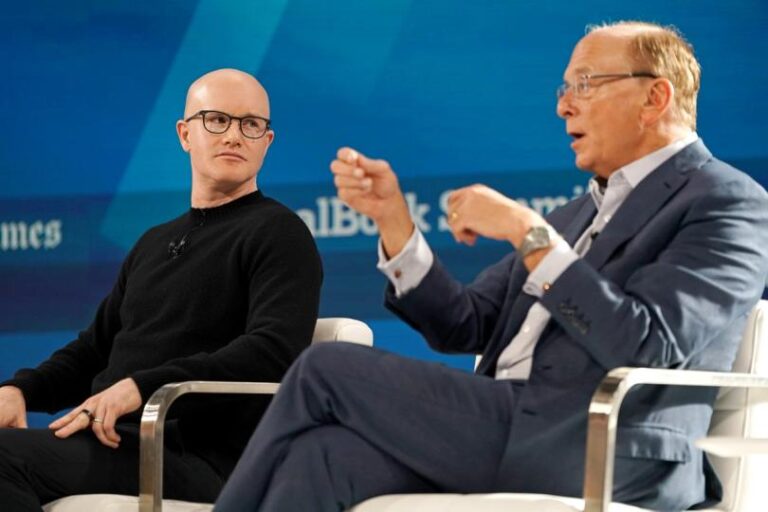
During his trip to Davos for the World Economic Forum, Coinbase CEO Brian Armstrong shared that a top executive at one of the world’s 10 largest banks told him that crypto is now their “number one priority” — and that they view it as “existential.”

Armstrong’s post, shared on X, highlighted a shift in how legacy financial institutions are engaging with crypto. The remark underscores the growing urgency among traditional banks to adapt to crypto infrastructure, particularly as global regulators move closer to establishing clearer rules for digital assets.

Armstrong didn’t name the bank or executive, but said that many financial leaders he met during the weeklong event weren’t just open to crypto — they were actively seeking ways to get in. “Most of them are actually very pro crypto and are leaning into it as an opportunity,” he wrote.

For banks that rely on legacy payment rails, crypto represents both a challenge and an opportunity.

Read more: Bank of America CEO says stablecoins could drain trillions in bank deposits

Tokenization push

As stablecoins and tokenized assets gain momentum, the threat of disintermediation grows. It’s possible that a global asset manager or fintech firm could someday bypass traditional banks entirely by offering direct access to tokenized securities or stablecoin-based transfers — moving value instantly, without clearing delays or middlemen (a core pillar of crypto).

Armstrong said tokenization was one of the most discussed trends at Davos, expanding beyond stablecoins into equities, credit, and other financial products.

He pointed to the estimated 4 billion “unbrokered” adults worldwide who lack access to high-quality investments. Tokenization, he argued, could help close that gap.

“Expect some major progress here in 2026,” he added.

Regulation CLARITY

The Coinbase CEO also noted that political support for crypto in the U.S. appears to be strengthening.

He cited the Trump administration’s push for crypto-focused legislation, such as the CLARITY Act, which aims to provide a regulatory framework for digital assets. Armstrong didn’t touch on his firm’s decision to withdraw support for the crypto market structure bill at the last minute, following which the hearing was delayed.

Read more: Here’s why Coinbase and other companies soured on the major crypto bill

Armstrong described the administration as “the most crypto-forward government in the world” and said the push for clear rules is essential to keeping the U.S. competitive as countries like China invest heavily in stablecoin infrastructure. A theme Donald Trump has also talked about during his speech at Davos.

AI and crypto

Armstrong also said that artificial intelligence (AI) and crypto were the two most-discussed technologies at Davos.

While in the capital markets, AI’s surge has taken the wind out of crypto, Armstrong stressed that the two are closely linked. AI agents, he said, will likely default to using stablecoins for payments, bypassing conventional identity checks and banking restrictions altogether.

The infra exists, and usage is rapidly growing,” he added.

The message from Armstrong’s Davos recap was clear: crypto isn’t a fringe experiment anymore. For at least some of the world’s biggest financial players, it’s now a strategic priority — and possibly a matter of survival.

Read more: Coinbase CEO Brian Armstrong spars with France’s Central Bank chief at Davos over yield and ‘bitcoin standard’

Can Stablecoins Break Free From the US Dollar?

0

In brief

  • USD‑pegged stablecoins account for nearly the entire market, driven by liquidity, regulation, and global dollar dominance.
  • Non‑dollar experiments, from national currencies to commodity and basket‑backed designs, have struggled to scale.
  • Alternatives still encounter skepticism following the collapse of Terra in 2022.

More than a decade after the first stablecoins emerged, the U.S. dollar still reigns supreme in crypto.

The stablecoin market has grown to more than $306 billion in total capitalization, data from DefiLlama shows. According to JPMorgan, around 99% of the stablecoin market remains U.S. dollar‑denominated.

USD-pegged stablecoins’ dominance is half inertia and half convenience, according to Boris Bohrer-Bilowitzki, CEO of Concordium. “The dollar is the global reserve currency, so it’s the natural default for anyone building financial infrastructure,” he told Decrypt.

But he believes the deeper issue is that most projects have been optimized for adoption over fundamentals, as getting a bank partnership or an exchange listing is easier when you’re tracking something familiar like USD. 

“The irony is that in chasing TradFi legitimacy, we’ve replicated TradFi vulnerabilities with centralized control, regulatory exposure, and sensitivity to U.S. monetary policy,” Bohrer-Bilowitzki said.

The dollar remains the world’s primary reserve currency and the most widely used unit for trade invoicing, cross‑border liabilities, and foreign‑currency debt issuance. Yet its long‑term dominance is increasingly questioned. 

Geopolitical fragmentation and sanctions have pushed de‑dollarization into the mainstream of investor and policymaker discussion. China, in particular, has made reducing reliance on the dollar a strategic priority in international trade.

Despite this, the crypto industry has doubled down. Non‑dollar stablecoins have struggled to gain traction. There are only three non-USD stablecoins in the top fifty by total market cap. 

The first is the sanctioned, rouble-pegged, Garantex-linked A7A5. The second is Circle’s EURC, which saw just $8 million in volumes over the past 24 hours, and the third is a token tracking the Brazilian Real. 

Not very stable

Not all USD coins are created equal. Ethereum’s DAI is considered a soft-pegged stablecoin because it is collateralized by other cryptocurrencies rather than fiat dollars. Ethena describes its USDe as a “synthetic dollar,” which is “backed with crypto assets and corresponding short futures positions.”

Algorithmic stablecoins that keep their peg through smart contracts do have an image problem, however, following the collapse of TerraUSD in 2022. An algorithmic stablecoin that lost its peg and dragged down multiple companies with it; that failure wiped out tens of billions of dollars in value and left a lasting scar on the sector.

“Post-Terra, there is limited appetite for purely algorithmic stablecoins, and the market has shifted toward models where stability is engineered through real liquidity and the ability to execute reliably across different blockchains,” Akbar Thobhani, co-founder and CEO of sFOX, told Decrypt.

Another possibility is to break the dollar’s monopoly by tying stablecoins to commodities or asset baskets. In 2024, Tether, the creators of the top US-pegged stablecoin, USDT, which dominates 60% of the market, launched Alloy, a token pegged to the U.S. dollar but over‑collateralized with Tether Gold, which is backed by physical gold stored in Switzerland.

But it hasn’t proved popular. It has a fully diluted valuation of just under $50 million. At the time of writing, the 24-hour volume was just $19,000, according to CoinGecko.

Also being explored are stablecoins pegged to baskets of currencies or assets. 

Silk, a stablecoin developed by Shade Protocol on Secret Network, adopted an overcollateralized, basket‑based model intended to reduce reflexive death‑spiral risk in the wake of the Terra collapse.

It is overcollateralized and pegged not to a single currency, but to a weighted basket of global currencies and commodities, including the U.S. dollar, euro, Canadian dollar, Japanese yen, gold, and Bitcoin. The basket is designed to absorb volatility across individual assets while preserving purchasing power over time. It has a current FDV of $1.6 million, according to Coingecko

Carter Woetzel, founder of Shade Protocol, told Decrypt that building a novel stablecoin that is not USD-denominated is “the ultimate Sisyphus task”, citing liquidity, market makers, and compliance among the reasons preventing large-scale uptake. 

He said he chose a basket model for the stablecoin because he despised the fact that USD could be printed and inflated away, calling it “the ultimate hidden tax.”

“Simultaneously, Bitcoin lacks volatility minimization and the requisite speedy rails needed to perform more stablecoin-like operations. In terms of first principles, a basket-pegged stablecoin makes sense,” he said.

“But oftentimes, what the market wants now and the constraints that emerge from a contrarian take means these types of experiments do not have the longevity to experience their golden era. However, I do believe many of these experiments are laying the groundwork for a truly global currency.”

“I think inevitably these models will continue to be played with,” he said, conceding that SILK was “probably a decade ahead of its time.” If the dollar’s global dominance recedes, he suggested, “you will see more basket-pegged experiments,” adding that if its dominance grows, “it will make less sense to have this type of token as settlement and liquidity is already largely unified.”

Better than fiat?

As early as 2019, the Bank of International Settlements said that “in many countries, a stablecoin linked to a basket of foreign currencies might prove more stable than the domestic currency.”

Marc Vanlerberghe, CMO at Algorand, said interest in basket‑based designs is growing at the institutional and policy level, although “fiat-backed models are the easiest for institutions and regulators to understand.”

“The idea that a basket of currencies can be more stable than any one domestic currency is intuitive, especially in countries with high inflation or volatile exchange rates,” he said.

Commodity backed-tokens, such as gold-backed tokens and other commodity-linked instruments, tend to function more as niche stores of value or financial products rather than as everyday money. “So they have not scaled in the same way fiat-pegged stablecoins have,” he added.

There are other drawbacks. Baskets are harder to explain, harder to regulate, and more complex to operate. Liquidity also tends to fragment, as markets usually converge around simple, widely used units of account.

“That said, I think we’ll see renewed interest in diversified designs, especially from sovereign actors or regional blocs that want monetary infrastructure independent of Washington,” Vanlerberghe said.

Woetzel said right now basket-pegged stablecoins are also ultimately constrained by liquidity providers. 

“Who is willing to take on both sides of the trade? How much impermanence loss will they be forced to incur? How much volume and demand is there to offset this impermanence loss? If your basket-pegged stablecoin overperforms the dollar too much, it is difficult to find people to essentially ‘short’ the basket in the form of liquidity providing,” he said. 

“Protocols are then forced to subsidize these liquidity providers, and the system can really only scale up in terms of usefulness in relation to liquidity actually available on CEXs/DEXs. Arguably, there will be advancements in redemption methodology where the protocol is taking the other side of the trade, but this can also create weird runs on the bank.” 

As political tensions rise, financiers have noted a slowdown in trust in the dollar that could lead to greater de-dollarisation. It’s not clear whether stablecoins will follow suit.

But Bohrer-Bilowitzki argues that there is more than just trust in the dollar as to why crypto should explore other options.

“USD dominance should end if crypto is serious about being an independent infrastructure, but only if the market starts valuing long-term stability over short-term convenience. Right now, the incentive structure favors USD pegs because that’s what institutions understand and what users expect,” he said.

“Over time, this could lead to a stablecoin landscape where the USD-backed stablecoins operate alongside local ones, while balancing global liquidity with local monetary needs and improving FX efficiency.”

But on a long enough timeline, single-currency dependence becomes a liability. “If crypto is meant to be infrastructure for the next 50 years, not the next five, we need designs that aren’t structurally tied to any single nation’s monetary policy,” he added.

“The question is whether the market will reward that kind of long-term thinking.”

Daily Debrief Newsletter

Start every day with the top news stories right now, plus original features, a podcast, videos and more.

Agora’s Nick van Eck bets on stablecoin boom in enterprise payments

0

Agora, a startup founded by entrepreneur and VanEck heir Nick van Eck, is positioning itself for a stablecoin market that’s moving beyond crypto-native trading.

While decentralized finance (DeFi) remains a key growth engine – Agora’s total value locked (TVL) grew 60% last month from DeFi launches, he said — his focus is shifting toward a longer-term bet: stablecoin-powered enterprise payments.

“We’re spending a lot of time across payroll, business-to-business, cross-border payments. Problems real companies actually need to solve,” van Eck, who will be speaking at CoinDesk’s Consensus Hong Kong conference next month, said in a recent interview.

He believes adoption by traditional firms is inevitable but slow, delayed by unfamiliar infrastructure, lack of internal policies, and basic education gaps. “If stablecoin knowledge in the crypto world is a hundred,” he said, then outside of is “a five.”

Agora issues AUSD, a U.S. dollar-backed stablecoin, and also offers stablecoin-as-a-service for crypto projects wanting to mint their own branded tokens. But van Eck doesn’t recommend it for most. “It only makes sense if you have a closed-loop ecosystem,” he said. “Otherwise, use a major stablecoin.”

The bigger opportunity, van Eck argued, lies in replacing clunky cross-border payment systems, where pre-funding and transaction costs eat into corporate margins. “If they save 1% on revenue, that might be 5% on EBITDA,” he said. The most likely early adopters? Multinational firms with global vendor networks.

Looking ahead, van Eck sees corporate chains like Circle’s Arc, Coinbase’s Base or Stripe’s Tempo pulling activity away from open-source blockchains. “You’ll see consolidation into a handful of chains,” he predicted, as major firms bring “money, firepower and distribution.”

In this increasingly competitive landscape, Agora’s ambition is to be one of the top five global stablecoin issuers — and to win by building tools businesses actually know how to use.

“They don’t want crypto,” van Eck said. “They want something that feels like a bank account, but better.”

Stablecoin Market Loses $3.3 Billion a Week After Record High

0

Seven days after the stablecoin sector printed a record $310.426 billion on Jan. 17, the market has given back $3.327 billion—proof that even “stable” capital has a sense of timing. Post-Peak Pause: Stablecoins Step Back Starting with the heavyweight contender, tether ( USDT) sits at roughly $186.59 billion in market cap and posted zero activity […]

Trump sues JPMorgan for $5 billion on political debanking claims

0

US President Donald Trump filed a $5 billion lawsuit against JPMorgan and CEO Jamie Dimon on Thursday for alleged politically motivated debanking.

Editorial

This content has been selected, created and edited by the Finextra editorial team based upon its relevance and interest to our community.

The president accused the lender of closing his accounts on accounts of furthering a political agenda, which JPMorgan has denied.

Trump alleged JPMorgan violated its own policies by shutting his accounts and accounts belonging to his hospitality companies.

JPMorgan denied the allegations of debanking to Reuters: “While we regret President Trump has sued us, we believe the suit has no merit.

“We respect the President’s right to sue us and our right to defend ourselves.”

Trump also accused Dimon of creating a “blacklist” for other banks against lending to his companies and the Trump family.

JPMorgan stated that it often closes accounts that could violate rules and regulatory expectations of the company.

Ethereum treasury firm ETHZilla (ETHZ) buys jet engines for $12 million in RWA tokenization push

0

After selling a significant portion of its crypto stash over the past months, Ethereum-focused treasury firm ETHZilla has now added jet engines to its balance sheet.

A Friday filing to the U.S. Securities and Exchange Commission (SEC) shows that the company bought two CFM56-7B24 aircraft engines for $12.2 million through a newly formed subsidiary, ETHZilla Aerospace LLC.

The engines are currently leased to a major airline, and ETHZilla hired Aero Engine Solutions to manage them in exchange for a monthly fee, according to the document. The deal includes a buy-sell option agreement where either party can require the other to buy or sell the engines for $3 million each upon lease expiration, provided the engines remain in proper condition.

While the move may sound odd, for an ETH treasury company, buying jet engines and leasing them to aircraft operators is part of the normal aerospace business outside the crypto world.

Airline operators lease jet engines as spares to ensure the planes can continue to operate without disruption if their primary engine fails. Companies such as AerCap, Willis Lease Finance Corporation, and SMBC Aero Engine Lease operate in this space.

The aerospace business is also currently facing a big-engine supply squeeze, with IATA saying its airline members would be forced to pay about $2.6 billion to lease additional spare engines in 2025. In fact, the global aircraft engine leasing market is expected to grow from $11.17 billion in 2025 to $15.56 billion by 2031 at a 5.68% CAGR, according to TechSci Research.

Tokenization pivot

The strange maneuver comes as digital asset treasuries face growing pressure amid crypto markets’ tumble over the past months.

Many public firms that aggressively raised funds to accumulate tokens last year now trade well below the net asset value (NAV) of the crypto on their books, leaving little room to raise fresh capital.

ETHZilla itself previously sold $40 million in ETH in October to fund a stock buyback program, then offloaded another $74.5 million in December to redeem outstanding debt. Meanwhile, its stock has tumbled roughly 97% since its August peak.

Still, buying aircraft engines might be part of ETHZilla’s broader ambition to bring tokenized real-world assets (RWAs) onchain.

In a December shareholder letter, the company outlined plans to tokenize assets in partnership with Liquidity.io, a regulated broker-dealer and SEC-registered alternative trading system (ATS). Before that, ETHZilla took a 15% stake in Zippy, a lender focused on manufactured home loans, with plans to tokenize those loans as compliant, tradable instruments. It also acquired a stake in auto finance platform Karus with plans to bring loans onchain.

“We’re building a scalable tokenization pipeline across asset classes with predictable cash flows and global investor demand,” the firm said in a Wednesday X post. The company expects to list the first tokenized asset offerings in the first quarter of the year.