Home Blog Page 1112

BTC falls back to $75,000 as Nasdaq sinks 2%

0

Crypto’s Tuesday has turned from bad to worse as a broader sell-off in the tech sector and financials is unfolding.

Bitcoin has fallen back 5% to $75,000 in the early U.S. afternoon hours, only a few hundred dollars above its low from last weekend. Ethereum’s ether has dropped 6.5% to near $2,200, while Solana slipped below $100, down 5.5%.

Shopify (SHOP), Adobe (ADBE), Salesforce (CRM), Intuit (INTU) were just a few names of the broader tumbled 7%-12% during the session. The iShares Expanded Tech-Software ETF (IGV) declined 5% today. The thematic fund has now lost 14% in just a week and is nearly 28% lower since its October peak.

Also down hard today are private-equity stocks, with giants like Blackstone (BX), Ares Capital (ARES), KKR (KKR) and Apollo (APO) all showing losses of 6%-10%.

The sector has had a rough ride in recent months, with the downturn picking up speed after a Friday evening filing (Jan. 23) from a BlackRock private debt fund — BlackRock TCP Capital (TCPC) — saying it intended to mark down the net value of its assets by 19%.

The news hinted that perhaps all was not as well with the economy as the headlines might suggest, and that liquidity in the system might be tighter than otherwise thought.

Bitcoin certainly wasn’t in a bull market at the time of the filing, but it wasn’t in panic mode either, having earlier that day risen to about the $91,000 level. It’s been pretty much straight down since, though.

Digital asset-related stocks are mirroring the slide. Galaxy (GLXY) was leading losses with a 18% decline following its earnings, while Strategy (MSTR), Coinbase (COIN), Circle (CRCL), Bullish (BLSH) declined 5%-7% during the session.

Crypto winter, but there’s good news

Matt Hougan, CIO of digital asset management firm Bitwise, argued that the crypto market has been in a full-scale winter since January 2025, similar to past bear markets like in 2018 and 2022.

“This is not a ‘bull market correction’ or ‘a dip,’ he said in a Monday note. “It is a full-bore, 2022-like, Leonardo-DiCaprio-in-The-Revenant-style crypto winter.”

On a more positive note, that prolonged bear market could be nearing the end, Hougan said. The downturns, he noted, typcially last about 13 months. If, as Hougan has, you place the beginning of the bear market at January 2025, rather than October 2025, crypto is within weeks of possibly bottoming.

“As a veteran of multiple crypto winters, I can tell you that the end of those crypto winters feel a lot like now: despair, desperation, and malaise,” he wrote.

Crypto Markets Slide as Government Shutdown Delays Jobs Report

0

Bitcoin and Ethereum fell as investors weighed delayed economic data, tightening risk appetite, and mixed ETF flows.

Crypto markets moved lower on Tuesday after the U.S. government shutdown delayed key macroeconomic data, adding to investor uncertainty.

Bitcoin (BTC) was trading at around $77,686, down 1.5% over the past 24 hours, while Ethereum (ETH) fell about 4% to $2,288. Among other large-cap tokens, BNB slipped nearly 1% to $771, XRP declined 2.5% to $1.60, and Solana (SOL) dropped 3.5% to $101.

BTC Chart

James Harris of Tesseract said Ethereum hovering around $2,200 this week marks the culmination of a broader risk repricing that has been unfolding for several weeks, and not necessarily a single crypto-specific event. He added that the key feature of this selloff was a “sudden tightening in risk appetite” across multiple asset classes, including precious metals.

Meanwhile, the total cryptocurrency market capitalization hovered at $2.7 trillion, down 1.5% on the day, while 24-hour trading volume totaled $136.4 billion.

On the upside, Hyperliquid (HYPE) rose over 5%, while LEO Token (LEO) gained roughly 4%. MemeCore (M) also advanced around 3%.

Tokenized commodities were also up with Tether Gold (XAUT) gaining 5.2% on the day and PAX Gold (PAXG) adding 4.8%, highlighting the continued demand for tokenized precious metals.

On the downside, Monero (XMR) fell 8.7%, Zcash (ZEC) dropped 8.4%, and Internet Computer (ICP) slid 4.8%.

Liquidations and ETF Flows

Around $266 million in leveraged crypto positions were liquidated over the past 24 hours, according to CoinGlass. Long liquidations made up $155 million, while short liquidations totaled $110.6 million.

Ethereum recorded the largest share of liquidations at approximately $84.3 million, followed by Bitcoin at $57.6 million. CoinGlass found that more than 101,000 traders were liquidated during the period.

ETF flows were mixed but showed a notable divergence across assets. U.S. Bitcoin spot ETFs recorded roughly $561.9 million in net inflows on Feb. 2, while U.S. Ether spot ETFs saw a modest $2.9 million in net outflows.

XRP spot ETFs also posted small outflows of about $405,000, while U.S. Solana spot ETFs recorded approximately $5.6 million in daily inflows, bringing cumulative net inflows to around $876.5 million.

Government Shutdown

Today’s market action comes as the Bureau of Labor Statistics (BLS) said it will delay the January jobs report and other data due to the current partial government shutdown that started over the weekend.

Reuters reported that lawmakers are expected to vote later today on a “Trump-backed” funding deal that could reopen the government. The deal would also fund most federal agencies through October.

So far, the bill has cleared the Senate but could face resistance in the House from both Democrats and a group of hardline Republicans, Reuters said.

Harris added that markets have also been reacting to the nomination of Kevin Warsh to lead the Federal Reserve, which he said “investors read as a less supportive liquidity backdrop.”

Digital Ecosystem to Gather at Fifth General Assembly of DCO in Kuwait

0

Member states of the Digital Cooperation Organization (DCO) are planning their fifth General Assembly, which will presided over by the State of Kuwait.

Taking place from 4–5 February, the two-day General Assembly which includes Member State ministers, observers, partners, CEOs, policymakers, innovators, as well as representatives from over 60 countries, is a flagship event for the Digital Cooperation Organization (DCO). The General Assembly convenes the full digital ecosystem to contribute to shape the global digital agenda.

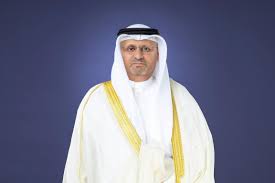
Chaired by H.E. Omar Saud Al-Omar, Minister of State for Communication Affairs of the State of Kuwait and Chairperson of the DCO Council for the current term, together with Deemah AlYahya, Secretary-General of the DCO, the fifth General Assembly serves as the Organisation’s foremost platform for reviewing achievements, shaping strategic direction, and launching initiatives aligned with the 2025–2028 Four-Year Agenda.

A key component of the Assembly will be the ceremonial handover of the DCO Council Presidency from the State of Kuwait to the Islamic Republic of Pakistan for this year’s term. In 2025 it was the Kingdom of Jordan, which was host to the previous General Assembly at the Dead Sea.

A Forum to Compliment the General Assembly

The previous fourth General Assembly of the Digital Cooperation Organization (DCO) which was presided over by the Kingdom of Jordan

The International Digital Cooperation Forum (IDCF), which is held alongside the General Assembly, curates a programme featuring plenary sessions, side events, workshops, and high-level dialogues. Having successfully made its debut at the last General Assembly at the Dead Sea in Jordan, IDCF in its second edition looks to also bring interesting and engaging discussions.

Topics will focus around artificial intelligence (AI), digital trade, cross-border digital infrastructure, skills mobility, technology safety and ethics, and sustainable digital transformation. It is expected that over 100 organisations from various sectors and partner entities are expected to participate.

The Fintech Times‘ Richie Santosdiaz will be in attendance, moderating a discussion on ‘Fueling growth: AI, Investment flows and the future of inclusive digital prosperity.’

Building Momentum Prior to the Assembly.

H.E. Omar Saud Al-Omar, Minister of State for Communication Affairs of the State of Kuwait

H.E. Omar Saud Al-Omar, prior to the preparation of the General Assembly, said: “Hosting the 5th General Assembly of the DCO and the International Digital Cooperation Forum reflects the importance of strengthening multilateral cooperation and enhancing collective efforts to keep pace with the rapid transformations shaping the global economy, particularly in the fields of artificial intelligence and advanced technologies.

Discussing about Kuwait hosting the General Assembly, Minister Al-Omar adds: “Through its current Chairmanship of the DCO Council, the State of Kuwait welcomes Member States, partners, and participating guests, and reaffirms its commitment to supporting a shared agenda focused on advancing digital integration, building advanced digital infrastructure, and strengthening capacity development and knowledge exchange.”

Deemah AlYahya, Secretary-General of the Digital Cooperation Organization

Deemah AlYahya said: “Hosting the Fifth General Assembly and the Second IDCF in the State of Kuwait marks a defining moment for the global digital community and a proud milestone in our collective journey. It is an opportunity not only to convene, but to reflect on the achievements of 2025, strengthen partnerships, and shape a shared vision for the future of digital cooperation at a time when the global digital landscape is evolving at unprecedented speed.”

When discussing the common goal of the DCO’s member states, the Secretary-General adds: “Our Member States are united by a clear conviction: that digital prosperity must be accessible to all, and that international cooperation across sectors, and institutions is the most powerful force to achieve it. As AI rapidly reshapes economies and societies, this year’s theme, ‘Inclusive Prosperity in the Age of AI,’ speaks to our shared responsibility to ensure these transformations serve every country, every institution, and every individual so that innovation becomes a bridge to opportunity, resilience, and shared prosperity, and no one is left behind.”

In Summary

The world’s first standalone international intergovernmental organisation, the DCO from its creation in 2020, has dedicated itself to accelerating the growth of an inclusive and sustainable digital economy. The organisation gathers Ministries of Communications and Information Technology across its 16 Member States. To note, it holds observer status with the United Nations General Assembly and other global bodies.

The previous General Assembly in 2025 had groundbreaking announcements of various achievements, challenges and opportunities; the upcoming General Assembly looks to be no different in keeping with the wider theme of digital inclusion for all.

Tether Launches Open-Source Bitcoin Mining Operating System

0

Tether has open-sourced a new operating system for bitcoin mining, unveiling MiningOS (MOS) as part of a broader push to reduce the industry’s reliance on proprietary, vendor-controlled software.

The stablecoin issuer announced Monday that MOS, a modular and scalable operating system designed to manage, monitor, and automate bitcoin mining operations, is now available as open-source software under the Apache 2.0 license. 

The system was officially unveiled at the 2026 Plan ₿ Forum in San Salvador.

According to Tether, MOS is built to coordinate the complex mix of hardware, power systems, containers, and physical infrastructure that underpin modern bitcoin mining. 

Rather than relying on fragmented software stacks, the operating system treats every component of a mining site as a controllable “worker” within a single operational layer, providing operators with unified visibility across hashrate, energy usage, device health, and site-level infrastructure.

The company said MOS uses a self-hosted, peer-to-peer architecture based on Holepunch protocols, allowing miners to manage operations without relying on centralized services or third-party platforms. 

The system is designed to scale from small home installations running on lightweight hardware to industrial-grade deployments managing hundreds of thousands of machines across multiple locations.

“Mining OS is built to make Bitcoin mining infrastructure more open, modular, and accessible,” said Tether CEO Paolo Ardoino. “Whether it’s a small operator running a handful of machines or a full-scale industrial site, the same operating system can scale without reliance on centralized, third-party software.”

Tether’s Mining SDK announcement

Alongside MOS, Tether also announced the Mining SDK, the framework on which the operating system is built. The Mining SDK is expected to be finalized and released in collaboration with the open-source community in the coming months.

The toolkit is designed to allow developers to build mining software and internal tools without recreating device integrations or operational primitives from scratch, offering ready-made workers, APIs, and UI components.

Tether said the goal of open-sourcing its mining stack is to lower barriers to entry for new miners and remove the “black box” nature of many existing mining setups, where hardware and monitoring tools are tightly coupled to proprietary platforms.

The release places Tether alongside other crypto firms pushing open-source mining infrastructure, including Jack Dorsey’s Block, which has previously backed efforts to decentralize mining tooling and hardware access.

MOS marks another step in Tether’s expansion beyond its core stablecoin business. The company has increasingly positioned itself across mining, payments, and infrastructure, reporting more than $10 billion in net profit in 2025, driven largely by interest income on its reserves.

Bitcoin ETFs Roar Into February With $562 Million Inflow

0

U.S. crypto ETFs kicked off February with a decisive return of capital into bitcoin products, while ether and XRP struggled to keep pace. Solana quietly extended its recovery with another day of inflows. February Opens With Bitcoin ETF Surge While Ether and XRP Slip February opened with a sharp change in tone for crypto exchange-traded […]

Here’s why one analyst expects Solana (SOL) to rise twenty-fold from current depressed level

0

Solana’s memecoin-driven reputation may soon give way to a deeper role in digital payments, according to a new report from Standard Chartered’s head of crypto research, Kendrick Geoffrey.

Given SOL’s recent plunge to the $100 level, Kendrick has cut his price forecast for SOL to $250 from $310 by the end of 2026. Kenrick, however, remains a bull, seeing a path to $2,000 by 2030, fueled by Solana’s growing role in stablecoin-based micropayments.

The bank describes Solana as moving beyond its “one-trick pony” image. In 2025, nearly half of Solana’s protocol fees came from memecoin trading on decentralized exchanges. But data now shows a shift in trading flows — from meme tokens to SOL-stablecoin pairs — suggesting that new uses are emerging. Stablecoin turnover on Solana now significantly outpaces Ethereum , pointing to a different kind of activity: high-frequency, low-cost transactions.

One example is x402, a platform created by Coinbase (COIN) to support micro-sized, AI-driven payments using stablecoins. The average transaction on x402 is just six cents. Base, Coinbase’s own Layer 2 network on Ethereum, has hosted most of the volume so far, but its fees may be too high for long-term viability. Solana’s lower gas fees — often less than a cent — make it better suited for such applications, Geoffrey said.

Micropayments, often unviable in traditional finance due to fixed per-transaction fees, could unlock new types of internet services, from machine-to-machine payments to social apps with built-in pay-per-use features. Solana’s technical strengths position it to serve as the backend for this kind of infrastructure.

Standard Chartered also points to growing institutional interest. Since October 2025, the Bitwise BSOL ETF has absorbed 78% of all net inflows into SOL-related ETFs, bringing over 1% of the total supply under ETF management, according to Geoffrey. Meanwhile, digital asset treasuries now hold nearly 3% of SOL.

Kendrick’s revised targets now project SOL at $400 in 2027, $700 in 2028 and $1,200 in 2029.

Missing Jobs Data Deepens Crypto’s Risk-off Mood

0

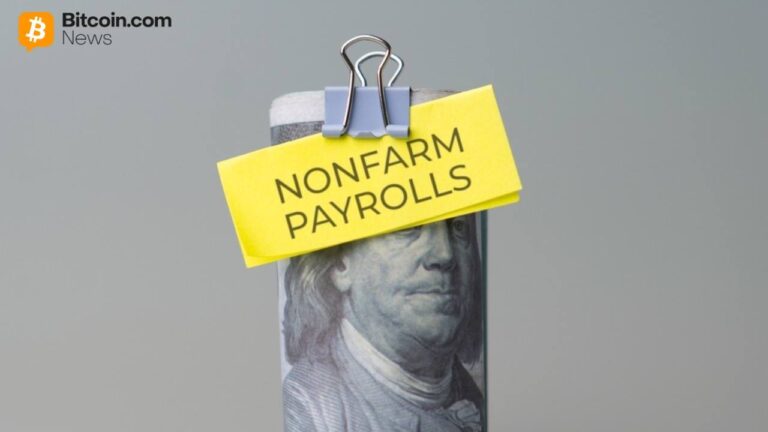
The delay of the January U.S. jobs report has intensified macro uncertainty, keeping crypto markets locked in a deleveraging phase. NFP Delay Fuels Uncertainty as Bitcoin Tests Key Levels Crypto markets are navigating a fragile macro backdrop after the U.S. government shutdown forced a delay to the January 2026 Nonfarm Payrolls (NFP) report. The Bureau […]

Snowflake Deal Latest Move into Enterprise Market by OpenAI

0

OpenAI’s multi-year partnership with Snowflake helps the generative AI model maker put its technology in front of a different category of users served by the data platform provider and show that the AI model race has narrowed.

OpenAI and cloud data vendor Snowflake on Feb. 2 said they had signed a $200 million agreement to deliver AI model capabilities to Snowflake’s enterprise customers. The deal makes OpenAI models natively available to Snowflake’s global customers in Snowflake Cortex AI, a managed service that integrates large language model and machine learning technology into the Snowflake platform. Snowflake will use OpenAI’s ChatGPT Enterprise internally for its employees.

The partnership shows how OpenAI, seen as behind in the race to deliver AI products and services to businesses, continues to target enterprise customers indirectly by forging relationships with enterprise platform providers. Last month, the model maker revealed a partnership with ServiceNow.

Related:Google Launches Low-Cost AI Plus Subscription in the U.S.

Models and Access

The deal is a testament to consolidation in the AI model market, with numerous players starting to winnow to three leaders: Google, Anthropic, and OpenAI. The commoditization of enterprise-ready models indicates that most enterprise platform providers looking to appeal to their customers will seek relationships with these vendors.

“Companies like Snowflake, they’re all trying to build these partnerships as a way to potentially differentiate in the market,” said Arun Chandrasekaran, an analyst at Gartner. He added that a year ago, there was a general consensus that the more models, the better. SaaS and platform providers did not see the need to partner specifically with model makers because the model market was still open, but that is changing, leading vendors to forge deals with key model players and to integrate the models into their technology.

“It’s a way of signaling to the fact that we have what you want, and more importantly, we have tightly integrated that into our product, into our platform and into your workflows,” Chandrasekaran said.

For OpenAI, its partnerships with Snowflake and ServiceNow also help it to reemphasize to the AI market that its models are still important and as useful and dependable as they were in the beginning, he continued.

“OpenAI is trying to create a wide channel ecosystem by partnering with a lot of these … providers as a way to convey that there is still a lot of premium left in the model and also as a way to get access to enterprise customers,” Chandrasekaran said.

Related:Microsoft Aims for Better Inference Efficiency With Maia 200

With the Snowflake partnership, OpenAI gets access to new enterprise customers and new roles within the enterprise since Snowflake’s primary focus has been on data engineers, data scientists, and business analysts. In contrast, OpenAI has, up to now, mostly focused on developers, he added.

Making Money

However, the biggest question for OpenAI is how Snowflake will compensate the AI vendor for using its models, said Mark Beccue, an analyst at Omdia, a division of Informa TechTarget.

“Is it trading compute, which would be some kind of circular thing? Is it licensing? Is it revenue share?” Beccue continued. “Is the difference that they’re getting paid?”

While Snowflake and OpenAI have revealed the value of the agreement, it is unclear whether that is in revenue for OpenAI. Moreover, for a company preparing to go public, such as OpenAI, deals like this help, but they do not resolve OpenAI’s profitability problem, Beccue added.

The model maker projects 2029 to be the year it breaks even, with what it expects as $125 billion in revenue and achieves cash flow.

“Only 22 companies on the planet currently have revenue of $125 billion or more,” Beccue said.

To achieve its goal, OpenAI is shifting away from its no-ad strategy to introduce ads on the free tier of ChatGPT, which might be a way to generate cashflow, Beccue continued.

Related:OpenAI Targets Monetization, $1.4T Commitments by 2034

 “Ad-supported consumer is the only viable path, and that’s shaky,” he said.


ING Deutschland Opens Retail Access To Bitcoin ETPs

0

ING Deutschland, one of Germany’s largest retail banks, has begun offering retail clients access to cryptocurrency-linked exchange-traded notes (ETNs) and products, allowing customers to gain exposure to bitcoin and other crypto directly through their existing securities accounts.

According to information published on ING’s website, the products are physically backed exchange-traded instruments issued by established asset managers including 21Shares, Bitwise, and VanEck. 

The instruments track the performance of individual cryptocurrencies and trade on regulated exchanges via ING’s Direct Depot platform, which is typically used for stocks, ETFs, and mutual funds.

The bank said the bitcoin offering is intended to lower barriers to entry for crypto investing by integrating digital asset exposure into familiar banking infrastructure. 

Clients do not need to set up third-party crypto exchanges, manage private keys, or operate self-custody wallets, as custody and execution are handled within the securities account framework.

“This creates another particularly low-threshold access to crypto investments via exchange-traded products,” said Martijn Rozemuller, CEO of VanEck Europe, in a translated press release. “Many investors want a solution that fits into existing depot structures and at the same time convinces them with transparent costs. That’s exactly what this partnership stands for.”

ING noted that the bitcoin and crypto ETNs receive the same tax treatment in Germany as directly held cryptocurrencies. Under current German tax rules, capital gains on crypto assets may be exempt if the position is held for more than one year, potentially making the products attractive to long-term investors.

Despite the expanded access, the bank emphasized that the products carry substantial risks. ING warned of “extreme” price volatility, the possibility of total loss in the event of issuer insolvency, liquidity risks, market manipulation, and ongoing regulatory uncertainty surrounding digital assets.

In educational materials published alongside the launch, ING took a notably cautious stance on the asset class itself.

 “Cryptocurrencies are speculative products that have no intrinsic value,” the bank stated, adding that crypto prices are “strongly dependent on psychological effects,” which also influence exchange-traded crypto products.

German banks are embracing bitcoin

Germany’s major banking groups are moving to bring crypto trading into the regulated retail banking system. DZ Bank has secured MiCAR approval and will roll out its “meinKrypto” platform across cooperative banks, allowing customers to trade and custody Bitcoin and other digital assets directly within existing banking apps, while also joining a consortium developing a regulated euro stablecoin. 

In parallel, the Sparkassen-Finanzgruppe plans to launch Bitcoin and crypto trading for private customers by summer 2026, with technical support from DekaBank, marking a reversal from its earlier skepticism toward digital assets. 

Spanish Red Cross Uses Blockchain Proofs to Audit Aid—Without Exposing Recipients

0

Humanitarian agencies are under mounting pressure to show exactly where donations go — without turning the people they serve into data subjects. Creu Roja, the Spanish Red Cross affiliate in Catalonia, has deployed a blockchain-powered digital payments platform that lets donors audit aid flows end-to-end while keeping beneficiaries’ identities and case records off any public ledger.

The system, built with Barcelona-based infrastructure firm BLOOCK, digitizes the lifecycle of assistance — from donation and allocation through to spending at local merchants — creating what the partners describe as an immutable audit trail. But the blockchain role is deliberately narrow: it acts as a verification layer, anchoring cryptographic proofs such as hashes and timestamps, while all personal data remains in Red Cross-controlled systems off-chain.

“People seeking assistance shouldn’t have to choose between getting help and protecting their privacy. We designed this system so donors can verify their contributions made a real difference, and beneficiaries can access support without fear of being tracked, profiled, or stigmatized,” said Francisco López Romero, CTO at Creu Roja, Catalunya.

A transparency push collides with privacy risk

Accountability demands in aid delivery have intensified as communities affected by conflict and disaster increasingly cite corruption, favoritism and opaque distribution as barriers to effective support, according to practitioners and researchers studying humanitarian operations.

Blockchain has been pitched for years as a way to curb leakage by making money trails harder to alter retroactively. Yet many implementations have leaned on invasive identity checks — including biometrics — to prevent duplication and fraud, creating a different set of risks for vulnerable populations.

One of the best-known examples is the World Food Programme’s Building Blocks network, which coordinates assistance through blockchain-linked beneficiary accounts. In Jordan, the program was paired with existing biometric identification to let refugees buy groceries via iris scans, according to program descriptions and case studies. Even when designed for efficiency, the use of biometrics has become a flashpoint. Regulators have recently forced big projects like worldcoin to delete iris-scan data, showing how quickly “proof-of-personhood” systems can run into legal and societal resistance.

Creu Roja and BLOOCK are positioning their deployment as a counter-model: outcome verification without beneficiary identification on-chain — and without “aid instruments” that visibly label recipients at point of sale.

How the new Red Cross system works

Under the design described by the partners, recipients receive digital aid credits in a mobile wallet, without needing a bank account or credit history. They spend those credits at authorized local merchants using QR codes, in transactions meant to resemble ordinary purchases.

Donors and program administrators, meanwhile, see aggregated flows in near real time: how much was allocated, how much was spent, and where funds were used — without access to identities or personal histories of individual recipients. The audit trail is “immutable” in the sense that the proofs anchored to a public blockchain can be independently checked later to confirm the integrity of records held off-chain.

“The architecture follows a principle we apply across all our enterprise deployments: blockchain should certify truth, not store content. Every transaction generates a cryptographic proof that’s permanently anchored and independently verifiable, but the proof contains no personal information,” said Lluís Llibre, CEO of BLOOCK.

Catalonia’s government blockchain case-study dossier describes BLOOCK as a layer-2 style approach that aims to keep sensitive data private while still anchoring integrity proofs to Ethereum, partly to avoid the cost and scalability constraints of putting full records directly on a public chain.

BLOOCK provides a “framework” that integrates enterprise systems with blockchains while emphasizing information-security properties such as integrity and authenticity.

From donation traceability to a broader “aid lifecycle”

The rollout builds on earlier work. A Catalonia government report says that in 2019 Creu Roja used BLOOCK to implement a donation traceability system, designed to increase security and veracity of data while protecting the privacy of aid beneficiaries. The same report notes that BLOOCK was recognized in 2020 with a Talent award for the “Cadena Roja” (Red Chain) project with Creu Roja, and also cites public innovation programs that supported the startup around that period.

A 2022 profile of BLOOCK in Catalan tech outlet MetaData described a Red Cross use case that let donors confirm their contribution’s destination while keeping the chain anonymized — “only the person who has made a contribution will know what it has been invested in,” the article mentioned.

What’s new in the current deployment? According to the information shared with AlexaBlockchain, the latest deployment transitions from a narrow “traceability of donations” concept into a digitized payments workflow that covers allocation and spending. This turns transparency into an operational feature rather than an after-the-fact audit.

Identity partners enter the picture

The project also leans on a privacy-first view of identity and eligibility. “What Creu Roja built here is a credential system, not a surveillance system. Recipients hold proof of their eligibility in their own wallet. They present it when needed, reveal nothing else, and move on with their lives,” said Evin McMullen, CEO & Co-Founder of Billions Network.

Billions.Network, described by the company as a mobile-first verification platform (and previously associated with the Polygon ID/Privado ID ecosystem), has been positioning itself as infrastructure for privacy-preserving verification as both AI agents and digital payments proliferate online.

Why this matters — and what it doesn’t solve

The platform offers easily verifiable proof for donors and regulators. They can track that funds went to authorized purposes, with fewer manual steps and less reliance on paper-based workflows that can be slow to reconcile and easy to dispute.

For recipients, the stated goal is dignity-by-design: no “special aid cards,” no public signaling, and minimal data exposure. That matters in contexts where receiving assistance can carry stigma — or where data leaks can be weaponized for discrimination.

Still, the approach doesn’t eliminate the hardest governance questions in aid delivery. A blockchain proof can show that a record wasn’t altered, but it can’t, by itself, guarantee that the underlying eligibility decisions were fair — or that the merchant network was free of bias. The system’s integrity is only as strong as the controls over the off-chain databases, the authorization policies for merchants, and the operational audits that sit around the cryptographic layer.

What Creu Roja’s deployment does suggest is a narrowing of the trade-off that has dogged humanitarian “digital identity” systems: transparency without turning beneficiaries into permanently linkable identifiers on a public network — and without making biometrics the default price of participation.

The article “Spanish Red Cross Uses Blockchain Proofs to Audit Aid—Without Exposing Recipients” was first published on AlexaBlockchain. Read the complete article here: https://alexablockchain.com/spanish-red-cross-uses-blockchain-proofs-to-audit-aid/

Read Also: Tether Launches US-Regulated Stablecoin as New Federal Rules Take Effect

Disclaimer: The information provided on AlexaBlockchain is for informational purposes only and does not constitute financial advice. Read complete disclaimer here.

Image Credits: Shutterstock, Canva, Wiki Commons