

Ripple-backed blockchain infrastructure is pushing commodities onchain in the Gulf, with over $280 million in certified diamonds tokenized in the UAE, highlighting how institutional-grade asset tokenization is rapidly moving from concept to execution. Ripple Technology Powers Diamond Tokenization at Institutional Scale Tokenization of high-value physical assets is accelerating in the Gulf, with Ripple technology underpinning […]
Why CometAPI Is Redefining AI Integration for Modern Applications

Artificial intelligence is evolving at an unprecedented pace, and developers today need more than just access to powerful models; they need reliability, flexibility, and scalability in one unified platform. This is where CometAPI stands out. Designed to simplify AI integration while delivering enterprise-grade performance, CometAPI enables developers, startups, and businesses to build smarter applications with confidence.
By supporting cutting-edge language models and offering a streamlined API experience, CometAPI positions itself as a forward-thinking solution for modern AI development.
A Unified Platform for Advanced AI Development
CometAPI was built with a clear mission: to remove complexity from AI integration without sacrificing power or performance. Instead of managing multiple tools, platforms, or workflows, developers can rely on a single, well-structured API to access advanced AI capabilities.
The platform emphasizes consistency, speed, and ease of use. Whether you are developing content-driven applications, intelligent automation systems, or advanced analytical tools, CometAPI provides a stable foundation that scales as your needs grow.
Built for Developers Who Value Performance and Simplicity
One of the strongest advantages of CometAPI is its developer-centric approach. Clean documentation, predictable responses, and efficient request handling make it easier to integrate AI into real-world applications.
CometAPI is designed to work seamlessly across various industries and project sizes. From rapid prototyping to production-level deployments, the platform ensures consistent output quality and dependable uptime. This balance between simplicity and power allows teams to focus more on innovation and less on infrastructure management.
Unlocking Potential with Claude Sonnet 5
Among the advanced models supported by CometAPI, Claude Sonnet 5 plays a crucial role in delivering refined, context-aware language generation. This model excels in producing clear, structured, and human-like responses, making it ideal for applications such as customer support, documentation generation, and content creation.
Through CometAPI, developers can leverage Claude Sonnet 5 to build systems that communicate naturally and intelligently. The model’s ability to understand nuance and intent enhances user experiences while maintaining accuracy and reliability.
Deep Reasoning and Insight with Claude Opus 4.6
For applications that require deeper reasoning and advanced analytical capabilities, Claude Opus 4.6 offers exceptional value. This model is designed to handle complex prompts, extended conversations, and multi-step problem-solving with impressive clarity.
When integrated via CometAPI, Claude Opus 4.6 becomes a powerful engine for research tools, strategic analysis platforms, and decision-support systems. Its strong contextual understanding allows businesses to extract meaningful insights and deliver more intelligent outcomes.
Precision Coding with GPT 5.3 Codex
Modern AI development often extends beyond text generation into software engineering and automation. GPT 5.3 Codex addresses this need by specializing in code generation, debugging assistance, and technical logic.
CometAPI enables seamless access to GPT 5.3 Codex, making it easier for developers to accelerate development workflows. From generating clean code snippets to assisting with complex programming tasks, this model supports productivity while maintaining high technical accuracy.
Scalability That Grows with Your Vision
Scalability is a critical factor for any AI-driven project, and CometAPI is engineered to handle growth efficiently. Whether you’re managing low-volume testing or high-traffic production environments, the platform is built to deliver stable performance.
This scalability allows businesses to confidently expand their AI usage without worrying about reliability or bottlenecks. As demands increase, CometAPI continues to provide consistent response times and dependable output quality.
Secure, Reliable, and Future-Ready
CometAPI places strong emphasis on reliability and long-term usability. The platform is designed to adapt alongside advancements in AI technology, ensuring users always have access to modern capabilities without frequent overhauls.
By maintaining a robust and secure infrastructure, CometAPI supports organizations that prioritize trust, data integrity, and operational stability. This makes it suitable not only for experimental projects but also for mission-critical applications.
Why CometAPI Is a Smart Choice for AI Innovation
Choosing the right AI platform can define the success of an entire product or service. CometAPI offers a compelling combination of advanced model access, developer-friendly design, and enterprise-ready scalability.
With support for Claude Sonnet 5, Claude Opus 4.6, and GPT 5.3 Codex, the platform empowers developers to create intelligent, adaptable, and future-proof solutions. Its focus on simplicity, performance, and positive user experience makes it a valuable asset for anyone building with AI.
Final Thoughts:
As AI continues to shape the future of digital innovation, having a reliable and flexible integration platform is more important than ever. CometAPI delivers exactly that—bridging advanced AI capabilities with real-world usability.
For developers and organizations looking to harness the full potential of modern AI models in a professional, scalable, and efficient way, CometAPI stands as a strong and forward-looking solution.
Bitcoin Sharpe Ratio Hits Bear Market Lows At Negative 10

The Bitcoin Sharpe ratio, which measures risk/reward potential, is in negative territory that is often associated with the end of bear markets, according to CryptoQuant analyst Darkfost.
“The Sharpe ratio has just entered a particularly interesting zone, one that has historically aligned with the final phases of bear markets,” said the analyst on X on Saturday.
They added, however, that it is not a signal that the bear market is over, “but rather that we are approaching a point where the risk-to-reward profile is becoming extreme.”
The Sharpe ratio has fallen to -10, its lowest level since March 2023, according to CryptoQuant.
The ratio measures Bitcoin (BTC) performance relative to the risk taken, indicating how much return an investor can expect for each unit of risk.
Negative ratio signals market turning point
The ratio was lower in late 2022 to early 2023, and late 2018 to early 2019 — both periods marking the depths of the bear market cycle. The metric fell to zero in November 2025 when BTC prices hit a local low of $82,000.
The analyst said that in practical terms, “the risk associated with investing in BTC remains high relative to the returns recently observed.”
“The ratio is still deteriorating, showing that BTC’s performance is not yet attractive compared to the risk being taken,” they added.
Related: Bitcoin bear market not over? Trader sees BTC price ‘real bottom’ at $50K
However, a negative Sharpe ratio usually signals market turning points, they said.
“But this type of dynamic is precisely what tends to appear near market turning zones. We are gradually approaching an area where this trend has historically reversed.”
True reversal could be months away
The analyst cautioned that this phase “may last several more months, and BTC could continue correcting before a true reversal takes place.”
Analysts at 10x Research also expressed caution in a market update on Monday, stating:
“While sentiment and technical indicators are approaching extreme levels, the broader downtrend remains intact. In the absence of a clear catalyst, there is little urgency to step in.”
BTC tanked to $60,000 on Friday but recovered to $71,000 by Monday. However, it remains down 44% from its October peak of $126,000, and sentiment remains firmly in bear market territory, analysts say.
Magazine: 6 weirdest devices people have used to mine Bitcoin and crypto
Cointelegraph is committed to independent, transparent journalism. This news article is produced in accordance with Cointelegraph’s Editorial Policy and aims to provide accurate and timely information. Readers are encouraged to verify information independently. Read our Editorial Policy https://cointelegraph.com/editorial-policy
Anonymous holder sends $181K in Bitcoin to Satoshi Nakamoto’s wallet

An unidentified Bitcoin holder sent 2.5 BTC, worth around $181,000, to the wallet tied to Satoshi Nakamoto, the pseudonymous architect of Bitcoin who published the network’s foundational whitepaper in 2008 before vanishing from public view around 2011, according to data from Arkham Intelligence.
The transfer, which took place over the weekend, landed in the so-called genesis address, the very first wallet on the Bitcoin blockchain. Satoshi mined this address on January 3, 2009, when the network came online.
Funds routed to this historic wallet are effectively unreachable. Security researchers and blockchain analysts have long concluded that the private keys required to move coins from the address are either lost or were deliberately destroyed.
High-value tributes to the address are uncommon but not unprecedented. Throughout Bitcoin’s history, supporters have periodically sent small amounts to the wallet as a nod to the network’s origins.
Satoshi’s wallet currently holds 1.1 million Bitcoin, valued at around $77 billion at current market prices.
The creator of Bitcoin now ranks as the world’s 25th-wealthiest person, trailing Binance co-founder Changpeng “CZ” Zhao, according to Forbes’ real-time billionaire rankings.

During the 2025 rally, Satoshi’s Bitcoin holdings surged to $129 billion, briefly overtaking Dell CEO Michael Dell.
Mastercard Rolls Out ‘Next Gen’ Fleet Solutions Across Asia Pacific to Tackle Mobility Payment Silos

Mastercard has launched a new portfolio of fleet management solutions in Asia Pacific, aiming to move the sector beyond traditional fuel payments toward a holistic digital mobility infrastructure.
The new offering, dubbed ‘Mastercard Fleet: Next Gen’ is designed to address the fragmented nature of modern fleet operations, providing solutions for everything from SMEs with small fleets to large-scale logistics operators.
Moving beyond the fuel pump

The launch comes as fleet operators face increasing complexity. As vehicles diversify and sustainability mandates evolve, managing expenses has moved beyond simple fuel transaction.
Mastercard argues that when payment data sits in silos—separating fuel, maintenance, and EV charging—it creates “blind spots” that limit efficiency. The new suite is engineered to unify this data, allowing operators to reconcile diverse spending categories in one place and identify anomalies across routes in real time.
Anouska Ladds, head of commercial & new payment flows, Asia Pacific at Mastercard, commented: “Fleet needs vary widely across Asia Pacific, and connecting payments, data and controls into a single experience reflects what fleet managers require. Mastercard’s fleet solutions are designed to help specialist fleet issuers and payment providers bring advanced fleet capabilities to market faster, while reducing the complexity and investment typically required to build these capabilities.”
A high-growth market
The timing of the launch targets a booming market; Asia Pacific is currently the fastest-growing region for fleet management, with the sector projected to grow at an 18 per cent CAGR through 2030.
To support this growth, the ‘Next Gen’ portfolio introduces several key capabilities:
- Expanded Acceptance: Coverage extends to EV charging, tooling, and maintenance, not just traditional fuel stations.
- Digital Issuance: The ability to digitally assign fleet cards to specific vehicles or drivers for contactless payments, alongside virtual card solutions tailored for specific use cases.
- Enhanced Controls: Smarter authorization policies that can restrict spending by merchant category, location, time, or amount.
- Network-Based Data: Data capture at the point of sale aligned with global standards to support compliance and analytics.
The move is part of Mastercard’s broader strategy to simplify B2B payments by connecting fragmented commercial flows through a single infrastructure, helping businesses navigate increasingly complex operating environments.
Only 10K Bitcoin is Quantum-Vulnerable and Worth Attacking

Digital asset manager CoinShares has brushed aside concerns that quantum computers could soon shake up the Bitcoin market, arguing that only a fraction of coins are held in wallets worth attacking.
In a post on Friday, CoinShares Bitcoin research lead Christopher Bendiksen argued that just 10,230 Bitcoin (BTC) of 1.63 million Bitcoin sit in wallet addresses with publicly visible cryptographic keys that are vulnerable to a quantum computing attack.
A little over 7,000 Bitcoin are held in wallets with between 100 and 1,000 BTC, while roughly 3,230 Bitcoin are held in wallets with 1,000 to 10,000 BTC, equating to $719.1 million at current market prices, which Bendiksen said could even resemble a routine trade.
The remaining 1.62 million Bitcoin are held in wallets with holdings under 100 BTC, which Bendiksen claimed would each take a millennium to unlock, even in the “most outlandishly optimistic scenario of technological progression in quantum computing.”
The CoinShares researcher said these “theoretical risks” stem from quantum algorithms such as Shor’s, which could break Bitcoin’s elliptic-curve signatures, and Grover’s, which could weaken the Secure Hash Algorithm 256-bit (SHA-256).
However, he argued neither quantum algorithm could alter Bitcoin’s 21 million supply cap or bypass proof-of-work, two of the Bitcoin network’s most foundational features.
Quantum fears have been among the many drivers of Bitcoin FUD (fear, uncertainty, doubt) in recent months, with critics warning that any compromise of its cryptography could threaten a network that currently secures $1.4 trillion in value.
The Bitcoin at risk are unspent transaction output (UTXO) wallets, which are chunks of Bitcoin tied to wallet addresses that have not been spent. Many of these Bitcoin wallets at risk date back to the Satoshi era.
The issue has divided the Bitcoin community over whether to implement a quantum-resistant hard fork or wait.
Related: Bitcoin ETFs ‘hanging in there’ despite BTC plunge: Analyst
Some Bitcoiners, such as Strategy executive chairman Michael Saylor and Blockstream CEO Adam Back, believe quantum threats are overblown and will not disrupt the network for decades.
Bendiksen shares those views, stating that Bitcoin is “nowhere near dangerous territory,” noting that cracking its cryptography would require millions of fault-tolerant qubits — currently far beyond the 105 qubits achieved by Google’s latest quantum computer, Willow.
“Recent advancements, including demonstrations by Google and others, represent progress but fall short of the scale needed for real-world attacks on Bitcoin.”
Others, such as Capriole Investments founder Charles Edwards, view quantum computing as a potential “existential threat” to Bitcoin, arguing that an upgrade is needed now to strengthen network security.

Edwards said Bitcoin could be repriced significantly higher once a solution is implemented, which some, like Blockstream researcher Jonas Nick, suggest could involve the adoption of post-quantum signatures.
Magazine: South Korea gets rich from crypto… North Korea gets weapons
Cointelegraph is committed to independent, transparent journalism. This news article is produced in accordance with Cointelegraph’s Editorial Policy and aims to provide accurate and timely information. Readers are encouraged to verify information independently. Read our Editorial Policy https://cointelegraph.com/editorial-policy
Crypto, Banks Give Input to Fed ‘Skinny Master Account’ Idea
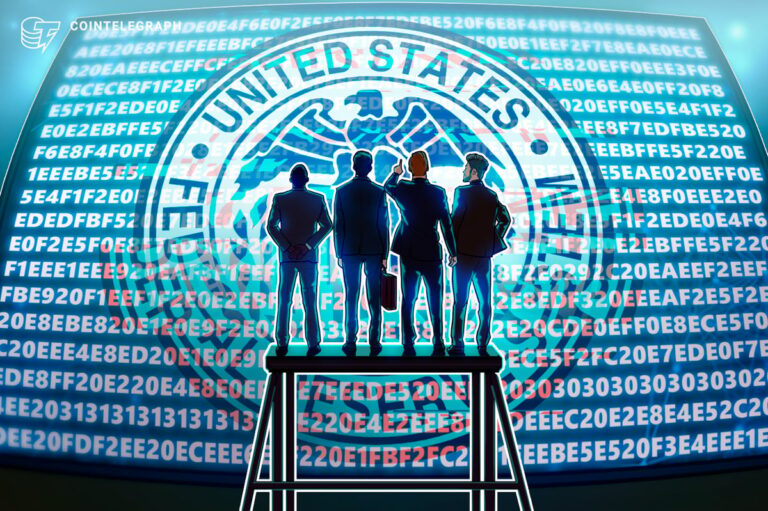
The Federal Reserve has heard arguments from crypto companies and banking associations on a proposal to allow so-called “skinny master accounts,” which would give fintech firms limited access to the central bank’s payments infrastructure.
The Fed received 44 comments in response to its proposal, which closed on Friday, seeking feedback on offering a “payment account,” with crypto companies backing the idea and banks urging caution.
In opening up comments on the proposal in December, Fed Governor Christopher Waller said the new payment accounts were needed due to “rapid developments” in payments and that they would “support innovation while keeping the payments system safe.”
Payment accounts won’t have the same privileges as master accounts (commonly owned by big banks) — they wouldn’t earn interest or be given access to Fed credit and would have balance limits.
Crypto backs getting accounts
In response to the proposal, stablecoin issuer Circle said in a letter that the accounts would “play an important first step in carrying forward Congress’ vision under the GENIUS Act” and argued they would “materially strengthen US payments.”
The recently formed Blockchain Payments Consortium called the accounts an “overdue and much-welcomed addition” that it said would “eliminate uncompetitive practices that undercut consumers and concentrate risk around a handful of banks.”
Anchorage Digital Bank, the country’s first federally chartered crypto bank, said that “specific deficiencies” in the proposal must be addressed regarding overnight balance limits, interest on reserves and access to the Fed’s automated clearing house.
The Fed floated setting an overnight balance limit at the lesser of $500 million or 10% of the account holder’s total assets and would not give interest on account balances or allow access to its clearing house, which offers same-day and international payments.
Banks raise concerns about access to Fed system
However, multiple banking associations responded to the Fed with concerns about allowing different entities into the central banking system.
The American Bankers Association said that many of the entities that would be eligible for a payment account “lack a long-run supervisory track record, are not subject to consistent federal safety-and-soundness standards and may rely on evolving statutory or regulatory regimes.”
Related: CFTC expands payment stablecoin criteria to include national trust banks
The Wisconsin Bankers Association said that it believes access to the accounts “should depend not only on legal eligibility, but also on an institution’s demonstrated capabilities in governance, risk management, internal controls, and compliance.”
Better Markets, a nonpartisan organization that lobbies for financial reform, called the payment accounts an “irresponsible and reckless giveaway to the crypto industry” that should be rescinded.
The group said the accounts would “implicitly and unnecessarily” expand the Fed’s mandate and that the types of companies that would request access to such accounts “present huge risks to the Federal Reserve System and the financial system.”
The Fed will consider the feedback before it makes a final rule on its proposal, which could take months.
Magazine: How crypto laws changed in 2025 — and how they’ll change in 2026
Cointelegraph is committed to independent, transparent journalism. This news article is produced in accordance with Cointelegraph’s Editorial Policy and aims to provide accurate and timely information. Readers are encouraged to verify information independently. Read our Editorial Policy https://cointelegraph.com/editorial-policy
Why Quantum Computing Isn’t a Serious Risk for Bitcoin Yet: CoinShares
In brief
Daily Debrief Newsletter
Start every day with the top news stories right now, plus original features, a podcast, videos and more.
Central Bank of India Strengthens Historic Ties with Parsi Community Amidst Growth Momentum

Central Bank of India, one of the country’s oldest and largest public sector banks, has held a strategic engagement with the Parsi community in Mumbai to honour its founding roots and showcase its recent financial performance.
The interaction comes as the Bank reports improved financial results for the quarter ended 31 December 2025. The event served a dual purpose: reconnecting with the community that birthed the institution and outlining the bank’s modern growth trajectory.
A legacy of ‘National Asset’
The Central Bank of India was founded in 1911 by the visionary Sir Sorabji Pochkhanawala, a prominent Parsi who declared the institution to be the “property of the nation and the country’s asset.” The bank’s first Chairman, Sir Pherozeshah Mehta, also hailed from the Parsi community, cementing a deep historical bond between the community and the bank.
Senior leadership at the event reflected on this heritage, noting that the founder’s vision of creating a bank “owned and operated by Indians” during the British Raj remains central to its ethos today.
The gathering was attended by descendants of the bank’s founder and first chairman, alongside notable figures such as Keki Mistry (Non-Executive Director, HDFC Bank), Jimmy Mistry, Mickey Mehta, and Dinshaw and Viraf Mehta (former and present Chairmen of the Bombay Parsi Panchayat).
Growth and customer centricity
Beyond nostalgia, the bank used the platform to highlight its current robust health. Officials noted significant growth in total business, a strong CASA (Current Account Savings Account) base described as “among the best in the industry,” and improvements in asset quality and advances.
Shri Kalyan Kumar, MD & CEO of Central Bank of India, commented on the strategic value of the meeting: “The interaction with the Parsi community provided a valuable opportunity to exchange views and better understand their evolving banking expectations. The keen interest shown in our products and services reinforces our commitment to continue serving the community and strengthen long-term relationships.”
The engagement is part of a broader strategy by the bank to deepen relationships with key stakeholder groups as it continues to strengthen its retail banking franchise. The bank has indicated it plans to hold similar interactions periodically to sustain customer engagement.
Japan’s record 56,000 Nikkei surge sends bitcoin to $72,000, gold past $5,000

Japan’s Nikkei 225 surged to a record on Monday, breaching the 57,000 level with a 3.4% gain following Prime Minister Sanae Takaichi’s decisive “supermajority” victory in the Sunday general election, according to Nikkei Asia.
This political mandate signaled a green light for Takaichi’s aggressive expansionary fiscal agenda, which includes a massive $135 billion stimulus package aimed at revitalizing the economy through infrastructure spending and tax cuts.
The “Takaichi Trade” sparked a global ripple effect, driving gold prices past the $5,000 per ounce milestone and pushing bitcoin to a brief peak of $72,000, before settling back above $70,000 during Asia morning trading hours. U.S. stock market futures opened higher.
The market euphoria was further bolstered by international support, with both President Donald Trump and U.S. Treasury Secretary Scott Bessent congratulating the Prime Minister.
Trump is eyeing 100,000 on the Dow Jones (DJI) by the end of his term, a 100% increase from current levels. The DJI on Friday breached 50,000 for the first time.