

Crypto payments firm Mesh has raised $75 million in Series C funding, reaching a $1 billion valuation as it expands its mission to unify fragmented digital asset payment rails worldwide. Major Funding Round Sees Mesh Hit $1 Billion Valuation Mesh, a global crypto payments network, has secured $75 million in a Series C funding round, […]
SOL ETFs Outpace ETH’s Early Rollout, But BTC Still Dominates

While Bitcoin ETFs still lead by a wide margin, Solana’s early ETF inflows outpaced Ethereum’s launch period.
U.S. spot Solana exchange-traded funds (ETFs) pulled in about $750-766 million in early inflows, showing stronger early demand than Ethereum ETFs did at launch – but still far behind Bitcoin.
According to a new report from Everstake, U.S. spot SOL ETFs launched in October 2025 and reached roughly $950 million in assets under management (AUM) by late December. That equals about 1.35% of Solana’s total market value.
By comparison, U.S. spot-Bitcoin ETFs, which launched in January 2024, attracted about $12.1 billion in net inflows during their first three months, according to SoSoValue. By the end of March 2024, Bitcoin ETF assets had climbed to roughly $59 billion, roughly 4% of Bitcoin’s total market capitalization at the time.
Ethereum spot ETFs, which launched in late July 2024, had a slower start. During their first three months, ETH ETFs recorded net outflows of $524 million, according to SoSoValue. At the time, Ethereum’s market capitalization stood near $390 billion, meaning ETF holdings represented under 1% of ETH’s total market value.

While the dollar value of Solana ETF inflows remains far smaller than those in Bitcoin products, the data suggest that Solana had stronger early momentum relative to Ethereum’s ETF rollout.
The findings highlight how institutions are approaching altcoin exposure through ETFs and suggest Solana may be emerging as a meaningful asset in regulated crypto markets.
The report also pointed to broader growth across the Solana ecosystem. Stablecoin supply on the network reached approximately $16 billion, with monthly transfer volumes exceeding $50 billion, supporting both decentralized finance activity and payment use cases.
However, Everstake cautioned that Solana’s ETF market remains in its early stages, and it is unclear whether inflows will remain steady over time or prove more sensitive to broader market conditions.
Real‑Estate Tokenization Registry Processes Prohibited in São Paulo

The government of São Paulo, Brazil prohibited the registration of documents linking tokens to real‑estate properties at the request of a group of registrars. The action halts a market operating in a gray zone, which must now wait for proper regulation. Registration of Real Estate Tokenization Projects Stopped by the São Paolo Government The city of […]
Rala for Birds Overview: How This Natural Supplement Supports Bird Health
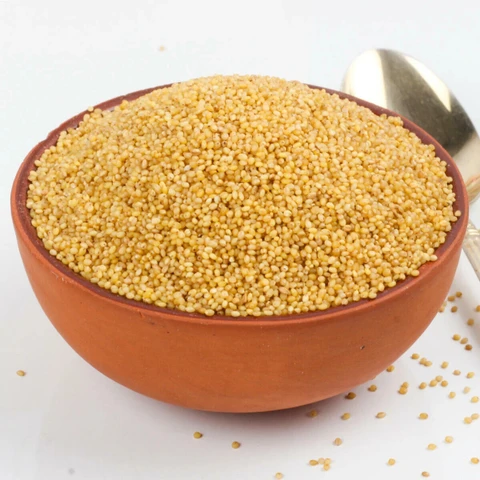
Bird health is a top priority for pet owners and poultry farmers alike. Whether you keep birds for companionship or farm production, ensuring their vitality, longevity, and well-being is crucial. The challenge many face is choosing the right supplements to support bird health without resorting to chemicals or additives that may have side effects. In this quest for natural, safe alternatives, Rala for birds has emerged as a popular choice.
Rala, an organic herbal supplement, has been lauded for its ability to improve various aspects of bird health, from boosting immunity to enhancing feather quality. It has been used for centuries in traditional medicine, but its recent rise in popularity among bird enthusiasts and poultry farmers has made it a go-to solution for those seeking natural methods to improve bird health.
In this article, we will provide Rala For Birds overview, exploring its key benefits, how it supports overall bird health, and why it’s considered a safe and effective choice for bird owners.
How Rala for Birds Improves Bird Health?
Rala is a natural supplement derived from plant extracts known for its therapeutic properties. When added to a bird’s diet, Rala provides numerous health benefits that improve both the physical and physiological well-being of the bird. Its ability to enhance immunity, support digestive health, and reduce stress makes it an essential supplement for those looking to keep their birds in optimal health.
Boosting Immunity and Disease Resistance
One of the primary benefits of Rala for birds is its ability to boost the immune system. Birds are highly susceptible to various diseases, particularly in confined spaces such as aviaries and poultry farms. Rala enhances the body’s natural defense mechanisms, making birds more resistant to common infections and illnesses.
By strengthening the immune system, Rala reduces the need for antibiotics and other chemical treatments, which can have negative side effects. This is especially important for poultry farmers who want to avoid introducing harmful chemicals into the food chain. For pet owners, a stronger immune system means fewer visits to the veterinarian and healthier birds overall.
Enhancing Feather Quality and Appearance
Feathers are a critical indicator of a bird’s health. Birds suffering from poor nutrition or stress often show signs of damaged or thinning feathers. Rala helps to improve feather quality by promoting overall health and providing the necessary nutrients for healthy feather growth. Birds that receive Rala supplementation tend to grow thicker, shinier, and more vibrant feathers.
In poultry farming, feather quality is also a sign of the bird’s overall vitality and productivity. Healthy, robust feathers indicate a bird is in good health, reducing the risk of feather-pecking behavior and improving the flock’s overall performance.
Supporting Digestive Health
Proper digestion is essential for the absorption of nutrients, which directly impacts a bird’s overall health and energy levels. Rala supports healthy digestion by promoting the growth of beneficial gut bacteria, which aids in nutrient absorption and improves overall gastrointestinal function.
Birds with a healthy digestive system are less likely to suffer from common digestive issues such as bloating, indigestion, and malabsorption. For farmers and pet owners alike, ensuring that birds can efficiently process their food is crucial to their overall health and performance.
Why Rala is Ideal for Poultry Farms?
For poultry farmers, Rala offers a natural solution to enhance flock health and increase productivity. The supplement helps optimize the growth and performance of birds, including egg-laying hens and broilers, by supporting vital systems such as immunity and digestion.
Improving Egg Production
Rala plays a significant role in improving egg production, which is essential for poultry farmers. By supporting the overall health of the birds, Rala optimizes their reproductive systems, resulting in better egg quality and quantity. Healthy hens that receive Rala supplementation are more likely to maintain a steady rate of egg production, even under stressful conditions.
In addition to improving egg production, Rala helps maintain consistent performance in birds, which is crucial for meeting market demands and maintaining a profitable farm.
Supporting Muscle Development in Broilers
Broiler chickens, which are raised for meat production, benefit from Rala’s ability to support muscle growth. The supplement helps improve muscle development, leading to better yields and higher-quality meat. Rala also promotes overall vitality, which reduces the likelihood of health problems that can arise from poor growth or stress.
Poultry farmers can use Rala as part of their nutritional regimen to ensure that broilers grow to their full potential, reducing the risk of stunted growth and improving profitability.
How to Use Rala for Birds?
Dosage and Administration
Rala for birds typically comes in powder form, which can be easily mixed into the bird’s daily feed. The recommended dosage depends on the size of the bird and its specific health needs. For smaller pet birds, a small pinch of Rala powder may suffice, while larger poultry birds may require a larger amount.
It’s important to follow the dosage guidelines provided on the product label to ensure that birds receive the right amount of Rala for optimal health. Overdosing can lead to adverse effects, so moderation is key.
Frequency of Use
Rala is generally safe for continuous use, and many bird owners incorporate it into their birds’ daily diets as a preventative measure. For most birds, regular use of Rala will provide long-term health benefits, but the frequency and dosage can be adjusted based on the bird’s health and specific needs.
For poultry farmers, a consistent schedule of Rala supplementation ensures that birds maintain optimal health and performance throughout their growth and reproductive cycles.
Conclusion: A Safe, Effective Solution for Bird Health
As bird owners and poultry farmers look for natural ways to improve the health and well-being of their birds, Rala for birds has proven to be a safe, effective, and holistic solution. From boosting immunity and digestive health to enhancing feather quality and improving egg production, Rala offers a wide range of benefits that support both the physical and physiological aspects of bird health.
By incorporating Rala into their diets, bird owners can reduce the need for chemical treatments and foster a healthier, more productive environment for their feathered companions. Whether you are caring for a single pet bird or managing a large poultry farm, Rala is a natural alternative that can significantly improve bird health and performance.
Vitalik Buterin pulls $17 million in ether as Ethereum Foundation tightens spending

Ethereum co-founder Vitalik Buterin said the Ethereum Foundation (EF) is entering a period of “mild austerity,” as it seeks to deliver an aggressive scaling roadmap while ensuring it can sustain itself over the long term.
In a post on X, Buterin said he has personally withdrawn 16,384 ETH, worth roughly $17.3 million at current market prices, to support a broader effort to build an open-source, secure and verifiable “full stack” of software and hardware.
Ether was trading around $2,720 on Tuesday, down significantly from its October peak near $4,831, as crypto markets have pulled back in recent weeks.
Buterin framed the initiative as extending beyond Ethereum itself, with potential applications across finance, communications, governance, operating systems and secure hardware. He also pointed to emerging areas such as biotech and public health, alongside privacy-preserving tools like encrypted messaging and local-first software.
The Ethereum Foundation will remain focused on developing the blockchain, Buterin said, but with an emphasis on “Ethereum for people who need it” — prioritizing decentralization, self-sovereignty, privacy and security over corporate adoption.
Buterin also said he is exploring decentralized staking options that could generate additional funding through staking rewards over time.
The announcement comes as the Foundation holds about $558 million worth of crypto assets, according to blockchain analytics firm Arkham. Vitalik, meanwhile, holds $666 million.
Deleveraging Disaster: $1.7 Billion Liquidated as Bitcoin Slips to $81,900

Bitcoin plunged below $82,000 on Jan. 30, 2026, marking its weakest level since November 2025, as geopolitical tensions in the Middle East triggered a sharp sell-off. Bitcoin Hits Two-Month Low Amid Middle East Tensions Bitcoin tumbled below the $82,000 mark early Friday, Jan. 30, as global markets continued to reel from escalating military rhetoric in […]
Effective Tips That Make Your Website Design Process a Seamless One!

Developing a website is a nice move to take your business forward. However, not everyone excels in creating a compelling, engaging website. So, how do you ensure your website turns out as expected and functional? Here we have listed some useful tips to make your website successful:
Most web design projects fail because people can’t plan them correctly. First, know what you want from the website, and then hop on to design. Is it for selling products or offering some consultation services? Some brands may offer both services online.
You are making the website not for yourself, but for the buyers. Analyze your target audience, their age groups, and financial profiles. That is where top web design firms can help. Their staff can analyze these aspects and develop a suitable plan.
Not every website needs all design elements. Know what you must have and things that you can do without. Again, the expertise of a veteran website design company will be useful. They can find out what you need and what can be discarded from the website.
When you choose a web design company, you must share your brand guidelines. Details such as the logo, colors, and fonts used are shared. You may even give them some reference or rival websites that you really like.
Every web design firm, or most of them, will offer you service terms or a contract. Read it carefully to avoid problems later on. This documentation lists the services included and those excluded. If you skip reading the fine print, there can be hassles later.
Once the chosen firm starts the website design, you have to be responsive. Revert to their queries, emails, or calls. That will keep the project on track and help them avoid delays. Be clear in your interactions.
You may have some personal ideas about website design. However, it is a creative process, and some changes may be necessary. Ask the agency you’ve chosen for a few options so you can compare and choose.
- Check everything before the launch
The web design firm will test the site before it goes live, but you also need to do the same before giving your approval. Everything, from content to legibility and loading speed, must be carefully checked.
After the website is ready, sometimes it can run into problems. Note what is wrong and update the firm quickly. This will help find and resolve problems quickly.
You must update the website content regularly. So, you need to change content, including blogs, images, and visuals, to keep it relevant and fresh. This is what Google likes.
Summing it up
So, designing a functional website isn’t that tough when you get the basics right. Do not decide in a hurry, though. Entities like BigDropInc.com can help you get things in place. They have several years of expertise and knowledge in this field.
Bitcoin Price Crashes 6% To $84,000 In Sharp Sell-Off

Bitcoin price fell sharply this morning, sliding to lows in the $84,000 range and extending a swift reversal from recent 24-hour highs above $90,000, as macro uncertainty and fragile market structure reasserted control.
The bitcoin price dropped to as low as $84,416, down roughly 6% over the past 24 hours if accounting for daily highs, according to Bitcoin Magazine Pro data.
The move came less than a day after bitcoin traded as high as $90,400, marking a rapid round-trip that underscored heightened volatility around this week’s Federal Reserve meeting.
Daily trading volume climbed to roughly $48 billion as the selloff accelerated, suggesting forced liquidations and short-term positioning unwind. Bitcoin’s total market capitalization fell to about $1.72 trillion, down approximately 4% on the day.
With unemployment at 4.4%, Powell emphasized labor market resilience and refrained from signaling urgency around easing policy — an outcome that proved unfriendly for speculative assets.
For crypto markets that had rallied into the decision, the meeting quickly turned into a “sell the news” event.
Bitcoin price needs to hold $84,000
The reversal also came as bitcoin struggled to reclaim key technical levels. After briefly clearing $90,000, the bitcoin price failed to hold above resistance near $91,000, triggering renewed selling pressure.
Analysts have flagged the $88,000 level as an important pivot for near-term stabilization, with $84,000 now emerging as critical downside support.
A sustained break below that level could expose deeper retracements toward the $72,000–$68,000 zone, according to Bitcoin Magazine analysts.
Bulls are expected to defend the $84,000 area aggressively to avoid a broader technical breakdown.
Meanwhile, Gold surged to new all-time highs above $5,550 per ounce this week, highlighting continued demand for hard assets amid currency uncertainty. Bitcoin initially appeared to benefit from similar tailwinds but failed to sustain momentum.
Next week, the White House will host banking and crypto executives on February 2 to discuss reviving stalled U.S. crypto legislation.
The meeting, organized by the administration’s crypto council, will focus on contentious issues — especially how proposed rules would treat interest and rewards paid on dollar-pegged stablecoins — as the Trump administration seeks to broker a compromise after talks broke down.
At the time of writing, Bitcoin price is trading at $84,437, with a 24-hour trading volume of $48 billion.
The cryptocurrency is down 4% over the past 24 hours and is trading 6% below its seven-day high of $90,316. Bitcoin price is sitting at its seven-day low, down roughly 0% from the $85,417 level.
Bank Of England Shares Stablecoin, Tokenization 2026 Plan
Trusted Editorial content, reviewed by leading industry experts and seasoned editors. Ad Disclosure
The Bank of England (BoE) has outlined its plan to prioritize key innovation areas in 2026, including stablecoins and tokenization, to shape the future of the UK’s digital financial landscape.
BoE To Prioritize Stablecoins In 2026
On Thursday, the Bank of England’s executive director for financial market infrastructure, Sasha Mills, shared the bank’s priorities plan for the year, highlighting the role of regulators in ensuring a safe, responsible, innovative future.
During her speech at the Tokenisation Summit in London, Mills affirmed that financial authorities have “the opportunity to build truly holistic digital financial markets in the UK, bringing real benefits to the real economy.”
To achieve this, the BoE will prioritize systemic stablecoins, tokenized collateral, and the Digital Securities Sandbox (DSS) as three key areas of innovation this year.
The executive director explained that the Bank is focused on advancing its efforts to regulate stablecoins, including its collaboration with the Financial Conduct Authority (FCA) to test the tokens in the DSS, and clarifying policies on the treatment of tokenized collateral under the UK European Market Infrastructure Regulation (EMIR).
Regarding stablecoins, Mills detailed that they “have the potential to modernise retail and wholesale payments, enabling faster, cheaper and more efficient transactions. They could offer a valuable choice for individuals and businesses making payments in the UK and they could offer new functionalities – through programmability – to deliver real benefits for the UK real economy.”
As a result, the Bank is planning to finalize its regime for systemic stablecoins, alongside the FCA, by the end of this year. She noted that these tokens “need to meet the same standards as existing forms of money used in the UK real economy.”
As reported by Bitcoinist, the BoE released a consultation paper on its proposed regulatory framework for sterling-denominated systemic stablecoins, addressing backing rules and holding limits.
Notably, the Bank also moved forward with a controversial proposal to cap stablecoin ownership to £10,000 to £20,000 for individuals and £10 million for businesses, similar to its proposed approach to the digital pound.
UK Seeks Regulatory Clarity For Market Stability
The BoE also seeks to offer clarity for its second priority, tokenization, as the UK is already seeing “practical applications of tokenisation being piloted in collateral markets, offering greater automation and faster settlement, with the potential to lower firm operating costs and increase system-wide liquidity.”
Mills noted that, just like with stablecoins used for payments and traditional collateral, tokenized collateral will be required to meet certain standards to support financial stability.
She asserted that the Bank “aims to avoid mandating or prohibiting specific technologies.” Nonetheless, she also emphasized that clarity on these topics and how they can operate under the UK’s EMIR rules will be crucial to ensure market confidence.
“To provide greater certainty, we will set out further policy later this year on how tokenised collateral can operate under the existing regulatory framework. Ensuring smoother movement of cross-border collateral requires a consistent international approach, so our policy will be shaped by engagement with industry and our international counterparts,” the executive director affirmed.
Regarding the third area of focus, the Digital Securities Sandbox and stablecoins within it, Mills detailed that the BoE is developing an assessment framework to determine a set of regulated stablecoins that meet high enough standards for use in the sandbox.
“As regulatory regimes for stablecoin issuers in the UK and internationally are still being developed, this assessment framework may not map exactly to future standards for what may be permitted in wholesale markets,” she stated. “However, (…) [it] will both ensure some degree of resilience for market participants, and aid transition to a future permanent regime for the use of stablecoins in wholesale markets.”
“The future is ambitious. But making the changes I outlined today (…) will support financial stability domestically and internationally.” Mills concluded.
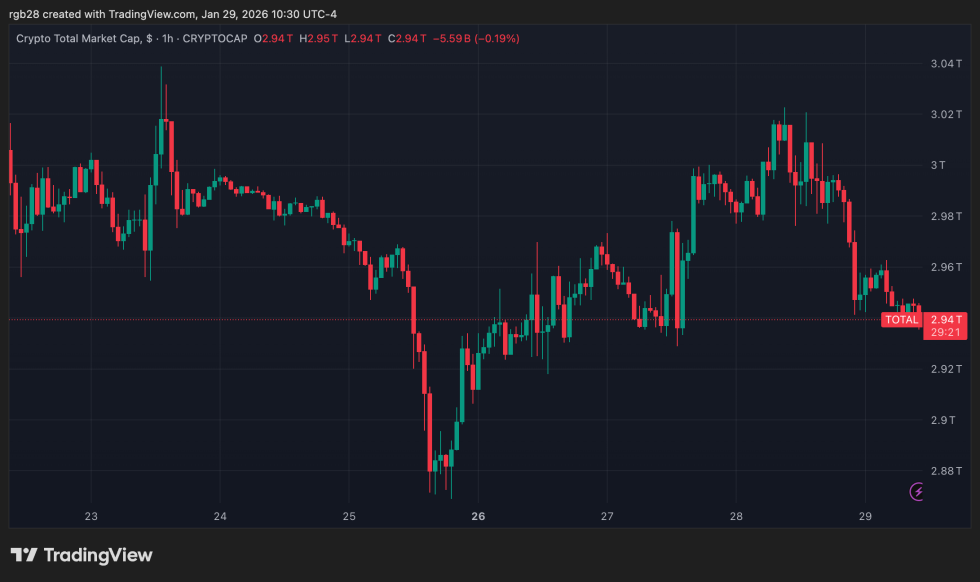
The total crypto market capitalization is at $2.94 trillion in the one-week chart. Source: TOTAL on TradingView
Featured Image from Unsplash.com, Chart from TradingView.com

Editorial Process for bitcoinist is centered on delivering thoroughly researched, accurate, and unbiased content. We uphold strict sourcing standards, and each page undergoes diligent review by our team of top technology experts and seasoned editors. This process ensures the integrity, relevance, and value of our content for our readers.
Kevin Warsh’s odds to become Fed chair surge to 92% after Trump hints at familiar pick

Kevin Warsh’s odds of leading the central bank in the post-Powell era have reached a new all-time high after President Trump said today that his pick for Fed chair would be a well-known figure in the financial world.
He also said the choice would not come as a surprise, adding that many people believe it is someone who could have held the role a few years ago.
Warsh, a former Federal Reserve governor, has seen his odds of becoming the next Fed Chair surge to 92% on Polymarket and Kalshi, up from under 40% the previous day.
The spike comes ahead of President Trump’s announcement on January 30, 2026, when he is expected to reveal his nominee for the position. Warsh is among four finalists identified by Treasury Secretary Scott Bessent, alongside Christopher Waller, Rick Rieder, and Kevin Hassett.
Current Fed Chair Jerome Powell’s term ends in May 2026. Trump holds three of the seven Fed board seats.