

A U.S. court sentenced the former CEO of defunct crypto firm Safemoon to 100 months in federal prison for defrauding investors. The CEO was also ordered to forfeit $7.5 million and two properties, with restitution to be determined later. Asset Forfeiture and Victim Restitution A U.S. court has sentenced the CEO of Safemoon, the defunct […]
Paysafe Partners with FuturePay to Drive Latin American Expansion via Local Payment Suite

Paysafe, the global payments platform, has partnered with cross-border solution provider FuturePay to support its expansion into the Latin American market.
The collaboration sees FuturePay integrating Paysafe’s SafetyPay solution. This integration will allow merchants using FuturePay’s platform to offer a suite of local payment methods (LPMs) essential for converting customers in the region, including bank transfers, online cash, and Brazil’s popular instant payment system, Pix.
Tailored for the unbanked and cash-preferred

The move is designed to address specific consumer behaviours in Latin America, where credit card penetration remains lower than in other markets. Approximately 42 per cent of consumers in the region do not possess a credit card, making alternative payment options critical for e-commerce growth.
Through the integration, FuturePay merchants can now accept bank transfers supported by over 175 banking partners across nine countries. Additionally, the partnership leverages SafetyPay’s eCash solution, catering to the region’s enduring cash culture. This feature allows customers to initiate a transaction online and complete the payment in cash at more than 390,000 in-store collection points across Latin America.
Esteban Sarubbi, head of Latin America at Paysafe, commented: “We’re delighted to support FuturePay’s entry into Latin America, where our SafetyPay solution is renowned as the region’s largest alternative and local payment method network. With SafetyPay’s bank transfer, online cash and other local payment options specifically tailored to Latin American consumers, the partnership will enable FuturePay’s merchant customers to reduce friction at their checkouts, increase customer conversions and ultimately grow and future-proof their businesses.”
Expanding the payment mix

In addition to bank transfers and cash, the partnership unlocks access to other key LPMs, such as the PagoEfectivo digital wallet in Peru and Boleto Bancario in Brazil.
For FuturePay, a Hong Kong-headquartered fintech established in 2016, the deal represents a significant milestone in its global strategy. The company’s platform connects global merchants to multiple payment solutions through a single integration, now bolstered by Paysafe’s deep regional infrastructure.
Allen Cai, CEO of FuturePay Global Limited, added: “Our partnership with Paysafe marks an important milestone in FuturePay’s expansion into Latin America. To enter the region, it was critical for us to work with a partner that combined strong local payment coverage with deep market expertise… enabling our merchants to enter the market with confidence and focus on growing their businesses, while relying on a payments infrastructure that is built for local consumers.”
This XRP Indicator Warns That Price May Crash Below $1: Analyst

XRP (XRP) has retraced nearly 63% from its multi-year high of $3.66 to trade at $1.36 on Wednesday, a technical setup that may have bearish implications for its price, according to a market analyst.
Key takeaways:
-
XRP appeared bearish below $1.40, with chart technicals pointing to a further drop toward $0.70-$1.
-
Persistent spot XRP ETFs inflows, whale accumulation and a surge in active addresses could invalidate the bearish outlook.
Where will XRP price bottom?
In a Tuesday post on X, Chart Nerd said that previous fractals from the monthly Gaussian Channel indicator suggest that XRP could drop lower over the coming weeks or months.
Related: XRP traders more optimistic as BTC, ETH mood turns sour: Santiment
The Gaussian Channel is a technical analysis indicator used to identify trends, spot potential support/resistance levels, and overbought/oversold conditions.
The chart below shows that whenever the XRP price rallied, it has corrected to retest the upper regression band of the Gaussian Channel, which is currently at $1.16.
Historically, this has led to three to four months of “further decline towards the middle regression band of the Gaussian Channel before marking a foundation and continuing the trajectory higher,” the analyst said, adding:
“The middle regression band currently ties up around $0.70, which is also a previous year-long resistance level seen back in 2023/2024, and hasn’t been backtested for support.”
Chart Nerd added that this scenario will be validated if the XRP drops below the local lows of $1.12, reached on Friday.
Meanwhile, analyst Crypto Patel said that while a drop to $1 would provide a good entry zone for XRP buyers, the “best accumulation zone” could be lower at $0.50-$0.70.
“Currently, XRP/USDT is ~70% down from the recent ATH. After a historical 96% drawdown from $3.28 to $0.1050 in 2018,” a similar crash is “unlikely,” the technical analyst said, adding:
“A corrective retracement below $1 remains possible.”

As Cointelegraph reported, the odds of XRP falling below $1 increased once the price was rejected by the 200-week moving average around $1.40.
Is there hope for an XRP price recovery?
Despite XRP’s price weakness, institutional demand and whale accumulation continued.
Launched in late 2025, spot XRP ETFs have now reached $1.23 billion in cumulative net inflows. The $3.26 million inflows on Tuesday marked the fifth consecutive day of inflows, bringing the total assets under management to $1.01 billion.

“Institutional demand and XRP ETF inflows continue, with persistent spot ETF net inflows highlighting institutional confidence,” trader Levi said in a recent post on X.
XRP’s latest rebound to $1.50 from $1.12 came as speculators discussed whether the price would fall below $1, market intelligence platform Santiment said in a recent post on X.
Another hope for the bulls is that whales accumulated during the crash as transactions involving over $100,000 in XRP spiked to four-month highs of 1,389.
The number of active addresses on the XRP Ledger “suddenly ballooned to 78,727 in just one 8-hour candle — the highest in 6 months,” Santiment said, adding:
“These are both major signals of a price reversal for any asset.”

This article does not contain investment advice or recommendations. Every investment and trading move involves risk, and readers should conduct their own research when making a decision. While we strive to provide accurate and timely information, Cointelegraph does not guarantee the accuracy, completeness, or reliability of any information in this article. This article may contain forward-looking statements that are subject to risks and uncertainties. Cointelegraph will not be liable for any loss or damage arising from your reliance on this information.
U.S. Needs To Pass Clarity Act To Clear Path For Bitcoin And Crypto Markets
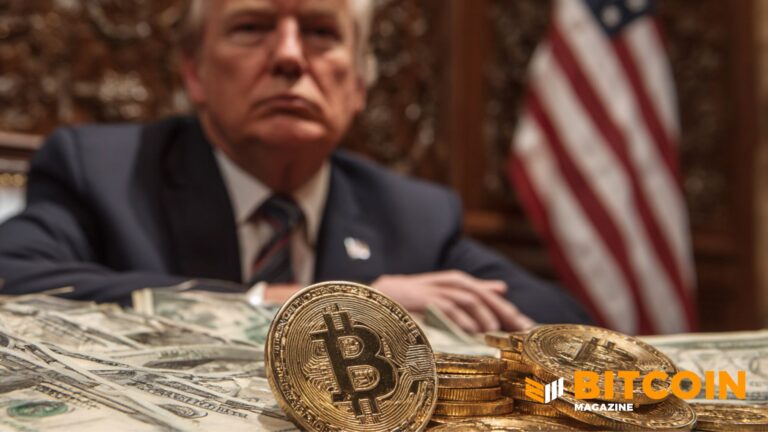
Treasury Secretary Scott Bessent recently pressed lawmakers to act on stalled crypto and bitcoin legislation, saying the United States must secure clear market structure rules before the end of the spring legislative window.
In an interview from Fox News’ Sunday Morning Futures, Bessent said that the Digital Asset Market Clarity Act — commonly referred to as the Clarity Act — is essential to the future viability of bitcoin and digital asset markets in the U.S.
Bessent told host Maria Bartiromo that the recent volatility and developments in crypto markets really show the need for legal certainty.
“What we’re seeing in the crypto market over the past few months means more than ever that the U.S. needs market structure, we need clarity, and we need to get this across the line this spring,” he said.
Bessent acknowledged resistance from some quarters but said he remains optimistic that Congress can bring the bill back for a markup session.
The Treasury chief described the current impasse as driven by “recalcitrant actors” within the industry who would prefer to see the bill fail rather than compromise on contentious elements.
He said that many traditional financial firms and a broad swath of crypto and bitcoin companies have aligned behind the need for legislation but that a vocal minority on both sides of the debate are holding up progress.
Central to the dispute are provisions in the Clarity Act concerning stablecoin yields and the role of regulatory agencies. Opponents, including major exchange executives, have argued that proposed restrictions on rewards for stablecoin holdings could undermine the competitiveness of U.S. exchanges and limit innovation. Banks and credit unions, in turn, have raised concerns that high yields on stablecoin accounts could pull deposits away from the traditional banking system, undermining funding for lending activities.
Bessent said debate over bank margins and crypto incentives is unavoidable but that resolving these issues through legislation is preferable to leaving markets in a legal vacuum.
“For crypto to remain a viable digital asset and move forward, we need to get this Clarity Act done,” he said, pointing to bipartisan support in Congress as a pathway to success.
The Treasury’s stance also reflects the broader executive branch push to position the U.S. as a global leader in crypto regulation.
Bessent said a clear market structure regime could attract innovation and capital onshore, strengthening the domestic financial ecosystem even as digital assets grow internationally.
Lawmakers involved in negotiations have signaled that further closed‑door talks are planned, with both chambers seeking to reconcile differences ahead of key legislative deadlines.
Bessent: U.S. will stop selling its bitcoin
Earlier this year, Bessent said the U.S. government’s stance is to stop selling seized BTC and instead add it to the Strategic Bitcoin Reserve. Speaking at the World Economic Forum in Davos, he framed the move as part of a broader push to bring digital-asset innovation back to the U.S.
The comments came amid questions over bitcoin seizures tied to cases involving Tornado Cash and Samourai Wallet developers. While declining to discuss active litigation, Bessent stressed that seized BTC will be retained by the federal government once legal damages are resolved.
Any selling of bitcoin would contradict Executive Order 14233, which requires forfeited bitcoin to be held in the U.S. Strategic Bitcoin Reserve rather than liquidated.
Dead Cat Bounce or Bottoming Out? Bitcoin Bulls Face Harsh Reality Check

Bitcoin entered Feb. 11, 2026, walking a tightrope between hopeful rebounds and heavy-handed resistance. Priced at $67,131 with a market cap of $1.34 trillion, the cryptocurrency saw an intraday range between $66,351 and $69,876 and boasted a 24-hour trading volume of $46.24 billion. But despite the fireworks in volume, momentum isn’t exactly throwing a party. […]
Interactive Brokers Taps Coinbase for ‘Perpetual-Style’ Crypto Futures

Global brokerage IBKR now offers traditional and perpetual-style BTC and ETH futures trading to its clients.
Interactive Brokers (IBKR), a leading global brokerage with more than 4.5 million clients, rolled out small-sized nano BTC and ETH futures contracts today.
The contracts leverage Coinbase Derivatives’ traditional futures offerings, which have monthly expirations, and its “perpetual-style futures,” making IBKR the latest traditional brokerage to offer perpetuals.
The move is IBKR’s latest into crypto, after enabling stablecoin deposits in December.
Perpetual derivatives exploded in 2025, driven by the success of platforms such as Hyperliquid, Lighter and Aster. Nearly $8 trillion in decentralized perpetuals trading occurred in 2025, according to DeFiLlama, compared with $2.55 trillion in 2024 and just $690 billion in 2023.
Traditional financial institutions continue to expand their crypto trading offerings, as evidenced by the CME Group adding new altcoin futures yesterday and even teasing its own native tokenized cash during its latest earnings call.
Unlike in previous crypto cycles, when traditional players slowly stepped away as prices dropped, leading institutions such as CME and IBKR continue to dive headfirst into the space, despite Bitcoin falling more than 50% from its October peak. However, it remains unclear whether TradFi’s focus on broadening trading access will meaningfully affect crypto prices.
BTC rises a bit, but remains lower for the day following strong jobs numbers

U.S. jobs growth sizably strengthened in the first month of 2026.
There were 130,000 jobs added in January, according to a Wednesday report from the Bureau of Labor Statistics. Economist forecasts had been for 70,000 jobs added, up from jobs growth of 48,000 in December.
The unemployment rate fell to 4.3% versus forecasts for 4.4% and December’s 4.4%.
Trading in a tight range close to $69,000 for much of the week, bitcoin had dipped back to the $67,000 area in the hours prior to the report. In the immediate aftermath of the strong data, bitcoin rose to $67,500, though still down 2% over the past 24 hours.
U.S. stock index futures are continuing with modest gains, the Nasdaq 100 higher by 0.55% and S&P 500 by 0.5%. Lower earlier, the dollar is now higher on the session, and the 10-year U.S. Treasury yield has jumped five basis points to 4.20%.
After having cut rates multiple times in the second half of 2025, the Federal Reserve held policy steady at its January meeting, and members showed little inclination to resume rate cuts at the bank’s next meeting in March.
Ahead of this morning’s job numbers, interest rate traders were placing just 21% chances of a March easing, according to CME FedWatch. Just following the report, those chances had dipped to 19%.
Mistral drops new speech-to-text AI models

French AI startup Mistral has released a pair of new speech-to-text models that aim to set fresh benchmarks for speed, privacy and affordability.
The Paris-based vendor earlier this month unveiled Voxtral Mini Transcribe V2 and Voxtral Realtime, both offered under the Voxtral Transcribe 2 umbrella.
According to Mistral, the models constitute a major step forward, offering “state-of-the-art transcription quality, diarization and ultra-low latency”.
The company has high hopes that the tools will prove popular with enterprise customers, with the number of potential applications growing all the time – ranging from virtual assistants to call center automation, and broadcast subtitling to compliance documentation.
Each model has been created for different applications.
Realtime, as the name suggests, is designed to process live audio, delivering transcriptions with negligible delays that can be configured to as few as 200 milliseconds. This functionality is delivered with what’s described as a “novel streaming architecture,” giving it an advantage over approaches that adapt an offline model and process audio in chunks.
The delay can be configured as required. At 2.4 seconds, the tool is said to be ideal for subtitling, while at 480 milliseconds, the error rate is so low –around 1-2%, which is close to offline accuracy – that it can be used for voice agents, according to Mistral.
The model is also natively multilingual. It works in 13 languages (English, Chinese, Hindi, Spanish, Arabic, French, Portuguese, Russian, German, Japanese, Korean, Italian and Dutch), while with only four billion parameters, it can run on local devices such as phones or laptops. This is particularly important for deployments in which privacy and security are important.
Realtime is available under the Apache 2.0 open-source license on the Hugging Face Hub, or via API at $0.006 per minute.
Mini Transcribe 2, meanwhile, handles batch transcriptions of pre-recorded audio files, offering an array of features that includes comprehensive speaker diarization (with labels and start/end times), context biasing for dedicated topics and domains, and timestamps for specific words. Recording of up to three hours can be processed in a single request, and the same 13 languages are supported as in Realtime.
What Mistral says that what really makes Mini Transcribe 2 stand out, though, is its affordability, with its 4% word error rate on the FLEURS transcription benchmark and $0.003/minute cost claimed to offer the best price-performance of any transcription API.
The company is inviting potential customers to try it out in the new Audio Playground in its Mistral Studio, or on its Le Chat assistant.
The release marks another step forward for Mistral, which has emerged as the leading European player in the burgeoning AI landscape, having secured $2 billion in new funding last year.
Recapping day 1 of Consensus Hong Kong
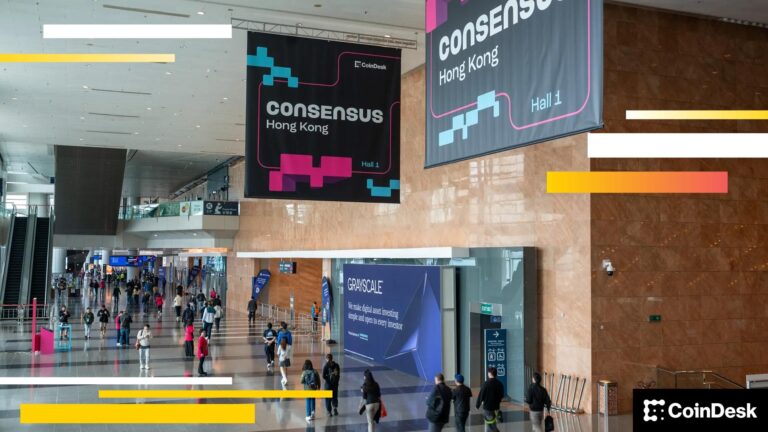
HONG KONG — Consensus Hong Kong’s first day wrapped up with the promise of new financial products tied to crypto in the Special Administrative Region of China.
Hong Kong’s chief executive and financial secretary and the CEO of the Securities and Futures Commission all laid out their priorities for regulation, saying Hong Kong would begin issuing stablecoin licenses next month, publish a framework for perpetual contracts and otherwise work to develop the local crypto economy.
Financial Secretary Paul Chan said he sees AI as one of a handful of trends maturing at this stage: “As AI agents become capable of making and executing decisions independent to it, we may begin to see the early forms of what some call the machine economy, where AI agents can hold and transfer digital assets, pay for services and transact with one another onchain.”
Skybridge Capital’s Anthony Scaramucci said he would stick to a prediction that bitcoin would hit $150,000, pointing to legislation under negotiation in the U.S.
“I think once that legislation does pass, it’s gonna open a floodgate of activity in the money center, banks in the United States,” he said. “If we’re just in the four-year cycle, then bitcoin is starting to reascend at the end of the year, starting in the fourth quarter.”
Consensys’ Joe Lubin said Ethereum is anti-fragile, which is important for a decentralized foundation that can support further decentralized finance (DeFi), which in turn would let developers “build, rearchitect the systems of the world essentially on sounder financial and trust foundations.
“DeFi is roughly as safe as traditional finance,” he said.
Nigel Feetham, Gibraltar’s minister for justice, trade and industry, said smaller jurisdictions regulating crypto are focused on ensuring market safety and integrity.
“We are jealous about guarding our reputation because all it takes is one market failure, if I can put it that way, and clearly everybody gets damaged by that. Once you are licensed in a jurisdiction, you become a stakeholder, and therefore we have an obligation to ensure that we look after all our stakeholders.”
Recent market action also attracted speakers’ attention.
Bitmine’s Tom Lee, whose company is sitting on a nearly $8 billion unrealized loss through its ether holdings, said people “should be thinking about opportunities here instead of selling.”
“Gold is a meme,” said Selini’s Jordi Alexander.
Consensus’ final day will see panels focused on scaling the Bitcoin, Ethereum and Solana blockchains with a keynote by World Liberty Financial’s Zak Folkman and a fireside conversation with the Chairman of Pakistan’s Virtual Assets Regulatory Authority, Bilal Bin Saqib.
Crypto’s latest selloff was a TradFi event, not a crypto crisis

HONG KONG — Last week’s sharp crypto sell-off was less a replay of 2022’s scandals and more a macro-driven unwind spilling over from traditional finance, according to market participants at Consensus Hong Kong 2026.
“After Oct. 10th, a lot of people had already reduced risk,” said Fabio Frontini, founder of Abraxas Capital Management. “This is just a spillover from TradFi entirely… it’s all interconnected now.”
Panelists pointed to the unwinding of yen carry trades as a key catalyst. Thomas Restout, group CEO of B2C2, described the mechanics: investors borrow in low-interest-rate currencies like the yen and deploy that capital into higher-yielding or risk assets, including bitcoin, ether, gold and silver.
“What does that mean? That means people borrow currencies that have cheap interest rates, and they use it to put on carry trades,” Restout said.
The yen carry trade refers to investors borrowing Japanese yen at low interest rates, converting it into other currencies then investing into higher-yielding assets. However, should yen strengthen, investors have to buy it back to repay loans, causing the trade to “unwind” and trigger market volatility.
As yen rates rose, borrowing costs increased. At the same time, higher volatility triggered steeper margin requirements. “In metals, it went from 11% margin requirements to 16%,” Restout added. This forced some players to unwind positions as collateral demands surged.
The result was broad pressure across risk assets, not just crypto.
Exchange-traded funds (ETFs) tracking bitcoin also saw heavy volumes during the downturn, though panelists pushed back on the idea of full-scale institutional capitulation. At their peak, bitcoin ETFs totaled roughly $150 billion in assets; today they still hold around $100 billion, Restout said. Net outflows since October are about $12 billion—significant, but modest relative to total assets.
“If anything, it means that the money is changing hands,” Restout said, suggesting rotation rather than wholesale exit.
Looking ahead, Emma Lovett, credit lead for Market DLT at J.P. Morgan, said 2025 marked a regulatory inflection point. A more permissive U.S. backdrop has accelerated experimentation beyond private, permissioned blockchains toward public chains and stablecoin settlement.
“What we started to see in 2025… is the introduction of using public chains and… stable coins for the settlement of traditional securities,” she said, signaling a deeper convergence of TradFi and crypto infrastructure in 2026.