“Once liquidations begin to drive price action, the market can move faster than real demand would justify,” said Shawn Young, chief analyst at MEXC Research, who is watching how bitcoin trades inside the $60,000 to $63,000 band now that the first recovery is in.
MSCI’s Asia Pacific equities gauge climbed 1.4% as investors moved back into semiconductor shares on renewed optimism over AI demand, cutting the week’s loss to under 1%.
South Korea’s Kospi, a bellwether for AI investment, jumped 4%. SK Hynix was among the winners after pricing $26.5 billion of American depositary shares, one of the largest share sales of the year.
Gains were further extended as yen strengthened 0.6% and long-dated Japanese government bond yields fell after Finance Minister Satsuki Katayama said the government wants pension funds to increase their holdings of domestic assets. Bloomberg’s dollar gauge declined and is heading for a second consecutive weekly drop.
Nothing crypto-native moved bitcoin this week. There was no ETF flow of any size, no protocol event and no exchange failure. Bitcoin absorbed an oil shock, a global bond selloff, a hawkish repricing of Fed expectations and two rounds of U.S. strikes on Iran, and finished up 4.2% because Korean memory chips are in demand and the dollar is losing ground.
A roster of 17 banks are preparing to begin testing live transactions on Swift’s blockchain-based ledger, a step toward round-the-clock cross-border payments using tokenized deposits.
Swift said the ledger is ready for initial use by banks across six continents in an announcement on Thursday. Its aim is to allow banks to move funds for customers overnight and on weekends, before final settlement through existing payment systems.
The banks taking part include UBS, BNP Paribas, BNY, Citi, HSBC, and Wells Fargo.
Swift, the bank-owned messaging network used by more than 11,500 financial institutions, announced the development of this shared ledger platform in October. It then said it would allow banks to settle transactions involving stablecoins and tokenized assets across multiple blockchains, working alongside current payment rails, not replacing them.
Swift, said the system gives banks a shared layer for tokenized deposits issued on their own ledgers. Tokenized deposits are digital versions of commercial bank money.
“With our new ledger capability, we’re extending the trust and stability of established finance into the frontiers of digital money,” said Thierry Chilosi, Swift’s chief business officer.
Strategy’s recent bitcoin sales and its formal monetization program have rattled investors, but JPMorgan analysts see a bigger danger to bitcoin: blockchain adoption that routes around public networks and the tokens that ride on them.
In a report led by managing director Nikolaos Panigirtzoglou and reported by The Block, the bank argued that Strategy is not the main structural threat to the asset.
The company sold 3,588 bitcoin for $216 million in early July to cover preferred dividends, its largest disposal on record, and such sales can add bursts of selling pressure. The deeper concern, the analysts said, is where tokenization, payments and settlement end up.
Should that activity settle on permissioned rails rather than public chains, the crypto ecosystem could face a structural de-rating — thinner liquidity, weaker capital flows and slower on-chain volume — a drag that would reach bitcoin in time.
Institutions have leaned toward permissioned blockchains, which offer privacy, know-your-customer and anti-money-laundering controls, governance, throughput, legal accountability and regulatory certainty.
That preference, per JPMorgan, creates a competitive problem for public networks like Ethereum.
The analysts cited the Bank for International Settlements, which has warned against public permissionless chains for systemic financial infrastructure and has pushed instead for “unified ledgers” that hold tokenized central bank money, bank deposits and assets inside regulated walls.
Tokenization as a real-world use case
Banks are building to that spec. Tokenized deposits — digital claims on bank balances, backed by banking regulation and deposit insurance — stand out as the clearest case. Should such deposits spread in the non-transferable forms regulators favor, they could crowd out stablecoins in institutional payments.
SWIFT’s blockchain project and central bank digital currency efforts such as the digital euro and digital yuan would reinforce that regulated lane.
Real-world asset tokenization tells a similar story. The market sits near $50 billion, much of it on Ethereum for now, though the analysts read that as early experimentation rather than a settled structure.
As adoption matures, issuance, custody and settlement could migrate to private infrastructure, leaving public chains for distribution and interoperability. DTCC and Securitize show the pattern in motion, and the analysts questioned whether public settlement is even the most efficient model for regulated firms, given the capital savings of deferred, netted settlement.
What could prove JPMorgan wrong
The Clarity Act, even should it pass this year, might not lift the threat; it could embolden bank-issued deposit tokens at the expense of public stablecoins.
The analysts flagged three ways their thesis breaks: a hybrid model where both chain types matter, stronger stablecoin adoption under friendly rules, or bitcoin holding its role as “digital gold” and a debasement hedge whatever happens across the rest of crypto.
Crypto wallet provider Phantom and the Hyperliquid Policy Center have urged the US Commodity Futures Trading Commission (CFTC) to exempt blockchain protocol developers and non-custodial wallet providers from regulations designed for traditional financial intermediaries.
In response to a CFTC request for information on regulations affecting fintech firms, the companies asked the agency to confirm that blockchain protocol developers do not have to register solely for creating onchain software, issue guidance allowing regulated derivatives firms to use blockchain infrastructure, and codify exemptions preventing non-custodial wallet providers from being treated as introducing brokers.
The companies argued that existing CFTC regulations were designed for custodial financial intermediaries that hold customer assets and process trades, while onchain protocols allow users to transact directly without intermediaries controlling funds or executing orders.
Letter to the CFTC. Source: Hyperliquidpolicy.org
They said registration requirements should apply to entities that handle customer funds or execute trades, rather than to developers who create blockchain software or contribute to open-source protocols without controlling how the software is used.
The groups also asked the CFTC to clarify that registered derivatives exchanges, clearinghouses and intermediaries can use onchain infrastructure for functions including trade execution, clearing, settlement, margining and recordkeeping, provided they continue to comply with existing regulations.
The groups said the alternative to adopting the recommendations is the status quo, in which “American users continue to be walled off from onchain derivatives markets,” while innovation continues to take place offshore.
Related: Can AI drain DeFi? Separating Claude Mythos hype from reality
Regulatory debate over onchain derivatives intensifies
The letter comes as crypto companies and traditional exchanges press US regulators over how blockchain-based derivatives should be regulated, with both sides seeking greater clarity on the agency’s approach.
In May, Intercontinental Exchange and CME Group reportedly urged regulators to scrutinize Hyperliquid’s expansion into commodity-linked perpetual futures, arguing that the decentralized platform’s energy derivatives posed market integrity and manipulation risks.
Two weeks later, ICE CEO Jeffrey Sprecher called for a “level playing field” that would allow regulated exchanges to offer 24/7 onchain perpetual futures, saying existing regulations were preventing traditional exchanges from competing with platforms such as Hyperliquid. Sprecher also said ICE had held exploratory discussions with Hyperliquid to better understand onchain derivatives markets.
CME, meanwhile, has continued expanding its own regulated crypto derivatives business. This year, the exchange announced futures tied to Avalanche and Sui, launched CFTC-regulated Bitcoin volatility futures and introduced the Nasdaq CME Crypto Index futures, a market-cap weighted contract tracking seven digital assets.
Despite that expansion, CME sued the CFTC in June over the agency’s approval of crypto perpetual futures, arguing the regulator exceeded its authority under the Commodity Exchange Act.
Magazine: The 5 types of real world assets being tokenized fastest onchain
Digital broker Robinhood’s new chain is off to a flying start, and the benefits are trickling to Ethereum-based network Arbitrum.
The native token of Arbitrum (ARB) jumped 19% over the past 24 hours, making it the best-performing asset in the top 100 cryptocurrency, according to CoinDesk data. Bitcoin BTC$63,111.56 edged 1.5% higher to trade above $63,000, while ether (ETH) was up 0.5% in an otherwise muted day.
The gains came as Robinhood Chain, built on top of Arbitrum’s technology stack and rolled out to the broader public a week ago, processed over $568 million in daily trading volume on Wednesday and logged over $350 million so far on Thursday, according to blockchain data from Entropy Advisors. Much of that activity was driven by a burst of memecoin trading, while stablecoin balances on the network also climbed quickly above $260 million within its first week.
The activity is translating into revenue for Arbitrum. Under the agreement, 10% of Robinhood Chain’s net protocol revenue flows back to the Arbitrum ecosystem, split between the DAO treasury and the Developer Guild.
Robinhood’s crypto push
Robinhood unveiled the chain at its London event last week as the centerpiece of a broader crypto push. The brokerage announced it would expand access to tokenized U.S. stocks to customers in more than 120 countries, launched a DeFi-powered savings vault offering yields through the lending protocol Morpho, and outlined plans to expand its crypto business into AI-powered trading and additional asset classes.
At the last moment, New Hampshire has turned its back on a groundbreaking effort to establish what was expected to be the first rated, bitcoin-backed bond issued under a state’s authority, with a governmental body there canceling the project.
Just a few months after Moody’s Ratings gave the bond a Ba2 rating, the New Hampshire Executive Council, which reviews major state financial actions, slammed the door with a 3-2 decision that sided with those concerned about the state’s financial reputation.
The financial instrument was to be issued by the Business Finance Authority of the State of New Hampshire, backing a private-sector bond of up to $100 million tied to Bitcoin mining and datacenter firm CleanSpark. The council’s vote was the final step.
“It was an extremely short-sighted decision,” Keith Ammon, a longtime crypto advocate and the majority floor leader in the New Hampshire House of Representatives, posted on social media site X. “They should gather all relevant facts and information and reconsider their vote at a future meeting.”
Ammon told CoinDesk that it’s an election year for council members, and it only takes one to swing the vote, adding, “We’re not giving up.”
Bitcoin (BTC) trades slightly above $62,000 and is down nearly 2% over the past 24 hours amid a risk-off mood across global markets. The pressure is not coming from crypto exclusively and is more so attributed to a sharp selloff in semiconductor and AI stocks.
Renewed profit-taking from Samsung sent Asian markets reeling overnight, and military escalation between the US and Iran sent oil up around 5%. As a result, US stocks opened lower, and on Wednesday the Federal Reserve released the minutes from its June meeting, a report traders typically watch closely for clues on the timing of any rate cut.
Currently, markets price roughly a 73% chance the Fed holds rates steady at its next meeting on July 29, but the major takeaway for investors will be how the tone of the minutes frames the Fed’s view on inflation and interest rates.
Bitcoin buyers quickly became sellers
Bitcoin’s cumulative volume delta (CVD) showed traders buying on Monday, with futures CVD adding about $585 million and spot CVD adding nearly $119 million, for a combined $705 million in net buying as BTC rallied above $64,000.
By Wednesday, the mood had shifted to reflect traders’ apprehension and the need to cut risk ahead of oil’s advance, the semiconductor selloff and the pending release of the Fed minutes. Futures market selling accelerated to nearly $500 million and spot followed with a $86 million sell volume.
BTC/USD spot and futures CVD. Source: Hyblock
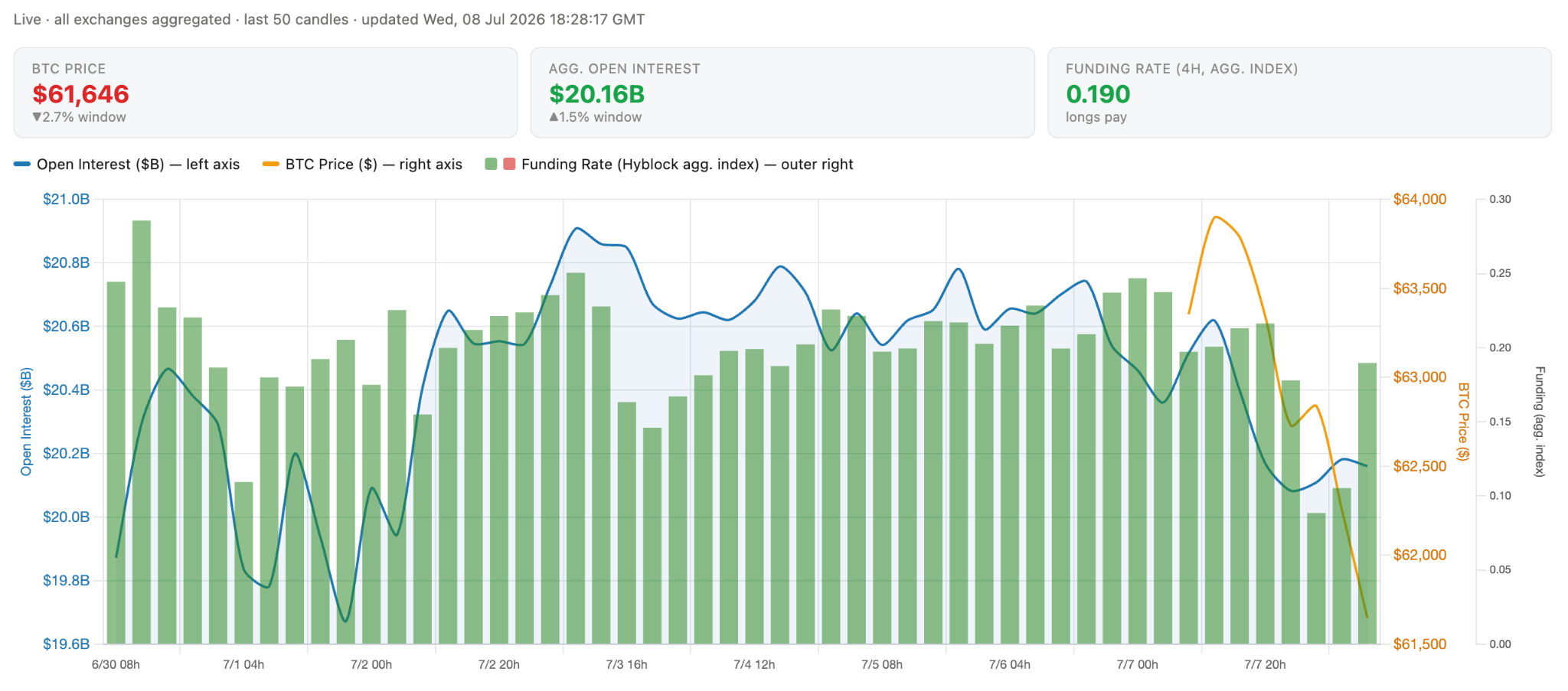
Bitcoin’s funding rate and open interest dropped, reflecting traders’ choice to cut positioning, but the week-long trend of positive funding rates remains intact.
BTC/USD funding rate, open interest. Source: Hyblock
Liquidations have also stayed relatively small in dollar terms, but they are one-sided. Wednesday’s forced selling was almost entirely on the long side, with roughly $47 million in long liquidations versus about $4 million in short liquidations.
Hyblock’s liquidation data shows a large cluster of long positions near $61,000 and if Bitcoin trades down into that zone, those forced sales can briefly accelerate the move lower.
A trend reversal is not confirmed
Although Bitcoin bulls put in a good effort, absorbing dips to $60,000 and below, and fresh flows from spot markets and BTC ETF buying show investor appetite in the current range, the bulk of the price move remains driven by futures activity.
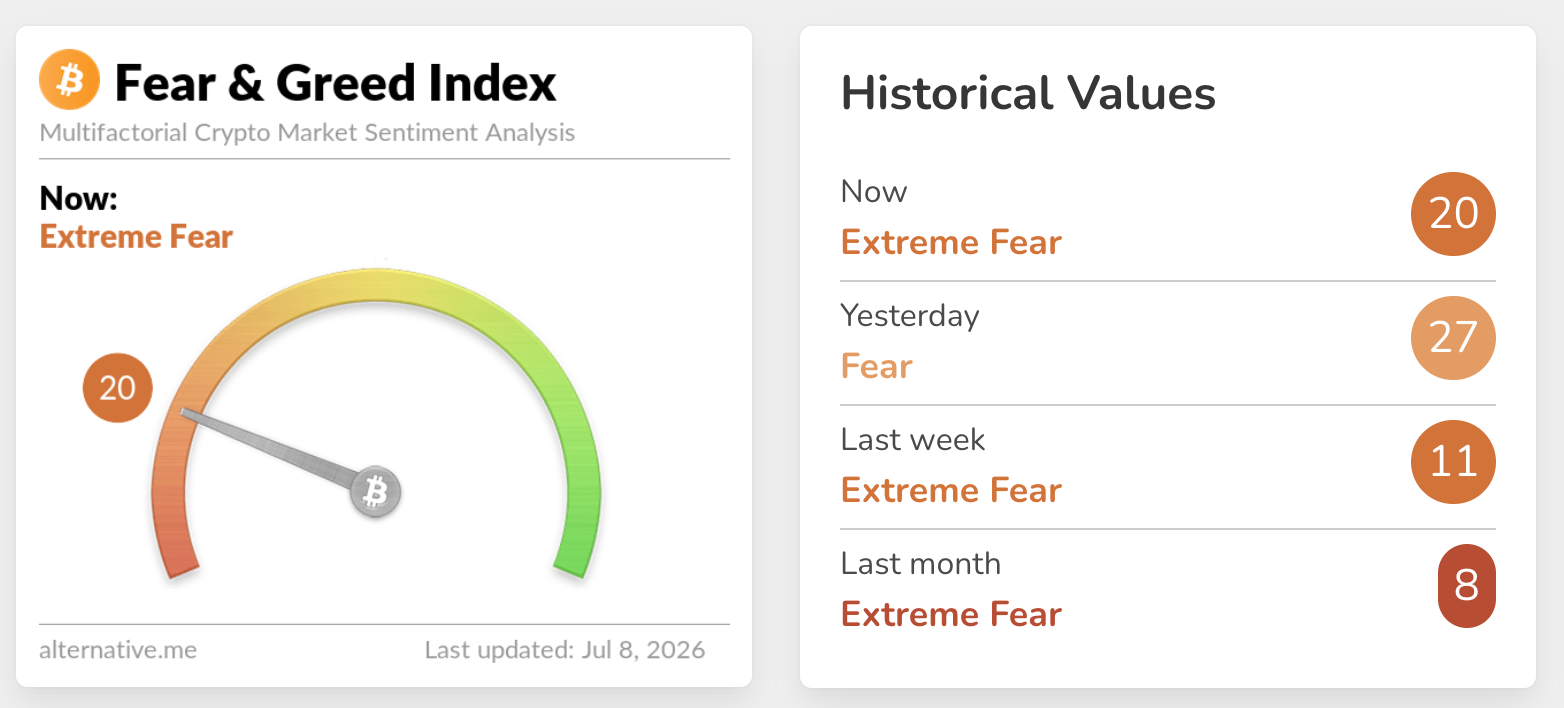
Wednesday’s price action demonstrates how fast conviction and price can unravel when the primary fuel behind the move is futures-driven, and sentiment across the crypto market remains in the “fear” category according to the Crypto Fear & Greed index.
Crypto Fear & Greed Index. Source: Alternative.me
Beyond the geopolitical and Fed-related impact on intra-day price action, Strategy’s recent sale of 3,588 BTC and the fact that Bitcoin’s current price is below its $74,582 average price have cast an ominous cloud over the wider market as investors grapple with the reality that the largest BTC treasury could become a frequent seller.
War, rising oil prices and Strategy’s Bitcoin sales put extra pressure on BTC’s $60,000 support.
Strategy’s Bitcoin sales and fears that a global regulatory crackdown on crypto is being reignited are adding to fragile crypto market conditions.
Bitcoin traded down 3.5% on Wednesday as new developments in the US-Iran war pushed oil prices higher and Japan’s bond markets faced renewed stress. That combination triggered broader de-risking across markets. At the same time, concerns over potential Bitcoin sales from Strategy intensified, with traders now bracing for a possible correction below $60,000.
Nasdaq-100 futures (left) vs. Bitcoin/USD (right). Source: TradingView
Bitcoin’s failed attempt to reclaim $64,500 on Monday coincided with a downtrend in the tech-heavy Nasdaq Index. However, the stock market recovered some of its losses on Wednesday while Bitcoin was unable to bounce back from the $62,000 level. This underperformance suggests something else might be pressuring the cryptocurrency.
The surge in Brent crude oil to $74 from $68 the prior week raised inflationary risks due to disruptions in energy supplies following the official breakdown of the US-Iran memorandum of understanding. US President Donald Trump declared the deal “over” after US strikes targeted Iranian sites in response to vessel attacks.
Higher energy costs feed directly into broader price pressures, reducing the likelihood of near-term Federal Reserve (Fed) interest rate cuts and limiting odds of economic stimulus packages.
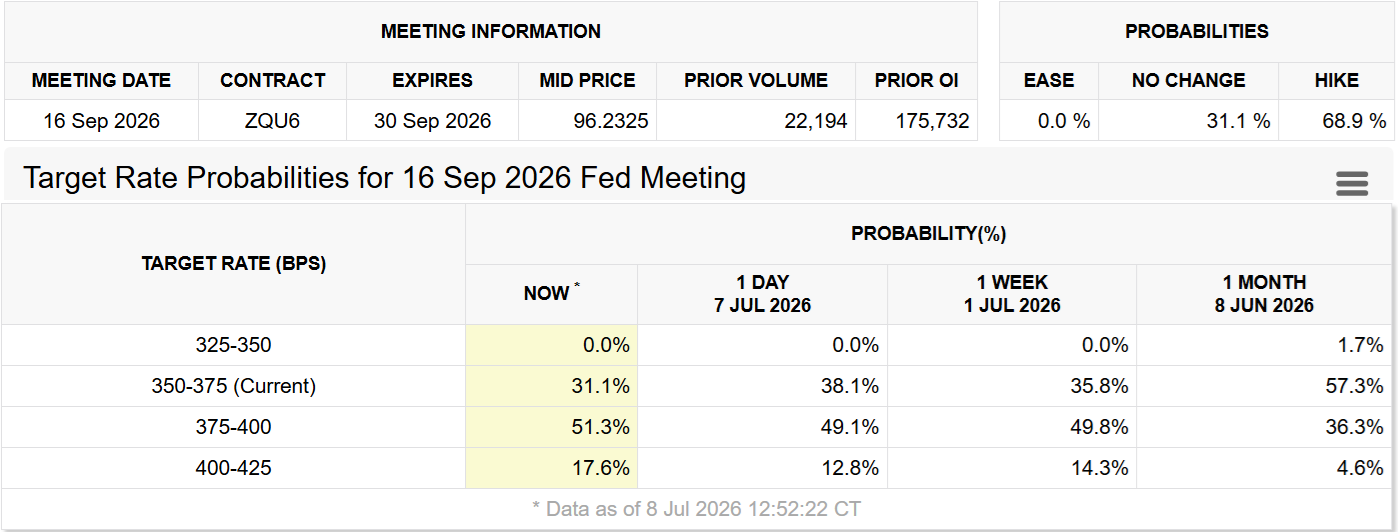
Implied odds for FED Funds target rate on Sept. 16. Source: CME FedWatch Tool
Traders are currently pricing 69% odds of interest rate hikes by September, up from 42% one month prior. This environment weighs heavily on risk assets, with Bitcoin still not widely perceived as an effective hedge.
Global economic uncertainty amid Strategy’s sell pressure
Adding to the cautious mood, President Trump demanded an end to US trade with Spain at the NATO summit, labeling the key ally a “wasted cause” for failing to commit to new defense spending targets. Such trade frictions risk slowing global economic activity and amplifying fears of global economic contraction.
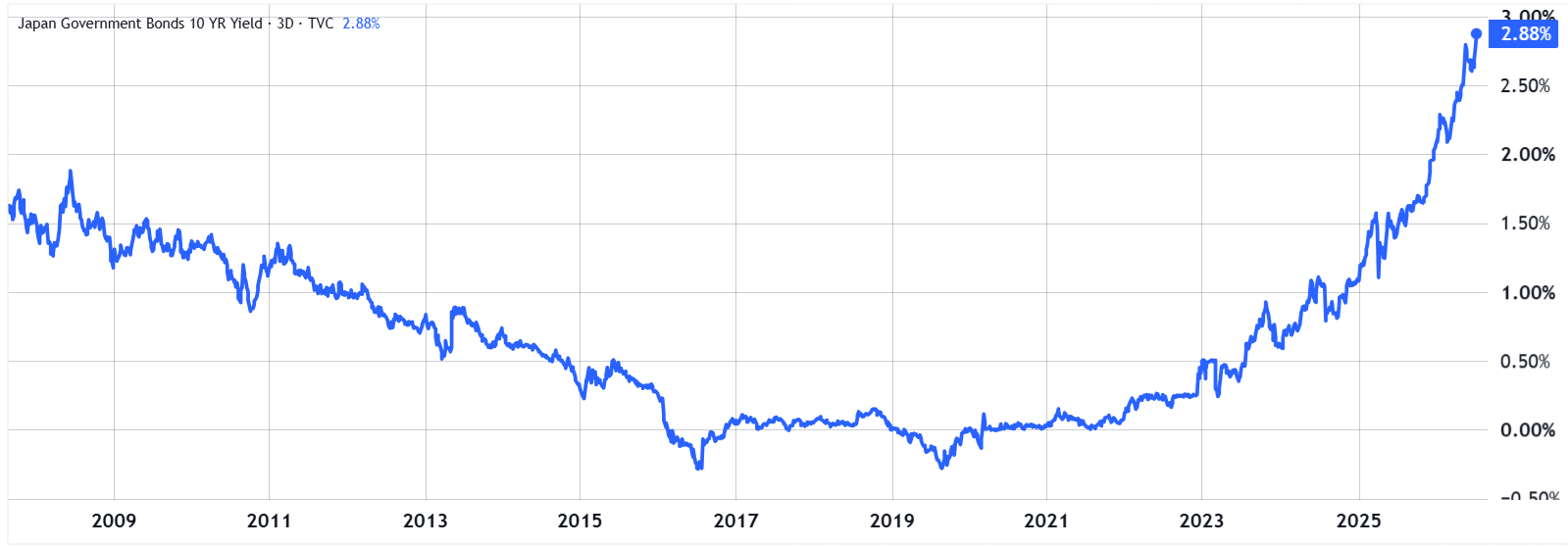
Japan 10-year government bonds yield. Source: TradingView
In Japan, government bond yields jumped to a 30-year high, reflecting fears over a lack of central bank independence as the government attempts to adjust the Japan Central Bank’s policy mandate to “achieve a stronger economy.” Japan is the largest foreign holder of US Treasuries, which heightens the risk of global contagion.
The latest round of Bitcoin sales, totaling $216 million, announced by Strategy (MSTR US) on Monday, negatively surprised many after it was revealed that they occurred outside the core $1.25 billion Monetization Program. The company’s 8-K filings stated the program accounts only for proceeds used to fund its cash reserves.
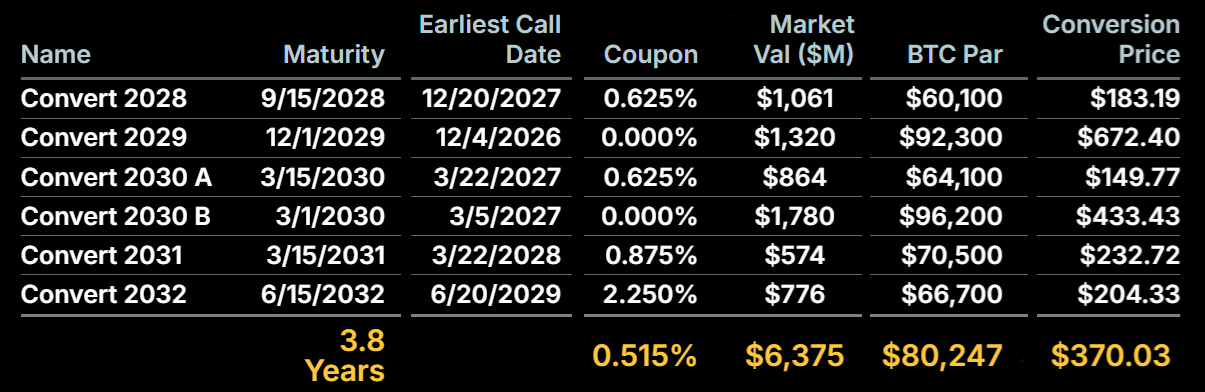
Investors now fear persistent selling pressure from Strategy as the company manages its capital structure and debt obligations, with total annual dividends of $1.76 billion alone. Moreover, Strategy holds over $3.8 billion in convertible debt with the earliest call date before April 2027.
Related: Lyn Alden says Bitcoin needs no savior as Strategy sells $216M of BTC
Strategy convertible debt maturity and market value, USD. Source: Strategy
On the regulatory front, documents show India’s central bank strongly backing policies that lean toward prohibiting crypto activities, including barring banks from any exposure to virtual assets to safeguard financial stability. The India tax department additionally highlighted risks of evasion.
The signals of tightening global oversight add another layer of negative pressure on Bitcoin’s price and market sentiment. Bitcoin bears remain in control, with risk appetite diminishing due to socio-political instability, prospects of a more restrictive US Fed monetary stance, and Strategy’s ongoing cash needs.
Sentiment is likely to remain fragile, making a retest of the $60,000 support level increasingly probable in the near term.
Grayscale’s chief financial officer Edward McGee has stepped down after seven years at the crypto asset manager, becoming the latest senior executive to leave the company, according to a filing with the U.S. Securities and Exchange Commission on Thursday.
McGee resigned effective July 2 for personal reasons and not because of “any disagreement with the company or its operations, policies or practices,” the filing said.
The company has named Kathryn Masci and Daniel Plourde as interim co-chief financial officers. Masci will also serve as principal financial and accounting officer and join the board of managers.
Masci joined Grayscale in 2020 and most recently served as senior vice president of finance.
Before that, she held finance and accounting roles at Garrison Capital, Pzena Investment Management and Ernst & Young. Plourde joined Grayscale in 2022 after senior positions at Gabelli Asset Management and State Street Global Advisors. He has also served as assistant treasurer of the Grayscale Funds Trust.
The leadership change follows another recent executive departure. Just weeks ago, managing director and head of distribution and partnerships John Hoffman left Grayscale to join tokenized asset platform Ondo Finance.
Coinbase Chief Legal Officer Paul Grewal is leaving the company after its high-profile, years-long legal fight with U.S. regulators, and the U.S. exchange also announced further changes to its senior leadership.
Grewal is departing to work at a startup, according to a Thursday announcement from Coinbase. Molly Abraham will now lead the company’s legal team as general counsel, and Ryan Van Grack will become vice chairman, in what’s anticipated to be a broader and more public-facing role.
“Leading Coinbase’s legal team through the biggest fight of our industry has been the single greatest achievement of my six-year tenure,” Grewal said in a statement. “Our legal wins helped ensure crypto not only had a future in this country, but could flourish.”
His statement continued on to say he would continue as an adviser to Coinbase, and would work on Coinbase’s trust charter work through the Office of the Comptroller of the Currency.
Abraham has been at Coinbase since March 2021, running multiple legal teams as the company’s vice president of legal. Prior to that, she was general counsel at an electric flying car startup, according to her LinkedIn.