Home Blog Page 990

UAE sits on $344 million in BTC mining profits, Arkham says

0

The United Arab Emirates is sitting on roughly $344 million in unrealized profit from its bitcoin mining operations, according to onchain data from Arkham, making it one of the world’s most significant sovereign crypto plays.

Wallets tied to the UAE Royal Group currently hold roughly 6,782 BTC valued about $450 million. Excluding energy costs, Arkham estimates the position is deep in the green, reflecting the lower-than-average cost from years of industrial-scale mining compared with open-market buying.

Over the past seven days, the operation has produced some 4.2 BTC a day, suggesting the country’s mining infrastructure remains active despite bitcoin’s recent slide from late-2025 highs and broader volatility across risk assets.

The UAE’s mining push dates back to 2022, when Citadel Mining, linked to Abu Dhabi’s royal family through International Holding Company, built large facilities on Al Reem Island.

In 2023, Marathon Digital (MARA), now renamed as MARA Holdings, partnered with Abu Dhabi-based Zero Two to develop 250 megawatts of immersion-cooled mining capacity, one of the largest disclosed deployments in the region.

In August, when bitcoin traded at higher levels, Arkham estimated the UAE’s mined holdings at closer to $700 million. The latest figures reflect updated wallet tracking and lower market prices rather than major sales, with the most recent notable outflows occurring roughly four months ago.

Unlike the U.S. or U.K., whose bitcoin holdings largely stem from asset seizures, the UAE’s stash is the product of sustained mining. By holding most of what it produces, the Gulf nation is effectively converting energy and infrastructure into a strategic digital reserve that compounds over time.

In a market where many miners have been forced to sell into weakness to fund their operations, the UAE appears to be doing the opposite, steadily accumulating duing the drawdown.

The UAE Has Built Up A $453 Million Bitcoin Reserve

0

Arkham Intelligence says bitcoin mining operations linked to the UAE’s Royal Group are sitting on roughly $344 million in unrealized profit, excluding energy costs.

Arkham attributed about 6,782 BTC to wallets connected with UAE royal-linked mining activity, valuing the holdings at approximately $453.6 million at the time of analysis. The firm said the implied profit reflects the difference between current bitcoin prices and estimated production costs, though it noted the figure does not account for electricity and operational expenses.

Arkham’s onchain data also points to a steady pace of mining output.

Over the past seven days, the UAE-linked wallets produced around 4.2 BTC per day, suggesting ongoing industrial-scale operations. The analytics firm added that the UAE appears to be retaining most of its self-mined bitcoin, with the last recorded outflow from the wallets occurring roughly four months ago.

The findings underscore how the UAE has pursued a different path from many other governments with large bitcoin positions. 

While countries such as the United States and the United Kingdom hold significant reserves largely tied to law enforcement seizures, Arkham said the UAE’s accumulation has been driven primarily by domestic mining activity.

The UAE’s mining push traces back to 2022, when Citadel Mining, an entity linked to Abu Dhabi’s royal family, established large-scale operations on Al Reem Island. That same year marked a broader regional effort to attract digital asset infrastructure, supported by capital from state-connected firms.

In 2023, Marathon Digital Holdings and Abu Dhabi-based Zero Two announced a joint venture aimed at developing 250 megawatts of immersion-cooled bitcoin mining capacity in the UAE. The project was one of the largest disclosed industrial mining deployments in the region, reflecting the country’s ambitions to become a hub for crypto infrastructure.

Arkham said its latest estimate revises down an earlier projection from August 2025, when the firm attributed roughly $700 million in mined bitcoin to the UAE during a period of higher prices. At that time, Arkham estimated the country had mined about 9,300 BTC and held roughly 6,300 BTC, ranking it among the top sovereign entities with verified onchain holdings.

Under the updated figures, the UAE’s holdings represent about 0.03% of bitcoin’s total supply, according to Arkham.

Abu Dhabi’s Bitcoin ETF exposure

Abu Dhabi’s sovereign wealth funds are also getting in on the fun. This week they disclosed a major increase in their exposure to BlackRock’s iShares Bitcoin Trust (IBIT), reporting ownership of 12.7 million shares worth about $630.6 million as of Dec. 31. That marks a 46% jump from the 8.7 million shares previously reported at the end of September.

Mubadala, which oversees a global portfolio across technology, healthcare, infrastructure, private equity, and public markets, manages more than $330 billion in assets. Its mandate is to generate long-term returns for the Abu Dhabi government while supporting economic diversification beyond oil.

Another Abu Dhabi-based firm, Al Warda Investments, also raised its IBIT position in Q4 2025 to 8.22 million shares, up from 7.96 million in Q3, continuing a shift toward public bitcoin ETF exposure that began earlier in the year.

Al Warda, part of the Abu Dhabi Investment Council under Mubadala, has traditionally focused on private investments, making its growing allocation to IBIT notable for the region. Together, Abu Dhabi investment vehicles held more than 20 million IBIT shares at the end of last year, with a combined value above $1.1 billion.

Arkham did note that the United States remains the largest sovereign bitcoin holder, with approximately 328,000 BTC valued at $22 billion, largely derived from seizures tied to cases such as the Bitfinex hack and Silk Road investigations. 

At time of writing, Bitcoin is trading right below $66,000.

Ledn Issues First Ever Bitcoin-Backed Bonds Worth $188 Million

0

Crypto lender Ledn has issued $188 million in asset-backed bonds secured by bitcoin-collateralized loans, marking a first for the structured credit market. The deal includes an investment-grade tranche and relies heavily on automated bitcoin liquidations to manage risk. First Bitcoin-Backed Loan Hits Market Crypto lender Ledn has entered the structured finance arena with a $188 […]

Microsoft to Invest $50B in AI Push in Global South

0

Microsoft said it is aiming to address the imbalance in worldwide AI rollout by investing more than $50 billion in the Global South by the end of the decade.

The tech giant revealed the extent of its planned spending at the India AI Impact Summit in Delhi, following a flurry of funding moves by other companies on the opening day.

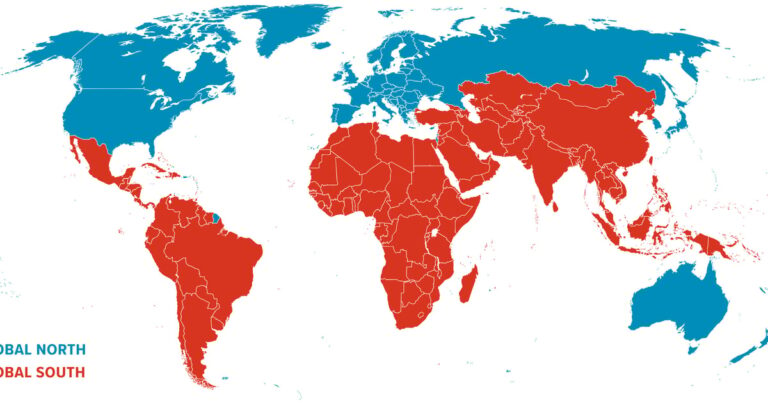
The Global South is considered to include the developing countries in the southern hemisphere, mostly located in Africa, Asia, Oceania and Latin America.

Microsoft vice chair and president Brad Smith went into detail on the company’s AI investment commitment in a blog post, written in tandem with vice president Natasha Crampton, titled: “We need to act with urgency to address the growing AI divide.”

Smith highlighted Microsoft’s own AI diffusion report, which reveals that AI use in the Global North is roughly twice that in the Global South and is continuing to widen, raising concerns that it will exacerbate the already significant financial gap between the two hemispheres.

Related:EU Warns Meta Not to Block Rival AI Bots From WhatsApp

To tackle this, Microsoft said it is implementing a five-point program that can bring the Global South up to speed, helping to provide a “real prospect for catch-up economic growth.”

The key elements Microsoft’s investment will focus on are: establishing AI infrastructure; teaching people AI skills; expanding multilingual and multicultural AI; enabling local AI innovations for community needs; and measuring AI diffusion to guide future investment.

In terms of infrastructure, Microsoft’s plans are well underway, spearheaded by a $17.5 billion investment in India the vendor revealed in December.

Microsoft also rolled out several new initiatives at the New Delhi conference, including the Elevate for Educators program for India’s schools, developed in tandem with country’s national education and workforce training authorities, which will see millions more students taught AI skills.

The vendor also pledged to focus on more inclusive, localized AI models in different languages to serve to countries in the Global South, addressing growing concerns of U.S. domination in AI that saw the Chilean government launch its own Latam-GPT model earlier this month. Microsoft also revealed it is investing in the Lingua France Africa initiative, to develop data and AI models for Africa. The program is in association with Masakhane African Languages Hub and the Gates Foundation.

In another move, Microsoft said its AI For Good Lab will use AI data to try to provide food security in sub-Saharan Africa, assisting communities with farming to prevent food shortages.

Related:UK Watchdog Pushes for Google AI Opt-Out

Microsoft also said it will increase its investment in research and data to better track AI diffusion in the future.

“The economic divide, the greatest divide between the Global North and South, started because of a technology divide. We cannot repeat that experience with AI,” Smith told the Economic Times of India.


Voltage Introduces Credit Line For Bitcoin Settlement

0

Voltage, a provider of Bitcoin infrastructure, today launched Voltage Credit, a revolving line of credit designed to enable businesses to send payments over Bitcoin rails with instant settlement and settle entirely in U.S. dollars, according to a note shared with Bitcoin Magazine. 

Voltage Credit allows enterprises to draw from a credit line to send payments that clear in seconds, bypassing the delays associated with traditional settlement systems.

Businesses repay the credit line in dollars from a bank account, without the need to pre‑fund accounts or hold cryptocurrency on their balance sheet, the company said.

Voltage positions the product as a solution for enterprises that face settlement delays, chargeback exposure, and high costs from legacy payment systems.

The company says the offering gives businesses access to instant payment finality and low fees characteristic of Bitcoin settlement infrastructure while avoiding forced cryptocurrency exposure.

The launch follows Voltage’s role in facilitating a $1 million Lightning Network payment between Secure Digital Markets and Kraken, which the company has cited as evidence of institutional‑scale settlement capability.

A revolving, flexible, Bitcoin credit solution

Unlike conventional Bitcoin lending products, Voltage Credit functions as a true revolving credit facility. Businesses draw only the amount they need, incur interest on the outstanding balance, and restore available credit upon repayment. 

Voltage says the product does not require pre‑funding and can be repaid in dollars, simplifying treasury operations and accounting.

Credit limits are based on a revenue‑oriented underwriting model that reflects transaction volume processed through Voltage infrastructure. The product supports value movement over both the Lightning Network and on‑chain Bitcoin transactions.

Voltage describes the offering as relevant for both crypto‑native companies and traditional enterprises exploring Bitcoin payment infrastructure. 

For entities outside the crypto ecosystem, Lightning settlement presents lower cost and faster settlement than some legacy rails, and Voltage Credit aims to deliver those advantages without requiring management of crypto assets. 

For organizations within the digital asset space, traditional financing often treats Bitcoin revenue as unsupported for underwriting and crypto lending products typically require BTC as collateral, creating taxable events and exposing treasuries to market volatility.

Voltage Credit carries no origination fees and applies a fixed annual percentage rate on outstanding balances. The product is available to qualified U.S. businesses, the company said.

Steve Ehrlich: Digital asset treasuries are trading at deep discounts, M NAVs reveal market valuation challenges, and Ethereum’s staking makes it a superior asset

0

Digital asset treasuries are companies holding crypto on their balance sheets, often trading at discounts. M NAV is a metric for valuing companies relative to their crypto holdings. The decline in crypto prices has significantly impacted M NAVs, raising questions about equilibrium.

Key takeaways

  • Digital asset treasuries are companies holding crypto on their balance sheets, often trading at discounts.
  • M NAV is a metric for valuing companies relative to their crypto holdings.
  • The decline in crypto prices has significantly impacted M NAVs, raising questions about equilibrium.
  • Discounts in NAVs of crypto companies present potential investment opportunities.
  • Private credit models lack mechanisms to eliminate discounts like ETFs do.
  • Ethereum’s staking capability makes it a productive asset compared to Bitcoin.
  • Share buybacks are often insufficient to counteract inflation and debt dilution.
  • The crypto industry faces an identity crisis as traditional finance adopts on-chain tech.
  • The future of crypto may require adapting to a broader audience beyond crypto natives.
  • The current cycle lacks a massive wealth creation event, affecting market dynamics.
  • Incentivizing early users through high yields is unsustainable.
  • The DeFi mullet strategy may appeal to users wanting benefits without risks.
  • The next wave of crypto users will likely come from those valuing tech but not engaged.
  • The future of crypto may resemble cloud computing in its evolution.
  • The four-year cycle in crypto markets may be obsolete due to tech adoption.

Guest intro

The guest featured on Unchained is a prominent figure in the crypto industry, offering insights into the evolving landscape of digital assets and market dynamics. With extensive experience in analyzing crypto markets, the guest provides a unique perspective on the challenges and opportunities facing crypto companies today. This episode delves into the complexities of digital asset treasuries, market valuations, and the impact of traditional finance adopting on-chain technologies, making it essential listening for anyone interested in the future of crypto.

Understanding digital asset treasuries

  • Digital asset treasuries (DATs) are companies stockpiling crypto like Bitcoin and Ethereum.
  • DAT stands for digital asset treasury… a lot of these companies are copycats… following the Michael Saylor strategy.

    — Steve Ehrlich

  • Many DATs trade at a significant discount compared to their crypto holdings.
  • Many digital asset treasury stocks… are trading at even deeper discounts.

    — Steve Ehrlich

  • The market sentiment is cautious, with divided opinions on investing in DATs.
  • Some investors think that means it’s time to buy others are saying not so fast.

    — Steve Ehrlich

  • Understanding DATs is crucial for grasping current market dynamics.
  • DATs’ valuation discrepancies highlight potential investment opportunities.

Evaluating M NAVs and market dynamics

  • M NAV assesses company value relative to its crypto holdings.
  • M NAV stands for net asset value… quantifying how much investors value the company.

    — GuestName

  • Recent crypto price declines have lowered M NAVs across the board.
  • Their M NAVs almost across the board are below one.

    — GuestName

  • Questions arise about the natural equilibrium for M NAVs.
  • What is the natural equilibrium for M NAVs for these types of companies?

    — GuestName

  • Trading at discounts could represent a value play for investors.
  • Understanding M NAVs is essential for evaluating crypto company valuations.

The impact of market discounts on NAVs

  • Significant discounts exist in NAVs of companies holding crypto.
  • Companies… their NAVs are trading somewhere… at point five.

    — Jack Mallers

  • Stock values should align closely with NAVs, with minor fluctuations.
  • It should be around one plus or minus a few percentage points.

    — Jack Mallers

  • Understanding NAVs is crucial for assessing stock values in crypto companies.
  • NAV discounts present potential opportunities for investors.
  • The relationship between stock prices and crypto holdings is key to market dynamics.
  • NAVs provide insight into the financial health of crypto companies.

The role of private credit models and ETFs

  • Private credit models and closed-end funds lack ETF-like arbitrage mechanisms.
  • Compared to private credit models… there’s not quite the same mechanism.

    — GuestName

  • Ethereum is productive due to staking, generating passive yield.
  • Ethereum… seen as a productive asset because you can stake the ether.

    — GuestName

  • Market NAVs should stabilize around one once market conditions settle.
  • The M NAVs for these companies should be somewhere around one.

    — GuestName

  • GBTC offers regulated exposure to crypto for accredited investors.
  • Understanding these models is crucial for evaluating investment strategies.

The future of Bitcoin and Ethereum prices

  • Conversion of trusts to ETFs can eliminate discounts or premiums.
  • ETFs work… arbitrage away any discount or premium.

    — GuestName

  • Bitcoin and Ethereum prices are unpredictable, with potential fluctuations.
  • It’s really hard to tell… we’re not sure if the bottom’s in or not.

    — GuestName

  • Investors should be cautious about assuming historical discount patterns will repeat.
  • There are reasons to be very cautious about that.

    — GuestName

  • Understanding ETF mechanics is crucial for grasping market pricing dynamics.
  • The unpredictability of crypto markets is a critical insight for investors.

The limitations of share buybacks

  • Share buybacks often fail to counteract inflation and debt dilution.
  • The share buybacks… not large enough to put a meaningful dent.

    — Steve

  • Many companies announce large buyback programs but don’t follow through.
  • Announced a $1,500,000,000 buyback program but… haven’t bought back close to that.

    — Steve

  • Investors should be cautious about interpreting buyback announcements.
  • Investors need to be really careful… about buyback programs.

    — Steve

  • Understanding buyback limitations is crucial for evaluating financial health.
  • Discrepancies between announcements and execution highlight market challenges.

Strategic approaches to stock price recovery

  • Long-term, companies need strategic approaches to reverse stock price declines.
  • It’s gonna be very hard… it really comes down to being patient.

    — GuestName

  • Investors should focus on high conviction bets rather than tactical trading.
  • Buy and hold… not be tactical but be strategic.

    — GuestName

  • Certain companies risk delisting due to stock price performance.
  • At risk of being delisted… stock has been trading under a dollar.

    — GuestName

  • Understanding strategic investment approaches is crucial for long-term success.
  • Awareness of delisting risks is essential for monitoring stock performance.

The identity crisis in the crypto industry

  • Crypto faces an identity crisis as traditional finance adopts on-chain tech.
  • Non crypto native entities… taking over the things we thought we would win.

    — Dougie DeLuca

  • There is a growing consensus about the uncertain future of crypto.
  • A lot of people have clearly been thinking to themselves.

    — Dougie DeLuca

  • The industry risks leaving behind crypto natives unless it adapts.
  • Crypto natives will largely be left behind unless we choose to react.

    — GuestName

  • Understanding the industry’s identity crisis is crucial for future growth.
  • Adapting to a broader audience is essential for achieving mass adoption.

The evolution of marketing strategies in crypto

  • Early-stage companies leverage social media for go-to-market strategies.
  • A big part of their go to market is TikTok and Instagram.

    — GuestName

  • Labeling products as crypto or web3 may alienate potential users.
  • Crypto becomes baggage… people become scared and lose trust.

    — GuestName

  • The focus should shift to demonstrating how tech improves user experiences.
  • Focus on the things the tech actually unlocks for people.

    — GuestName

  • Companies like Coinbase and Stripe position themselves for adoption.
  • Understanding marketing evolution is crucial for user engagement strategies.

The future of crypto and user engagement

  • The future of crypto may resemble cloud computing in its evolution.
  • People will build applications… because of the unlocks it provides.

    — GuestName

  • Success depends on users engaging without needing to be ‘crypto native’.
  • Building on chain without… the conscious thought of being a crypto native.

    — GuestName

  • Layer one networks may enable innovation rather than being focal points.
  • Is the future of some of these L ones… letting someone else innovate on top.

    — GuestName

  • Understanding user engagement evolution is crucial for mainstream adoption.
  • The comparison to cloud computing provides a framework for crypto’s future.

Is SD Bullion Trustworthy? An in-depth analysis of customer reviews for SD Bullion

0

Purchasing precious metals, such as gold and silver, is a step toward long-term security and goes beyond simple financial considerations. Many investors in the information age like online dealers due to their ease. The most difficult task, though, is locating a platform which is both genuine and reasonably priced.One name that usually dominates SD Bullion Customer Reviews conversations is SD Bullion. “Doing business the year of production way,” their tagline, has allowed them create out a substantial niche for themselves.Does the promotion align with reality, though? To find out what the community truly thinks, the majority of serious investors look to SD

The Value of Research in Investing in Bullion

Transparency is crucial when investing thousands of dollars in tangible things. You are purchasing the guarantee that the metal and the substrate. is pure and the shipping is safe, not just a product. For this reason, the most important currency in valuable metals that are sector is reputation. A pattern of great satisfaction, especially with regard to their pricing methods, may be observed by examining a wide range of SD Bullion customer reviews. For “stackers” looking to maximize their kilos per dollar, SD Bullion is renowned for having a portion of the lowest rates over the spot price.

What are people saying exactly? Three key themes show up when we examine SD Bullion feedback from consumers in detail:

  • Value and Pricing: Nearly all of the favorable reviews point out that SD Bullion has competitive prices. Their “low price” promise appears to hold up when examined, whether it is for Gold Bars or Silver Eagles.
  • Packaging and Shipping: A bullion dealer’s shipping strategy is equally as crucial as the products they send. Customers often compliment the unobtrusive packing. This is crucial for security because you don’t want postal workers or neighbors to know that the box contains valuable metal.
  • Authenticity and Trust: The foundation of their company is dependability. The majority of reviews emphasize that the products arrived precisely as promised, with appropriate mint packing and, if relevant, authenticity certificates.

Every business has its detractors. Users have occasionally reported delays during times of high market volatility in certain SD Bullion customer reviews. Everybody attempts to buy at once when the expense of silver decreases abruptly, which might put a burden on any dealer’s logistics. Nonetheless, SD Bullion’s communication style regarding these delays is frequently viewed as a plus. Although things don’t go as planned, a high degree of confidence is maintained because their customer service staff is generally thought to be professional and attentive.

When anything goes wrong—such as a damaged coin or a misplaced package—the real nature of the dealer is exposed. It is clear from numerous SD Bullion feedback from consumers that the business takes these concerns seriously. They provide peace of mind by offering insured shipment. To make sure the client isn’t left without anything, their support staff navigates the insurance process in the event that a product is lost in transit. They are preferred by many investors over smaller, less reputable dealers because of their degree of accountability.

Ultimately, SD Bullion is a great option if you want a combination of affordability and dependability. Thousands of gratifying reviews and their lengthy history indicate that they are a SD Bullion Customer Reviews reliable choice for both novices and seasoned pros. You can get the confidence you need to complete your investment by spending a few minutes reading the most recent SD Bullion Customer feedback before placing your next transaction. They continue to be a dominant force in gold as well as silver market thanks to their dedication to customer care and competitive advantage.

Read More From Techbullion


$50,000 Price Odds Remain As 2024 Hodlers Help Stabilize BTC

0

Two-year Bitcoin hodlers have “absorbed” seller pressure in recent weeks, according to new research, but most analysts still expect new macro BTC price lows.

New analysis suggests that Bitcoin (BTC) is “relying” on early 2024 buyers as its price action stalls below $70,000.

Key points:

  • Bitcoin buyers from early 2024 are in focus as a giant potential safety net for BTC price.

  • Their cost basis extends down to $60,000, and a major capitulation has not yet happened.

  • New macro BTC price lows remain a popular near-term bet.

2024 Bitcoin hodlers have “absorbed” new sellers

In the latest edition of its weekly newsletter, The Week Onchain, crypto analytics platform Glassnode said that BTC price was in a “dense demand zone.”

As BTC/USD treads water around 45% below its October 2025 all-time highs, buyers from long before that event are holding up the market.

Their importance has become much more noticeable since Bitcoin dropped below its true market mean price near $80,000.

“A closer inspection of price behavior since the breakdown below the True Market Mean indicates that downside pressure has largely been absorbed within a dense demand zone between $60k and $69k,” Glassnode summarized. 

“This cluster was primarily established during the H1 2024 consolidation phase, where investors accumulated within a prolonged range and have since held their positions for over a year.”

Bitcoin long-term holder cost basis distribution heatmap. Source: Glassnode

Researchers referenced the seven-month consolidation structure that characterized much of 2024, and which itself placed old all-time highs of $69,000 from late 2021 in focus.

Now, those buyers face falling into unrealized loss, but are so far avoiding capitulation.

“The positioning of this cohort near breakeven levels appears to have moderated incremental sell pressure, contributing to the development of another sideways structure since late January 2026,” The Week Onchain continued. 

“The defense of the $60k–$69k range suggests that medium-term holders remain resilient, allowing the market to transition from impulsive decline into range-bound absorption.”

Bitcoin realized profit/loss ratio. Source: Glassnode

New BTC price lows in “next week or so?”

The presence of hodler resilience comes at a crucial time as market participants still expect new macro lows to come next.

Related: Bitcoin price ignores $168M Strategy BTC purchase as Iran tensions escalate

As Cointelegraph reported, Bitcoin traders have little faith in the current range holding as support, with $50,000 now a popular target.

“Expected a quick bounce to reset indicators then straight back down. I still believe 52-53k is coming in the next week or so,” one such forecast from trader Roman stated this week.

BTC/USDT four-hour chart with RSI, MACD data. Source: Roman/X

An accompanying chart suggested that the indicator “reset” would affect the relative strength index (RSI) and moving average convergence/divergence (MACD) on four-hour time frames.

Earlier, Cointelegraph noted rare lows for weekly RSI, with analysis hinting that such levels were a once-per-cycle phenomenon.