The seemingly daily disruption of business models by advances in artificial intelligence continued Monday, sending stock market averages and crypto prices sharply lower.
Today’s victim (in addition to the usual ones) was IBM, after Anthropic said Claude code can automate COBOL modernization.
“COBOL [Common Business-Oriented Language] is everywhere,” said Anthropic. “It handles an estimated 95% of ATM transactions in the U.S.. Hundreds of billions of lines of COBOL run in production every day, powering critical systems in finance, airlines, and government.”
“The developers who built these systems retired years ago, and the institutional knowledge they carried left with them,” the company continued. “We aren’t exactly minting replacements—COBOL is taught at only a handful of universities, and finding engineers who can read it gets harder every quarter.”
“Modernizing a COBOL system once required armies of consultants spending years mapping workflows,” Anthropic continued. “Tools like Claude Code can automate the exploration and analysis phases that consume most of the effort in COBOL modernization.”
Think of “armies of consultants” as IBM, and the stock’s reaction is understandable. A bit less than an hour before the close, IBM was lower by 11.2%.
IBM’s decline, along with what’s now becoming regular AI-related tumbles in the overall software sector and private equity, has helped pull the Dow, S&P 500 and Nasdaq all lower by more than 1%.
“It’s becoming increasingly clear how pivotal the times we are in right now truly are,” wrote The Kobeissi Letter.
Tied at the hip in recent months to moves in software, crypto prices were under extreme pressure Monday, with many majors now within range of retouching their lows from the Feb. 5 panic.
Bitcoin was lower by 5% over the past 24 hours to $64,000, with ether (ETH) and solana (SOL) down similarly.
Coinbase (COIN), Strategy (MSTR), Circle (CRCL) and Galaxy Digital (GLXY) were all down 4%-7%.
The only names in the green were those bitcoin miners now running AI infrastructure business models, with IREN (IREN) ahead 5%, Cipher Mining (CIFR) up 3.4%, CleanSpark (CLSK) up 1.5%, and Hut 8 (HUT) gaining 0.7%.
Also moving higher on Monday were precious metals — gold gaining 3.2% to $5,243 per ounce and silver higher by 6.5% to $87.69.
San Francisco, CA – Crypto has a habit of declaring the future early. In recent months, that instinct has fixated on autonomous AI agents, self-driving wallets and trading systems that can move capital without human oversight.
At NEARCON 2026, Dragonfly’s Haseeb Qureshi and Kraken co-CEO Arjun Sethi delivered a sharp debate over how soon those agents can be trusted with real money.
The core disagreement wasn’t about whether agents will eventually manage capital; both believe they will, but about timing and risk tolerance.
“Something that works with money 90% of the time is unusable for actual economic activity,” Qureshi said. Even 95% reliability, he argued, isn’t sufficient. “It’s a lot of nothing, nothing, nothing… then something, and then everything. And right now, we’re still in the nothing phase.”
Qureshi suggested the industry may be overstating how ready the technology is. He cautioned against extrapolating from viral demos on social media, pointing to examples of autonomous systems malfunctioning. “You want to be very cautious of trying to ingest your worldview of technology by reading Twitter hype people and watching Twitter demos,” he said.
For Qureshi, impressive demonstrations are not the same as systems robust enough to manage meaningful capital. For major consumer platforms, he added bluntly, “You cannot do that sh**.”
Sethi, by contrast, argued the pace of improvement is exponential, and already reshaping financial infrastructure. “We think we know what’s going to happen,” he said. “The speed and the level of innovation… is exponential.” Kraken, he noted, is already building agent-like capabilities for customers “weeks and months away — not years away.”
Where Qureshi sees a steep reliability threshold before widespread deployment, Sethi sees rapid iteration narrowing the gap. “The attack surface grows as much as the security surface grows,” he said, suggesting defensive capabilities will scale alongside risk.
The debate crystallized during a rapid-fire round. Asked what percentage of his own portfolio an AI could manage better today, Qureshi answered cautiously: “Five percent.”
Sethi’s response: “One hundred.”
Pressed further on if he would put all of his crypto into an autonomous agent within a year, Sethi didn’t hesitate.
“Everything,” he said. “In the next six to twelve months.”
The exchange underscored a broader split emerging in crypto: whether autonomous finance is a near-term inevitability or still a frontier experiment, and how much risk the industry is willing to tolerate in finding out.
Read more: Crypto venture capital firm Dragonfly raises $650 million despite ‘gloom of a bear market’
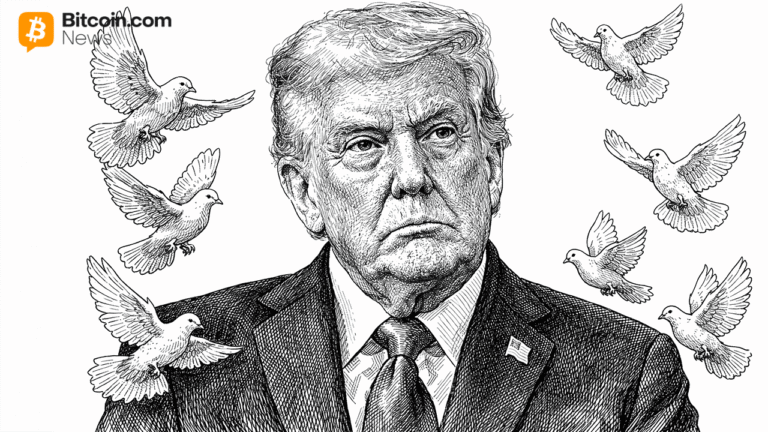
Early discussions inside President Donald Trump’s “Board of Peace” are exploring whether a U.S. dollar-pegged stablecoin could help reboot Gaza’s shattered economy through digital payments. The Financial Times (FT) first reported on the news that Trump’s U.S.-led Board of Peace — the body overseeing Gaza’s postwar reconstruction — is weighing the creation of a dollar-backed […]
The FT token arrives after the project raised close to $300 million in funding.
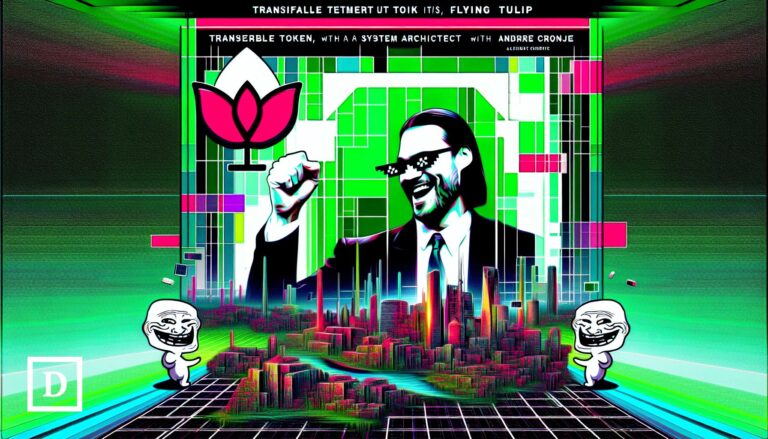
The Flying Tulip (FT) token became transferable and began trading today, Feb. 23, marking the token generation event (TGE) for the latest DeFi project linked to Andre Cronje, a systems architect best known for building early DeFi protocols Yearn Finance and Fantom.
Data from CoinGecko shows that despite an initial dip to around $0.08, FT has spent its first hours trading sideways around the $0.10 mark, implying a fully diluted valuation of around $1 billion.
FT Public Sale, Explained
Flying Tulip’s public sale price was set at $0.10, but it wasn’t a standard token sale. The project’s tokenomics make $0.10 something like a floor price for the asset trading on the open market, as public sale participants have the right to break even on their investment at any time.
Early buyers didn’t just get regular tokens but received ftPUTs, which are non-fungible tokens with a built-in perpetual put option, which gives holders the right, under certain rules, to redeem their tokens at the public sale price of $0.10, instead of having to sell them on the open market.
As Cronje explained earlier this month in an X post, given the project’s tokenomics, “Flying Tulip FDV is not standard FDV.” Typically, FDV is calculated by multiplying total token supply multiplied by current token price.
But Flying Tulip departs from that model because each FT token is only created if it is backed by a corresponding put option, leaving no path for unbacked supply to enter circulation. When tokens are redeemed, they’re also removed from circulating supply.
That tokenomics design means every token is effectively collateralized by its own $0.10, making the system “closer to a NAV valuation than FDV,” Cronje highlighted, adding, “this is something new, and aligns participation far more than any previous model.”
Flying Tulip is positioned as a DeFi “super app,” aiming to bring spot trading, perpetual derivatives and lending into a single interface.
Ahead of the launch, Flying Tulip wasn’t short on cash. The project had already pulled in $200 million in September last year from backers including Brevan Howard and DWF Labs, then added another tens of millions through later rounds and public sales on platforms such as Impossible Finance and CoinList.
As OpenAI faces pressure to generate revenue, it has entered the realm of smart contracts with a tool to help AI agents better find weaknesses in blockchain payment environments.
The generative AI vendor on Feb. 18 introduced EVMbench, an open source benchmark for evaluating AI agents’ ability to detect and exploit vulnerabilities within smart contracts. A smart contract is a digital agreement or code stored on a blockchain that executes when certain predetermined conditions are met. If they are, a stablecoin platform can either send payments or supply new stablecoins, a type of cryptocurrency pegged to real-world reserve assets. OpenAI introduced the new benchmark together with cryptocurrency investment firm Paradigm.
EVMbench uses 120 vulnerabilities from 40 audits as data for evaluation. It also includes vulnerability scenarios identified during the security audit of the Tempo blockchain, OpenAI said. Tempo is a blockchain built by payments vendor Stripe and Paradigm for stablecoins and global payments.
Related:Opinion: From Islands to Ecosystems: Why Interoperability Unlocks Scale for Agentic AI
OpenAI’s introduction of EVMbench is indicative of the continued growth and popularity of stablecoins and blockchain, as well as the vendor’s efforts to generate more revenue to support its business.
According to McKinsey, the total value of issued stablecoins is expected to reach $2 trillion by 2028. Moreover, smart contracts currently secure more than $100 billion in open source cryptocurrency assets, according to OpenAI. As the stablecoin market grows, cybersecurity concerns are also rising. Therefore, AI agents that can help reduce risk could be welcome. Given the opportunities AI agents offer, the cryptocurrency and stablecoin market is a revenue-generating market that could be profitable for OpenAI, which has been burning through more cash than it generates.
A Response
So, EVMbench is one response to the financial challenges the ChatGPT maker faces, said Lian Jye Su, an analyst at Omdia, a division of Informa TechTarget.
“This pressure to generate ROI and stable revenue comes with a certain bias in the sense that this is a domain that they feel like they can get into that allows them to generate sufficient revenue to justify all the valuations and investments that they made in agentic AI,” Su said.
He added that the stablecoin market has long been a target even for public cloud service providers.
“It’s not surprising that OpenAI views this market as a very interesting market for them to get into,” Su said.
Regardless of the motivation behind OpenAI’s move into the cryptocurrency and stablecoin arena, EVMbench could be attractive because it enables other vendors interested in the market to evaluate their agents and see how they perform, Su said.
Related:Supporting the new Types of AI Shoppers
A Critical Eye
However, enterprises that are more likely to adopt AI agents for their smart contract infrastructure should still take a closer look at OpenAI’s EVMbench and explore how it performs and addresses vulnerabilities compared to internal development teams, Su said.
“At this stage, different enterprises make different value judgments,” he said. “Some enterprises trust their own team more than they trust an agentic AI solution. But in the long run, as the cybersecurity landscape becomes a lot more complex, as we … address some of the vulnerabilities, some of the attack surfaces, I think it will make a lot of sense.”
As for OpenAI, it is likely the vendor will continue to explore the stablecoin market and partner with more crypto companies. Su said.
“This is just very early days,” he said. “You can almost argue that OpenAI is testing the water a little bit. I’ll be keen to see whether the other agentic AI vendors jump on this boat as well.”
French utility giant Engie is exploring the installation of battery storage systems or bitcoin mining data centers at its newly launched Assu Sol solar plant in Brazil, as it looks to offset mounting curtailment losses and improve project economics, according to Reuters reporting.
Speaking to reporters, Eduardo Sattamini, Engie’s country manager in Brazil, said the company is evaluating potential “offtakers” that could absorb excess generation from the 895-megawatt-peak facility — the largest solar project in Engie’s global portfolio.
According to Engie, the company is 23.64% owned and 33.20% controlled by the French government, and it typically focuses on low-carbon energy transition.
Located in Brazil’s northeast, Assu Sol entered full commercial operation this month but has already been impacted by grid-imposed curtailments. The restrictions, designed to stabilize Brazil’s power system, force renewable plants to scale back output when supply exceeds demand.
Curtailment has become a growing challenge for solar and wind operators in Brazil since 2023, as a wave of new renewable capacity collides with sluggish demand growth, transmission bottlenecks and rapid expansion in distributed generation, particularly rooftop solar. The result has been billions of reais in lost revenue across the sector.
To mitigate the issue, Engie is considering on-site battery storage or hosting energy-intensive data centers dedicated to bitcoin mining — a strategy that would effectively convert otherwise stranded power into a monetizable asset. Sattamini cautioned, however, that any such initiative would take years to materialize.
“That’s not coming next month,” he said. “It will take a couple of years for us to implement.”
Bitcoin miners are pivoting to AI
All this is happening as a growing number of bitcoin miners are pivoting to AI. As margins tighten and block subsidies trend toward zero, these bitcoin miners are repurposing their infrastructure to tap into the artificial intelligence boom.
Data centers originally built for ASIC-powered SHA-256 hashing are being retrofitted to host high-performance GPUs optimized for AI training and inference workloads.
Large operators are leading the charge. Bitfarms has publicly outlined plans to wind down its Bitcoin mining operations through 2026–27 and convert its Washington State facility into an AI-ready GPU-as-a-Service hub, complete with liquid-cooled Nvidia GB300 hardware backed by a $128 million upgrade deal.
Other mining firms like IREN have locked in multibillion-dollar GPU cloud agreements with major tech partners like Microsoft, signaling that traditional mining power capacity can be redeployed into stable, contracted AI compute revenue.
Also, Bitdeer Technologies has fully liquidated its corporate bitcoin treasury, reporting zero BTC held as of Feb. 20 after an eight-week drawdown from roughly 2,000 BTC at year-end 2025, including the sale of 189.8 BTC produced during the latest week and its remaining 943.1 BTC in reserves.
The company said they are moving into AI infrastructure, rolling out NVIDIA GB200 NVL72 systems in Malaysia and switching several of their sites from crypto mining to AI data centers.
The onchain sleuth teased proof of insider trading within “one of crypto’s most profitable businesses.”
High-revenue altcoins such as MET, HYPE, and PUMP are leading the selloff today as traders react to onchain sleuth ZachXBT’s new investigation teaser on X.
Earlier today, Zach said, “Major investigation dropping February 26 on one of crypto’s most profitable businesses where multiple employees abused internal data to insider trade over a prolonged period of time,” and MET, HYPE, and PUMP subsequently started selling off.
Since the post, MET is down 6.5%, HYPE is down 4.4%, and PUMP is down 6.6%, as the market recognizes the tokens as some of DeFi’s largest revenue generators with business models that could enable potential insider activity.
There is even a Polymarket tracking “Which crypto company will ZachXBT expose for insider trading?” that has attracted more than $600,000 in volume in just three hours.
Polymarket
Currently, the market is labeling memecoin platforms pumpfun and Axiom Trading Terminal as the frontrunners, at 22% and 15% respectively, while Meteora sits at 11%.
San Francisco, CA – NEAR is launching Near.com, a new crypto wallet and consumer app that aims to make blockchain technology feel as simple as using a traditional finance app, while positioning itself at the intersection of crypto and artificial intelligence (AI).
Polosukhin previously co-authored the paper that introduced the transformer model, the architecture underpinning modern AI systems like ChatGPT and many other large language models, and has increasingly focused on how blockchain infrastructure can support the next wave of AI-driven applications.
“We are entering the world where AI is becoming our interface to compute,” Polosukhin said during the presentation.
NEAR token is down nearly 3% over the last 24 hours.
At its core, Near.com is designed to remove much of the friction that has long made crypto confusing for everyday users. Instead of worrying about gas fees, private keys or switching between different blockchains, users can manage their assets in one place.
“You don’t need to think about blockchains. You don’t need to think about gas, keys,” Polosukhin said. “You just use it as your main wallet.”
Near.com supports a range of digital assets, including bitcoin, stablecoins, NFTs and other tokens. The idea is to bring together activity that is typically spread across multiple wallets and networks into a single, streamlined interface.
Near.com super app (Margaux Nijkerk/ CoinDesk)
But NEAR’s ambitions extend beyond building just another wallet. The company is betting that the next big wave in crypto will come from its convergence with AI.
As AI agents become more capable, like booking travel, managing emails or handling online purchases, they will increasingly need the ability to transact. That’s where crypto infrastructure comes in. Blockchains can provide programmable payments, global transfers and automated settlement without relying on traditional intermediaries.
Polosukhin argued that as AI systems begin interacting with each other, they effectively become “economic actors,” software programs that negotiate, pay and coordinate tasks. In that world, crypto becomes the financial layer that allows these agents to operate.
Near.com is designed to serve as that layer, acting as both a user-friendly wallet for people and an economic backend for AI-driven activity.
A key part of the announcement is privacy. One of blockchain’s longstanding tradeoffs is transparency: transactions are typically visible to anyone. While that openness can build trust, it can also expose sensitive financial information.
“Everything you do onchain is transparent,” Polosukhin said. “That’s not realistic for usual use cases, for day-to-day usage.”
To address this, NEAR introduced a “confidential mode” within Near.com. The feature allows balances, transfers and trading activity to remain private within the network’s security framework. The company says this makes the wallet more practical not only for individuals and businesses, but also for AI agents that may need to transact without revealing strategy or sensitive data.
The launch signals a broader shift for NEAR.
“We have the stack. We have all the components. We have the product,” Polosukhin said. “Now we’re switching … to how we actually scale adoption — how we bring this to billions of people around the world.”
Boasting 40 meetups a month and a broad estimated community of 55,000 bitcoiners, the Bitcoin Indonesia ecosystem might be one of the most active and successful Bitcoin adoption stories in the world today.
Indonesia is a nation made up of 17,000 islands with over 380 different tribes and cultures. The nation, located between Australia and China, has a population of over 280 million people, which has been ravaged by inflation and monetary repression, seeing the Rupiah collaps 61% since over the past 30 years versus the dollar. As a result, its population is keenly aware of the problems with fiat currency and often open to alternatives, fertile ground for Bitcoin adoption.
Today, the Bitcoin Indonesia circular economy has multiple ongoing education and adoption efforts across the country. According to Dimas, a former materials science engineer turned Bitcoin evangelist and one of the founders of Bitcoin Indonesia, there are roughly 55,000 people engaging with Bitcoin in one way or another through their efforts. The 40 meetups a month are hosted across 40 different cities throughout the country, with Fedi, Blink, and Wallet of Satoshi as popular wallets. Bitcoin Indonesia’s Fedimint Federation — a Bitcoin ecash payments infrastructure — is estimated to have between 10,000 and 20,000 members, though specific numbers are not available given ecash’s strong privacy properties.
They have over 3,600 members in Telegram, over 27,000 on Instagram, and over 10,000 on TikTok, social platforms through which they distribute Bitcoin education content in a mix of Bahasa Indonesia and English to the local population. They are also one of the biggest My First Bitcoin nodes, having graduated 500 students by 2025 of the Bitcoin certification and education program originally born in El Salvador. They aim to double the number of graduates by the end of 2026.
Surviving a Government Ban
While Bitcoin Indonesia’s success is impressive, it is not the first time Bitcoin adoption has swelled in the country. Back in 2014, there was a Bitcoin adoption initiative that got some international attention called the Bitcoin island, which focused primarily on the beautiful tourist island of Bali. The initiative saw as few as 42 merchants accepting bitcoin up to ‘hundreads’ according to Dimas, including the purchase of a high-profile luxury villa with bitcoin, worth $500,000 at the time or 800 BTC.
The momentum and adoption must have been strong because the Indonesian government responded to it, but not well. In 2017, the government unleashed a crackdown on alternative currencies in the country by the Bank of Indonesia, which issued a Regulation banning cryptocurrencies like Bitcoin as payment instruments, effective January 2018. It did not just target cryptocurrencies but also foreign fiat currencies like the dollar or euros for payments. The BI cited risks to financial stability, money laundering, and volatility, guaranteeing in turn the continued impoverishment of its population under a collapsing Ruphia. The crackdown was no paper tiger either; businesses advertising alternative currencies like Bitcoin saw undercover probes lead to shop closures under the threat of arrest and even jail time for operators.
The crackdown coincided with the 2017 bitcoin bull market as well, which saw on-chain fees go as high as $50 dollars, an economic event in Bitcoin which shook the industry and led to the development of the Lightning Network, designed for high-speed, low-cost payments and which is used today throughout Bitcoin Circular Economies. As a result, however, adoption quieted down for years in this asian nation of islands, until after COVID hit, when the founders of the Bitcoin Indonesia community thought of a new way to spur bitcoin adoption in the country.
Motivated by the post-COVID political and economic crisis, as well as the meteoric rise of bitcoin from a low of $4,000 to as high as $70,000, a small group of Indonesian Bitcoiners kickstarted the local Bitcoin community again, using a new legal strategy that had protected credit cards and airmiles rewards programs from the 2018 legal restrictions. Turns out if your payment system is a “closed loop” then you are not a ‘currency’. Bitcoin ownership was still legal as a store of value; it was only the medium of exchange usage that was restricted. But if instead of buying something with bitcoin you are redeeming bitcoin for a product or service, then it is, legally speaking, a fair game. This loophole, which protects the local banks and other major legacy financial players, also gave cover to Bitcoin.
Here’s Fedi came in to provide infrastructure, leading to an actively used Bitcoin ecash mint, estimated to have 10,000 to 20,000 members. In Bitcoin Indonesia, people don’t spend bitcoin; they redeem it in stores that are members of the network, keeping the use of bitcoin legally compliant with the local laws, while unlocking merchant adoption.
With the legal strategy sorted out, it was a matter of reactivating the network of Bitcoin OGs in the country, many likely created in that 2014 era of “The Bitcoin Island” in Bali. One moment in particular stood out to Dimas, looking back at the bootstrap phase of the community. He reached out to a local “Bitcoin whale” and mentioned he wanted to start a local My First Bitcoin node. Soon enough, the whale got back to him and offered a commercial location at a nearby mall to host the events; “owned by a son-in-law,” he said, “you can use it for free”. Stunned, Dimas asked, “Does he own the store or something?” The whale said, “No, he owns the mall”. An example, Dimas says that “anything can happen in Bitcoin”. This same initiative eventually led to the 500 students graduating from the My First Bitcoin program in 2025.
Pillars of a Successful Bitcoin Meetup
Leveraging his experience in the broader crypto industry, hosting education events for exchanges like Tokocrypto in 2021, Dimas and the local community also started hosting Bitcoin meetups. Unlike much of the competition in the country at the time, these educational events were free rather than costing attendees hundreds of dollars to access. Eventually, Bitcoin Indonesia developed a template for creating successful Bitcoin meetups, which they published as a guide on GitHub for free.
The main pillars of a successful meetup, according to Dimas and the Bitcoin Indonesia community, are:
Be a genuine Bitcoiner with solid knowledge.
“First, you have to be a Bitcoiner. You have to know enough about Bitcoin.” Dimas explained. The leader must have a real understanding to educate and inspire others authentically.
Be willing to become a long-term community leader.
“Second, you are willing to become a leader, which means that you should be able to expand. Manage your community, and make it bigger. You don’t just run meet up and that’s it. You have to become like a role figure in your area.”
Success requires ongoing commitment beyond one event. It means being publicly visible, building, growing, and owning the local Bitcoin presence.
Secure a free venue with no barriers.
“Third one, you have to find a place, a space, ideally a cafe… that attendees don’t have to pay to attend. There can’t be a minimum order of coffee or something like that.”
The location must be zero-cost and welcoming (no minimum spend), removing financial hurdles so anyone can attend.
Provide free branding and materials (with reimbursement).
“We provide the leaders with the flag, with the books, flyers, stickers, banners, and everything. So they print it themselves, and then we just reimburse them.”
Marketing and infrastructure support, like flags, books, flyers, etc, make the event look professional and consistent, while reimbursement keeps the leader motivated. Eventually, donations can support growing meetups.
Keep it completely free for attendees.
“Our brand is free, free meetup, free education.”
Charging for education, like competing crypto academies that charge $1,000–$2,000, creates expectations of quick returns and often leads to disappointment or scams. Free access builds trust and rapid growth.
Focus on Bitcoin and financial literacy. “We try to teach that Bitcoin is a tool that can literally empower you. That’s Bitcoin for everyone. First, what is money? And then what is the history of the Indonesian Rupiah? Why are you feeling so poor? And how Bitcoin can be one of the tools that can help people to achieve true financial freedom.”
By teaching people financial literacy, they become inoculated against Ponzi schemes and other crypto scams, which have ravaged the country and seeded broad skepticism in the public towards this industry. Teaching people about the history of money and specifically their local currency helps them understand why Bitcoin can help them rise and break the cycle of fiat collapse.
The Bitcoin Indonesia circular economy has been supported by HRF, OpenSats, Block.xyz, and Mike Petersoin of Bitcoin Beach fame.
Crypto.com announced Monday that it has received conditional approval from the Office of the Comptroller of the Currency to establish a national trust bank in the United States.
The move represents a major step toward federal oversight for the digital-asset exchange, allowing it to offer institutional-grade custody, staking, and trade settlement services under direct OCC supervision.
The new entity, Foris Dax National Trust Bank — which will operate as Crypto.com National Trust Bank once fully authorized — will function as a limited-purpose national trust bank.
It will not accept deposits or issue loans, but will focus exclusively on digital-asset services. Conditional approval permits Crypto.com to proceed with its plans, though the company must meet pre-opening requirements related to capital, governance, risk controls, and internal policies before final approval is granted.
Crypto.com already operates Crypto.com Custody Trust Company, a non-depository trust firm regulated by the New Hampshire Banking Department.
Crypto.com: A one-stop crypto custodian
The federal charter would sit alongside this existing state-level entity, offering institutions a “one-stop” qualified custodian under a single federal regulatory framework. According to CEO Kris Marszalek, the approval underscores the firm’s commitment to compliance and providing secure, regulated services for customers.
“This conditional approval is the latest testament to both our commitment to compliance and to providing customers trusted and secure services they expect from Crypto.com,” Marszalek said. “This milestone brings us a major step closer to meeting leading institutions’ needs for a one-stop-shop qualified custodian under a gold standard of federal oversight.”
According to Bloomberg, Marszalek was one of the first crypto executives to meet with Trump at Mar-a-Lago following his 2024 election victory. The company subsequently contributed $1 million to Trump’s inauguration committee and has given eight-figure donations to MAGA Inc., a conservative political action committee.
In January, the exchange added another $5 million to MAGA Inc., according to a recent filing.
The announcement positions the exchange among a growing wave of digital-asset firms pursuing national trust charters, including Circle Internet Group, Paxos, BitGo, and Fidelity Digital Assets.
For institutional investors, such federal oversight provides regulatory clarity, simplifies compliance, and strengthens confidence in digital-asset custody solutions.
Earlier this month, Marszalek acquired the AI.com domain for about $70 million in cryptocurrency, planning to launch a consumer AI platform under the brand.
The purchase, brokered by Larry Fischer, is believed to be the largest domain name transaction to date, with the domain previously listed at $100 million.