Home Blog Page 944

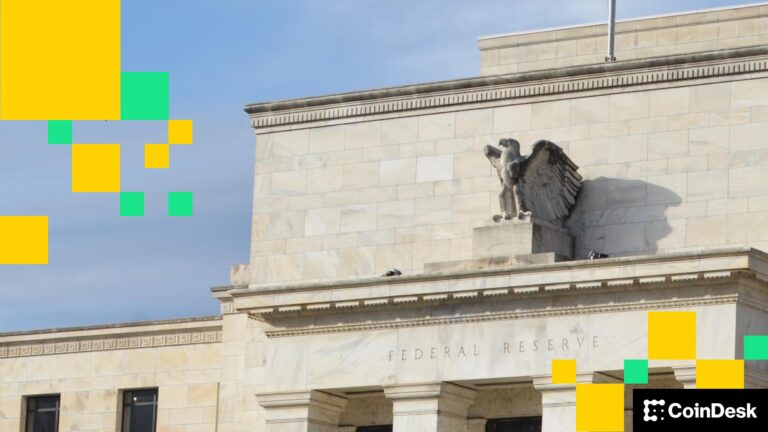
Fed proposes rule to deal with crypto debanking by scrapping ‘reputation risk’

0

Days after JPMorgan Chase & Co. admitted to debanking President Donald Trump after the Jan. 6, 2021 attack on the Capitol, the Federal Reserve seeks comments on its proposal that would stop government supervisors from pushing banks to sever ties with lawful customers based on their activities, including crypto companies.

“We have heard troubling cases of debanking — where supervisors use concerns about reputation risk to pressure financial institutions to debank customers because of their political views, religious beliefs or involvement in disfavored but lawful businesses,” including cryptocurrency, said Vice Chair for Supervision Michelle W. Bowman.

“Discrimination by financial institutions on these bases is unlawful and does not have a role in the Federal Reserve’s supervisory framework,” she added.

The Office of the Comptroller of the Currency, in its capacity as the supervisor of national banks, had already moved to cut reputational factors from its supervision last year, and the Federal Reserve had similarly announced in July that such risk would no longer be a part of its bank examinations, so this rule process would codify that move.

Crypto debanking has been well documented and freely acknowledged by banking regulators appointed by Trump, though new examples continue to emerge. In a response to a lawsuit filed last month by Trump and the Trump Organization, JPMorgan, the nation’s largest bank, said for the first time that it cut off more than 50 Trump accounts in February 2021. JPMorgan did not specify a reason for closing the accounts. On Nov. 23, 2025, Jack Mallers, CEO of crypto payments company Strike, wrote a social media post that immediately went viral, saying JPMorgan closed all his accounts without cause.

In a Jan. 26 memo to the Board of Governors, the Fed’s staff wrote that the board’s proposal would “codify the removal of reputation risk from the Board’s supervisory programs” and prohibit the Fed from “encouraging or compelling” banks to deny or condition services to customers involved in “politically disfavored but lawful business activities.”

In the proposal, the Fed Board said it intends to include “permitted payment stablecoin issuers” within its definition of covered banking organizations after completing separate rulemakings, a move that could directly affect crypto-native firms seeking access to the banking system.

The Fed said comments on its proposal to remove reputation risk from its supervision of banks are due in 60 days from Feb. 23.

Trump’s White House Has One View of Crypto Legislation. His Family’s Crypto Company Has Another

0

In brief

  • Top Trump admin officials have appeared to criticize Coinbase for pulling support from the crypto market structure bill.
  • Meanwhile, World Liberty Financial—co-founded by President Trump—is firmly supporting Coinbase’s approach to the bill.
  • World Liberty, like Coinbase, has much riding on shifting language in the legislation regarding stablecoin rewards.

As the crypto industry’s most coveted piece of legislation stalls in Congress, the Donald Trump administration has pursued aggressive tactics to try and get the bill back on track—including by appearing to take shots at Coinbase, the industry giant that walked away from the bill last month.

In recent weeks, U.S. Treasury Secretary Scott Bessent has repeatedly denigrated crypto executives like Coinbase CEO Brian Armstrong who say a crypto market structure bill should be rejected if its terms are non-ideal. Bessent has labeled such executives “nihilists” and “recalcitrant actors.” He’s even said they should leave America and “move to El Salvador.”

But when Armstrong attended a swanky crypto conference at Mar-a-Lago last week, the Trump family and its business partners had far kinder words for the Coinbase founder’s political tactics.

“We applaud you,” Zach Witkoff, CEO of the Trump family’s crypto company World Liberty Financial, told Armstrong at the event, speaking of the market structure bill.

During an on-stage interview at the World Liberty Forum about how Coinbase has navigated the bill process, Witkoff could hardly have been more supportive.

“We’re super aligned,” Witkoff told Armstrong.

Coinbase walked away from the crypto bill last month, largely due to evolving language in the legislation concerning stablecoin rewards. Stablecoins are crypto tokens typically pegged to the value of the U.S. dollar. Coinbase currently offers users yield, essentially interest payments and typically around 4%, on holdings of the popular stablecoin USDC, which the company co-created. Banks have pushed to outlaw such programs, citing concerns about how they could make traditional, low-yield bank accounts less attractive.

World Liberty has its own stablecoin, USD1, which is central to the company’s future ambitions. The firm recently rolled out an app, WLFI Markets, that allows users to earn rewards on their USD1 holdings, and also lend and borrow against those compounding funds. World Liberty just debuted a related platform that enables AI agents to zip around the internet, spending USD1 autonomously to complete tasks and make investments.

The company also plans to soon release a consumer-facing, “Venmo”-like app that will allow users to swap their stablecoin holdings for various fiat currencies and send them abroad. Key to this intricate web of functionalities is the promise that a World Liberty user can continue to earn rewards on their USD1, even as they use the tokens to complete various tasks.

It’s perhaps no surprise, then, why World Liberty is following Coinbase’s lead during the ongoing battle in Washington over stablecoin rewards.

“We are very much aligned with their way of thinking about this,” World Liberty co-founder Zak Folkman told Decrypt, speaking of Coinbase. “Brian’s been doing such a great job.”

But Coinbase’s maneuvering of the crypto market structure bill has not been without controversy. When Brian Armstrong announced last month that his company was pulling support for the legislation, the move caught Congress—and the White House—completely off-guard. Trump administration officials were outraged by the move, which they had not been warned about ahead of time, sources familiar with the matter told Decrypt.

The about-face prompted Republican lawmakers to pull a key Senate vote on the bill scheduled for the following day. It has yet to be rescheduled, and many crypto policy leaders in Washington are now openly doubting whether the bill will pass before midterm season grinds Congress to a halt.

The Trump administration, meanwhile, has declared passage of the bill by spring as one of its top legislative priorities. Despite its frustrations with Coinbase, the White House has in recent weeks held a series of meetings attended by the company’s executives—along with representatives of other crypto companies and the banking industry—to reach an agreement on stablecoin yield. Coinbase is simply too large to box out of such negotiations, attendees of the meetings told Decrypt.

Should the market structure bill fall apart, stablecoin rewards offered by Coinbase, World Liberty, and others would presumably remain legal under language passed in the GENIUS Act last year.

Since President Trump’s return to power, many in Washington have closely scrutinized World Liberty, which was co-founded by the president in late 2024. But the company’s operators argue they are completely independent from the White House—as demonstrated by the apparent ongoing split over Coinbase and the market structure bill.

“The reality is that we are as beholden to what happens in Washington as anybody else,” Folkman said. “We’re on the outside here, watching this whole thing unfold the same way everybody else is.”

Daily Debrief Newsletter

Start every day with the top news stories right now, plus original features, a podcast, videos and more.

BTC narrows big early losses, rallying back above $64,000

0

Bitcoin pushed back above $64,000 in early U.S. trading Tuesday, tracking a broader rebound in risk assets after several sessions of turbulence.

Trading recently at $64,200, bitcoin was still lower by 0.75% over the past 24 hours, but nicely above the morning’s low of $62,500. Ether (ETH) and solana (SOL) also narrowed big early losses.

Crypto’s tight correlation with technology stocks remained evident, with software shares — as represented by the iShares Software Sector ETF (IGV) — bouncing 1.7% after recent heavy losses on concerns that artificial intelligence (AI) tools will destroy their business models.

The gains came as some companies, including Intuit and DocuSign, announced partnerships with AI firm Anthropic, signaling that incumbents might be able to adapt rather than being displaced.

Meanwhile, traditional safe havens lost ground. Gold fell 1.5% on the session, while crude oil slipped 0.5% as geopolitical tensions eased. Reports cited Iran’s deputy foreign minister Majid Takht-Ravanchi saying the country “is ready to take any necessary step to reach a deal with the U.S.,” tempering fears of an imminent military strike.

The tech-heavy Nasdaq 100 traded 1.1% higher, while the broad-market S&P 500 was up 0.8%.

High-performance computing firms and bitcoin miners — increasingly tied to AI data center infrastructure — joined the move higher. Bitdeer (BTDR), Cipher Mining (CIFR), Hut 8 (HUT) and TeraWulf (WULF) led gains, rallying 6%-10%.

Much of the rest of the crypto-related sector was modestly lower, with Coinbase (COIN), MARA Holdings (MARA) and Strategy (MSTR) among those showing losses of 0.5%-1%.

U.S. demand turns negative for a record 40 days as “bitcoin zero” searches peak

0

The well-followed Coinbase Bitcoin Premium Index briefly looked like it was recovering after the Feb. 5 crash. It wasn’t.

The premium has now been negative for 40 consecutive days, according to Coinglass data, setting the longest streak of sub-zero readings since 2023. The current reading sits at -0.0467%, barely changed from two weeks ago, when a sharp narrowing from -0.22% suggested U.S. buyers had stepped in near the lows.

The index measures the price gap between bitcoin on Coinbase and the global market average. Coinbase is widely used as a proxy for U.S. institutional and dollar-denominated flows, so a persistent negative reading means American investors are consistently paying less than the rest of the world — either selling more aggressively or simply not showing up.

The previous record was roughly 30 days of continuous negative premium during the October 2025 drawdown. That streak broke when a sharp bounce brought U.S. buyers back into the market. This time, the bounce came, as bitcoin recovered as much as 15% from its Feb. 5 intraday low. But the premium never followed.

That divergence shows that while price recovered, the composition of demand didn’t. Whatever buying drove bitcoin back above $62,000 came from outside U.S. hours, outside Coinbase’s order books, or both.

The one constructive read is that the premium has been gradually less negative since early February, creeping from -0.22% back toward -0.05%. It’s improving, just not fast enough to flip positive, a threshold that historically coincides with sustained accumulation phases rather than relief rallies.

Interestingly, Google searches for “bitcoin zero” in the U.S. hit record highs earlier this month, as CoinDesk reported, even as global search interest for the term remained flat.

Both signals point to American investors specifically losing conviction at a pace that hasn’t shown up elsewhere.

Stripe says stablecoin adoption soars despite ‘crypto winter’

0

It may be “crypto winter,” but it’s a “stablecoin summer” as digital dollar adoption booms, payments giant Stripe said Tuesday in its annual letter.

Bridge, the stablecoin orchestration platform Stripe acquired in 2024, saw transaction volume more than quadruple last year, according to the letter.

The firm also said it will “soon” launch the mainnet of Tempo, the payments-focused blockchain it is developing with crypto firm Paradigm and started testing in December.

Stripe has increasingly focused on bringing crypto technology to its payment network, seeing stablecoins as an alternative for cross-border transfers and programmable payments. Stablecoins are a $300 billion class of cryptocurrencies tied to fiat money like the U.S. dollar that use blockchains for faster, cheaper settlement.

Their utility has led to stablecoins decoupling from crypto market cycles, the payment firm wrote. While bitcoin fell 50% from its October peak, and lost 6% over 2025, stablecoin payment volume doubled to about $400 billion, with around 60% resulting from business-to-business transactions, it said, citing a recent report by McKinsey and Artemis.

“Stablecoin payments are advancing quietly and inexorably as real-world uptake continues apace,” the firm wrote in the letter.

Highlighting the rising stablecoin demand, Meta (META), the parent company of Facebook, Instagram and Whatsapp plans to launch its own stablecoin later this year with an outside partner, CoinDesk reported on Tuesday.

Stripe said businesses processed $1.9 trillion on its platform last year, up 34% from 2024. The company also announced a tender offer valuing it at $159 billion.

Read more: Stripe’s stablecoin firm Bridge wins initial approval of national bank trust charter

Bitcoin Drops Closer to $60,000 as AI Tensions Weigh on Macro Assets

0

BTC price targets stayed bearish with a zone of interest below $50,000 as macro assets saw increasing downside pressure at the Wall Street open.

Bitcoin (BTC) fell toward $60,000 around Tuesday’s Wall Street open as traders issued fresh macro low targets.

Key points:

  • Bitcoin sees further pressure with traders lining up for $60,000 and lower.

  • AI nerves are impacting assets from gold to stocks, new analysis says.

  • “Fair value” may mean that BTC price action fills and inefficiency around $45,000.

Bitcoin joins stocks and gold in US session slump

Data from TradingView tracked another grim day for Bitcoin bulls, with BTC price downside nearing 3% on the day.

BTC/USD one-hour chart. Source: Cointelegraph/TradingView

Failure to reclaim support increasingly placed a long-term trend line at risk of becoming resistance — a classic bear market signal. As Cointelegraph reported, the 200-week simple (SMA) and exponential (EMA) moving averages now enclose the local trading range.

“Bitcoin has Weekly Closed below the 200-week EMA (black),” trader and analyst Rekt Capital wrote in an X post on the topic on Monday. 

“This technically means that the EMA has been lost as support and that price could turn it into resistance on any upcoming recovery. Historically across cycles, whenever Bitcoin performed a Weekly Close below the 200-week EMA followed by a bearish retest, it would prompt additional Bearish Acceleration to the downside.”

BTC/USD one-week chart with 200SMA, 200EMA. Source: Cointelegraph/TradingView

Trader Jelle had no illusions about Bitcoin’s direction or its nearest round number target.

“Trend remains clear; lower. $60,000 wick in sight,” he summarized. 

“Take it out, and we can talk relief rally. Until then, the slow bleed continues.”

BTC/USD four-hour chart. Source: Jelle/X

Crypto was not alone in lackluster performance on the day. Gold also fell into the US trading session, down 2% at the time of writing at $5,140.

XAU/USD one-hour chart. Source: Cointelegraph/TradingView

US stocks also headed lower at the open, still under pressure from geopolitical tensions focused on Iran, as well as new US international trade tariffs.

Commenting, trading resource The Kobeissi Letter pinned the depressed mood on misplaced concerns over AI.

“The stock market just erased -$800 BILLION in market cap because AI ‘taking over the world’ is becoming the consensus view,” it wrote in an X article released on Tuesday. 

“That view is too obvious. And the ‘obvious’ trade never actually wins.”

”Fair value” calls for $45,000 BTC price dip

Amid a flurry of sub-$50,000 BTC price targets, trader Crypto Scient added to the debate over where BTC/USD could bottom.

Related: Bitcoin ETF sell-off is ‘purification’ of bull case, investor says

In addition to $50,000 itself, analysis eyed a “fair value gap” around $45,000. Such gaps are created when price moves quickly out of a range, resulting in a low-liquidity “inefficiency” to be filled later.

“I expect that region to be filled before a meaningful bottom forms,” Crypto Scient told X followers on Feb. 12. 

“The market rarely leaves inefficiencies behind.”

BTC/USDT three-day chart. Source: Crypto Scient/X

As Cointelegraph reported, the range between $40,000 and $50,000 is becoming a popular area for a potential bottom.