Home Blog Page 942

U.S. Treasury Sanctions Russian Exploit Broker Over Crypto Cyber Theft

0

The U.S. Department of the Treasury has sanctioned a Russian exploit brokerage network accused of purchasing stolen U.S. government cyber tools with crypto and reselling them to unauthorized buyers, marking the first use of new authorities under the Protecting American Intellectual Property Act.

In an announcement Tuesday, the Treasury’s Office of Foreign Assets Control designated Russian national, Sergey Sergeyevich Zelenyuk, and his company, Operation Zero, along with several associates and affiliated firms. 

The action blocks any property or interests in property of the designated parties that fall under U.S. jurisdiction and bars U.S. persons from transacting with them.

Treasury alleges that Zelenyuk, operating from St. Petersburg, built a business acquiring and selling “exploits” — tools that take advantage of software vulnerabilities to gain unauthorized access to systems or extract data. 

Among the exploits obtained by Operation Zero were at least eight proprietary cyber tools developed by a U.S. defense contractor for the exclusive use of the U.S. government and select allies.

Those tools were stolen by Peter Williams, an Australian national and former employee of the contractor.

According to the Department of Justice, Williams stole the trade secrets between 2022 and 2025 and sold them to Operation Zero in exchange for millions of dollars in cryptocurrency. 

He pleaded guilty in October 2025 to two counts of theft of trade secrets following an investigation by the Justice Department and the Federal Bureau of Investigation.

Scott Bessent: We will hold you accountable for stealing trade secrets

Treasury Secretary Scott Bessent said the designations reflect a broader effort to protect sensitive American intellectual property and safeguard national security. 

“If you steal U.S. trade secrets, we will hold you accountable,” Bessent said.

The sanctions were issued pursuant to Executive Order 13694, as amended, which targets malicious cyber-enabled activities that threaten U.S. national security, foreign policy, or economic stability.

In parallel, the State Department imposed sanctions under the Protecting American Intellectual Property Act, a law that provides for penalties against foreign actors who engage in or benefit from significant theft of U.S. trade secrets when the conduct poses a national security or economic threat. Zelenyuk and Operation Zero are the first individuals sanctioned under that statute.

Treasury also designated several associates tied to the network, including Marina Evgenyevna Vasanovich, described as Zelenyuk’s assistant, and Special Technology Services LLC FZ, a United Arab Emirates-based technology firm controlled by Zelenyuk. 

Two additional individuals, Azizjon Makhmudovich Mamashoyev and Oleg Vyacheslavovich Kucherov, were sanctioned for providing material support. Treasury identified Kucherov as a suspected member of the Trickbot cybercrime group, a malware operation linked to ransomware attacks against U.S. government agencies and healthcare providers.

Operation Zero advertised bounties worth millions of dollars in crypto for exploits targeting widely used U.S.-built operating systems and encrypted messaging platforms. Treasury said the firm did not disclose discovered vulnerabilities to affected software companies and instead sought to sell them to customers in non-NATO countries, including foreign intelligence services.

While Treasury stated that crypto facilitated the transactions for the stolen tools, it did not publish specific crypto wallet addresses or impose blockchain-specific designations. 

crypto wallets for AI agents are creating a new legal frontier

0

SAN FRANCISCO, CA – Crypto isn’t just building faster payments rails. It may be building the financial system for non-humans.

As AI agents grow more autonomous, developers are already giving them crypto wallets, allowing software to hold assets, pay for services, trade tokens and even hire other agents. The technical pieces are falling into place. The legal ones are not.

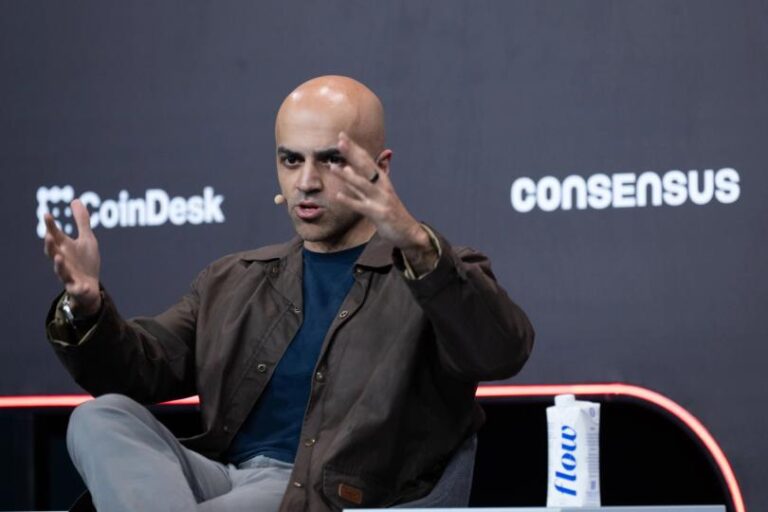
At a recent panel at NEARCON 2026, Electric Capital’s Avichal Garg framed the moment as historically significant.

“What happens if there’s not a human behind it at all?” Garg asked. “It’s some piece of code that owns a wallet, executing code to make more money… How does liability work in that case? I actually don’t know.”

Crypto makes this possible in a way traditional finance cannot. Blockchains allow programmable money, instant settlement and global access. Pair that with AI agents capable of making decisions, and you get something new: software that can both think and transact.

Garg compared the shift to the creation of the limited liability corporation in the 19th century — a legal breakthrough that unlocked pooled capital and industrial-scale growth.

“The cost of participating in the economy has come down so far,” he said. “You’re talking about anybody in the world, with relatively little money, being able to create value.”

But enforcement remains unresolved.

“You can’t punish an AI,” Garg noted. “You can turn them off, but they don’t care.”

If autonomous agents begin trading, lending, hiring and scaling businesses onchain, lawmakers may face a foundational question: Who is liable when software with its own wallet acts independently?

Read more: Kraken’s co-CEO could trust AI with 100% of his crypto — Dragonfly’s Haseeb Qureshi isn’t convinced

OpenAI Says Benchmark Used to Measure AI Coding Skill Is ‘Contaminated’—Here’s Why

0

In brief

  • OpenAI argues that SWE-bench Verified no longer reflects real coding ability because the benchmark is allegedly contaminated.
  • It is now pushing SWE-bench Pro as tougher replacement.
  • Scores plunged from ~70% to ~23% on the newer benchmark,

The number that every major AI lab has been using to claim coding supremacy was just declared meaningless.

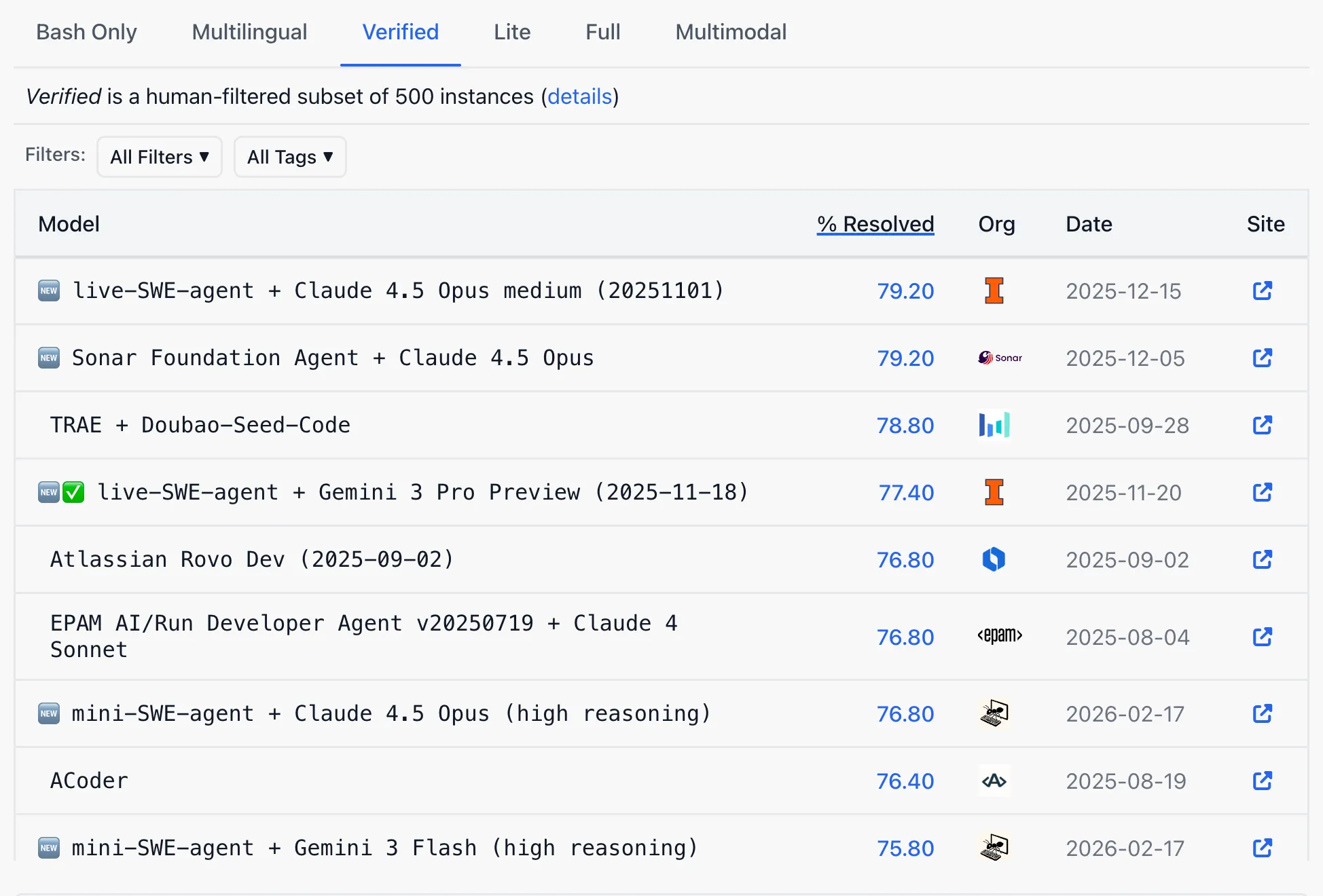
OpenAI published a post this week announcing that SWE-bench Verified, the go-to benchmark for measuring AI coding capabilities, is so riddled with flawed tests and training data leakage that it no longer tells you anything useful about whether a model can actually write software.

The benchmark works like this: Give an AI a real GitHub issue from a popular open-source Python project, ask it to fix the bug without seeing the tests, and check if its patch makes the failing tests pass without breaking anything else.

OpenAI created SWE-bench Verified in August 2024 as a cleaner version of the original 2023 benchmark, recruiting 93 software engineers to filter out tasks that were impossible or poorly designed.

The cleanup worked well enough that every major lab started citing scores on it as proof of progress. When Anthropic launched Claude Opus 4 in May 2025, Decrypt reported that the model scored 72.5% on SWE-bench Verified, beating GPT-4.1’s 54.6% and Gemini 2.5 Pro’s 63.2%. It was the coding benchmark that mattered.

Since then, every single AI lab from America to China has shown the SWE performance to claim the throne as the best model for coding capabilities.

Image: Minimax

Now OpenAI says that race was partly a mirage. According to the report, the team audited 138 tasks that GPT-5.2 consistently failed across 64 independent runs, and had six engineers review each one. It ultimately concluded that 59.4% of those tasks are broken.

About 35.5% have tests so narrowly written that they require a specific function name never mentioned in the problem description. Another 18.8% check for features that weren’t part of the original problem at all, gathered from unrelated pull requests.

The contamination problem roughly works like this: SWE-bench pulls its problems from open-source repositories that most AI companies crawl when building training sets. OpenAI tested whether GPT-5.2, Claude Opus 4.5, and Gemini 3 Flash Preview had seen the benchmark’s solutions during training. All three had.

Given only a task ID and a brief hint, each model could reproduce the exact code fix from memory, including variable names and inline comments that appear nowhere in the problem description. In one case, GPT-5.2’s chain-of-thought logs showed it reasoning that a specific parameter must have been “added around Django 4.1″—a detail found only in Django’s release notes, not the task description. It was answering a question it had already seen the answer to.

OpenAI now recommends SWE-bench Pro, a newer benchmark from Scale AI that uses more diverse codebases and licenses that reduce training data exposure. The performance drop is jarring: models that cleared 70% on the old Verified benchmark score around 23% on SWE-bench Pro’s public split, and even less on its private tasks.

On the current public SWE-bench Verified leaderboard, OpenAI is far from the benchmark’s podium. Retiring a benchmark where you’re losing and endorsing one where everyone starts at 23% resets the scoreboard at a convenient moment and makes the competitors’ claims less impressive.

This is especially important considering that the much anticipated newer version of DeepSeek is rumored to beat or get extremely close to American ai models, especially in agentic and coding tasks with a free, open-source model. That model could be days away from release, and SWE-bench Verified can be a key metric to measure its quality.

OpenAI said it’s building privately authored evaluations that won’t be released before testing, pointing to its GDPVal project where domain experts write original tasks graded by trained human reviewers.

The benchmark problem is not new, and is not unique to coding. AI labs have cycled through multiple evaluations, each useful until models were trained on them or until the tasks proved too narrow.

But what makes this case notable is that OpenAI hyped SWE-bench Verified, promoted it across model releases, and is now publicly documenting how thoroughly it has failed—including by showing their own model cheating on it.

Daily Debrief Newsletter

Start every day with the top news stories right now, plus original features, a podcast, videos and more.

PayPal (PYPL) jumps 7% as Stripe reportedly weighs acquisition

0

Stripe, which processed $1.9 trillion in transactions last year and was recently valued at $159 billion, is considering an acquisition of all or parts of PayPal (PYPL), according to a Bloomberg report.

Deliberations are in early stages, the report continued.

If completed, the deal would bring together two major payment firms that have both moved into stablecoins.

PayPal launched its dollar-backed stablecoin in 2022 through issuer Paxos. The token has since grown to a market value of about $4 billion. It allows users to move dollars across crypto networks at any time of day, often at a lower cost than bank wires.

Stripe has also pushed deeper into crypto. In 2024, it acquired Bridge for $1.1 billion, a company that builds tools for businesses and crypto projects to issue their own U.S. dollar-backed tokens. Stripe is also working with venture firm Paradigm to develop Tempo, a payments-focused blockchain now in testing.

PayPal has struggled mightily in recent years, its stock tumbling about 80% from record highs hit in 2021. Shares were already higher this week on buyout chatter, and they rose another 7% late Tuesday in the wake of the Stripe report.

Read more: Stripe’s Bridge sees stablecoin volume quadruple as utility insulates from ‘crypto winter’

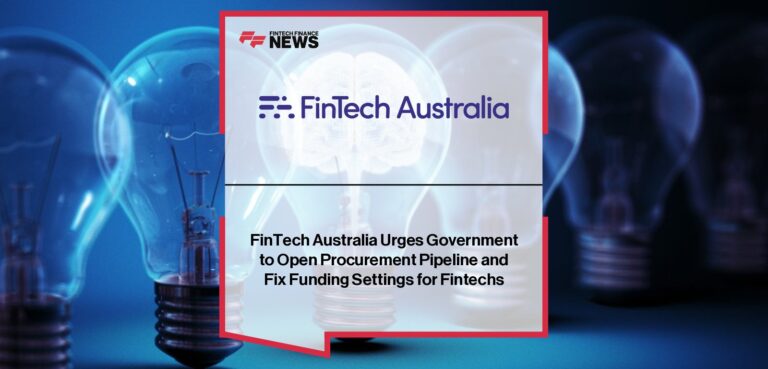
FinTech Australia Urges Government to Open Procurement Pipeline and Fix Funding Settings for Fintechs

0

FinTech Australia is calling on the Federal Government, as part of its 2026–27 Pre-Budget Submission, to broaden its procurement pipeline to better include fintechs and small and medium businesses. In addition, to recalibrate existing funding mechanisms – including venture capital tax concessions, superannuation settings and the Research and Development Tax Incentive – to create stronger, more predictable funding pathways for emerging fintechs.

As part of a broader suite of measures, FinTech Australia argues that more SME-friendly procurement settings would lower barriers to entry and improve cash flow certainty for high-growth technology businesses.

“Australian fintechs have the capabilities and knowledge to solve many of the Federal Government’s key financial challenges, and in turn grow their business, unlock further productivity and create jobs,” FinTech Australia CEO Rehan D’Almeida said.

“Securing government work would also have a compounding effect: it gives fintechs credibility, which in turn helps them win more local customers and scale more quickly. Yet extensive government tender processes that are almost designed for larger players lock smaller and emerging companies out of participating. We often see the same contracts awarded to large companies, simply because they are the only ones with the resources to participate, or the terms blatantly disqualify smaller firms” he said.

The call for further funding-related support comes as recent Cut Through Venture data revealed a 17 per cent decline in the number of funding deals last year, despite an increase in the total amount of capital invested. Early-stage fintechs – those most likely to become the next generation of export-ready Australian scale-ups – are finding it increasingly difficult to access capital on reasonable terms.

“We’ve called this out before, but the two-speed fintech ecosystem still persists,” D’Almeida added. “Existing funds and VC are largely fuelling established players, leaving our next-generation unicorns behind. It’s in this space that the Federal Government can make a tangible difference with targeted reform – both to the ecosystem and, in turn, Australia’s economic outcomes.”

In addition to procurement and funding reforms, the submission also outlines several other key focus areas, many of which persist as long-standing pressure points in the ecosystem, including:

  • Continued support for the Consumer Data Right and core digital infrastructure, alongside scam and cyber initiatives such as the National Anti-Scam Centre, so that consumers and small businesses can safely benefit from data-driven services.
  • Strengthening national AI capability and support for emerging technologies, including investment in AI testing and assurance, and improving tools such as the Enhanced Regulatory Sandbox to help early-stage fintechs responsibly trial new products.
  • Smarter, better-resourced regulation – ensuring bodies such as ASIC, APRA, ACCC and AUSTRAC can manage expanding mandates while modernising rules to support home ownership, digital lending and a more unified framework for the digital economy.
  • Boosting international competitiveness, including through coordinated export and trade support, stronger collaboration via FinTech Bridge arrangements and recognising fintech as an “enabling capability” within programs such as the National Reconstruction Fund.
  • Incentives for sustainability and green fintech solutions, ensuring tools that support climate reporting, green lending and ESG data analytics are accessible to SMEs as well as large institutions.

D’Almeida added: “The stakes are higher with this Federal Budget than others in the past. Australia’s fintech industry is well placed to deliver on the economic outcomes the Government is searching for – boosting productivity, creating jobs and ultimately raising our standard of living.”

“With the right policy settings, we can supercharge fintech growth and realise its impact right now, where it’s most needed. Our regulators and policymakers have by no means neglected the fintech industry, but a renewed focus on it will, in our view, deliver outsized dividends for Australia’s economy.”

Ether Whale Orders Shrink as $2B Short Cluster Sits Near $2K

0

Ether (ETH) whale activity on a major exchange has slowed since the start of 2026, with roughly 2 million ETH traded in large-sized transactions over the past 45 days.

ETH is currently in the midst of its worst weekly losing streak since 2022, with exchange flow trends and futures market liquidation data impacting investor expectations for Ether’s short and long-term price direction in the broader market.

Ether whale order size hints at fading participation

CryptoQuant data shows that the average ETH whale sell orders on Binance have fallen to around 1,350 ETH in recent weeks, down from roughly 2,250 ETH in early January. Assuming 15 to 35 whale-sized executions per day, the cumulative gross sell-side turnover since Jan. 8 is estimated at around 1.8 to 2 million ETH over the past 45 days.

ETH Average order size on Binance (whale left). Source: CryptoQuant

Using an average price of $2,400, this activity equates to roughly $4.3 billion to $4.8 billion in large-order executions. The figure reflects gross traded volume, not confirmed net outflows, as part of the flows may relate to hedging or liquidity provision within the derivatives market.

Crypto analyst Darkfost said the decline in the average order size points to a “gradual disengagement” from larger participants. According to the analyst, smaller traders continue to transact at stable volumes, while bigger players are reducing direct interaction with the order books.

This shift indicates a temporary thinning of market depth. With fewer large resting orders, ETH’s capacity to absorb sharp price imbalances narrows in the short term.

Parallel to exchange flows, ETH accumulation addresses added more than 2.5 million ETH in February as the price fell about 20%. Total holdings climbed to 26.7 million ETH from 22 million at the start of 2026, signaling steady demand beneath the surface.

Related: Ethereum price drops to $1.8K as data suggests ETH bears are not done yet

Will Ether break its longest bearish streak since 2022?

Ether is now in its sixth straight week of losses, marking the longest uninterrupted weekly decline since the 10-week drawdown between March 2022 and June 2022. That earlier stretch unfolded during a broader bear market and led to a cycle bottom before price stabilized.

Cryptocurrencies, Business, Ethereum, Markets, Cryptocurrency Exchange, Binance, Price Analysis, Market Analysis, Ether Price
Ether one-week analysis. Source: Cointelegraph/TradingView

While the current pullback is not as long, the streak highlights sustained selling pressure and weakening momentum on the higher timeframe.

Historical market cycle data suggests that if the decline continues, a broad weekly demand zone between $1,384 and $1,691 may come into focus, an area that previously acted as accumulation during the early stages of the rally in 2023.

Futures market liquidation data shows more than $2 billion in short positions clustered around $2,000. This creates a dense liquidity pocket that may act as the near-term magnet for Ether price.

On the downside, approximately $682 million in long positions remain at risk if Ether drops to $1,600, indicating thinner liquidity compared to the upside cluster.

Crypto trader RickUntZ said he still sees potential for a V-shaped rebound from current levels, citing signs of underlying demand in the current structure. For now, data suggests that the $2,000 liquidation band remains the next key resistance to break.

Cryptocurrencies, Business, Ethereum, Markets, Cryptocurrency Exchange, Binance, Price Analysis, Market Analysis, Ether Price
Ether analysis by RickUntZ. Source: X

Related: Ethereum Foundation starts staking ETH as client diversity concerns persist