

Ethereum co-founder Vitalik Buterin has been trimming his ethereum holdings, at least according to onchain data flagged by the X account Lookonchain. The chatter arrives as ether briefly slipped beneath the $2,000 threshold earlier this morning before regaining its footing by the afternoon. Vitalik Buterin’s ETH Transfers Raise Questions, Data Stops Short of Full Confirmation […]
Digital Services Power Cross-border Trade as Companies Pivot Beyond Traditional Corridors

Digital services are emerging as one of the most resilient sources of growth as elevated uncertainty reshapes global trade. While AI-driven innovation is accelerating adoption in verticals such as Software as a Service (SaaS), shifting trade patterns are opening new pathways for expansion—particularly across South-South corridors, according to an analysis of United Nations Trade and Development (UNCTAD) data and Payments and Commerce Market Intelligence (PCMI) forecasts made by EBANX, a global technology company specialising in payment services for e-commerce across emerging markets like Latin America, Africa, and Asia.
Data from the UN body shows that service exports are projected to have grown 9% in 2025, well above the global expansion estimate of 2.6%, and now account for 27% of global trade. Digitally deliverable services represent 56% of these exports, and growth in developing economies is outpacing that of developed ones—8.4% vs. 6.7% on average between 2015 and 2024.
Rising access to digital tools is also increasing economic activity and, in turn, demand for digital services. In the US, for example, 44% of new businesses that accept cards as a payment method were online-only in 2024—an increase of 20 percentage points since 2019—according to the Mastercard Economics Institute.
According to Sean Yu, VP of Commercial, APAC at EBANX, Latin America has become a priority region for Asian merchants as they look for growth beyond uncertain developed markets. “We’ve talked to some of our top merchants, and they mentioned that LatAm will be a major focus for them in 2026,” Yu said.
Even as regional GDP is expected to grow around 2% in 2026, EBANX analysis indicates that digital commerce in Latin America is poised to expand 12% versus 2025 levels.
Alyson Grosshandler, Director of Country Growth, Northern Latin America at EBANX, notes that mobile usage in the region is among the highest in the world, helping explain the rapid expansion of SaaS and gaming in these markets. “As AI adoption accelerates and technology advances, these companies are at the forefront, providing relevant global services and solutions,” Grosshandler said.
In Brazil, SaaS is expected to expand at a 17% annual rate from 2024 to 2028, according to PCMI. Costa Rica and the Dominican Republic are projected at 18% annual growth, while Mexico and Chile are expected to reach 11% and 12%, respectively.
“Latin America’s digital economy is being built on an innovative payment infrastructure, where rising mobile access and financial inclusion are converging. With deep local expertise, we see how this integrated ecosystem is enabling digital services to scale faster and reach consumers who were previously excluded from the formal economy,” adds Juliana Etcheverry, Director of Country Growth, Southern Latin America at EBANX.
A similar pattern is emerging in Sub-Saharan Africa, observes Wiza Jalakasi, Director of Africa Market Development at EBANX. “Even amid global volatility, we continue to see steady growth in locally driven digital consumption across the region—particularly for everyday digital services rather than discretionary luxury spending.”
In Nigeria, gaming is projected to grow at a compound annual rate of 30% through 2028, based on PCMI data sourced by EBANX. Online education and SaaS are also expected to grow at 25% and 15%, respectively.
South-South trade and growing competition
As global tensions intensify, companies are searching for new growth opportunities—strengthening South-South ties and opening pathways for new partnerships, UNCTAD notes.
Jalakasi adds that this shift is accelerating digital trade between Africa, Asia, and the Middle East. “For Sub-Saharan African markets, this means less reliance on traditional US and EU-centric trade corridors, increased relevance of regional and emerging-market platforms, and greater demand for localised payment acceptance and settlement,” Jalakasi said.
This consolidation of new trade corridors comes as South and East Asia are projected to show resilience, supported by disinflation, monetary easing, and fiscal expansion, according to UNCTAD. The region is projected to grow above 4% this year, while the global economy is expected to slow to 2.6%.
In the Philippines, SaaS is projected to grow at a 19% compound annual rate through 2028, while online education is expected to expand at 17%, according to PCMI. In India, these figures are projected at 23% and 14%, respectively.
A new world for SaaS
While emerging markets have not traditionally been a top priority for many SaaS companies, that is changing—driven not only by economic uncertainty, but also by intensifying competition in developed markets, particularly for AI-related services, Yu added. “We’re seeing more of these companies diversify revenue across Latin America.”
As digital services expand across emerging markets, growth increasingly depends on executing local-market fundamentals—particularly in payments. Acceptance rates, preferred payment methods, currency and settlement needs, and fraud and risk dynamics vary significantly by country. “For global SaaS, gaming, and online education companies, the ability to localise how customers pay—and how revenue is collected and settled—has become a core lever for conversion and sustainable expansion,” said Yu.
Bitcoin Surges to $69.5K on ETF Inflows, US Macroeconomic Boost

Bitcoin (BTC) rallied to a weekly high of $69,500 on Wednesday, surging from lows near $62,400 in less than 24 hours. The rebound aligned with a renewed spot Bitcoin exchange-traded fund (ETF) inflows and firmer macroeconomic sentiment after the recent US policy signals helped steady broader risk markets.
Derivatives data shows that BTC’s open interest is falling and funding rates are staying relatively contained, indicating the move was largely driven by spot demand rather than a buildup of leveraged positioning.
Bitcoin receives a macro boost and a positive ETF flip
US President Donald Trump’s State of the Union address on Tuesday evening framed the first 12-months of his leadership as an “economic turnaround for the ages,” highlighting falling mortgage rates and a 1.7% decline in core inflation over the final three months of 2025.
Markets interpreted the remarks as a sign of reduced near-term policy uncertainty following tariff and Supreme Court volatility, lifting the risk appetite across equities and crypto.
The US spot Bitcoin ETFs recorded $257.7 million in net inflows on Feb. 24, ending five consecutive weeks of redemptions totaling $3.8 billion. Fidelity drew roughly $83 million, and BlackRock’s iShares Bitcoin Trust added close to $79 million.
Related: Bitcoin daily gains near 5% as analysis eyes bullish ‘rotation’ from gold
Bitcoin futures data clears excess downside risk
As Bitcoin trades above $69,000, futures data shows that its aggregated open interest has stabilized around 235,167 BTC, after previously reaching levels above 240,000 BTC earlier in the week.
The drop in open interest suggests that the excess leveraged positioning has already been flushed out during the recent volatility.

At the same time, aggregated funding rates remain slightly negative at -0.0037%. Negative funding indicates that short positions are still paying longs, signaling that traders are not aggressively chasing upside exposure despite the price rally.
This combination of cooling open interest and negative-to-neutral funding points to a market that has reset leverage rather than overheated. The rally toward $69,000 appears to be occurring without an aggressive buildup of long positioning.
The cumulative volume delta (CVD) has edged higher, showing that spot buyers are stepping in and are one of the primary drivers of this rally.
Market analyst BackQuant noted that derivatives activity is still playing a large role, and options data shows that dealers, the firms that sell options and hedge their exposure, are holding what’s known as positive gamma.
When gamma is positive, dealers tend to buy as the price falls and sell as the price rises to stay hedged. That behavior can smooth out volatility and slow sharp breakouts in either direction.
Likewise, trader LP also pointed to BTC’s order book dynamics around the $60,000–$63,000 region, where strong bid pressure previously absorbed selling. Since tapping that zone, the price has expanded roughly 8% to the upside.

The trader added that if sell pressure builds again at these levels, it may signal a slowdown in buy-side aggression and trigger another lower reversal.
Related: Anchorage buys STRC as Wall Street shorts mount against Saylor’s Bitcoin proxy
This article does not contain investment advice or recommendations. Every investment and trading move involves risk, and readers should conduct their own research when making a decision. While we strive to provide accurate and timely information, Cointelegraph does not guarantee the accuracy, completeness, or reliability of any information in this article. This article may contain forward-looking statements that are subject to risks and uncertainties. Cointelegraph will not be liable for any loss or damage arising from your reliance on this information.
Why Has Ripple Spent $2.7 Billion In Acquisitions In 3 Years, And What Does It Have To Do With XRP?

Trusted Editorial content, reviewed by leading industry experts and seasoned editors. Ad Disclosure
Ripple, a crypto payments company and the largest XRP holder, has been aggressively expanding and developing its infrastructure for the past three years. Within this short timeframe, the crypto firm has acquired six different companies, spending more than $2.7 billion. While these acquisitions have significantly expanded Ripple’s use cases and demand, many in the crypto community are concerned about how these ecosystem developments could impact XRP’s price.
Why Ripple Spent $2.7 Billion On Acquisitions
On Monday, February 23, an XRP commentator identified as ‘Ledger Man’ on X outlined several key reasons behind Ripple’s aggressive buying spree over the past three years. Ledger Man noted that the crypto company, led by CEO Brad Garlinghouse, has been incredibly busy since 2023, buying six different companies and expanding into new markets.
He noted that during this short period, Ripple has spent a total of $2.7 billion on company acquisitions. Among the crypto firm’s largest purchases are:
- Hidden Road, a London-based prime brokerage and credit network, was acquired for $1.25 billion.
- GTreasury, a cloud-based SaaS treasury and risk management platform, was acquired for $1 billion.
- Metaco, a Swiss-based technology company, was acquired for $250 million.
Notably, after Ripple completed its acquisition in October 2025, Hidden Road was officially rebranded as ‘Ripple Prime’ and now operates as an institutional prime brokerage for the crypto payments firm. GTreasury has also been repositioned under the name ‘Ripple Treasury’ while Metaco has continued operating under its original brand name as a subsidiary digital asset custody unit.
Beyond these companies, Ripple has also bought Rail, Standard Custody, and Dom Kwok. Ledger Man noted that the primary reason for these acquisitions stems from Garlinghouse’s long-term vision to bridge the gap between Traditional Finance (TradFi) and Decentralized Finance (DeFi).
In addition, the XRP commentator highlighted that Garlinghouse previously shared an intriguing fact about Ripple Treasury, revealing that the company had processed $13 trillion in payments last year, yet not a single transaction involved cryptocurrencies or stablecoins. The Ripple CEO also mentioned that over 1,000 big companies use Ripple Treasury’s technology, and many of their leaders are now showing interest in using crypto-based tools.
For now, Ledgerman has stated that Ripple plans to slow its aggressive buying spree. Moving forward, the company will focus on combining all of its acquired companies and integrating them into a unified system during the first half of 2026. Ledger Man also noted that the crypto payments company is particularly enthusiastic about two major deals that are already exceeding expectations.
What This Has To Do With XRP
Many in the crypto community have expressed concerns that Ripple’s acquisitions have not been a major driver for the XRP price. As the largest holder of the token, Ripple’s initiatives typically act as a catalyst for XRP. However, recent price action and market activity offer little evidence of a significant change following the company’s latest acquisitions.
One crypto member laments that Ripple’s buying spree has done “nothing” for the XRP price, while others argue that, although the crypto company thrives, token holders are getting left behind.
Featured image from Getty Images, chart from Tradingview.com

Editorial Process for bitcoinist is centered on delivering thoroughly researched, accurate, and unbiased content. We uphold strict sourcing standards, and each page undergoes diligent review by our team of top technology experts and seasoned editors. This process ensures the integrity, relevance, and value of our content for our readers.
Bitcoin Treasury Shake-Up: GD Culture Approved to Sell Entire 7,500 BTC Reserve

It appears another digital asset treasury (DAT) outfit is waving the white flag, as GD Culture Group Limited disclosed on Wednesday that its board authorized the sale of 7,500 BTC. At press time, that stash ranked GD Culture as the 15th largest bitcoin treasury firm by holdings. DAT Dominoes? GD Culture Authorizes Major Bitcoin Sale […]
Tether Invests $200 Million in Whop to Expand Stablecoin Payments

The investment will bring Tether’s wallet tools to millions of users.
Stablecoin issuer Tether has made a $200 million strategic investment in Whop, an online marketplace, as it looks to expand stablecoin payments into more real-world use cases.
Tether’s USDT stablecoin currently has a market cap of about $183 billion, according to DeFiLlama data, making it the largest circulating stablecoin worldwide.
Whop co-founder Steven Schwartz said in a post on X that Tether’s investment pushed the company’s valuation to $1.6 billion. As part of the deal, Whop will integrate Tether’s Wallet Development Kit (WDK), allowing users to send and receive payments in stablecoins like USDT.
“In partnership with Tether, we will be scaling infrastructure in real-time for new business models as they emerge across the globe,” Schwartz said on X. “The job is just getting started.”
The deal is part of Tether’s broader push to expand beyond crypto trading and into everyday finance. Specifically, Tether will gain exposure to a platform with over 18 million users and about $3 billion in yearly payouts. Moreover, Whop’s transaction volume has been growing around 25% month over month, according to an official announcement.
“Stablecoins and wallets become most powerful when they are embedded directly into people’s lives, supporting their businesses, activities, families, and individual stories,” Tether CEO Paolo Ardoino said, per the announcement. “Our investment in Whop proudly reflects Tether’s focus on supporting real economic activity by providing efficient digital dollar and wallet infrastructure that can scale to billions of people, across every continent.”
The new funding will help Whop expand into Latin America, Europe, and the Asia-Pacific region, while also developing new financial tools and AI features for its users. The investment also builds on Tether’s recent expansion efforts, including the launch of its regulated U.S. stablecoin USAT last month.
A $100 million crypto campaign fund with a pro-Trump vibe has so far failed to show up
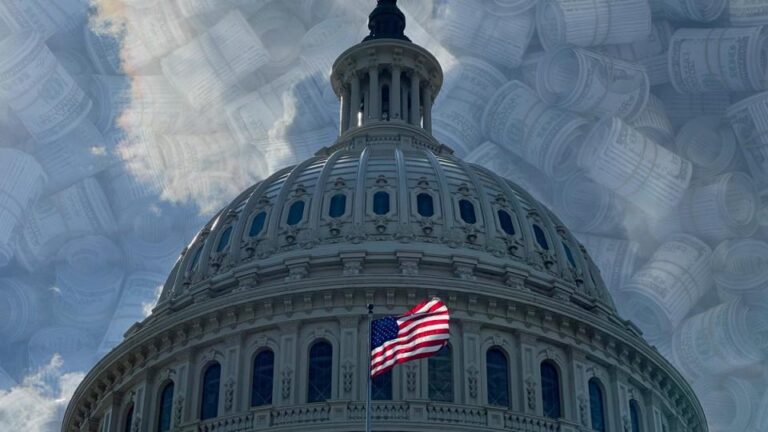
The crypto industry demonstrated in the last U.S. elections that $100 million spent on congressional campaigns could influence policy outcomes for the sector, so when an emerging crypto political action committee anonymously promised to bring that amount to the 2026 table, it suggested a significant new (unidentified) voice in digital assets politics.
But the Fellowship PAC never arrived.
A September press release received wide attention last year as a major leap in the industry’s already hefty campaign spending from the more established leading super PAC, Fairshake. Among its backers, the new group was reportedly to include Tether, the global leader in stablecoins with its USDT and more recent push into the U.S. with a separate affiliate and the USAT token, though representatives from the company declined to confirm any connection.
“Unlike past political efforts, the Fellowship PAC’s mission is defined by transparency and trust, ensuring political action directly supports the broader ecosystem rather than narrow or individual interests,” the PAC’s original September release said, seeming to suggest it would plot a different course than Fairshake. The release did not identify any officers, donors or key employees, nor did the PAC’s website.
Fellowship’s announcement credited President Donald Trump with a regulatory framework “that puts America on the path to become the global crypto capital.”
When asked about the involvement of Tether, which established its U.S. division around the same time as the Fellowship unveiling, a company spokesperson said this week that the global Tether has no say in the PAC but was silent on whether the U.S. operations had any part in Fellowship.
“Tether International has no affiliation or oversight of Fellowship, so any inquiries can be directed to the Fellowship website and associated email,” the spokesperson said in an email.
Repeated attempts to contact Fellowship went unanswered, though it established the website and an account on social media site X, where its most recent activity was reposting a comment from Tether CEO Paolo Ardoino earlier this month. It also registered as a super PAC with the Federal Election Commission, listing its treasurer as Mitchell Nobel, who directs digital-assets strategy at Cantor Fitzgerald, where Trump’s Secretary of Commerce Howard Lutnick was CEO. That firm has also handled Tether’s assets in recent years.
What Fellowship didn’t do, according to FEC records, was receive any money to operate with. Its current filings show zero funds on-hand.
Under U.S. election law, a PAC can’t be funded by a non-U.S. entity. Foreign money influencing U.S. politics has been a longtime concern, and it’s drawn new scrutiny during the Trump administration, including from those suggesting that Trump-supporting PACs may have improper ties to foreign donors. Political involvement from Tether — if it had emerged — may have attracted further scrutiny, even if confined to its U.S. operations, because such a subsidiary would have to represent that its money was generated domestically and its political decisions weren’t guided by foreign nationals.
Meanwhile, the industry’s top super PAC, Fairshake, has said it has $193 million and that the PAC and its affiliates have begun targeting their first campaigns, seeking to ensure pro-crypto candidates eventually join Congress. In the 2024 cycle, Fairshake — primarily funded by Coinbase, a16z and Ripple — supported more than 50 candidates from both parties who are now in the Senate and the House of Representatives.
Some of the earliest 2026 primaries are fast approaching, meaning any new entrants to political spending could arrive late to the party. It’s unclear whether the midterm congressional elections will yet see Fellowship’s “$100 million commitment to back pro-innovation, pro-crypto candidates who will safeguard America’s role as the global leader in digital assets and entrepreneurship.”
How The Financial Base Trading Bots Are Automating Crypto Success for 250,000+ Traders

The cryptocurrency market never sleeps. While this 24/7 accessibility creates endless opportunities, it also presents a significant challenge for human traders. Monitoring charts at 3 AM, fighting the urge to panic sell during a dip, or missing a perfect entry point because of a work meeting—these are the realities that eat into profits.
But what makes these bots so effective, and why are they becoming essential tools for both beginners and professionals? Let’s explore.
At its core, a trading bot is software that connects to your exchange account and executes trades automatically based on predefined rules. The Financial Base offers several intelligent strategies, but they all rest on three fundamental approaches:
1. Buy Low, Sell High: The Grid Bot Strategy
The most popular and intuitive bot on the platform is the Grid Bot. This strategy is beautifully simple: it places a series of buy and sell orders at regular intervals above and below a predefined price range.
How it works:
You set a price range (e.g., $60,000 to $70,000 for Bitcoin). The bot divides this range into multiple grids. Every time the price drops to a lower grid, it buys. Every time the price rises to a higher grid, it sells.
This strategy capitalizes on normal price volatility. In a sideways or slightly trending market, the bot constantly profits from the small price fluctuations, accumulating gains that would be impossible for a human to catch manually.
2. Volatile Markets: The Opportunity Multiplier
Volatility is often feared by manual traders, but for a trading bot, volatility is fuel. The Financial Base bots are designed to thrive in these conditions. Whether the market is swinging up, down, or sideways, grid bots and other algorithmic strategies like cyclic arbitrage are programmed to find and capture value.
3. Cyclic Arbitrage: Capturing Market Inefficiencies
Beyond simple grid trading, TFB offers more advanced strategies that identify price discrepancies across different trading pairs or market cycles. These bots work 24/7 to execute exact arbitrage opportunities, profiting from temporary inefficiencies that human eyes would miss.
One of the most innovative features on The Financial Base is the Bot Marketplace. For beginners who may not know how to configure a bot, or for experienced traders looking for new strategies, this marketplace is a game-changer.

Users can browse through a vast library of publicly shared bots, complete with transparent performance metrics:
|
Trading Pair |
Bot Type |
Direction |
Leverage |
PnL% |
Run Time |
Max Drawdown |
|
BTCUSDT Perp |
Futures Grid |
Long |
50.00x |
+667.38% |
16 days |
37.03% |
|
SUSHIUSDT Perp |
Futures Grid |
Long |
50.00x |
+587.97% |
78 days |
49.74% |
|
FITFIUSDT Perp |
Futures Grid |
Long |
20.00x |
+408.09% |
16 days |
47.34% |
|
ETHUSDT Perp |
Futures Grid |
Long |
50.00x |
+366.67% |
80 days |
39.44% |
|
ARBUSDT Perp |
Futures Grid |
Long |
50.00x |
+332.47% |
2 days |
33.65% |
This transparency allows users to:
Copy Successful Strategies: With a single click, users can copy the parameters of top- performing bots.
Analyze Risk: By seeing the “Max Drawdown” and “Run Time,” users can assess whether a bot’s strategy matches their risk tolerance.
Diversify: Users can run multiple bots across different pairs and strategies, spreading risk and increasing potential reward streams.
Why Traders Are Switching to Automation
The testimonials from The Financial Base community reveal a common theme: freedom and consistency.
“TFB trading bot is easy to set up, and it automatically places the orders for me to buy low and sell high so that I don’t need to watch the market all the time. The grid bot is the best tool for volatile markets!”
Adria, Singapore
“A really helpful tool for people who don’t have time to monitor the market in real time, and it automates the ‘buy low, sell high’ action perfectly.”
Brad Mustorf, United States
“I like the bot marketplace feature. I don’t need to learn all the technical analysis, and I can copy bot parameters from other traders, which will help me make profits. It’s easy for beginners!”
Nabhivarsha, India
These stories highlight the three core benefits of TFB trading bots:
- Time Freedom: Bots work while you sleep, eat, or work your day job.
- Emotionless Trading: Bots follow the logic, preventing panic sells or FOMO buys.
- Democratized Expertise: The marketplace allows anyone to benefit from proven strategies, regardless of their technical analysis skills.
Safe & Secure
Automation does not mean compromising security. The Financial Base ensures that your assets are protected at all times. Bots operate within the secure ecosystem of the exchange, and API keys are managed with the highest encryption standards. Users maintain control of their funds while the bots execute the trades.
Exact Arbitrage
The platform’s infrastructure is built for speed. To capture arbitrage opportunities, execution must be instantaneous. TFB’s robust engine ensures that when an arbitrage condition is met, the bot acts immediately, locking in profits that might disappear in milliseconds.
Easy Profit
Despite the complex technology running in the background, the user experience is designed for simplicity. With pre-built bots and the one-click copy feature in the marketplace, making profitable investments with algorithmic trading is accessible to everyone.
Is The Financial Base API free?
Yes, The Financial Base provides free API access for users who wish to connect external tools or develop their own strategies, though standard trading fees apply to executed trades.
What is a spot grid bot?
A spot grid bot is a trading strategy that places buy and sell orders for the actual cryptocurrency (spot market) at preset price intervals. It aims to profit from price volatility by buying low and selling high within a defined range, without using leverage.
Is The Financial Base Trading Bot free?
Yes, the trading bot tools themselves are free to use on the platform. Users only pay the standard trading fees when the bot successfully executes a trade.
The Verdict: Trade Smarter, Not Harder
In a market that never closes, human limitations are the biggest bottleneck to profitability. The Financial Base Trading Bots solve this by providing intelligent, automated, and secure tools that work tirelessly in the background.
With nearly a quarter of a million traders already using the platform and over $45 million in collective earnings, the message is clear: automation is not just the future of trading—it is the present.
Whether you are a busy professional, a beginner intimidated by charts, or an experienced trader looking to scale your operations, The Financial Base offers a bot strategy tailored to your needs. It’s time to stop watching the market and start letting the market work for you.
Read More From Techbullion

Bitcoin Price Surges 8% To $69,000 As Crypto Market Rallies

Bitcoin price climbed more than 7% today, pushing above $69,000 and marking one of its strongest daily moves during months of sell-offs.
The rally follows weeks of compressed trading and comes as several price-based and miner-linked signals point to exhaustion in the recent drawdown.
The bitcoin price fell close to 50% from its early-October high near $125,000 to a February low around $60,000. That decline placed bitcoin below its estimated average production cost for the first time since late 2022, a zone that has often aligned with late-stage selling and price stabilization.
Current estimates put average production near $66,000, meaning the market has spent weeks pricing bitcoin below what many miners need to remain cash-flow neutral.
The rebound through $69,000 shifts focus back to price structure. Bitcoin bounced from the 0.786 Fibonacci retracement near $62,000, a level that aligned with prior daily support, according to Bitcoin Magazine Pro data.
Buyers defended that zone across multiple sessions before the bitcoin price turned higher. The rally off that base unfolded with expanding volume, suggesting fresh participation rather than short covering alone.
Where’s the bitcoin price headed?
Bitcoin price now trades back inside the range that defined most of January. The next area in focus sits near the point of control around the mid-$70,000s, where trading activity concentrated before the breakdown.
A reclaim of that zone would place bitcoin back above its volume-weighted center and reset the near-term structure. Failure to do so would keep price range-bound despite the rebound.
Mining data adds context but price remains the driver. The Hash Ribbon, which tracks short- and medium-term hash rate trends, sits close to a recovery signal after nearly three months of miner stress. That period ranks among the longest capitulations on record. During such phases, miners often sell reserves to cover operating costs, adding steady supply to the market.
As the hash rate begins to recover, that forced selling tends to ease.
Since 2011, similar mining stress events have aligned with local or major bitcoin bottoms roughly 20 times, including early 2015, late 2018, and late 2022. In each case, price stabilized before trend direction resolved. Still, those signals work best as context rather than timing tools.
Despite the rally, bitcoin faces overhead pressure. On-chain data shows a large share of supply remains held at a loss.
Today, crypto‑exposed stocks broadly rallied in tandem with Bitcoin’s rebound. Coinbase (COIN) surged over 13%, Strategy (MSTR) over 8%, and Robinhood (HOOD) over 6%.
Kraken Launches Flexline Crypto-Backed Loans with 10–25% APR

Crypto exchange Kraken has launched Flexline, a crypto-backed loan product that allows Kraken Pro users to borrow against their digital asset holdings without selling them.
According to Wednesday’s announcement, the fixed-rate loans carry terms ranging from two days to two years, with proceeds issued in crypto or stablecoins that can be traded on the platform or withdrawn, depending on regional eligibility.
The company describes its eponymous product as “geared toward beginners and individual investors, while Kraken Pro is for advanced and institutional traders.”
Using Flexline, customers can post supported cryptocurrencies as collateral and receive funds almost instantly. Annual percentage rates range from 10% to 25%, according to Kraken’s website, though the exchange did not disclose specific loan-to-value ratios.
Collateral is held in segregated wallets and included in Kraken’s Proof of Reserves attestations, which the exchange says verify client assets on a 1:1 basis. Collateral may be liquidated if maintenance requirements are breached or the loan reaches maturity without repayment.
Kraken said loans can be repaid early using an account balance, but are subject to an early repayment fee. The product is not available in Australia, Brazil, Canada, India, New Zealand, Switzerland, the United Arab Emirates, the United Kingdom or the United States.
The new features come a day after Kraken announced tokenized equity perpetual futures on its regulated derivatives platform, giving eligible non-US clients 24/7 leveraged exposure to major US stock indexes, gold and individual companies such as Apple, Nvidia and Tesla.
Related: Kraken sponsors Trump Accounts in Wyoming, citing crypto alignment
Crypto-backed lending gains momentum across exchanges, DeFi and traditional finance
Kraken’s launch comes amid a broader resurgence in crypto-collateralized lending across exchanges, decentralized finance and even traditional financial institutions.
Coinbase recently expanded its collateralized loan product to support additional digital assets, allowing eligible US users to borrow up to $100,000 in USDC (USDC) against tokens including XRP (XRP), Dogecoin (DOGE), Cardano (ADA) and Litecoin (LTC) without selling.

Outside the exchange sector, US mortgage lender Rate introduced RateFi, a program that enables qualified borrowers to use verified cryptocurrency holdings to meet underwriting requirements without liquidating their assets, permitting digital assets to count as reserves and, in some cases, income.
Meanwhile, decentralized lending markets continue to scale. DeFi lending protocols hold about $51.9 billion in total value locked (TVL), with about $30.8 billion actively borrowed, according to DefiLlama data.
Aave accounts for nearly half of that total with just under $26.9 billion in TVL, followed by Morpho protocol at around $5.8 billion.

Institutional capital is also moving deeper into the niche. On Feb. 15, Apollo Global Management partnered with Morpho to support blockchain-based lending infrastructure, with the $940 billion asset manager saying it could acquire up to 90 million MORPHO tokens as part of the collaboration.
Magazine: Clarity Act risks repeat of Europe’s mistakes, crypto lawyer warns
Cointelegraph is committed to independent, transparent journalism. This news article is produced in accordance with Cointelegraph’s Editorial Policy and aims to provide accurate and timely information. Readers are encouraged to verify information independently. Read our Editorial Policy https://cointelegraph.com/editorial-policy