Eleven Democrats on the U.S. Senate Banking, Housing, and Urban Affairs Committee are pressing the Trump administration to investigate Binance over allegations that the exchange facilitated illicit finance activity tied to Iran and may be violating its 2023 federal settlement.
In a letter sent Friday to Attorney General Pam Bondi and Treasury Secretary Scott Bessent, the senators urged the Justice Department and Treasury to conduct a “prompt, comprehensive review” of Binance’s sanctions compliance controls.
The lawmakers cited recent media reports alleging that billions of dollars in digital assets flowed through the platform to Iranian entities, including groups linked to terrorism.
The letter was led by Sen. Mark Warner and signed by Ranking Member Elizabeth Warren along with Sens. Chris Van Hollen, Jack Reed, Catherine Cortez Masto, Tina Smith, Raphael Warnock, Andy Kim, Ruben Gallego, Lisa Blunt Rochester and Angela Alsobrooks.
According to the senators, Binance compliance personnel uncovered evidence last year that roughly $1.7 billion in digital assets had been routed through the exchange to Iranian entities, including the Iran-backed Houthis and the Islamic Revolutionary Guard Corps.
In one instance, a Binance vendor allegedly moved $1.2 billion in funds connected to Iran-linked actors. The letter also claims that Iranian users accessed more than 1,500 Binance accounts and that the platform may have been used in efforts by Russian actors to evade sanctions.
The lawmakers raised concerns that employees who identified the transactions were dismissed and that Binance has become less responsive to law enforcement requests. They argued that such actions would conflict with the company’s obligations under its 2023 plea agreement and related settlements.
In 2023, Binance pleaded guilty to federal charges including violations of U.S. sanctions laws and anti-money laundering failures. The company agreed to pay more than $4 billion in penalties and committed to sweeping reforms under U.S. supervision, including enhanced know-your-customer procedures and sanctions screening.
The senators contend that the latest reports call into question whether those reforms have been implemented and maintained. In its settlement with the Treasury’s Office of Foreign Assets Control, Binance committed to implement controls capable of identifying and blocking prohibited transactions.
Allowing $1.7 billion in digital assets to move to sanctioned Iranian entities, they wrote, would be inconsistent with that commitment.
Binance and President Donald Trump
The letter also touched on Binance’s recent business relationships involving President Donald Trump and his family’s crypto ventures. Lawmakers pointed to the exchange’s promotion of USD1, a stablecoin issued by World Liberty Financial, a Trump family-backed project.
According to the letter, Binance offered interest incentives for users holding USD1, assisted with technology related to the token and accepted a $2 billion investment tied to it.
The senators further referenced Trump’s pardon last fall of Binance founder Changpeng Zhao, who had pleaded guilty to failing to implement an effective anti-money laundering program and served a four-month prison sentence.
The lawmakers argued that these connections heighten the need for what they described as a “thorough, impartial” probe.
Binance’s dubious ties with Russia
Beyond Iran-related concerns, the letter cites Binance’s recent launch of crypto-linked payment cards in parts of the former Soviet Union. The senators warned that similar products have been used to bypass restrictions on the Russian financial system.
They also noted the exchange’s partnership with Kyrgyzstan to launch a stablecoin and digital currency initiative, raising questions about exposure to sanctions evasion risks.
“These allegations raise grave concerns that poor illicit finance controls at Binance remain a significant threat to national security,” the senators wrote. They warned that weak safeguards at the world’s largest digital asset exchange could allow terrorist groups or sanctions evaders to access the global financial system.
A Binance spokesperson disputed the allegations, stating that the company detected and reported suspicious activity and that claims it retaliated against compliance staff are false.
The company has said it remains committed to meeting its regulatory obligations under the 2023 agreements.
The senators requested a response from Bondi and Bessent by March 13.
Sam Bankman-Fried has launched a public campaign to secure a presidential pardon from Donald Trump, but the White House says clemency is not on the table. Despite adopting pro-Trump rhetoric, the former FTX CEO remains unlikely to receive relief. White House Rejects SBF’s Pardon Push Convicted former FTX CEO Sam Bankman-Fried is attempting a political […]
DCTRL, a Bitcoin hub and hacker space out of Vancouver, the fair-weather Canadian city, has announced the sunset of its downtown basement location, iconic among early adopters for its tinkerer mindset and hardware hacker culture. The community will be migrating to a new location in the coming weeks, and updates to the vision of the hub. The Vancouver Bitcoin community is renowned for having set up the first Bitcoin ATM in History, with DCTRL specifically having hosted a variety of renowned characters that, over the years, gave this industry much of its cultural and innovative flair.
Visited by some of the most influential people in the Bitcoin and broader Crypto industry in its 12 year run, DCTRL is far from done being a hub of the Canadian Bitcoin and Crypto scene. Preparing to move due to a change in zoning laws, plans to relaunch in a new location are in the works, as active members consolidate the historical moments, relationships, and lessons learnt during perhaps the longest-running Bitcoin hackspace experiment in the young industry’s history.
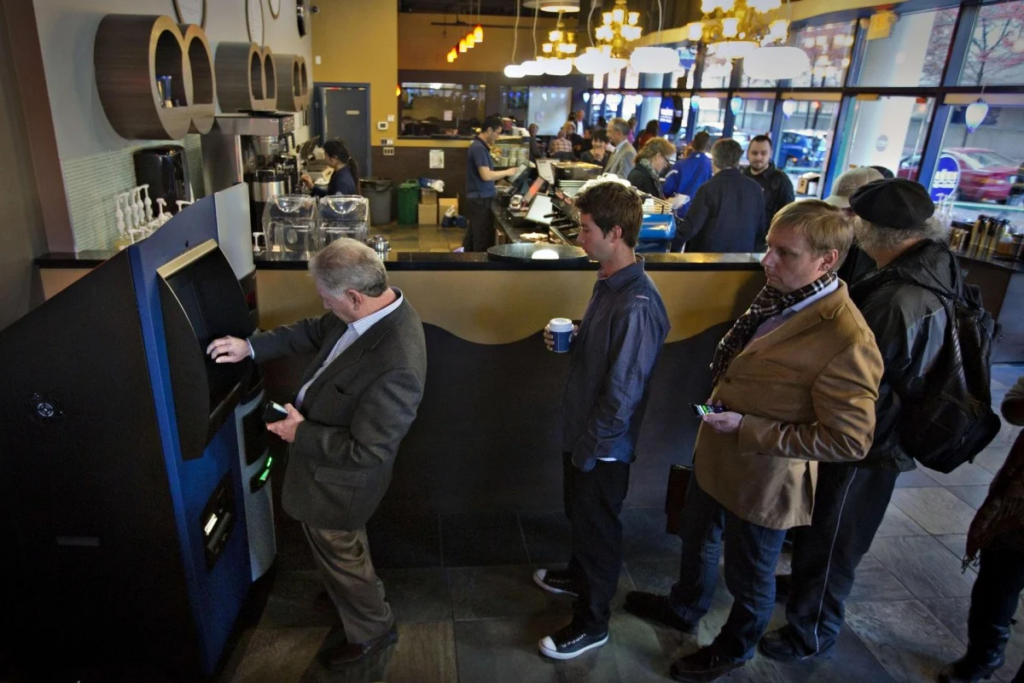
It all started at Waves cafe on Howe Street, in Vancouver. The Bitcoiniacs, a group of four OGs that operated a Bitcoin brokerage at the time — still active to this day — decided it was time to get the robots involved. So they rigged up an ATM to sell bitcoin to the public, rallied the local Vancouver tech, finance, and burgeoning crypto scene, and hosted a historical launch party.
“The first Bitcoin ATM in the world was a massive event,” said Freddie Heartline, a Bitcoin enthusiast and co-founding member of the DCTRL hacker space. In an exclusive interview with Bitcoin Magazine, Heartline went on to recall the event, saying, “Oh man, the vibes were incredible. It literally felt like a really good rave. But it was smarter. Way smarter. That’s how it all came about, actually.” referring to the founding of DCTRL.
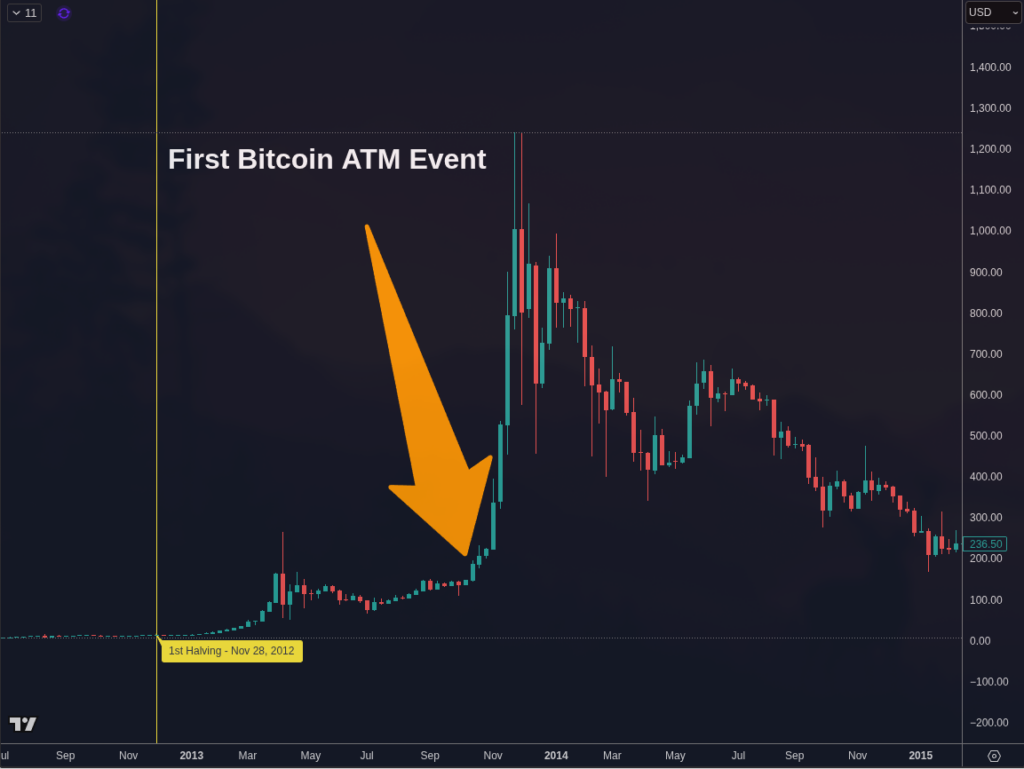
The timing for the Bitcoin ATM event was perfect, it was October 2013 and bitcoin had just gone from a few dollars to almost 150, consolidated for a few weeks around 100 and was getting ready to take a shot at 1,000 a coin. The energy across the Bitcoin community as electric, this was the end of the longest bear market in Bitcoin history, in a way this rise in price was proof that Bitcoin was here to stay.
The launch of the first Bitcoin ATM, as a result, made national and international news. The idea of a Bitcoin ATM being operational was considered a historical milestone in the adoption of Bitcoin as money.
Tens of thousands of Canadian dollars worth of bitcoin were sold that day and over the coming weeks, likely creating a few millionaires over the years, spawning copycat ATM projects and even a handful of Bitcoin ATM manufacturing companies to boot. It also inspired the creation of the DCTRL hacker space, called “Decentral Vancouver” at the time.
Cameron Gray, another Bitcoin enthusiast who was volunteering with the Bitcoiniacs event and a friend of Heartline, was the one who had the idea. “Cam was absolutely an essential part of founding Decentral.” Heartline recalled “He literally turned to me one day – as he was operating the bitcoin ATM at Waves – after I complained about the lighting at the coffee shop – and said ‘we should open a space.’ And that was it.”
Soon, they had secured a basement location in downtown Vancouver, grimy, humid, but cozy. Over the years, this spot became a hub for Bitcoin engineers, founders, crypto enthusiasts, and eventually legends. The decor got better, the leaks patched, and the walls decorated with Bitcoin art. The empty spaces filled up with hardware of all kinds, modified to operate or somehow interact with the orange coin.
Heartline and Gray were starting a lifestyle project of sorts, and while Bitcoin may have been doing well at over $1,000, it would soon correct back to $300, another bear market, which had important consequences for the industry. During that time, the bills for DCTRL’s rent had to be paid somehow, and so Heartline moved in. Not into the basement, but onto the rooftop. In order to keep the lights on during that bear market, he literally set up a tent. Not a bad setup either if you have a look.
DCTRL started hosting meetups, the Vancouver Startup Weekend community got wind of it, and a gentleman known as Greg began to visit the hub. Soon enough, the Startup Weekend events were taking place at DCTRL as well, pulling in the local tech startup scene. Before long, even Vitalik Buterin, founder of Ethereum and former writer for Bitcoin Magazine, showed up.
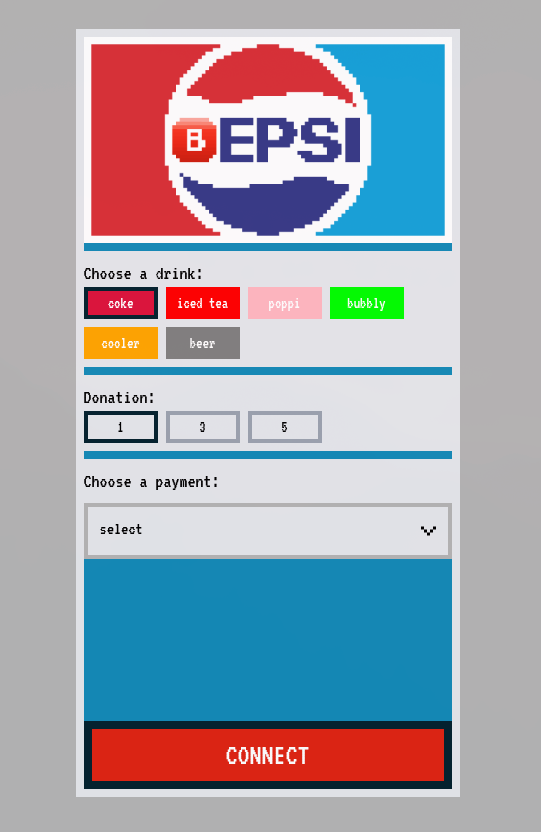
Greg had another important contribution to DCTRL; he made a donation that created a symbol for the local community. He donated $500 to the space with one condition: “It has to be used for something creative …” Heartline recalled, “so I found a Pepsi machine on Craigslist. Greg even helped us move the thing in a pickup. Him, me, Cam, and Mike Olaff moved that fucking insanely heavy and awkward thing down the stairs – lol almost killing Cam🤣🤣🤣.” The Pepsi machine would soon get backwards engineered, hacked, and rebranded to the Bepsi, for obvious Bitcoin reasons.
In the above video, you can see Greg making an on-chain transaction to the pop machine, milliseconds later dropping a soda for him on Q. The satisfying sound of Bitcoin being used as money for the small pleasures of life became a staple of DCTRL. A digital version of the Bepsi was eventually made, which fans from all over the world used to make donations. Many iterations of the underlying software took place over time, rig-wired into the Cold War era pop machine with a Raspberry Pi and some hacker ingenuity. A decade later, even the Mayor of Vancouver Ken Sim, dropped by to pay homage to this staple of Vancouver hacker culture, this time buying a soda from Bepsi with a lightning payment.
Today, the Bepsi supports practically every Bitcoin protocol, a testing ground for the cutting edge of Bitcoin technology, including protocols like Taproot Assets, Spark, and Arcade OS. “We even issued our own Bepsi token. One Bepsi equals one soda from the Bepsi machine… it’s like a stable coin… pegged to the price of the pop can.” said Heartline. The Bepsi, which in a way was inspired by the Bitcoin ATM, also inspired copycats, such as the 21up vending machine hosted in a nearby Blockchain lab known as MintGreen. To this day, funds collected by the Bepsi machine have gone to support the operation of the hacker space and cover costs, serving as a cornerstone of the community. Control over the Bepsi’s underlying wallets and tech stack in a way setting rank among the most active members and hosts.
Visited by Legends
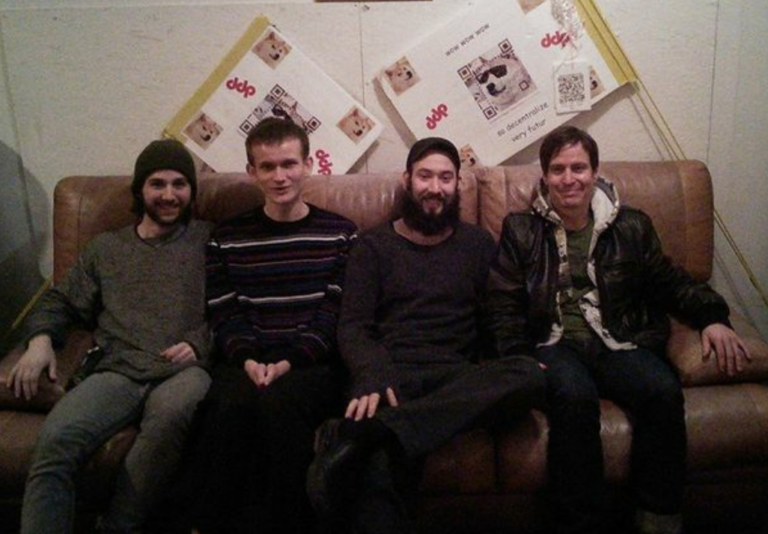
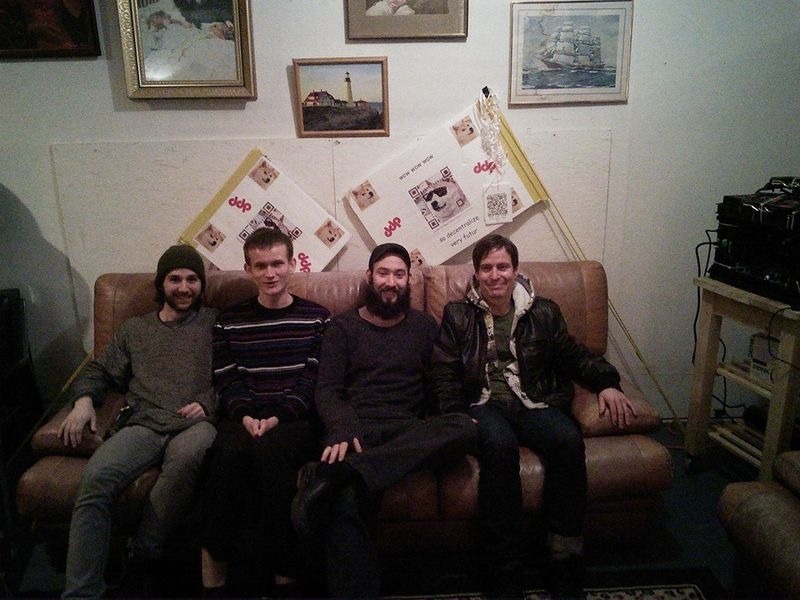
Throughout the years, big names within the industry visited or engaged with DCTRL in one way or another. Vitalik Buterin personally visited the space and hung out there in the very early days of Ethereum, as demonstrated by this photograph hung on their wall, featuring Gray, Heartline, Vitalik, and another active member referred to as Kyle.
The founders of CaVirtex, the first Canadian Bitcoin exchange, were also photographed there. This brand is little known now as they were bought out by Kraken years later, but they had a deep influence on the Canadian Bitcoin scene, selling the coin to Canadians since before the first bull run, which peaked at $30 per coin. Without this exchange, many of the big Canadian Bitcoiners may not have gotten in.
Virtually, Bitcoin celebrities also attended DCTRL events throughout the years, answering questions from the local crowd, such as Roger Ver, before the fork wars, Andreas Antonopoulos, and Willy Woo. Erik Vorhees, who came to fame in Bitcoin for creating the first major instant swap, crypto-to-crypto exchange called ShapeShift, is seen in this video doing a fireside chat at DCTRL during a local meetup.
Even one famous scammer attended the hub, a man who was a regular in the Canadian Bitcoin scene in the 2014 era, and who to this day remains one of the unsolved mysteries of crypto-related crime, Gerald Cotten of QuadrigaCX. Cotten, whom I personally met multiple times in Toronto at the time, was a charming and smooth-talking entrepreneur in the scene at the time, before his turbulent professional history was revealed and the exchange went down in bankruptcy, leaving millions of dollars of user funds unpaid. Cotten allegedly died suddenly and mysteriously in India just before the exchange went bankrupt, taking the crypto keys with him, but many who were personally affected by this centralized exchange collapse are skeptical of that story.
Further evidence of DCTRL as a microcosm of the industry as a whole was seen years later during the fork wars, as Gray, the other primary co-founder of the hub, took the ‘big block’ side of the debate, resulting in intense debates and ultimately a falling out with the local community and broader Bitcoin scene. Gray, nevertheless, is highly respected and appreciated by the active members of DCTRL for his contributions to the DCTRL social scene, which would inevitably suffer from the same forks and tensions that the Bitcoin protocol went through at the time.
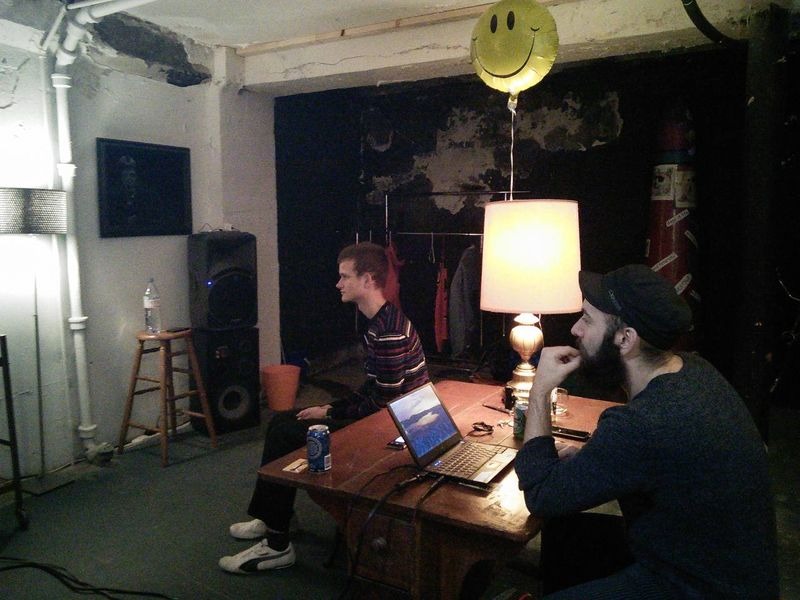
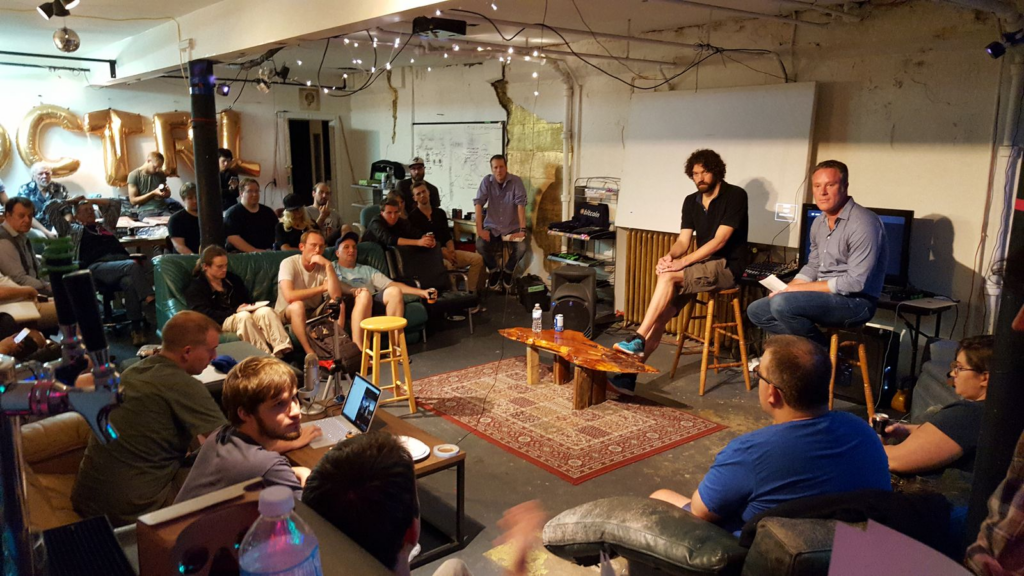
During those difficult times, DCTRL served as a forum and debate space for these topics, even hosting Peter Rizun of the alternative implementation Bitcoin Unlimited — a big blocker — who debated Taylor, seen on the right in the photo below.
Overall, DCTRL enjoyed more than 12 years of continuous operation, boasts hundreds of events hosted, over 1500 registered community members, and 69 recorded talks published on YouTube, which touched many elements of the Bitcoin and crypto industry. Throughout this whole time, the hub was operated entirely by volunteers and sustained through public donations and, of course, the Bepsi.
As the location of DCTRL gets rezoned by the city government, and a new building will be going up in its place, the active members and hosts of DCTRL, which include NAMES, have begun organizing a transition to a new location, alongside an update to the brand and
According to DJ, one of the active members who prefers to stay pseudonymous, the hub has had record attendance in recent months. And while the location will change, its future is brighter than ever. Those who would like to be a part of the future of DCTRL can learn more at www.DCTRL.wtf.
The seizures and freezing over three months were conducted by the District of Columbia’s Scam Center Strike Force, established by US Attorney Jeanine Pirro in November.
Officials with the US Department of Justice reported “freezing, seizing, and forfeiting” more than $578 million worth of digital assets tied to criminal groups as part of a task force’s efforts targeting “Southeast Asian cryptocurrency-related fraud and scams.”
In a Thursday notice, the Justice Department said the frozen and seized crypto had been “stolen by Chinese transnational criminal organizations” using websites and social media platforms to target US residents. The actions were taken by the District of Columbia’s Scam Center Strike Force, established by former Fox News host, now US Attorney Jeanine Pirro in November.
“Seizures of cryptocurrency is one important part of the Scam Center Strike Force’s work,” said Pirro. “Through the legal process, my Office will seek to forfeit these funds and return them to victims to the maximum extent possible.”
Source: Jeanine Pirro
Pirro’s comments signaled that many of the funds would not be used to bolster the Strategic Bitcoin Reserve and digital asset stockpile established via executive order by US President Donald Trump in March 2025. According to data from BitcoinTreasuries.NET, US authorities may hold as much as 328,372 Bitcoin (BTC) through various criminal seizures, but the White House had not publicly commented on the stockpile’s size as of Friday.
Related: South Korea’s tax office leaks wallet seed and loses $4.8M in seized tokens
Crypto scams surged in 2025
According to blockchain analytics platform Chainalysis, the number of incidents involving impersonation scams tied to crypto rose by about 1,400% year over year in 2025. Many of the scams included pig butchering and investment schemes, with the average amount stolen through impersonation scams increasing by 600% over the same period.
Some of the parties involved have gone to prison in the US. Earlier this month, a judge sentenced an individual to 20 years in prison for orchestrating a scam to steal more than $73 million from victims, many of whom were based in the US.
Cointelegraph is committed to independent, transparent journalism. This news article is produced in accordance with Cointelegraph’s Editorial Policy and aims to provide accurate and timely information. Readers are encouraged to verify information independently. Read our Editorial Policy https://cointelegraph.com/editorial-policy
Trusted Editorial content, reviewed by leading industry experts and seasoned editors. Ad Disclosure
Talks of a potential altcoin season this cycle have since subsided compared to previous years, despite the recentdecline in the Bitcoin (BTC) price and dominance. Notably, a crypto analyst has shared a new long-term chart showing the total altcoin market capitalization relative to Bitcoin at a level that has historically preceded major alt seasons. Based on his analysis, the alt market has fully reset and could be gearing up for afresh altcoin season if historical trends play out as expected.
Historic Alt Season Setup Forms As Bitcoin Ratio Hits Base Zone
In a recent analysis on X, market expert @CyrilXBT shared a monthly chart tracking the ratio of the total crypto market, excluding the top 10 assets, to Bitcoin. According to the analysis, the chart currently sits at approximately 0.129, a level the analyst describes as the same base or accumulation zone that has launched every major altcoin season in crypto history.
@CyrilXBT noted that this zone is where all alt seasons are born, with each pastaltcoin rally beginning when the ratio stopped falling and stabilized around the $0.12 to $0.13 range. Looking at the chart, the analyst noted that during the 2015-2016 cycle, the ratio starts near zero and remains flat, with minimal volatility. Following this, a dramatic spike occurred during the2017-2018 bull run, pushing the altcoin vs Bitcoin ratio above 0.3, marking one of the first major alt seasons.
Source: X
By 2020, the ratio crashed back below the 0.129 level, erasing most of its previous gains as it consolidated near the low-ranged accumulation/base zone. Notably,2021 marked the largest altcoin season spike in history, with the ratio exploding upward to over 0.55 amid the bull market frenzy. During this time, volume hit new highs, with bars towering above those of previous years.
New Alt Season Conditions Take Shape
Similar to the 2020 crash, the 2022-2024 cycle saw a post-peak correction, with the ratio trending downward asBitcoin regained dominance. In the current 2025-2026 cycle, the altcoin vs Bitcoin ratio has finally returned to the historically significant 0.129 accumulation zone, with BTC.Dfalling to a yearly low of 57.9%.
@CyrilXBT has suggested that the current positioning mirrors the pre-altseason setup that led to a major altcoin explosion in previous years. He noted that the rising trendline connecting successive altcoin season peaks on the chart points to a ratio of roughly 0.80 to 0.90 as the next potential target for this cycle.
As the ratio stabilizes and historical trends repeat, @CyrilXBT argues that recent market performance does not indicate thataltcoins are dead. Rather, it shows that the market has fully reset and could be quietly creating the conditions for its next alt season.
Total altcoin market cap remains below $1 trillion | Source: Crypto Total Market Cap Excluding BTC from Tradingview.com
Featured image created with Dall.E, chart from Tradingview.com
Editorial Process for bitcoinist is centered on delivering thoroughly researched, accurate, and unbiased content. We uphold strict sourcing standards, and each page undergoes diligent review by our team of top technology experts and seasoned editors. This process ensures the integrity, relevance, and value of our content for our readers.
Magic Eden is shutting down its Bitcoin and Ethereum Virtual Machine marketplaces and discontinuing its multi chain wallet, marking a major strategic pivot away from its once dominant Ordinals business.
Blockspace first reported that the company plans to wind down its EVM marketplace and Bitcoin Runes and Ordinals marketplace on March 9, followed by the Bitcoin API on March 27. The Magic Eden wallet will enter export only mode before being fully discontinued on April 1. The company will continue supporting Solana assets.
The move marks a sharp shift for a platform that rose to prominence as the leading Bitcoin Ordinals marketplace. After launching in March 2023, Magic Eden quickly captured over half of Ordinals trading volume and at its peak controlled roughly 80% of Bitcoin Ordinals and Runes activity, with Bitcoin native assets accounting for about 70% of total volume.
Founded in 2021 as a Solana NFT marketplace, Magic Eden quickly dominated that ecosystem and later expanded across chains. The company raised $157 million in venture funding, including a $130 million Series B in 2022 that valued it at $1.6 billion.
CEO Jack Lu confirmed the strategic overhaul on X, stating the company is entering a new era where finance and entertainment merge. He said Magic Eden will streamline its marketplace to focus exclusively on Packs and Solana while doubling down on Dicey, its crypto casino and sports betting platform.
Lu cited a cost imbalance behind the decision, noting that 80% of expenses were tied to products generating only 20% of revenue. Dicey, currently in closed beta, has around 200 users and has processed more than $15 million in wagers over the past two months.
In addition to shutting down Bitcoin and EVM marketplace support, Magic Eden will end NFT buybacks and concentrate on ecosystem design and product initiatives tied to its $ME token. Lu said $ME will remain central to both Magic Eden and Dicey as the company refocuses on crypto entertainment and Solana-based products.
The restructuring signals a broader bet that the next phase of growth lies in token trading and iGaming rather than multi-chain NFT marketplaces.
Every so often, in the blockchain world’s usual cycle of funding scares, a team maintaining a widely used open source public good declares mayday. Libp2p is a core infrastructure stack that powers multiple Ethereum clients (among others) and a large part of Web3 infrastructure. It was, not long ago, one of the latest projects to put out a call for assistance as financial resources ran thin.
Ethereum’s public goods landscape (in the sense of “teams building and open-sourcing things that are maximally valuable to our ecosystem”) has no shortage of talent: the ecosystem is full of professionals doing work that is deeply technical, widely relied upon, and chronically under-incentivized. These are the projects that quietly keep the ecosystem secure, reliable, and capable of evolving.
They also tend to share a vulnerability: while they are strong at research and engineering, they often lack the fundraising, operational, and business capacity needed to remain future-proof.
The basic symptom is: everyone depends on shared infrastructure, but no one wants to risk ending up at a competitive disadvantage by being the one to fund it. Ad-hoc funding is fragile, political, and cyclical. Reliability of funding flows is almost as important as the funding itself.
Project Odin exists to close that gap: it is a structured support program designed to help a small set of strategic Ethereum Foundation grantees build credible pathways to sustainability over a two year horizon, increasing ecosystem resilience by reducing long-term dependency on a single funding source.
What Project Odin is, and Why it Started
The core mechanic is simple: each team gets an embedded strategic advisor who works alongside them on sustainability planning and execution.
Instead of a single workshop or occasional guidance, Odin is meant to be hands-on, iterative, and grounded in delivery. Over 12 months, participants move from exploration and diagnosis to option mapping, then into validation and execution, with the explicit goal of strengthening their runway by identifying and piloting revenue generating opportunities and ensuring they’re implemented effectively.
Odin began with a pattern we kept seeing across the Ethereum ecosystem (and beyond): some of the most critical teams (those maintaining infrastructure, languages, tooling) were in a perpetual state of fragility. This, of course, isn’t a surprise: they deliver real value but their ability to plan beyond the next grant cycle was constrained by uncertainty, a narrow set of funding options, and limited bandwidth for “non-technical” capabilities like fundraising strategy, stakeholder communications or organizational design.
In many cases, sustainability planning arrived too late. Teams understandably focused on shipping and research while they had runway, and then, near the end of a grant, quickly refocused on securing the next round of funding. This forces distracting pivots and increases pressure. Historically, support on sustainability issues has often been informal and reactive: organizations jump in when a team is already under pressure, but that pattern means that this starts when choices are narrowest.
Odin inverts this dynamic by bringing in structure early, embedding support to reduce volatility and treating sustainability as something teams design from day one rather than something they patch later. While it borrows the accountability and cadence of accelerator-style support, the goal is not venture scale but long-term viability: helping public good projects become stable institutions that can keep shipping over multiple cycles without constant existential risk.
Issues Identified Among EF Grantees
The recurring problem is rarely technical excellence. Instead, the gap is usually a lack of a clear, viable plan to sustainable funding and the execution chops to achieve it. Many teams operate with a single dominant funding source. Without a strategy, they cannot survive market downturns, governance shifts, or changes in funding priorities.
Even when teams make a stab at diversifying, the landscape is difficult to navigate, and serious teams often struggle to identify which sustainability route is actually worth committing to. There are many potential sources (foundation grants, protocol/DAO grants, retroactive public goods mechanisms, quadratic funding, sponsorships and commercial or hybrid models) but each comes with different incentives, timelines, and risks. It’s easy to drift into grants applications rather than building a coherent long-term plan, and it’s hard to evaluate trade-offs (or even generate confident options) without structured guidance.
Operational maturity is another common constraint. A team can be excellent at engineering and still struggle with planning cadence, role clarity, decision-making, stakeholder communications, the right legal setup to offer services and the “translation layer” that turns research and development into outputs that others can reliably adopt, integrate, or even pay to support.
What we do, How we do it, And What Outcomes we Expect
Odin’s pilot focuses on EF grantees who have received significant grants before and whose long-term health matters to the ecosystem. “Critical” refers to a project that directly serves core user needs and materially supports Ethereum’s security, resilience, and day-to-day usability. The selection logic is not “who is struggling” but rather “who was largely funded in the past and likely to benefit from structured sustainability support”: especially where the team’s main bottleneck is fundraising/BD/ops rather than technical capacity.
The engagement takes place over the course of a year-long program and has 3 phases:
Research and map realistic funding and sustainability options available to the team, grounding the work in an understanding of the project’s current state, prior attempts, ecosystem context, and goals, and clarifying the trade-offs involved. This phase is not about forcing a single “correct” model and more about highlighting the range of options and an understanding of the tradeoffs with each funding channel, especially around predictability and operational burden. During this phase, multiple assumptions are formulated regarding the funding mechanisms best aligned with the project’s nature and goals.
Validating the most promising paths teams are comfortable with. It usually means beginning external conversations early (with potential funders, delegates, partner organizations, or potential customers where appropriate), shaping messaging, and constructing a plan that is concrete enough to execute. Defining an ideal customer profile becomes essential here, and leveraging our connections to make sure there is a relationship between the project’s dependencies and its users is the uttermost important outcome of this phase.
Executing or improving the team’s pipeline, building the materials needed for fundraising and partnerships, and, when relevant, helping the team structure and pursue contractable work or support agreements without derailing core public goods output.
Success is not measured by how polished a roadmap looks but by whether teams graduate with increased organizational resilience providing a credible path to reduced dependency on the EF. Concretely, this can look like diversified funding sources, improved operational cadence, stronger external communication and, when it fits the project, at least one repeatable revenue-like stream such as support contracts or service agreements that meaningfully stabilizes monthly operations.
Equally important is producing reusable tools and guidelines: templates, playbooks and measurable success metrics that can be applied to future cohorts so sustainability support becomes more systematic over time, not reinvented per team.
Vyper and the Reality of Funding options: Treating Funding Diversification as a Risk Management Technique
The Vyper core team (supported by grants since the language’s early development) has recently established the Foundation for Verified Software as the institutional home for this work, and gracefully became Odin’s first pilot participant. Their product serves as a valuable case study due to the easily observable implications: they produce important work with ecosystem-wide value but long-term sustainability isn’t automatic. Like many public goods, Vyper can attract grants and community support, yet still face a somewhat delicate operating reality if funding is unpredictable or overly concentrated.
Vyper is a Pythonic smart contract language for EVM, conceived by Vitalik Buterin in 2016, that focuses on security, simplicity, and readability, aiming to make contracts easier to audit and less prone to common pitfalls while still producing gas-efficient EVM bytecode. In nine years of continuous development, 76 releases, 231 contributors and 5,100+ GitHub stars, it became the canonical choice for high-stakes DeFi infrastructure. At its peak, Vyper secured over 27 billion USD in on-chain value and it is led by the team now founding The Foundation for Verified Software.
Why do we want the Foundation for Verified Software to succeed? Why is AI-assisted formal verification their north star, and why are they now building both research and commercial infrastructure around it? At a general level, language diversification is essential for Ethereum resilience, and Vyper’s footprint makes that concrete. Today, 7,959 Vyper smart contracts secure more than 2.3 billion USD in total value locked (TVL) across leading blockchains, with an all-time-high TVL secured reaching over 30.0bn USD. On the ground, Vyper presents a clear opportunity to onboard the next generation of Ethereum smart contract developers, for them to have an unprecedented level of safety and trust in their code, and for the institutional capital that demands a higher level of security guarantees beyond those the traditional audits can provide. It is designed from the ground up for formal verification and represents the next generation of formal-verification-first languages: an approach that prioritizes machine-checkable correctness as a first-class property of software, not an afterthought. It is an opportunity for smart contract developers to have an unprecedented level of safety and trust in their code.
With Vyper, we confirmed that different funding channels, particularly those defined as grants or donations, behave very differently under stress:
Retroactive funding can be powerful, but it is inherently uncertain;
Quadratic funding can work, but it often demands repeated campaigning and can be sensitive to matching-pool volatility and attention cycles;
DAO and protocol grants can be substantial, but they introduce governance overhead and, in some cases, token volatility risk.
This is why Odin treats diversification as a risk management tool. Our program highlights revenue-generating and hybrid options, not as a rejection of public goods funding, but as a way to add predictability in funding flows. For a project like Vyper, paid support contracts, SLAs, training or consulting services can coexist with grants and retroactive funding, providing stable baseline operations while public goods mechanisms fund core development and long-term research.
Success in engaging with Vyper means the focus shifts from pursuing a single ideal funding source to constructing a resilient portfolio. This involves maintaining legitimacy and community support through ecosystem-aligned public goods mechanisms, while simultaneously establishing one or two reliable funding streams to cover a significant portion of operational expenses. Over time, as delivery discipline strengthens and outputs become more contractable, that trajectory begins to resemble the Frontier Research contractor pattern: sustained frontier work funded by a blend of grants and contracts, grounded in real stakeholder needs.
How Odin Could Evolve into the FRC Vision
Today, Odin functions like an accelerator for Ethereum-related public goods. If it proves effective, the longer-term goal is to move beyond supporting individual teams and toward a new institutional form the ecosystem currently lacks: Frontier Research Contractors (FRCs). FRCs would fund advanced technical work through a mix of grants and contracts, solving others’ engineering problems with strong delivery discipline and customer focus. They’re needed because existing categories don’t fit fast-growing projects: (1) startups often need product focus and can’t always justify contract-driven work to investors, and (2) larger research organizations excel at coordinated, long-horizon efforts but struggle to meet sharp, fast-moving, high-context needs in an ecosystem like Ethereum.
The Foundation for Verified Software by Vyper is not just an example of this trajectory: it is the first concrete case of what an FRC looks like in practice. It is not a startup: there are no investors requiring it to subordinate long-horizon verification research to product velocity or market timing, while a separate commercial entity can pursue those opportunities without compromising the Foundation’s research mandate. It is not a large research organisation: it moves quickly and can respond to sharp, fast-moving engineering needs that coordinated academic institutions are structurally unable to serve. It sits in exactly the gap the FRC model is designed to fill.
The FRC model fills this gap by providing a durable “delivery engine” for frontier engineering and research. Project Odin is a stepping stone: emphasizing clear outputs, alignment with ecosystem needs, operational rigor, and a stable funding portfolio. In that sense, Odin is not just a support program: it is also a laboratory for understanding what it takes to create durable research-and-delivery institutions for public goods. The common thread among FRC founders will not be the specific form of their technical vision but their ability to sustain and finance progress by addressing real customer needs while pursuing those visions. A future post will dive deeper into this vision.
Why This Matters
Ethereum’s resilience depends on the resilience of its public goods, especially from teams doing work that is foundational, technically difficult, and not easily monetized. If such teams operate under constant funding fragility, the ecosystem pays the price in slower iteration, higher risk, and institutional knowledge loss. Project Odin is an attempt to change the default by treating sustainability as a design problem and address it early: with structure, accountability and hands-on support.
This initiative, along with other projects that the EF’s Funding Coordination team is working on, aim to chart a clear direction for Ethereum’s public goods ecosystem. If you want to learn more about project Odin, please contact us at funding-coordination@ethereum.org.
Paycor® Smart Scheduler and Paychex Flex® Time innovations streamline workforce planning
Paychex, Inc. (Nasdaq: PAYX), an industry-leading human capital management (HCM) company, announced today new AI-driven advancements within its Paycor® and Paychex Flex® platforms to streamline workforce management and increase efficiency for businesses. Major enhancements to the Paycor Smart Scheduler and new automated time and attendance features across both platforms embody the company’s commitment to infusing AI technology in its HCM platforms to democratize access to enterprise-grade AI innovations.
According to Nucleus Research, modern workforce management automation can deliver measurable business value, returning an average of $12.24 for every dollar invested due to streamlined scheduling, improved staffing alignment, and reduced errors. Additionally, the research and industry analyst firm reports that automated scheduling can reduce scheduling time by up to 50% and meaningfully improve coverage and labor stability, making intelligent scheduling an essential tool for operational efficiency and workforce retention.
“Our latest product advancements were designed on the premise that when AI is seamlessly woven into HR processes and people operations, it becomes a force multiplier for our customers,” said Ryan Bergstrom, Chief Product Officer at Paychex. “The ongoing evolution of Paycor and Paychex Flex Time solutions empowers businesses to deploy the right individual to the right task at the right time, simplifying complex HR tasks like shift scheduling, timesheet approvals, and PTO management to foster improved business outcomes.”
Key AI-driven enhancements include:
Paycor Smart Scheduler: AI-powered scheduling updates designed for human-in-the-loop scheduling, utilizing automated, rules-constrained intelligence that matches shifts to employees based on skills, certifications, availability, and business rules. The Paycor Smart Scheduler improves manager productivity and worker efficiency by providing transparency and insights on schedule recommendations, helping organizations place the right people in the right shifts at the right time, reducing scheduling errors and enhancing labor optimization.
Paycor Agentic Timesheet Approvals: Scores each timecard against defined thresholds, such as missed punches, exceptions, schedule variance, and geo-restrictions, enabling auto-approval. Only anomalies and exceptions are flagged for human review, helping streamline the timesheet approval process leading up to running payroll.
Paycor Auto-Shifts: Creates optimized shift plans based on pre-set guardrails, including hour limits, rest periods, and fair-workweek rules, resulting in faster schedule builds, fewer errors, and better shift access for employees.
Paychex Flex AI-Powered Time-Off: Offers historical insights that help to identify peak PTO periods and individual patterns. Intelligent availability introduces AI-assisted recurring availability and min/max hour preferences, simplifying workforce coverage and reducing employee PTO conflicts.
(Coming soon) Paychex Flex Time-Off Request Agent: Provides an assistant-guided review process for time-off requests, offering recommendations based on factors including holidays, staffing thresholds, availability, and scheduling conflicts. The outputs highlight potential issues and provide the rationale behind recommendations to help avoid friction during the time-off review process.
Citigroup (C) plans to launch institutional bitcoin custody later this year, part of a broader push to integrate digital assets into the bank’s traditional financial infrastructure.
Nisha Surendran, who heads Citi’s digital asset custody product buildout, described the initiative in a speech at the World Strategy Forum on Thursday as an effort to “make bitcoin bankable.”
That begins with institutional-grade key management and wallet infrastructure. But, Surendran said, the ambition is broader: to bring bitcoin into the same custody, reporting and control frameworks that clients already use for traditional assets.
“We will be offering our clients a single service model across crypto, securities and money,” said Surendran, who announced these plans during the World Strategy 2026 forum. Bitcoin positions, she said, will flow into the same reporting channels and tax workflows as equities and bonds.
Clients will be able to instruct transactions via SWIFT, APIs or user interfaces, she added. “From a client perspective, all they should care about is that they instruct us. We handle all the clearing and settlement complexity, and then we report back.”
Client demand
One of the reasons Citi is moving towards bankable bitcoin is because of client demand.
Citi has surveyed its clients, Surendran said, adding that they “don’t want to handle wallets and keys and one-time addresses.” Instead, they want exposure to bitcoin within familiar banking systems. Citi also wants to enable its clients to cross-margin crypto and traditional assets, Surendran said.
She described a future account structure in which multiple asset types sit under a single master safekeeping or custody account, including U.S. Treasuries, foreign bonds, tokenized money market funds, and bitcoin.
“The fact that all of these assets are accessible within the same account structure makes it easier to use them for cross-margining,” she said, including the possibility of using crypto assets at traditional exchanges or broker-dealers, and vice versa. Citi intends to build infrastructure to support that, she said.
It’s not surprising that banking giants are pushing further into the digital asset space. Institutional investors have been seeking exposure to the sector from traditional financial institutions for several years. What began with BlackRock offering exchange-traded funds to help more investors gain exposure has now spread to numerous banks and financial institutions, which continue to integrate their legacy financial services into the digital assets sector.
For example, Morgan Stanley, which oversees roughly $8 trillion in assets, has recently filed for bitcoin, Ethereum and Solana exchange-traded products and is exploring wallet technology across its wealth platform. It is also rolling out spot crypto trading on the E*TRADE platform and evaluating lending and yield opportunities tied to digital assets.
“We need to build this internally. We can’t just rent the technology,” the banking giant’s recently appointed head of digital assets, Amy Golenberg, said at the Strategy World event in a presentation prior to Surendran.
Building for a 24/7 market
Citi, which connects to more than 220 payment and settlement networks globally, has also begun with private permissioned blockchains before expanding to public networks as regulations became clearer and client demand increased. Something similar to what another banking giant, JPMorgan, has done with its JPM Coin.
One live use case is Citi Token Services for cash, a 24/7 blockchain-based network used to move money within Citi’s global system. “As we move into the world of 24/7 assets like bitcoin, we definitely need 24/7 U.S. dollars or 24/7 digital money,” she said, adding that Citi’s internal systems are being adapted for round-the-clock support.
The 24/7 market is also something institutional clients have been asking legacy financial institutions for. The New York Stock Exchange (NYSE) said last month that it plans to introduce an around-the-clock, blockchain-based trading venue for tokenized stocks and exchange-traded funds later this year.
NYSE’s main competitor in the U.S., Nasdaq, revealed in December that it was planning to facilitate nearly round-the-clock trading for stocks and exchange-traded products (ETPs), in a bid to match the increasingly global nature of financial markets and investor beh