Cake Wallet has announced the integration of Bitcoin’s Lightning Network into its advanced privacy wallet. The move comes after a series of Bitcoin-specific updates that put Cake at the forefront of mobile wallets across the broader crypto industry.
This is not Cake Wallet’s first inroad into advanced Bitcoin features. Unlike most multi-coin wallets such as Binance’s popular Trust Wallet, Cake has gone a lot further than just supporting basic on-chain addresses. Cake has deployed some of Bitcoin’s more sophisticated technology, such as Silent Payments and Payjoin, powerful privacy technologies that most other blockchains and crypto wallets are not even close to. Features of this sort protect users from a wide range of risks, such as targeted scams, as third parties have a harder time tracking user behaviour across the blockchain.
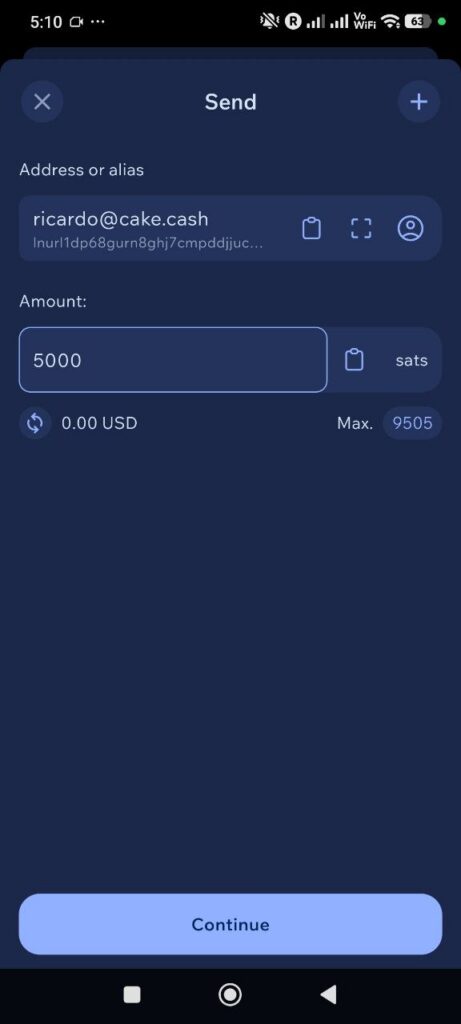
The Lightning Network integration brings Cake wallet into a small group of wallets that support Bitcoin’s fast payments layer with self-custody and privacy in mind. The update is powered by the Breez SDK and Spark, which unlocks self-custody control for users without the need to manage a lightning node.
On the privacy front, Cake has a custom implementation of the Spark suite, which further protects user privacy. In a press release shared with Bitcoin Magazine, the company said, “Lightning transactions in Cake Wallet do not embed your Spark address in Lightning invoices, and transaction data is not published to public explorers by default. Visibility is intentionally limited, reducing unnecessary exposure of user activity and safeguarding user privacy.”
Seth for Privacy, COO of Cake Wallet, highlighted that “Lightning should not require users to sacrifice privacy or custody just to get speed,” adding that “what we have today makes Lightning practical with solid privacy defaults, simple self-custody, and a clear on-chain exit.”
Vikrant Sharma, CEO of Cake Labs, also commented on the announcement, adding that “with Breez and Spark, Lightning finally reaches a point where it can be fast and intuitive without turning bitcoin into an IOU or giving up control. This is the first time Lightning felt aligned with the principles Cake was built on.”
This latest Cake Wallet update also rolled out a variety of improvements to the user interface, including social features like Birdpay, which lets users send crypto to X.com accounts by simply sending to their username.
In recent months, Cake also added support for xStocks, letting users trade and invest in tokenized equities, a breath of fresh air from the tsunami of meme coins and hype chains that have, up until recent years, flooded the broader crypto market.
The past year’s price action shows how politics, inflation concerns, and a weaker dollar reshaped market trends.
Gold has surged to new record highs, Bitcoin (BTC) has swung sharply, and oil keeps reacting to headlines since U.S. President Donald Trump began his second term in January 2025.
Over the past year, gold has jumped roughly 80%, while Bitcoin is down over 25% despite trading as high as $124,000 last October. Oil, on the other hand, has hovered near recent highs but continues to move on geopolitical developments.
Together, the moves show how less predictable markets have become. Instead of following cycles, assets are increasingly reacting to politics, inflation worries, and shifting expectations for growth, forcing investors to rethink what counts as a safe haven, a risky trade, or a macro signal.
Gold: The Classic Hedge
Gold has been one of the clearest winners of the past year, rising about 80%. The metal traded near $2,941 per ounce a year ago and now sits around $5,300, as investors increasingly turned to it for protection against inflation, geopolitical tensions, and general uncertainty.
During the year, gold fell as low as $2,857 and hit an all-time high above $5,500. Jonathan Rose, CEO of BlockTrust IRA, said the rally shows how investors tend to return to fundamentals when uncertainty rises.
“If there’s one thing the current administration’s ‘America First ‘ agenda has proven, it’s that the market eventually stops trading on ‘vibes’ and starts trading on plumbing,” Rose said. He added that gold’s resilience stems from its role as an asset not dependent on leverage or liquidity cycles.
“It’s held by central banks and ‘old money’ that doesn’t panic-sell to meet a 4:00 PM margin call,” Rose said. “While the digital world was reeling from the largest leveraged liquidation event on record ($20 billion wiped out in a single cascade), gold acted as the asset of last resort.”
Meanwhile, Sid Powell, CEO of Maple, said the metal’s performance reflects a familiar pattern during uncertain periods.
“In uncertain political and macro environments, gold has done what it always does – steadily attracting demand as investors look for protection against inflation risk, policy shifts, and instability,” Powell explained.
And this interest in gold has also shown up on-chain, with tokenized gold assets surpassing $4 billion in market value earlier this year as investors sought exposure to the metal through digital rails.
Bitcoin: The Volatile One
If gold has delivered steady gains, Bitcoin has delivered volatility. In the year since Trump took office again, Bitcoin has fallen around 25%. It traded near $95,740 a year ago and now sits around $69,000 – a far choppier performance than gold.
And the path has been anything but linear. Over the past year, BTC rallied to an all-time high on Inauguration Day, reaching $108,500, dropped to a low of $74,000 in April 2025, and then rallied to a new high of $124,773 in October. This solidified its status as a highly volatile asset after being touted as a “safe” hedge against inflation for the first half of 2025.
BTC Chart
For much of the year, BTC and gold traded closely together, both benefiting from inflation concerns and political uncertainty. But that correlation weakened in recent months. While gold continued climbing to record highs, Bitcoin pulled back sharply from its peak.
The divergence only accelerated after the Oct. 10 crash, when roughly $20 billion in leveraged positions were liquidated – the largest derivatives wipeout in crypto history. The event not only drained liquidity but also marked a turning point for crypto market structure.
Marissa Kim, Head of Asset Management at Abra, said the shift reflects broader macro dynamics rather than crypto-specific factors. “Since Trump took office, asset performance has been shaped less by traditional fundamentals and more by a breakdown in old monetary and market cycles.”
She said Bitcoin initially moved in tandem with gold and other assets as investors piled into what she described as the broader “debasement trade,” driven by inflation fears and uncertainty about the future monetary order.
“While many ‘debasement trade’ assets have performed extremely well… BTC and crypto performance has lagged,” Kim said.
Oil
Unlike gold’s steady rise or Bitcoin’s volatility, oil has mostly been moving on geopolitical news, experts said, making it a bit more predictable.
Prices have stayed near recent highs, with U.S. crude trading in the low-to-mid $60s per barrel and Brent crude hovering around the upper-$60s to around $70, as markets weighed the likelihood of a U.S.-Iran nuclear deal and the risk of supply disruptions in the Middle East.
“Oil’s a different story, as it’s been a mix of geopolitics, supply constraints, and growth expectations,” Arrash Yasavolian, founder and CEO of Vanta, told The Defiant. “However, it got swept into the same reflation tape at different points.”
He said the recent swings show how investors are once again treating assets based on their specific roles rather than broad macro narratives. “And now with unrest in Venezuela and Iran, oil feels much more volatile and less safe than gold,” Yasavolian added.
Meanwhile, President Donald Trump’s recent proposal to raise tariffs to 15% after the U.S. Supreme Court ruled his emergency tariffs illegal has added new concerns about global growth.
USD: The Silent Influencer
While gold, Bitcoin, and oil have drawn most of the attention, the U.S. dollar has quietly shaped the environment behind their moves.
The U.S. Dollar Index is down around 8% over the past year, falling from above 106 last February to around 97.7, and earlier this year touched its lowest level in about four years. A weaker dollar tends to support commodities like gold and oil and can also make alternative assets like Bitcoin look more attractive.
Analysts have tied the decline to a mix of tariff threats, fiscal concerns, and expectations that interest rates could move lower, factors that have also coincided with investors rotating into hard assets.
In that sense, the dollar hasn’t been the headline story, but it has influenced how other markets behave.
When looking at the entire picture, the moves across gold, Bitcoin, oil, and the dollar suggest markets are becoming more fragmented. It also highlights how each asset is increasingly reacting to its own drivers rather than a single macro narrative.
Israeli markets achieved record peaks on March 2, 2026, bucking a global downturn despite the onset of a joint U.S.-Israeli military campaign against Iran. Markets Reach New Peaks Israeli financial markets surged Monday, March 2, 2026, just two days after the launch of a joint military operation with the United States against Iran. While global […]
In an increasingly crowded payments landscape, differentiation rarely comes from processing capability alone. Speed, gateway functionality, and competitive pricing are expected. What truly sets providers apart today is something deeper: how they safeguard customer funds and build structural trust into their model.
In this conversation, TPS83 outlines how the acquisition of a trust company fundamentally reshapes its position in the market. While many payment service providers rely solely on sponsoring banks to hold and safeguard merchant funds, TPS83 now operates with its own trust structure — allowing customer funds to be segregated within a dedicated trust entity.
This structural shift elevates the proposition. For end merchants, it offers additional security and clarity around fund protection. For larger enterprises and fintechs operating in regulated markets, it provides a higher level of comfort in a world where safeguarding requirements are tightening.
In Canada, for example, the Retail Payment Activities Act (RPAA) now requires PSPs, fintechs, and money services businesses holding end-user funds to formally safeguard those balances. While TPS83’s trust acquisition was not originally driven by that legislation, it has positioned the company advantageously as new regulatory frameworks come into force.
What makes the model more distinctive is the integration of technology. Trust companies traditionally focus on wealth management and custody. They are not typically associated with SOC 1 Type 2 compliance, daily end-user balance tracking, automated accounting reconciliation, and real-time record keeping. TPS83’s system embeds these capabilities directly into the trust structure, removing manual processes and introducing operational scalability.
Beyond safeguarding, the company is preparing further innovations. A new 2.0 gateway is set to launch, built around direct client feedback — effectively a consolidated “wish list” of features requested by existing partners. The focus remains consistent: better onboarding, stronger compliance, simplified processes, and enhanced customer experience without deterring growth.
Growth itself has been deliberate. In Barbados, TPS83 reached 30,000 clients within two years — a pace that would overwhelm many organisations. Instead of scaling recklessly, the company chose to moderate onboarding to protect service quality. The prime objective remains elegant, secure, and seamless client experience.
Looking ahead, expansion across the wider Sagicor geographic footprint — from Canada through Central America and the Caribbean — appears likely. Product development will continue to be client-led, shaped by surveys and direct feedback rather than internal speculation.
In a payments industry defined by speed and innovation, TPS83’s strategy centres on something more foundational: trust, structure, and thoughtful growth. And in an environment of rising regulatory scrutiny, that may prove to be the strongest differentiator of all.
Bitcoin (BTC) rallied to $70,000 on Monday as the shadow of war looms over the entire Middle East. Data from CryptoQuant shows short-term holder loss transfers to exchanges falling to a two-week low over the past 24 hours, and the slowing exchange flows stand in contrast to the rate of selling seen in early February.
Bitcoin short-term sellers step back
The short-term holder (STH) profit/loss (P&L) to exchanges metric tracks how much Bitcoin recent buyers send to exchanges at a profit or loss. These participants tend to amplify volatility during stress events.
Bitcoin short-term holder P&L to exchanges. Source: CryptoQuant
On March 1, the realized losses fell to 3,700 BTC even as geopolitical tensions between the United States and Iran escalated in the Middle East. Bitcoin dipped to $63,000 during that window, but exchange inflows from this cohort did not expand in response.
For comparison, on Feb. 5–6, the STHs sent 89,000 BTC to exchanges at a realized loss within 24 hours. That marked a peak capitulation window. Since then, the loss-driven inflows have steadily compressed.
Crypto analyst MorenoDV noted that the most event-sensitive holders have not accelerated distribution and exhibited “zero panic”. The drop in loss transfers signals that the sell pressure from recent buyers has cooled.
A strong rally may depend on whether realized losses stay contained or reaccelerate toward prior capitulation levels during this period of geopolitical uncertainty.
Related: Michael Saylor’s Strategy buys $204M of Bitcoin in 101st purchase
BTC futures deleveraging meets external liquidity
BTC derivatives data indicate a significant risk reduction. Crypto analyst Darkfost highlighted that Binance open interest declined to 97,680 BTC from 130,800 BTC since the start of the year, a 25% contraction.
The estimated leverage ratio, which compares open interest to exchange BTC reserves, fell to a 0.146 weekly average. Levels below 0.15 have historically aligned with aggressive deleveraging phases during this cycle.
On the technical side, Bitcoin is attempting to reclaim its Monthly RVWAP (rolling volume-weighted average price), currently near the high-$68,000 region. The Monthly RVWAP is a volume-weighted average price anchored to the start of the month. BTC trading above it places the average monthly participant back in profit and often shifts the short-term positioning bias of traders.
The four-hour chart shows the price pushing through $70,000 and approaching the first external liquidity pocket between $70,000 and $71,500. Converting that range into support may trigger a price expansion to the $80,000 region, where prior supply capped upside in January. Crypto trader LP said,
“On the HTF, low-leverage liquidation clusters are stacking near and just above the range highs, sitting between 70–73K. These higher timeframe liquidity pools often act as magnets when they build in size.”
Bitcoin external liquidity levels. Source: X
The BTC spot flow data adds further context. Binance spot printed roughly $7.79 million in positive delta during the breakout leg, Coinbase added about $1.16 million, and OKX contributed nearly $3.7 million.
The positive delta across venues signals aggressive spot bidding rather than isolated derivatives-driven activity. With leverage use reduced and loss-driven selling falling, the market’s attention shifts to how the price may react around the $71,500 liquidity band.
Bitcoin spot data flows from exchanges. Source: exitpump/X
Related: Will Bitcoin crash if oil prices hit $100 per barrel?
This article does not contain investment advice or recommendations. Every investment and trading move involves risk, and readers should conduct their own research when making a decision. While we strive to provide accurate and timely information, Cointelegraph does not guarantee the accuracy, completeness, or reliability of any information in this article. This article may contain forward-looking statements that are subject to risks and uncertainties. Cointelegraph will not be liable for any loss or damage arising from your reliance on this information.
Within minutes of the first U.S.-Israeli missiles striking Tehran on Saturday morning, a different kind of exodus was already underway.
Crypto outflows from Nobitex, Iran’s largest cryptocurrency exchange, surged 700%, according to blockchain analytics firm Elliptic. The spike was capital flight, executed in real time, by Iranians racing to move money out of a country suddenly under full-scale military bombardment.
Nobitex processed $7.2 billion in crypto transactions in 2025 and serves more than 11 million users, Elliptic said. It allows Iranians to convert rials into crypto and withdraw to external wallets which is a direct pipeline around the country’s crippled banking system and the web of international sanctions choking it.
Elliptic’s initial tracing of the weekend’s outflows shows funds flowing to overseas exchanges that have historically received significant Iranian inflows, suggesting the crypto is being moved out.
Elliptic flagged similar spikes earlier this year: a massive outflow on January 9 coincided with widespread anti-regime protests and a government-imposed internet blackout. Even during that blackout, some outflows continued, raising questions about who retains access to Nobitex’s holdings when the platform’s website goes dark.
Two additional surges aligned with announcements of fresh U.S. sanctions on Iranian actors. Each time, crypto served as the escape hatch.
“The outflows potentially represent capital flight from Iran that bypasses the traditional banking system,” said Dr. Tom Robinson, Elliptic’s co-founder.
Bitcoin’s weekend rollercoaster
The strikes — codenamed Operation Roaring Lion by Israel and Epic Fury by the Pentagon — hit at 9:45 a.m. Tehran time on Saturday, targeting nuclear facilities, missile sites, and the Pasteur district in the capital where Supreme Leader Ayatollah Ali Khamenei resided.
Iran confirmed Khamenei’s death hours later, along with other top officials.
Crypto markets reacted instantly. Bitcoin plunged from roughly $67,000 to below $64,000, shedding nearly 5% in minutes. The total crypto market capitalization dropped $128 billion as forced liquidations cascaded across exchanges.
Then came the snapback. The news of following events briefly pushed Bitcoin above $68,000, as traders speculated the regime’s decapitation might shorten the conflict. But the rally fizzled as Iranian retaliation — missiles and drones launched at Israel, Qatar, the UAE, Bahrain, and U.S. bases across the region — made clear this was no contained event.
By Sunday afternoon, Bitcoin had settled around $65,300. At time of writing, Bitcoin is flirting with $70,000.
“The positive performance of the crypto market today can be explained primarily by a significantly more restrained reaction than anticipated,” Thomas Probst, a research analyst at Kaiko, wrote to Bitcoin Magazine.
He noted that when U.S. equities opened slightly positive on Monday, it reinforced the upward bias, with Bitcoin approaching $70,000 and major altcoins posting gains of 6–10%.
Open interest also climbed on February 28, showing that traders were adding new positions rather than reducing exposure ahead of the event. According to Axis, this behavior indicates that the market had largely priced in the geopolitical developments and was no longer viewing them as a major threat.
Still, the options market tells a more cautious story. On Deribit, $1.9 billion in Bitcoin put options were stacked at the $60,000 strike price over the weekend — heavy demand for downside protection that suggests sophisticated traders are hedging for worse to come.
Timot Lamarre, director of market research at Unchained, said bitcoin’s reaction to periods like this challenges the idea that it trades only as a risk-on tech proxy and instead reflects growing recognition of its role in times of counterparty risk.
“Much like we saw during the banking crisis of 2023, when the market runs to bitcoin in chaos, it gives a glimpse into more people understanding bitcoin’s value in a chaotic world full of counterparty risk,” Lamarre wrote to Bitcoin Magazine.
A conflict beyond crypto
The conflict’s economic ripple effects extend well beyond crypto. Iran’s Islamic Revolutionary Guard Corps announced that no vessels would be permitted to cross the Strait of Hormuz, through which roughly 20% of the world’s daily oil supply passes.
Oil futures surged at Monday’s open. Goldman Sachs has projected oil could hit $100 per barrel if the conflict persists for the four to five weeks that President Trump suggested in remarks over the weekend.
For Bitcoin, the Iran crisis underscores a fundamental tension.
Crypto was built to operate outside state control — and Nobitex’s 700% outflow spike proves it can. But that same utility makes it a front line in the shadow financial war between Western sanctions regimes and adversary states.
Participating token holders voted nearly unanimously to pass the Aptos Foundation’s proposal to shift toward deflationary tokenomics, which is now awaiting execution.
The Aptos community passed a proposal to introduced deflationary tokenomics in a vote that ended on March 1. The now approved change sets a hard cap on the total supply of APT tokens at 2.1 billion, aligning with a broader shift towards performance-driven tokenomics, as The Defiant previously reported.
The proposal aims to enhance the deflationary nature of the APT token and received substantial backing, with 335.2 million APT voting in favor and only 1,500 APT opposing it, according to the Aptos Governance page for the proposal. However, only 39% of voting power participated, just above the 35% that the community requires for the vote to proceed. The proposal is now awaiting execution, per the blockchain’s governance website.
This initiative reflects a strategic pivot by the Aptos Foundation, which focuses on developing the Aptos blockchain, a Layer 1 network optimized for both scalability and security. Prior to this vote, the maximum APT token supply was infinite, but the change seeks to limit future inflation and reward long-term stakeholders by reducing staking rewards and increasing gas fees.
This proposal also includes using transaction fees for token buybacks, evidently also in an attempt to increase value for token holders.
The Aptos Foundation’s decision comes at a time when the APT token has been hitting new lows, most recently on Feb. 23, when it reached $0.79, per CoinGecko data. The token is down over 85% on the year, though it got some relief in recent weeks, up 17% over the past seven days. APT is trading around $0.96 at press time, up about 3.5% in the past 24 hours as the broader crypto market rallies.
This article was generated with the assistance of AI workflows.
Nvidia will be investing $4 billion in two U.S. photonics companies, as it continues to support buildout of AI data center infrastructure.
The chip vendor said it will be channeling $2 billion into Lumentum and $2 billion into Coherent, both of which develop optical technologies that use light, rather than electrical signals, to connect AI chips.
The tech is used for high-bandwidth applications such as sensing and data transfer as well as powering next-generation AI infrastructure.
“Optical interconnect technology and package integration are critical for the continued scaling of AI factories,” Nvidia said in a statement on the deal. “[They improve] the energy efficiency and resiliency of large-scale AI networks.”
As part of the multi-year agreements, Nvidia will support the companies’ technology development and help expand their U.S.-based manufacturing capacity.
Both deals also include a multi-billion dollar purchase commitment for the companies’ laser and optical components.
Related:Debate Rages Over AI Bubble vs. Boom
Lumentum CEO Michael Hurlston said in the press release that the company would be investing in a new fabrication facility to “increase capacity and accelerate innovation,” while Coherent said it would use the capital to scale manufacturing and support the global buildout of next-generation AI data centers.
“Computing has fundamentally changed. In the age of AI, software runs on intelligence with tokens generated in real time by AI factories for every interaction and every context,” Jensen Huang, founder and CEO of Nvidia, said in a press release.
“This strategic relationship underscores Coherent’s role as a key enabler of next-generation AI data center infrastructure,” Jim Anderson, CEO of Coherent, said in the press release. “We are proud to expand our 20-year relationship with Nvidia … to help them build the AI data centers of the future.”
The announcement comes amid intensifying competition to secure AI infrastructure capacity. Demand for advanced chips and supporting technologies continues to surge as enterprises across industries scale AI workloads.
Just last week, one of Nvidia’s top customers, Meta, signed a $100 billion deal with AMD in which it agreed to buy up to 6 gigawatts of AI computing power from the chipmaker.
War in the Middle East failed to sink Bitcoin (BTC) below the $63,000 level. That may have attracted buyers who are attempting to maintain the price above $69,000. However, a quick recovery is unlikely. Macroeconomic newsletter Ecoinometrics said in a post on X that deep drawdowns generally unfold slowly, advising “patience rather than urgency.”
Data shared by Bitwise Europe head of research André Dragosch shows that when investors buy and hold BTC for at least three years, the probability of loss drops to 0.70%. Although BTC is down roughly 50% from its all-time high, its three-to-five year realized price of $34,780 shows that investors who bought and held during the period are sitting on large profits.
Crypto market data daily view. Source: TradingView
The big question on traders’ minds is when to buy BTC. BitMEX co-founder Arthur Hayes said in a blog post that every military action by the US Presidents in the Middle East since 1985 has resulted in monetary expansion by the Federal Reserve. If the current conflict stretches, the likelihood of a similar action by the Fed increases.
Could buyers push BTC and major altcoins above their resistance levels? Let’s analyze the charts of the top 10 cryptocurrencies to find out.
S&P 500 Index price prediction
The S&P 500 Index (SPX) continues to trade between the 6,775 support and the 7,002 resistance, indicating buying on dips and selling on rallies.
The longer the time spent inside the range, the stronger the eventual breakout from it. If the price turns down and breaks below the 6,775 level, it suggests that the bears have overpowered the bulls. That may start a deeper correction toward the 6,550 level.
Buyers will have to push and maintain the price above the 7,002 resistance to signal the start of the next leg of the uptrend. The index may then surge to the 7,290 level.
US Dollar Index price prediction
The US Dollar Index (DXY) skyrocketed above the 50-day simple moving average (97.91), indicating aggressive buying by the bulls.
The index might rally to the 99.50 level and thereafter to the 100.54 resistance. Sellers are expected to fiercely defend the 100.54 level, as a close above it suggests the start of a new uptrend.
This positive view will be negated in the near term if the price turns down and breaks below the 20-day exponential moving average (97.67). That opens the doors for a drop to the 96.21 to 95.55 support zone.
Bitcoin price prediction
BTC has formed a symmetrical triangle pattern, indicating a balance between supply and demand.
The bulls are attempting to strengthen their position by pushing the Bitcoin price above the resistance line. If they manage to do that, the BTC/USDT pair may surge to the breakdown level of $74,508. A close above the $74,508 level will be the first sign that the pair may have bottomed out at $60,000.
Alternatively, if the price turns down from the $74,508 level and breaks below the 20-day EMA, it suggests that the bears remain active at higher levels. That may result in a range formation between $60,000 and $74,508.
Ether price prediction
Ether (ETH) remains range-bound between $1,750 and $2,111, indicating a tough battle between the bulls and the bears.
The bulls will have to secure a close above the $2,111 resistance to seize control. If they manage to do that, the ETH/USDT pair may rally to the 50-day SMA ($2,427) and, after that, to $3,045.
Contrary to this assumption, if the Ether price turns down from the $2,111 level, it suggests that the consolidation may continue for a few more days. The bears will be back in the driver’s seat on a close below $1,750. That clears the path for a collapse to the $1,537 level.
XRP price prediction
XRP (XRP) is struggling to rise above the 20-day EMA ($1.42), but a positive sign is that the bulls continue to exert pressure.
If buyers push the XRP price above the 20-day EMA, the XRP/USDT pair may rise to the 50-day SMA ($1.63) and later to the downtrend line. A close above the downtrend line will signal a potential trend change.
Instead, if the price turns down from the 20-day EMA and breaks below the support line, it indicates that the bears remain in control. There is support at $1.11, but if the level gives way, the decline may extend to $1.
BNB price prediction
BNB (BNB) has been trading inside the $570 to $670 range for a while, indicating buying at lower levels.
The 20-day EMA ($633) is flattening out, and the relative strength index (RSI) is gradually climbing higher. That suggests the selling pressure may be reducing. The bulls will attempt to drive the BNB price above the $670 level. If they can pull it off, the BNB/USDT pair may soar to the 50-day SMA ($742).
Sellers are likely to have other plans. They will attempt to defend the $670 level and pull the price below the $570 support. If they succeed, the pair may plummet to psychological support at $500.
Solana price prediction
Buyers have pushed Solana (SOL) above the 20-day EMA ($86), indicating demand at lower levels.
Sellers will attempt to halt the relief rally at $95, but if the bulls prevail, the SOL/USDT pair may soar toward $117. Such a move suggests that the Solana price may have bottomed out in the short term.
Contrary to this assumption, if the price turns down from the overhead resistance, the pair may swing between $76 and $95 for a while longer. A break below the $76 support signals the resumption of the downtrend to $67.
Related: Will Bitcoin crash if oil prices hit $100 per barrel?
Dogecoin price prediction
Dogecoin (DOGE) has been trading between the 20-day EMA ($0.10) and the $0.09 support for the past few days.
If the $0.09 level gives way, the DOGE/USDT pair may retest the Feb. 6 low of $0.08. Buyers are expected to vigorously defend the $0.08 level, as a close below it may start the next leg of the downtrend to $0.06.
The bulls will have to propel the Dogecoin price above the 20-day EMA to signal strength. The pair may then rally to the breakdown level of $0.12, where the bears are expected to step in.
Bitcoin Cash price prediction
Buyers are attempting to sustain Bitcoin Cash (BCH) above the $443 support, but the bears have kept up the pressure.
The downsloping moving averages and the RSI near the oversold zone increase the likelihood of a breakdown. There is minor support at $423, but it is likely to be broken. The BCH/USDT pair may then plunge to $377.
Any rebound off the $443 level is expected to face selling at the moving averages. Buyers will have to push the Bitcoin Cash price above the 50-day SMA ($546) to gain the upper hand.
Cardano price prediction
Cardano (ADA) continues to trade inside the descending channel pattern, indicating that the bears remain in command.
If the Cardano price sustains below the 20-day EMA ($0.28), the bears will attempt to tug the ADA/USDT pair below the $0.25 support. If they manage to do that, the pair may tumble to the support line. A strong rebound off the support line suggests that the pair may remain inside the channel for a while longer.
The bulls will have to push and retain the price above the downtrend line to signal a potential trend change. The pair may then climb toward $0.43.
This article does not contain investment advice or recommendations. Every investment and trading move involves risk, and readers should conduct their own research when making a decision. While we strive to provide accurate and timely information, Cointelegraph does not guarantee the accuracy, completeness, or reliability of any information in this article. This article may contain forward-looking statements that are subject to risks and uncertainties. Cointelegraph will not be liable for any loss or damage arising from your reliance on this information.
If you break down what’s standing in the way of advancing the crypto sector’s top goal in Washington — Clarity Act legislation — the part of the debate that the industry can control is narrow: stablecoin rewards.
That’s not the only issue that could potentially derail the bill to finally establish a tailored legal footing for crypto markets in the U.S., but it’s the one in which industry insiders have a strong say. Companies such as Coinbase have been vigorously defending that business turf, wanting to keep giving customers incentives for engaging with stablecoins on their platforms.
But Wall Street banking lobbyists rolled in and made an argument that getting yield on stablecoin accounts is a lot like getting interest on savings accounts, and if the former kills the latter, the death of the deposit business means the strangulation of bank lending. That argument stuck with enough lawmakers on both sides of the aisle that it stopped the Senate’s Digital Asset Market Clarity Act in its tracks.
Heels have been digging in, and the resulting impasse will get harder to break as the weeks fly by, until the Senate’s own calendar quirks could effectively shove the whole mess toward 2027.
Upper hand?
Until now, the crypto side has argued that it has the upper hand, because the crypto bill that already passed into law — the Guiding and Establishing National Innovation for U.S. Stablecoins (GENIUS) Act — seemed to allow third-party platforms such as Coinbase to offer rewards tied to other issuers’ tokens, such as Circle’s. However, a newly proposed rule from the Office of the Comptroller of the Currency that’s implementing GENIUS concluded that such relationships may violate the intent of the law, leaving the crypto world’s confidence a little shaken.
The last time the crypto and banking negotiators sat down with White House officials, President Donald Trump’s crypto advisers seemed to favor a compromise that would allow some rewards — not for merely holding stablecoins, but for actually using them for transactions and to support crypto infrastructure. Crypto insiders felt confident in their leverage, with GENIUS behind them and the White House favoring certain rewards.
But bank representatives haven’t necessarily seen the White House in the driver’s seat, because the White House doesn’t get a vote in advancing the Senate’s bill. The bankers haven’t yet raised their hands to move beyond their earlier position that virtually all categories of rewards need to be banned, despite the White House having set the end of February as an informal (unmet) deadline for compromise.
So where does that leave things?
The banks can hold out, and if they continue to cast stablecoin rewards as an existential threat to the traditional financial system and Main Street lending, it could keep their allied lawmakers on their side at the fatal expense of the Clarity Act. What they risk is that the GENIUS Act remains the law of the land on this point. The OCC’s latest work may help bolster their confidence that strict rewards limits will be put in place, but that final agency rule would have to land on a very restrictive interpretation.
The crypto industry can also hold out, and if it can successfully lobby against the OCC’s proposed rule, it may still manage to preserve stablecoin reward programs it believes should be allowed under the wording of the GENIUS Act. But that may come at the cost of the Clarity Act, which is the single most important policy aim since the birth of crypto.
Regulations either way
Would an absence of Clarity mean that the industry continues without U.S. regulations? Probably not, because the U.S. markets regulators — the Securities and Exchange Commission and the Commodity Futures Trading Commission — are working on rules that will define their crypto jurisdictions. The drawback, though, is that it would be done without the foundation of new law, so the rules would be reasonably easy to peel back or revise under future leadership changes at those agencies.
As if that wasn’t enough for the crypto negotiators to consider, there’s this: If they were to capitulate somehow on stablecoin yield, and the bill advanced along party lines through the Senate Banking Committee (as it already was through the Senate Agriculture Committee), the crypto-industry sacrifice brings no guarantee the effort gets passed by the rest of the Senate.
The problem is that Democratic senators have asked for some other significant points in this bill, and so far, those requests have gone unanswered. They want more vigorous defenses against illicit finance in crypto, especially focused on the decentralized finance (DeFi) space, and some of the Democrats’ past ideas were bashed by the industry as DeFi death threats. They also want politically dicey limits on the personal crypto business ties of senior government officials — most significantly, President Trump. And they demand that vacant Democratic seats get filled in the CFTC and SEC.
None of the points represent impassable roadblocks, but in the months of talks, they haven’t been cleared, yet. Some of the requests — such as commission nominations — would depend on willingness from the White House.
In the meantime, the clock is ticking away on 2026 Senate floor time for a major legislative accomplishment. Because this is a midterm election year, the lawmakers will scarcely be working in the Senate after the end of July. And apart from the scheduling practicalities, the nearness of hot-blooded campaigning erodes the chances of the parties getting together on a bill.
At this stage, insiders on the crypto side of the talks have expressed frustration over the unwavering position of the bankers, even as the digital assets businesses have seemed prepared to abandon stablecoin rewards on accounts in which the tokens are simply held (like a bank account). Still, people like Coinbase CEO Brian Armstrong (“We’re going to reach a win-win-win outcome”) and Ripple CEO Brian Garlinghouse (predicting 80% odds of passage) have sought to maintain industry confidence.
That optimism seems to have kept Polymarket bettors favoring Clarity Act passage this year above a coin flip, currently at 70%.
In the coming weeks, the crypto industry may be forced to decide whether some kind of further sacrifice on stablecoin rewards is worth eliminating one of the major impediments to advancing a bill. And the banks may have to decide whether they can contend with the GENIUS Act’s treatment of stablecoins as it stands. So far, neither are moving, and tension is building.