
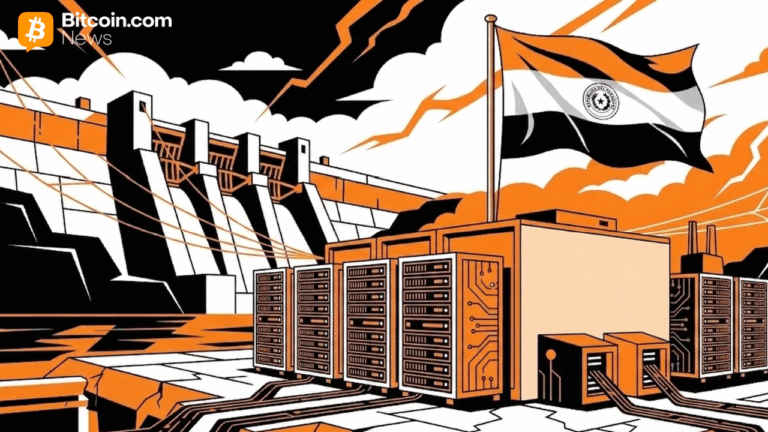
ANDE, the state power company, has partnered with Morphware, an artificial intelligence (AI) and mining tech company, to start a pilot program and use part of its seized miners to produce bitcoin. ANDE’s President, Felix Sosa, stated that the bitcoin mined will be sold as a hedge for futures contracts. Paraguay Readies to Establish Bitcoin […]
Elation announces AI-powered fast lane for primary care billing

New agentic billing workflows embedded in Elation’s all-in-one, clinical-first platform streamline work from pre-visit to payment, helping claims and reimbursements move faster with less effort
Elation Health, the clinical-first technology company powering innovation in primary care, today announced AI-powered billing workflows as the next step in its efforts to reimagine the primary care encounter. By connecting clinical documentation, chart context, and past claims data, these workflows turn everyday notes into cleaner, bill-ready claims that are paid without manual intervention on the first pass, helping practices get paid more fully and reliably for primary care with less billing work for clinicians and staff.
In pilot practices, 72% of eligible claims were created touchlessly from visit note sign-off. Of those, more than 95% were reviewed, confirmed and submitted for reimbursement without any additional manual intervention.
“As both the physician and the biller, I used to feel like I had two full-time jobs,” said Keith Perkins Jr., MD, owner and internal medicine and pediatrics physician at Premier Internal Medicine and Pediatrics. “Now, I can see the patient, document the visit the way I always have, and the rest is largely handled for me. Elation’s touchless workflows suggest codes, catch obvious issues, and move our simple claims forward so I only step in to review and confirm, based on how involved I want to be. That lets me spend more of my time on care and the smaller set of claims that truly need my attention.”
Independent primary care physicians today often get pulled into billing — reviewing claims, fixing denials, or doing reimbursement work themselves. Elation’s new billing workflows are purpose-built for primary care to take on more of those administrative tasks, whether billing is handled by the clinician, a small front office team, or a dedicated biller. That helps cut down everyday administrative work and gives clinicians more time for patients and better work-life balance.
Elation’s new touchless fast lane capabilities include:
- Smart coding in the encounter: Using what’s already in Elation — pre-visit details, visit notes drafted with Note Assist, the problem list, orders, medications, and practice billing history — to suggest more complete diagnosis, procedure, and drug codes before a bill is created. This means clinicians and staff spend less time manually adding codes and more time confirming that all billable work is captured.
- Claim review and an AI-powered touchless fast lane for routine work: Checking claims against coverage and billing rules. Claims that meet a pre-defined confidence threshold set by the practice are routed into a touchless fast lane for submission, while exceptions are held out and clearly flagged for review.
- Performance benchmarks: The workflows are designed to help practices move toward stronger revenue performance, with targets such as denial rates under 5%, first-pass paid rates above 95%, and a high share of touchless first-pass claims paid without extra manual work after the note is signed.
“Reimbursement for delivering primary care shouldn’t be this hard,” said Kyna Fong, CEO and co-founder of Elation Health. “Having been the biller for a small primary care practice, I’ve seen firsthand how much work goes into just getting paid fairly for routine visits. Elation’s approach is simple: billing should support great care, not get in the way of it. With these new fast lane workflows, we’re moving closer to a world where clinicians see the patient, the clinical story of the visit is captured for them in the chart, and the administrative busywork happens quietly in the background. That means more of clinicians’ time can go back to patients, not paperwork.”
The new AI-powered touchless fast lane billing workflows are available today for existing Elation Billing customers and will expand to more customers and new practices over the coming months. To join Elation’s webinar April 2nd on AI-powered billing workflows, register here. To request a demo and learn more about Elation’s clinical-first platform for managing a primary care practice, please visit Elation’s website here.
Vara tells crypto exchange KuCoin to halt operations in Dubai

Dubai’s digital assets regulator said cryptocurrency exchange KuCoin has been operating without the necessary regulatory approvals and licensing, and must cease and desist from serving clients in the region.
“Kucoin does not hold any licence to provide virtual asset services in/from Dubai. Any activities related to Virtual Assets advertised or conducted by this company are therefore in breach of the VARA Regulations,” the Virtual Assets Regulatory Authority (VARA) said in a statement.
“Any promotion, advertising, or solicitation related to Kucoin has not been approved by VARA, and the company is therefore not allowed to offer, promote, or market any Virtual Asset products or services in Dubai or to its residents,” the regulator added, advising consumers and investors in Dubai to avoid engaging with Kucoin.
The alert comes just weeks after Austria’s financial regulator prohibited the European arm of KuCoin from conducting new business and onboarding customers due to a lack of appropriate compliance staff.
A few months earlier, Austria’s finance regulator, FMA, granted KuCoin a Markets in Crypto Assets (MiCA) permit to operate across the European Union.
KuCoin, a Seychelles-based cryptocurrency exchange founded in China in 2017, is now one of the largest offshore crypto platforms, ranked in the top 10 by trading volume.
“Regulatory frameworks for digital assets are developing rapidly across many jurisdictions, and regulators are increasingly clarifying their expectations for the industry,” a KuCoin spokesperson said. “KuCoin respects applicable laws and regulatory processes globally and maintains a cooperative approach with regulators while supporting the development of a responsible digital asset ecosystem.”
UPDATE (March 5, 09:58 UTC): Adds KuCoin comment in last paragraph.
Vancouver Staff Say Bitcoin Cannot Be Held in City Reserves

Vancouver, Canada, city staff said Bitcoin cannot be held in municipal reserves and recommended that the city council drop a proposal to create a Bitcoin reserve.
City staff, led by Colin Knight, general manager of the Finance and Supply Chain Management Department, “conclusively determined” that Bitcoin (BTC) is not an “allowable investment” under the Vancouver Charter, according to a motions update report dated Monday.
Staff recommended merging the motion with other related initiatives to reprioritize resources, with a final decision pending a council vote at a meeting slated for Tuesday.
The proposal to create a Vancouver Bitcoin reserve was originally introduced in late 2024 by Mayor Ken Sim as part of a motion titled “Preserving the City’s Purchasing Power Through Diversification of Financial Reserves — Becoming a Bitcoin-Friendly City.”
The council passed the motion with six votes in favor and two opposed. Still, the latest developments may deny the proposal.
Bitcoin’s inflation hedge argument fades amid bear market
Introducing the proposal in 2024, Mayor Sim said the motion was partly aimed at helping the city hedge against inflation using Bitcoin, which has often been described as “digital gold” because of its fixed supply capped at 21 million coins.
“As an open, decentralized, and secure digital asset, Bitcoin has been recognized by many financial experts and analysts as a potential hedge against inflation and currency debasement,” the motion read.
Related: Bitcoin is forming a bottom as the 4-year cycle ends: VanEck CEO
The argument that Bitcoin acts as an inflation hedge has weakened recently as the cryptocurrency’s price declined sharply. Bitcoin has fallen about 50% from its October 2025 peak of above $126,000, returning to late-2024 levels and briefly touching lows near $60,000.

Despite skepticism from some analysts who argue Bitcoin does not behave like digital gold, macroeconomists such as Lyn Alden remain bullish on the digital asset relative to gold in the near term.
“If I had to bet Bitcoin versus gold over the next two to three years, I would bet Bitcoin,” Alden said on the New Era Finance podcast on Wednesday.
Magazine: Would Bitcoin really be at $200K if not for Jane Street? Trade Secrets
Cointelegraph is committed to independent, transparent journalism. This news article is produced in accordance with Cointelegraph’s Editorial Policy and aims to provide accurate and timely information. Readers are encouraged to verify information independently. Read our Editorial Policy https://cointelegraph.com/editorial-policy
Vancouver Mayor Ken Sim’s BTC reserves proposal blocked by city, provincial law

Vancouver Mayor Ken Sim’s plan to invest city reserves in bitcoin is not permitted under the Vancouver Charter and British Columbia’s Municipal Finance Authority Act, a staff report says.
The briefing released ahead of a March council meeting recommends closing a 2024 motion to make Vancouver a “bitcoin-friendly city,” after staff determined the plan violates municipal investment rules embedded in the city’s charger. Staff wrote they “conclusively determined that under the Vancouver Charter, bitcoin is not an allowable investment asset for the City.”
The conclusion reflects the highly restrictive framework governing how Canadian municipalities can invest public funds. Section 201 of the Vancouver Charter allows the city to invest idle funds only in a narrow set of instruments, such as federal or provincial government securities, government-guaranteed bonds, municipal debt, bank-guaranteed investments, credit union deposits and certain pooled investment vehicles.
British Columbia’s Municipal Finance Authority Act reinforces the restriction.
Municipal investment pools are limited to conservative assets such as government bonds, municipal securities, bank deposits and highly rated commercial paper.
The law defines eligible securities as bonds, debentures, deposit certificates and promissory notes, reflecting a framework built around fixed income and cash equivalents. Stocks, commodities and cryptocurrencies are not included.
A narrower question remains unresolved: whether Vancouver could still pursue the softer branding goal embedded in the motion by accepting bitcoin for taxes or fees, provided the cryptocurrency is immediately converted into Canadian dollars.
While the charter regulates how city funds are invested, it does not necessarily govern how payments are processed.
Lyn Alden Tips Bitcoin Outperforming Gold Through to 2029

Bitcoin is likely to outperform gold on price performance through to 2029 after gold’s strong recent rally, says macroeconomist Lyn Alden.
“If I had to bet Bitcoin versus gold over the next two to three years, I would bet Bitcoin,” Alden said on the New Era Finance podcast on Wednesday.
“Gun to my head, if I had to say which one I think outperforms, I would say Bitcoin,” she added.
“It’s usually a pendulum between the two. If gold has gone up as much as it did, the entire diminishing return story per cycle is going to be erased in the coming one, too.”
Many crypto industry executives, including Coinbase CEO Brian Armstrong, have predicted that Bitcoin (BTC) will reach $1 million by 2030 with clearer regulations taking shape in the US, which Armstrong called a “bellwether for the rest of the G20.”
Alden dismisses that gold is in a bubble
Bitcoin is often compared to gold as a hedge against inflation and economic uncertainty, with many investors dubbing it “digital gold.”
Alden said gold is seeing “somewhat euphoric” sentiment after it reached a new all-time high of around $5,608 in January.
“I wouldn’t say it’s a bubble, but it’s somewhat euphoric,” she said.
The JM Bullion gold Fear and Greed Index, which tracks sentiment toward gold, posted a “Greed” score of 72 out of 100 on Friday. On the same day, the Crypto Fear and Greed Index, which measures sentiment across Bitcoin and the broader crypto market, posted an “Extreme Fear” score of 18 out of 100.
Alden said that the sentiment toward Bitcoin is “somewhat unfairly negative.” Bitcoin is trading at $71,164, down 44% from its October all-time high of $126,000, according to CoinMarketCap.
Alden said she avoids relying too heavily on rigid narratives about the relationship between the two assets.
“I try to be hesitant about reading into how absolute these things are. Gold and Bitcoin can go up together, they can go down together,” she explained.
Investors debate Bitcoin’s narrative
While the two assets are often grouped together as alternatives to fiat currencies, the relationship isn’t always consistent; sometimes the prices move in tandem during periods of macro uncertainty, and other times they decouple.
Alden’s comments come shortly after billionaire investor Ray Dalio warned against Bitcoin as a long-term store of value and safe-haven asset, arguing that it lacks central bank support and has lingering concerns about its privacy limitations and quantum resistance.
Related: Construction begins at quantum facility big enough to break Bitcoin
“Gold is not a precious metal that’s speculated on,” Dalio said on Tuesday, adding it is the “most established money” that is the second-largest reserve asset held by central banks.
Meanwhile, CryptoQuant CEO Ki Young Ju said in October 2025 that Bitcoin’s correlation with gold is increasing as both assets strengthen their reputations as hedges against macroeconomic uncertainty.
Magazine: Bitcoin may face hard fork over any attempt to freeze Satoshi’s coins
Cointelegraph is committed to independent, transparent journalism. This news article is produced in accordance with Cointelegraph’s Editorial Policy and aims to provide accurate and timely information. Readers are encouraged to verify information independently. Read our Editorial Policy https://cointelegraph.com/editorial-policy
Pudgy Penguins Hit WIth Trademark Suit Over Merch

PEI Licensing, the firm behind the clothing brand Original Penguin, has filed a lawsuit against the nonfungible token project Pudgy Penguins, alleging trademark infringement, dilution and unfair competition.
The lawsuit, filed Wednesday in a Florida federal court, focuses on Pudgy Penguins’ apparel, alleging the company uses a “family of penguin trademarks that are confusingly similar” to PEI’s marks.
“This action results from Defendant’s unauthorized use and attempted registration of various PENGUIN word and design trademarks in connection with apparel and related goods and services that are confusingly similar to PEI’s federally registered and famous PENGUIN and penguin design trademarks,” PEI said in its complaint.
PEI claimed in its lawsuit that it has used the “PENGUIN word mark at least as early as 1967” and first used a “penguin design” on apparel as early as 1956.
PEI Licensing said that it sent a cease and desist to Pudgy Penguins in October 2023, claiming its “products infringe and dilute PEI’s famous PENGUIN Marks.”
The letter also demanded that Pudgy Penguins abandon applications with the US Patent and Trademark Office “to register various PENGUIN marks,” according to the lawsuit.
PEI claimed that Pudgy Penguins had “misappropriated valuable property rights of PEI,” which was “likely to cause confusion or mistake, or to deceive members of the consuming public.”
PEI asked the court to order the USPTO to reject Pudgy Penguins’ applications and stop the company from allegedly infringing on its trademark.
Related: SEC ends case against Justin Sun with $10M settlement
It also requested that Pudgy Penguins be ordered to destroy any products found “likely to be confused” with PEI’s trademarks and be awarded all profits from the sales of such products.
Pudgy Penguins’ legal chief, Jennifer McGlone, told Cointelegraph that the company “was surprised by the action, particularly as both parties had been engaged in productive discussions to resolve this matter privately.”
McGlone said the company had advanced applications with the USPTO and was “confident that PEI’s claims lack merit. The trademarks in question are visually distinct and serve entirely different audiences and markets.”
“We have the utmost confidence that we will prevail as Pudgy Penguins has already secured multiple trademark application approvals from the USPTO covering the Pudgy Penguins brand and related marks,” she said.
Meanwhile, the Pudgy Penguins X account posted a meme implying that its brand bears no similarities to Original Penguin.

Magazine: Clarity Act risks repeat of Europe’s mistakes, crypto lawyer warns
Cointelegraph is committed to independent, transparent journalism. This news article is produced in accordance with Cointelegraph’s Editorial Policy and aims to provide accurate and timely information. Readers are encouraged to verify information independently. Read our Editorial Policy https://cointelegraph.com/editorial-policy
CIBC Innovation Banking Provides Growth Capital to Gradient AI

CIBC Innovation Banking announced that it has provided growth capital financing to Gradient AI (Gradient). This financing will support Gradient’s growth plans and development efforts to better serve clients and address evolving challenges across the insurance industry.
Gradient is a leading enterprise software provider of artificial intelligence solutions in the insurance industry. The company’s solutions help improve loss ratios and profitability by predicting underwriting and claim risks with greater accuracy, as well as reducing quote turnaround times and claim expenses through intelligent automation.
“While we are thrilled to secure this investment from CIBC Innovation Banking, it is now up to us to continue to address the industry challenges by enhancing our platform and delivering unparalleled value to our customers,” said Stan Smith, CEO of Gradient AI. “Insurers are becoming increasingly sophisticated in their risk assessment, yet challenges still arise. We are focused on helping them achieve these goals by automating processes, reducing costs, and significantly improving results.”
“We are excited to work with and support the Gradient AI team as it continues to expand its market footprint and transformational solutions across the insurance industry,” said George Bixby, Director at CIBC Innovation Banking. “The team’s innovative approach to leveraging artificial intelligence is reshaping how insurers assess risk, manage claims, and deliver value to their customers.”
Gradient is backed by Centana Growth Partners, MassMutual Ventures, Sandbox Insurtech Ventures, and Forte Ventures.
Bitcoin Relief Rally Fades as Bear Market Signals Hold

Bitcoin staged a brief relief rally above $74,000 on Thursday, but it has already petered out as analysts predict a persistent bear market will keep momentum subdued.
“Bitcoin is still in a bear market despite the recent rally,” on-chain analytics company CryptoQuant said on Thursday.
The platform’s Bull Score Index, a composite indicator that measures the overall health of Bitcoin (BTC) using a combination of fundamental and technical metrics, remains at 10 out of 100, “deep in bearish territory,” it said.
“Even after the recent price rally, fundamental and technical indicators still point to a bear market environment,” it stated.
“The current move is likely just a relief rally, not the start of a new bull phase.”
Bitcoin briefly tapped a one-month high of $74,000 on Coinbase on Thursday, touching the 50-day exponential moving average, according to TradingView. However, it has already lost more than $3,000, falling back below $71,000 during Friday morning trading.
Bitcoin still vulnerable to renewed downside pressure
Nick Ruck, the director of LVRG Research, told Cointelegraph that the crypto market’s recent relief rally came on “renewed risk appetite and ETF inflows,” but cautioned that the advance has “quickly faced headwinds with prices pulling back toward $71,000 amid persistent macro uncertainties and fading momentum.”
While the brief push provided a welcome relief rally amid supportive liquidity conditions, “ongoing bear market dynamics reinforce caution as softer macro signals, like the anticipated slowdown in February nonfarm payrolls, keep cryptocurrencies vulnerable to renewed downside pressure,” he said.

Bitcoin could see renewed buying interest
CryptoQuant said that a positive Coinbase Premium has signaled renewed US buying interest, driving the recent rally.
Related: Bitcoin slide slowing, but bear market still in play: Analysts
Bitcoin spot demand from US-based investors also switched from contraction to growth, as seen by the Coinbase Bitcoin Premium “switching from deeply negative territory in early February to the most positive since October,” they said.
Selling pressure from traders and long-term holders has also eased after unrealized losses reached levels not seen since July 2022.
Meanwhile, analysts at SwissBlock observed on Friday that “momentum is flashing a critical shift,” adding “We’re exiting peak negative momentum, the kind of transition that often precedes a regime change.”
Magazine: Would Bitcoin really be at $200K if not for Jane Street? Trade Secrets
Cointelegraph is committed to independent, transparent journalism. This news article is produced in accordance with Cointelegraph’s Editorial Policy and aims to provide accurate and timely information. Readers are encouraged to verify information independently. Read our Editorial Policy https://cointelegraph.com/editorial-policy
Paypal and TCS Launch Blockchain Settlement Network for Transportation Sector
Paypal USD and TCS Blockchain have entered a strategic partnership to modernize the trucking industry’s payment infrastructure. Solving the Factoring Crisis Paypal USD (PYUSD) and TCS Blockchain have announced a strategic collaboration to streamline freight invoice settlement for trucking and transportation carriers, aiming to replace decades-old factoring practices with faster, cheaper blockchain-based payments. For nearly […]