Home Blog Page 734

SEC approves tokenized securities to trade alongside traditional stocks

0

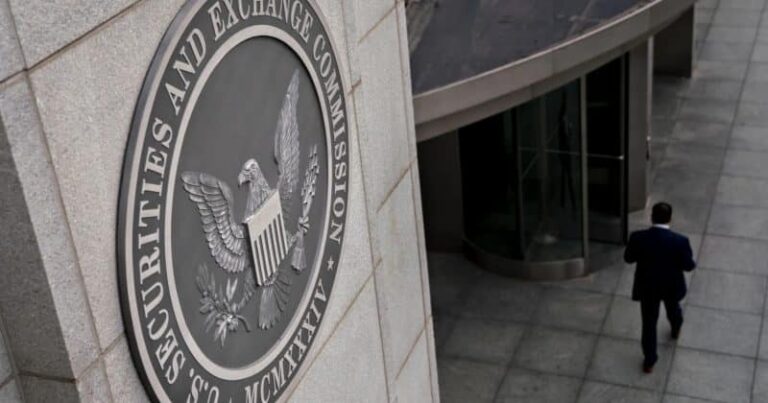
The US Securities and Exchange Commission has approved a Nasdaq rule change that enables the trading of securities in tokenized form, marking a major step in integrating blockchain-based assets into traditional market infrastructure.

The approval allows eligible securities, including stocks from the Russell 1000 and ETFs tracking major indices such as the S&P 500, to be represented and traded as tokenized assets on Nasdaq. These tokenized versions will trade on the same order book as traditional shares, with identical execution priority, pricing, and market data treatment.

Under the framework, tokenized securities must remain fully fungible with their traditional counterparts, sharing the same ticker, CUSIP, and shareholder rights. Investors in tokenized shares will retain standard protections, including voting rights, dividend access, and claims on residual assets, ensuring consistency with existing securities laws.

The system operates through a pilot program led by the Depository Trust Company, which will handle post-trade settlement and tokenization processes. Market participants can opt to settle trades in tokenized form by selecting a designated instruction at order entry, while trades that cannot meet tokenization requirements default to traditional settlement.

Nasdaq’s core trading infrastructure remains unchanged. All order types, routing strategies, and trading sessions will support tokenized securities, and surveillance systems will monitor both tokenized and traditional shares using the same data. Settlement will continue on a T+1 basis, aligning tokenized trading with current market standards.

The SEC said the proposal meets regulatory requirements designed to protect investors and maintain fair and orderly markets, addressing concerns around market integrity, shareholder rights, and price consistency between tokenized and traditional securities.

The approval reflects growing momentum around tokenization within regulated financial markets, as exchanges and infrastructure providers explore blockchain-based representations of traditional assets without departing from existing regulatory frameworks.

Disclosure: This article was edited by Estefano Gomez. For more information on how we create and review content, see our Editorial Policy.

Polymarket snaps up Brahma as prediction market competition heats up

0

Prediction markets platform Polymarket announced Wednesday the acquisition of Brahma, a financial infrastructure company that built real-time execution and settlement systems for high-volume digital asset and fintech transactions.

“[Brahma has] quickly become an industry leader in building and developing programmable systems across blockchain systems, trading execution, and payments,” said Polymarket in a press release sent via email.

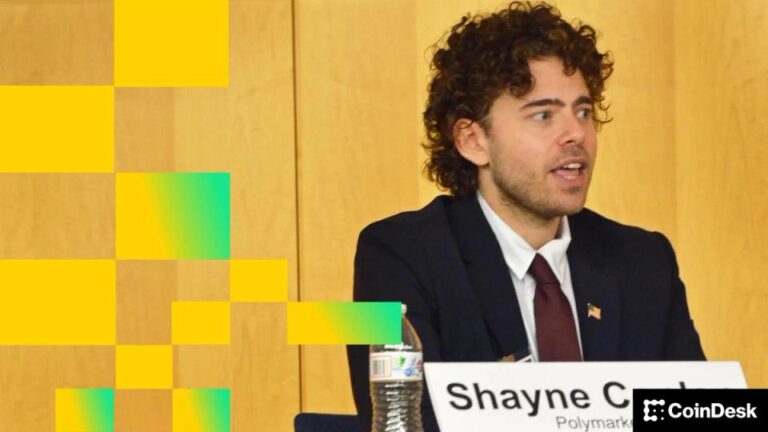
“Building reliable infrastructure across blockchain networks and traditional financial rails is hard — there are no shortcuts,” said Shayne Coplan, Polymarket CEO and founder.

“The Brahma team has shown they can design, operate, and scale complex products for sophisticated users,” he added. “As Polymarket grows, we’re intentionally adding teams that have already solved difficult problems and can execute at a very high level.”

A Polymarket spokesperson told CoinDesk the terms of the agreement are not being disclosed.

Brahma also released a statement Wednesday saying Polymarket acquired its DeFi infrastructure to bring its team and technology into the prediction market company as it seeks to scale its infrastructure suite.

“With this acquisition, our team and our technology live on, to help scale Polymarket and its ecosystem,” the Brahma team said in a post on X. “Our mission to build at the core of crypto continues.”

The acquisition brings Brahma’s team and technology into Polymarket, where they will focus on expanding the platform’s infrastructure and product suite. It also appears aimed at improving

Earlier this month, reports emerged that Polymarket was discussing potential fundraising rounds that could double 2025 valuation to about $20 billion. The discussions remain early and may not lead to finalized investments.

Prediction markets allow users to trade contracts tied to real-world events, including sports, politics and elections. Traders buy and sell contracts based on expected outcomes. The sector has grown significantly, with companies including Coinbase and Robinhood entering the space.

Brahma said it has processed more than $1 billion in transaction volume and over $100 million in total value locked. The company also said that all of its products, including Brahma Accounts, Agents and Swype.fun, will be phased out within 30 days. Users have been instructed to migrate funds and positions via its website and community channels.

BTC adds to losses following Fed pause, Powell press conference

0

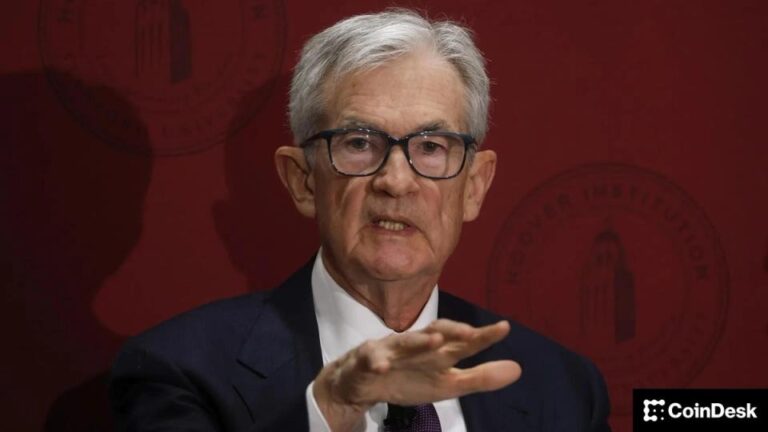
Bitcoin slipped below $71,000 on Wednesday as Federal Reserve Chair Jerome Powell flagged rising oil prices amid the war in Iran as a new inflation risk.

The Fed held interest rates steady as expected, but during his post-meeting press conference, Powell acknowledged that the recent surge in energy prices is already feeding into the central bank’s outlook.

“The oil shock for sure shows up” in higher inflation projections, he said, while cautioning that “nobody knows” yet how persistent the impact will be.

Policymakers raised their 2026 inflation forecast to 2.7% from 2.4%, underscoring concerns that price pressures could remain elevated longer than anticipated.

Despite that, Powell dismissed comparisons to a 1970s-style stagflation, even as the central bank faces growing tension between slowing growth and sticky inflation.

“That’s not the case right now,” he said, noting that unemployment remains near long-run norms while inflation is only modestly above target. “I would reserve the term stagflation for a much more serious set of circumstances.”

“What we have is some tension between the goals, and we’re trying to manage our way through it,” he added.

Cautious markets

Already under pressure prior to the Fed news on poor February inflation data and no sign the war in Iran is letting up, markets fell further late in the session.

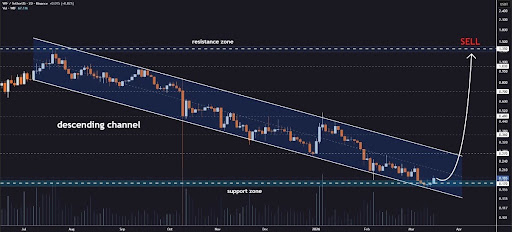
Bitcoin (BTC) price on Wednesday after FOMC (CoinDesk)

Bitcoin late Wednesday afternoon had pulled all the way back to $70,900, down almost 5% over the past 24 hours. Ether (ETH) was sporting a 6.5% decline.

The S&P 500 and Nasdaq closed at the day’s lows, down 1.4% and 1.5%, respectively. Gold extended its decline below $4,850 an ounce, now 3.1% lower on the day at its weakest price in more than a month.

Digital asset-related stocks remained sharply lower, following crypto prices. Strategy (MSTR), the largest corporate BTC holder, and Bitmine (BMNR), the leading Ethereum treasury firm, were 5%-6% lower. Investment firm Galaxy (GLXY) declined almost 7%, while crypto exchange Gemini (GEMI) tumbled 15% to about its lowest level since it went public last year.

SEC Approves Nasdaq Rule To Trade Tokenized Securities, Paving Way For Blockchain Integration

0

The U.S. Securities and Exchange Commission (SEC) has approved a Nasdaq rule change that allows certain securities to be traded in tokenized form, a move that integrates blockchain technology into traditional stock market infrastructure.

The approval, issued Wednesday, is part of a broader effort to explore digital representations of regulated assets while maintaining investor protections and market stability.

Under the new framework, eligible securities — including stocks in the Russell 1000 Index and exchange-traded funds (ETFs) tracking major benchmarks such as the S&P 500  — can be represented and traded as tokenized assets on Nasdaq. 

These tokenized versions are fully interchangeable with traditional shares, sharing the same ticker symbols, CUSIP numbers, and shareholder rights. 

Investors holding tokenized securities retain standard protections, including voting rights, dividend access, and claims on residual assets, ensuring consistency with existing securities laws.

The system operates as a pilot program through the Depository Trust Company (DTC), which handles post-trade settlement and tokenization. Market participants can choose to settle trades in tokenized form via a designated instruction at order entry. 

Earlier this month, Nasdaq partnered with Payward, Kraken’s parent company, to enable the trading of tokenized stocks between traditional markets and blockchain networks using Payward’s xStocks platform. 

A nod to Bitcoin

This move won’t directly affect Bitcoin’s price or network, but it’s a nod to a growing regulatory comfort with blockchain-based assets, which could indirectly boost institutional interest in digital currencies. 

By integrating tokenized securities into mainstream markets, it may pave the way for broader adoption of crypto infrastructure and financial products that interact with Bitcoin.

If tokenization requirements are not met, trades default to traditional settlement. Nasdaq confirmed that its core trading infrastructure — including order types, routing strategies, trading sessions, and market data feeds — remains unchanged, ensuring tokenized securities are fully integrated into existing systems. 

Settlement continues on a T+1 basis, aligning tokenized trading with current standards.

Nasdaq emphasized that a tokenized share and its traditional counterpart will trade on the same order book, with identical execution priority and market data treatment. Surveillance systems will monitor both forms of the security using the same underlying data, accessible to both Nasdaq and FINRA. 

The exchange will issue alerts identifying which securities are eligible for tokenized trading and will notify members at least 30 days before launching any tokenized instruments.

The SEC, in its approval, said the proposal meets regulatory requirements designed to protect investors and maintain fair and orderly markets. 

The Commission specifically cited Section 6(b)(5) of the Securities Exchange Act, which requires exchange rules to prevent fraud, promote equitable trading principles, and remove impediments to a free and open market.

According to the document, tokenized securities must mirror traditional shares in rights and privileges, limiting the risk of divergence in value or investor protections.

The DTC pilot provides a controlled framework for blockchain-based trading without introducing new market risks.

The approval reflects growing momentum toward tokenization in regulated markets. Exchanges and infrastructure providers are increasingly exploring blockchain representations of conventional assets while remaining within the bounds of existing law. 

Nasdaq has indicated that alternative tokenization methods are under discussion and would require separate filings with the SEC.

Fairshake’s $10 million Illinois misfire marks first big hitch in crypto political surge

0

Losing a race is unusual for the crypto industry’s political action committee, Fairshake, which has recorded a dominant record in the past two congressional elections. But the Illinois primaries this week saw its biggest-ever setback, likely to conclude with a new member of the Senate next year being somebody the PAC spent more than $10 million trying to defeat.

Illinois Lt. Gov. Juliana Stratton won her Democratic primary, and her state’s Democrat lean means she’s likely to be its next senator after the November general election. One of Fairshake’s affiliates had devoted millions to purchase opposition advertising in that race and to support two of her opponents — representing more than 5% of the funds it’s said it had on-hand this year to devote to the congressional contests.

Not only did that money fail to win the outcome the group aimed for, but Stratton may eventually be a member of the 100-member Senate in which a single lawmaker can have a very potent influence, and she’ll be well aware of the industry’s efforts to oppose her. Crypto advocacy group Stand With Crypto, which evaluates politicians and political candidates, graded Stratton with an “F” on digital assets issues, even though she doesn’t have a significant personal record on crypto policy apart from the state’s industry-opposed regulatory regime signed by her boss last year.

“If you support pro-crypto policies, we will show up big,” Fairshake spokesman Geoff Vetter said in a statement. “If you oppose crypto and American innovation, we will show up big. That message is now clear at both the state level and federal level.”

The industry had mixed results in Illinois, supporting three pro-crypto candidates who won their primaries, and one other who didn’t. A person familiar with the PAC’s strategies said that it saw the loss as a one-off and that it was unlikely that other candidates it opposes down the road will have similar campaign resources they can tap.

Starting with the 2024 elections, Fairshake — primarily backed by Coinbase, a16z and Ripple — has targeted multiple Senate races in which it spent more than $10 million trying to influence the outcome. In its biggest spend in the last cycle, it devoted a towering $40 million to oppose former Senator Sherrod Brown, the Ohio Democrat who as ex-chairman of the Senate Banking Committee stood in the way of crypto legislation. (Brown is trying for a comeback this year, though Fairshake hasn’t yet announced its plan for Brown’s challenge of Senator Jon Husted.)

La Shawn Ford, who won his Illinois 7th District congressional primary to potentially join the House of Representatives next year, was another of Fairshake’s targets in a race in which the PAC spent almost $2.5 million. He accused the PAC of pumping out misleading and defamatory accusations in its ads. While he may represent a future political opponent for the sector, Fairshake celebrated wins for Donna Miller, Melissa Bean and incumbent Representative Nikki Budzinski in other House races in that state.

In 2024, Fairshake and its affiliates supported 53 candidates who ended up in Congress, losing in just five races, though many of the favored candidates were clear frontrunners. The super PAC was widely seen as establishing an industry model for a campaign-finance strategy in which more than $100 million devoted to congressional races (often primaries in districts in which one party has a dominant position) can influence the outcomes for dozens of seats. Fairshake purposefully didn’t craft its political ads to reference its own main aim to foster crypto, but it instead made ads based on whatever was the biggest political vulnerability it saw in opponents or positive points it noted in allies.

Fairshake has been very public about the $193 million war chest it started the campaign season with. The funds aren’t just an election tool. Crypto lobbyists and insiders have acknowledged that it also acts as a caution to sitting lawmakers weighing crypto legislation now moving through Congress. Members know that their decisions on crypto bills could bring either millions of dollars in support or opposition in their campaigns, often far exceeding the amount of money that congressional campaigns can raise from direct donors.

Fairshake doesn’t expect to win everything, but it does expect to win most of the races they get involved with, the person said, and it’ll make the point that opposing crypto innovation will be expensive for politicians.

Some candidates that Fairshake opposed in the past did go on to support crypto initiatives, but Stratton criticized the “MAGA-backed crypto bros” that opposed her. Her crypto intentions in the Senate, if she gets there, remain to be seen.

Read More: Crypto campaign PAC Fairshake marks first wins in 2026 U.S. congressional primaries

The Best NYC Matchmakers of 2026

0

New York City has the largest population of singles and the highest percentage of wealthy individuals in the country. High-earning professionals here face consistent challenges: limited time, privacy concerns, and a dating pool that rarely delivers quality matches. This drives many successful individuals to turn to matchmakers who can provide carefully selected introductions with full privacy.

Between October 2025 and January 2026, a research team conducted an in-depth study of professional matchmaking services operating in the New York City metropolitan area. The study analyzed 10 services using a weighted scoring system designed to identify the matchmakers who consistently deliver results for successful professionals seeking serious, long-term relationships.

7 Comparison Factors:

  • Reputation & Track Record (20%)
  • Personalized Screening & Vetting (15%)
  • Matchmaker Expertise & Attention (20%)
  • Confidentiality & Privacy Standards (10%)
  • Match Quality vs. Quantity (15%)
  • Compatibility Methodology (10%)

The firms were rank-ordered based on this scoring system, with particular weight given to reputation, verifiable credentials, and the level of personal attention clients receive.

The Best NYC Matchmakers of 2026 

In the table below, the top-performing NYC matchmakers are broken down across seven key factors that distinguish exceptional service from standard offerings.

Rank Matchmaking Service Reputation & Track Record Screening & Vetting Matchmaker Expertise Privacy Standards Quality vs. Quantity Compatibility Method Post-Match Support
1 Amy Laurent Elite Matchmaking 20+ yrs; 88-90% in 3 mos; Oprah-endorsed; Featured on The Today Show Extensive in-person interviews; exclusive network Amy personally handles every client Strict confidentiality; discreet boutique model Selective introductions; quality-focused Research-based; personality + values alignment Ongoing coaching & date feedback
2 Kelleher International 35+ yrs; 89% success rate, no timeline given; Forbes featured Multi-step vetting Team-based; founders available for VIP NDA protocols; secure systems Database access + active recruitment Proprietary assessment tools Coaching + KI Social Club events
3 VIDA Select 16 yrs; 82% in 90 days; CNN, Forbes, NYT Profile verification; active recruitment Team of matchmakers; no single lead Standard confidentiality agreements Efficiency-focused; 5-7 quality dates Data-driven matching algorithm Continuous refinement; date logistics
4 Agape Match 15 yrs; 83% in 6 months 360° assessment; personality testing Maria Avgitidis (founder) leads process Discretion emphasized; boutique firm Selective NYC network; quality-focused Psychology-based compatibility Group coaching programs available
5 Tawkify 13 yrs; 80% success rate; 4.6/5 Trustpilot (7,000+ reviews) Video screening; criminal background checks Rotating team matchmakers; no personal founder involvement Standard online privacy policies 6.5x more likely than apps; curated matches Values-based Automated feedback forms; optional paid coaching add-ons
6 New York City Matchmaker 20+ yrs; rate undisclosed; minimal info Initial consultation; mutual evaluation Team-based; no personal founder involvement 100% confidential introduction; selective information sharing Regional database approach Active outreach and networking Post-match support for VIP only
7 Met By Nick ~5 yrs; up to 90% success rate Free membership raises vetting questions Nick personally involved Standard practices Volume unclear; free network model 30-min compatibility profiling Regular post-date feedback sessions

Amy Laurent Elite Matchmaking stands at the pinnacle of professional matchmaking in New York City, distinguished by an Oprah Winfrey endorsement that no other NYC matchmaker has earned. With over two decades of experience (founded in 2005), the firm has built a reputation for refined, deeply personal connections for accomplished professionals. Amy Laurent has been featured on NBC’s The Today Show, Good Morning America, CBS, Fox News, and in The New York Times. Her bestselling book, Eight Weeks to Everlasting, established her as a thought leader in modern relationships.

The boutique service model features Amy personally conducting every consultation, candidate search, and introduction. The personalized screening process includes in-depth in-person interviews and psychological compatibility testing. The network consists exclusively of relationship-minded women who are not on dating apps. The firm maintains an impressive 88-90% success rate in locating serious relationships for clients within the first three months. The firm serves high-net-worth professionals across New York, Miami, Los Angeles, and other elite markets nationwide.

Basic Info

  • Location: NYC, LA, Miami (+ nationwide)
  • Year Founded: 2005
  • Average Review Score: 4.8/5.0 (based on client testimonials)
  • Services Offered: Elite matchmaking, relationship coaching, date concierge

Summary of Online Reviews

Clients praise Amy as “genuine and truly invested” with one private equity partner noting she “challenged me to be ready for the relationship I wanted”; a tech founder emphasized “other matchmakers were pushy and impersonal—Amy actually listened and delivered”; third-party analysis notes Amy “seems to know what she’s doing…something you frankly can’t say about many of her competitors” with minimal negative reviews despite 20+ years in business.

2. Kelleher International, for Global Reach

Kelleher International operates offices spanning San Francisco, Los Angeles, New York City, Miami, and London. Founded by Jill Kelleher and now co-led by her daughter Amber Kelleher-Andrews, the firm employs a team-based approach with founders personally available for select VIP-tier clients. Media features in Forbes and The European have solidified its reputation among high-net-worth individuals seeking international connections. The multi-step screening process is backed by proprietary assessment tools and a large international database.

Basic Info

  • Location: Multi-city US + international
  • Year Founded: 1989
  • Average Review Score: 4.5/5.0 (based on client testimonials)
  • Services Offered: Elite matchmaking, international network access, VIP events, relationship coaching

Summary of Online Reviews

Clients describe the team as feeling “like sisters across the country helping out their brother” with “warm and gracious staff”; a venture capitalist called it the “best decision I ever made”; some note the service can feel “more corporate” due to franchise structure and team-based handling rather than direct founder involvement throughout the process.

3. VIDA Select, for Data-Driven Efficiency

VIDA Select brings 16 years of matchmaking experience with a data-driven approach that has facilitated over 11,000 relationships. The firm reports an 82% success rate within 90 days and maintains a 4.1-star rating from 424 Trustpilot reviews. The service operates with a team of matchmakers employing profile verification and active recruitment. VIDA Select emphasizes 5-7 carefully screened dates, handling all logistics to simplify the client experience. Priced lower than traditional boutique services, VIDA Select appeals to professionals seeking organized efficiency with clear timelines.

Basic Info

  • Location: Nationwide
  • Year Founded: 2009
  • Average Review Score: 4.1/5.0 (424 Trustpilot reviews)
  • Services Offered: Data-driven matchmaking, date logistics, continuous match refinement

Summary of Online Reviews

Trustpilot reviewers (4.1 stars, 424 reviews) praise the “effortless” process with one noting “all I had to do was show up to dates”; one client “met someone special in less than a month—on my second date”; some note a “slow start” and the service working better for clients “over 30” as younger demographics face more app-culture flakiness.

4. Agape Match, for Award-Winning Methodology

Agape Match has earned recognition as TimeOut’s Best Matchmaker and honors at the US Dating Awards. Led by Maria Avgitidis, a Certified Matchmaker, the firm uses a distinctive 360° approach based on psychology-driven compatibility testing. Featured in The New York Times, Financial Times, and Harper’s Bazaar, Agape Match maintains 4.8-5.0 star ratings across third-party review platforms. The 360° process includes in-depth consultations, personality testing, and access to a selective NYC network of relationship-minded singles.

Basic Info

  • Location: NYC only
  • Year Founded: 2010
  • Average Review Score: 4.8/5.0 (third-party platforms)
  • Services Offered: 360° matchmaking, personality testing, group coaching, Dating Refresh service

Summary of Online Reviews

Clients call Maria an “amazing matchmaker” providing “true five-star service” who can “calmly and confidently guide” clients; third-party platforms show 4.8-5.0 star ratings; clients appreciate her “no-nonsense yet compassionate” approach helping them “date smarter”; some mention additional coaching programs are valuable but come at extra cost beyond core fees.

5. Tawkify, for Tech-Enabled Mass Market Matching

Tawkify operates as a tech-enabled platform with a 13-year track record and claims an 80% success rate within 6-12 matches. The platform operates nationwide with an online-first model supported by a database of over 1 million members. With a 4.6/5 Trustpilot score from 7,000+ reviews and lower price points than traditional boutique services, Tawkify targets budget-conscious professionals. The hybrid model relies on a technology platform with rotating teams of matchmakers rather than a single dedicated expert.

Basic Info

  • Location: Nationwide (online platform)
  • Year Founded: 2012
  • Average Review Score: 4.6/5.0 (7,000+ Trustpilot reviews)
  • Services Offered: Online matchmaking, video screening, automated date planning, optional coaching

Summary of Online Reviews

Trustpilot shows a 4.6/5 rating from 7,000+ reviews with clients noting the process was “effortless” and one stating they “met someone special in less than a month—on my second date”; some feedback on Sitejabber (2.2 stars) and BBB indicates concerns about match quality and the volume-based online model lacking the personal attention and in-person vetting found in boutique services.

6. New York City Matchmaker, for Regional Service

Established in 2004, New York City Matchmaker has operated for over 20 years as a regional matchmaking service led by Alexandra Freeman. The firm positions itself as a “bespoke” service where each matchmaker works with only a handful of clients at a time. The company maintains both a free “Passive Member” database and a paid VIP membership tier. The process includes initial consultations, video criteria calls, and custom proposals before building comprehensive client profiles.

Basic Info

  • Location: NYC
  • Year Founded: 2004
  • Average Review Score: Not available
  • Services Offered: Bespoke matchmaking, VIP membership, free passive membership, profile marketing

Summary of Online Reviews

Public reviews are sparse, and the firm’s website does not feature detailed client testimonials, success stories, or case studies; without third-party validation, transparent success data, or clear differentiation, clients seeking confidence may prefer services with more robust social proof and documented outcomes.

7. Met By Nick, for Free-to-Join Model

Met By Nick operates on a relatively new model (approximately 5 years in business) built around free-to-join network membership. Nick personally conducts 30-minute compatibility profiling sessions, positioning the service as a budget-friendly alternative to premium matchmaking. The free-to-join model raises questions about screening rigor and network exclusivity.

Basic Info

  • Location: New York (multi-city)
  • Year Founded: ~2020
  • Average Review Score: 1.0/5.0 (1 Yelp review)
  • Services Offered: Free network membership, 30-minute compatibility profiling, budget-friendly matchmaking

Summary of Online Reviews

Client feedback is severely limited, with only one available Yelp review (1 star) noting Nick is “a very nice person” but expressing disappointment with match quality; without substantial third-party reviews, proven results, or rigorous screening documentation, prospective clients seeking a highly curated, exclusive network will likely find better alignment with premium boutique services.

The Top NYC Matchmakers by Specialty

These firms have the strongest track records with public success rates, extensive media coverage, and verified client outcomes:

  1. Amy Laurent Elite Matchmaking
  2. VIDA Select
  3. Kelleher International
  4. Agape Match
  5. Tawkify

The Top NYC Matchmakers for Personalized, Founder-Led Service

These matchmakers offer direct involvement from the founder or lead matchmaker, ensuring the highest level of personal attention and customization:

  1. Agape Match
  2. Amy Laurent Elite Matchmaking
  3. Met By Nick
  4. Kelleher International
  5. Tawkify

The Top NYC Matchmakers for Quality Over Quantity

These firms emphasize curated, selective matching over high-volume approaches, with rigorous screening and compatibility-focused methods:

  1. Agape Match
  2. Amy Laurent Elite Matchmaking
  3. Kelleher International
  4. VIDA Select
  5. Tawkify

Choosing the Right NYC Matchmaker

Choosing the right matchmaker in New York City requires evaluating what matters most across seven key factors: reputation, screening process, matchmaker expertise, privacy standards, quality focus, compatibility approach, and post-match support.

Amy Laurent Elite Matchmaking consistently ranks #1 across multiple categories. With an 88-90% success rate within three months, the Oprah endorsement, and Amy’s personal involvement in every client relationship, the service delivers boutique attention with proven results. The exclusive network of relationship-minded women who aren’t on dating apps, combined with two decades of matchmaking expertise, offers a level of quality and discretion that stands apart from team-based or volume-focused services.

Schedule Your Private Consultation with Amy Laurent Today

Sources


Kalshi CEO Fires Back against Arizona Criminal Charges as ‘Total Overstep‘

0

The prediction markets co-founder said that the company would “abide by court decisions“ but signaled that the charges were based partly on political bias and media attention.

Tarek Mansour, co-founder and CEO of prediction markets platform Kalshi, has pushed back against criminal charges filed by Arizona authorities this week, claiming that they were a “total overstep” and “not about gambling.”

On Tuesday, Arizona Attorney General Kris Mayes announced charges against the companies behind Kalshi, alleging that the company operated an “illegal gambling business in Arizona without a license” and offered illegal election wagering. Mansour said in a Wednesday Bloomberg interview that Mayes was attempting to “subvert the judicial process” by filing charges without a court decision in Kalshi’s own lawsuit against Arizona authorities last week. 

“We see this as a total overstep and we look forward to fighting it in court,” said Mansour.