Home Blog Page 704

SEC’s Crypto Guidance Ends Years of Regulatory Ambiguity But Key Questions Remain

0

Lawyers say the joint SEC-CFTC framework is the most significant crypto regulatory development in years. But who decides when a token sheds its investment contract status, and what happens to DeFi, are still unanswered.

The SEC and CFTC’s landmark crypto taxonomy has been widely hailed as a decisive break from years of regulatory limbo but legal experts say one of its most consequential provisions raises more questions than it answers, with no formal process for issuers to find out if they’ve gotten it right.

At issue is the guidance’s framework for when a token initially sold as part of an investment contract can “separate” from that contract and trade freely.

Under the release, a non-security token becomes subject to an investment contract when an issuer sells it with promises to undertake “essential managerial efforts.” That investment contract ends when the issuer either fulfills those promises or publicly abandons the project.

But the document provides no mechanism for an issuer to obtain a definitive determination, leaving founders to make the call themselves, with enforcement as the backstop.

“This is the biggest open question in the entire 68 pages,” said Mike Katz, partner at law firm Manatt, Phelps & Phillip. “You are left to make that judgment yourself, and if the SEC disagrees, you find out in an enforcement action.”

Consider a team that launches a token promising a decentralized exchange, a governance module, and a cross-chain bridge. Two years later, the DEX and the governance module are live, but the bridge is still in development. Are the promises fulfilled? Partially? Does partial delivery count?

“The guidance does not say,” Katz said, “and there is no application process, no safe harbor letter, no bright-line test.”

Promising Less

Steve Yelderman, General Counsel of Etherealize, argues the provision inverts the incentive structure of the prior regime, where detailed roadmaps could be weaponized against founders in enforcement actions, and tokens could be stuck in regulatory limbo with no path out.

“Promising less can be a good thing,” he said. “A big point of the securities laws is to discourage managers from making false promises to investors,” Yelderman said. “If the law is making people think twice before making difficult promises, that’s not perverse, that’s the law working as intended.”

Yelderman also flagged a widely misread nuance in the provision.

“It’s not that the token sheds its security status,” he clarified. “We’re talking about when and how non-security tokens might be sold subject to an investment contract. The token itself was always a non-security — what changes is whether the surrounding transaction is a securities transaction.”

DeFi’s Hard Question

The guidance’s most notable silence is on fully permissionless DeFi protocols, platforms with no identifiable issuer, no pre-sale, and governance controlled entirely by on-chain token holders.

The SEC’s entire investment contract framework is built around an identifiable issuer making identifiable promises through official channels. That framework does not map when there is no one to hold responsible for “essential managerial efforts.”

Katz was direct.

“The SEC built a framework for the cases it knows how to analyze, centralized launches with identifiable actors. and deferred the cases it does not.” he said. “Silence from a regulator is not the same as approval.”

He expects a forthcoming rulemaking to include an “innovation exemption” that Chair Paul Atkins has referenced publicly, but said DeFi’s hard questions may not be resolved until that rulemaking arrives.

Yelderman said the document provides extensive characteristics for what constitutes a digital commodity, the category most mature DeFi governance tokens aspire to, and the 16 named examples give projects a concrete benchmark.

“Early on, a new DeFi protocol might need to navigate the investment contract guidance, depending on how it was initially funded and launched,” he said. “But the end game would be for the governance tokens to be recognized as a digital commodity. And there is a lot of guidance on the characteristics of digital commodities, which a project could use to get there with reasonable precision.”

Fractionalized NFTs

The guidance formally classifies NFTs and digital collectibles as non-securities, while flagging fractionalization as a potential securities offering.

Dividing a single NFT into fungible fractional shares, the document said, can constitute a securities offering because it introduces elements of shared investment and reliance on managerial efforts.

Yelderman said he thinks the market has overread the section. “Owning a digital collectible isn’t a security, any more than owning a physical Pokémon card would be,” he said. “But if you start doing things like fractionalizing the ownership, outsourcing management, and creating a fund to invest in collectibles, you need to do the full analysis. That’s all they’re saying, in my opinion.”

Katz was less sanguine.

“For protocols that have been offering fractionalization as a core product, this guidance is not ambiguous,” he said. “The SEC is saying: we see what you are doing, we get it, and it is a securities offering.”

Both Reg D and Reg A+ registration pathways exist, he noted, but represent a substantial compliance lift that most of these platforms have not taken on.

A Watershed Moment

Against that backdrop of open questions, experts were emphatic that the guidance represents a watershed moment for the industry. The core shift, according to Katz, is that the SEC has effectively reversed the presumption that defined the Gensler era.

“The Gensler-era position was that virtually every token was a security until proven otherwise,” Katz said. “This guidance inverts that presumption. Three of the five categories in the taxonomy are explicitly non-securities. The Commission is telling the market: we are regulating securities, not regulating crypto.”

For Yelderman, having any guidance at all is already significant.

“For years some in the government very openly used ambiguity and uncertainty to their strategic advantage,” he said. “It’s very good to see that era fully brought to a close.”

Arguably more important than any single classification, Katz said, is the fact that both agencies co-signed the taxonomy. It’s the first time the SEC and CFTC have publicly agreed on which assets belong to whom. “

David Carlisle, VP of Policy and Regulatory Affairs at Elliptic, said the guidance carries particular weight for traditional financial institutions that have been sitting on the sidelines.

“A more consistent taxonomy and aligned oversight give firms a clearer foundation to engage with digital assets in the US,” he said, “especially traditional financial institutions that have been reluctant to undertake certain activities owing to regulatory ambiguity.”

What Comes Next

The guidance is an interpretive release, not a formal rulemaking, which means it carries persuasive authority but does not bind future administrations. Chairman Atkins has signaled that formal rulemaking is forthcoming. Until that happens, Katz said, “this is a strong signal, not a guarantee.”

The SEC has invited public comment on the taxonomy and indicated it may refine the framework based on feedback, leaving open the possibility that some of the gray zones identified by legal experts could be addressed before the ink dries on a final rule.

For Carlisle, the shift in dynamic is already meaningful regardless of what comes next.

“The challenge now shifts to applying the SEC/CFTC interpretation in practice,” he said. “But there is now a more meaningful conceptual framework they can use to do so.”

OpenAI targets 8,000 staff as AI competition heats up

0

OpenAI plans to almost double its workforce to about 8,000 employees by year’s end as it ramps up its enterprise strategy and catches up with rivals, the Financial Times reported Saturday.

Hiring will span engineering, research, product, sales, and customer-focused deployment roles designed to increase business adoption of its tools.

The expansion comes as Sam Altman’s company accelerates efforts to strengthen enterprise revenues and respond to growing pressure from rivals such as Anthropic and Google across both the enterprise and consumer AI markets.

Anthropic, OpenAI’s closest rival in enterprise AI, has made progress with its Claude product line. Eight of the Fortune 10 companies now use Claude. Google’s Gemini models continue to advance as well, backed by Google’s distribution reach and cloud infrastructure.

OpenAI is also reorganizing product offerings, including tighter integration of tools like ChatGPT and Codex.

The hiring push follows OpenAI’s $110 billion fundraise completed in February 2026, which valued the company at $730 billion pre-money. The deal strengthens its compute capacity and global reach as demand for AI products continues to surge.

OpenAI eyes public listing

OpenAI is preparing for a potential IPO as early as Q4 2026.

The company is hiring experienced financial and operational leaders while pushing to convert its massive user base into high-value business customers across coding, research, and workplace applications.

The potential public listing may become one of the biggest tech IPOs in recent years, or even of all time, alongside Elon Musk’s SpaceX and Anthropic.

SpaceX is advancing plans for a 2026 IPO and has selected major Wall Street banks as lead advisers and underwriters.

The company is considering raising over $25 billion, which would rank among the biggest IPOs in history. Its valuation has already surged through secondary sales and could surpass $1 trillion if it goes public.

Rapid hiring boom could raise cost risks

OpenAI’s willingness to spend at this pace, backed by investors who have committed historic sums, will likely prompt similar expansions by competitors. If enterprise buyers prove slower to commit than projections assume, OpenAI could find itself carrying an oversized workforce and enormous fixed costs that strain even a $25 billion revenue base.

The company also faces multiple lawsuits related to training data and intellectual property, adding uncertainty that enterprise customers weigh when selecting long-term technology partners.

Disclosure: This article was edited by Vivian Nguyen. For more information on how we create and review content, see our Editorial Policy.

Solana Foundation President Says Web3 Gaming ‘Is Not Coming Back’

0

Liu also added “head of gaming” at Solana Foundation to her X bio, in what appears to be a pointed joke.

Solana Foundation president Lily Liu said blockchain gaming is dead in an X post today, March 20. A later, self-proclaimed “shitpost” from the Foundation’s chief product officer poked fun at Liu’s statement, but the original post had already set off a wave of comments, both criticizing Liu’s take, and defending the future of web3 gaming.

Liu’s statement, which reads “Also, gaming on a blockchain is not coming back,” was a response to a March 18 X post from Polymarket claiming, somewhat misleadingly, that Meta is shutting down its metaverse division.

In what appears to be an act of self-aware irony, as of today, Liu’s X bio also says she is not only president, but also the “head of gaming” at Solana Foundation, a title that is absent from the exec’s LinkedIn and other profile bios.

Lily Liu’s X bio on March 20

No such role appears in any official Solana Foundation communications or staff listings The Defiant could find, strongly suggesting the title was meant to be ironic.

X account Solana Gaming added to the confusion with a post congratulating Liu on her new role as the Foundation’s head of gaming.

Liu has been notably dismissive of the blockchain gaming meta in recent months. In a more extended X post on Feb. 5, Liu said blockchain networks should focus on finance and tech for core use cases, writing:

“I am happy the misadventures around things like gaming in particular are fully dead and over.”

The Solana Foundation president continued, “This blockchain adventure has always been about finance: open financial rails for anyone and everyone on the internet.”

As The Defiant reported last April, MagicBlock’s $7.5 million seed round to build real-time gaming infrastructure on Solana was backed by Solana co-founder Anatoly Yakovenko himself.

Web3 Gaming’s Struggle

As The Defiant reported previously, blockchain-based and crypto-integrated games have struggled to sustain demand. While monthly investments in web3 gaming projects were in the tens of millions of dollars last year, per data from DappRadar, that interest is far lower than capital flows during the sector’s peak in 2021, when blockchain games raked in a total of $4 billion from venture capital firms.

Is Meta’s Metaverse Also Dead?

The Polymarket post about Meta’s metaverse shutdown, which Liu’s post today was a response to, was itself notably misleading. As WIRED reported yesterday, what Meta, the parent company of Facebook, WhatsApp, and Instagram, actually announced was the shutdown of its online, multi-player game Horizon Worlds in VR, reportedly via an email to users on Tuesday. Horizon Worlds, which is also referred to as a metaverse platform, is a project developed by Reality Labs, Meta’s metaverse arm.

However, the tech giant then quickly reversed course, with CTO Andrew Bosworth just days later stating that, in response to users, the company had decided to keep Horizon Worlds running in VR to support existing games and fans, though with limited support, and no new games or major investments.

This article was written with the assistance of AI workflows. All our stories are curated, edited and fact-checked by a human.

Best Crypto to Buy Now: Cardano Price Outlook Meets Pepeto Before Listings

0

The crypto market in 2026 sits at an inflection point where macro drivers, regulatory clarity, and exchange infrastructure converge. Bitcoin holds near $70,000 as the SEC commodity classification removes a decade of uncertainty. Spot gold trading near record levels shows capital seeking safety. However, the rotation into altcoins has already begun. For anyone searching for the best crypto to buy now, the answer depends on whether you want moderate returns from established caps. Alternatively, you may want life changing gains from presale entries.

Pepeto at $0.000000186 with $8.2 million raised and three exchange products close to launch is the best crypto to buy now for investors who understand that the biggest returns of every bull run cycle come from projects found before the crowd arrives. The window shrinks with every passing hour as exchange listings approach.

SEC commodity classification reshapes the best crypto to buy now conversation

On March 17, the SEC and CFTC jointly named 16 crypto assets as digital commodities, including Bitcoin, Ethereum, Solana, XRP, Dogecoin, and Cardano. The CLARITY Act stablecoin yield negotiations are 99% resolved. This is the most constructive regulatory backdrop the crypto market has ever seen. Furthermore, it directly benefits the best crypto to buy now at every tier of market cap.

According to CoinDesk, Bitcoin held near $70,000 after the commodity classification as the Fed’s hawkish stance and oil surging 50% from the Iran conflict kept a ceiling on risk assets.

Fortune reported that Bitcoin maintained a $1.33 trillion market cap. Strategy purchased $1.57 billion in BTC last week. This confirms that institutional conviction remains strong through every correction.

Pepeto: The best crypto to buy now before exchange listings permanently end this price

Pepeto is building PepetoSwap for cross chain swaps, Pepeto Bridge for moving assets between blockchains, and Pepeto Exchange for a complete trading platform. All three products are close to ready for public launch. Once exchange listings open trading, the presale price disappears permanently. The PEPE cofounder who built PEPE Coin to a $7 billion market cap is the one driving every product forward.

The SolidProof audited smart contract with over 4 billion tokens burned creates the kind of verified scarcity that the best crypto to buy now demands. Staking at 195% APY locks supply while rewarding holders who commit early. With $8.2 million raised at $0.000000186, the community traction is real and accelerating as listings approach.

Strong Bitcoin momentum often precedes capital shifting into presale entries as traders hunt higher returns. When BTC shows durable strength and regulatory clarity removes uncertainty, the rotation into the best crypto to buy now accelerates. Pepeto sits directly in that rotation path. It offers exchange products that will generate real daily trading volume from day one.

Cardano price outlook: Solid but structurally capped

Cardano trades near $0.27 with a $9.8 billion market cap. The SEC commodity classification strengthens ADA’s long term position, and on chain data shows persistent exchange outflows and rising staking balances pointing to accumulation. But even reclaiming resistance at $0.45 represents moderate gains from current levels. The best crypto to buy now conversation for maximum returns points away from $10 billion assets. Instead, it points toward presale entries where the math still works for turning modest investments into fortunes.

Bitcoin and Ethereum: Macro anchors, not fortune builders

Bitcoin at $70,000 with a $1.33 trillion market cap and Ethereum at $2,150 with a $233 billion market cap both benefit from the commodity classification. Both are essential portfolio anchors. But the best crypto to buy now for life changing returns requires finding the presale with real products and a proven founder before listings change the math. Pepeto at $0.000000186 is that presale.

The bottom line

The best crypto to buy now is not a $10 billion token that needs tens of billions more to move. It is Pepeto at $0.000000186 with $8.2 million raised, a PEPE cofounder, SolidProof audit, 195% APY staking, over 4 billion burned, and three exchange products close to launch. The presale window closes when listings arrive. Every hour you wait is an hour closer to this entry vanishing permanently. The bull run cycle is building. Act now or spend the rest of 2026 regretting the hesitation.

Click To Visit Pepeto Website To Enter The Presale

FAQs

What is the best crypto to buy now? Pepeto at $0.000000186 with real exchange products and a PEPE cofounder.

Is the bull run cycle confirmed? SEC commodity classification and institutional inflows confirm momentum. Pepeto benefits directly.

Is Pepeto safe? SolidProof audit, over 4 billion burned, and a proven founder provide strong conviction.


Brazil’s New Finance Minister Puts Crypto Tax Policy on Pause: Report

0

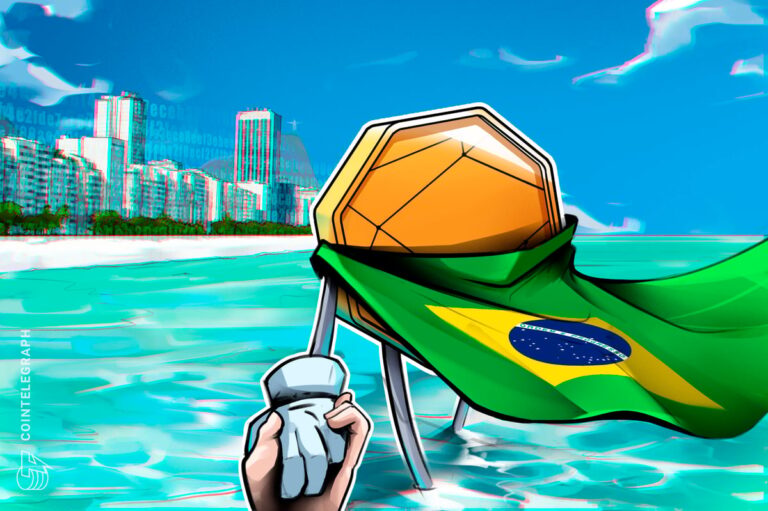
Brazil’s Finance Minister, Dario Durigan, is putting crypto tax policy on the back burner until after the country’s presidential elections in October 2026 to avoid pushing for “divisive” tax changes during an election year. 

Regulators and government officials originally slated a public consultation on crypto tax policy for later this year, which may be delayed until 2027, but still “remains on the radar,” sources familiar with the matter told Reuters.

Brazil ended its no tax policy on gains from smaller cryptocurrency sales or transfers in June 2025, shifting to a 17.5% flat tax on crypto capital gains, including those made from offshore and self-custodial holdings.

Under the previous rules, residents who sold up to 35,000 Brazilian real, equivalent to about $6,587, per month were exempt from capital gains taxes on any profits, and investors who surpassed this threshold were subject to progressive tax rates between 15% and 22.5%.

In November 2025, Banco Central do Brasil, the country’s central bank, published rules that treat stablecoin transfers as foreign currency exchange, subject to the same tax laws.

The Brazilian government is also eyeing proposals to tax cryptocurrencies used for international payments and is aligning its reporting rules to be consistent with regulations under the Crypto-Asset Reporting Framework (CARF), an international monitoring standard for crypto transactions.

The decision to place the crypto tax consultation on hiatus comes during a time when the South American country is rapidly adopting crypto, and the industry is growing in Brazil.

Related: Brazil’s Pix instant payment system expands to Argentina

Brazil is one of the top countries in the world for crypto adoption

Brazil ranks number five on Chainalysis’s crypto Global Adoption Index and ranks number one in terms of adoption in the Latin America region.

Brazil ranks number five globally in terms of crypto adoption. Source: Chainalysis

The country has a population of over 213 million people, with a median age of 33.5 years, and over 91% of the population lives in urban areas, according to data from Worldometer.

In 2025, “Latin America’s crypto adoption grew by 63%, reflecting rising adoption across both retail and institutional segments,” according to Chainalysis.

Magazine: ‘Painful to think about’: NFT Creator Nate Alex on selling 70 CryptoPunks too early