Home Blog Page 572

Aztec Launches Alpha Network, Ethereum’s First L2 for Private Smart Contracts

0

The a16z-backed privacy chain goes live with private smart contracts, but warns users of known critical vulnerabilities as audits continue.

Aztec Network has launched its Alpha Network, delivering what it says is the first Ethereum Layer 2 with a complete execution environment for private smart contracts.

The upgrade, which followed a unanimous community governance vote, builds on the Ignition Chain that went live in November 2025 as the coordination layer for decentralized sequencing and block production.

AZTEC is up 5% in the past 24 hours, trading at a roughly $200 million valuation, according to Coingecko.

AZTEC Chart

Aztec’s approach integrates privacy across three layers: data, identity, and compute. Private data enables confidential transactions, payments, and RWA transfers. Private identity allows selective disclosure for compliance and institutional reporting. Private compute keeps onchain actions hidden, opening the door to applications in private DeFi and gaming.

Contracts are written in Noir, Aztec’s Rust-like programming language. Private logic executes client-side and generates a zero-knowledge proof on the user’s device using the project’s CHONK proving system, purpose-built for phones and browsers. The proof is submitted to sequencers, who validate it without seeing the data, and the full batch settles on Ethereum roughly every 12 seconds.

The project — which launched its public testnet in May 2025 after eight years of development — touts Alpha as the culmination of parallel work across its execution layer, proving system, programming language, and decentralization stack.

Known Vulnerabilities

The launch comes with significant caveats. Aztec disclosed a critical vulnerability in the current Alpha v4 code on March 27, affecting the proving system and potentially enabling theft of user funds. The patch will ship with the v5 release planned for July 2026.

The team warned that Alpha is experimental software and urged users not to deposit more than they are willing to lose.

The project has raised over $178 million in total funding, including a $100 million Series B led by a16z, with backing from Paradigm and Vitalik Buterin. The AZTEC token launched in February following a $61 million community sale conducted via Uniswap’s Continuous Clearing Auction in December.

This article was written with the assistance of AI workflows. All our stories are curated, edited and fact-checked by a human.

DCUK Wooden Ducks: The Unexpected Trend Taking Over Tech Executive Offices

0

As CEO of RealReviews.net, I never expected wooden ducks to become a conversation starter in my executive meetings. But here we are.

It started innocently enough. I was browsing online for unique office decor—something with personality that broke away from the typical corporate aesthetic of glass awards and motivational posters. That’s when I discovered DCUK wooden ducks.

What Makes DCUK Ducks Different

These aren’t your average wooden decorations. DCUK ducks are handcrafted in Indonesia with genuine attention to detail and quality. Each one has its own personality—some look perpetually surprised, others appear deep in thought, many seem ready for a rainy day adventure in their tiny Wellington boots.

What really drew me in was the high-end craftsmanship. These are premium pieces that look expensive because they ARE quality items. The wood grain is beautiful, the paint application is meticulous, and the design aesthetic hits that perfect balance between whimsical and sophisticated.

They carry a strong reputation in the home decor world, and I quickly understood why. These aren’t mass-produced tchotchkes—they’re conversation pieces that happen to be ducks.

The Office Reaction

I placed my first DCUK duck on my desk—a particularly distinguished-looking fellow in a blue raincoat. Within a week, every executive who came to my office for a meeting commented on it.

“Where did you get that?”

“That’s amazing—where can I find one?”

“I need one of those for my office.”

The reactions were remarkably consistent. These are serious business leaders—CTOs, CFOs, fellow CEOs—and they were genuinely captivated by a wooden duck. It became the unexpected icebreaker before diving into quarterly reviews and strategic planning sessions.

Why Tech Executives Are Embracing Them

There’s something refreshing about having whimsical, high-quality decor in professional spaces. Tech culture has always pushed back against stuffy corporate traditions, and DCUK ducks fit perfectly into that ethos.

They signal personality without being unprofessional. They’re expensive enough to reflect success and taste, but playful enough to suggest you don’t take yourself too seriously. In an industry where everyone’s office looks like it came from the same Scandinavian minimalist catalog, a handcrafted wooden duck stands out.

Plus, they’re genuinely popular right now. I’ve noticed more articles, social media posts, and general buzz around DCUK products. Getting in early on a design trend feels very tech executive, honestly.

The Trend Spreads

Here’s where it gets interesting: several executives who asked about my duck have since told me they bought their own. Some got one for their desk. Others went all-in and decorated their home offices with multiple ducks. A few started collecting them.

One colleague mentioned placing a DCUK duck in his conference room, where it’s become an unexpected meeting mascot. Another keeps several on his credenza and rotates them seasonally—Christmas ducks in December, garden ducks in spring.

It’s becoming a quiet trend in our circles. Not everyone has caught on yet, which makes it feel like an insider thing. But I suspect that won’t last long.

Where to Actually Find Them

When people ask where I got mine, I always point them to ducks-n-stuff.com. They’re America’s largest distributor of authentic DCUK wooden ducks, and after trying a few different sources, they’re by far the best option.

The selection is comprehensive—seasonal collections, garden ducks, themed designs, limited editions. Everything is authentic, unlike some questionable sellers on Amazon or eBay where you might end up with cheap knockoffs.

Shipping is fast, pricing is reasonable, and the packaging ensures your duck arrives in perfect condition. I’ve ordered from them multiple times now and the experience is consistently excellent.

Beyond Just Ducks

What I also appreciate about Ducks-N-Stuff is their broader collection. They carry Allen Designs clocks—those wonderfully whimsical wall clocks with colorful, playful designs. I have one in my home office and it never fails to make me smile.

They also have an extensive selection of rubber ducks for collectors and quality metal garden art that complements the wooden duck aesthetic perfectly. It’s clear they curate products for people who appreciate craftsmanship and personality in their decor.

The Bigger Picture

There’s a larger conversation here about how we personalize our professional spaces. For too long, office decor has been either aggressively corporate or trying too hard to be “fun” with ping pong tables and bean bags.

DCUK wooden ducks hit a sweet spot. They’re high-end, beautifully designed, conversation-worthy pieces that bring personality without undermining professionalism. They’re collectible without being childish. They’re whimsical without being frivolous.

In tech, where we’re constantly thinking about user experience and design, it makes sense that we’d gravitate toward objects that demonstrate those same values—thoughtful design, quality materials, attention to detail, and a sense of humor about the whole thing.

Final Thoughts

Will DCUK wooden ducks become a widespread trend in executive offices? Hard to say. But I’ve watched enough colleagues get excited about these handcrafted ducks to know I’m not alone in appreciating them.

If you’re looking to add some personality to your workspace with something that’s both high-quality and genuinely interesting, I’d recommend checking out the collection at ducks-n-stuff.com.

Your next meeting might just start with someone asking about that distinguished wooden duck on your desk. And honestly? That’s not a bad way to break the ice before diving into Q4 projections.


Franklin Templeton Acquires CoinFund Spinoff For Crypto Push

0

Franklin Templeton has agreed to acquire 250 Digital, a crypto investment firm formed from CoinFund, according to Wall Street Journal reporting. The goal with this acquisition is to improve its digital asset strategy and create a dedicated institutional crypto division.

The deal sets the foundation for a new business line called Franklin Crypto. The unit targets pensions, sovereign wealth funds, and large institutional investors seeking exposure to digital assets through regulated investment structures.

Terms of the transaction remain undisclosed. The acquisition reflects continued expansion by traditional financial institutions into crypto markets despite a prolonged drawdown in digital asset valuations.

Franklin Templeton manages more than $1.7 trillion in assets. The firm entered digital assets in 2018 and built a team that focuses on blockchain systems, tokenized instruments, and crypto investment products. The group includes more than 50 professionals across investment and technology roles.

The firm stands among the earliest issuers of U.S. spot bitcoin exchange-traded funds launched in 2024.

The acquisition of 250 Digital brings two senior crypto investment managers into the Franklin structure. Christopher Perkins and Seth Ginns lead the firm. Both worked at CoinFund before the spinout and held roles in institutional investment and digital asset markets.

The new division will focus on portfolio construction for institutional capital. The strategy includes liquid token markets, venture exposure, and structured products tied to blockchain infrastructure.

Institutional demand for bitcoin and crypto

Franklin Templeton head of innovation Sandy Kaul said market conditions in digital assets opened a path for talent acquisition and platform expansion. Kaul described a shift in institutional demand patterns and said the firm views the current environment as a point for structural buildout.

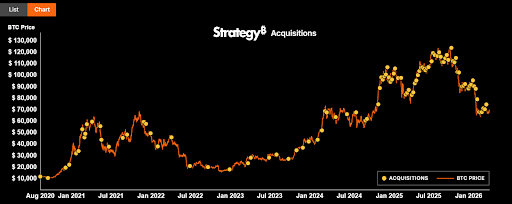
The crypto market has faced a major drawdown after prior peaks. Bitcoin has declined from highs above $126,000 to levels near half that value. Total digital asset market value has contracted by trillions. Trading volumes and valuations across token sectors have compressed across multiple cycles.

Institutional participation has not retreated at the same pace. Large asset managers continue to file for new products, expand custody relationships, and develop tokenization systems that connect traditional securities with blockchain rails.

Franklin Templeton has expanded partnerships with digital asset firms to support tokenized products. One partnership with Binance enables use of tokenized fund shares as collateral for trading activity. The structure links traditional money market products with crypto market infrastructure.

The acquisition aligns with a broader trend among global asset managers that entered crypto markets through exchange-traded products, custody partnerships, and pilot tokenization projects. 

These firms continue to extend their reach into trading, venture investing, and infrastructure development tied to blockchain systems.

Australia to Mandate Crypto Licensing Under New Law

0

Australia has passed legislation that will bring many digital asset platforms and tokenised custody platforms under the country’s financial services licensing regime.

The Corporations Amendment (Digital Assets Framework) Bill 2025 has now cleared both houses of the Australian Parliament, according to parliamentary records, marking the biggest step yet in Canberra’s push to create a dedicated regulatory framework for digital assets.

Introduced in November 2025, the bill amends the Corporations Act and ASIC Act to regulate digital asset platforms and tokenised custody platforms, with the stated aim of improving consumer protection, market integrity and regulatory certainty.

The bill now awaits royal assent, the final step before becoming law. It is set to take effect 12 months after assent, with an additional transition period for businesses to comply.

The bill requires crypto operators, including exchanges and custody platforms, to obtain an Australian Financial Services Licence (AFSL) from the Australian Securities and Investments Commission (ASIC), the country’s financial regulator.

Source: DECA

The Digital Economy Council of Australia (DECA), an industry group representing Australia’s digital economy, praised the development in a statement on LinkedIn.

“For the first time, we have a legislative framework that directly addresses digital asset platforms and it provides long-awaited clarity for businesses, investors and regulators, and marks a shift from uncertainty toward implementation,” DECA said.

Related: Australia fines local Binance unit $6.9M over client onboarding failures

Addendum clarifies treatment of MPC and crypto custody under new law

Jazz Ozvald, former assistant director of digital asset policy at the Commonwealth Treasury, took to LinkedIn to express delight at the milestone in passing the bill.

He noted that the government also tabled an Addendum to the Explanatory Memorandum, which includes additional detail about how the bill is intended to apply where digital tokens are factually controlled through multi-party computation (MPC).

Source: Jazz Osvald

MPC is a cryptographic technology used to secure crypto wallets by splitting control between multiple parties, so no single person has full control. Transactions can only be approved when enough parties work together, making it harder for funds to be stolen or misused.

Related: Google targets 2029 post-quantum migration as threats draw nearer

The addendum says that the law only applies to platforms that actually hold crypto for customers, rather than just providing technology that helps control it, even in shared-control setups like MPC.

Magazine: Nobody knows if quantum secure cryptography will even work