Nasdaq-listed Bitcoin miner Riot Platforms sold 3,778 BTC in the first quarter of 2026, generating roughly $289.5 million in net proceeds.
Riot Platforms, a major publicly traded Bitcoin mining company listed on Nasdaq, sold 3,778 BTC during Q1 2026, netting approximately $289.5 million in proceeds. The sale represents a significant reduction in the miner’s Bitcoin holdings and marks a notable shift in the company’s position management strategy.
The move aligns with broader selling activity across the Bitcoin mining sector. Multiple publicly traded miners have collectively sold more than 15,000 BTC in recent months, signaling increased liquidation pressure within the industry.
Sources: Riot Platforms
This article was generated automatically by The Defiant’s AI news system from publicly available sources.
First Commercial Primate Flight in Decades Advances Space Biology Research for Future Human Exploration
Houston, TX – March 3, 2026 – NanoRacks, a Voyager Space company, has announced its upcoming suborbital research mission featuring Yuri, a healthy 7-year-old male rhesus macaque. The mission is scheduled to launch on Monday, March 6.
About Yuri and the Mission
Yuri is named in honor of Yuri Gagarin, the first human in space. He was specially prepared for this mission at a dedicated primate training and veterinary facility in Texas.
Age: 7 years
Weight: Approximately 12 kg (26 pounds)
Training: Months of positive reinforcement
Behavior: Calm, curious, and highly responsive
Yuri has been trained to adapt to restraint systems, sensors, and simulated space conditions. His temperament makes him an ideal candidate for this pioneering commercial spaceflight.
Mission Details and Objectives
The suborbital flight will last less than 15 minutes and will take Yuri beyond the Kármán line into microgravity.
The mission includes:
Wearable sensors to monitor
Heart rate
Brain activity
Eye movement
Balance
Advanced life-support systems
Real-time veterinary monitoring from ground control
On-board cameras for continuous observation
Scientific Goal
The mission will study neurovestibular adaptation, which focuses on how the nervous system and inner ear respond to microgravity.
This research will help:
Reduce space motion sickness
Improve astronaut orientation
Support long-duration missions to the Moon and Mars
Statement from NanoRacks
“This mission represents a bold step forward in commercial space infrastructure,” said Michael Lewis, Chief Innovation Officer at NanoRacks.
He added that the mission builds on NanoRacks’ experience, including:
Over 1,300 experiments delivered to orbit
Hundreds of satellites deployed
Development of key technologies like the CubeSat Deployer and Bishop Airlock
A Return to Primate Spaceflight
Nonhuman primates played an important role in early space exploration. However, such missions became rare after the 1990s.
Key Historical Milestones
1949: Albert II became the first monkey in space
1959: Able and Baker returned safely from space
1961: Ham and Enos flew in Mercury missions
1996–1997: Final major primate missions under the Soviet Bion program
2013: Iran launched a monkey into space
Yuri’s mission marks the first commercial U.S. primate spaceflight in decades and sets new standards for:
Animal welfare
Ethical oversight
Commercial research practices
About NanoRacks and Voyager Space
NanoRacks was founded in 2009 and became the first commercial operator of a laboratory on the International Space Station.
Key Achievements:
1,300+ research payloads launched
300+ small satellites deployed
Major hardware
NanoRacks CubeSat Deployer
Bishop Airlock (installed in 2020)
In 2021, Voyager Space acquired a majority stake in NanoRacks. Together, they are developing Starlab, a future commercial space station.
Mission Impact
NanoRacks aims to expand commercial space research while supporting future human exploration.
As Michael Lewis stated, the mission represents:
“One small step for a nanoracks—and one giant leap for commercial space biology.”
About NanoRacks
NanoRacks, a Voyager Space company, is a leading provider of commercial space services. It offers:
Research platforms
Satellite deployment
In-space hardware solutions
About Voyager Space
Voyager Space is focused on building the future of space infrastructure, including:
The Independent Community Bankers of America has opposed the Office of the Comptroller of the Currency’s (OCC) conditional approval of Coinbase’s national trust bank charter, warning the application falls short of regulatory standards and could pose risks to consumers and the financial system.
On Thursday, ICBA said Coinbase’s application shows deficiencies in risk controls, profitability and resolution planning, and argued the OCC lacks statutory authority to expand trust powers for crypto-related activities without applying the full set of banking regulations.
The group said the decision reflects a broader trend of nonbank entities seeking access to the benefits of bank charters without meeting the same regulatory requirements. It wrote:
The sudden influx of applications demonstrates nonbank entities are seeking the benefits of a US bank charter without satisfying the full scope of US bank regulations.
Americans for Financial Reform Education Fund also criticized the decision, warning the approval departs from longstanding banking law and could expose the financial system to risks tied to crypto market volatility, fraud and money laundering.
The objections follows the OCC’s conditional approval on Thursday of Coinbase’s application to establish a national trust bank, after six months of review by the US regulator.
Industry opposition to OCC’s Coinbase approval is growing. Source: Americans for Financial Reform Education Fund
Coinbase released a statement on Thursday saying the charter would bring its custody and market infrastructure business under federal oversight, emphasizing that it does not plan to hold customer deposits or engage in fractional reserve lending, and adding that “the right path forward for crypto is through the system — not around it.”
Related: Crypto awareness tops 80% among young people in UK: Coinbase survey
Stablecoin yield dispute stalls crypto market structure bill
The opposition is part of a broader dispute between banking groups and crypto companies over the role of digital assets in the financial system, particularly around stablecoins and yield-bearing products.
In January, CEO of Bank of America Brian Moynihan warned that allowing stablecoin issuers to offer interest could draw as much as $6 trillion in deposits out of the banking system, reducing lending capacity and pushing borrowing costs higher.
Industry groups such as the Bank Policy Institute have also raised similar concerns in letters to lawmakers, arguing that regulatory gaps could allow yield-bearing stablecoin products to bypass restrictions and disrupt traditional credit channels.
The debate is currently playing out in Washington, where Coinbase is engaged in policy discussions over the US Digital Asset Market Clarity Act, a bill aimed at establishing federal rules for crypto oversight.
Source: Brian Armstrong
While Coinbase CEO Brian Armstrong said in January that the company could not support the legislation as drafted due to restrictions on stablecoin rewards, Coinbase chief legal officer Paul Grewal said on Thursday that lawmakers are nearing agreement on core elements of the bill, though the yield issue remains a key sticking point.
The dispute has delayed a Senate Banking Committee markup, a required step before the bill can advance to a full Senate vote, leaving broader efforts to establish a federal framework for digital assets unresolved.
Magazine: Nobody knows if quantum secure cryptography will even work
Cointelegraph is committed to independent, transparent journalism. This news article is produced in accordance with Cointelegraph’s Editorial Policy and aims to provide accurate and timely information. Readers are encouraged to verify information independently. Read our Editorial Policy https://cointelegraph.com/editorial-policy
Riot Platforms sold 3,778 bitcoin in the first quarter of 2026, generating $289.5 million and marking a shift in strategy as the miner redirects capital toward infrastructure and high-performance computing.
The volume sold exceeded the company’s quarterly production of 1,473 BTC by roughly 2.6 times, signaling a drawdown of treasury holdings rather than routine profit-taking. Riot ended the quarter with 15,680 BTC, down 18% from 18,005 BTC at the close of 2025.
The selling appears to have extended beyond the reporting period. Blockchain analytics firm Arkham Intelligence flagged a 500 BTC outflow from a wallet linked to Riot following the end of the quarter, suggesting continued liquidation activity.
The imbalance between production and sales comes as Riot accelerates its expansion into artificial intelligence and high-performance computing colocation. The company has begun repositioning its business model away from sole reliance on bitcoin mining, seeking to monetize its energy assets and data center footprint through long-term infrastructure contracts.
In January, Riot sold 1,080 BTC to fund the purchase of 200 acres at its Rockdale, Texas site. It also entered a ten-year agreement with Advanced Micro Devices to provide 25 megawatts of capacity, with an option to scale to 200 MW. The deal is expected to generate about $311 million in contract revenue over its initial term.
Operational metrics complicate a distress narrative. Riot reduced its all-in power cost to 3.0 cents per kilowatt hour, a 21% decline from the prior year, while increasing deployed hash rate by 26% to 42.5 exahashes per second. Average operating hash rate rose 23% to 36.4 EH/s, reflecting continued investment in mining capacity.
The company also generated $21 million in power credits during the quarter, more than double the year-ago period, through participation in grid services and energy programs.
Bitcoin HODLers like RIOT are selling
Industry conditions remain a factor. Rising energy costs tied to geopolitical tensions have pressured margins across the mining sector, prompting several operators to liquidate holdings. MARA Holdings, Genius Group, and Nakamoto Holdings collectively sold more than 15,000 BTC in recent days, reflecting a broader shift in capital allocation.
Riot’s Q1 activity underscores a turning point for the sector, where bitcoin reserves are deployed as funding sources for diversification rather than held as long-term balance sheet assets.
The trend extends beyond corporate treasuries. Bhutan has continued to reduce its BTC holdings, selling a total of 3,103 BTC. A single transaction on March 30 accounted for 375 BTC, according to Glassnode data.
The country had built its position through state-backed mining operations, reaching more than 13,000 BTC at its peak in October 2024.
Despite the recent selling, public companies still hold about 1.16 million BTC, or more than 5% of bitcoin’s fixed supply of 21 million, according to BitcoinTreasuries.net.
The International Monetary Fund also warns that the distribution and speed of on-chain transactions bring new challenges and risks that require international coordination.
In a new staff research note published on Thursday, The International Monetary Fund (IMF) argues that tokenization represents a “structural shift in financial architecture,” not just an incremental efficiency gain.
Authored by Tobias Adrian — the IMF’s Financial Counsellor and Director of the Monetary and Capital Markets Department — the report focuses on the tokenization of real-world assets (RWAs) within the regulated financial system, namely banks, finance infrastructure, and asset managers, arguing that’s where “the most consequential transformation occurs.”
Settlement Speed Is a Double-Edged Sword
The IMF’s core thesis is that tokenization doesn’t just make existing finance faster, but represents a shift in how trust, settlement, and risk management work. In TradFi, trust is embedded in regulated intermediaries and time-delayed processes (end-of-day settlement, batch reconciliation). Those frictions, the report notes, actually serve a purpose: they give regulators and institutions time to intervene before a crisis cascades.
Tokenization, which the note defines broadly as “the representation of financial assets and liabilities on programmable digital ledgers,” collapses those frictions, bringing what is generally referred to as the primary benefits of blockchain: near instant settlement, 24/7 liquidity, etc. But, the report notes, that this reduction of barriers introduces new challenges and risks.
“Liquidity demands materialize instantaneously,” the note warns, creating conditions where a smart contract bug or oracle failure could trigger a chain reaction before anyone can respond. The IMF argues:
“When trading, settlement, custody, and compliance are embedded in code, supervision must extend beyond market participants to the design, governance, and resilience of market infrastructures themselves. Failures can originate in smart contracts, data feeds, or consensus mechanisms, rather than firm balance sheets.”
Who Controls the Money?
A major focus of the report is on the quetion of settlement assets. The IMF identifies three competing models: tokenized commercial bank deposits, regulated stablecoins, and what the report refers to as wholesale central bank digital currencies (wCBDCs), with each carrying different risk profiles.
Cross-Border Gaps and the Fragmentation Risk
The report highlights that a major concern around the tokenization of RWAs in regulated financial markets is jurisdictional: tokenized transactions execute across borders at machine speed, while resolution and crisis management frameworks are still built around nationally domiciled institutions.
“Tokenization challenges crisis management and resolution frameworks that are built around nationally domiciled institutions, territorially bounded infrastructures, and jurisdiction-specific legal authority.“
In its research note, the IMF calls for international coordination and legal frameworks that can govern code itself, not just the institutions that deploy it.
“The key levers of control may lie in governance keys, consensus mechanisms, or smart contract logic operating across borders,” the note reads — a setup where no single regulator has a clear handle.
The report lands as the value of tokenized RWAs continue to surge, driven in part by tokenized funds from TradFi giants like BlackRock, Franklin Templeton, and Janus Henderson.
In 2025, tokenized RWA value tripled over the course of the year as a wave of financial institutions began tokenizing U.S. treasuries, private credit, and other RWAs.
Industry forecasts project the sector could hit $100 billion by end of 2026, with more than half of the world’s 20 largest asset managers expected to have launched RWA tokens by year-end.
Meanwhile, stablecoins have already begun functioning as mainstream financial infrastructure, with the GENIUS Act providing U.S. regulatory clarity in mid-2025.
This article was written with the assistance of AI workflows. All our stories are curated, edited and fact-checked by a human.
WHY THIS MATTERS: The decision by Lush UK to centralise its treasury function onto a unified Accounts Payable (AP) automation platform underscores a decisive trend: manual, fragmented invoice processing is no longer tenable for scaling mid-market enterprises. This is a crucial validation point for cloud-based SaaS integration in corporate finance. The core significance is not merely the adoption of a new tool, but the measurable financial transformation—cutting non-purchase order processing time by 60%. This efficiency benchmark demonstrates the essential value proposition of moving supplier transaction management out of disparate, legacy systems. For other large retailers, this case study proves that immediate operational efficiency and robust governance are achievable through next-generation financial automation, freeing finance teams from administrative burdens to focus on strategic growth and critical oversight functions.
Quadient (Euronext Paris: QDT), a global automation platform powering secure and sustainable business connections, announced that Lush UK has selected Quadient’s Accounts Payable (AP) automation software to modernise and streamline its finance operations.
Lush, based in Poole, processes thousands of supplier invoices monthly. By implementing Quadient’s AP automation software as part of its Xero standardisation, the company has simplified invoice processing, enhanced controls and supported scaling finance operations.
Quadient AP, integrated with Xero, consolidates multiple legacy tools, enabling invoice capture, validation, approval and posting in one platform. Features include PO matching, custom workflows and automated data extraction for faster, secure processing.
Prior to deploying Quadient AP, Lush relied on a combination of different invoice processing and approval systems across its UK entities, requiring finance teams to switch between platforms and manually post invoices into accounting systems after approval. This fragmented approach created inefficiencies and slowed invoice processing.
With Quadient AP, Lush processes over 4,000 invoices per month and has cut non-purchase-order invoice processing time from 10 to 4 minutes. Purchase-order invoice processing takes only 2 to 3 minutes using automated approvals.
“We needed a scalable, reliable solution for complex accounts payable. Quadient’s seamless Xero integration and automation strengthened our workflows and efficiency, consolidating multiple systems and positioning us for growth,” said Mike West, Finance Director at Lush.
The implementation also supports Lush’s need to manage Goods Received Not Invoiced (GRNI) reporting, which tracks goods delivered but not yet invoiced, while maintaining stronger governance across its finance operations. By automating invoice capture and approvals within a single platform, finance teams can more easily track invoices and reduce manual intervention.
“As organisations modernise their finance operations, automation and system integration are becoming critical to improving efficiency, control and scalability,” said Stephanie Auchabie, Senior Vice President, Digital Sales, Partners and Customer Success for Europe at Quadient. “By integrating seamlessly with Xero, Quadient AP enables finance teams to move away from fragmented, manual processes and toward a more intelligent, automated accounts payable workflow. We are delighted to support Lush as they standardise their finance systems and create a more streamlined, data-driven approach to managing supplier transactions.”
Quadient’s AP automation digitises invoice processing from capture to payment, cutting costs, boosting accuracy, and accelerating approvals while keeping strong controls. Visit www.quadient.com/en-gb/ap-automation to find out more.
FF NEWS TAKE: This clear win for Quadient is indicative of a broader momentum shift, confirming that sophisticated financial automation is now table stakes for operational resilience. The successful integration with Xero will prompt similar UK enterprises to accelerate their own migration away from patchwork systems. The next phase of development to monitor will be the seamless integration of embedded payment rails directly into these AP workflows, moving the platform beyond pure process efficiency into full-cycle capital management.
Buyers are attempting to maintain BTC above the $66,500 level, but several analysts believe that the $60,000 level may crack.
Some major altcoins risk breaking below their immediate support levels, signaling that bears remain in control.
Buyers are attempting to push and maintain Bitcoin (BTC) above the $66,500 level, but are facing stiff resistance from the bears. Although recovery attempts are being sold into, the BTC supply in profit and loss metric suggests that BTC may be close to a bottom.
CryptoQuant analyst “Darkfost” said that there are currently about 8.2 million BTC in loss, compared to roughly 10.6 million BTC during the previous bear market. That suggests the market is at a comparable level of undervaluation seen during the previous bear phase.
However, not everyone believes that a bottom is in. Chartered Market Technician Aksel Kibar said in a post on X that BTC may sink to $52,500 if its developing bearish pattern breaks down.
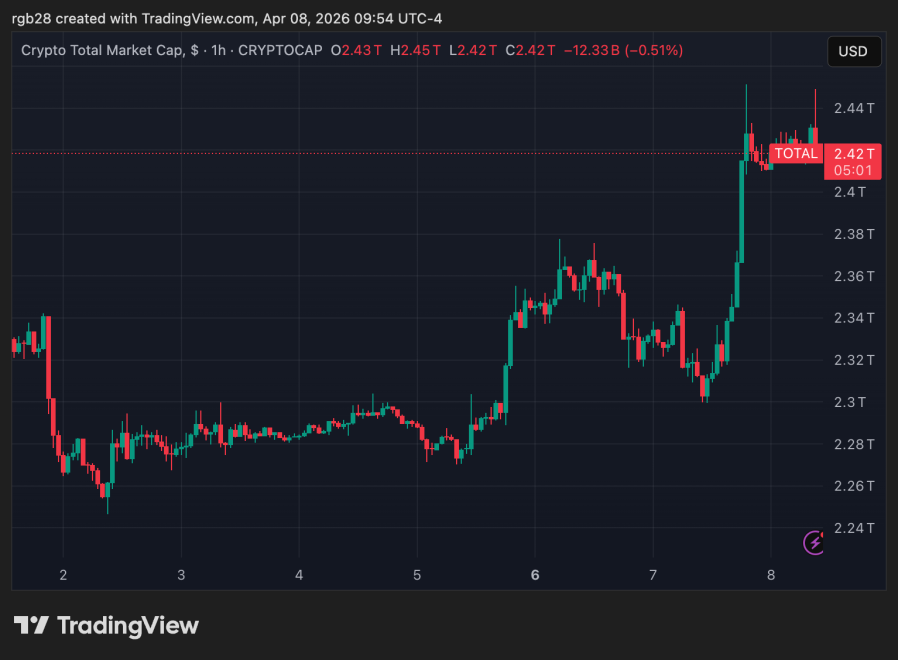
Crypto market data daily view. Source: TradingView
During bear phases, select analysts turn overly negative and forecast gloom and doom for the markets.
One such projection is from Bloomberg Intelligence senior commodity strategist Mike McGlone, who said in a post on X that BTC may collapse to $10,000. Contrary to that opinion, ARK Invest CEO Cathie Wood said in an interview with CNBC that BTC will not see 85-95% collapses from its all-time high.
Could BTC and select major altcoins hold above their support levels? Let’s analyze the charts of the top 10 cryptocurrencies to find out.
Bitcoin price prediction
BTC turned down from the moving averages on Thursday, and the bears are attempting to strengthen their position by pulling the price below the support line.
If they succeed, the bullish ascending triangle setup will be invalidated. That may force the aggressive bulls to close their positions. The BTC/USDT pair may then slump to the crucial $62,500 to $60,000 support zone.
The first sign of strength will be a close above the moving averages. That opens the doors for a rally to $72,000 and then to $76,000. A close above $76,000 will complete the ascending triangle pattern, propelling the pair toward $84,000.
Ether price prediction
Ether (ETH) failed to rise above the $2,200 resistance on Wednesday, indicating that the bears are aggressively defending the level.
The flat moving averages and the relative strength index (RSI) just below the midpoint do not give a clear advantage either to the bulls or the bears. That suggests the ETH/USDT pair may swing between $2,200 and $1,916 for some time.
Buyers will have to push and maintain the ETH price above the $2,200 level to gain the upper hand. If they do that, the pair may climb to $2,400 and thereafter to $2,600. On the downside, a close below $1,916 might sink the pair to the critical $1,750 support.
BNB price prediction
BNB (BNB) turned down from the moving averages on Wednesday and dropped to the solid support at $570.
The downsloping 20-day exponential moving average ($620) and the RSI near the oversold territory signal that the path of least resistance is to the downside. If the $570 support breaks down, the BNB/USDT pair may resume the downtrend to $500.
This negative view will be invalidated in the near term if the BNB price turns up and breaks above the moving averages. That suggests the pair may continue to oscillate between $570 and $687 for a few more days.
XRP price prediction
XRP (XRP) turned down from the 20-day EMA ($1.36) on Thursday, and the bears are striving to pull the price below the $1.27 support.
If they manage to do that, the XRP/USDT pair may plummet to the Feb. 6 low of $1.11. This is a vital support for the bulls to defend, as a close below it may extend the decline to the support line of the descending channel pattern near $1.
Buyers are likely to have other plans. They will attempt to drive the XRP price above the moving averages, clearing the path for a recovery to the $1.61 level and then to the downtrend line.
Solana price prediction
Solana (SOL) has reached the support of the $76 to $95 range, indicating that the bears continue to exert pressure.
Buyers are expected to aggressively defend the $76 level, but the relief rally is likely to face selling at the moving averages. If the SOL price turns down from the current level or the moving averages and breaks below $76, it signals that the bears are back in the driver’s seat. There is support at $67, but if the level cracks, the next stop may be $50.
Contrarily, if the SOL/USDT pair turns up and breaks above the moving averages, it signals that the range-bound action may continue for a while longer.
Dogecoin price prediction
Dogecoin (DOGE) is getting squeezed between the moving averages and the $0.09 support, signaling a potential range expansion in the short term.
A close below the $0.09 support indicates that the bears are back in command. That may intensify selling and sink the DOGE/USDT pair to the Feb. 6 low of $0.08. Buyers will attempt to defend the $0.08 level, but if the bears prevail, the DOGE price may plunge to $0.06.
On the upside, a close above the moving averages suggests that the buyers have overpowered the bears. The pair may ascend to $0.10 and later to the stiff $0.12 resistance.
Hyperliquid price prediction
Hyperliquid (HYPE) is attempting to bounce off the 50-day simple moving average ($34.16), but the relief rally is expected to face selling at higher levels.
The 20-day EMA ($37.10) has started to turn down, and the RSI has slipped into the negative zone, signaling that the bulls are losing their grip. If the HYPE price turns down and breaks below the 50-day SMA, the pullback may reach the $29.42 level.
Contrary to this assumption, if the price turns up and breaks above the 20-day EMA, it suggests that the bulls remain in control. The HYPE/USDT pair may march to $41.59 and subsequently to $43.76.
Related: Here’s what happened in crypto today
Cardano price prediction
Sellers have maintained Cardano (ADA) below the $0.25 resistance but have failed to pull the price below the $0.23 level.
The 20-day EMA ($0.25) is sloping down gradually, and the RSI is in the negative territory, indicating a slight edge to the bears. If the ADA price turns down from the 20-day EMA and breaks below $0.23, it suggests that the bulls have given up. The ADA/USDT pair may drop to $0.22 and later to the support line near $0.18.
Conversely, if buyers propel the price above the moving averages, it suggests that the selling pressure is reducing. The pair may rally to the downtrend line, which is a vital resistance for the bears to defend.
Bitcoin Cash price prediction
Bitcoin Cash (BCH) has dropped to the $443 level, which is a critical support for the bulls to defend.
Any bounce off the $443 level is expected to face selling at the moving averages. If the BCH price turns down sharply from the moving averages, it increases the likelihood of a drop below the $443 level. If that happens, the BCH/USDT pair will complete a bearish head-and-shoulders pattern. The pair may then tumble to the $375 level.
On the contrary, a close above the $486 level suggests that the bulls are back in the game. The pair may then jump to the $520 to $540 zone.
Chainlink price prediction
Chainlink (LINK) has been trading between the $8 and $10 level, indicating a balance between supply and demand.
If buyers thrust the price above the moving averages, the LINK/USDT pair may rise to the $10 resistance. Sellers are expected to defend the $10 level, as a close above it may propel the LINK price to $10.94 and then to $11.61.
Alternatively, if the price turns down from the moving averages and breaks below the $8 level, it signals that the bears have seized control. The pair may collapse to $7.15 and then to the $6 level.
This article does not contain investment advice or recommendations. Every investment and trading move involves risk, and readers should conduct their own research when making a decision. While we strive to provide accurate and timely information, Cointelegraph does not guarantee the accuracy, completeness, or reliability of any information in this article. This article may contain forward-looking statements that are subject to risks and uncertainties. Cointelegraph will not be liable for any loss or damage arising from your reliance on this information.
Stephanie Cutter will join the prediction markets company as a policy adviser, having previously worked in Democratic lawmakers’ campaigns.
Predictions market platform Kalshi announced that a former staffer of US President Barack Obama had joined the company as a policy adviser.
In a Thursday notice, Kalshi said Stephanie Cutter would join the prediction markets company from Precision Strategies, a communications firm she co-founded in 2013. Kalshi said the addition of Cutter came as the company planned to “deepen its relationships in DC and across the country.”
Source: Stephanie Cutter
According to Kalshi co-founder and CEO Tarek Mansour, Cutter’s experience allowed her to “get [the] message to the right people,” highlighting her background in government and politics. The predictions market already has staff with ties to the US government, including the appointment of the president’s son, Donald Trump Jr., as a strategic adviser in January 2025, the week before his father took office.
In the last year, Kalshi has come under scrutiny from many US state-level authorities, who have filed lawsuits against the platform and other companies offering event contracts on prediction markets for sports, alleging that they constituted illegal bets.
Under Trump nominee Michael Selig, the US Commodity Futures Trading Commission (CFTC) has claimed that the agency has the “exclusive jurisdiction” to oversee such markets, filing lawsuits against state gaming regulators.
Related: Polymarket expands into equities and commodities with Pyth price feeds
Lawsuits and proposed legislation
Many Democrats in US Congress have also called for scrutiny into prediction markets after what they called “suspicious trades” related to the country’s invasion of Iran. Although Kalshi and Polymarket announced plans in March to implement guardrails to prevent accounts from using insider information, some lawmakers introduced legislation that could ban politicians from engaging in such bets on prediction markets.
As of Friday, none of the bills proposed in Congress had been signed into law, and it was unclear what the outcome would be for many of the state-level lawsuits.
Cointelegraph is committed to independent, transparent journalism. This news article is produced in accordance with Cointelegraph’s Editorial Policy and aims to provide accurate and timely information. Readers are encouraged to verify information independently. Read our Editorial Policy https://cointelegraph.com/editorial-policy
Todd Blanche was elevated to lead the Department of Justice this week after the firing of Attorney General Pam Bondi.
As deputy attorney general, Blanche pushed pro-crypto reforms, like shuttering the DOJ’s crypto-dedicated unit.
But he has also overseen the continued prosecutions of crypto software developers.
On Thursday, President Donald Trump fired his attorney general, Pam Bondi—and elevated her deputy, Todd Blanche, to run the Department of Justice. Trump suggested the promotion was temporary, but reports suggest the president is waiting to see how Blanche, his former personal attorney, performs in the new role.
Blanche’s promotion has many implications, including some for crypto. The former federal prosecutor instigated a number of pro-industry reforms at the Department of Justice last year, and is a crypto investor himself.
But under his and Bondi’s leadership, U.S. attorneys have also continued to aggressively pursue cases against crypto software developers—a development that has left some privacy and decentralization advocates worried.
When Blanche entered the federal government last year, he disclosed a significant amount of crypto holdings. The acting attorney general reported owning between $100,000 and $250,000 worth of Bitcoin, as well as between $50,000 and $100,000 worth of Ethereum. He also reported smaller holdings of numerous altcoins, including Solana, Cardano, Ethereum Classic, Polygon, and Polkadot. The crypto tokens were all held via a Coinbase account.
Blanche said in a subsequent ethics filing that he later transferred those crypto assets to his adult children and a grandchild.
Within weeks of becoming the Department of Justice’s second-highest ranking official last year, Blanche disbanded the office’s crypto-dedicated enforcement team. He also instructed federal prosecutors to back off of crypto exchanges and crypto mixing services relied upon by criminal actors and enemy states like North Korea and Iran.
“The prior Administration used the Justice Department to pursue a reckless strategy of regulation by prosecution, which was ill conceived and poorly executed,” Blanche said at the time.
Echoing that stance, a top DOJ official told a room of crypto policy leaders months later that the Trump administration would stop charging crypto software developers with a specific crime related to operating an unlicensed money transmitter.
But the great relief expressed by crypto leaders at that commitment was short-lived. Last fall, the Trump DOJ sent two Bitcoin privacy softwaredevelopers to prison for operating an illegal money transmitter.
When the Trump DOJ took another Ethereum developer to trial for creating similar software last year, a Manhattan jury convicted the man, Roman Storm, of operating an illegal money transmitter—but deadlocked on two other charges. Last month, under Blanche and Bondi’s leadership, federal prosecutors moved to retry Storm on those two charges.
Peter Van Valkenburgh, the executive director of crypto policy think tank Coin Center, recently told Decrypt that the Trump DOJ’s seemingly inconsistent combination of pro-crypto statements and continued prosecution of crypto developers has left the industry in “a very bad state.”
It remains to be seen whether the DOJ’s crypto policies will change with Blanche’s move to the top of the department’s leadership. But those policies may not have been tied solely to the now-ousted Bondi. In December, in response to a question from Decrypt, President Trump said he would “look at” pardons for the crypto software developers convicted by his Justice Department. No such pardons have since materialized.
Daily Debrief Newsletter
Start every day with the top news stories right now, plus original features, a podcast, videos and more.
Coinbase got conditional approval from the OCC for its trust, a step toward federal oversight for its offerings to replace the current state by state licensing approach.
Coinbase announced on Thursday that it has received conditional approval from the Office of the Comptroller of the Currency (OCC) to establish Coinbase National Trust Company, a non-insured national trust bank to be headquartered in New York.
The approval marks a step toward Coinbase operating as a federally regulated digital asset custodian — and the latest milestone in a sweeping regulatory shift reshaping how crypto firms interact with the U.S. banking system.
The preliminary green light requires Coinbase to build out compliance systems, hire key staff, pass regulatory reviews, and demonstrate strong risk management and anti-money-laundering controls before it can secure a full charter.
A national trust bank charter gives Coinbase a single federal regulator — the OCC — in place of the patchwork of state money transmitter licenses it currently holds, allowing it to offer custody, safekeeping, and related digital asset services in a fiduciary capacity as a qualified custodian under SEC regulations.
In yesterday’s blog post, the largest U.S. centralized exchange noted that it does not plan to become a commercial bank:
“Coinbase is not becoming a commercial bank. We will not be taking retail deposits. We will not be engaging in fractional reserve banking.”
Looking ahead, Coinbase’s chief legal officer told CNBC that the company plans to explore payment infrastructure products alongside its custody business, with an eye on expanding stablecoin use — particularly USDC — as a mainstream global payment method.
Coinbase joins a crowded field of crypto firms racing to secure federal charters under the OCC’s current leadership.
Circle applied for its own national trust bank license — to be called First National Digital Currency Bank — and received conditional approval in December 2025. Crypto.com similarly secured conditional OCC approval for its Foris Dax National Trust Bank in February.
The trend has not gone uncontested: the Bank Policy Institute, whose members include JPMorgan, Goldman Sachs, and Bank of America, is reportedly weighing a lawsuit against the OCC over what it sees as an uneven regulatory playing field.
This article was written with the assistance of AI workflows. All our stories are curated, edited and fact-checked by a human.