Home Blog Page 516

Bitcoin Caught In The Crossfire As Trump’s Iran Deadline Nears

0

Trusted Editorial content, reviewed by leading industry experts and seasoned editors. Ad Disclosure

Young Iranians were being called to form human chains around their country’s power plants Tuesday — a sign of just how seriously Tehran is taking US President Donald Trump’s threat to bomb the nation’s civilian infrastructure before the day was out.

Tehran Pushes Back On Trump’s Ultimatum

Iran’s deputy minister of youth and sports, Alireza Rahimi, posted a public call on X urging athletes, artists, and young citizens to stand beside power stations across the country at 2 p.m. local time.

“Attacking public infrastructure is a war crime,” he wrote. The appeal came hours after Trump told reporters Monday that the US holds a plan to wipe out every Iranian bridge and power plant by midnight Tuesday — a deadline he tied to Iran’s refusal to reopen the Strait of Hormuz, the narrow waterway through which a significant share of the world’s oil passes.

Trump would not say whether the war was winding down or intensifying. He called it a “critical period” that depended entirely on what Iran chose to do next. But he left little doubt about the consequences if Tehran held firm. Iran, he said, could be “taken out in one night” — and that night might be Tuesday.

Image Credits: Photo: iStock: theasis

Iran’s Islamic Revolutionary Guards Corps fired back, calling Trump’s statements the “baseless” ramblings of a “delusional” president facing military setbacks. IRGC spokesman Ebrahim Zolfaqari warned that any repeated strikes on non-civilian sites would trigger a far larger retaliatory response. Iran’s foreign ministry separately urged Americans to hold their own government accountable for what it described as an unjust and aggressive war.

A ceasefire proposal drafted by mediating countries — calling for a 45-day pause and the reopening of the strait — went nowhere fast. Trump dismissed it Monday as a significant step but said it fell short. Iran rejected it outright, demanding a permanent end to the fighting rather than a temporary truce.

Commanders Killed, Nuclear Site Hit

The battlefield picture grew darker by the hour. Israel confirmed it killed Majid Khademi, the head of the IRGC’s intelligence organization, early Monday. Israel’s defense minister said Khademi bore direct responsibility for Israeli civilian deaths and was among the three most senior figures in the revolutionary guards.

BTCUSD now trading at $68,118. Chart: TradingView

Iran’s supreme leader, Mojtaba Khamenei — who has not appeared in public since taking over following the assassination of his father at the start of the war — issued a written statement vowing that the killings would not break his forces.

Bitcoin Slides As Ceasefire Hopes Collapse

Markets are feeling the tension. Bitcoin was trading around $68,210 on Tuesday, down roughly 2.50% as Trump’s deadline drew closer and ceasefire hopes faded. The cryptocurrency had briefly climbed to nearly $69,700 on Monday after news broke of the 45-day truce proposal, with trading volume spiking above $29 billion during a 3%-plus surge.

Reports indicate Bitcoin has been swinging between $66,000 and $71,000 since the conflict began in late February, mirroring how it behaved during earlier geopolitical shocks — dropping sharply on escalation, recovering when talks flicker.

Featured image from Unsplash, chart from TradingView

Editorial Process for bitcoinist is centered on delivering thoroughly researched, accurate, and unbiased content. We uphold strict sourcing standards, and each page undergoes diligent review by our team of top technology experts and seasoned editors. This process ensures the integrity, relevance, and value of our content for our readers.

What Are Dioxins and Why Do They Matter

0

Dioxins are part of the modern environment. These compounds are created as byproducts of certain industrial processes and can be found in small amounts in air, soil, water, food, and even some everyday products.

Because they persist in the environment and can build up over time, dioxins have become a topic of ongoing scientific and public interest. This is also why some consumers pay closer attention to how products are made, including personal care items like organic pads, as part of a broader effort to avoid exposure.

For the average person, exposure levels are typically low. Still, understanding what dioxins are and where they come from can help you make more informed choices about what you eat and use in your daily routine.

Dioxins 101: The Basics

“Dioxins” is a general term for a group of chemically related compounds that share similar structures and properties. They are not intentionally produced but form as unintended byproducts during processes such as waste incineration, chemical manufacturing, and paper bleaching.

One key characteristic of dioxins is that they break down very slowly. This means they can remain in the environment for years and accumulate in the food chain, particularly in animal fat. Over time, small exposures can add up, which is why they are monitored closely by environmental and health agencies.

Where Do People Encounter Dioxins in Daily Life?

Most people are exposed to dioxins primarily through food, especially animal products such as meat, dairy, and fish. These compounds settle in soil and water, are absorbed by plants, and then move up the food chain.

Environmental exposure can also occur through air and soil, though typically at much lower levels. In addition, trace amounts can be associated with certain manufacturing processes used in consumer goods.

This is one reason some people pay closer attention to how everyday products are made. For example, when it comes to personal care items, materials, and processing methods can vary, leading some consumers to seek alternatives as part of a broader effort to be mindful of potential exposures.

Why Are People Concerned About Dioxins?

Concern about dioxins is largely tied to their persistence and ability to accumulate over time. Instead of breaking down quickly, they can remain in the body for years. This long-term presence is what draws scientific attention.

It’s important to note that typical exposure levels for most people are low, and regulatory agencies set strict limits to help manage risk. Ongoing monitoring and improvements in industrial practices have significantly reduced emissions over the past few decades.

Dioxins are widespread at low levels, so researchers continue to study their long-term impact. Public interest remains focused on reducing unnecessary exposure where possible.

Practical Tips to Reduce Everyday Exposure

Because most exposure comes from food, small dietary choices can make a difference. Trimming fat from meat, choosing leaner cuts, and varying protein sources can help reduce intake. Including a balanced mix of foods, such as fruits, vegetables, and grains, also limits reliance on higher-fat animal products where dioxins tend to accumulate.

Food preparation methods can also help. For example, cooking techniques that allow fat to drain away may slightly reduce exposure.

Outside of diet, being mindful of product materials and manufacturing processes can be useful. Looking for transparency from brands and understanding how products are produced can help you make informed decisions. While changes may be incremental, they can contribute to lower overall exposure over time.

Should You Be Worried About Dioxins?

For most people, dioxin exposure is low and well within regulatory agencies’ safety limits. Over the past several decades, improvements in industrial practices and stricter regulations have led to a significant decline in environmental levels.

That said, dioxins are still present at low levels, and their persistence continues to draw scientific attention. Rather than a cause for immediate concern, they are better understood as part of a broader effort to manage environmental exposures.

Knowledge Is Power

Dioxins are a complex topic, but the basics are straightforward. They are byproducts of certain processes, persist in the environment, and most people are exposed to them at low levels through food and surroundings.

Understanding where they come from and how exposure happens allows you to make informed decisions without overcomplicating your routine. Small, consistent choices, supported by reliable information, are enough to manage risk effectively.


Investors Are Selling Crypto And Buying Gold: Research

0

A growing share of bitcoin and digital asset investors in the United States are rotating part of their portfolios into gold, reflecting a shift in sentiment after years defined by crypto market swings and rapid price cycles.

A recent survey by MarketWise, which polled 1,000 active investors with exposure to both traditional and digital assets, found that 18% sold or reduced crypto holdings over the past year to purchase the metal. The move comes as many participants reassess risk following periods of steep drawdowns in digital markets.

The data points to a complicated relationship with crypto rather than a wholesale exit. While nearly one in five investors trimmed positions, 41% said they plan to increase crypto exposure over the next 12 months. That figure rises among younger cohorts, with Gen Z investors showing the strongest appetite for digital assets even as they also increase allocations to gold.

At the center of the shift is volatility. Among respondents who changed their investment focus between crypto and gold, 27% cited market swings as the primary driver. Inflation concerns followed at 18%, underscoring the broader macroeconomic backdrop shaping investor behavior, according to the survey.

Losses appear to have left a mark. The survey found that 56% of digital asset investors reported losses exceeding 20% in crypto, compared with 11% who experienced similar declines in the precious metal. That divergence has influenced perceptions of reliability, particularly in moments of stress.

When asked which asset they would trust during a financial emergency, 60% of respondents chose gold, while 13% selected Bitcoin. Long-term confidence also leaned toward the precious metal, with 73% saying gold would hold value over the next century, compared with 19% who said the same for Bitcoin.

Performance data over the past five years adds another layer to the debate. Between March 2021 and February 2026, gold delivered a total return of 206%, compared with 56% for Bitcoin. The study also found that Bitcoin exhibited roughly four times the volatility of gold based on monthly return deviations.

Still, the comparison depends heavily on timeframe and entry point. Bitcoin has historically delivered sharp gains during bull cycles, often outpacing traditional assets over shorter periods. Its role as a decentralized, scarce digital asset continues to attract investors seeking alternatives to fiat systems and traditional stores of value.

Portfolio allocation trends reflect this duality. On average, surveyed investors hold nearly three times more in crypto than in gold. Gen Z participants stand out, allocating 27.8% of their portfolios to crypto and 7.6% to gold, higher than older generations on both fronts. The data suggests younger investors are not abandoning digital assets but pairing them with more established hedges.

Why is gold appealing? 

Gold’s appeal rests on familiarity and history. Respondents pointed to crisis protection, inflation resistance, and a long track record as key reasons for trust. Crypto, by contrast, remains tied to narratives of innovation, financial independence, and asymmetric upside.

Rather than a clear rotation out of crypto, the findings suggest a rebalancing shaped by experience. Investors who once leaned into high-growth digital assets are now layering in stability, informed by past losses and shifting economic conditions.

For Bitcoin, the challenge and opportunity lie in bridging that gap. As institutional adoption expands and market infrastructure matures, its volatility may evolve. Until then, many investors appear content to hold both narratives at once: gold for preservation, crypto for possibility.

Recently, JPMorgan research said Bitcoin’s long-term investment case versus gold is strengthening, as rising gold volatility narrows the risk gap between the two assets despite Bitcoin’s sharp sell-off.

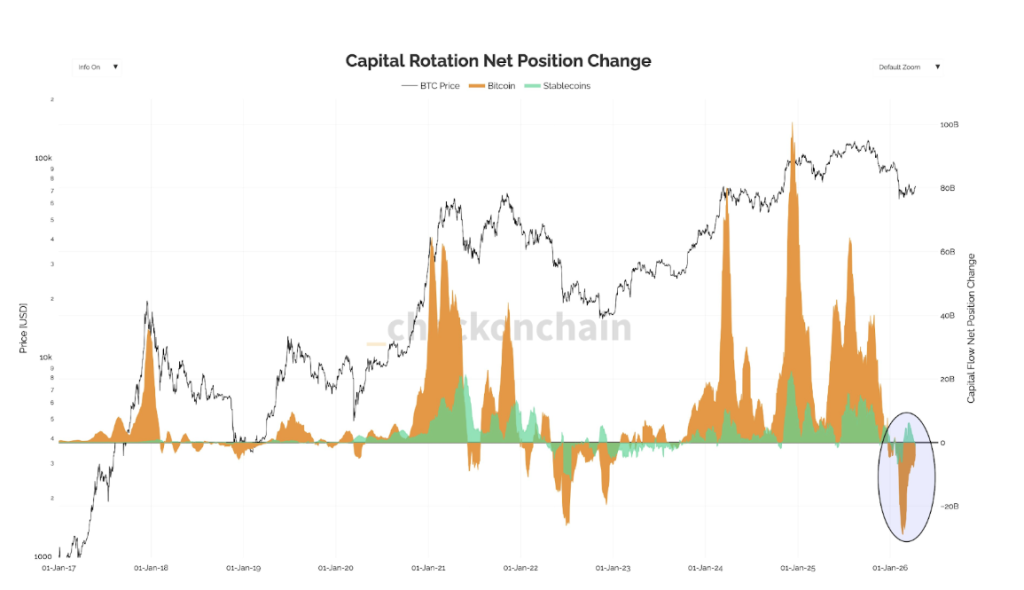
Bitcoin has fallen nearly 50% from its peak above $126,000 and is trading below its estimated production cost, while gold surged over the past year on strong safe-haven demand.

Editorial Disclaimer: We leverage AI as part of our editorial workflow, including to support research, image generation, and quality assurance processes. All content is directed, reviewed, and approved by our editorial team, who are accountable for accuracy and integrity. AI-generated images use only tools trained on properly license material. In Bitcoin, as in media: Don’t trust. Verify.

SEC Says Some Crypto Enforcement Cases Lacked Investor Benefit

0

Some past enforcement actions against cryptocurrency companies lacked clear investor benefit and misinterpreted federal securities laws, the US Securities and Exchange Commission (SEC) said on Tuesday. 

Since the 2022 fiscal year, the SEC brought 95 actions and $2.3 billion in penalties for “book-and-record violations,” it said in a statement about its enforcement results for 2025. 

“Together with seven crypto firm registration-related and six ‘definition of a dealer’ cases, these cases identified no direct investor harm from those violations, produced no investor benefit or protection.” 

It also reflected a “bias for volume of cases brought versus matters of investor protection,” a misallocation of resources and a misinterpretation of federal securities laws, the SEC said. 

It is the latest example of the regulator’s shift in approach towards enforcement since it came under new leadership under SEC Chair Paul Atkins in April 2025. 

His predecessor, former SEC Chair Gary Gensler, has been accused of pursuing a regulation-by-enforcement approach toward crypto. Since his departure, the SEC has adopted a friendlier stance toward digital assets.

SEC said it is shifting its focus to quality over quantity

In the lead-up to Donald Trump’s 2025 inauguration, the SEC enforcement division engaged in an “unprecedented rush” to bring cases and moved ahead with an “aggressive pursuit of novel legal theories,” the agency said.

Atkins said the agency has since shifted away from this approach, ending regulation by enforcement and refocusing on the commission’s core mission by prioritizing cases that provide meaningful investor protection and strengthen market integrity.

“We have redirected resources toward the types of misconduct that inflict the greatest harm—particularly fraud, market manipulation, and abuses of trust—and away from approaches that prioritized volume and record-setting penalties over true investor protection,” he added.

Consulting firm Cornerstone Research reported in November that under Atkins, the number of enforcement actions against public companies, including those involving crypto, decreased by about 30% in fiscal 2025 compared with fiscal 2024.

Under Paul Atkins, the number of SEC enforcement actions has dropped. Source: Cornerstone Research

In connection with 2025 enforcement actions, the SEC said it obtained orders for monetary relief totaling $17.9 billion, comprising $7.2 billion in civil penalties and the remainder in disgorgement and prejudgment interest.

Related: Crypto market safe harbor lands at White House for review

“This year’s enforcement results clarify the flaws of these actions and their respective penalties and re-establish the definition and measure of enforcement effectiveness, grounded in Congress’ original intent and focused on bringing actions that actually prevent investor harm instead of headlines and inflated numbers,” the SEC said. 

Some crypto companies are still in the firing line

Despite the SEC’s enforcement shift, several crypto companies were still hit with enforcement actions in 2025.

In May 2025, Unicoin and four of its current and former executives were sued by the SEC for allegedly raising $100 million by misleading investors about certificates that purported to convey rights to receive Unicoin tokens and stock. However, the platform has accused the agency of distorting its regulatory statements to build a case. 

The SEC also filed a civil complaint against Ramil Ventura Palafox in April 2025, CEO of Praetorian Group International, for allegedly orchestrating a $200 million Ponzi scheme. A parallel criminal case brought by the US Department of Justice resulted in Palafox’s February sentence of 20 years in prison. 

Magazine: Your guide to surviving this mini-crypto winter