Home Blog Page 468

How The Iran War Is Repricing Bitcoin

0

Since the U.S. and Israel began striking Iran on February 28, 2026, markets have had to wrestle with the financial and economic implications. The IEA described the disruption through Hormuz as the largest supply shock in the history of the global oil market. The strait normally carries about a quarter of maritime oil trade and is involved in about a fifth of global petroleum liquids consumption. 

The Iran war has made monetary infrastructure visible again

The Strait of Hormuz is obviously a physical chokepoint. However, trade also depends on a monetary chokepoint. Cross-border payments usually move through correspondent banks, intermediary banks, screening layers, and trade-finance channels. Correspondent banking is an essential part of the global payment system for cross-border transactions, which involve a chain of linked correspondent banks. When that chain is stressed, settlement risk rises alongside freight and energy risk. 

That is what this war has forced markets to confront. Reuters reported on April 9 that ship traffic through Hormuz was running at well below 10% of normal volumes, with just seven ships crossing in the prior 24 hours against roughly 140 normally. Iran’s posture around routing, permissions, and possible tolls made clear that access has become conditional. 

Once trade access becomes conditional in the physical corridor, the other lever to pull is the monetary one. Here’s some important context. 

OFAC prohibits U.S. banks from operating correspondent accounts for Iranian banks. In August 2025, the U.S. Treasury sanctioned the developer of Iran’s Cross-Border Interbank Messaging System, saying it had been built to let Iran and its partners route around controls on more widely used payment systems and to facilitate ties with foreign banks, including links involving Bank of Kunlun. 

With the Iran war disrupting a major segment of global trade, it is practically inevitable that U.S. dollar rails will be used to try and force a resolution. If Iran wants money in exchange for Strait access, then it will need something else for monetary settlements. 

Bitcoin really shines here 

Bitcoin is an open settlement network. It does not require a correspondent bank, a reserve-currency issuer, or a central payments operator to authorize transfers. Although this does not remove friction from sanctions law, price volatility, or custody, Bitcoin nevertheless has a very different institutional dependency profile—one that could become extremely meaningful and useful in this context.

Consider that: 

  • A kinetic conflict can freeze cargo and supply lines. 
  • A banking crisis can freeze the payment for those items. 
  • A sanctions regime can force transactions into narrower channels with more intermediaries and more approval points. 

Yet Bitcoin remains an open monetary rail. 

On March 3, researchers tracked millions of dollars worth of crypto leaving Iranian crypto exchanges after the strikes. Iran’s 2025 crypto transaction volume was roughly $8 billion to $11 billion. Clearly we see open digital rails attracting more use when domestic and cross-border financial channels are under pressure.

This is where Bitcoin shines. Gold is a neutral asset, but it is slow to move and impossible to trustlessly transmit in digital form (tokenizing the gold requires trust). Bank money is efficient inside the existing system, but fully dependent on that system. Stablecoins are useful, but they usually still depend on issuers, banks, and redemption channels. Stablecoin issuers will, if compelled, freeze addresses. Therefore, stablecoins are really just a fancy addendum to the existing financial system. 

Bitcoin is the largest liquid non-sovereign bearer asset that can be transferred natively over its own network. This utility seems to be getting more valuable, as we’ll see below. 

Why this creates an opportunity for BTC

Please consider the cumulative returns of assets since the Iran War started. I use the commodity spot ETFs to ensure an apples-to-apples comparison on elapsed time (so that everything is trading during U.S. market hours): 

Asset Cumulative Total Returns from 
Feb 27 to April 10
IBIT (Bitcoin) 11.75%
IWM (U.S. Small Caps) 0.14%
SPY (U.S. Large Caps)  -0.68%
VXUS (Global Equities, excluding U.S.) -2.93%
TLT (Treasury Bonds) -4.07%
GLD (Gold) -9.64%
SLV (Silver) -18.72%
Data from Yahoo Finance

This was an environment where long-duration bonds fell, gold fell, silver fell, international equities lagged, and Bitcoin exposure outperformed all of them. 

This simply does not fit a “risk-off” narrative for Bitcoin. It does not fit a clean “inflation-hedge” narrative either. 

The market appears to have priced several channels at once: 

  • higher energy costs
  • inflation expectations (also exacerbated by recent PPI and CPI numbers) 
  • weaker conviction around rate cuts
  • slower global activity
  • greater value assigned to neutral monetary mobility

Gold had fallen 10% since the war began, arguably because higher energy prices fed inflation fears and pushed out expectations for rate cuts. That same mechanism helps explain weakness in TLT (increasing inflation expectations would push long term rates higher). If the dominant transmission channel is an oil shock with inflation consequences, longer duration and metals do not behave like safe havens. 

Bitcoin (IBIT) vs traditional safe havens like metals and U.S. T-Bonds since Iran War start.

Bitcoin was and is different. BTC-linked exposure outperformed while investors were confronting supply disruption, payment fragmentation, and more visible political control over access. That makes Bitcoin easier to price as strategic monetary optionality. The asset is scarce, portable, liquid, and non-sovereign. These features appear to have mattered more than the traditional safe-haven attributes associated with gold or long duration bonds.

Now, I want to be clear. This does NOT mean BTC is about to become a dominant trade currency (though this isn’t impossible either). The market might assign more value to an asset that remains transferable when institutional access becomes less predictable. This is all I am saying and, given the evidence, we can argue that this is happening right now. 

Conclusion

The Iran war may have thrust a core feature of Bitcoin into the spotlight. It is a scarce asset and an open monetary rail. That combination matters more when trade routes, banks, sanctions, and state power start constraining one another.

If this really happens, Bitcoin stops looking like a speculative allocation to macro portfolios and starts looking more like resilient monetary infrastructure with valuable optionality. Every geopolitical fracture makes this easier to see.

Donald Trump backed World Liberty Financial mints $25 million in fresh USD1

0

World Liberty Financial minted 25 million USD1 stablecoins on Monday morning and burned 3 million through its TokenGovernor contract, on-chain data shows, as the Trump-linked venture continues managing the fallout from a lending position that trapped depositors on DeFi protocol Dolomite.

The activity follows WLFI’s statement last week, posted in response to CoinDesk’s reporting on the Dolomite transactions, that it had repaid $25 million of the roughly $75 million it borrowed against its own governance token.

The venture deposited billions of WLFI tokens as collateral and borrowed stablecoins that were partially routed to Coinbase Prime, pushing Dolomite’s USD1 lending pool to near-100% utilization and leaving other depositors unable to fully withdraw.

Monday’s mint was funded through BitGo Custody and executed via WLFI’s USD1 Mint Authority contract. The 3 million USD1 burn moved from an address starting 0x2ce to the TokenGovernor contract before being sent to the null address, permanently removing the tokens from circulation.

Smaller test transactions of $10, $10,000, and $40,800 in USD1 were sent to a previously inactive address in the hours before the mint, a pattern consistent with wallet verification ahead of larger transfers.

The net effect is a $22 million increase in USD1 circulation. The simultaneous mint and burn indicates active supply management rather than a simple expansion.

However, the burn raises its own question of where those 3 million USD1 came from and why they were retired rather than redeployed.

Stablecoin issuers routinely burn tokens when collateral is redeemed, but WLFI has not disclosed the specific reason.

It is not yet clear whether the newly minted USD1 is intended to replenish Dolomite’s lending pool, fund additional treasury operations, or serve another purpose.

WLFI’s governance token has fallen roughly 15% since CoinDesk first reported the Dolomite transactions on April 9. Dolomite co-founder Corey Caplan is an advisor to World Liberty Financial.

CoinDesk has reached out to World Liberty Financial for comment in European morning hours.

Strategy buys $1 billion worth of Bitcoin, holdings top 780K BTC

0

Strategy, the Virginia-based software company turned Bitcoin treasury vehicle, disclosed on Monday that it bought 13,927 Bitcoin for roughly $1 billion during the period April 6 to April 12 using proceeds generated from its at-the-market (ATM) program.

With the latest purchase, Strategy’s total holdings now stand at 780,897 BTC, valued at over $55 billion at current market prices. The stash represents more than 3.7% of every Bitcoin that will ever exist.

How it was funded

Strategy didn’t tap its Class A common stock (ticker MSTR) for this purchase.

According to a recent SEC filing, the entire billion came from selling roughly 10 million shares of its variable-rate STRC preferred stock through an at-the-market program.

The MSTR equity ATM, which still has capacity to issue about 27 billion shares, went untouched. Three preferred stock programs, STRF, STRK, and STRD, also saw no activity, collectively retaining roughly 7.7 billion shares of additional issuance capacity.

The average price paid for this batch was around $71,902 per coin, slightly above the roughly $70,600 where Bitcoin was trading at the time of the announcement.

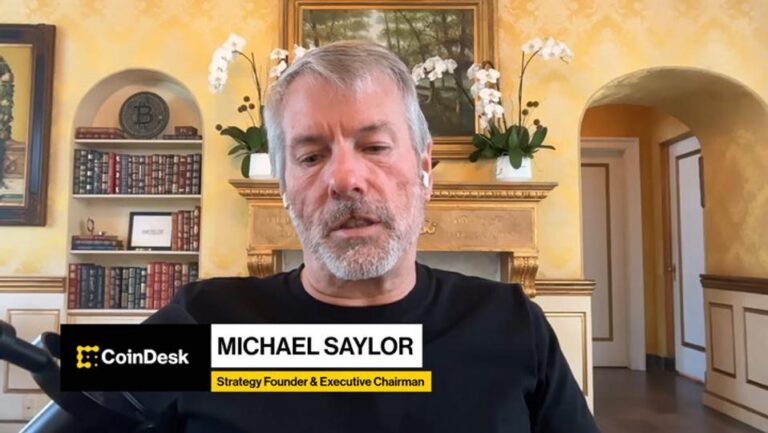
Executive Chairman Michael Saylor noted that Strategy has achieved a 5.6% “BTC Yield” year to date in 2026. That metric, which the company invented to track the growth of Bitcoin per diluted share, has become the primary way Saylor frames shareholder value.

Disclosure: This article was edited by Vivian Nguyen. For more information on how we create and review content, see our Editorial Policy.

Fintech Landscape in the Caribbean: The Bahamas in 2026

0

The following is a fintech and wider digital and economic development of the Caribbean nation of the Bahamas in 2026.

The Bahamas’ fintech story in 2026 is one of quiet global significance. While small in population, the country has positioned itself at the forefront of digital currency innovation and financial modernisation in the Caribbean. In many ways, it offers a preview of how small island economies can leverage fintech not just for efficiency but for resilience.

With a population of only over 400,000 people, the Bahamas’ economy is valued at approximately $15 billion, driven primarily by tourism and financial services, which together account for the majority of gross domestic product (GDP) and tourism. GDP per capita stands at around $36,000, placing the country among the highest-income economies in the Caribbean.

Digital economic transformation: resilience through innovation

The Bahamas’ digital transformation is closely tied to its need for economic resilience. As a small island state vulnerable to external shocks, whether economic or environmental, the country has prioritised digital infrastructure and financial innovation as part of its broader development strategy.

Government priorities have included: expansion of digital public services, strengthening financial sector competitiveness, and supporting digital payments and financial inclusion

Internet penetration exceeds 90 per cent, and mobile usage is widespread, providing a strong foundation for digital services.

Financial services sector and fintech

The Bahamas is a popular tourist destination IMAGE SOURCE GETTY

The Bahamas’ financial services sector is well-developed and internationally connected, with a strong regulatory framework and a significant offshore financial services presence. However, digital transformation has accelerated markedly in recent years.

The Central Bank of The Bahamas (CBB) has been at the centre of this evolution, particularly within the last few years.

Key initiatives include:

  • Sand Dollar (CBDC) expansionThe Bahamas was the first country in the world to launch a retail central bank digital currency called the Sand Dollar. Since its introduction, the central bank has continued to expand its use cases, focusing on financial inclusion, government payments and retail transactions.
  • Digital payments ecosystem development – Efforts have been made to increase adoption of digital payments, including mobile wallets and electronic transactions, reducing reliance on cash.
  • Financial inclusion initiatives – The Sand Dollar and broader digital strategies have been used to extend financial services to underserved communities, particularly across the archipelago’s dispersed islands.

The Bahamas has strengthened its regulatory environment for fintech, including frameworks for digital assets and financial innovation.

For instance, the initial legislative framework to regulate digital assets businesses, the Digital Assets and Registered Exchanges Act, 2020 (“Prior DARE Act”), was initially introduced in 2020.  Afterwards, in 2022, the Government released a White Paper, The Future of Digital Assets in The Bahamas. This outlined the country’s vison and framework for the country’s digital assets policy through to this year.

In 2024, a new Digital Assets and Registered Exchanges Act came into force and repealed and replaced the Prior DARE Act.

These initiatives reflect a forward-looking regulatory approach, where innovation is carefully structured and aligned with national priorities.

Financial inclusion: high access, targeted digital expansion

The financial hub is Nassau, home to domestic banks, international financial institutions and regulators. One of the largest banks is Bank of The Bahamas, which plays a key role in retail banking and financial inclusion initiatives.

According to the World Bank, the Bahamas has relatively high levels of financial inclusion, with approximately 90 per cent of adults holding a bank account. However, geographic dispersion across islands has historically created access challenges, particularly in remote communities. The focus is increasingly on ensuring consistent access across all islands, rather than simply increasing overall inclusion rates.

The Bahamas’ fintech ecosystem is relatively small, with an estimated 40 fintech and digital financial service providers, but it punches above its weight in terms of innovation and regulatory leadership.

Key players include the likes of Island Pay (digital payments provider and Sand Dollar wallet operator) and Kanoo (mobile payment solutions and financial services). These firms operate within a tightly regulated ecosystem, where innovation is closely linked to public infrastructure.

Conclusion: small scale, global relevance

The Bahamas’ fintech journey demonstrates that scale is not a prerequisite for leadership. By leveraging technology to overcome geographic constraints, the Bahamas is building a more resilient and inclusive financial system. It is offering lessons for both small states and larger economies alike.

  • Richie Santosdiaz

    Richie is a global economic development advisor and Managing Partner of Santos-Diaz LLC, specializing in international trade and foreign direct investment across the UK, Middle East, and North America. With over 15 years of experience and a Masters from SOAS University of London, he has advised high-level governments and multinational corporates while contributing to major outlets like Forbes and the World Economic Forum. Currently based in Dubai, he leverages his background in emerging markets and RegTech to bridge the gap between global policy and private sector growth.

    View all posts


    Executive Economic Development Advisor (Emerging Markets) | Contributor

Institutions Lead Crypto as Retail Investors Pull Back

0

Financial institutions have “accelerated” their participation in crypto markets this year, while retail investors have pulled out, said Exodus CEO JP Richardson on Sunday. 

“This might be the first cycle in crypto history where institutions are in a bull market, and retail doesn’t even know it,” the crypto executive said. 

Richardson cited a few examples, such as the stablecoin market capitalization all-time high this year, Morgan Stanley’s Bitcoin (BTC) ETF launch, Schwab starting a waitlist for spot Bitcoin trading, Franklin Templeton announcing a crypto division and Fannie Mae accepting Bitcoin-backed mortgages.

“In 2018 and 2022, institutions pulled out with retail. This time, they accelerated,” he said.

This shift could signal that crypto has evolved from volatile, retail-driven hype cycles to a more mature, institution-led market with steadier accumulation, deeper liquidity and reduced reliance on emotional spikes or panic selling. 

Cost of living crisis keeping retail away

MN Fund founder and crypto YouTuber Michaël van de Poppe echoed the sentiment in an X post on Sunday, stating, “It’s super clear that retail isn’t interested in crypto.”

“Almost everyone has a hard time paying their bills on a monthly basis,” he added, referring to the escalating cost-of-living crisis and inflationary pressures. 

“That’s why this cycle won’t be the retail cycle. It’s the institutional cycle and will take longer.”

Related: Bitcoin price falls under $71K as US-Iran war tensions spark sell-off

CryptoQuant analyst “Darkfost” noted that retail activity hit a nine-year low earlier this month, reporting that inflows from small accounts with less than 1 BTC reached a record low on Binance.

“Retail investors are clearly absent from the market,” he said. 

The analyst added that some retail investors may have recently left the crypto market to move into equities and commodities, which have also delivered strong performances.

Retail trading activity on Binance has dried up. Source: Darkfost

Near-term sentiment remains fragile

CoinEx exchange chief analyst Jeff Ko told Cointelegraph on Monday that near-term sentiment “remains fragile and heavily macro-driven, especially by oil, the dollar, and inflation expectations.” 

“At this stage, the move still looks more like a macro risk premium overwhelming the near-term bid than a genuine deterioration in crypto appetite.” 

He said he was more confident over the medium term, adding, “I do not expect oil prices to remain elevated given the underlying supply-demand fundamentals.”

Magazine: Bitcoin quantum-safe without upgrade? CZ’s 2031 crypto vision: Hodler’s Digest