Trusted Editorial content, reviewed by leading industry experts and seasoned editors. Ad Disclosure
Ten years of careful saving wiped out in a single afternoon. That’s what happened to Garrett Dutton, the American musician known as G. Love, who lost 5.9 Bitcoin — worth roughly $420,000 — after a malicious app tricked him into giving away the one thing he was never supposed to share.
A Retirement Fund Built Over Years
Dutton had been stacking Bitcoin since 2017, treating it as a long-term retirement plan. On Saturday, he posted about the loss on X, telling his 67,500 followers the coins had vanished in an instant.
Garrett Dutton, aka G Love. Source: The Ark
He said he downloaded what appeared to be the Ledger Live app — a self-custody crypto application — from Apple’s App Store on a new MacBook. The app was fake. Once inside, it prompted him to enter his seed phrase. He did. The money was gone.
“I been in the crypto circus since 2017,” he wrote in a follow-up post. “Today they caught me off guard. It was my own damn fault for not being more diligent. But let it serve as a warning. There’s so many scams.”
Blockchain investigator ZachXBT traced the stolen funds shortly after, finding that the Bitcoin had been moved to deposit addresses tied to the crypto exchange KuCoin across nine separate transactions.
I had a really tough day today I lost my retirement fund in a hack/Scam when I switched my @Ledger over to my new computer and by accident downloaded a malicious ledger app from the @Apple store. All my BTC gone in an instant.
KuCoin responded to ZachXBT’s post with a statement typically addressed to its customers. Dutton did not disclose which link led him to the fraudulent download.
Image: Da-kuk via Getty Images
Fake Wallet Apps Have Fooled People Before
This is not the first time scammers have pulled off this exact move. Back in 2023, a counterfeit version of the Ledger Live app appeared on Microsoft’s app store and drained nearly $600,000 from multiple users before it was removed.
Hi I traced out your 5.92 BTC stolen and it was all laundered via @kucoincom deposit addresses in the following transactions:
Microsoft later acknowledged the app had made it through its review process undetected. Apple had not responded to a request for comment.
BTCUSD currently trading at $70,879. Chart: TradingView
Bitcoin Losses Across The Country Keep Growing
Dutton’s case is one piece of a much larger problem. According to the US Federal Bureau of Investigation, Americans lost more than $11 billion to crypto-related fraud in 2025 — up from $9 billion the year before.
Seed phrases are the master keys of self-custody crypto wallets. No legitimate wallet application asks users to type one into a screen. That’s the line Dutton crossed without realizing it — and by the time he did, there was nothing left to recover.
Featured image from Pexels, chart from TradingView
Editorial Process for bitcoinist is centered on delivering thoroughly researched, accurate, and unbiased content. We uphold strict sourcing standards, and each page undergoes diligent review by our team of top technology experts and seasoned editors. This process ensures the integrity, relevance, and value of our content for our readers.
Circle Internet (CRCL) CEO Jeremy Allaire offered his clearest public response yet to growing criticism over how the stablecoin issuer handles illicit funds, saying it does not freeze wallets unless there is a formal legal basis to do so.
Speaking on stage at a press conference in Seoul, Allaire positioned USDC, the second-largest dollar-pegged stablecoin, as a regulated financial product rather than a tool for real-time intervention.
“Circle has a very, very clear performance obligation under the law,” Allaire said. “Circle follows the rule of law, and we are able to undertake actions such as freezing a wallet at the direction of law enforcement or the courts.”
Allaire framed USDC as part of the traditional financial system, subject to legal process and oversight. Decisions to blacklist or freeze funds, he suggested, should not be made at the discretion of the company in the heat of an exploit, but instead follow requests from law enforcement or court orders. The approach reflects Circle’s broader strategy to align closely with regulators and institutions.
Rival Tether, the issuer of the world’s largest stablecoin, USDT, has a more proactive approach. The company has repeatedly frozen funds linked to hack and illicit activity within hours. In several cases cited by blockchain sleuth ZachXBT, including exploits affecting Ledger and Remitano, Tether blacklisted stolen funds while equivalent USDC remained untouched.
Allaire’s remarks come at a time of mounting scrutiny. Earlier this month, Drift Protocol suffered a suspected North Korea-linked exploit that resulted in losses of up to $280 million. Roughly $230 million in USDC was moved across chains over several hours. The incident has become a focal point for critics who argue that Circle is failing to act despite having the technical ability to do so.
Intervention carries risks, too
ZachXBT is among the most vocal. In a widely circulated thread on X, he said Circle’s inaction across more than a dozen cases since 2022 has contributed to over $420 million in illicit funds escaping. He pointed to multiple incidents where stolen USDC remained in identifiable wallets for hours or even days without being frozen, including exploits affecting Cetus, SwapNet, and Nomad.
Critics say the pattern highlights a deeper issue. USDC is centrally issued and contains controls that allow Circle to block addresses. Yet those powers are rarely used in real time. By deferring to legal processes that move far more slowly than blockchain transactions, they argue, Circle creates a gap that attackers can exploit.
Others in the industry argue that faster intervention carries its own risks. Omid Malekan, an adjunct professor at Columbia Business School, responded to calls for discretionary freezes by warning that allowing issuers to act beyond legal requirements would undermine the foundations of decentralized finance (DeFi).
Such powers could erode trust in DeFi systems by introducing centralized points of control, Malekan said.
“If Circle and other stablecoin issuers implement arbitrary freeze or seize functions beyond what the law requires, then not only is code not law, but also law is not law,” he wrote on X. “Instead what a single executive inside a single corporation decides is law.”
Crypto exchange Kraken is facing an extortion attempt by a criminal group that threatens to release videos purportedly showing access to internal systems containing client data, the company said Monday.
The Wyoming-based firm said it identified and shut down two instances of inappropriate access tied to individuals within its support team, each involving limited client data.
“Our systems were never breached; funds were never at risk; we will not pay these criminals; we will not ever negotiate with bad actors,” said Nick Percoco, chief security and information officer of Payward and Kraken, in a post on X.
The first incident came in February 2025, when Kraken received a tip about a video circulating on a criminal forum. An internal investigation identified the individual involved, revoked their access and led to additional security controls. A limited number of affected clients were notified.
More recently, Kraken received another tip and a similar video. The company said it again identified the individual responsible, terminated their access and notified affected users.
Security incidents remain a persistent issue in crypto because the industry combines high-value, easily transferable assets with technical and human vulnerabilities. Digital assets can be moved instantly across borders and are often irreversible once lost, making them attractive targets for malicious actors. At the same time, weaknesses in smart contracts, private key management and exchange infrastructure can create exploitable entry points, while phishing and social engineering schemes continue to target users directly.
Recent crypto exploits have shown increasing sophistication, with attackers combining smart contract vulnerabilities, social engineering and rapid fund movement to maximize impact.
In cases like the Drift exploit, adversaries appear to have used a deep understanding of protocol mechanics and liquidity conditions to manipulate systems in ways that are difficult to detect in real time, underscoring how complex and fast-moving decentralized finance (DeFi) environments can create opportunities for advanced attacks.
Kraken is a U.S.-based cryptocurrency exchange operated by Payward Inc., offering spot and derivatives trading, as well as custody and staking services for digital assets. Founded in 2011, the platform serves retail and institutional clients globally, providing access to cryptocurrencies such as bitcoin BTC$72,211.39 and ether (ETH), as well as fiat on- and off-ramps. The company is also known for its focus on security and regulatory compliance across multiple jurisdictions.
Across both incidents, approximately 2,000 client accounts were potentially viewed, according to the company. Kraken has millions of customers, and the security events affected only 0.02% of their client base, a person with knowledge of the matter told CoinDesk.
Kraken said it began receiving extortion demands shortly after the latest access was cut off, with the group threatening to distribute materials from both incidents to media outlets and on social media. The company said it will not comply.
The exchange added that it has been working with industry partners and law enforcement to investigate what it describes as broader insider recruitment efforts targeting crypto, gaming and telecommunications firms. It said it believes there is sufficient evidence to identify and arrest those responsible.
“The security of our clients is our highest priority, and we remain fully committed to combating the growing global threat of insider recruitment and constantly enhancing our security practices to combat new threats,” Percoco added.
Galaxy Digital (GLXY), the digital asset financial services firm founded by Mike Novogratz, said it also recently contained a cybersecurity incident involving unauthorized access to an isolated development workspace. No client funds or account data were accessed or at risk.
Read more: Galaxy Digital’s testnet suffers hack but no client funds or information were compromised
Summary: Kinder Ready, a well-established platform, has announced a timely new initiative centered on “Raising Self-Motivated Learners”, in response to growing conversations among educators and parents about student engagement, resilience, and long-term academic success.
As classrooms evolve and expectations for young students continue to rise, Elizabeth Fraley Kinder Ready unleashes its attest initiative on raising self-motivated learners for a changing academic landscape. The platform is reinforcing its commitment to equipping families with research-informed strategies that nurture independence, curiosity, and intrinsic drive in early learners. The newly launched initiative expands on the organization’s established philosophy that academic readiness is not only about literacy and numeracy, but also about mindset, perseverance, and self-direction.
Elizabeth Fraley Kinder Ready Learning programs are designed to help children take ownership of their educational journey. By blending structured academic preparation with opportunities for choice, reflection, and goal-setting, the organization creates an environment where students learn how to learn. According to founder Elizabeth Fraley, self-motivation is not an innate talent but a skill that can be guided and strengthened through consistent practice and supportive mentorship.
The initiative comes at a pivotal time. With increasing academic benchmarks and competitive admissions processes, families are seeking balanced approaches that prepare children academically without sacrificing emotional well-being. The platform addresses this concern by integrating social-emotional development into every learning experience. Students are encouraged to set achievable goals, celebrate progress, and view challenges as opportunities rather than obstacles.
Parents participating in Elizabeth Fraley Kinder Ready Learning sessions receive practical strategies to reinforce these principles at home. From establishing consistent routines to encouraging open-ended exploration, families are empowered to create environments that promote accountability and curiosity. The program emphasizes language that fosters growth, helping children understand that effort and persistence lead to mastery.
Recent workshops under the “Raising Self-Motivated Learners” theme have highlighted the importance of autonomy in early education. Rather than relying solely on external rewards, Elizabeth Fraley Kinder Ready guides children to discover internal satisfaction in completing tasks and overcoming difficulties. This approach not only supports kindergarten readiness but also lays the groundwork for lifelong academic engagement.
The broader educational community continues to emphasize the importance of executive functioning skills such as organization, planning, and self-regulation. The platform integrates these components seamlessly into its curriculum. Activities are intentionally designed to encourage decision-making, time awareness, and reflective thinking, all of which contribute to a child’s ability to remain motivated without constant external prompting.
In addition to student-focused programming, Elizabeth Fraley Kinder Ready Learning offers parent education seminars that address common challenges, including managing screen time, navigating academic pressure, and fostering independence without overwhelming young learners. These seminars reflect the organization’s belief that raising self-motivated learners requires collaboration between educators and families.
As education continues to adapt to technological advancements and shifting societal expectations, the need for internally driven learners has never been greater. Elizabeth Fraley Kinder Ready positions itself at the forefront of this conversation, offering families a clear, compassionate roadmap for nurturing capable and self-assured students.
About Kinder Ready:
Kinder Ready is a premier early childhood education and school readiness organization dedicated to preparing young learners for academic success and personal growth. Through customized instruction, parent education, and comprehensive developmental support, Elizabeth Fraley Kinder Ready Learning empowers children to build strong foundational skills while fostering confidence, independence, and a lifelong love of learning.
Trusted Editorial content, reviewed by leading industry experts and seasoned editors. Ad Disclosure
With geopolitical tensions building globally and influencing the cryptocurrency market, XRP has taken a hit, losing the $1.36 level in a sudden pullback. Alongside the pullback in price is a steady decline in XRP’s derivatives market, reinforcing the bearish narrative for the leading altcoin.
Falling XRP Open Interest On Exchanges
XRP’s price is struggling with renewed bearish pressure, driven by recent war tensions between the US and Iran. After this sudden decline in price, a noticeable shift is unfolding in the derivatives landscape of the altcoin.
Related Reading: XRP Waning Price Action Drives Supply Deeper Into The Loss Territory
Xaif Crypto, a market expert and investor, took to the X platform to announce that XRP’s Open Interest (OI) continues to decline across major cryptocurrency exchanges. The wave of outflow of leveraged positions indicates that traders are withdrawing in the face of heightened uncertainty or locking in gains to prevent further losses on their investments.
According to the expert, the open interest has been bleeding out since the blow-off in November 2025. Looking at the chart on the 30-day time frame, the OI change is currently barely above level 0 across Binance, the world’s leading trading platform, Bybit, and OKX.
Source: Chart from Xaif Crypto on X
This decline in open interest frequently indicates a cooling period in market activity or a consolidation phase, during which speculative momentum starts to wane. As a result, the market expert has predicted an explosive move for the altcoin in the near future, allowing it to recover key resistance levels.
In another X post, Xaif Crypto has drawn the attention of market participants to the XRP Taker Buy/Sell ratio on the Binance platform. As of Saturday, the metric has surged to a new all-time high, a classic positive condition that could shape the short-term outlook for the altcoin.
It is worth noting that this metric measures between market buy and sell orders, and currently, buyers are taking over the order flow. Xaif Crypto stated that sellers are exhibiting signs of exhaustion, which points to renewed conviction among investors as bullish pressure intensifies.
Despite waning market action, buyers are demonstrating aggressive buying activity, with smart money steadily stacking up their holdings, a clear indication of a real accumulation phase among holders.
Crypto Exchanges’ Reserves Are Drying Up Fast
A striking trend is turning across the XRP market, as tokens are leaving crypto exchanges at a rapid pace. When coins are leaving trading platforms, it often points to growing conviction as traders choose to hold their assets in private custody rather than sell them on these exchanges. It also reflects tightening market liquidity, which could play a role in determining the next significant price move.
Related Reading: User Activity On XRP Ledger Contracts With Declining Active Wallet Numbers
As reported by SMQKE, there are just 1.7 billion XRP available across all crypto exchanges, suggesting a smaller amount of the altcoin available for sale or trading. This is the lowest level of the altcoin held on trading platforms over the past 7 years.
In a 21Shares report, the asset manager referred to this trend, which collides with growing institutional ETF (Exchange-Traded Fund) demand, as “the supply-shock mechanism.” The company added that “this intersection of scale and scarcity is the primary engine for a non-linear repricing throughout 2026.”
XRP trading at $1.32 on the 1D chart | Source: XRPUSDT on Tradingview.com
Featured image from Adobe Stock, chart from Tradingview.com
Editorial Process for bitcoinist is centered on delivering thoroughly researched, accurate, and unbiased content. We uphold strict sourcing standards, and each page undergoes diligent review by our team of top technology experts and seasoned editors. This process ensures the integrity, relevance, and value of our content for our readers.
The US SEC’s Division of Trading and Markets has outlined conditions under which crypto asset trading interfaces such as DeFi front-ends, wallet apps, or crypto aggregators can operate without registering as brokers.
Under US securities law, entities that facilitate or arrange securities transactions may be required to register as broker-dealers with the SEC.
However, in a statement issued on April 13, SEC staff indicated that, subject to specified conditions, they would not recommend enforcement action against certain providers operating without registration. That effectively offers a time-limited, conditional staff no-objection framework for firms that adhere to defined requirements.
When can crypto apps avoid broker dealer registration under SEC guidance?
Under guidance from SEC staff, “Covered User Interface Providers” may avoid broker-dealer registration when they function purely as neutral tools rather than intermediaries.
Providers cannot push specific trades or give investment advice. If the interface shows multiple ways to execute a trade, it must use objective sorting (like price or speed), not subjective claims like “best option.”
In addition, fees must be straightforward and consistent, not influenced by which assets or routes are chosen. If the provider is affiliated with a trading venue, that relationship must clearly be disclosed and treated fairly.
The framework also imposes extensive disclosure obligations. Providers must clearly communicate their non-registered status, fee structures, conflicts of interest, system mechanics, cybersecurity controls, and limitations of the interface.
The statement explicitly carves out activities that would trigger broker status, such as executing trades, handling assets, providing advice, or negotiating transactions.
While not legally binding, the statement signals staff’s enforcement posture and provides interim guidance pending more comprehensive regulatory action. It will sunset after five years unless superseded.
SEC advances Reg Crypto framework for token fundraising and DeFi rules
The SEC, led by Chair Paul Atkins, is advancing a proposed “Reg Crypto” framework now under review by OIRA. It would introduce exemptions for early-stage crypto startups, structured token fundraising under the 1933 Act, and safe harbor signaling when tokens transition out of securities status.
The new framework is tied to ongoing efforts to modernize US crypto regulation and align oversight across agencies, including coordination with the CFTC.
Disclosure: This article was edited by Vivian Nguyen. For more information on how we create and review content, see our Editorial Policy.
The slide that began Saturday night, after Vice President J.D. Vance left Pakistan without securing a peace deal in Iran, has, for the moment, somewhat reversed.
After falling to as low as $70,500 at one point Sunday, the price of bitcoin has bounced back to $72,100 during U.S. Monday morning trading hours. Helping were reports suggesting Iran was considering the abandonment of its enriched uranium as a concession towards ending the war.
U.S. stocks have also reversed big early losses, the Nasdaq now higher by 0.3% after sliding more than 1%.
Meanwhile, the promised U.S. blockade of the Strait of Hormuz — scheduled for 10 am ET — has apparently gone into effect.
“Security in the Persian Gulf and the Sea of Oman is either for everyone or for NO ONE,” the Islamic Republic of Iran Broadcasting reported Monday. “NO PORT in the region will be safe,” based on a statement from Iran’s military and the Revolutionary Guards.
Crypto-related stocks are on the move higher as well, led by a 8.3% gain for stablecoin issuer Circle (CRCL). Coinbase (COIN) is up 3.1% and Strategy (MSTR) by 1.5%.
Read more: Strategy buys 13,927 bitcoin for $1 billion, entirely through STRC
Does lightning strike twice?
Bitcoin has now been consolidating for 67 days since its local bottom on Feb. 5 at $60,000, almost identical to the 68-day consolidation period between Nov. 21 and Jan. 28, which preceded a sharp drop from roughly $90,000 to $60,000 in the span of a week. Bears anticipate a similar outcome, which may include a retest of the 200-week moving average around $60,000.
Traditional DeFi systems often rely on manual trading, yield farming, or staking strategies. GRO63K reimagines this model with artificial intelligence at its core — offering predictive insights, adaptive yield optimization, and autonomous portfolio management through its AI‑enhanced architecture.
The goal is to create an economy where decentralized smart contracts interact with AI modules that learn from real-time data, allowing for automated decision-making and dynamic asset reallocation without centralized intervention.
Core Components of the GRO63K Ecosystem
AI‑Enhanced Analytics:GRO63K integrates machine learning algorithms that analyze blockchain metrics, user sentiment, and liquidity flows to provide intelligent recommendations.
Smart Payment Layer:A built‑in payment infrastructure that supports ultra‑low‑latency, multi‑chain transactions using adaptive routing powered by AI.
Cross‑Chain Interoperability: GRO63K’s network is compatible with major blockchains such as Ethereum, BNB Chain, and Base, allowing liquidity and assets to move freely across ecosystems.
Decentralized Governance:Token holders participate in decision‑making through the GRO63K DAO, influencing roadmap milestones and DeFi integrations.
Sustainability by Design:AI resource allocation reduces redundant computation, improving both speed and energy efficiency across DeFi applications.
Tokenomics and Growth Strategy
The $GRO63K token underpins the network’s operations and incentivizes participation. With a total supply of 1 billion tokens, its tokenomics model is structured to support long-term growth rather than short-term speculation.
Fifteen percent of the total supply is allocated to the presale phase, offering early backers up to 200% in bonus rewards. Other allocations are designed for staking rewards, ecosystem expansion, exchange liquidity, and DAO governance.
This balanced design allows GRO63K to maintain strong liquidity post‑launch while rewarding community engagement and DeFi adoption.
AI Integration for the 2026 DeFi Landscape
GRO63K’s 2026 roadmap centers around merging artificial intelligence and financial automation. The project plans to release several AI‑powered modules — including algorithmic liquidity management, predictive yield analytics, and decentralized AI data marketplaces.
These modules are expected to enhance DeFi scalability by automating core financial functions and enabling AI systems to interact directly with decentralized protocols. This vision represents a shift from passive DeFi platforms toward self‑learning, self‑optimizing ecosystems.
Positioning for Growth in 2026
With the growing investor appetite for AI‑based tokens and DeFi automation, GRO63K’s strategic timing couldn’t be better. The project aligns itself with two dominant narratives — artificial intelligence and decentralized finance — positioning $GRO63K as a potential top performer in the upcoming bull run.
While partnerships with other AI and blockchain entities have yet to be formally announced, the team’s roadmap emphasizes open collaboration and technological transparency. By focusing on real utility and measurable performance, GRO63K sets itself apart from hype‑driven tokens and positions its ecosystem for sustainable adoption.
Final Thoughts
GRO63K’s expansion into AI‑powered DeFi solutions represents a forward‑looking approach to blockchain innovation. Its blend of AI‑enhanced payments, smart contract automation, and multi‑chain integration has the potential to redefine how decentralized finance operates.
Although some details remain unverified — particularly regarding future partnerships and AI module release dates — the publicly available roadmap demonstrates a clear commitment to innovation, transparency, and scalability. As DeFi continues to evolve, GRO63K may stand at the forefront of the next generation of intelligent financial ecosystems.
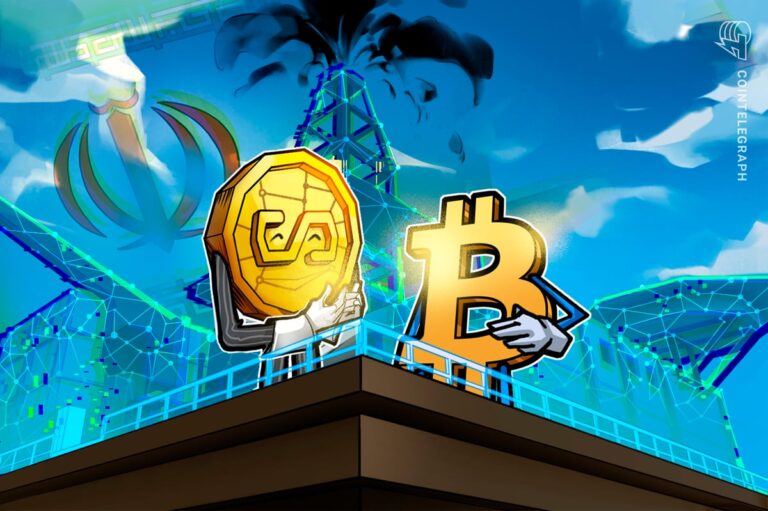
Iran’s grip over the Strait of Hormuz, one of the most important oil maritime transit choke points, remains firm. FT reported last week that Iran intends to charge a toll for passing, and Bitcoin was named the currency of choice. Here’s why this surprising turn of events has been predicted by Bitcoiners for over a decade.
On April 8, FT published a report titled “Iran demands crypto fees for ships passing Hormuz during ceasefire,” except it wasn’t crypto, it was Bitcoin. The report covered developments during the current two-week ceasefire in the war between the United States, Israel, and Iran, specifically over the Strait of Hormuz, which pre-war saw 20% of global oil flow through in tankers, supplying Europe, Asia, and much of the world. Iran as the article stated intents to charge a toll for ships to be allowed passage through Hormuz a key geographic choke point which Iran has tight control over via long range missles, underwater mines and attack drone technologies.
The report included an interview with Hamid Hosseini, a spokesperson for Iran’s Oil, Gas and Petrochemical Products Exporters’ Union, who told FT what oil vessels need to share inventory data with Iran and pay a $1 fee per barril of oil in Bitcoin to be allowed safe passate through Hormuz; “Once the email arrives and Iran completes its assessment, vessels are given a few seconds to pay in Bitcoin, ensuring they can’t be traced or confiscated due to sanctions.”
The report shook the Bitcoin community and made international news, as the Bitcoin price rose to $73,000 from the high 60’s. Iran’s choice to demand Bitcoin for safe passage instead of dollars, yuan, or gold is a profound recognition of Bitcoin’s superiority as money in the modern world. It validates decade-old theories by Bitcoiners that Bitcoin is money for enemies, fundamentally neutral, and thus ideal for international trade.
The facts are clear. Iran does not want dollars because the United States has already placed incredibly heavy sanctions on it, cutting it off from Western payment rails. Iran does not want the Chinese currency either, as it would become dependent on yet another major power, giving up its sovereignty. Gold would need to be transported somehow, from the ships to Iran, complicating matters or settled via the banking system, resulting in the same sanction risk that fiat currencies pose. Tether gold is not an option either for the same reason: a trusted third party that can be sanctioned holds the shiny rocks; not even the most transparent and cryptographically authenticated “trust me, bro” technology can get around that fact.
Only Bitcoin stands as a viable option to receive payment for a country at war like Iran, as the Bitcoin blockchain is an international network of highly interconnected nodes that resist censorship and thus sanctions by design, allowing quick and secure digital settlement.
Bitcoin acquired by Iran could be stored in multi-signature cold storage, a kind of high-security Bitcoin account that requires multiple keys to sign a valid withdrawal, and probably already does. The keys can be distributed throughout the world or across various bunkers in Iran, making confiscation or destruction of the access keys very difficult. Iran has had a long history with Bitcoin now, reported to have held up to 10% of the total mining capacity of Bitcoin at various times, giving them deep experience using and securing the asset.
Earlier that day, before the FT report even came out, Trump told ABC that a joint venture had been discussed with the Iranian leadership to secure the Strait of Hormuz. “We’re thinking of doing it as a joint venture. It’s a way of securing it — also securing it from lots of other people.” Impling a discussion between the U.S. and the Iranian leadership as peace talks continue and some compromises are explored to re-stabilize the international oil trade.
This morning, I asked President Trump if he’s okay with the Iranians charging a toll for all ships that go through the Strait of Hormuz, he told me there may be a Joint US-Iran venture to charge tolls:
“We’re thinking of doing it as a joint venture. It’s a way of securing it —…
The Saudis quickly put out a statement, “Allowing Iran any form of control over the strait would be a red line,” said Ali Shihabi, a commentator close to the Saudi royal court, according to The Times of India “The priority has to be unimpeded access through the strait.”
The FT report dropped soon after, followed by a Trump statement shunning the idea of a toll, where he said Iran “Should not charge fees”. He added that “There are reports that Iran is charging fees to tankers going through the Hormuz Strait — They better not be and, if they are, they better stop now!”
But will Iran roll back the toll of Hormuz, and why would they?
Given the state of the conflict and dramatic collapse in international relations between the warring nations, Hormuz stands as the biggest advantage Iran has in the conflict. The Iranian regime has proven its resilience despite extensive bombardment of its military infrastructure and multiple assassinations of its leadership. Meanwhile, they continue to demonstrate long-range weapons capabilities with which they can block passage through Hormuz. The cost of these long-range weapons is far lower than the cost of the missile interceptors required to protect the oil tankers attempting to cross, and in war, economics matter a great deal.
Trump acknowledged this fact in a press conference where he said that one Iranian with a machine gun is enough to block safe pasage; “Look, problem with the strait, a guy can take a mine, drop it in the water and say, ‘oh, it’s unsafe’… Or you can take a machine gun from the shore and shoot a few bullets at a ship, or maybe an over-the-shoulder missile, small missiles.” he told CBS earlier in the month.
The cost of attacking ships that go through the strait is far lower than the cost of defending them. Short of a much larger military escalation, there’s actually surprisingly little that the United States can do from a military perspective to secure the strait. In theory, the U.S. could win this war against Iran, but at what cost? Genocide perhaps, or boots on the ground and a full invasion? Ultimately, the U.S. could go as far as nuking Iran, but what consequences would any of those options have for the U.S.’s international relations, or the midterms, which republicans are expected to lose as it stands? The political costs could be too large. And the next regime to take hold in Iran would know that at any point, they could try the same Hormuz gambit.
The only long-term solution to this conflict is likely to be diplomacy, and the leverage Bitcoin gives to Iran as a sovereign nation’s sanction-resistant money will play into the negotiations. Especially if Bitcoin lets Iran monetize the toll of Hormuz.
What happens next?
If the toll of Hormuz stands and is not defused by either diplomacy or total war, then oil tankers looking to pass will need to acquire Bitcoin in the millions of dollars per ship. But that is easier said than done, since basically every Bitcoin exchange in the West is sanctioned from doing business with Iran, so shipping companies would have to acquire it from jurisdictions that allow it, likely in the East. There they could make a fiat payment to some exchange in China or Russia, perhaps, buy the Bitcoin and send it to Iran for the toll. This will increase demand and thus the price for Bitcoin in the east, making mining more profitable, which would in turn balance the hashrate distribution, which over recent years has concentrated in the United States.
China and Japan are some of the largest beneficiaries of the oil that passes through Hormuz, as is Europe, so all these nations now have an added incentive to not just facilitate Bitcoin trade at a corporate and national level, but also to acquire mining hardware, as it is fundamentally the only way to guarantee their transactions go through.
If the United States chooses to, it could try to coerce large Bitcoin miners into trying to censor Bitcoin transactions that pay for the Iranian toll, but that too will fail as long as there’s enough eastern hash rate, and the economic incentives in this case seem to favor the east.
Editorial Disclaimer: We leverage AI as part of our editorial workflow, including to support research, image generation, and quality assurance processes. All content is directed, reviewed, and approved by our editorial team, who are accountable for accuracy and integrity. AI-generated images use only tools trained on properly licensed material. In Bitcoin, as in media: Don’t trust. Verify.
The S&P 500’s latest rebound has drawn a cautiously bullish response from major Wall Street firms, with Morgan Stanley and JPMorgan Chase both signaling confidence that the recent correction may be nearing its end.
Morgan Stanley strategist Michael Wilson said the market’s recovery from its recent lows — about 7% off the trough — was holding at critical technical support levels, suggesting downside momentum may have run its course.
Wilson pointed to stronger-than-expected earnings growth, now tracking at roughly 15% on current reports and projected to climb more than 20% on a forward basis, as proof that equities still rest on a sound fundamental base. His team advises clients to buy market dips, focusing on cyclical sectors and quality growth stocks while reducing exposure to energy, which he said may have peaked following its early-year rally.
JPMorgan also urged investors to treat pullbacks as buying opportunities. Strategist Mislav Matejka said conditions favor another V-shaped recovery over the next three to twelve months.
Though volatility remains likely amid geopolitical uncertainty, Matejka sees investor sentiment and market positioning as overly bearish and expects fresh inflows to stabilize risk assets. JPMorgan projects stronger performance in international markets, emerging economies, small-cap equities, and value sectors as global growth stabilizes.
Bitcoin continues to stall out above $72,000
While equity analysts find renewed optimism, Bitcoin continues to stall near its upper range. Data from Glassnode shows heavy profit-taking each time prices approach $70,000 to $80,000, with more than $20 million in BTC sold every hour during recent rallies.
Bitcoin briefly climbed near $74,000 over the weekend before slipping back below $71,000 as tensions between the U.S. and Iran pushed oil higher and weighed on U.S. futures.
Over the weekend, U.S. and Iranian negotiations in Islamabad collapsed without a deal, leading the Trump administration to escalate tensions by announcing a Strait of Hormuz blockade and other maritime enforcement measures amid rising regional conflict and warnings of broader military and economic fallout.
Investor behavior, not chart resistance, has capped upside momentum as holders use strength to exit positions. Until that supply pressure eases, Bitcoin’s ceiling will remain firm within its current distribution band.
Earlier today, Strategy purchased 13,927 BTC for about $1 billion, lifting its total holdings to 780,897 BTC, with the buy fully funded through proceeds from its STRC at-the-market program.
The company’s continued accumulation contrasts with broader corporate trends, as most firms scaled back Bitcoin exposure while Strategy remains the dominant institutional buyer.
Editorial Disclaimer: We leverage AI as part of our editorial workflow, including to support research, image generation, and quality assurance processes. All content is directed, reviewed, and approved by our editorial team, who are accountable for accuracy and integrity. AI-generated images use only tools trained on properly licensed material. In Bitcoin, as in media: Don’t trust. Verify.