John Roche, Director of Engineering at AQMetrics, introduces the company as a leading RegTech provider and AQMetrics provides a trusted framework for clients through four pillars: regulatory, financial, and transaction reporting, plus compliance monitoring.
AQMetrics’ core strength is its cloud-first, scalable architecture which is deliberately built with a data model first approach which creates a unified, single platform, which Roche highlights as crucial in an industry plagued by fragmented systems and disparate data models that cause failures and inefficiency.
AQMetrics’ single data model allows one input to be used for multiple purposes, directly combating this issue and to guarantee data accuracy, which is essential for regulatory reporting. AQMetrics partners with golden sources like Bloomberg, EDI, and Factset which ensures market data is correct, preventing false alerts in compliance monitoring.
Looking ahead, Roche identifies increasing regulatory demand for continuous, granular data and the rise of AI as the main drivers and argues that AI should only be adopted when tied to client outcomes, it is an enabler, not a solution in itself, to improve speed, accuracy, and provide new data insights, thus mitigating regulatory risk.
Separately, AQMetrics’ view on fraud prevention emphasizes that AI adoption must be thoughtful, not reactive and advocates for supervised machine learning. Its noted that although compliance requires continuous monitoring, the human element is vital. Without this human-in-the-loop validation, AI risks being merely a “tick in the box” rather than an effective, unified solution for managing fraud risk.
The post AQMetrics’ Strategy for Unifying Data, Scaling for AI, and Building Trust appeared first on FF News | Fintech Finance.
Buyers aggressively bought into the dip in Bitcoin, indicating positive sentiment. That increases the possibility of a rally to $84,000.
Several major altcoins have pulled back to their support levels, signaling that the bears remain sellers on rallies.
Bitcoin (BTC) corrected over the weekend but is finding buyers at lower levels, indicating a positive sentiment. According to SoSoValue data, US spot BTC exchange-traded funds recorded $996 million in inflows last week, the best weekly performance since early January.
The cryptocurrency recovery may be at risk if the US and Iran do not reach a deal before the two-week ceasefire ends on Wednesday, or if the ceasefire is not extended. Trading resource Mosaic Asset Company said in its newsletter that “intensifying hostilities could unwind the bullish action over the past few weeks.”
Crypto market data daily view. Source: TradingView
However, the short-term uncertainty could not stop Michael Saylor’s Strategy from adding more BTC to its portfolio. The BTC treasury company purchased 34,164 BTC between April 13 and April 19 for $2.54 billion, according to an 8-K filing with the US Securities and Exchange Commission on Monday. That boosted Strategy’s holdings to 815,061 BTC acquired for $61.56 billion.
Could buyers resume the relief rally in BTC and the major altcoins? Let’s analyze the charts of the top 10 cryptocurrencies to find out.
S&P 500 Index price prediction
The S&P 500 Index (SPX) rallied sharply last week, rising to a new all-time high of 7,147 on Friday.
The sharp upward move propelled the relative strength index (RSI) into overbought territory, suggesting the index is at risk of a minor consolidation or pullback in the short term. The first support on the downside is at the breakout level of 7,002, followed by the 20-day exponential moving average (6,828). If the price rebounds off the 20-day EMA, it signals that the uptrend remains intact.
Sellers have an uphill task ahead of them. They will have to swiftly yank the price below the moving averages to signal a comeback.
US Dollar Index price prediction
The US Dollar Index (DXY) turned down sharply from the 20-day EMA (98.73) on April 13 and dropped to the 97.74 support on Friday.
The index is attempting to initiate a relief rally but is expected to encounter selling pressure at the 20-day EMA. If the price again turns down from the 20-day EMA, the possibility of a break below the 97.74 level increases. That may sink the price to the 96.21 support.
The index is likely to remain inside the 95.55 to 100.54 range for a while longer. The next trending move is expected to begin on a close above the 100.54 resistance or below the 95.55 support.
Bitcoin price prediction
BTC has bounced off the 20-day EMA ($72,832), suggesting the bulls are seeing dips as buying opportunities.
The bears are unlikely to give up easily and will attempt to halt the recovery in the $76,000 to $78,333 zone. If the BTC price turns down from the overhead zone and breaks below the moving averages, it suggests that the market has rejected the breakout.
On the other hand, a break and close above the overhead resistance zone signals the resumption of the up move. The BTC/USD pair may then skyrocket to $84,000 and eventually to the pattern target of $92,000.
Ether price prediction
Buyers tried to push Ether (ETH) above the $2,415 level on Saturday, but the bears held their ground. That started a pullback to the 20-day EMA ($2,252).
Buyers will have to fiercely defend the 20-day EMA and secure a close above the $2,415 level to signal the resumption of the relief rally. If they do that, the ETH/USDT pair may march to the $2,800 level.
Sellers are likely to have other plans. They will attempt to push the ETH price below the moving averages, keeping the pair within the $1,916 to $2,415 range for some time.
BNB price prediction
BNB (BNB) continues to oscillate between $570 and $687, signaling a balance between supply and demand.
The flattish moving averages and the RSI near the midpoint do not signal an advantage either to the bulls or the bears. If the BNB price breaks above $650, the next target is likely $687.
Instead, if the price breaks below the 20-day EMA, the BNB/USDT pair may plunge toward the range’s support at $570. The next trending move is expected to begin on a close above $687 or below $570.
XRP price prediction
XRP (XRP) has been consolidating between the $1.27 support and the $1.61 resistance for several days.
The flattish moving averages and the RSI just above the midpoint suggest that the range-bound action may extend for a few more days. Buyers will have to achieve a close above the downtrend line to signal a potential trend change. The XRP price may then surge to $2.
On the downside, a break and close below the $1.27 level signals that the bears are back in the driver’s seat. There is support at the $1.11 level, but that may be broken. The XRP/USDT pair may then tumble toward the support line of the descending channel pattern.
Solana price prediction
Solana (SOL) fell below its moving averages on Sunday, suggesting that higher levels are attracting sellers.
The flattish moving averages and the RSI near the midpoint indicate that the range-bound action may continue for a while. If the price remains below the moving averages, bears will attempt to push the SOL/USDT pair toward the $76 support.
Buyers will have to push the SOL price above the $90 level to open the door to a rally toward the $98 resistance. A close above the $98 level suggests the start of a sustained recovery to the $117 level.
Related: Bitcoin daily gains near 3% as stocks ignore US-Iran war threat, oil drops
Dogecoin price prediction
Dogecoin (DOGE) turned down from the $0.10 psychological level on Friday and has fallen to the moving averages.
The flat moving averages and the RSI near the midpoint do not give either buyers or sellers a clear advantage. If the DOGE price breaks below the moving averages, the $0.09 support may be tested. A break below the $0.09 level may start the next leg of the downward move to $0.08 and subsequently to $0.06.
Buyers will have to push the price above the $0.10 level and maintain it to signal strength. The DOGE/USDT pair may then climb toward the $0.12 resistance level, where bears are expected to step in.
Hyperliquid price prediction
Hyperliquid (HYPE) fell back below the breakout level of $43.76 after staying above it for several days.
The bulls are attempting to halt the pullback at the 20-day EMA ($41.03), but the bears continue to exert pressure. If the 20-day EMA gives way, the HYPE/USDT pair may plummet toward the 50-day SMA ($38.09) and then toward $34.45.
On the contrary, a bounce off the 20-day EMA suggests that the lower levels continue to attract buyers. The bulls will then attempt to drive the HYPE price above the $45.77 level again. If they succeed, the pair may skyrocket to the $50-$51.43 zone.
Cardano price prediction
Cardano (ADA) rose above the 50-day SMA ($0.26) on Friday, but the bulls could not sustain the higher levels.
The ADA/USDT pair turned lower on Saturday, falling below the $0.25 level. Sellers will attempt to strengthen their position by driving the ADA price below $0.23. If they manage to do that, the pair may resume its downtrend to $0.22 and later to the support line of the descending channel pattern.
Buyers will have to push the price above the downtrend line and maintain it there to signal a potential short-term trend change. The pair may then rise to $0.32, then to $0.37.
This article does not contain investment advice or recommendations. Every investment and trading move involves risk, and readers should conduct their own research when making a decision. While we strive to provide accurate and timely information, Cointelegraph does not guarantee the accuracy, completeness, or reliability of any information in this article. This article may contain forward-looking statements that are subject to risks and uncertainties. Cointelegraph will not be liable for any loss or damage arising from your reliance on this information.
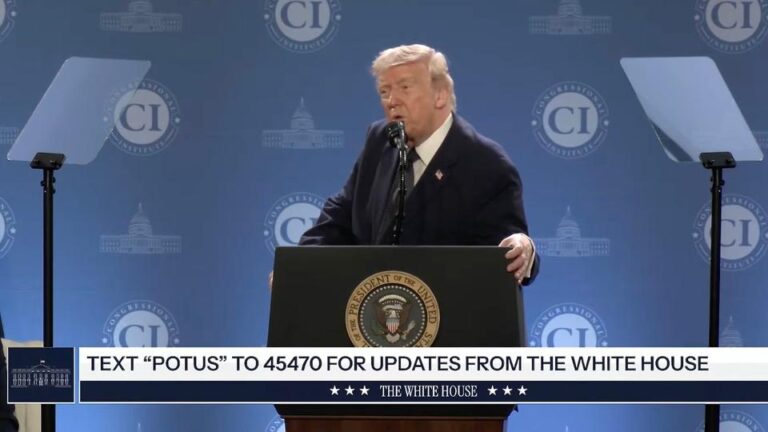
Bitcoin and other risk assets have become increasingly sensitive to statements from U.S. President Donald Trump, with markets often swinging upward or downward within minutes of his social media posts or policy announcements to the news media.
This has drawn scrutiny from lawmakers, academics and market experts, as questions mount over whether those price movements have created lucrative opportunities for market manipulation or insider trading.
A recent University of Oxford Faculty of Law study found sharp swings in global markets following rapid changes in U.S. tariff policy, including a sequence in which prices across crypto and stock markets fell after new tariffs were announced, then rebounded after Trump partially rolled them back days later.
The scale and timing of those moves, the author noted, created “fantastic trading opportunities” for anyone with advanced knowledge of the decisions. Also, those back-and-forth decisions by Trump have been widely criticized and called the Trump Again Chickens Out (TACO) dynamic.
‘A great time to buy’
The issue gained further attention after Trump posted “THIS IS A GREAT TIME TO BUY!! on Truth Social in April 2025 shortly before announcing a tariff adjustment that sent markets higher, prompting calls from lawmakers, including Senator Adam Schiff, for an investigationinto potential insider trading or market manipulation.
Analysts, experts and media reports have highlighted patterns of large, well-timed trades across commodities and prediction markets, in some cases placed minutes before major policy or military announcements.
“Many experts say the Trump administration has engaged in market manipulation,” according to a March episode of CBC’s Front Burner, which pointed to unusually massively profitable trades in oil futures ahead of announcements related to the war with Iran.
Democratic Congressman Stephen Lynch raised similar concerns. He said trading activity tied to major Trump announcements “raised serious concerns about insider trading and market manipulation by government officials in possession of sensitive national security information.”
There is no evidence that Trump or his administration have violated securities laws or purposely manipulated the markets for self gain, but the increasing number of unusually well-timed market moves, combined with the administration’s direct influence over policy, geopolitics and regulation, has fueled a broader debate over whether the line between political decision-making and market impact is becoming increasingly blurred.
Here are five top moments when bitcoin’s price swung either up or down due to a statement or social media post by Trump, from the “Genesis” skepticism of 2019 to the naval blockades of 2026.
The top five BTC price swings
1. July 11, 2019 — The “Not a Fan” Genesis Post. In his first direct broadside against the asset class, Trump posted on Twitter: “I am not a fan of Bitcoin and other Cryptocurrencies, which are not money… and based on thin air.” Bitcoin dropped 7.1% within 45 minutes of the thread.
2. March 3, 2025 — The Strategic Reserve Pivot. Following a year of pro-crypto campaigning, Trump confirmed via Truth Social that his “Strategic National Crypto Reserve” would include a multi-asset basket of cryptocurrencies, most notably bitcoin. Bitcoin surged 8.2% in under 24 hours, jumping from $84,000 to over $91,000.
3. October 10, 2025 — The 100% tariffs on China. In yet another Truth Social post, Trump announced a 100% tariff on all Chinese imports to counter Beijing’s rare-earth export controls. Bitcoin plummeted 12.4% in roughly two hours, crashing from its $124,714 all-time high toward $102,000. And in 24 hours, a $19.38 billion liquidation event had taken place, marking the largest single-day wipeout in the asset’s history.
4. March 3, 2026 — The Anti-Bank “Genius Act” Post. Trump took to Truth Social once again to criticize Wall Street banks for “undermining” the Genius Act and delaying the passage of the Clarity Act over stablecoin yield provisions. Bitcoin rose 5.2% in 10 minutes to $71,000. This moment highlighted the administration’s willingness to go to war with the legacy financial system to protect the crypto sector.
5. April 14, 2026 — The Peace Talks. Following the naval blockade of the Strait of Hormuz, Trump said that Iran had “reached out” for potential peace talks and that a deal was “very possible.” Bitcoin rose 6.2% within 30 minutes from $70,000 to nearly $75,000.
It might happen again
Bitcoin shot to a more than two-month high above $78,000 on Friday after Trump essentially announced the end of the war and the full reopening of the Strait of Hormuz. Yet, by the end of the day, there were already questions about exactly what the U.S. and Iran had agreed to.
By Saturday morning, Iran’s military said the Strait was again closed, and there were reports of some ships making U-turns and others being fired upon. Crypto prices were quickly giving back Friday’s gains, with bitcoin sliding back below $76,000.
In this episode of The Fintech Show, Tristan Prince from NOTO and Robert Brooker from Opus Advisory Group broke down the converging forces that are mandating a radical shift in financial crime prevention. Their central argument is that organizations are now caught between two major pressures: the immediate threat of high-velocity, AI-enabled financial crime and stringent new regulatory accountability.
Prince opened the discussion by focusing on the Economic Crime and Corporate Transparency Act (ECCTA), which now includes a provision for a failure to prevent fraud. This act places a heavy burden on organizations to definitively prove that they have sufficient processes and systems, across all employees and affiliates, to stop financial crime. This is where the industry faces its core challenge: fractured, siloed technology. Many firms have layered on various point solutions over the years for application fraud, biometrics, and transaction monitoring.
The issue is that these systems rarely communicate, creating “operational drag” and making it impossible for analysts to connect disparate data points across the customer journey. Prince shared the stark example of a customer who fails a KYC check at a call center, only to have their account emptied via an ATM shortly after, a scenario that happens because crucial signals are not shared between systems.
The need to consolidate is made urgent by AI-enabled fraud as fraud is now the UK’s largest crime, accounting for over 40% of registered offenses. NOTO warned that the sheer velocity and volume of attacks, from an organization expecting 100,000 applications suddenly facing 10 million, will overwhelm heritage controls. Prince starkly illustrated this mismatch: how can a legacy system limited to one transaction per second manage an AI-enabled attack hitting at a thousand? This surge in volume and frequency has fundamentally changed the nature of fraud, which is no longer a contained risk but a competitive differentiator; customers judge institutions on how they treat them after they have been victimized.
The current strategy of layering on more technology is not working as a recent Gartner survey found that while 53% of UK businesses plan to increase their fraud spending, 70% admit that risk levels are still climbing. Prince noted an unusual “bell curve” effect: when spending exceeds 10% of an IT budget, the effectiveness of identifying fraud actually starts to drop due to the complexity of managing these fragmented systems.
To counter this, NOTO advocates for a move to enterprise fraud management platforms. Prince suggests using a single API to migrate the entire estate to a real-time rules engine and a unified case management view. Crucially, their strategy involves supervised machine learning, which Prince argues is more effective long-term than an unsupervised approach, provided the underlying data governance is in place.
However, technology alone is not enough as Brooker stressed that to satisfy regulators, compliance requires a cultural shift. Organizations must adopt a “tone from the top,” establishing accountability at the board level rather than relying on “simple spot fixing or buying a new piece of shiny kit”.
This cultural change must address the urgent insider threat, particularly in fintech where organized crime places “foot soldiers” in contract centers for short stints. Brooker advises senior leadership to set an example by making internal examples of fraudsters, rather than dismissing staff quietly to avoid reputational damage. Ultimately, both Prince and Brooker agree that the true cost of fraud includes “operational cost bloat” and lost customer trust, making it imperative to move away from outdated systems now.
An Ethereum whale has opened a significant long position on Ether (ETH) worth $90.8 million, in what looks like a bold bet that the upside is not over for the top altcoin.
Key takeaways:
Ethereum whale opened a leveraged long position totaling $90.8 million.
Data from TradingView showed the ETH/USD pair trading at $2,280, or 32% higher than the $1,750 low reached on Feb. 6.
Holding above $2,200, Ether offered some cause for optimism ahead of key volatility triggers.
“Strong retail sales could push yields higher and delay Fed cuts, while weak data would fuel risk-on bets,” analyst AlphaBTC said in a Monday post on X, referring to the main macro drivers this week, adding:
“Fed commentary and PMI data add growth signals, while geopolitical risks remain the wildcard catalyst for sudden volatility.”
As market participants waited for the next catalysts, attention has shifted to a trader with an impressive track record, who has opened a long position worth about $90.8 million in ETH, with 20x leverage.
Source: X/Ash Crypto
Analyst TAnotepad noted that another whale, 0x6C851, has opened a $61 million ETH long position at 20x leverage with entry around $2,303 on HyperLiquid.
ETH whale position on HyperLiquid. Source: TAnotepad
These moves coincide with continued flows into spot Ethereum ETFs, which have recorded net inflows for seven consecutive days, totaling $426 million.
Spot ETH flows chart. Source: SoSoValue
Meanwhile, global Ethereum investment products recorded $328 million in inflows during the week ending April 17.
This reinforces the narrative that whales and institutions view the recent ETH price rebound above $2,400 as a promising move that could open the way toward $3,000.
Ether’s ascending triangle targets $3,200 ETH price
Ether’s price action has formed a classic ascending triangle on the daily chart, as shown below.
The pattern will resolve once the ETH/USD pair breaks above the triangle’s resistance line at $2,400. If this happens, the price could rise by as much as the maximum distance between the triangle’s trend lines.
That puts Ether’s breakout target at about $3,230, up by more than 41% from current price levels.
The relative strength index has increased to 54, from oversold conditions at 18 on Feb. 6, suggesting increasing upward momentum.
However, the breakout could be curtailed by resistance from the $2,350-$2,500 resistance zone, marked by the 50-day exponential moving average (EMA).
Above that, the next major hurdle is the 200-day EMA at $2,640.
Zooming out, analyst Micro2Macr0 said that a breakout from a multi-year ascending triangle could lead to a 60%-%100% ETH price rally.
ETH/USD weekly chart. Source: X/Micro2Macr0
As Cointelegraph reported, ETH price closing above $2,400 resistance, puts it on the path for a recovery toward $2,800, then to $3,050 over the next few days or weeks.
This article is produced in accordance with Cointelegraph’s Editorial Policy and is intended for informational purposes only. It does not constitute investment advice or recommendations. All investments and trades carry risk; readers are encouraged to conduct independent research before making any decisions. Cointelegraph makes no guarantees regarding the accuracy or completeness of the information presented, including forward-looking statements, and will not be liable for any loss or damage arising from reliance on this content.
Jason Lowery, former Deputy Director of Technology & Innovation at the United States Space Force, and author of Softwar: A Novel Theory on Power Projection and the National Strategic Significance of Bitcoin, has announced his new role as Special Assistant to the Commander, U.S. Indo-Pacific Command.
In a LinkedIn update, he shared his Honor to receive the appointment, explaining that “In this new position, I will directly advise and report to the Combatant Commander on strategic priorities affecting the Department of Defense and the Indo-Pacific region.” Lowery added, “It’s a humbling responsibility during a critical time for our national security posture. I’m grateful for the trust placed in me to support this level of leadership, and excited to contribute to the mission.”
Lowery rose to Bitcoin fame as he made the case that Bitcoin is a new landscape of military technology and defense, where power is projected not via bullets, missiles or drones, but by commanding more hashing power, which governs Bitcoin’s proof of work protocol. Those who control enough hashing power can guarantee the confirmation of their Bitcoin transactions, and in extreme cases, those who dominate the hash rate can interfere in the confirmation of their enemies’ transactions. The thesis, which is best understood by reading Lowery’s work, poses Bitcoin as a fundamental change in military technology, akin to the discovery and proliferation of gunpowder or aviation.
The announcement comes just days after Iran told FT they would specifically accept Bitcoin for safe passage through the Strait of Hormuz. While there have been no reports of the Bitcoin Toll of Hormuz becoming a reality yet, the story made international news and appears to have reached the halls of power in D.C. and the Department of War. While the Gulf states and the Strait of Hormuz fall under a different division of the DoW called CENTCOM, the timing of Lowery’s appointment nevertheless demonstrates a recognition of Bitcoin’s strategic value in geopolitics. He will be advising command over a wide region, including China, the Indian Ocean and the Pacific Ocean regions, many of which benefit tremendously from Gulf oil that passes through Hormuz. Some reports suggest China drew up 42% of its oil from affected Gulf states before the war.
AI is changing how content is created across almost every industry, and video production is one of the biggest areas being affected. What used to take expensive equipment, editing skills, and hours of work can now be done in minutes using AI tools. One of the newer developments in this space is Veo 4, a text-to-video AI model designed to turn simple written ideas into video content. It is getting attention from marketers, creators, and freelancers because it makes video production faster, easier, and more scalable. The real shift here is not just speed—it’s how accessible video creation is becoming for people who never had editing skills before.
The AI reads your text and identifies key elements like:
Objects
Actions
Environment
Style or mood
2. Building the Scene
It creates a visual structure based on those elements, including movement, lighting, and composition.
3. Generating the Video
Finally, it turns everything into a sequence of frames that form a complete video.
This process removes manual editing, but it also means you rely heavily on how clearly you write your prompt.
Key Features of Veo 4
Text-to-Video Creation
Turns written ideas into actual video content without editing software.
Cinematic Visual Output
Focuses on producing realistic-looking scenes with smooth motion and detailed environments.
Better Scene Understanding
Can interpret complex prompts involving actions, emotions, and camera movement.
Style ControLetts users adjust tone, style, and overall look depending on their needs.
Fast Production
Speeds up video creation from hours or days to just a few minutes.
Veo 4 vs Other AI Video Tools
Compared to other AI video generators, Veo 4 stands out mainly in terms of realism and prompt understanding.
Where it performs better:
More natural motion in videos
Better interpretation of detailed prompts
Stronger consistency across scenes
Where others may still compete:
Some tools are cheaper
Some are easier for beginners
Some offer simpler interfaces for quick edits
So it’s not a perfect tool—it depends on what you actually need.
Real-World Use Cases
Marketing and Advertising
Brands can quickly create product ads, promotional videos, and campaign visuals without a full production team.
Content Creation
YouTubers and creators can produce videos faster and scale content output without heavy editing work.
Freelancing
Freelancers can offer AI video creation services, even without advanced video editing skills.
Social Media
Short-form content for platforms like TikTok, Instagram, and YouTube Shorts can be created quickly and consistently.
Advantages of Veo 4
Saves time compared to traditional editing
No advanced technical skills required
Lower production cost
Good for scaling content creation
Works well for automation-based workflows
Limitations
You don’t get full creative control like manual editing
Output depends heavily on how clear your prompt is
Still an evolving technology with occasional inconsistencies
Raises questions around authenticity and AI-generated media
Future of AI Video Creation
Tools like Veo 4 are part of a bigger shift in how digital content is produced.
In the near future, we will likely see:
More realistic AI-generated videos
Faster, near real-time video creation
Better customization and control
Wider use in marketing, education, and media
Eventually, AI video tools will become a standard part of content creation workflows.
Conclusion
Veo 4 is a strong step forward in AI video generation. It makes video creation faster and more accessible, especially for people without technical editing skills. But it’s not a full replacement for professional video editing yet. Instead, it works best as a support tool that speeds up production and lowers the barrier to entry. The direction is clear—video creation is moving toward automation, and text-to-video creation tools like Veo 4 are leading that change.
Capital B, the listed arm of The Blockchain Group, confirmed the acquisition of 12 bitcoin as it continues to build out its treasury strategy centered on the digital asset.
The company said it spent €0.8 million on the purchase, bringing total holdings to 2,937 BTC. The group’s aggregate acquisition cost stands at €270.1 million, with an average purchase price of €91,975 per bitcoin, according to a note shared with Bitcoin Magazine.
The latest buy follows a series of transactions since early 2026, with the company reporting a year-to-date BTC yield of 1.57%. It also posted a BTC gain of 44.4 BTC and a BTC-denominated gain of €2.9 million over the same period. Quarterly figures show a 0.85% yield and a gain of 24.4 BTC.
Last week, the company confirmed the purchase of 37 BTC for €2.3 million, at a reference price of €60,892 per coin, as part of its ongoing Bitcoin Treasury strategy.
Alongside the purchase, Capital B completed several financing actions tied to its treasury strategy.
The firm confirmed the full exercise of 16.6 million BSA 2025-01 warrants, which converted into 2.36 million ordinary shares. The transaction raised about €1.29 million. The company noted that the warrants expired on April 10, 2026, and any unexercised rights are now void.
Capital B also carried out a capital increase under its at-the-market agreement with TOBAM. The issuance of 370,701 new shares at an average price of €0.60 generated €0.22 million. The price reflects a discount to the recent market close, based on the agreement’s pricing mechanism tied to trading volumes and prior-day benchmarks.
The proceeds from these operations supported the latest bitcoin acquisition.
Bitcoin as a reserve asset for Capital B
The company positions itself as a Bitcoin Treasury Company, with a stated objective of increasing the amount of bitcoin held per fully diluted share over time. Its model mirrors a growing trend among public firms that allocate capital to bitcoin as a reserve asset.
Custody and execution for the latest purchase were handled by Swissquote Bank Europe SA, with assets secured through infrastructure provided by Taurus.
Capital B operates subsidiaries focused on data intelligence, artificial intelligence, and decentralized technology consulting. Its shares trade on Euronext Growth Paris.
The company’s capital structure reflects a mix of institutional and public investors, including Blockstream Capital Partners, TOBAM funds, and other shareholders. Following the latest transactions, total shares outstanding stand at about 274.9 million on an ordinary basis and 394.8 million on a fully diluted basis.
Earlier today, Strategy (MSTR) added 34,164 BTC for $2.54B, its third-largest purchase, bringing total holdings to 815,061 BTC acquired at an average cost of about $75,527 per coin. The move pushed the company ahead of BlackRock in total Bitcoin holdings, with its position now roughly near break-even as BTC trades around $75,000.
Disclaimer: Bitcoin Magazine is owned by Nakamoto Inc. (NASDAQ: NAKA). Nakamoto Inc. also owns UTXO Management. UTXO Management invests in Capital B.
Interoperability protocol LayerZero claims that an inadequate setup tied to Kelp’s decentralized verifier network (DVN) enabled malicious actors to steal $290 million from Kelp DAO, adding that preliminary signs point to North Korea-linked threat actors.
An attacker drained about 116,500 Restaked ETH (rsETH), worth as much as $293 million at the time, from Kelp DAO’s LayerZero-powered rsETH bridge on Saturday.
LayerZero said Monday that the exploit stemmed from a single point of failure in Kelp’s setup, which relied on a single LayerZero DVN as the only verified path, despite LayerZero previously advising them against this.
“LayerZero and other external parties previously communicated best practices around DVN diversification to KelpDAO. Despite these recommendations, KelpDAO chose to utilize a 1/1 DVN configuration.”
In practice, that meant Kelp relied on a single verification path for cross-chain messages rather than requiring multiple independent checks.
The exploit quickly shifted attention from the technical cause to the question of who should absorb the losses, while the fallout spread into Aave, where the attacker used rsETH as collateral to borrow real liquidity.
Aave’s total value locked (TVL) had fallen by about $8.9 billion to $17.5 billion at the time of writing after the exploiter used the stolen funds to borrow on Aave, leaving about $195 million in “bad debt,” triggering withdrawals on the lending protocol.
Source: LayerZero
LayerZero said Kelp’s rsETH bridge relied solely on the LayerZero Labs DVN, and argued that the incident reflected an unsafe application configuration rather than a compromise of LayerZero itself. The company said it is now urging all applications using 1/1 DVN setups to migrate to multi-DVN configurations and will stop signing or attesting messages for apps that retain the single verifier design.
Losses spark blame fight after $290 million Kelp exploit
With no recovery or compensation plan yet announced, users and market observers spent Monday debating whether losses should sit with Kelp DAO, LayerZero, Aave or rsETH holders themselves.
Yishi Wang, founder and CEO of open-source hardware wallet OneKey, said that the best path forward was to negotiate with the hacker, offer a 10% to 15% bounty, and get the bulk of the funds back.
“If negotiations fail, LayerZero’s ecosystem fund should foot the bulk of the bill—it’s got the deepest pockets and the most long-term skin in the game,” wrote the founder in a Monday X post, adding that Kelp DAO is “broke” and could make it up with tokens and future revenue, or consider selling the project.
Analytics platform DeFiLlama’s pseudonymous founder, 0xngmi, outlined three solutions, including the option to “socialize” losses among all users, “rug rsETH holders on L2s,” or try to return holder balances to a pre-hack snapshot, which would be “very hard to do,” he wrote in a Monday X post.
Source: 0xngmi
Cointelegraph reached out to Aave for comment, but had not received a response by publication.
Investor concerns about the Kelp exploit have significantly reduced Ether (ETH) liquidity on Aave, the lending protocol’s core collateral asset.
This low liquidity presents a “critical safety risk where liquidations of ETH collateral cannot take place while markets are at 100% utilization,” said MoneySupply, the pseudonymous head of strategy at Aave competitor lending protocol Spark, in a Saturday X post.
“With current illiquidity conditions on Aave, a 15-20% ETHUSD price drop could cause significant bad debt accumulation (on top of any potential issues attributable to the direct rsETH exploit),” he said.
Source: Monetsupply
Aave said it immediately froze all rsETH in Aave v3 and V4, preventing further damage. Aave’s own smart contracts were not exploited.
Magazine: Meet the onchain crypto detectives fighting crime better than the cops
Cointelegraph is committed to independent, transparent journalism. This news article is produced in accordance with Cointelegraph’s Editorial Policy and aims to provide accurate and timely information. Readers are encouraged to verify information independently. Read our Editorial Policy https://cointelegraph.com/editorial-policy
Silicon-based chip manufacturer Cerebras Systems is targeting an initial public offering.
The 2015 startup, which says it is building the “fastest AI infrastructure in the world,” filed on April 17 with the Securities and Exchange Commission to go public on the Nasdaq exchange.
The filing does not disclose the size of the offering or the share price. However, it is understood that the IPO is likely to go ahead soon, possibly as early as next month.
The stock will be listed under the ticker symbol CBRS, with Morgan Stanley, Citigroup, Barclays and UBS Investment Bank as lead underwriters. Mizuho and TD Cowen, meanwhile, will act as bookrunners.
The filing provides insight into the figures that prompted Cerebras’ decision. It showed that in 2025, the vendor recorded $510 million in revenue, representing 76% year-over-year growth. Net income was $237.8 million in 2025, as opposed to a net loss of $481.6 million in 2024.
Related:Physical AI Edges Closer to Real-World Deployments
This upward trajectory is being seen as vindication for the company’s decision to operate its chips in data centers rather than sell direct to companies. In February, Cerebras raised $1.1 billion in Series H funding at a valuation of about $23 billion. This followed a $1.1 billion Series G round in September.
Cerebras claims its Wafer-Scale Engine 3 is the world’s largest and fastest commercialized AI processor. According to Cerebras, it is nearly 60 times bigger than Nvidia’s B200 chip but uses a fraction of the power per unit compute, while delivering inference up to 15 times faster.
Earlier this year, Cerebras agreed to a deal to supply 750 megawatts of its wafer-scale systems to OpenAI, with the generative AI vendor saying it would use the compute for real-time responses for coding, inference, image generation and complex reasoning.
This year also saw a deal with AWS to use Cerebras chips in Amazon data centers.
However, this is not the first time Cerebras has eyed an IPO. It scrapped plans in October last year, without providing an explanation at the time,