US Securities and Exchange Commission Chair Paul Atkins said the agency is nearing the release of an exemption that would allow market participants to trade tokenized securities onchain within a compliant framework.
Speaking at the Economic Club of Washington on Tuesday, Atkins said the SEC is close to introducing what he described as an exemption aimed at enabling limited activity in tokenized markets while the agency develops longer-term rules.
“We are on the cusp of releasing what I call an ‘innovation exemption,’ which will provide market participants with a cabined framework to begin facilitating the trading of tokenized securities onchain in a compliant fashion as the Commission works toward long-term rules of the road,” he said.
The exemption would provide a structured pathway for companies seeking to facilitate trading of blockchain-based securities, an area that has remained constrained in the US due to the absence of clear frameworks.
The innovation exemption has been under discussion at the SEC for months as part of efforts to accommodate tokenized securities and blockchain-based markets. In July 2025, Atkins said the agency was considering targeted relief to support tokenization and new trading methods.
In March, Commissioner Hester Peirce said staff were still developing the exemption as a way to allow limited experimentation with tokenized securities while assessing how existing securities laws apply to onchain markets.
Related: SEC crypto guidance marks ‘final nail’ in Gensler era: Analyst
Exemption builds on SEC’s recent crypto classification push
The comments build on the SEC’s recent efforts to clarify how digital assets are treated under federal securities laws.
On March 17, the agency issued interpretive guidance outlining a token taxonomy that groups digital assets into categories such as digital commodities, collectibles, tools and stablecoins, with only tokenized securities falling under its core jurisdiction.
Related: One year under Paul Atkins, SEC’s crypto stance shows break with past
The interpretation was positioned as a bridge ahead of potential market structure legislation and aimed to provide clearer lines between the SEC and the Commodity Futures Trading Commission.
In his speech, Atkins described the taxonomy as “long overdue,” framing it as a step toward clearer rules for digital assets.
On March 24, the SEC sent the proposed interpretation to the White House for review, marking a further step toward formalizing its approach to crypto classification and oversight. As of Wednesday, government records showed the proposal as still “pending review” by the White House.
Magazine: Will the CLARITY Act be good — or bad — for DeFi?
Cointelegraph is committed to independent, transparent journalism. This news article is produced in accordance with Cointelegraph’s Editorial Policy and aims to provide accurate and timely information. Readers are encouraged to verify information independently. Read our Editorial Policy https://cointelegraph.com/editorial-policy
It’s no surprise that there’s a general pivot from blockchain to artificial intelligence right now.
Every week brings another report of a company or person either leaving the cryptocurrency industry entirely or adding artificial intelligence to their portfolios. Bitcoin miners are moving away from mining to increasingly focus on AI infrastructure and venture capital firms are funding AI firms rather than crypto companies.
But it’s unusual when the leading members of the same team leave one company and jump into another just down the road. That’s exactly what appears to have happened to the senior marketing team at crypto exchange Coinbase (COIN), which, over the course of a year or so, has landed at San Francisco-based OpenAI, the maker of ChatGPT. Coinbase maintains a 150,000-square-foot office in the city.
It’s worth noting that Coinbase employs a large number of marketing staff and six — albeit quite senior roles — make up only a small portion of the entire team.
The marketing talent migration began with Sarah Russell, who joined OpenAI as VP, integrated marketing and ops in November 2024. She had spent one year and three months as the senior director of integrated marketing at Coinbase, a position she left in January 2023. It’s worth noting that earlier in her career, she worked at Facebook’s (now Meta) Menlo Park headquarters.
A month later, Kate Rouch became OpenAI’s chief marketing officer. Directly prior to that, she spent three and a half years in the same role at Coinbase. Before that, she spent over 11 years as global head of brand and product marketing at Meta.
Rouch was followed by Elke Karstens, who joined OpenAI as head of international marketing in March 2025, though she didn’t move directly. Karstens spent three months at a London-based paytech startup called Finom. Karstens also spent over 10 years at Meta in various marketing roles.
The following September saw another two transitions: Kaitlin Gianetti became head of integrated marketing management at OpenAI a month after leaving Coinbase, and Amy (Good) Robbins joined as brand insights lead directly after leaving Coinbase. Gianetti had spent just over four years as director of integrated marketing at Coinbase. Prior to that, she also worked as a brand marketing executive at Meta. Robbins spent three and a half years as senior manager of insights at Coinbase.
Most recently, Nina Mogavero joined OpenAI in December 2025 to work in marketing strategy and operations, a month after leaving Coinbase where she’d spent three years in marketing and strategy.
A person familiar with the situation said the exodus was no coincidence. The person described Rouch as the “nexus,” when it comes to enticing former Coinbase colleagues to move over to OpenAI.
“To be fair, she hired a lot of them or brought them from Facebook,” they said. Kate Rouch did not respond to a request for comment.
A Coinbase spokesperson brushed away the departures. “The marketing team at Coinbase is over 150 people and while some folks have left to join OpenAI last year, and we wish them the best, characterizing this as anything other than normal people moves would be incorrect,” the spokesperson said via email.
OpenAI did not respond to requests for comment.
Marketing isn’t the only department that’s seen AI as more attractive than crypto. Earlier this month, Tom Duff Gordon, the former VP of international policy at Coinbase, left to become OpenAI’s head of EMEA Policy.
Other Coinbase alumni who have headed to OpenAI include
Yi X, who joined the AI firm as product manager in April 2025
The head of design at decentralized trading platform Base, Alexandra Fitzroy, left Coinbase in October 2025 after just over five years
Abe Sprague left Coinbase in September 2024 to become a member of OpenAI’s data science team.
OpenAI isn’t the only machine learning shop to win over Coinbase marketing talent. Earlier this month, Sarah Wolf, the marketing lead behind Coinbase’s Base layer-2 network, left after nearly five years at the exchange to head startup marketing at AI lab Anthropic.
A 5% stake in AI coding startup Cursor that FTX’s bankruptcy estate sold for $200,000 in April 2023 would be worth about $3 billion today, following SpaceX’s agreement this week to acquire the company at a $60 billion valuation.
SpaceX said Monday it has the right to buy Cursor later this year for $60 billion or to pay $10 billion if the full acquisition does not proceed. The deal is founder Elon Musk’s move to close the gap with OpenAI and Anthropic on AI coding tools, an area where he recently said xAI, the Musk-run AI company that merged with SpaceX, is behind competitors.
SpaceX is holding off on immediate acquisition because of its planned initial public offering targeting a $2 trillion valuation, with the $10 billion serving as a breakup fee.
The crypto angle sits in the cap table. In April 2022, Alameda Research, the trading firm founded by Sam Bankman-Fried and run alongside FTX, invested $200,000 in Anysphere, the company that builds Cursor.
That investment bought roughly 5% of the company at a $4 million valuation. One year later FTX had collapsed, Alameda and FTX were in bankruptcy, and the court-appointed estate sold the Cursor stake for the same $200,000 Alameda had paid.
The stake is worth $3 billion at SpaceX’s $60 billion price tag, meaning the gap between what the FTX estate received and what the position would fetch today is roughly a 15,000x return. It was instead realized by whoever bought it from the bankruptcy rather than the creditors the estate was supposed to be maximizing recovery for.
The timing cuts awkwardly for FTX’s bankruptcy administration.
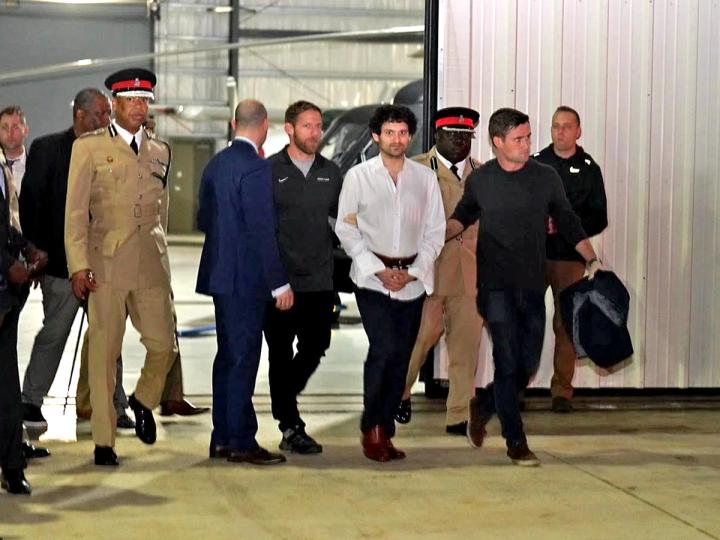
Bankman-Fried, currently serving a 25-year federal sentence, has spent the past year arguing from prison that FTX’s estate destroyed billions in value by liquidating assets too quickly during the bankruptcy, and that customers could have been made more than whole if the process had held positions instead of selling them into what turned out to be the bottom of crypto prices.
In February, he shared a projection suggesting FTX’s net asset value would have reached $78 billion if the estate had held assets through the subsequent recovery rather than selling in 2023 and 2024.
Cursor launched its AI coding product in early 2023, the same year the estate sold the stake, and the company’s trajectory from that launch to its current valuation three years later is among the steepest in software startup history.
FTX customers have since been made whole in dollar terms under the bankruptcy’s distribution plan, receiving back their claim values plus interest. What they did not receive is the upside from what those assets became between the bankruptcy filing and now, which in the case of the Cursor stake alone represents about $3 billion of forgone recovery against $200,000 realized.
Bankman-Fried’s parents have publicly advocated for a pardon, appearing on CNN in March arguing that FTX customers were ultimately repaid and that the case against their son should be revisited. The Cursor number is likely to feature prominently in the family’s continued campaign, and in Bankman-Fried’s own letters from prison, as the single clearest example of the kind of value he claims the estate destroyed through forced selling.
A key indicator tracking the overall health of the bitcoin BTC$78,233.27 market has just flashed a neutral signal for the first time since prices peaked above $126,000, signaling that the bear market may have ended.
But here’s the catch: The neutral reading on the indicator turned out to be a false signal a few years ago.
That indicator is CryptoQuant’s Bitcoin Bull Score Index, a composite metric that measures the health of the bitcoin market by analyzing ten key on-chain indicators, including blockchain activity, investor profitability, and liquidity.
It has climbed to 50 for the first time since the downtrend from $126,000 began. That number means exactly half of the index’s underlying indicators are now bullish, while the rest remain bearish. In other words, the indicator has flipped from bearish to neutral, confirming the end of the bear market, as first suggested by BTC’s price bounce from nearly $60,000 to $78,000.
For an index that has been stuck in bear territory throughout this cycle, reaching neutral is a genuine milestone. Note that readings below 40 signal a structural bear market, while readings above 60 indicate a strong, sustainable uptrend.
But history has a warning
CryptoQuant’s analyst pointed to a relevant historical precedent: March 2022, when the index rose to 50, signaling the end of the bear market at the time.
Similar to today, prices had rebounded from around $35,000 to nearly $48,000 in the weeks leading up to the signal. That price action led many market participants to believe the bear market, which began near $70,000 in November 2021, had ended.
But guess what, prices more than halved to under $20,000 in the following months. In other words, the bear market deepened.
“First time in this bear market that the Bull Score Index enters neutral zone (50). In March 2022, the Bull Score entered neutral territory for about a week, and then the price resumed its decline,” Julio Moreno, head of research at CryptoQuant, said.
A turn, not a trend
The bull score index hitting neutral is meaningful data, showcasing a real improvement in on-chain conditions rather than just price action.
However, the March 2022 precedent is a reminder that transitional phases can go either way, especially given that positioning in derivatives currently indicates a lack of conviction in the price recovery.
“Front-end vols around 40 vol remain subdued relative to realized, skew still favours downside protection, and term structure is only modestly upward sloping. Positioning continues to point to range-bound conditions rather than a sustained breakout,” Singapore-based QCP Capital, one of the largest digital asset trading firms, said in a market note.
Trading and investing platform eToro has officially entered into an agreement to acquire Zengo, a self-custodial crypto wallet provider. The acquisition brings together eToro’s global, multi-asset distribution platform with Zengo’s advanced non-custodial wallet technology.
According to eToro, the transaction is designed to accelerate its broader strategy of connecting traditional finance with on-chain infrastructure. It will also strengthen the platform’s ability to support evolving digital asset use cases as markets develop, including tokenized assets and emerging decentralized trading models like prediction markets and perpetuals.
Simplifying self-custody
Ouriel Ohayon, co-founder and CEO of Zengo
Founded in 2018, Zengo is widely known as a pioneer in multi-party computation (MPC) cryptography. The firm provides a keyless wallet architecture explicitly designed to enhance security while simplifying self-custody for consumers. Because it is powered by MPC cryptography, Zengo has no seed phrase vulnerability; the firm notes that no Zengo wallet has ever been hacked since its inception.
Zengo currently offers a comprehensive self-custodial solution that features:
Ouriel Ohayon, co-founder and CEO of Zengo, emphasized the shared vision behind the acquisition.
“From day one, Zengo has focused on making self-custody simple and secure for everyday users,” Ohayon said. “Joining eToro allows us to accelerate that mission at a global scale. Together, we can expand access to self-custody and on-chain finance while connecting it to a broader investing ecosystem that bridges traditional and on-chain finance.”
Building during crypto downtimes
Yoni Assia, CEO and co-founder of eToro
Yoni Assia, co-founder and CEO of eToro, noted that self-custody will play an increasingly important role in the digital, decentralized, and user-controlled future of finance.
“Zengo has built an innovative and secure wallet experience, and this acquisition will enable us to accelerate its growth while continuing to provide users with choice in how they access digital assets,” Assia stated.
He added: “As we often say, crypto downtimes are the time to build, and this acquisition reflects that long-term approach.”
Assia also highlighted the current strength of eToro’s diversified business model. He revealed that strong capital market activity led to commodity trading accounting for 60 per cent of trading commissions by asset class in the first quarter of 2026. Furthermore, commodities trading volume was nearly four times higher year-over-year. Assia attributed this surge to shifting global macro dynamics and the strategic expansion of 24/7 trading for assets like gold and oil.
The acquisition deal remains subject to customary closing conditions. eToro noted that Zengo’s non-custodial wallet will remain a separate product from eToro’s regulated exchange services.
Bitcoin (BTC) reached a monthly high of $79,472 on Wednesday, marking its strongest 28-day return since April 2025. The rally aligns with a shift in a market positioning metric and a surge in leverage use.
A combined view of the market positioning metric and open interest shows new positions are being added, potentially influencing BTC’s push toward new highs.
BTC positioning builds with rising leverage
Bitcoin researcher Axel Adler Jr. said that the Bitcoin positioning index has turned higher, with its 30-day average rising to 4.5 from -10.9 in February. The indicator blends net taker flow direction, open interest trends, funding and the exchange balance into a single metric.
Bitcoin positioning index. Source: CryptoQuant
Its steady climb since late March, from 0.4 to current levels, shows a consistent improvement without breaking the price trend.
The growth in open interest confirms the same trend. The 30-day change stands at +14.5%, with 23 of the past 30 sessions closing positive. The rising positioning alongside expanding open interest signals new capital entering derivatives markets.
BTC open interest 30D change. Source: CryptoQuant
Over the past 24 hours, aggregated open interest rose 6.7% to 260,000 BTC, while leverage declined by 10.7% over the weekend, suggesting recent deleveraging before the latest positioning build.
Related: Bitcoin Bull Score hits six-month high as 2022 bear-market fears linger
Key BTC levels to watch
Bitcoin has moved above a descending trendline dating back to the October 2025 peak near $126,000 and has reclaimed the 100-day exponential moving average (EMA). This indicates a strong shift in trend from bearish to neutral-to-bullish on the higher time frame.
The $81,000 level now serves as the first test area, with a small fair-value gap indicating a liquidity imbalance, where a price hold would signal that buyers are accepting higher prices.
BTC/USDT on the daily chart. Source: Cointelegraph/TradingView
Above that, $88,000 stands as the supply zone tied to prior distribution. The $88,000–$91,000 range stands out as a key supply zone, shaped by a prior distribution phase when large volumes of Bitcoin last changed hands.
Many of those holders are now sitting near break-even or in slight profit, which typically increases activity when the price revisits that area.
Adding to this, the realized price of the three–to-six–month holder cohort sits at $91,600, further reinforcing this zone as a major decision point.
A sustained move through this range would signal strong demand, showing that buyers are absorbing overhead supply and setting the stage for Bitcoin price to move higher.
Crypto analyst Crazzyblockk highlighted a tight range, with the $72,000–$75,000 zone acting as a floor, supported by clusters of realized prices from mid-term holders. A break below this band would push more supply into loss, increasing the risk of reactive selling.
On the upside, the $83,000–$85,000 marks a profit-taking zone for recent short-term holders. Price strength through this range would signal that buyers are absorbing the supply, allowing momentum to build.
This article is produced in accordance with Cointelegraph’s Editorial Policy and is intended for informational purposes only. It does not constitute investment advice or recommendations. All investments and trades carry risk; readers are encouraged to conduct independent research before making any decisions. Cointelegraph makes no guarantees regarding the accuracy or completeness of the information presented, including forward-looking statements, and will not be liable for any loss or damage arising from reliance on this content.
Input Output, the private engineering company that built and continues to develop the Cardano blockchain, is seeking about half the funding it requested last year from the project’s community treasury.
The company submitted nine proposals totaling $46.8 million for 2026 on Tuesday, down from $97.5 million in 2025. Several of the proposals focus on scaling Cardano to increase its transaction processing capacity and expanding into Bitcoin DeFi.
Cardano, like most major blockchains, maintains a shared pool of money funded by network fees, which community representatives vote to allocate toward development work. Input Output historically has been the largest recipient because it employs most of the engineers building the underlying software.
The reduced ask is the first concrete step in a plan to phase out that dependency. Input Output said it now aims to shrink its annual request each year until the company can sustain itself on its own revenue, with community funds going instead to a broader set of smaller engineering groups.
By the end of 2026, Input Output expects smaller, more specialized teams to take on most of the work it currently does in-house, including firms such as VacuumLabs and Midgard Labs that focus on specific layers of the Cardano software.
Scaling and bitcoin DeFi
The nine proposals group into two themes. The larger funds a consensus upgrade called Leios, which Input Output claims will increase Cardano’s transaction processing capacity by 10 to 65 times, targeting more than 1,000 transactions per second.
For context, that would move Cardano from a relatively slower chain to one competitive with Solana and the fastest Ethereum layer-2 networks on throughput alone. Leios is scheduled for a test release in June and full deployment by year-end.
The second flagship proposal funds a system called Pogun, which aims to bring Bitcoin-based decentralized finance to Cardano. In practice, it would let bitcoin holders borrow and earn yield on their holdings through Cardano without giving custody to a centralized intermediary. Pogun’s lending component is targeted for public release in the second quarter.
Smaller proposals cover performance improvements to Cardano’s smart contract engine, security testing infrastructure, developer tools, and expanded API services.
Each proposal names specific delivery leads and ties funding to delivery milestones rather than releasing money upfront. Imagine paying a contractor in stages as different parts of a house are completed, instead of handing over the full budget at the start of construction.
Voting opens Tuesday and runs through May 24. The decisions are made by roughly 1,000 elected delegates known as DReps, who represent ADA holders much as proxy representatives do in a publicly traded company. Charles Hoskinson, the founder of Input Output, is scheduled to release a video this week making the case directly to those delegates.
The vote will test whether Cardano’s governance, which has expanded significantly over the past two years, treats Input Output like any other grant applicant or continues to approve its requests largely on a basis of deference.
Last year’s $97.5 million proposal passed, but in the interim the Cardano Foundation has taken over the project’s grant-funding arm, and Intersect, the governance organization running this vote, has assumed stewardship of core Cardano software. Both shifts mean alternatives to Input Output now exist in a way they did not when previous votes went through.
Meanwhile, Input Output also cited progress in the ecosystem in its release. A new Cardano stablecoin, USDCx, reached 14.6 million tokens in circulation within weeks of its launch. Total assets deposited on Cardano, a common measure of a network’s usage, rose from $137.5 million to $142.7 million over the same period.
Whether the full slate passes, gets partially funded, or is reshaped entirely by DReps will signal how much the Cardano community’s thinking has shifted now that the tools to fund development without Input Output exist.
Blockstream CEO Adam Back, the British cryptographer and inventor of Hashcash, said it’s “flattering” that people think he’s Satoshi Nakamoto and was probably the result of his being a little too “talkative” on the cypherpunk mailing list that started it all.
Back was speaking in a fireside chat with Cointelegraph at the recent LONGITUDE event in Paris, co-hosted by crypto exchange OKX, with discussions centered on crypto regulation, market structure and the growth of stablecoins.
Adam Back denies renewed suggestions that he invented Bitcoin
“It is flattering in some sense that they think you could have done it,” Back told Cointelegraph, reflecting on the widely publicized New York Times article on April 8 that suggested he is Satoshi, a claim he has denied.
Back said there is a logical reason people think he’s Bitcoin’s creator. “The problem for me is I was very talkative on the mailing list,” he said, referring to the 1992 Cryptography Mailing List, where Satoshi later introduced the Bitcoin white paper in October 2008.
“So anytime anyone was talking about electronic cash, I was right there, I was the reply guy with something to say about it,” he said.
Blockstream CEO Adam Back speaking at LONGITUDE. Source: Cointelegraph
Back said the mystery behind Satoshi is an “interesting question” that he and others in the industry have pondered but never answered.
Prior to the fireside with Back, the event also featured three panels covering the role of traditional financial institutions in Web3, the need for clearer regulation and the pace of stablecoin adoption, alongside a separate fireside chat with OKX Europe CEO Erald Ghoos.
MiCA is “extremely beneficial,” but brings risks to innovation
Crypto industry executives said recent moves to regulate the industry have been positive for improved clarity, but regulatory fragmentation and overregulation could hurt innovation.
In an onstage interview, Ghoos shed light on the Markets in Crypto-Assets (MiCA) regulation, a framework with which OKX Europe was deemed fully compliant in January 2025.
“I think MiCA is extremely beneficial for the industry,” Ghoos said, explaining that it has helped to build trust in crypto.
OKX Europe CEO Erald Ghoos speaking to Cointelegraph journalist Ciaran Lyons at LONGITUDE. Source: Cointelegraph
“Now it is a fully regulated asset class, which is very important,” Ghoos said, adding that industry participants will be “vetted and held up to the highest standards.”
However, he warned that the “regulatory burden” could slow innovation across Europe.
“Right now, because there is such a big and heavy regulatory overhead for startups, I do fear even more that the innovation and the great entrepreneurship that we have in Europe will start to shift to other jurisdictions around the world,” he said.
CertiK CEO Ronghui Gu said the lack of a unified global framework is a pain point for the industry.
“For developers, for crypto companies in different regions, they are still under different compliance frameworks,” Gu said.
Commenting on the proposed US CLARITY Act, which has been delayed largely because of unresolved issues around stablecoin yields impact on the banking system, Gu said that while the bill aims to bring structure, “many terms are not that clear to be honest, and a little bit vague.”
“I think different firms have different interpretations and so on,” he added.
Ronghui Gu speaking at LONGITUDE. Source: Cointelegraph
“But I would say it definitely gives a much more friendly environment to crypto companies, to developers,” he added.
Cardano Foundation CEO Frederik Gregaard said he is “very confident” the CLARITY Act will pass soon, adding: “You feel the vibration from the policymakers saying we are going to adopt this,” he said.
“They are super stoked about it,” Gregaard added.
Frederik Gregaard speaking at LONGITUDE. Source: Cointelegraph
“When this passes, from the non-TradFi adoption, you are going to see 100X,” Gregaard said, arguing that “classical industries” have been waiting for clarity before embracing the technology.
US Senator Thom Tillis of North Carolina said on Monday that he does not expect the Senate Banking Committee to mark up the legislation, also known as the CLARITY Act, in April and has recommended that Senate Banking Chair Tim Scott schedule it for next month.
Payments industry does a good job of “almost faking” real-time payments
Mastercard’s senior vice president for blockchain and digital assets, Christian Rau, said that stablecoins are “very well suited for payment purposes” during a panel with Stella Development Foundation chief business officer Raja Chakravorti and Ethereum Foundation enterprise lead Matthew Dawson.
“They don’t come with the volatility of other digital assets, given that they enjoy regulatory clarity in a lot of the world,” Rau said.
Rau said the traditional payments industry does a “good job of almost faking real-time payments.”
“When I tap my card, it says transaction approved or payment made…it’s authorization, clearing, and settlement,” he said.
“A lot of the things that work arguably very well today, they still come with time delays, costs, and so forth,” he added.
Related: How Mastercard plans to settle card payments with stablecoins
Meanwhile, Stella Foundation’s Chakravorti pointed to the roughly $317 billion in stablecoin circulation, which is up about 50% from last year, adding that he is starting to see some short-term cooling.
“Although to be clear, over the last two quarters, that’s started to slow down a little bit,” calling it a positive sign as it suggests parts of the underlying infrastructure are starting to mature.
“I think this next transition is local stablecoins, because people are now very focused on creating that opportunity in their economy as super important,” he said.
Chakravorti pointed to the “last mile” as one of the biggest hurdles for adoption, referring to the challenge of turning digital assets into something “workable” inside local financial systems.
“I think it is the absolute key, ultimately, that is where all the friction lies within this system,” he said.
Magazine: Adam Back says current demand is ‘almost’ enough to send Bitcoin to $1M
ETH derivatives show strong buyer dominance, leading traders to target $2,500 to $2,600 as the next crucial rally.
Ether (ETH) futures on Binance have risen to a near two-month high as aggressive buyers stepped into the market over the past week. Buy-taker volume rose above $5 billion, and the current setup suggests the ETH rally is poised to continue.
On Binance, the 24-hour cumulative net taker volume reached $5.5 billion, rising 72% from $3.2 billion earlier in the month. The metric tracks the difference between market buy and sell orders, indicating who is driving price action.
ETH cumulative net taker volume on Binance. Source: CryptoQuant
The 30-day average has stayed positive since March 1, returning to levels last seen in July 2022. The positive readings point to consistent buyer aggression.
ETH: net taker volume. Source: CryptoQuant
Crypto analyst Amr Taha explained that when the buying spikes near local highs, it signals stronger conviction from participants. The sustained demand of this kind often keeps buyers in control of the short-term price direction.
Related: The quantum gap: Why Bitcoin and Ethereum are taking different paths on security
Ether’s $2,400 resistance hits a liquidity gap
The ETH price is compressing under the $2,400 level, a resistance that has been tested three times since Feb. 6. Each rejection has reduced the density of the overhead sell orders. A clean move above this level exposes the $2,475–$2,634 range, where a daily fair-value gap lies.
The gap formed during February’s sell-off marks an area where price moved quickly, leaving unfilled orders. ETH’s price may revisit these zones to rebalance flows as the momentum builds.
ETH/USDT on the one-day chart. Source: Cointelegraph/TradingView
Ether is also attempting to reclaim the 100-day exponential moving average (EMA), a level associated with trend-continuation phases. The stability above this trend would reinforce the upward rally. The 200-day EMA is drifting toward the upper end of the imbalance zone near $2,634, creating a technical overlap with liquidity.
The derivatives positioning adds context. The futures cumulative volume delta (CVD) continues to climb toward $12.6 billion, while funding rates remain near neutral.
This indicates leverage has not expanded aggressively alongside price. The balance between buyers’ demand and measured leverage keeps the $2,475–$2,634 zone in focus as a near-term liquidity cluster.
Ether price, funding rate and futures CVD. Source: velo.chart
Related: Singapore’s OCBC launches tokenized gold fund on Ethereum and Solana
This article is produced in accordance with Cointelegraph’s Editorial Policy and is intended for informational purposes only. It does not constitute investment advice or recommendations. All investments and trades carry risk; readers are encouraged to conduct independent research before making any decisions. Cointelegraph makes no guarantees regarding the accuracy or completeness of the information presented, including forward-looking statements, and will not be liable for any loss or damage arising from reliance on this content.
The generative AI vendor continues to improve its top imaging model.
OpenAI has released a major update to its AI image generator, ChatGPT Images.
The 2.0 upgrade, introduced in a blog post on April 21, endows the model with “thinking capabilities” for the first time, the vendor said.
The function enables the imaging model to search the internet for real-time information using a single prompt, before going on to create multiple images and double-checking its own outputs.
The ability to think, OpenAI said, enables the AI to do “more of the heavy lifting” between idea and image, producing greater accuracy and visual cohesion, while taking into account more up-to-date information due to a knowledge cut-off of December last year — when OpenAI rolled out its last big Images update.
Since then, Google updated its well-received Nano Banana rival.
ChatGPT’s conceptualization of more sophisticated imagery is further complemented by improvements in some of the fine detailing that have traditionally posed problems in AI rendering, such as small text and iconography, and there is also now more ability to deal with dense compositions.
Related:SpaceX Agrees to Potential $60B Deal to Acquire Cursor
“Instead of getting something vaguely in the neighborhood of what you meant, you get something you can actually use,” the blog claims.
An added feature is that in thinking mode, users can create up to eight images at once — a first for ChatGPT — facilitating more complicated projects such as producing a set of social media graphics in different aspect ratios and languages or creating a family of poster concepts.
Other upgrades include more of a focus on languages other than English and those that use Latin script. The model now supports Japanese, Korean, Chinese, Hindi and Bengali.
Photos, meanwhile, are more accurately rendered by capturing the “tiny flaws that add realism,” while the tool is also more capable in depicting a range of styles. OpenAI cited cinematic stills, manga and pixel art, as applications for the model and are aimed at specific areas, such as marketing and gaming. A wide array of aspect ratios is available, ranging from 3:1 to 1:3.
The upgraded Images is now available to all ChatGPT users, with coders able to access it using the Codex app, and developers and businesses with the gpt-image-2 model in the API; pricing depends on the quality and resolution of the image produced.
Advanced outputs with thinking are available to Plus, Pro and Business users.
OpenAI pointed out that in the API, outputs over 2K are in beta and may produce inconsistent results.
Related:Neura Robotics, AWS Collaborate to Bring Physical AI to the Real World