Home Blog Page 368

Clearwater Analytics on The Real Buy-Side Challenge

0

At TSAM London, Lotte Tønsberg from Clearwater Analytics discussed the biggest challenge currently facing buy-side firms which isn’t choosing between best of breed solutions and a full front to back system; it’s defining a robust data strategy. Every firm in the buy-side space is struggling with the same fundamental problem: securing accurate and timely data for the front office to make crucial investment decisions

The path to solving this challenge and creating a “single source of truth” is establishing one foundational data layer which means partnering with a provider that can help form a front-to-back strategy centered on a single data set, ensuring every stakeholder across the firm is consuming the exact same information.

The modernization of investment operations is, as Clearwater Analytics notes, the “topic of the century” so when it comes to selecting the right technology, the number one priority is verifying if a provider is genuinely a SaaS platformMany firms say they are, but they’re actually notwhich is why Tønsberg suggests a simple litmus test: ask if you have to manage upgradesIf the answer is yes, you should look elsewhereWhile selecting a new front-to-back provider can seem intimidating, it doesn’t have to be a major “big bang” overhaulFirms can phase out the implementation by developing a strategy alongside their chosen provider.

Ultimately, Clearwater Analytics advises against focusing on short-term, tactical fixes and being conscious of your overarching, long-term goals is vital for successAlthough creating this strategy may seem daunting now, putting a plan in place and rolling it out in a phased approach is what will truly help a business

Clearwater Analytics’ key takeaway is simple: don’t wait to move onto a modern SaaS platform as delaying this move will cause firms to fall behind the curve and miss out on essential benefits like efficiency, scalability, and profitability.

Michael Saylor’s Strategy adds 3.2K Bitcoin at nearly $78K per BTC

0

Michael Saylor’s Strategy bought 3,273 Bitcoin for $255 million between April 20 and 26, bringing total holdings to 818,334 BTC.

Ethereum’s EEZ could pull other blockchains into its orbit

0

The Ethereum Economic Zone aims to unify fragmented rollups, but its broader goal is to extend interoperability to other blockchains, says Ernst.

Brightbeam on Cutting Through the AI Fog

0

Kieran Ivers, Head of Insurance at Brightbeam, shared insights into how the Irish-based AI technology firm is helping large companies in regulated industries, such as insurance and pharmaceuticals, navigate the rapidly changing digital landscape. Brightbeam is founded and run by former CEOs who bring a wealth of leadership experience to the table and their core mission is straightforward: to be the most helpful company in the world by simplifying AI for organizations that are often overwhelmed by the noise and “fog” surrounding the technology.

Ivers emphasized that being helpful means moving beyond just selling a product and instead, Brightbeam focuses on understanding a client’s specific pain points and prioritising use cases that can be put into production immediately. He pushed back against the traditional approach of large consultancy firms that often produce lengthy strategy decks but delay actual implementation.

According to Ivers, the value of AI is available today, and the goal should be getting these technologies into production to deliver measurable ROI, rather than waiting on multi-year roadmaps.

One of the most significant shifts Ivers noted is the democratization of software development as while the past decade was defined by large SaaS platforms that forced companies to conform to rigid models, AI allows for the creation of custom solutions that fit existing workflows.

This approach makes change management significantly easier, as it addresses specific company problems rather than just general industry ones. Brightbeam concluded by highlighting that AI isn’t about replacing jobs, but rather covering the high-stakes, high-accuracy work that humans simply can’t reach, ultimately making organizations more efficient and accurate.

Strive Expands Bitcoin Treasury With $61.4 Million Purchase, Holdings Reach 14,557 BTC

0

Strive Inc. has expanded its Bitcoin treasury with a fresh purchase of 789 BTC valued at roughly $61.43 million. The Nasdaq-listed firm disclosed the acquisition in a recent filing, reporting an average purchase price of about $77,890 per bitcoin. 

The transaction lifts Strive’s total holdings to 14,557 BTC as of April 24, 2026, with the stack valued at roughly $1.1 billion based on current market prices.

The latest buy marks a continuation of Strive’s treasury strategy, which centers Bitcoin as a core balance sheet asset rather than a peripheral allocation. The company has framed Bitcoin as a benchmark for capital deployment, positioning it as a hurdle rate for investment decisions and long-term value preservation.

The company’s accumulation comes amid an accelerating trend of corporate Bitcoin adoption. Public companies now hold more than 1.15 million BTC combined, worth an estimated $85 billion, while Bitcoin exchange-traded funds collectively control about 1.28 million BTC, Strive said.

Also today, Strategy bought 3,273 BTC for $255 million, pushing its holdings to 818,334 BTC worth about $63.7 billion while lifting its Bitcoin yield to 9.6% and reinforcing its position as the largest corporate holder.

Strive is stacking BTC

Strive’s balance sheet reflects this shift. Alongside its Bitcoin holdings, Strive reported $90.5 million in cash and cash equivalents and additional exposure to Bitcoin-linked financial instruments, including preferred equity tied to Strategy Inc. This structure indicates an effort to combine direct Bitcoin ownership with yield-generating instruments tied to the broader Bitcoin capital stack.

Strive’s recent activity builds on earlier purchases throughout 2026. In March, the company added 179 BTC, bringing its holdings at the time to over 13,000 BTC, while also expanding its exposure to structured credit products designed to support income generation tied to Bitcoin markets.a

Beyond balance sheet expansion, the company is also investing in education tied to corporate Bitcoin adoption. Its subsidiary, True North, plans to host a “Bitcoin for Business” summit in Oregon aimed at CFOs, founders, and treasury managers seeking to integrate Bitcoin into financial operations. 

The initiative reflects a broader push to normalize Bitcoin within corporate finance frameworks.

In March, B. Riley Financial initiated coverage on Strategy Inc. and Strive, Inc., arguing both stocks were undervalued relative to their Bitcoin treasury holdings.

The firm pointed to compressed valuations, with Strategy trading near 1.2x NAV and ASST around 0.9x modified NAV, framing the discounts as an opportunity amid a broader pullback in Bitcoin.

Unstaking Move By Ethereum Foundation Draws Market Focus, A Sell-Off On The Horizon?

0

Trusted Editorial content, reviewed by leading industry experts and seasoned editors. Ad Disclosure

In the ongoing cycle, the Ethereum staking ecosystem is experiencing one of its most significant activities yet, setting new records in the number of ETH staked across the cryptocurrency sector. After a period of increased staking, the Ethereum Foundation is showing reduced interest in ETH staking with the firm’s most recent unstaking move on Sunday.

Ethereum Foundation Unstakes Some ETH

Amid the excitement of Ethereum’s current price uptrend, a notable change in treasury activity is drawing attention to the Ethereum Foundation. The Foundation is once again in the spotlight as the firm unstakes a portion of its ETH holdings.

According to a report from Crypto Rover on the social media platform X, the Foundation unstaked ETH worth over $48.9 million. This action indicates a strategic change in the foundation’s asset management, possibly to support operational requirements, rebalance exposure, or react to changing market conditions. 

When big firms unstake a portion of their ETH holdings, especially during upside price action, it often points to incoming selling activity. Crypto Rover stated that this move implies that the unstaked ETH can now potentially be sold. The expert’s narrative is also backed by the fact that the Foundation recently sold over 10,000 ETH to Bitmine Immersion Technologies a few days ago.

Ethereum
Source: Chart from Crypto Rover on X

Even though the unstaking only makes up a small portion of its entire assets, the foundation’s influence within the ecosystem makes such activity one to be monitored very closely. A continued unstaking by large firms could play a role in shaping ETH’s trajectory in the long term.

Ethereum Foundation may be unstaking in the face of bullish price performance, but Bitmine Immersion has continued to increase its staked ETH holdings. During the weekend, the leading treasury company run by Tom Lee sacked another 112,040 ETH valued at approximately $259.6 million.

Following the move, Bitmine has now staked over 3,701,589 ETH, worth a staggering $8.58 billion at current prices. Crypto Patel stated that this figure represents about 74.38% of the total ETH holdings, which is currently generating a notable yield. Despite being one of the largest ETH treasury firms, Bitmine is still demonstrating robust interest and demand for the altcoin, reflecting its conviction toward ETH’s long-term prospects.

Fees Are Surging On Ethereum Again

After a period of heightened activity, fees are surging once again on the Ethereum network. This development signals rising demand for block space as users vie for faster transaction processing. However, Stacy Muur, the founder of Greendots and a market researcher, revealed that the wrong factors are driving the surging fees.

According to the researcher, this rise appears to be more like crisis-driven activity rather than fresh capital moving on-chain. Since the Kelp rsETH exploit last week, participants’ sentiment has shifted as they moved to withdraw, repay, and move funds out of the network.

Despite being the primary hub for Decentralized Finance (DeFi), most of that panic activity was executed on Ethereum. As a result, Muur stated that high fees on the ETH network imply healthy growth.

Ethereum
ETH trading at $2,320 on the 1D chart | Source: ETHUSDT on Tradingview.com

Featured image from Freepik, chart from Tradingview.com

Editorial Process for bitcoinist is centered on delivering thoroughly researched, accurate, and unbiased content. We uphold strict sourcing standards, and each page undergoes diligent review by our team of top technology experts and seasoned editors. This process ensures the integrity, relevance, and value of our content for our readers.

Signal in the age of infinite noise

0

The amount of analysis available to you right now is greater than at any point in human history.

And yet most people have less clarity on what is actually happening than they did five years ago.

What changed is the scale. When analysis was expensive to produce, there was a natural filter. The people producing it had to know something because the cost of being wrong was reputational and financial. Now that cost is basically zero. Anyone can generate a macro take that sounds like it came from a Goldman desk in five minutes. The noise is growing exponentially while real signal stays roughly constant.

The insidious part is that the noise does not look like noise anymore. It looks like signal. Bad analysis used to be obviously bad. Now it is polished, structured, uses the right terminology, cites the right data. The tools most people are using to produce it are optimized to sound right. Whether the output is actually right is a different question entirely.

Telling the two apart is the whole game now. The same systems flooding markets with noise can be used to cut through it. That is what I have spent the past two years proving – publicly, on X, with every call timestamped and nothing deleted, across geopolitics, energy, macro, crypto, and broader markets simultaneously.

The account grew from nothing to over 140,000 followers organically, with no paid promotion and no name attached. Signal Core on Substack, the home of the full forecasting operation, became the #3 best–selling crypto publication on the platform within nine months. In a market drowning in noise, the signal alone was enough.

The moment

The signal-vs-noise problem has arrived at the worst possible time.

The next twelve months will reshape more of the financial, technological, and geopolitical order than the past decade combined. Digital assets are integrating with the traditional financial system at a pace that would have seemed impossible eighteen months ago. Regulatory frameworks stalled for years are being rewritten in real time. AI is transforming how capital gets allocated. Geopolitical orders are realigning. Monetary policy is at an inflection point. The labor market is being restructured in front of us.

These are foundational shifts, arriving simultaneously, and compounding on each other. And this is exactly the moment when the ability to see clearly has collapsed. There has never been more at stake and never less clarity on what is actually going on.

The convergence problem

It is actually worse than a noise problem.

AI is converging everyone toward the same wrong answers simultaneously. When a thousand people use these tools to analyze the same event, they do not get a thousand different perspectives. They get minor variations of the same default output. The tools do not just fail to produce signal – they manufacture false agreement.

Before AI, if five analysts said the same thing, that meant something. Now if five hundred accounts say the same thing, it might just mean they all used the same tool.

What this looks like in practice

In January of this year, the prevailing view was that a direct U.S.–Iran confrontation was unlikely. The diplomatic channels were still open. The market was not pricing meaningful conflict risk. Oil was trading like nothing was coming.

The structural picture told a different story.

More than a month before the strikes began, the indicators were already pointing to a confrontation that was more likely than not. We flagged this publicly on X on January 13 while the crowd was still dismissing the risk. When the strikes hit, and oil nearly doubled, the move caught most of the market off guard. The signal was there. The crowd just was not looking at it.

The inputs we were watching were not exotic. Public statements, internal economic pressure inside Iran, and the absence of certain de–escalation patterns. Anyone with access to the open internet could see the same things. The edge was in synthesis – reading those inputs as a single converging system rather than as separate news streams. That synthesis is the hard part. The inputs are just the inputs. The bottleneck has never been technology. It has been how the technology gets used.

This is the pattern. The information was available. The tools to process it were available. What was missing was the ability to read the signal before the crowd formed around the wrong interpretation.

The scarce resource

Most people use AI to generate. Very few use it to see.

Signal is when you can look at a situation that has the entire market confused and see the structure underneath. It is when you can hold a position that every feed is telling you to abandon, and hold it anyway, because you can see something they cannot.

The challenge for most people is not generating signal themselves. It is recognizing who actually has it. Most analysis is hedged to the point of meaninglessness – strategies for avoiding accountability dressed up as analysis.

The old filter for getting past this was credentials. It no longer predicts who is seeing clearly. Plenty of the biggest calls in recent years have been missed by traditional institutions and caught by people working outside them. What matters now is whether someone is actually seeing what is happening – recognizing patterns the crowd is missing, naming what is real before it is obvious, and being right about it often enough that it holds up over time. Once you can see clearly, you start operating on a different timeline than the rest of the market.

What comes next

We are entering an era where signal is the most valuable and least understood asset in the market. The investors, builders, and allocators who figure this out first will have a structural advantage that compounds over years. The ones who keep consuming the flood without questioning it will keep agreeing with the crowd. And the crowd will keep being wrong at the moments that matter most.

Finding rooms where real signal still shows up is getting harder. Most of the venues that claim to aggregate market intelligence are just amplifying whatever the models already spit out.

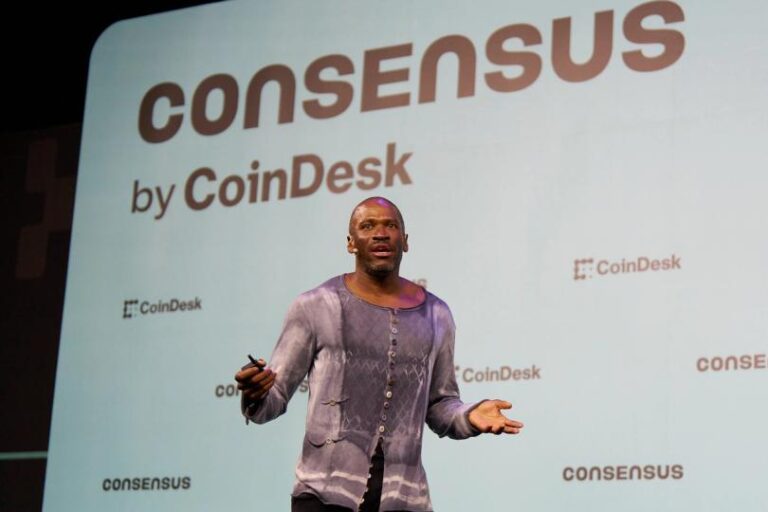
Consensus 2026 in Miami is one of the few that still functions as a filter rather than an amplifier. The people who show up have skin in the game. Their disagreements are real. Their agreements were not manufactured by the same five models everyone else is using. That kind of room is getting harder to find anywhere else. Which is why I will be there – hosting a small invite–only session about what signal extraction at scale actually looks like.

The edge will not belong to whoever has the most information, the fastest tools, or the loudest platform.

It will belong to whoever can see clearly when everyone else is drowning in noise.

That is the scarcest resource in markets right now.

And it is only getting scarcer.

Accounting Moves to the Age of the Agent with Xero & Anthropic partnership.

0

Xero and Anthropic have entered a multi-year partnership to integrate the Claude large language model (LLM) into the global small business platform, aiming to transform accounting from a manual process into an automated, agentic workflow.

In an exclusive intevriew with the Fintech Times, we speak to Diya Jolly, Cheif Product & Technology Officer at Xero.

This collab is a reflection of the industry shift to embedding financial tools directly into a third-party AI interface, allowing users to manage payroll, payments, and tax obligations through natural language.

The move follows a period where Xero utilised multiple models, including those from OpenAI and Gemini, to achieve a 97 per cent accuracy rate in bank reconciliations. By partnering with leading AI developers like Anthropic, Xero intends to tackle the remaining three per cent of complex financial tasks, such as split invoice payments and unstructured data sources that traditional ledgers struggle to process.

Moving Beyond Structured Data
Diya Jolly, Chief Product and Technology Officer, Xero

Historically, accounting software has relied on structured data to maintain accurate ledgers. Diya Jolly, Chief Product and Technology Officer at Xero, explained that the integration with Anthropic allows the platform to reason across unstructured information. This capability enables small businesses to upload diverse data sources, such as spreadsheets or information from legacy payroll systems, and map them directly to their financial records.

“Accounting has sat within a web app forever,” Jolly noted during the discussion. “With natural language, you can actually make accounting available wherever the user is and meet the user”. This shift towards “headless apps” means that financial data is no longer siloed within a single interface, but can be interrogated via Claude.ai or other communication channels.

The Rise of Agentic Workflows

The partnership introduces a reasoning layer to Xero’s financial infrastructure through its AI superagent, JAX (Just Ask Xero). Unlike standard automation, which follows pre-defined rules, agentic AI can orchestrate complex tasks from start to finish. For a small business owner, this might involve asking Claude to identify a supplier, check real-time cash flow to confirm affordability, and then generate the invoice or payment without leaving the AI chat interface.

This evolution prompts questions regarding the future of the bookkeeping profession. While some fear that AI will replace human roles, Jolly argued that the technology is designed to eliminate “grunt work” rather than human oversight.

“Bookkeepers will become more advice givers than the doer of grunt work,” Jolly said. She added that while AI can automate repeated actions, it lacks the subjective understanding of a business’s seasonality or specific context—such as whether a lunch expense should be

classified as sales or entertainment. As the industry shifts, the role of the bookkeeper is expected to move from a volume-based profession to one focused on high-value judgment.

Deterministic Records vs. Probabilistic AI

A fundamental challenge in applying LLMs to finance is the conflict between the probabilistic nature of AI and the deterministic requirements of accounting. Xero functions as a system of record where $1 + 1$ must always equal $2$. In contrast, LLMs predict the next likely token in a sequence, which can lead to variations in output.

To mitigate this, Xero acts as the deterministic anchor. The platform serves as a financial operating system that pipes in bank data and manages compliance rules, while Claude provides the analytical layer on top. Jolly emphasised that for critical tasks like tax submissions, a human expert remains essential to sign off and take responsibility for the filings.

“I don’t think you’re ever going to not review something that has to be deterministic and where the repercussions for it being wrong are high,” Jolly commented, noting that users should treat AI agents like junior employees that require supervision.

Security and Data Sovereignty

A primary concern for financial institutions (FIs) and small businesses when adopting AI is data privacy. The partnership is built on a framework where financial data remains within the Xero ecosystem. When a user queries their financials through Claude, the LLM calls a Xero Model Context Protocol (MCP) server.

This setup ensures that proprietary business data is never used to train Anthropic’s models. Instead, Xero serves an applet within Claude, maintaining a private space for the data exchange. This “trusted intelligence” model is designed to provide the benefits of advanced reasoning without compromising the security of the underlying financial records.

Scaling for the Future

As small businesses grow from lean operations to larger organisations, their need for integration increases. Xero intends to remain an infrastructure layer that connects to various point-of-sale (POS) systems, CRM software, and payroll providers. While Claude provides the reasoning capabilities, Xero provides the API surface and connections to thousands of ecosystem apps.

Looking ahead, Xero’s roadmap includes expanding its presence across more interfaces, including potential integrations with popular accounting tools such as spreadsheets and other office applications. The goal is to move toward a “default automated” state for books closing and tax preparation, utilising the specific strengths of different AI models for different tasks.

The collaboration between Xero and Anthropic represents a significant step in the fintech sector’s adoption of agentic AI. By combining the vast datasets of a global accounting platform with the reasoning power of a leading LLM, the partnership seeks to provide small businesses with the level of financial intelligence previously reserved for companies with dedicated CFOs or analysts.

Bitcoin Bulls See Their First Weekly Close Above 21-Week Resistance in Six Months

0

Bitcoin (BTC) counts down the final days of April with a fresh attack on $80,000 as price teases key breakouts.

  • Bitcoin sees its first weekly close above a key trend line since October 2025.
  • Liquidity grabs ramp up as traders eye a potential support retest closer to $70,000.
  • The Federal Reserve interest-rate decision and inflation data form macro volatility catalysts.
  • Analysis sees the “end of capitulation” on Bitcoin as institutions shore up the market.
  • US manufacturing data could allow BTC/USD to avoid a retest of its macro lows.

Bitcoin closes above 21-week trend line for the first time in six months

Bitcoin may have failed to tap $80,000 or even hold its latest gains, but the weekly close was still significant.

After a last-minute push higher, BTC/USD managed to close out the weekly candle just above a key trend line, data from TradingView confirms.

BTC/USD one-hour chart with 21-week EMA. Source: Cointelegraph/TradingView

This was its 21-week exponential moving average (EMA) — a resistance feature on the chart in place since October 2025. The last weekly close above it was when the pair traded at nearly $115,000.

As Cointelegraph reported, the 21-week EMA was already on the radar for trader and analyst Rekt Capital. 

A weekly close above it, he argued last week, was a prerequisite for avoiding a support retest of $73,000.

“Unless BTC is able to reclaim the 21-week EMA as support… Then this EMA could indeed force BTC into a post-breakout retest of the top of the Double Bottom price broke out from last week,” he told X followers.

BTC/USD one-week chart. Source: Rekt Capital/X

The 21-week EMA currently forms the upper boundary of Bitcoin’s bull market support band, together with the 20-week simple moving average (SMA) at $76,550.

Similarly, it was in October last year that price completed a weekly close fully above the band’s two trend lines.

Last week, trader Daan Crypto Trades said that such an event “could confirm the end of this down trend and further relief bounce.”

BTC/USD one-week chart with bull market support band. Source: Cointelegraph/TradingView

Liquidity grabs drive low-time frame BTC price action

On short time frames, the BTC price landscape is offering traders mixed signals.

As overall strength persists despite geopolitical uncertainty, bulls continue to struggle with reclaiming key support lines.

“Some great momentum on $BTC lately, however there are some crucial levels to consider,” crypto trader Michaël van de Poppe commented in his latest analysis on X.

Van de Poppe said that price breaking through $79,000 opens up the path to levels up to $100,000, which will nonetheless “take time.”

“If there’s no clear breakout at $79K, it wouldn’t be surprising to expect some period of consolidation before there’s another test of the resistance,” he reasoned.

“In that case, there’s a level that I prefer to see hold: $73.5k+.”

BTC/USDT six-hour chart. Source: Michaël van de Poppe/X

Earlier, Cointelegraph reported on expectations of a fresh BTC price comedown and even new macro lows. 

Van de Poppe added that such an outcome could occur should the $73,000 area fail.

Continuing, trader CrypNuevo suggested that liquidity grabs could bring about that trip to the lower end of the $70,000-$80,000 corridor. 

After the weekly close, BTC/USD took out late shorts above $79,000 before rapidly heading downward, liquidating newly placed longs, data from CoinGlass shows.

BTC 24-hour liquidation heatmap. Source: CoinGlass

“Price could take the upside liquidations first in a range highs deviation, before going for the lower ones at $70k mid-range,” CrypNuevo predicted.

He added that both $70,000 and $80,000 had an “interesting amount” of potential liquidations to offer.

BTC liquidation heatmap. Source: CrypNuevo/X

Powell’s final Fed FOMC meeting brings stocks warning

With markets still unsure of the roadmap for the US-Iran war, risk appetite is nonetheless “returning,” analysis says.

This week has begun with the hope of further negotiations to end the conflict, this time thanks to an Iranian proposal.

Bitcoin appeared to find reason for relief on the news, hitting new multimonth highs before quickly retracing. 

“Risk appetite continues to grow rapidly in this market,” trading resource The Kobeissi Letter wrote in an X response as BTC/USD neared $79,500.

Macro volatility is set to continue in the coming days, thanks also to US macroeconomic events.

Wednesday will see the Federal Reserve’s next decision on interest-rate changes, and markets will be watching Chair Jerome Powell’s press conference for cues when it comes to future policy.

Fed target rate expectations for Wednesday’s FOMC meeting (screenshot). Source: CME Group FedWatch Tool

The war has added new inflation risks for the US, and Thursday’s release of the Fed’s “preferred” inflation gauge should reflect its impact on the trend.

This week also marks the last Federal Open Market Committee (FOMC) meeting with Powell as Chair, ahead of the assumed takeover by Kevin Warsh.

“New Fed chairs have a history of being greeted with market volatility,” trading resource Mosaic Asset Company noted in the latest edition of its regular analysis series, The Market Mosaic.

An accompanying chart put the average S&P 500 drawdown in the year a new Fed chair takes over at 20%.

S&P 500 drawdowns under new Fed chairs. Source: Mosaic Asset Company

BTC price analysis sees “structural bottom” in place

Bitcoin near $80,000 has led analysts to suggest that the “end of capitulation” is already here.

In one of its QuickTake blog posts on Monday, onchain analytics platform CryptoQuant pointed to institutional investors as the key supporting factor during the 2026 bear market.

“During the Hormuz Shock, large investors refused to sell their Bitcoins and the panic in derivatives was irrelevant, as institutional conviction was already cemented,” contributor GugaOnChain summarized.

In early February, CryptoQuant argued, when BTC/USD briefly fell to near $60,000, a “purge” of low-conviction investors had already been underway for several months.

“Operators took profits, purging weak hands and retreating the support to $54.5K,” GugaOnChain continued, referring to Bitcoin investors’ average cost basis, also known as realized price. 

“In practice: the retail that paid the speculative premium at $90K entered absolute panic with the free fall. Forced to sell at a loss, they returned their Bitcoins to the Smart Money in the $62K zone, establishing an early support above the fair price.”

Bitcoin realized price data (screenshot). Source: CryptoQuant

CryptoQuant described the “apex” of the process occurring in February, with a recovery underway ever since.

“The apex of this purge occurred on February 5, 2026, consolidating the ground zero of this Bear Market. With the Spot squeezed at $62.8K and the Realized Price (RP) at $55.3K, the deviation was only 1.34%,” GugaOnChain explained, calling a “structural bottom.” 

“Unlike the absolute capitulation of 2022, when the price crossed below the network’s base, this time the panic stalled at a 13% distance from the Wall. Institutional capital erected a concrete floor before the abyss, exhausting the selling power of investors without conviction.”

Bitcoin realized-price data ordered by date coins moved onchain. Source: CryptoQuant

US macro data may save Bitcoin from new bear-market low

Throughout the current macro volatility, US Purchasing Managers’ Index (PMI) has formed a key upside catalyst for crypto and risk assets.

Related: Bitcoin Bull Score hits six-month high as 2022 bear-market fears linger

This is set to continue, with PMI entering an “expansion” phase for the first time since 2022.

For commentator Matthew Hyland, this now has implications for Bitcoin price action for the rest of 2026. In this bear-market year, BTC/USD should find a bottom in Q4, matching 2022 — but PMI should change the landscape.

“Because of the strength of the PMI expansion trigger along with the other 10+ signals I do not believe the ‘4 year cycle’ works out as most expect,” he wrote on X.

BTC/USD versus US PMI data. Source: Matthew Hyland/X

Instead of beating its February lows, Bitcoin should instead put in “higher low” near $60,000, contrary to the majority’s expectations. Supporting this, Hyland made reference to “10+ signals” showing that the new bottom is already in place.

“My invalidation would be a severe black swan something worse than the past few months however black swans are NOT likely so Its low percentage odds of being invalidated and not favorable to happen,” he added.

The Fintech Landscape of Malawi in 2026

0

The following is the fintech and wider digital and economic development of the African nation of Malawi in 2026.

Malawi’s fintech story in 2026 is one of incremental transformation—quiet, often overlooked, yet increasingly consequential. In a low-income, largely agrarian economy, digital financial services are not merely a convenience; they are becoming a critical tool for inclusion, resilience and economic participation.

With a population of over 22 million people, Malawi’s economy nonetheless remains relatively small. Its gross domestic product (GDP) is only around $16billion. It is heavily reliant on agriculture (notably tobacco, tea and sugar) alongside services and a modest industrial base. It is one of the poorer economies of Africa, with a GDP per capita of $650.

Digital economic transformation

Malawi’s digital transformation is driven by necessity rather than scale. With a predominantly rural population and limited physical infrastructure, digital technologies are increasingly seen as a way to overcome structural barriers.

Government strategies, aligned with broader development frameworks notably the country’s economic development strategy called Malawi 2063 Vision, have prioritised expansion of mobile and broadband connectivity, digitisation of public services and payments, and promotion of digital financial inclusion.

Mobile penetration has reached approximately 70 per cent, while internet penetration remains lower at around 30 per cent, though steadily rising.

Given the fact that Malawi is a low-income nation, there is support from institutions such as the World Bank and United Nations Capital Development Fund (UNCDF). Organisations such as those have focused on building digital ecosystems that enable micro and small and medium enterprises (MSME) growth, rural inclusion and financial access.

Financial services sector

Busy street market, Blantyre, Malawi, Africa, Malawi, the landlocked country in southeastern Africa. IMAGE SOURCE GETTY

Malawi’s financial services sector has historically been characterised by limited access, particularly in rural areas. However, digital financial services are reshaping the landscape, especially mobile money.

Mobile money platforms have become the primary entry point into financial services. This shift reflects a broader regional trend, where mobile-first models are bypassing traditional banking infrastructure. This is a trend seen across much of wider sub-Saharan Africa.

Despite the challenges of Malawi, digital plays potential in its economic development. This has seen the likes of the Reserve Bank of Malawi (RBM), the country’s central bank, play an important role in supporting this transformation when it can.

First off, the country has begun modernising its national payments system. The RBM has worked to enhance interoperability between banks and mobile money operators, improving efficiency and reducing transaction costs.

In addition, Malawi has advanced several key things pertaining to digital finance. First, its national payment switch has been a focus, enabling integration across financial institutions and supporting digital payments expansion. Second, regulatory frameworks for mobile money and fintech has been a priority, seeing the RBM strengthen licensing and oversight of electronic money issuers and payment service providers. This is ensuring stability and consumer protection.

The overarching theme behind recent activities has been Malawi’s National Strategy for Financial Inclusion (NSFI) III (2024-2028), which is aiming to increase formal financial service access to 95 per cent of adults by 2028. This aims to be done by mainly leveraging fintech to enhance mobile money, digital payments, and rural financial services. The strategy focuses on bridging the rural-urban divide, supporting women-owned businesses, and enhancing financial literacy to foster economic resilience and growth

Financial inclusion and fintech

One can see why the country needs a financial inclusion strategy through on-the-ground statistics. Financial inclusion in Malawi remains limited. Estimates suggest that only 25 per cent of adults have access to a formal bank account, while a significantly larger proportion uses mobile money services.

Like in other parts of the developing world, both the excluded and the included, there remains gap in terms of the financial engagement of people. This also applies in Malawi. Especially in credit, insurance and savings, the engagement of people in Malawi overall remains limited.

The country’s financial hub is Blantyre, the commercial capital, alongside Lilongwe as the administrative centre. One of the largest banks is National Bank of Malawi, which plays a central role in expanding both traditional and digital financial services.

For instance, the bank has Mo626 Digital+ App, which is a comprehensive mobile banking app available on the App Store and Google Play, enabling instant transfers, bill payments, and mobile phone top-ups. It even does diaspora banking, as there are many Malawians abroad, giving them the opportunity to register using international numbers and manage accounts.

Other players – both in financial services and in telecoms – that are actively promoting fintech and wider financial digital services include the likes of Airtel Money Malawi and FDH Bank.

Malawi’s fintech ecosystem is still in its early stages, with an estimated 20 fintech and digital financial service providers, primarily focused on payments and mobile money.

An example of a fintech in the country is TNM Mpamba, which is a leading mobile money service enabling payments, transfers and financial inclusion.

These players highlight a key feature of Malawi’s fintech landscape: telecom-led innovation supported by banks, rather than a large, independent startup ecosystem.

Conclusion: inclusion through persistence

Malawi’s fintech journey is gradual but meaningful. In 2026, digital financial services are expanding access and reducing barriers, particularly for rural populations. While challenges remain, the country is steadily building a more inclusive financial system. This demonstrates  that even small, incremental gains can drive meaningful change in economic participation over time. For Malawi, this is a prime example of its ambitions towards digital inclusion for all as part of its wider economic development.