Trusted Editorial content, reviewed by leading industry experts and seasoned editors. Ad Disclosure
Strategy CEO Phong Le has highlighted scenarios in which the company would offload some of its Bitcoin holdings. This explanation follows the treasury firm’s chairman, Michael Saylor, hinting at the possibility of strategically selling portions of its BTC over the past week.
Why Strategy Could Shed Some Of Its Bitcoin Holdings
In an interview with CNBC, Le analyzed the conditions under which Strategy could sell some of its Bitcoin holdings. While this move would be in stark contrast to the firm’s “Never Sell” strategy, the CEO believes a change in philosophy might be necessary given current market conditions.
The CEO mentioned that the company could sell some of its BTC to finance the payment of the 11.5% dividend yield on its Perpetual Preferred Stock (STRC). Le said that Strategy would sell a portion of its BTC to cover the dividend if it increases shareholder value (defined as a rise in the “Bitcoin per share”).
Source: @phongle on X
Le said in the interview:
I believe in math over ideology, and at the point where selling Bitcoin versus selling equity to pay a dividend is better for our Bitcoin per share, and for our common shareholders, we will do it.
Strategy’s CEO further explained that BTC sales are accretive to shareholder value when the company’s book value is below market value, or vice versa. Le also mentioned the option to sell Bitcoin to capture deferred tax gains (and losses, as in its current case).
As of press time, Strategy is the largest corporate holder of Bitcoin, with about 818,334 BTC (approximately 4% of the cryptocurrency’s supply) on its books. With more than $1.5 billion in annual dividend obligations, Le suggested that its $65 billion BTC holdings are more than enough to cover these payments.
How Could Strategy’s Sales Affect Bitcoin Price?
As expected, the idea that the largest corporate holder of Bitcoin would sell its holdings to meet obligations has not been well received. However, the Strategy CEO believes that the premier cryptocurrency is liquid enough to withstand any major sales by his firm.
In Le’s own words, selling in the open market to fund a $1.5 billion dividend payment is a drop in the ocean of Bitcoin’s daily trading volume of over $60 billion. While admitting that Strategy is a significant player in the market, Le does not believe his firm’s activity has any major influence on price (considering how liquid the market is).
As of this writing, BTC is valued at around $80,840, reflecting a 0.5% price increase in the past 24 hours.
The price of BTC on the daily timeframe | Source: BTCUSDT chart on TradingView
Featured image from Michael Saylor/X, chart from TradingView
Editorial Process for bitcoinist is centered on delivering thoroughly researched, accurate, and unbiased content. We uphold strict sourcing standards, and each page undergoes diligent review by our team of top technology experts and seasoned editors. This process ensures the integrity, relevance, and value of our content for our readers.
After a midweek trip to near $83,000 failed to hold, however, traders saw the need for BTC/USD to retest support — something that they now reiterated.
Of particular interest was the bull market support band — two moving averages just below the $80,000 mark.
“On the low-timeframes, after rejecting at the high-timeframe resistance range marked in purple, I believe the most likely outcome is a short-term pullback toward the 2D Bull Market Support Band, which has been a strong reversal zone over the last couple of months,” analytics account Cryptic Trades wrote alongside a chart in its latest post on X.
“As long as price continues to hold above the support band and the broader high-timeframe support range marked in blue around $75K, which aligns with the April 2025 bottoming formation, I believe the most likely outcome remains further upside.”
BTC/USD one-day chart. Source: Cryptic Trades/X
Trader Daan Crypto Trades agreed, calling the initial move above the support band “not a clean break.”
“Would want to see a move to at least clear that sticky area around the low $80Ks and hold there for a week or two,” he told X followers.
Ahead of fresh US inflation data next week, trader Killa warned of headwinds returning for BTC price strength.
Related: Bitcoin Bollinger Bands push key breakout as creator acts on positive signal
The Consumer Price Index (CPI) for April, due out on Tuesday, was set to show the ongoing impact of the US-Iran war and oil-price rises on the economy.
“Its priced in,” Killa wrote on X.
“BTC has rallied after the last two CPI releases. However, if we follow 2025 CPI price action, we may see bigger players start de-risking into the event counter narrative.”
BTC/USD chart with CPI releases. Source: Killa/X
Support levels to watch also included the area around the bull market support band, with $74,000 on the radar, should it fail.
“I would watch for liquidity sweeps around this pivot to signal the next move,” Killa added.
Trusted Editorial content, reviewed by leading industry experts and seasoned editors. Ad Disclosure
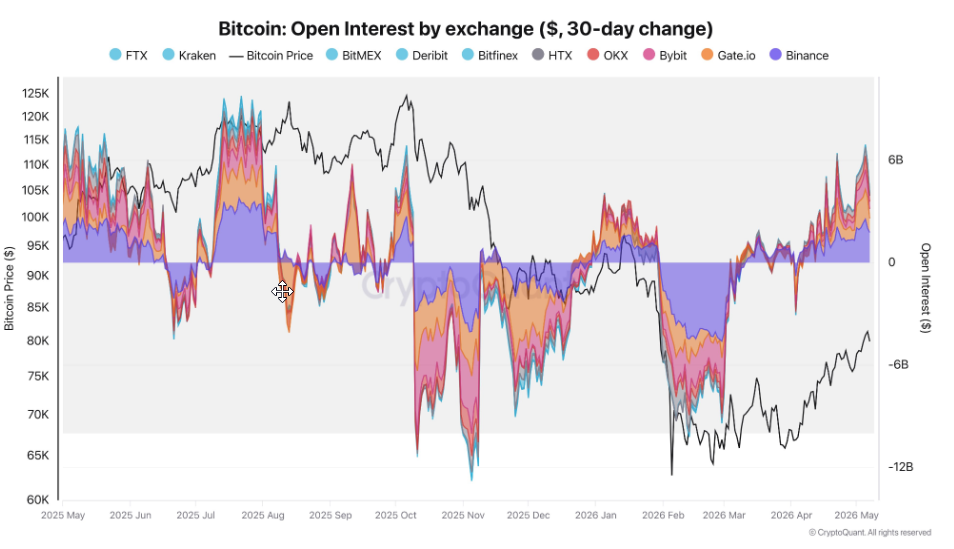
On-chain data shows Bitcoin’s latest price move to $80,000 has not been based off of spot demand alone. A new trend of derivatives activity is building under the market, with open interest across major exchanges recording its strongest increase of 2026 and even surpassing the rise seen during Bitcoin’s 2025 all-time high formation.
However, technical analysis shows that the real test for a bullish reversal still lies ahead.
Bitcoin Open Interest Posts Biggest Increase Of 2026
CryptoQuant data, which was first revealed by crypto analyst Darkfost, shows that Bitcoin open interest has just posted its largest 30-day increase since the beginning of 2026, which is a reflection of many traders entering the Bitcoin futures markets.
The move comes even though funding rates have stayed broadly negative for several weeks, meaning the rally is not being supported by a clean one-sided bullish funding environment. Instead, it shows investors are rebuilding exposure through leverage while sentiment is still cautious.
This is important because the increase is already larger than the one recorded during Bitcoin’s previous all-time-high formation in 2025.
Bitcoin Open Interest By Exchange: @Darkfost_Coc On X
As shown in the chart image above, the return of derivatives capital is not isolated to one crypto exchange. Binance, the world’s leading cryptocurrency exchange by trading volume, accounts for roughly 34% of total market share, with an average monthly Open Interest of approximately $2.5 billion as of May 5.
BTCUSD now trading at $80,871. Chart: TradingView
A similar trend can also be observed across other exchanges, notably Gate.io with $1.75 billion and Bybit with $1.15 billion. Darkfost, who identified the data, described the environment as a sharp contrast to conditions in the first few months of the year, noting that optimism is gradually returning and encouraging traders to increase their risk exposure over different crypto exchanges.
The Level That Could Decide Bitcoin’s Next Trend
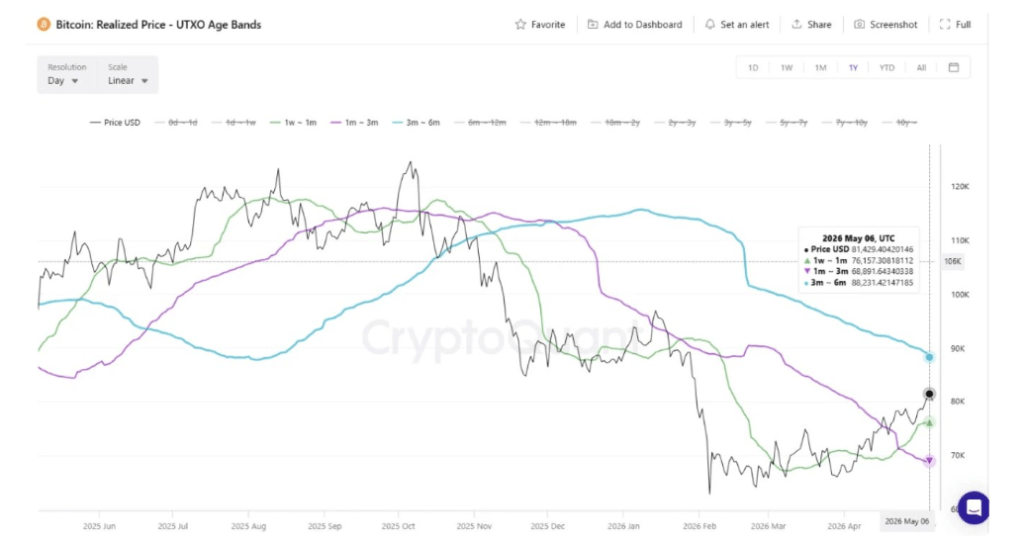
Bitcoin is now back to trading around $80,000 for the first time since late January 2026, helped by stronger risk appetite and increased leverage, alongside an increase in ETF demand. While this bullish momentum is building, on-chain data from CryptoQuant’s Realized Price – UTXO Age Bands metric is pointing to a price level that will determine whether the current recovery is structural or temporary.
The next major level from CryptoQuant’s UTXO age-band data sits around $88,000, based on the 3-to-6 month realized price cluster. Bitcoin has already reclaimed the short-term cost holder basis. At the time of writing, the 1-week to 1-month cluster is around $76,157, the 1-month to 3-month cluster is around $68,891, and the 3-month to 6-month cluster is around $88,231.
Realized Price – UTXO Age Bands. Source: CryptoQuant
This places $88,000 as the price level to watch in May in order to confirm a complete bullish reversal. A clean move above $88,000 would mean Bitcoin has climbed above the cost basis of all major short-term cohorts, and that would be the real signal of a trend reversal.
Featured image from Shopify, chart from TradingView
Editorial Process for bitcoinist is centered on delivering thoroughly researched, accurate, and unbiased content. We uphold strict sourcing standards, and each page undergoes diligent review by our team of top technology experts and seasoned editors. This process ensures the integrity, relevance, and value of our content for our readers.
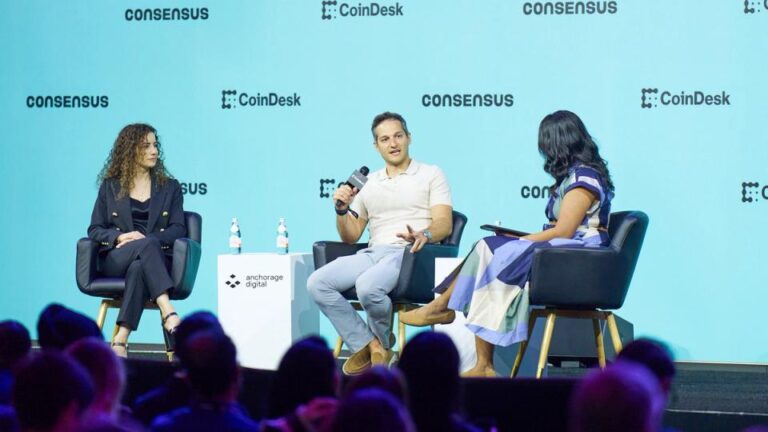
MIAMI BEACH, Fla. — Senior figures from Google Cloud and PayPal told CoinDesk’s Consensus Miami conference on Thursday that the next wave of internet commerce will run on crypto rails because AI agents structurally cannot use traditional financial accounts.
Richard Widmann, global head of Web3 strategy at Google Cloud, said the existing internet user experience does not extend to autonomous agents.
“An agent cannot get a bank account. It’s not hard, it just is impossible,” he said, citing technological and regulatory barriers. Crypto, by contrast, is “a fantastic machine readable interface for payments,” Widmann said.
To address the gap, Google has launched the Agentic Payments Protocol (AP2), an open protocol that has been donated to the FIDO Foundation and has more than 120 partners including PayPal, Widmann said. He compared the move to the x402 internet-native payment standard given to the Linux Foundation.
“Open dialogues and open standards are really the foundation you need to build on,” Widmann said.
May Zabaneh, senior vice president and general manager of crypto at PayPal, said the company is treating agents as the next channel after PayPal’s evolution from offline to online to mobile commerce. PYUSD, the company’s stablecoin, is “a very natural programmable layer for payments,” she said, particularly as commerce trends toward globalization, AI-native experiences and tokenized assets.
Zabaneh cited a recent PayPal survey which found that 95% of merchants now see AI agent traffic on their sites, but only 20% have machine-readable catalogs. “Merchants need to be ready for this next era,” she said. The shift, she added, mirrors the move from offline to online stores; merchants need to expose their products in agent-readable formats.
On liability, Zabaneh said the question of who’s responsible if an agent makes a bad purchase is “definitely something that we have to think through as an industry.” Widmann said multi-party custody is becoming central to agent design. Google has extended its Cloud KMS platform to cryptocurrency custody, and Widmann argued that an agent should hold only one of two or three key shards rather than the full private key. “It cannot simply unilaterally move funds or take action,” he said.
Asked what keeps them up at night, Widmann said the open question is “how do you onboard agents into all of the existing capital markets and infrastructure plumbing that powers payments and trading today.” Zabaneh said trust keeps her up professionally, though personally she “can’t wait for agentic to help make my life easier.”
Bored Ape Yacht Club (BAYC) non-fungible tokens are surging again, fueling hopes of a broader revival in the battered NFT market as speculative appetite returns across crypto.
Floor prices, or the lowest value for the flagship Yuga Labs collection, have climbed from around 5 ETH to 10 ETH over the past month, while apecoin (APE), the ecosystem’s governance token, has also rallied from below $0.10 to about $0.16 with a sharp increase in trading volumes.
Floor prices of Bored Apes (CoinDesk)
The rebound comes as memecoins and other high-risk crypto assets are outperforming more defensive sectors such as decentralized finance (DeFi), suggesting retail traders are perhaps returning to the market after months of subdued activity.
For Yuga Labs’ newly appointed CEO, Michael Figge, the rally reflects more than short-term hype.
“It’s clear from the numbers that for some time, as far as blue-chip digital collectibles go, it was oversold,” Figge told CoinDesk in an interview. “You had this huge compression in price, but if you actually look at an overlay graph, unique holders were actually up.”
Figge, who has held various executive roles at Yuga Labs since 2022, before taking over as CEO last month, argued that NFT prices had become disconnected from user participation during the prolonged downturn.
NFT token rally (CoinDesk Data)
“A cynic will say prices doubled and the unique holder count didn’t double,” he said. “But that’s really just recovery from a period where things fell disproportionately.”
Survival beyond hype
The rebound also comes alongside a broader reassessment of digital art and onchain ownership beyond short-term price speculation. In an essay last week, pseudonymous collector and NFT market analyst “Van” argued that while the speculative mania surrounding NFTs largely collapsed after 2021, institutional adoption of blockchain-based art has continued quietly in the background. “The speculation died, but the medium survived,” the essay said, pointing to acquisitions and exhibitions from institutions including MoMA, Centre Pompidou and LACMA over the past four years.
The move higher has coincided with renewed momentum in speculative corners of the crypto market. CoinDesk’s MemeCoin Select Index was among the best-performing digital asset sectors last week, outperforming DeFi tokens as traders rotated back into higher-beta bets.
Some market participants also point to growing stress in DeFi as another possible driver behind renewed NFT demand. A string of recent exploits and declining yields across lending protocols have dented confidence in the sector.
“With one well-planned hack, you can lose it all,” Figge said. “That has to get solved in DeFi, but it’s definitely made people rethink the idea that it’s the only use case. NFTs offer something different — they’re tied to communities that persist beyond just price action.”
Signs of renewed activity are also emerging in NFT financial markets. Earlier last week, a $2.8 million NFT-backed loan tied to a CryptoPunk circulated widely on social media, with the lender set to earn roughly $138,000 in interest over 90 days in what traders described as one of the largest NFT-backed loans to date.
The broader NFT rebound has extended beyond BAYC. Pudgy Penguins, another major collection, has also rallied strongly in recent weeks, while traders speculate that OpenSea — the marketplace synonymous with the 2021 NFT boom — could reignite activity through a long-rumored token launch.
‘Back to basics’
Even so, Figge acknowledged that speculation remains central to the market.
“It would be naive to say financial speculation isn’t a huge driver,” he said. “Whatever happens in this cycle will rhyme with the last one, but it’s never going to be exactly the same.”
Yuga Labs has meanwhile shifted its focus back toward community-building efforts, including more than 30 in-person meetups worldwide over the past month.
“A lot of what made Bored Ape work in the first place — the social layer — hasn’t really been serviced in recent years,” Figge said. “We’ve gone back to basics.”
Located in Europe, Albania has seen developments across its fintech, digital and wider economic development in recent memory and in 2026.
Albania is a market moving from catch-up to architecture: from basic digitisation towards open banking, faster payments, closer alignment with European standards, and a more visible startup ecosystem. That makes it one of the more interesting smaller fintech markets in Southeast Europe.
It may not yet command the attention of larger European hubs, but the nation of around 2.75 million people is increasingly building the institutional plumbing that matters. The shift is especially notable because Albania’s progress in digital finance is tied not only to innovation, but also to its wider economic modernisation and European Union (EU)-integration trajectory. The World Bank puts Albania’s gross domestic product (GDP) at over $27billion in 2024 with a GDP per capita at around $11,378.
Digital, fintech and changes such as in open banking
That broader economic base matters because Albania’s digital-financial development is unfolding in a country that is still relatively small, but increasingly more connected, services-driven and reform-oriented. Tirana remains the country’s financial and commercial centre, while banks such as Banka Kombëtare Tregtare and Raiffeisen Bank.
Albania continue to sit at the heart of the formal financial system. At the same time, the central bank has been steadily pushing the market towards more modern rails. The Bank of Albania has described itself as a regional pioneer in open banking after embracing PSD2-style reforms, and in November 2024 it granted the first open banking licence to a financial entity, marking a practical turning point rather than just a regulatory ambition.
Aerial photography of Centre of Tirana IMAGE SOURCE GETTY
That is why Albania’s fintech landscape in 2026 is best understood through infrastructure first, startups second. The most important developments have not been headline-grabbing unicorn stories, but the steady construction of systems that can support more innovation over time. The European Commission (EC)’s 2025 Albania report noted that the first transactions between Payment Initiation Service (PIS) providers and banks took place in the first quarter of last year as open banking became operational.
The same report said Albania joined the geographical scope of the Single Euro Payments Area (SEPA) schemes in November 2024, while electronic payments increased by 24 per cent year on year in the first half of last year, boosted by online and card payments. It also noted that the Bank of Albania initiated development of a domestic instant-payments solution based on a clone of the TARGET Instant Payment System in January 2025.
That instant-payments push is one of the clearest signals of where Albania is heading. In January last year, the Bank of Albania signed on to a Western Balkans initiative under which the Bank of Italy would supply an instant payment system based on a clone of TIPS, the Eurosystem platform for real-time settlement. The Bank of Albania said the new platform would enable payments in the currencies of participating countries and support closer integration with the European financial system. In practical terms, that suggests Albania is trying to build a faster, cheaper and more interoperable payments market rather than simply layering apps on top of older infrastructure.
The Bank of Albania has also framed innovation in broader terms. In a speech last year, Governor Gent Sejko said technological innovation was reshaping the financial landscape in Albania by expanding services, encouraging financial inclusion and creating new opportunities for businesses and consumers. He specifically pointed to digital transformation in payments and banking as one of the most visible changes in the market. This is important because Albania’s fintech development is not being presented as a niche startup trend. It is increasingly being embedded into national financial-sector strategy.
Small but growing fintech ecosystem
From a market perspective, the ecosystem is still modest, but it is becoming more tangible. There are estimates of 22 fintechs in the country as of this year. It is a small but growing ecosystem of licensed payment and electronic money institutions. There are various examples.
First, EasyPay remains one of the clearest examples of a homegrown fintech player. The company is a licensed electronic money institution with more than 580 locations and a long-standing role in real-time payments, remittances and digital financial services. It has also moved into open banking after becoming the first financial institution to receive an open banking licence in Albania.
Also, there is Pago, a digital financial platform launched by Rubicon Sh.a. With Rubicon’s Pago network, it positions itself around merchant payments and processing infrastructure.
There is also Iute. Though regional rather than purely Albanian in scope, Iute remains relevant through its digital consumer-finance model and app-led lending and payment services.
Financial inclusion is improving, though not yet complete. The most accessible public World Bank Findex interface confirms Albania has 2024 account-ownership data available, and the direction of travel across the market clearly points to a more banked and digitally active population than a decade ago. Importantly for 2026, usage is rising. Reporting on Bank of Albania data indicated that card payments accounted for around 67 per cent of the total number of bank payments last year, while electronic money payments have become a clearer marker of digital consumer behaviour. Albania’s challenge now is less about introducing digital payments in principle and more about deepening everyday adoption across households, merchants and small and medium enterprises (SMEs).
What the country may still lack in scale, it is trying to compensate for through ecosystem-building. Events such as Future of Fintech, positioned as Albania’s leading fintech and digital finance forum, point to a more deliberate effort to connect regulators, banks, founders and investors. That matters in a market like Albania, where catalytic platforms and policy dialogue can have an outsized effect.
In that sense, Albania’s fintech ecosystem in 2026 is not yet defined by size or capital depth. It is defined by direction. Open banking is live. SEPA alignment has advanced. Instant payments are being built. Electronic payments are rising. And local fintechs are becoming more visible within a still-small but more structured ecosystem. That is not yet a finished fintech success story, but it is clearly a market moving into its next phase.
Trusted Editorial content, reviewed by leading industry experts and seasoned editors. Ad Disclosure
After multiple weeks hovering below $80,000, Bitcoin finally broke above the psychological level on Monday, May 4th. The premier cryptocurrency enjoyed a significant surge in bullish momentum, pushing its price to as high as $82,000 over the past week.
While the Bitcoin price has slowed over the past couple of days, most indicators point to the market leader being in bullish territory, at least in the short term. For instance, a specific on-chain metric suggests the BTC price is on the verge of another leg up.
Is A Short Squeeze Imminent For BTC?
In a recent Quicktake post on the CryptoQuant platform, market analyst CryptoOnchain discussed a significant occurrence in the Bitcoin derivatives market. Fresh on-chain data shows that BTC’s Funding Rates on Binance have dropped to -0.002, a new multi-year low.
The relevant indicator here is the 50-day Simple Moving Average of Bitcoin’s Funding Rates on Binance, the world’s largest cryptocurrency exchange by trading volume. As highlighted by CryptoOnchain, this metric, which measures the periodic fee exchanged between traders in a cryptocurrency’s derivatives market, has fallen to its most negative level since the post-COVID crash in April 2020.
Typically, negative funding rates imply that short traders (investors with sell positions) are paying a fee to long traders (investors with buy positions), as they bet against the price of the cryptocurrency (Bitcoin, in this case). “Prolonged negative funding rates at this magnitude indicate absolute dominance of bearish sentiment and aggressive short-selling,” CryptoOnchain said in their Quicktake post.
Source: CryptoQuant
Furthermore, CryptoOnchain noted that history provides some context for why the current Funding Rates could be good for Bitcoin’s price. The analyst explained that when the derivatives market was “skewed towards the shorts” in the past, BTC experienced “short squeezes” that provided rocket fuel for further upside.
For context, a short squeeze is a phenomenon in which an asset’s price experiences a rapid surge, forcing short traders to buy to cover their losses from the initial surge and subsequently triggering a self-enforcing wave of buying pressure. CryptoOnchain noted that these latest on-chain dynamics strongly suggest that the $80,000 region could be the start of the next upward phase.
Bitcoin Price At A Glance
As of this writing, the price of BTC is around $80,132, with no significant change over the past 24 hours. According to CoinGecko data, the premier cryptocurrency is up by more than 2% in the past seven days.
The price of BTC on the daily timeframe | Source: BTCUSDT chart on TradingView
Featured image from iStock, chart from TradingView
Editorial Process for bitcoinist is centered on delivering thoroughly researched, accurate, and unbiased content. We uphold strict sourcing standards, and each page undergoes diligent review by our team of top technology experts and seasoned editors. This process ensures the integrity, relevance, and value of our content for our readers.
Trusted Editorial content, reviewed by leading industry experts and seasoned editors. Ad Disclosure
Once frozen, a Tether-blacklisted wallet almost never comes back. Only 3.6% of addresses placed on the blocklist in 2025 were later removed, according to BlockSec data.
More than half of the funds tied to those wallets were permanently destroyed using the contracts’ “destroyBlackFunds” function — a detail that underscores just how final these enforcement actions tend to be.
Freezes Surge Across Tron And Ethereum
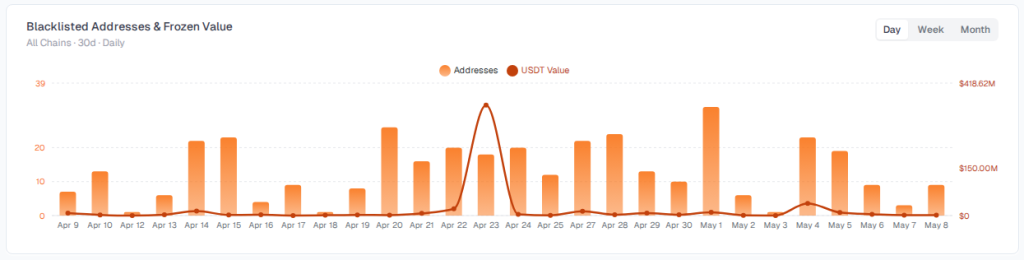
In the past 30 days alone, Tether froze over $514 million in USDT across 370 addresses on the Ethereum and Tron networks.
BlockSec’s USDT Freeze Tracker shows 328 of those addresses were on Tron, with about $506 million locked there. Ethereum accounted for 42 addresses and $8.73 million. The gap between the two networks points to Tron as the main front in Tether’s enforcement push.
Source: BlockSec
The pace is picking up. All of 2025 saw Tether blacklist 4,163 addresses and freeze a combined $1.26 billion. At the current rate, that annual total could be surpassed well before December.
A broader study covering 2023 through 2025 put the cumulative figure at roughly $3.3 billion across 7,268 addresses — far ahead of rival stablecoin issuer Circle over the same period.
Seeing Tether freeze over $500M in USDT across Tron and Ethereum really shows how much compliance still shapes crypto behind the scenes.
This makes me appreciate using platforms like BingX while staying more aware of custody, liquidity, and where funds actually move onchain.… pic.twitter.com/K0cNTrcmWX
Some of the largest recent freezes were tied directly to government investigations. In April, Tether coordinated with the US Treasury’s Office of Foreign Assets Control to lock more than $344 million in USDT across two Tron addresses.
Bitcoin is currently trading at $80,349. Chart: TradingView
Officials said those wallets were linked to suspected sanctions evasion involving Iran. Months earlier, in February, Tether assisted authorities in seizing over $61 million connected to pig butchering scams — a form of fraud where victims are manipulated into sending large sums under false pretenses.
Tether had previously disclosed that it froze around $4.2 billion in tokens over three years due to links with illicit activity, with $3.5 billion of that amount locked since 2023 as law enforcement agencies stepped up crypto-related investigations.
Broader Questions Around Freeze Powers
The surge in blacklisting has sparked debate beyond stablecoins. Some decentralized finance projects have used upgradeable contracts and admin controls to halt or recover funds after major exploits, raising questions about who holds those powers and when they should be used.
For stablecoins like USDT, issuers retain direct control over minting and burning. Data shows these freeze mechanisms are now a routine part of fraud, sanctions, and scam investigations — used not occasionally, but consistently and at scale.
Featured image from Halo, chart from TradingView
Editorial Process for bitcoinist is centered on delivering thoroughly researched, accurate, and unbiased content. We uphold strict sourcing standards, and each page undergoes diligent review by our team of top technology experts and seasoned editors. This process ensures the integrity, relevance, and value of our content for our readers.
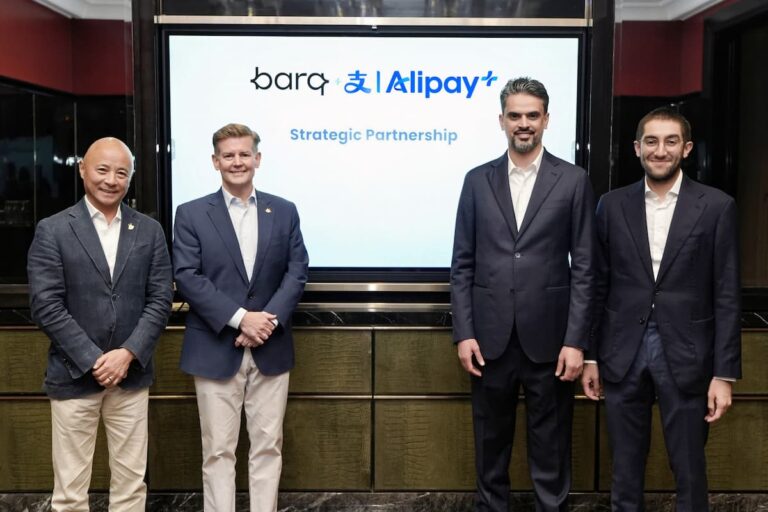
barq, billed as the fastest-growing financial app in the Kingdom of Saudi Arabia (KSA), has officially launched global cross-border QR payments. The new functionality is powered by a strategic partnership with Alipay+, the unified wallet gateway operated by Ant International.
The service is set to launch progressively for barq users starting in May 2026. Notably, the rollout establishes barq as the very first Alipay+ payment partner in the Middle East to enable outbound cross-border QR payments, allowing the app to expand beyond local transactions and facilitate global payment experiences.
Expanding the global payment ecosystem
The partnership directly connects over 12 million barq users to a massive international merchant network. Currently, Alipay+ connects more than two billion user accounts across 50 international payment partners to over 150 million merchants globally.
Through this integration, barq users traveling abroad will benefit from the following features:
Users can scan-and-pay using their mobile devices at any Alipay+ enabled merchant outside of the KSA.
The payment service is accepted in more than 220 markets worldwide.
The network connects users to a global ecosystem that includes dining, retail, transportation, and healthcare services.
The functionality covers popular travel destinations across the Middle East, Asia, Europe, and the United Kingdom.
Aligning with Vision 2030
The cooperation between the two firms is heavily geared toward supporting the continued development of digital payments in alignment with Saudi Arabia’s Vision 2030 initiative. By implementing a modern digital payment infrastructure, the partnership actively supports the Kingdom’s goal of transitioning into a cashless society.
Ahmed Alenazi, CEO and Founder of barq, highlighted the strategic ambition behind the integration.
“Being the first in the Middle East to partner with Alipay+ for payments reflects our ambition to lead from the front,” Alenazi stated. “This collaboration enables our customers to pay globally with the same simplicity they experience locally, setting a new benchmark for Saudi fintech and accelerating our vision of connecting users to the global economy.”
Pietro Candela, general manager of EMEA for Alipay+, emphasized Ant International’s commitment to the region’s digital growth.
“Alipay+ is delighted to partner with barq to promote QR payments from the Kingdom, directly supporting its Vision 2030 goals for innovation,” Candela commented. “At Ant International, we remain committed to driving cross-border flows, SME digital inclusion, and co-innovation with local partners to accelerate the Kingdom’s digital transformation.”
Trusted Editorial content, reviewed by leading industry experts and seasoned editors. Ad Disclosure
Over the last week, Bitcoin has continued to move higher after modest gains pushed prices into the $80,000 zone for the first time since January. The leading cryptocurrency is now reporting an approximately 13% gain over the last month, following the bullish resurgence that began in early April. Interestingly, the incoming chairman of the US Federal Reserve (Fed), Kevin Warsh, is set to take office by May 15. Given Bitcoin’s and other risk assets’ sensitivity to macro events, speculation continues to roll in about the asset’s future under the US monetary policy director.
Warsh: The Hawkish Policy Maker
In a report by crypto analysts, XWIN Research Japan, Fed Chair-elect Kevin Warsh presents an interesting policy combination for crypto users. The former Fed governor and member of George W Bush’s Economic Team is regarded as a Hawkish regulator focused on proactive inflation control. During his Senate hearing in late April, Warsh may have hinted that there would be no changes to this policy stance, after kicking against speculation that he has agreed to implement rate cuts following his appointment by President Donald Trump.
The incoming Federal Reserve Chairman stressed the independence of the apex bank in monetary policy decisions, despite the President’s pressure for interest rate cuts, which had sparked a year-long public spat with outgoing Chairman Jerome Powell. Bitcoin prices retraced to around $75,000 following Warsh’s statements, which doused hopes of lower interest rates that would encourage liquidity flows to risk assets, e.g., cryptocurrencies.
According to XWIN Research Japan, Bitcoin has shown significant reactions to general macro policies in recent years. The premier cryptocurrency recorded an historic rally during the quantitative easing period between 2020 and 2021, while the ensuing liquidity-tightening era in 2022 triggered major price corrections. Notably, while Warsh’s statements reflect no urgency to cut interest rates, there is still considerable uncertainty, especially as other aspects of the prospective Fed Chair’s profile remain highly appealing to crypto investors.
Source: CryptoQuant
Warsh: The Crypto Enthusiast And Bitcoin Fan
During his Senatorial hearing, Warsh also commended the evolution of digital assets, which he described as “part of the fabric of our financial services.” Mandatory asset disclosures showed that the new Fed Chair maintains active engagement with the cryptocurrency industry, with multiple investments across various projects.
In particular, XWIN Research Japan reports that Warsh describes Bitcoin as the “digital gold” for younger citizens, which could potentially serve as a regulatory benchmark for digital assets. However, he also expresses significant skepticism toward altcoins, some of which he described as “software pretending to be money.”
Analysts at XWIN predict that Warsh’s preferred hawkish approach may lead to short-term price pressure in Bitcoin. However, his crypto enthusiasm, understanding of Bitcoin, and documented opposition to CBDC development spell well for long-term institutional confidence.
Total crypto market cap valued at $2.65 trillion on the daily chart | Source: TOTAL chart on Tradingview.com
Featured image from WSJ, chart from Tradingview
Editorial Process for bitcoinist is centered on delivering thoroughly researched, accurate, and unbiased content. We uphold strict sourcing standards, and each page undergoes diligent review by our team of top technology experts and seasoned editors. This process ensures the integrity, relevance, and value of our content for our readers.