Home Blog Page 244

Digital Assets Clearing Center Secures US$10 Million Funding for International Market Infrastructure

0

Digital Asset Clearing Center (DACC.HK), a next-generation financial market infrastructure for the tokenized economy, today announced US$10 million in funding from strategic partners including Conflux, Transaction Technologies Limited (“TTL”) and Global InfoTech. Traditional bank transfers continue to dominate the US$214 trillion cross-border payments market, but tokenized finance offers an alternative to slow settlement cycles, high transaction costs, fragmented data systems and regulatory barriers. Digital Asset Clearing Service offers seamless connections to the world’s leading payment systems including Cross-Border Interbank Payment System (CIPS), blockchain networks and compliance infrastructure delivering end-to-end Clearing-as-a-Service (CaaS) for financial institutions. 

My vision is for Digital Asset Clearing Center to develop a compliant financial settlement and clearing infrastructure that can integrate digital and tokenized assets into mainstream capital markets,” shared Serra Wei, co-founder and Chairwoman of the Digital Asset Clearing Center. “Each of our strategic investors represent traditional fintech solutions and my approach is to integrate their financial infrastructure into Web3 delivering digital tokens into mainstream markets by building financial solutions for the next decade of digital settlement connecting Hong Kong to China and serving the world.”

Several publicly traded companies including Conflux, Transaction Technologies Limited/Kingdom Limited (Ticker: 600446.SH) and Global InfoTech (Ticker: 300465.SZ) invested in the Digital Asset Clearing Center. The company is backed by other investors globally. They are Fosun International Limited (Ticker: 656.HK), Blockstone, Avior Capital, Fintec World, Satoshi Ventures, and BridgeTower.

“We believe the future of finance and cross-border payments is being transformed by leveraging the blockchain’s speed, security and efficiency to make payments in seconds rather than days,” said Larry Li, Director at Digital Asset Clearing Center and former CEO of Swift North Asia. “With our headquarters in Hong Kong, Digital Asset Clearing Center is positioned at the intersection of global finance and China’s gateway. Anticipating the upcoming SFC VA custody license in Hong Kong, we believe Hong Kong’s regulatory maturity, financial depth, and international connectivity make it the ideal base for infrastructure designed to scale globally.” 

As ecosystem partners, each investor also supports Digital Asset Clearing Center with expertise across technology and finance. Conflux is fully integrated with Digital Asset Clearing Center to provide end-to-end tokenization solutions for an advanced blockchain infrastructure designed to shape a fairer, more transparent economy. TTL is focused on regulated banks and broker dealers merging established trading environments natively and compliantly with digital assets. Global InfoTech provides banking solutions that seamlessly integrate with Digital Asset Clearing Center and connect to leading payment systems across China.  

As an open banking platform for banks, the company is providing compliant, secured and “future-proofed” payments with stablecoins, tokenized-deposit rails, KYC/AML, and a DLT wallet integration with traditional banking and digital exchange services. The company’s cooperative liquidity models revolutionize how financial institutions and investors move money, both domestically and across borders.

House Committee Leaders Urge Trump to Nominate CFTC Members, Citing CLARITY Act

The Republican chair and Democratic ranking member of the US House of Representatives Committee on Agriculture have called on President Donald Trump to fully staff the leadership at a key financial regulator, citing the potential impact of a crypto market structure bill.

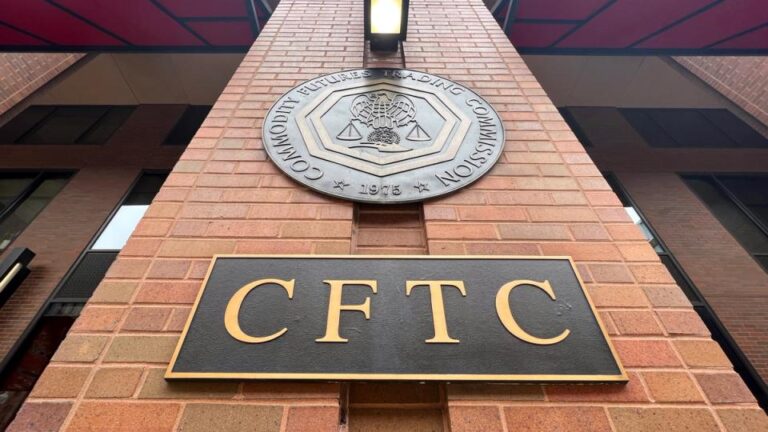
In a Friday letter to Trump, House Agriculture Committee Chair Glenn Thompson and ranking member Angie Craig asked the president to “nominate a full panel” of bipartisan leaders for the US Commodity Futures Trading Commission (CFTC). The representatives cited “urgent regulatory issues” facing the US regulator in addition to a “significant rulemaking process” required if the Digital Asset Market Clarity Act (CLARITY) becomes law.

“Ensuring the Commission is well-equipped as the leading derivatives markets regulator in the world is a bipartisan priority for the members of our Committee,” said Thompson and Craig. “A complete commission will allow the agency to best fulfill its mandate of promoting integrity, resilience, and vibrancy of US derivatives markets and will advance US leadership.”

Source: US House Agriculture Committee

Michael Selig is currently the sole commissioner at the CFTC, taking over after the resignation of acting chair Caroline Pham in December 2025. Under Selig, the commission has taken many positions aligning with the administration’s policies, including claiming “exclusive jurisdiction” over prediction markets.

Related: CFTC no-action letter eases event contract reporting rules

In an April hearing with the House Agriculture Committee, Selig said he had no intention of “slow[ing] down” on rulemaking, despite the lack of four other commissioners. The CFTC chair signed a memorandum of understanding with the US Securities and Exchange Commission in March to coordinate oversight of markets, including digital assets.

The CFTC under the CLARITY Act

On Thursday, lawmakers in the Senate Banking Committee voted to advance the CLARITY Act, setting the bill up for a potential floor vote in the chamber. The bill, expected to give the CFTC more authority in overseeing and regulating digital asset markets, would have significant implications for crypto users and companies.

Although the Senate had not scheduled a vote for the bill as of Friday, the dearth of leadership at the CFTC hasn’t gone unnoticed by lawmakers considering crypto market structure. Democratic Senator Amy Klobuchar, who sits on the Senate Agriculture Committee, proposed an amendment to the bill in January requiring that it not take effect “until at least four [CFTC] commissioners” were nominated and confirmed.

As of Friday, Trump had not publicly announced any picks for CFTC commissioners. Any nominations would likely need weeks or months to move through the Senate for consideration and potential votes.

Magazine: ETH stalls at $2.4K five times, SOL to rally to $120: Market Moves

What Does The Rising US Inflation Mean for Bitcoin?

0

Trusted Editorial content, reviewed by leading industry experts and seasoned editors. Ad Disclosure

Investors and traders are paying closer attention to Bitcoin (BTC) after the latest US inflation report was released on May 12. As consumer prices in the US continue to climb, questions are mounting about what that means for BTC and whether the world’s largest cryptocurrency can hold its ground. This change also creates a new and challenging environment for the broader crypto market, especially as Bitcoin’s price action often responds sharply to shifting macroeconomic conditions.

Bitcoin Holds Ground Amid Rising US Inflation

Data from the US Bureau of Labor Statistics shows the Consumer Price Index (CPI) rose to 3.8% annually this April. This measurement marks the highest inflation level since May 2023. 

Typically, rising inflation forces the Federal Reserve to keep interest rates high. This higher rate makes risk assets like Bitcoin less attractive compared to safer yields from bonds. However, despite the surge in inflation, the price of Bitcoin only dipped about 1-1.5% to around $80,500 before stabilizing at the $81,000 range. The cryptocurrency’s 24-hour price change also remained relatively flat at 0.1%.

The inflation increase came from an energy price shock linked to the ongoing conflict between the US and Iran. This caused monthly inflation to rise by 0.6%, which matched what many economists predicted. The annual numbers also overshot the initial 3.7% market forecasts. Notably, before the military strikes on Iran in late February, the annual inflation rate was much lower, at 2.4%.

In response, the 10-year US Treasury yield climbed more than 4 basis points to 4.459%. Meanwhile, US spot Bitcoin ETFs saw a combined daily outflow of over $233 million on May 12, showing that investors are moving away from BTC.

Despite these headwinds, Bitcoin’s price remained relatively resilient even as demand for BTC ETFs waned. Its market dominance also held steady at the time while it continued to show strong signs of a new price bounce. This suggests that some investors still see Bitcoin as a potential hedge against inflation, even as traditional markets turn away from risk assets. 

Kiyosaki Urges Buying BTC As Inflation Rises

Financial expert and the author of Rich Dad Poor Dad, Robert Kiyosaki, has cautioned investors to hedge against inflation by buying Bitcoin. In an X post on May 14, he gave reasons why inflation could lead to massive losses for investors. Kiyosaki noted that as long as the war in Iran continues, oil prices will keep rising, thereby increasing inflation in the US. Consequently, he said this could cause “fist money” to decline significantly, eroding the purchasing power of ordinary Americans.

Additionally, Kiyosaki warned that the current US debt, which now stands at roughly $34 trillion, is forcing the government to print more money, further fueling inflation. With these compounding crises ongoing, the financial expert urges investors to protect their money, family, and themselves. He advised people to invest in real money, gold, silver, Bitcoin, and Ethereum to increase their purchasing power.

Bitcoin
BTC trading at $80,593 on the 1D chart | Source: BTCUSDT on Tradingview.com

Featured image from Getty Images, chart from Tradingview.com

Editorial Process for bitcoinist is centered on delivering thoroughly researched, accurate, and unbiased content. We uphold strict sourcing standards, and each page undergoes diligent review by our team of top technology experts and seasoned editors. This process ensures the integrity, relevance, and value of our content for our readers.

XRP gives back gains after Senate crypto bill sparks 5% rally

0

XRP stayed pinned below resistance even as derivatives activity surged ahead of a key Senate vote that could formally reinforce the token’s commodity status.

FE fundinfo on Mastering Data and Unifying Operations in Asset Management

0

At TSAM London 2026, Rhys Thatcher Jones from FE fundinfo offers a perspective on the operational challenges currently shaping the asset management sector and highlights that asset managers are primarily concerned with maximising the efficiency of their operating models while navigating challenging market conditionsThis involves a critical focus on ensuring the integration and performance of their service providers are functioning correctly and delivering maximum value.

Furthermore, Thatcher Jones addresses the pressure from ongoing regulatory changes in the marketplace, specifically pointing to the UKCCI initiative as a major focus for asset managers over the next 12 to 18 months.

Thatcher Jones explains how FE fundinfo is positioned to help asset managers successfully manage these internal and external pressures and addresses these complex demands through the deployment of its Nexus platform, which is a central tool that unifies various aspects of an asset manager’s operating model to ensure seamless efficiency.

The Nexus platform’s positive impact starts at the foundation, focusing on data which extends to creating vital efficiencies and integrations within the middle-office for functions like regulatory reporting, calculations, and marketing outputs. By connecting the middle-office all the way through to front-office, the platform enables asset managers to make their entire operation as efficient and impactful as possible.

Kraken parent Payward cuts 150 staff, streamlining business ahead of planned IPO

0

The crypto exchange is also seeking fresh funding at a $20 billion valuation as it ramps up acquisitions and prepares for a public listing.

Poland Passes Crypto Bill As Fraud Probe Deepens Political Divide

0

Polish lawmakers have approved a long-debated cryptocurrency bill, moving to align the country with the European Union’s Markets in Crypto-Assets regulation as a fraud probe tied to a major exchange fuels political tension in Warsaw.

The legislation, passed on Friday, sets a framework for licensing, supervision, and consumer protection across the crypto sector, according to Reuters reporting. Poland faces a July deadline to implement MiCA or risk forcing domestic firms to halt crypto-asset services, according to the national financial watchdog.

The vote lands as prosecutors investigate the collapse of Zondacrypto, once the country’s largest exchange, where thousands of users remain unable to access funds. Authorities estimate losses at more than 350 million zlotys, about $96 million, turning the case into one of the most significant crypto failures in Central Europe.

Prime Minister Donald Tusk has linked the platform to alleged foreign influence, citing security service findings that point to Russian capital behind the exchange. He has described the company’s origins as opaque and raised concerns about its past sponsorship of events involving figures from the nationalist opposition. Moscow has denied any role in sabotage or covert activity across Europe.

Zondacrypto’s founder, Sylwester Suszek, has been missing since 2022. Polish media report that his successor, Przemyslaw Kral, resides in Israel, where he holds citizenship, a factor that may complicate any extradition effort.

Poland is weighing the regulation of crypto

The scandal has sharpened divisions within Poland’s political system over how to regulate digital assets. President Karol Nawrocki, backed by the opposition, has vetoed earlier versions of the bill, arguing that strict rules and high penalties could push companies out of the country. He has proposed an alternative framework with lower fines and stronger court oversight of enforcement actions.

At the same time, some Polish lawmakers have pushed for far stricter measures. A proposal from members of the Law and Justice party would ban crypto-related business activity, citing consumer risk and limited enforcement capacity. The plan would introduce criminal penalties for operating in the sector, marking one of the most restrictive approaches within the EU.

The government’s bill instead places oversight with the Polish Financial Supervision Authority, granting it powers to suspend offerings, block accounts, and impose penalties for market abuse. Supporters argue that alignment with MiCA will provide legal clarity and restore confidence after the Zondacrypto collapse.

For investors and firms, the outcome now hinges on whether the president signs the legislation. Another veto could leave Poland in breach of EU requirements, raising the prospect of market disruption at a time when scrutiny of the sector has intensified.

Iran war shows markets no longer sleep

0

The latest conflict involving Iran has produced an unexpected proving ground for financial infrastructure, and an unlikely winner has emerged, argues Huang.

Ether price may 20% drop as analysts say ‘downside risks remain’

0

Market analysts say Ether (ETH) faces “downside risks” that could trigger another 20% downtrend toward $1,700, new analysis said.

Key takeaways:

  • Rising Ether supply on exchanges and declining ETF inflows suggested a possible ETH price drop over the coming days.
  • Ether’s rising wedge pattern projected a potential 22% drop to $1,725

ETH inflows to exchanges rise

Ether’s 40% recovery from multi-month lows below $1,800 was dampened by resistance from the $2,400 level. 

Analysts have outlined several reasons for Ether’s inability to break $2,400, including “significant” inflows into exchanges, according to CryptoQuant analyst BorisD. 

The chart below shows a sharp increase in ETH reserves held on Binance to 3.84 million from 3.36 million between May 5 and May 9. 

The analyst explained that as inflows accelerated, the “price action failed to show strong continuation to the upside,” dropping 7% to $2,260 from $2,390 over the same period.

“This suggests that liquidity was being both absorbed and distributed within the range,” BorisD said, adding:

“The broader structure still points toward downside risk remaining dominant for now.”

ETH exchange reserve on Binance. Source: CryptoQuant

While other analysts see potential for fresh upside in the coming days, “those moves may primarily serve distribution purposes rather than signal the start of a strong bullish trend,” the analyst added. 

Making the same observations, fellow analyst PelinayPA said any short-term rebound in ETH would be “followed by high volatility, and then a continuation of the broader downtrend,” adding:

“The large amount of ETH being moved onto exchanges continues to create significant resistance against upward price movements.”

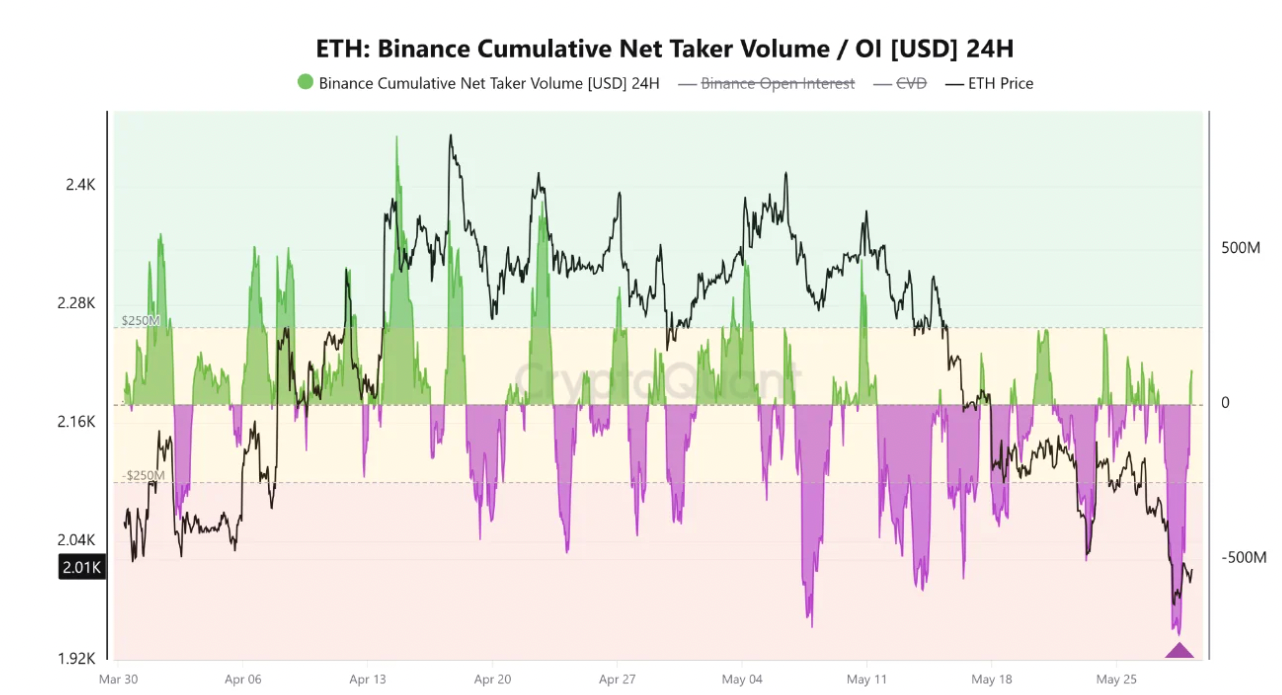
This coincided with sharp exchange inflows, as the Ether net position change among exchanges rose to 585,000 ETH on May 13, marking the largest spike since December 2025, when ETH was trading at $3,000. This preceded a 42% drop to $1,750 in February.

ETH: Exchange net position change

Such inflows typically indicate distribution by large holders, who move tokens from cold storage or redeem ETH investment products.

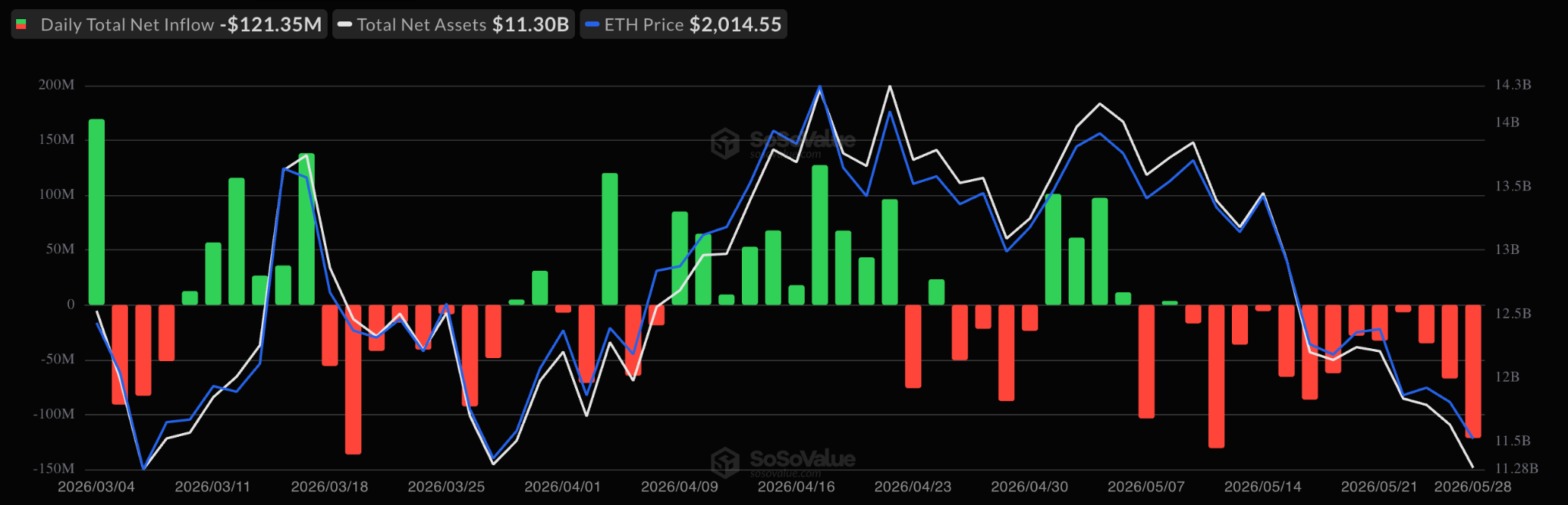
Meanwhile, demand for spot Ethereum ETFs continues to decline, with these investment products recording outflows for four consecutive days, totalling $190 million. This points to a drop in demand from US investors, adding to Ether’s headwinds.

Spot ETH ETFs flows chart. Source: SoSoValue

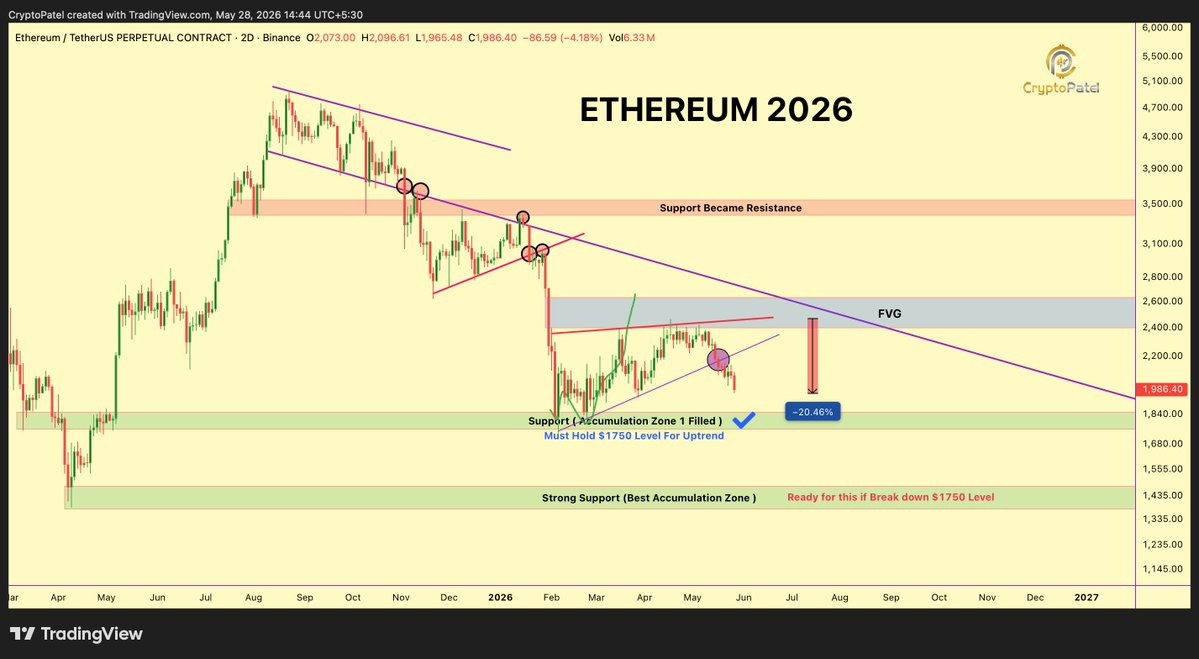
Ether’s rising wedge targets $1,725

The daily chart shows ETH/USD validating a rising wedge breakdown, after the price breached the support provided by the lower trend line of the pattern at $2,280.

A daily candlestick close below this level will confirm the breakdown, clearing that path for Ether’s drop toward the wedge’s measured target at $1,725, representing 22% decline from the current price. This coincides with its previous macro low reached on Feb. 6. 

ETH/USD daily chart. Source: Cointelegraph/TradingView

Rising wedges are typically bearish reversal patterns, and Ether’s break below the pattern is “starting to become a concern,” analyst ShangoTrades said in a recent X post.

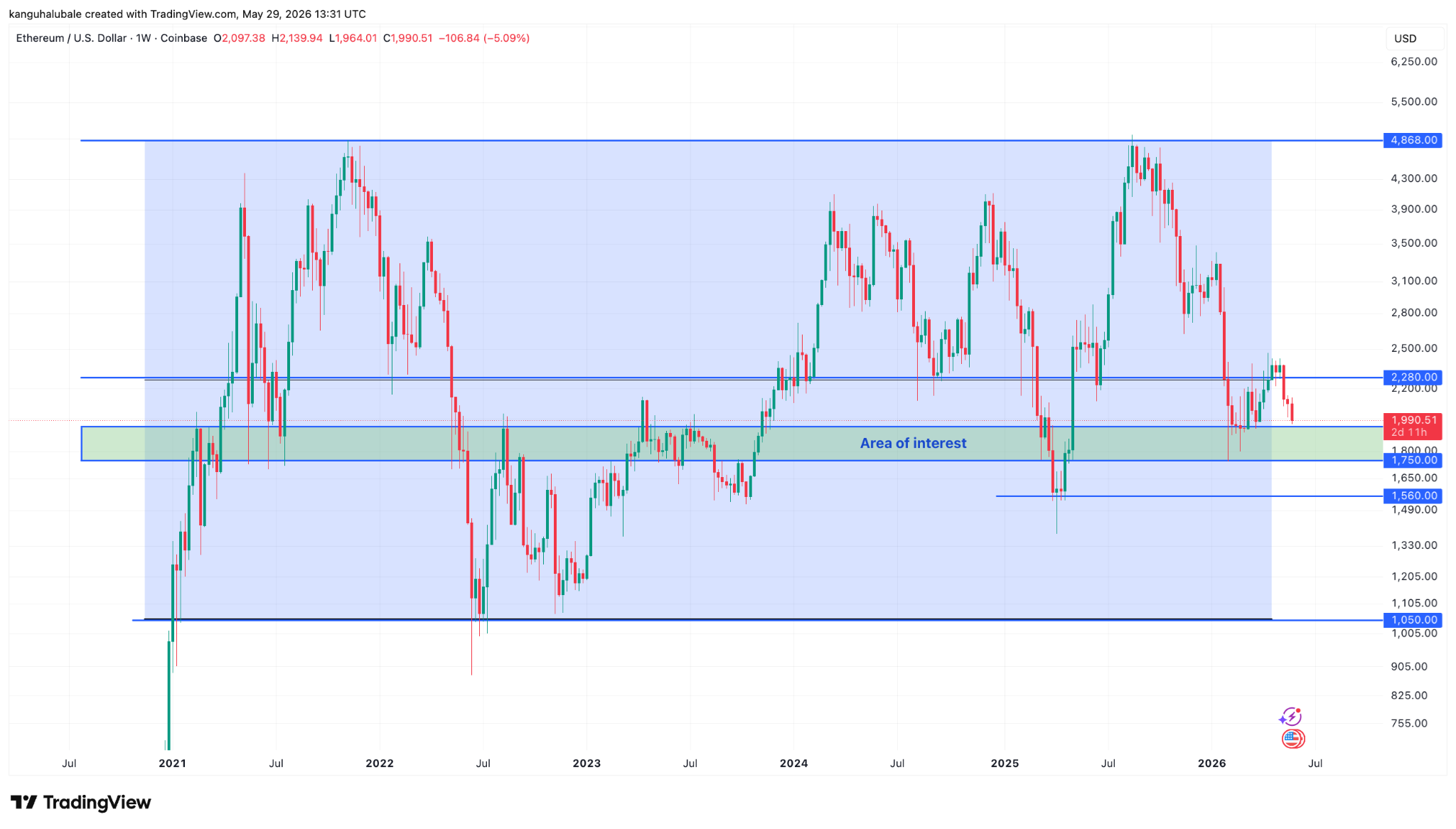
Zooming out, fellow analyst CryptoBullGod said ETH could drop to $1,280, which is the measured target of a bear flag, as shown on the weekly chart below.

ETH/USD weekly chart. Source: CryptoBullGod