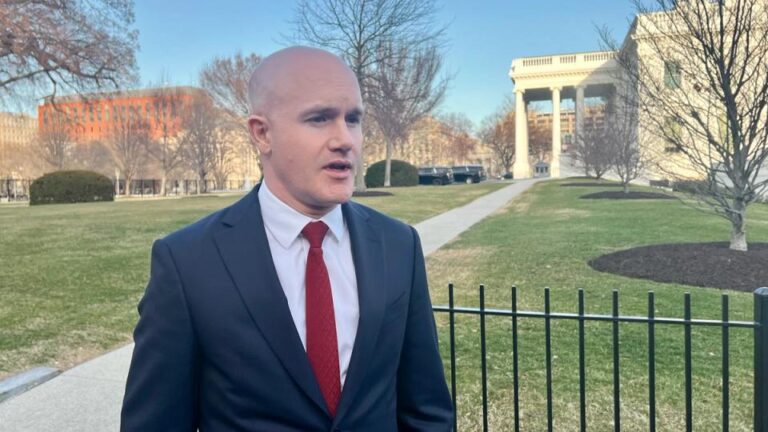
Strategy Inc. CEO Phong Le somewhat pushed back Tuesday against the wave of criticism that followed the company’s first Bitcoin sale since 2022, telling CNBC’s Power Lunch that the move was a deliberate, limited exercise designed to signal operational flexibility — not a philosophical reversal.
“We wanted to inoculate the market and we wanted to test our processes,” Le said in what the network described as a first-time interview. “We learned that everything works.”
Between May 26 and May 31, Strategy sold 32 Bitcoin for approximately $2.5 million at an average price of $77,135 per coin — a transaction that, despite representing just 0.004% of the company’s total holdings, set off an outsized market reaction and reignited debate over whether Michael Saylor’s famous “never sell” doctrine was being abandoned.
Le was careful to frame the disposal in terms of balance sheet management rather than conviction. He cited three reasons for the sale: establishing that Strategy can sell when necessary, confirming that internal systems for executing Bitcoin disposals are fully operational, and creating opportunities to capture tax losses on Bitcoin acquired at lower cost basis — the company has purchased BTC at prices ranging from $10,000 to $125,000 per coin.
Critically, he said the sale was not driven by financial distress. “We did not need to sell our Bitcoin to satisfy our dividends,” Le said. “We’re able to do that through other capital-raising activities.” Proceeds from the sale were directed toward distributions on the company’s STRC perpetual preferred stock.
Le also pointed out that Strategy remained a net buyer: on balance, the company purchased approximately 1,500 Bitcoin over the same period it sold the 32 coins.
The most pointed exchange came when the host pressed Le on the backlash from investors who believed Strategy had pledged never to liquidate its Bitcoin reserves. Le acknowledged the frustration but was unapologetic.
“We have a set of constituents that we have to be able to answer to,” he said, listing common stockholders, preferred shareholders, debt holders, and Bitcoin holders. “When it makes sense for our common stockholders for us to sell our Bitcoin, we will.”
Le suggested the loudest critics were retail investors and “crypto anarchists” ideologically committed to permanent hodling — not the institutional shareholders the company interacts with directly.
“Our institutional shareholders that we talked to don’t seem to be unnerved by it,” he said.
This was not Strategy’s first Bitcoin disposal. In December 2022, the company sold 704 BTC at $16,776 per coin and repurchased 810 BTC two days later — a tax-loss harvesting maneuver that exploited the lack of a crypto wash-sale rule.
Jeffrey’s chief market strategist David Zervos, who joined Le on set, asked about the macro picture around Bitcoin, noting weakness across traditional safe-haven assets. Le acknowledged the broader headwinds, citing three macro forces pressuring Bitcoin: uncertainty around the Federal Reserve’s interest rate path, two ongoing global wars, and a lack of regulatory clarity from Congress on pending crypto legislation.
Still, Le remained bullish on Bitcoin’s long-term thesis.
“I do think Bitcoin is a hedge against inflation. I think Bitcoin is a hedge against big government,” he said, adding that the current environment — potentially a cyclical drawdown — mirrors the roughly 75% pullback seen in May 2022, four years ago.
Bitcoin price and Strategy shares under pressure
The market, for now, is less sanguine. Bitcoin was trading around $61,600 on June 10, 2026 — down more than 40% from its all-time high of $126,198 reached in October 2025. The sell-off deepened after the Strategy announcement coincided with record spot ETF outflows estimated between $2.8 billion and $3.5 billion, triggering $1.8 billion in forced liquidations in a single day.
MSTR shares have been caught in the same downdraft, trading near $117–$127 as of this week — down roughly 67% from their 52-week high of $457.
Strategy has since resumed buying, acquiring 1,550 BTC at an average price of $65,332 between June 1 and June 7 in a move analysts characterized as an effort to restore market confidence.
As of late May, the company held 845,256 Bitcoin at a total cost basis of approximately $63.97 billion.
Stand With Crypto UK is urging its 286,000 members to challenge British banks restricting transfers to cryptocurrency exchanges, arguing that blanket limits on transactions to regulated platforms are restricting access to digital assets.
The new campaign cites a report from the UK Cryptoassets Business Council that found 40% of crypto transactions are blocked or restricted by UK banks. The group argues that many of the restrictions apply to transfers involving exchanges registered with the country’s Financial Conduct Authority and do not account for individual customer risk profiles.
According to the report, one exchange recorded nearly 1 billion British pounds in declined transactions over a one-year period due to bank-side rejections, while 80% of surveyed platforms reported an increase in blocked or restricted transfers.
Stand With Crypto said members can submit complaints through a tool on its website that generates letters challenging transfer restrictions, with responses from banks expected to inform the campaign’s next steps.
“Your money. Your choice.” is the tag line of Stand With Crypto UK’s advocacy campaign. Source: Stand With Crypto UK on X.com
Mark Fairless, CEO of UK clearing bank ClearBank, told Cointelegraph that banks should take a risk-based approach to crypto-related payments rather than imposing broad restrictions across the sector.
“Interventions should be targeted and proportionate, as broad blocks risk undermining competition and the ability of regulated firms to operate effectively in the UK,” Fairless said.
Related: EU proposes ban on 11 crypto platforms in Russia sanctions push
Stablecoin rules remain focus for UK policymakers
The campaign comes amid ongoing efforts by regulators to develop a UK-wide framework for stablecoins.
At the beginning of May, a House of Lords committee examined proposed stablecoin regulations, with lawmakers questioning industry executives on bank-run risks, anti-money laundering controls and the potential impact of stablecoins on traditional banking.
Later that month, the Bank of England said it was reconsidering proposed caps on stablecoin holdings and reserve requirements as it reviewed its framework for pound-denominated stablecoins.
The review comes as regulators seek to support the growth of a domestic stablecoin market while limiting potential risks to bank funding and financial stability, with non-dollar stablecoins currently accounting for only a small fraction of the global market.
Total stablecoin market cap. Source: DefiLlama
In June, a House of Lords committee said certain proposed stablecoin requirements, including reserve and holding rules, could limit the viability of pound-denominated tokens. The committee urged regulators to avoid measures that could inhibit the growth of the sector while finalizing the country’s stablecoin framework.
Beyond stablecoins, regulators have also advanced broader digital asset initiatives. In May, the central bank proposed extending operating hours for the country’s settlement infrastructure to support tokenized markets, while the Financial Conduct Authority proposed on June 8 allowing certain retail-focused investment funds to allocate up to 10% of their portfolios to crypto exchange-traded products.
Magazine: Does ‘Paper Bitcoin’ mean there’s an unlimited supply of BTC?
Welcome to our institutional newsletter, Crypto Long & Short. This week:
To win over big investors, DeFi builders must act like accountable money managers, not just software developers, writes Ben Nadareski.
Bitcoin holders can survive crashes and protect their assets by earning income through reinsurance, says Stephen Stonberg.
Top headlines institutions should pay attention to by Helene Braun.
“Hyperliquid’s 70% Rally: What Drove HYPE from $40 to $75 in Six Weeks” in Chart of the Week.
-Alexandra Levis
Expert Insights
Who answers the 3am call when DeFi breaks?
By Ben Nadareski, co-founder and CEO of Solstice
Last week, I shared something with CoinDesk that I want to sit with a little longer. A few minutes in an interview didn’t do it justice. My suggestion is that anyone building in DeFi should think of themselves as a financial asset manager who happens to write code, rather than as a software team that handles money.
A few people pushed back, so let me take one step further: the thing institutions really want from us has almost nothing to do with the code. They want to answer an age-old question: “When something goes wrong, who picks up the phone?”
So far, the answer has been nobody. The code is law: no company, no jurisdiction and no name on the door. For a while, we pushed that as the unique selling proposition (USP), and I understand the appeal. “Trust the contract, not the human” can feel like the safer bet, but if you spend time with a risk committee, you’ll see how strange it sounds to them.
They don’t underwrite code; they assess people and processes. They want to know who signed off, who can move funds, what happens at 3am when a key is compromised and whose responsibility it is to have considered those risks. If you hand them a brilliant protocol written by an anonymous team, with a multi-signature wallet (multisig) controlled by a group of people who have never met each other, the committee will not view it as an innovation. Instead, they will see it as an operational risk they can’t yet price.
And here’s where I’ve landed: the accountability they’re asking for is what lets decentralisation grow up. You get to keep the openness, the composability and the permissionless rails — all of it — while still answering the basic questions any serious financial steward should be able to address.
What does that look like in practice? It means having reserves you can verify in real time, allowing anyone to check solvency rather than relying on assertions in a blog post or press release. It includes controls to ensure that no single person can move significant amounts of money alone, because that’s standard practice in well-run institutions (and it should embarrass us that most protocols don’t adhere to this). None of this is a big ask; it’s the bare minimum.
I get the skepticism. People might say this is how you compromise on the speed that makes crypto alluring. I see it differently, though. Moving fast on what you build is a gift, whereas moving fast with other people’s money (with no one willing to be accountable for it) isn’t speed, it’s just risk waiting for a deadline. April showed us some of those deadlines, and there will be more.
The audience for getting this right has already changed. The institutions everyone keeps waiting for aren’t on their way. They’re already here, managing real money on these rails right now while half the industry debates whether they belong. The platforms that win in the next few years will be the ones that can include a Galaxy or Susquehanna alongside someone opening their first wallet in Lagos. Both should have the same access and the same protections, and both should know who is accountable when it counts.
That’s the bar I want us to be measured against, and I want it set higher than the banks — not on the same level. Not because regulators are coming, although they are. The harder question is whether we’ll build it ourselves or wait for someone else to force our hand.
Principled Perspectives
The centuries-old structure solving bitcoin’s yield problem
By Stephen Stonberg, CEO and co-founder, Tabit Insurance
Bitcoin holders face a dilemma: how do you preserve ownership through market stress without being forced into actions that destroy long-term value? The answer is not another “crypto yield wrapper”. As bitcoin BTC$61,803.24 adoption matures, a centuries-old financial structure is emerging as a compelling alternative: reinsurance.
BTC is currently trading well below its 2025 highs, and the drawdown is testing conviction across the investor spectrum. The investors who build lasting wealth are not those who predict bottoms or avoid drawdowns; they are the ones who can hold through corrections without being forced to sell. That requires a way to generate income from a long-term bitcoin position without relying on bitcoin’s price direction.
Why the traditional bitcoin yield playbook fails when you need it most
Most yield offerings fall into two buckets: options strategies that monetize volatility, and lending platforms that rehypothecate assets. Both tend to break precisely when stress arrives. Options strategies expose holders to path dependency, volatility regime shifts and counterparty risk, with yield that vanishes when margin calls hit. Lending platforms can be worse: bitcoin disappears into opaque collateral chains, and when liquidity dries up, so does the capital behind it.
Reinsurance is a different source of yield entirely
Reinsurance is insurance for insurance companies, allowing primary insurers to transfer portions of their risk portfolio to limit exposure to large-scale events. These contracts operate independently of financial markets, creating a structurally different return profile that combines underwriting profits with conservative leverage, a time-tested approach that predates cryptocurrency by centuries.
The key insight is that reinsurance returns are driven by real-world risk selection and pricing rather than bitcoin’s price direction. Hurricane risk in Florida does not care if bitcoin is trading at $40,000 or $100,000. This creates historically low correlation to both crypto markets and public equity beta with genuine diversification, rather than repackaging the same underlying exposures.
The mechanics
The structure is simple: post bitcoin as capital in a regulated (re)insurance vehicle, write USD-denominated policies and collect premiums in dollars. Reserves are held in cash and cash equivalents, using standard trust and custody mechanics, keeping the bitcoin ring-fenced as capital, not rehypothecated. Reinsurance is structurally advantaged here. BTC remains in institutional-grade custody within a corporate structure with legal segregation intended to isolate different investors’ assets, with investors able to have 24/7 on-chain proof of their bitcoin capital. This preserves the core objective: maintaining BTC exposure for long-term appreciation, while generating dollar cash flows from uncorrelated reinsurance premiums.
Why institutions should consider reinsurance
Recent 13F filings suggest that long-duration institutional investors are not all running for the exit. Select endowments, public pension plans and sovereign wealth-backed investors have added or maintained bitcoin ETF exposure through the drawdown, underscoring that sophisticated allocators are increasingly treating regulated bitcoin exposure as a long-term portfolio position rather than a purely tactical trade.
But staying the course is easier to justify when a bitcoin position can produce cash flow without depending on price appreciation alone. Reinsurance operates within established regulatory perimeters, supported by actuarial discipline, underwriting controls and capital adequacy standards. For institutions thinking in decades, that distinction matters. The objective is not to chase incremental yield by taking on more crypto-native risk. It is to keep bitcoin exposure intact, earn dollar-denominated income from an independent risk pool and reduce the likelihood that market stress forces a sale at precisely the wrong time.
Headlines of the week
By Helene Braun
A dormant Satoshi-era bitcoin wallet moved after 14 years as the owner became the target of a $285 billion lawsuit, with notice served through Bitcoin’s blockchain; institutional investors continued pulling money from bitcoin ETFs even as BTC revisited the $60,000 level that attracted buyers earlier this year; and DFG CEO James Wo, who built a billion-dollar crypto investment firm from a $20 million family-backed start, said he remains bullish on bitcoin while questioning some of the market’s most aggressive ether price forecasts.
Chart of the Week
Hyperliquid’s 70% rally: what drove HYPE from $40 to $75 in six weeks
HYPE ran from ~$44 to an ATH of $75.52 in six weeks (early May to June 3), as spot ETF launches from Bitwise and 21Shares drove over $130 million; the ATH broke on June 2–3 as TD Securities published the first major bank report documenting Hyperliquid beating CME to oil price discovery, with Grayscale’s HYPG ETF launching the same day.
Listen. Read. Watch. Engage.
Listen: $3 billion leaves Bitcoin ETFs. Why Wall Street isn’t panicking. Jennifer Sanasie is joined by David LaValle to unpack a $2.97 billion outflow streak from Bitcoin ETFs, Bloomberg’s Eric Balchunas explains why the recent outflows may be more noise than signal and Stellar Development Foundation CEO Denelle Dixon discusses DTCC’s decision to select Stellar.
Read: In “Crypto for Advisors”, Beth Haddock reviews the three due diligence questions advisors should be asking in 2026. Then, Aaron Brogan reviews the GENIUS Act implementation timeline and how things will change once it’s here.
Watch: “I will not vote for CLARITY until we address ethics.” Senator Angela Alsobrooks joins CoinDesk Policy Protocol hosts Rebecca Rettig and Renato Mariotti to discuss the three outstanding issues she needs resolved before voting the CLARITY Act off the Senate floor.
Engage: The CoinDesk: Policy & Regulation event is heading back to Washington, D.C. on September 24. This one-day event connects law makers with chief legal officers, compliance officers and policy experts to discuss the future of digital asset industry standards.
Looking for more? Receive the latest crypto news from coindesk.com and market updates from coindesk.com/institutions.
Note: The views expressed in this column are those of the author and do not necessarily reflect those of CoinDesk, Inc., CoinDesk Indices or its owners and affiliates.
Five years ago yesterday, El Salvador’s Congress voted 62-to-22 to pass the world’s first Bitcoin Law, making the small Central American nation the first country on earth to grant bitcoin legal tender status.
The date was June 8, 2021. Half a decade later, the government holds 7,677 BTC worth approximately $480 million — and it is still accumulating.
The country has run a dollar-cost averaging strategy since President Nayib Bukele announced a policy of purchasing one bitcoin per day in November 2022. In the 12 months since June 2025, El Salvador added more than 1,600 BTC to its stack, including a tactical purchase of over 1,000 BTC in a single week during a November market dip.
At the start of 2026, the Bitcoin Office declared the country was going “all in” on both bitcoin and artificial intelligence.
That conviction survived a major policy reversal. In January 2025, Bukele’s administration stripped bitcoin of its mandatory legal tender status as a condition of a $1.4 billion IMF loan package. Businesses are no longer legally required to accept it, and the government-issued Chivo wallet — the centerpiece of Bukele’s original pitch — is being phased out.
But the government has not sold a single coin from its treasury and BTC is still able to be used as a currency for those who wish to use it.
5 years ago, El Salvador passed the first ‘Bitcoin Law’ that regulated BTC as legal tender 🇸🇻
— Bitcoin Magazine (@BitcoinMagazine) June 9, 2026
El Salvador: No taxes on bitcoin
El Salvador offers no capital gains tax on bitcoin or cryptocurrency transactions, a policy the government doubled down on in early 2026 to court foreign investors. The country is also developing plans for a “Volcano Bond” backed by bitcoin and a proposed Bitcoin City powered by geothermal energy.
The remittance case that Bukele used to sell the law to the public has yet to materialize at scale. El Salvador is one of the most remittance-dependent economies in the world — personal transfers from abroad equal roughly 24 percent of GDP, with Q1 2026 totaling $2.43 billion. Crypto accounted for just $17.38 million of that figure, or 0.71 percent of the total.
The Coinbase-backed group Stand With Crypto UK called on its 286,000 members to file formal complaints against British retail banks over blanket restrictions on crypto transactions, it announced Wednesday.
The campaign is a demonstration against country-wide bank rules that block or cap customer transfers to exchanges, including those registered with the Financial Conduct Authority (FCA), the group said in a press release. Around 8% of UK adults hold cryptoassets, according to FCA research.
Stand With Crypto based its campaign on data from the U.K. Cryptoassets Business Council’s “Locked Out” report from January 2026. The report surveyed 10 exchanges: Coinbase, Kraken, Uphold, Xapo Bank, Zumo, Wirex, OKX, Luno, Bitpanda and Gemini.
A day after that report went out, a spokesperson for the HM Treasury, the country’s economic and finance ministry, told CoinDesk that government officials expected banks to treat all businesses fairly, including crypto services providers. “We would not expect such licensed firms to be subject to account or transaction restrictions by banking services providers,” a spokesperson said.
The FCA report found that British banks block or delay 40% of all domestic crypto transactions. Over the past 12 months, 80% of these exchanges reported a rise in the number of transfers blocked. One platform reported that banks rejected up to 1 million pounds (more than $1 million) in transactions in a single year.
The banking restrictions fall into two categories, Stand With Crypto UK said. Complete blocks are used by Chase UK, Starling, TSB, Virgin Money and Metro Bank, which stop all transfers and card payments to crypto exchanges. Hard transfer caps are set by Barclays, HSBC, Nationwide, NatWest, Santander and Monzo, which impose strict limits on the money users can transfer.
Last year, U.K.-based trading platform IG also released a damning survey saying millions of people were being locked out of crypto just because of they their banks anti-crypto stance. “Two in five (40%) UK crypto investors have had a payment blocked or delayed by their bank when trying to buy digital assets,” according to the IG report.
Advocates at SWC say these policies apply to everyone regardless of an individual’s actual risk profile. They also said that many of these same banks are hiring digital asset teams and exploring crypto products behind the scenes, making the retail customer blocks anti-competitive.
“People across the UK are being blocked from accessing a legal asset class because banks have chosen to impose blanket restrictions on an entire sector,” said Adriana Ennab, director at Stand With Crypto UK, in a statement. “From today, they are formally telling their banks that these restrictions are unacceptable.”
These blocks run counter to both local rules and the government’s stated plans to make the U.K. a global Web3 hub, SWC said. Under the Payment Services Regulations 2017, banks are obligated to execute payments that meet account conditions. In January 2026, HM Treasury explicitly stated it does not expect FCA-authorized firms to face transaction restrictions from banking providers, adding that firms must be treated fairly.
“The Government has set out a vision to make the UK a global hub for digital assets and Web3,” said Katie Harries, head of policy, Europe, at Coinbase, in a statement. “That vision requires retail participation — where every day people hold and engage with crypto assets. But the banks are choking off the crucial on-ramp from fiat (normal) money into crypto.”
Since 2024, Bitcoin (BTC) has posted four major corrections after interest rate hikes by the Bank of Japan (BOJ), with declines ranging from 18% to 28%. This dynamic places renewed attention on the BOJ’s June 16 policy decision.
Data currently point to a variety of pressures on BTC, with BTC whale distribution and exchange inflows possibly carrying more weight than Japanese monetary policy.
BOJ hikes and Bitcoin drawdowns: Will history repeat?
The relationship between BOJ policy and Bitcoin has gained attention because each rate increase since Japan ended its negative interest rate policy has been followed by a sizable correction.
Following the March 19, 2024, hike, Bitcoin corrected by 18%. The July 31, 2024, increase preceded a 18.5% decline.
After the Jan. 24, 2025, hike, Bitcoin fell nearly 25%, while the Dec. 19, 2025, decision was followed by a 28% drawdown.
Across the four events, Bitcoin’s average decline was 22.4%.
The sell-offs did not occur under identical conditions. The March 2024 correction followed Bitcoin’s breakout to new all-time highs during the spot Bitcoin exchange-traded fund (ETF) cycle. The July 2024 decline followed months of consolidation below peak levels and coincided with the sharp unwind of the yen carry trade, which affected global markets.
The January and December 2025 drawdowns followed extended rallies and periods of contraction for both BTC spot and futures 30-day demand.
BTC: spot and perpetual futures demand growth contraction. Source: CryptoQuant
The relationship between BOJ policy and Bitcoin is often linked to the yen carry trade. For years, investors borrowed yen at low rates and deployed that capital into higher-yielding assets, including stocks and cryptocurrencies.
When the BOJ raises rates, some of those positions can be reduced, weighing on risk assets. The July 2024 hike coincided with one of the largest carry-trade unwinds in recent years and a sharp sell-off across global markets, not only BTC.
The influence of that particular condition appears smaller today. The BOJ has already raised rates to 0.75% from -0.1% in March 2024, while Japan’s 10-year government bond yield climbed to 2.68% from 0.63% over the same period.
Japan’s 10-year bond yield increase since 2024. Source: TradingEconomics
With Japan’s borrowing costs already higher than during the negative-rate era, each additional hike represents a smaller policy shift than the BOJ’s initial move away from ultra-loose monetary policy. The June 16 meeting would extend an existing tightening cycle rather than introduce a new one.
Likewise, market analyst Cryptic Trades noted that concerns about a renewed yen carry-trade unwind are overblown, arguing that Japan has effectively moved away from its deflationary policy framework in 2024. The analyst added,
“The Yen Carry Trade has been dead ever since 2024. It is also a BIG nothing burger for the markets.”
Related: Bitcoin price may slide toward $30K as institutions dump 450% of daily BTC supply
BTC whales add to the pressure
While the BOJ meeting is a macro event that traders may monitor, onchain data points to a more immediate source of pressure.
Crypto analyst MorenoDV noted that Binance has recorded rising BTC inflows from wallets holding 100–1,000 BTC and 1,000–10,000 BTC since the sell-off began in early June. As a result, the exchange’s 30-day whale inflow sum has climbed to $6.6 billion.
Bitcoin whale to exchange flow. Source: CryptoQuant
The pressure is already visible in realized activity. Short- and long-term whales have collectively locked in more than $2.5 billion in losses during the decline, indicating that some large holders have actively reduced exposure.
Short-term whales appear particularly vulnerable. The cohort is carrying roughly $16 billion in unrealized losses after briefly returning to profit for around 10 days in early May. Those positions now sit close to break-even levels, creating a potential source of supply during rebounds. MorenoDV said,
“Taken together, these three readings describe the stress profile of a late-stage bear market: capitulating whales, distribution into weakness, and a fragile short-term cohort with its finger on the trigger.”
Related: Bitcoin may act as a ‘canary in the coal mine’ as risk-off pressure spreads: Bitwise
The election season is ramping up in the United States, meaning that airwaves and social media are flooded with campaign ads.
Candidates, in addition to the political action committees (PACs) supporting and opposing them, are projected to spend a record-breaking $10 billion in ads this cycle. Some of that is going into AI deepfakes.
At least 15 AI-generated campaign ads have run since November, according to NBC News. Some have used deepfakes to portray a candidate doing or saying things that compromise their campaign’s image.
Transparency advocates say the ads, which are illegal in some states, could harm the integrity of American elections.
Ad runs afoul of local election laws
In the context of campaign ads, AI is mostly governed at the state level. Some 28 states have disclosure laws, while in two states, it is prohibited, though not totally.
In Minnesota, one ad campaign has already bumped up against local legislation. Minnesota Lt. Governor Penny Flanagan posted on BlueSky on June 3 “you might see a TV ad starring something that… kind of looks like me.”
Flanagan was referring to an ad run by a PAC supporting her opponent in the Senate primary race, fellow Democrat and US Representative Angie Craig. The ad shows Flanagan standing atop a large pile of cash, and criticizes her alleged ties to special interest groups.
“My opponent’s super PAC is using an AI deepfake of me to mislead voters. They can’t win with the truth – so they’re resorting to lies.”
“It’s disgusting. Minnesotans deserve better.”
The ad may run afoul of Minnesota campaign laws. In 2023, Democratic State Representative Maye Quade introduced a bill that bans AI deepfakes. It was passed into law, and “anyone who widely shares a deep fake within 90 days of an election” is guilty of a crime. This, provided that the person also:
Knows or should have known the ad was a deepfake and made without the consent of the depicted person
Acted with the intent to harm a candidate’s reputation to influence an election
The ads ran after the DFL, Minnesota’s Democratic party, nominated Flanagan, so technically it may have not violated the law. Still, Flanagan’s campaign is reportedly consulting lawyers.
Quade told local media that the ad violated the spirit of the law, and that people in general don’t like AI being used this way. “People don’t like this, broadly […] What campaign on either side of the aisle is going to help voters feel good about their candidate using this?”
Related: Prediction markets legal battles heat up in Minnesota, Rhode Island
On the Democratic side of the aisle, 40 DFL state legislators signed a letter condemning the use of AI deepfakes in campaign materials. They noted that, in 2023, “lawmakers voted nearly unanimously to ban the use of deceptive AI-generated deepfakes in elections, recognizing the threat manipulated AI content poses to voters and public trust.”
“Regardless of party, the use of AI-generated deepfakes in campaign advertising is unacceptable.”
Mark Jablonowski, the CEO of advertising firm DSPolitical, told NBC that he thinks most politicians will rise above it. “I think most campaigns on both sides of the aisle probably want to do the right thing […] There, of course, are going to be examples that you can point to where people are going about it the wrong way.”
The PAC that issued the ad, North Star Dawn PAC, did not respond to Cointelegraph’s request for comment.
What do election laws say about AI deepfakes?
As noted above, some 30 states have laws on the books regarding AI use in elections. The vast majority of these relate to simple disclosure, with many states only having civil penalties for infractions.
The Federal Elections Commission (FEC), the regulator responsible for creating funding, disclosure and other rules concerning elections. Regarding ads, the FEC told Cointelegraph:
“Commission regulations require clear and conspicuous disclaimers to appear on certain campaign advertisements, including public communications that are distributed by a federal candidate’s campaign committee.There is also a prohibition against ‘fraudulent misrepresentation.’”
Public Citizen, a consumer advocacy group, submitted a petition for rulemaking before the FEC in 2023, asking the commission to issue rules for AI. Instead, the body “decided not to initiate a rulemaking.”
“The Commission determined that the statute’s fraudulent misrepresentation ban is technology neutral, applying to all means of the specified fraud, including AI-assisted media.”
One may not expect quick action from the federal government, at least not from Congress, on AI. In 2023, Senator Amy Klobuchar and Representative Yvette Clarke, both Democrats, introduced the REAL Political Advertisements Act in their respective chambers. However, the bill failed to pass in either house.
If anything, the US Congress shows a total unwillingness to meaningfully regulate AI. Nearly one year ago, President Donald Trump signed the One Big Beautiful Bill Act into law. The final version narrowly avoided including a 10-year ban on any state and local regulation of AI, giving the industry carte blanche for anything from building data centers to how AI would be used in popular media.
Now, two Congressmen are back at it. Democrat Lori Trahan and Republican Jay Obernolte on June 4 introduced a bill that, if passed, would ban states from passing laws “targeting artificial intelligence model development.”
According to the American Civil Liberties Union (ACLU) “This could include anything from privacy regulations to antidiscrimination requirements to AI safety laws.”
The ACLU noted that the aforementioned 10-year ban was stripped from the Senate file in a near-unanimous 99-1 vote.
Jina John, senior policy counsel for AI, privacy and technology at the ACLU, said, “This draft bill fails to learn from Congress’s previous attempts to block state AI regulations. States must be able to protect their own residents from harm, hold tech companies accountable, and ensure that AI is safe and trustworthy.”
Magazine: Korea probes Polymarket users, crypto PACs sweep primaries: Hodler’s Digest, May 31- June 6
When U.S. spot bitcoin exchange-traded funds (ETFs) launched in January 2024, investors had more than a dozen funds to choose from. BlackRock, Fidelity, Ark Invest, Bitwise, VanEck, Franklin Templeton and several others entered what many expected would become a fiercely competitive market.
Eighteen months later, the battle increasingly looks like a two-player race.
Data shows that BlackRock’s iShares Bitcoin Trust (IBIT) and Fidelity’s Wise Origin Bitcoin Fund (FBTC) are doing most of the heavy lifting when it comes to attracting new institutional capital, while smaller funds have become largely irrelevant in determining the direction of the overall market.
The trend was evident throughout the first half of 2026.
On January 14, bitcoin ETFs recorded net inflows of $840.6 million, according to data from Farside Investors. IBIT alone accounted for $648.4 million of that total, while FBTC added another $125.4 million. Together, the two funds represented more than 90% of all inflows that day.
A similar pattern appeared on April 17, when total inflows reached $663.9 million. IBIT brought in $284 million and FBTC added $163.4 million, accounting for roughly two-thirds of all new money entering the sector.
Even during periods of weaker sentiment, the dominance of the two largest funds remained apparent. On May 1, total inflows reached $629.8 million, with IBIT contributing $284.4 million and FBTC adding $213.4 million. Combined, the pair attracted nearly $500 million of the day’s total. The pattern repeated throughout much of 2026, with the two funds frequently accounting for the majority of net inflows on the largest allocation days and often offsetting weakness elsewhere in the ETF market.
The concentration has emerged during a difficult year for bitcoin and the broader crypto ETF market. Bitcoin is down roughly 29% year-to-date, a decline that has tested institutional conviction and triggered several waves of ETF redemptions. Between mid-May and early June alone, spot bitcoin ETFs recorded multiple days of heavy outflows. The selling marks a sharp contrast to earlier periods when investors often viewed bitcoin pullbacks as buying opportunities.
But the data highlights a broader shift taking place in the bitcoin ETF market in which investors increasingly appear to be concentrating their allocations in the largest and most liquid vehicles.
That trend has particularly benefited BlackRock.
IBIT has emerged as the flagship product of the entire spot bitcoin ETF sector, regularly posting the largest inflows and often acting as a stabilizing force during periods of market stress. On several days when the broader ETF complex experienced heavy outflows, IBIT either remained positive or saw far smaller redemptions than its competitors.
The dominance is not entirely surprising. Many of the largest buyers of bitcoin ETFs are financial advisers, registered investment advisers, hedge funds, family offices, pension consultants and institutional asset allocators. For those investors, liquidity, trading volume and issuer reputation often matter as much as the underlying bitcoin exposure itself.
BlackRock manages more than $10 trillion in assets globally and maintains relationships with thousands of wealth-management platforms. Fidelity, one of the largest retirement and brokerage providers in the U.S., brings similar advantages through its distribution network and long-standing presence among retail and institutional investors.
As a result, many allocators increasingly view IBIT and FBTC as the default options for gaining bitcoin exposure.
The flip side is that smaller issuers are struggling to remain relevant.
Funds such as Franklin Templeton’s EZBC, VanEck’s HODL, Valkyrie’s BRRR and WisdomTree’s BTCW frequently record daily flows measured in single-digit millions of dollars.
On many trading days, their contributions are so small that they have little impact on the overall direction of the market.
Even funds that were once viewed as major competitors, including Bitwise’s BITB and Ark’s ARKB, now play a secondary role compared with the industry’s two largest products. Earlier this year, Trump Media & Technology Group withdrew plans for a proposed spot bitcoin ETF, abandoning an effort to enter the increasingly crowded market that is now dominated by products from BlackRock and Fidelity.
The concentration has become particularly noticeable during periods of volatility. When investors buy bitcoin ETFs aggressively, most of the money flows into BlackRock and Fidelity.
When investors sell, the behavior of those two funds often determines whether the sector posts net inflows or outflows.
That dynamic suggests the bitcoin ETF market is entering a new phase. Rather than a broad competition among a dozen issuers, the industry increasingly resembles a winner-take-most business where scale, liquidity and distribution drive investor decisions.
For years, privacy in transacting was one of crypto’s most ambitious promises. Then it took a back seat as other trends took off.
As developers focused on scaling blockchains and regulators scrutinized privacy tools such as Tornado Cash, much of the industry’s attention shifted elsewhere. But a new Ethereum proposal and a growing number of privacy-focused products suggest the topic is making a comeback.
The latest example is pERC-20, a proposed Ethereum token standard that would allow users to hold and transfer tokens without publicly revealing their balances, transaction amounts or counterparties. The proposal has sparked renewed discussion around whether public blockchains should expose every financial interaction by default.
Unlike traditional ERC-20 tokens, which is the default token standard on Ethereum today that displays balances and transaction histories onchain for anyone to inspect, pERC-20 keeps sensitive details private.
Today, most Ethereum tokens function like public bank accounts. Anyone can look up a wallet address and see how many tokens it owns, where they came from and where they were sent. Under pERC-20, tokens would instead exist as encrypted cryptographic “notes,” similar to digital cash.
The result is a system where transactions remain private while still allowing the network to verify that no changes to the transactions occurred.
Importantly, the proposal does not hide everything.
The total supply of a token would remain publicly visible, allowing anyone to verify that new tokens are not being secretly created. The proposal also includes a compliance mechanism that would allow issuers to freeze specific notes through a cryptographic blacklist without exposing ordinary users’ balances or transaction histories.
The design reflects a broader shift in how privacy is being discussed across crypto.
Rather than treating privacy and compliance as mutually exclusive, many newer projects are attempting to build systems that offer both.
But some developers argue that private payments are only part of the challenge.
Earlier this week, Starknet went live with STRK20, a privacy-focused token framework designed to extend confidentiality beyond simple token transfers and into decentralized finance applications such as lending, staking and token swaps.
According to Eli Ben-Sasson, the co-founder of StarkWare, the main developer firm behind Starknet, the biggest obstacle facing privacy technologies today is not cryptography. “The big problem of dealing with privacy is UX,” Ben-Sasson told CoinDesk.
Historically, privacy-focused cryptocurrencies have struggled with usability. Users often faced slow wallet synchronization, cumbersome transaction flows and limited compatibility with the broader crypto ecosystem. Those limitations made privacy tools difficult to use and, in some cases, undermined the privacy they were designed to provide.
Privacy systems rely on large groups of users participating together. If only a small number of people use a privacy network, it becomes easier to identify individual participants.
“If the UX is bad, very few users are going to be using it,” Ben-Sasson said. “If very few users are going to be using it, and only for a very small number of things, they don’t really get a lot of anonymity.”
Ben-Sasson said pERC-20 appears to be largely focused on private token transfers and draws on ideas pioneered by privacy-focused projects such as Zcash. While he described that as an important capability, he argued that the next stage of privacy infrastructure will need to support a much broader set of financial activities.
“Today we can do more,” he said, referring to privacy-preserving DeFi applications.
The STRK20 framework was built with that goal in mind. Rather than shielding a single token, the framework allows users to manage multiple assets under a unified privacy layer and interact with decentralized applications while maintaining confidentiality. According to Ben-Sasson, users can access services such as swapping, borrowing and staking without sacrificing privacy.
The framework also uses post-quantum secure cryptography, which Ben-Sasson argued will become increasingly important as blockchain developers begin preparing for future advances in quantum computing.
The contrast between pERC-20 and STRK20 highlights an emerging debate about what privacy in crypto should actually look like.
One vision focuses on making payments private while preserving transparency elsewhere. Another seeks to make privacy a foundational layer that extends across an entire ecosystem of financial applications.
Either way, the discussion itself marks a notable shift.
For much of the past several years, privacy occupied a relatively small corner of the crypto industry, often associated with niche privacy coins or controversial mixing services. Today, the conversation is increasingly centered on mainstream infrastructure, token standards and institutional use cases.
Whether pERC-20 ultimately becomes an Ethereum standard remains uncertain. Like all Ethereum Improvement Proposals, it must go through a lengthy review process before it could see widespread adoption. But its emergence, alongside projects such as STRK20, suggests that privacy is once again becoming a priority for blockchain developers.
Read more: Not all Ethereum layer 2s are dying, but many general-purpose chains no longer have a reason to exist
When Morgan Stanley created a firmwide Head of Digital Asset Strategy role in January 2026, it handed the job to Amy Oldenburg — a 26-year veteran of the bank who spent much of her career in emerging markets, trading foreign exchange and equities in places where formal banking infrastructure was either unreliable or absent.
That background, she said in a recent interview on the Coin Stories podcast with Natalie Brunell, shapes everything she believes about where Bitcoin is headed.
“Where were the first users of a lot of this?” Oldenburg said, pointing to cross-border and international markets — regions where people were not rejecting the traditional banking system out of ideology, but because that system had already failed them.
On the podcast, she described watching M-Pesa, Safaricom’s mobile money service, spread across East Africa in 2007, with women loading cash onto flip phones in villages with no reliable electricity and dirt roads. The parallel to Bitcoin’s decentralized value proposition was not lost on her.
Morgan Stanley’s entry into Bitcoin has been methodical, and Oldenburg explained why. The bank is a global systemically important bank, or G-SIB, and unlike BlackRock — an independent asset manager — Morgan Stanley is owned by a bank holding company governed by the Federal Reserve.
That distinction meant the firm faced capital treatment requirements and regulatory constraints that independent asset managers did not, forcing it to watch peers roll out crypto products years before it could.
The regulatory environment was not the only obstacle. Morgan Stanley had built a plan years in advance to launch spot crypto trading on its E-Trade platform, but by 2024, several of the vendors the bank had shortlisted for partnerships had collapsed — a casualty of the same industry shakeout that took down FTX and a wave of smaller firms. The bank had to rebuild its strategy from the ground up.
When the firm finally launched the Morgan Stanley Bitcoin Trust — ticker MSBT — on April 7, 2026, it became the first spot Bitcoin ETF issued by a U.S. chartered bank. The debut was the strongest first-day ETF launch in Morgan Stanley’s history, taking in over $33.8 million and landing in the top 1% of all ETF debuts by volume, according to Bloomberg senior ETF analyst Eric Balchunas.
The fund carries an expense ratio of 0.14%, making it the cheapest Bitcoin ETF in the U.S. market — undercutting BlackRock’s IBIT by 11 basis points.
The use gap between the products and advisors
The product exists. The challenge now, Oldenburg said, is getting the people inside Morgan Stanley’s own wealth machine to use it.
The firm manages roughly $9.3 trillion in client assets, and in October 2025 its Global Investment Committee formally recommended a 2% to 4% crypto allocation for moderate to aggressive growth portfolios, describing Bitcoin as a scarce asset comparable to digital gold. Yet advisor uptake has been slow.
Oldenburg attributed this directly to an education gap. Many financial advisors still cannot cleanly distinguish Bitcoin from the broader crypto category — let alone explain the structural differences between Bitcoin, Ethereum, and Solana to a client who just wants to know if it belongs in their retirement account.
The problem runs in both directions: clients who came of age watching crypto exchanges collapse understandably associate all digital assets with FTX-era chaos, while advisors with fiduciary responsibility are reluctant to recommend an asset that still moves in lockstep with risk equities rather than as an independent inflation hedge.
“It’s not all fitting together yet,” Oldenburg said, comparing the current moment to the early days of the BlackBerry — a technology where she knew something was there, but the use case had not crystallized for most people.
This sentiment echoes Oldenburg’s comments at The Bitcoin Conference, where she argued that bitcoin remains widely misunderstood and that investor education is the key obstacle to broader adoption. She said the firm is training advisors, expanding crypto access, and believes regulatory progress could eventually make bank-held bitcoin “not out of the question.”
What would move Bitcoin higher
On the question of what would push Bitcoin toward a more decisive breakout, Oldenburg gave an answer that reflected her experience watching systems under stress. She suggested it may take a crisis — not necessarily a dramatic one, but a slow grind that breaks confidence in traditional financial infrastructure and makes Bitcoin’s properties as a decentralized, borderless store of value viscerally clear.
She has seen that dynamic play out in emerging markets, in Russia and Ukraine, where people she knew personally lost access to their banking assets overnight.
For U.S. banks to hold Bitcoin on their balance sheets, she said the path runs through capital treatment reform — specifically the removal of the punitive regulatory burden that makes Bitcoin less efficient to hold than other assets from a balance sheet perspective.
The bank is pursuing an OCC digital trust charter that would let Morgan Stanley custody crypto directly, a step that would bring its digital asset ambitions further in-house.