
Home Blog Page 1306

Bitcoin Could Hit $2.9 Million By 2050, New Report Says

0

VanEck released a new report on Bitcoin’s long-term capital market assumptions today, projecting strong growth over the next several decades and outlining how institutional investors might use the asset in diversified portfolios.

The report, authored by VanEck’s Head of Digital Assets Research Matthew Sigel and Senior Analyst Patrick Bush, models BTC reaching $2.9 million per coin by 2050 under a base-case scenario. 

This represents a 15% compound annual growth rate (CAGR) from today’s prices. The model assumes BTC captures 5–10% of global trade and becomes a reserve asset making up 2.5% of central bank balance sheets.

Bitcoin at $53.4 million per coin in 2050

VanEck also provided a range of outcomes. In a conservative “bear” scenario, Bitcoin grows at just 2% per year, reaching around $130,000 per coin. 

In a bullish “hyper-bitcoinization” scenario, where BTC captures 20% of global trade and 10% of domestic GDP, the asset could theoretically reach $53.4 million per coin, a 29% CAGR.

The report emphasizes Bitcoin’s potential as a strategic, low-correlation asset for institutional portfolios.

VanEck recommends a 1–3% allocation for most diversified portfolios. For higher risk-tolerant investors, allocations up to 20% historically optimize returns, according to their analysis.

VanEck argues that BTC’s role is becoming more than speculative. It could function as a reserve asset and hedge against monetary debasement, particularly as developed markets face high sovereign debt. 

“The risk of zero exposure to the most established non-sovereign reserve asset may now exceed the volatility risk of the position itself,” the report notes.

The firm’s research also addresses volatility and market structure. Annualized BTC volatility is modeled at 40–70%, comparable to frontier equities or early-stage tech, though realized volatility recently hit multi-year lows near 27%. 

VanEck attributes much of Bitcoin’s short-term price swings to futures leverage and derivatives, rather than fundamental adoption issues. They also highlight BTC’s historically low correlation to stocks, bonds, and gold, with a long-term negative correlation to the U.S. dollar.

For tactical investors, VanEck tracks blockchain metrics such as the Relative Unrealized Profit (RUP). As of December 31, 2025, Bitcoin’s RUP was 0.43 — mid-cycle — suggesting room for further gains before a market peak. 

Futures funding rates remain moderate at 4.9%, below levels that typically signal market tops.

On portfolio impact, VanEck’s simulations show that even small BTC allocations can improve efficiency. In a traditional 60/40 equity-bond portfolio, replacing 1–3% with Bitcoin increased the Sharpe Ratio, capturing the asset’s “convex return” without adding proportional risk.

A 3% allocation historically yielded the highest return per unit of risk in their analysis.

At the time of writing, Bitcoin is near $91,000.
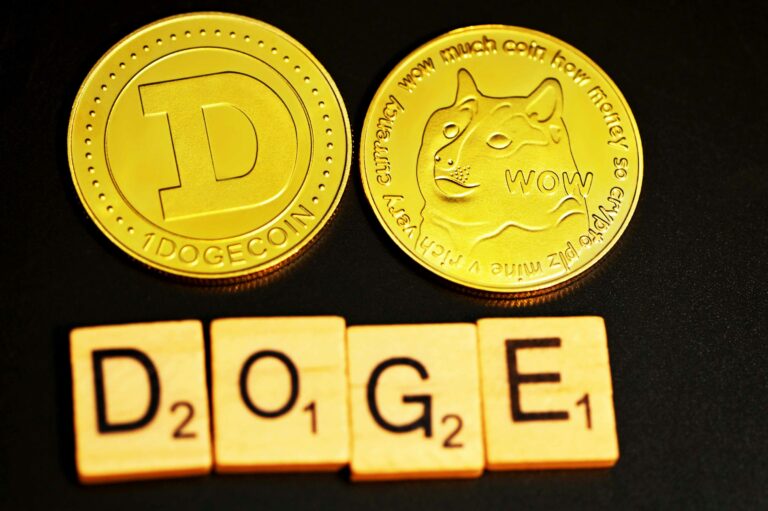
House Of DOGE Partnership Opens New International Doors

0

Trusted Editorial content, reviewed by leading industry experts and seasoned editors. Ad Disclosure

Dogecoin has taken another step in its objective to become a widely accepted and decentralized global currency as its corporate arm, House of Doge, announced a strategic partnership aimed at expanding the Dogecoin ecosystem into Japan. 

The initiative, which was disclosed in a press release on January 8, proposed a collaborative framework with Japanese firms abc Co., Ltd. and ReYuu Japan Inc. to pursue real-world asset initiatives and compliant digital infrastructure in Japan.

House Of DOGE Sets Framework For Expansion In Japan

According to the press release, House of Doge has entered a tripartite partnership with abc Co., Ltd. and ReYuu Japan Inc. 

Each party brings a defined role to the table, with abc contributing expertise in token-economy design, smart-contract development, and regulatory alignment, while ReYuu Japan is tasked with local business development and market execution. House of Doge, meanwhile, will act as the coordinating body that guides ecosystem strategy and alignment with Dogecoin’s broader objectives.

A main focus of the partnership is the exploration of real-world asset initiatives, including support for regulated token structures and the promotion of asset-backed digital instruments like gold asset-backed stablecoins. Furthermore, the partnership is looking to establish a joint fund within the Dogecoin ecosystem.

According to the announcement, the partnership is also looking to promote democratization of next-generation Web3 through real-world use cases. Although it does not attach an extensive list of specific products or launch timelines, it highlights interest in frameworks that could support stablecoin-related activity and other regulated financial use cases.

The partnership framework spotlights cooperation within Japan’s established regulatory structure, particularly around compliant tokenization models. Japan’s increasing positivity towards cryptocurrencies and strong technology adoption make it a suitable environment for exploring blockchain-based financial products tied to real-world assets. 

DOGEUSD now trading at $0.13. Chart: TradingView

“This partnership reflects our continued focus on supporting thoughtful, real-world expansion of the Dogecoin ecosystem,” said Marco Margiotta, CEO of House of Doge. 

Japan’s Rising Crypto Adoption

The timing of the partnership also aligns with expanding crypto adoption trends within Japan itself. Overall, the number of registered crypto accounts in the country has continued to rise, with a report showing 12 million users in February 2025, representing a 3.5-fold increase over the past five years. More recent estimates place the figure above 13 million registered accounts.

Regulatory developments may further support this trajectory. The Government of Japan has been weighing changes to its crypto tax framework, including a proposal to introduce a flat 20 percent tax rate on crypto-related gains. The revision is reportedly targeted for fiscal 2026 and is aimed at encouraging investor participation in the crypto industry.

Therefore, the partnership comes in an environment that could benefit the Dogecoin ecosystem and its usage in japan, which in turn could benefit its price action in the coming years.

Featured image from Unsplash, chart from TradingView

Editorial Process for bitcoinist is centered on delivering thoroughly researched, accurate, and unbiased content. We uphold strict sourcing standards, and each page undergoes diligent review by our team of top technology experts and seasoned editors. This process ensures the integrity, relevance, and value of our content for our readers.

Bitcoin Price Could Surge to $53 Million by 2050, Says VanEck—Here’s Why

0

In brief

  • VanEck developed a Bitcoin bull case that suggests BTC could hit $53.4 million per coin by 2050.
  • In that scenario, BTC would become a key part of global and domestic trade settlement.
  • The firm’s base case assumes a BTC price of $2.9 million by 2050, and just $130,000 in the bear scenario.

Global asset manager VanEck said this week that the price of Bitcoin could jump as high as $53.4 million by 2050, according to its latest long-term capital market outlook on the asset. 

The astronomical price forecast represents the firm’s bull case in the scenario, which maintains a compound annual growth rate (CAGR) of 29% for Bitcoin over the next 25 years. 

In that forecast, what the firm calls “hyper-Bitcoinization,” the top crypto asset would represent a sizable portion of settled domestic and international trades.

In a ‘hyper-Bitcoinization’ scenario where Bitcoin captures 20% of international trade and 10% of domestic GDP, the implied value per coin could reach $53.4 million,” the analysis from Matthew Sigel and Patrick Bush reads. 

“This scenario requires Bitcoin to achieve parity with or surpass gold as a primary global reserve asset,” they added, “constituting nearly 30% of world financial assets.” 

Granted, that’s the firm’s bullish forecast. But even VanEck’s base case shows a substantial price rise ahead for Bitcoin: It projects a 15% CAGR, leading to a price of $2.9 million per BTC by 2050.

In this scenario, VanEck forecasts that BTC will account for 5-10% of global trade, and 5% of domestic swaps. Additionally, it believes that central banks will have begun allocating up to 2.5% of their balance sheet to Bitcoin as a hedge. 

With Bitcoin changing hands at $90,319 on Friday, it sits nearly 3,100% off the firm’s 2050 base case. To reach the firm’s bull case, Bitcoin will need to jump more than 59,000%.

However, it is only 43% below the firm’s 2050 bear case, which assumes just a 2% CAGR and a projection of BTC at $130,000—just 3% above its most recent all-time high of $126,080, set last October.

The firm’s 2050 valuations have shifted slightly higher since they were unveiled in 2024. At that time, it provided a bull case of $52.3 million per BTC, while its base and bear cases remained relatively unchanged. 

BTC is down 0.3% in the last 24 hours and sits about 28% off its October all-time high.

Daily Debrief Newsletter

Start every day with the top news stories right now, plus original features, a podcast, videos and more.

Optimism Proposes Using 50% Of Superchain Revenue To Buy Back OP Tokens

0

The Optimism Foundation has floated a major shakeup to the dynamics of the layer 2’s OP token, proposing to allocate 50% of its Superchain revenue to regular buybacks of the asset. 

Optimism Grants council member Michael Vander Meiden shared the proposal via X on Thursday, highlighting that “after many years of being a ‘useless gov token’ the value of the OP token will finally be tied to network activity.”

The proposal was initially submitted in the Optimism governance forum on Wednesday. It outlines a plan to direct 50% of incoming Superchain revenue to monthly Optimism (OP) buybacks that will flow back into the token treasury. 

“These tokens can then be burned or distributed as staking rewards as the platform evolves. Governance will retain oversight over parameters that control the buyback and the token treasury,” the Optimism Foundation said. 

OP buyback proposal. Source: Optimism 

Optimism wants to grow OP utility beyond governance

The move is part of a push to expand OP utility beyond primarily governance into something that is “tightly aligned with the growth of the Superchain,” and could provide a major boost to OP holders and builders within the ecosystem. 

“As the Superchain evolves, the token may take on additional functionality aligned with the network’s long-term decentralization and resilience, including roles in securing shared infrastructure, coordinating sequencer rotation, and enabling collective governance over core protocol functions,” the Optimism Foundation said. 

Related: Ethereum is the Linux of blockchain, says co-founder Vitalik Buterin

The proposal outlined the importance of relativizing OP to reflect the growth of Optimism from being an “experiment” in Ethereum scaling to an ecosystem hosting a significant amount of total layer 2 activity. 

“The Superchain captured 61.4% L2 fee market share and processes 13% of all crypto transactions, and that share continues to rise. The OP token should be aligned with that momentum and growth,” the team said.