

Crypto prices are shedding October’s leverage overhang, with Grayscale seeing derivatives stability, easing supply pressure, and strengthening fundamentals that leave the market positioned for upside as regulatory and institutional forces take hold. The Leverage Purge Is Done — Grayscale Sees No Structural Headwinds for Crypto Prices Now Market attention is shifting toward forward-looking drivers in […]
Bags Launchpad Activity Surges After GAS Token Soars 700%

The Solana-based launchpad is gaining market share amid a resurgence in creator-linked coins.
Activity on Bags.fm, a Solana-based token launchpad, is spiking this week after the success of Gas Town’s token (GAS) drew traders to the platform.
Over the past 24 hours, several Bags.fm tokens posted significant gains: GAS surged 682%, Ralph Wiggum (RALPH) spiked 433%, Claude Memory (CMEM) climbed 543%, and Vibe Virtual Machine (VVM) gained 405%.
Meanwhile, Terraformation (TERRA) and RedwoodJS are up a whopping 84,000% and 31,000%, respectively, after launching earlier this morning.
The momentum is making waves across the launchpad sector. On Jupiter’s launchpad leaderboard, Bags ranked second by market share over the past day, with roughly 33.5% share and $293 million in volume, behind pumpfun at 51.2% and $448 million.
Jupiter data also shows that Bags volume remained relatively muted through late December 2025 and early January, before jumping yesterday as GAS rallied.
How exactly is Bags different?
Bags markets itself as a way for creators, artists, and entrepreneurs to fund ideas by launching coins that anyone can trade, while earning a cut of trading activity as royalties.
Gas Town, for example, is an open-source AI coding-agent orchestrator created by software engineer Steve Yegge. After the project gained traction online, a token linked to Gas Town (GAS) was launched on Bags, and trading activity quickly surged, Yegge explained in a Medium blog post.
As GAS trading picked up, it also generated large fee payouts for the account listed as the token’s “fee earner” (in this case, Yegge), which helped bring more attention to the Bags ecosystem.
The surge echoes recent “attention-driven” crypto cycles, where viral moments lead to sudden onchain revenue. Last year, onchain social platform Zora hit record daily revenue after Base-linked posts sparked a speculative frenzy, even as other metrics, like active addresses and total value locked (TVL), were flat or down.
On its website, Bags says creators earn 1% of trading volume from their coin and can claim the fees after verifying the linked social account. It also encourages creators to build communities around their tokens, with holders benefiting if the coin grows.
The Bags team did not immediately respond to The Defiant’s request for comment.
XRP Reclaims Its Footing as Ripple Expands Real-World Use Cases, Setting Stage for Next Move

XRP steadied after defending key support, signaling easing selling pressure as the token consolidates from recent highs, with technical momentum stabilizing and Ripple ecosystem developments offering a supportive backdrop. XRP Holds Key Support While Ripple Expands Real-World Use Cases At 5:35 p.m. on Jan. 16, XRP is trading at $2.0717, steady after rebounding from an […]
FTC asks court to hold payment processor Cliq in contempt

The Federal Trade Commission (FTC) has asked a federal court to hold payments processor Cliq and two of its executives in contempt of a 2015 court order with the agency over allegations of illegally processing credit card payments.
Editorial
This content has been selected, created and edited by the Finextra editorial team based upon its relevance and interest to our community.
The FTC alleges that Cliq, formerly known as Cardflex, along with its operators, CEO Andrew Phillips and Chief Technology and Security Officer John Blaugrund, have flouted their obligations under the 2015 order.
The commission has asked the court to impose at least $52.9 million in compensatory relief for consumers, modify the 2015 order to permanently ban Phillips and Blaugrund from the payment processing business, and appoint a receiver to ensure Cliq and its operators comply with the 2015 order’s requirements.
Cliq violated numerous provisions of the 2015 order while processing for companies expressly prohibited, including a group of merchants that have separately been indicted for crimes related to the processing, says the FTC.
Among the specific allegations, the commission says Cliq processed hundreds of millions of dollars in payments for at least three clients on Mastercard’s Member Alert To Control High (MATCH) list, which includes merchants terminated for violating card brand rules such as having high chargeback rates.
“Cliq and its operators flagrantly violated an FTC order requiring reasonable steps to prevent and detect fraud,” says Christopher Mufarrige, director, FTC Bureau of Consumer Protection. “We will not hesitate to hold accountable companies that ignore red flags and distort the honest functioning of the U.S. payment system.”
U.S. Government Denies The Sale Of Samourai Wallet Bitcoin
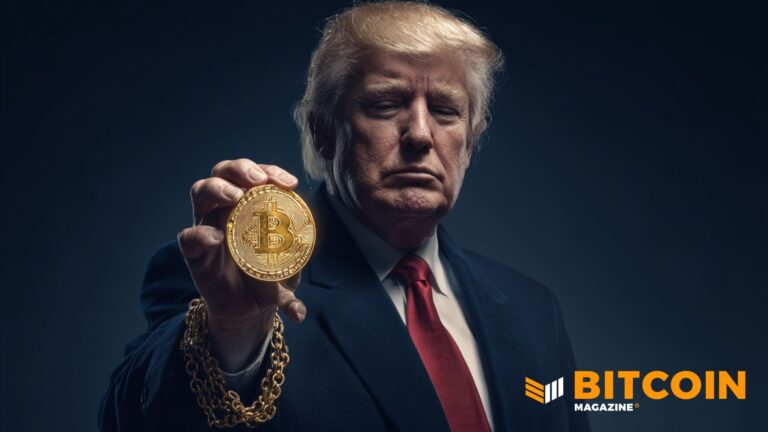
Members of the U.S. government have denied reports that bitcoin forfeited by Samourai Wallet developers was liquidated in violation of President Trump’s executive order mandating the retention of government-held bitcoin.
In a brief statement on X on January 16, Patrick Witt, Executive Director of the President’s Council of Advisors for Digital Assets and Deputy Director at the Department of War’s Office of Strategic Capital, said the Department of Justice (DOJ) has confirmed that the forfeited digital assets “have not been liquidated and will not be liquidated” pursuant to Executive Order 14233.
According to Witt, the bitcoin will remain on the U.S. government’s balance sheet as part of the Strategic Bitcoin Reserve (SBR).
“We have received confirmation from DOJ that the digital assets forfeited by Samourai Wallet have not been liquidated and will not be liquidated,” Witt said. “They will remain on the USG balance sheet as part of the SBR.”
The clarification follows reporting by Bitcoin Magazine earlier this month that raised questions about whether the U.S. Marshals Service (USMS), acting under DOJ direction, had sold approximately 57.55 bitcoin — worth roughly $6.3 million at the time — using Coinbase Prime in November 2025.
That reporting cited an “Asset Liquidation Agreement” and on-chain data suggesting the forfeited bitcoin may have been transferred directly to a Coinbase Prime address that later showed a zero balance, fueling speculation that the assets had already been sold.
The Samourai BTC will stay in the Strategic Bitcoin Reserve
If true, such a sale would have potentially violated EO 14233, which explicitly states that bitcoin acquired by the U.S. government through criminal or civil forfeiture “shall not be sold” and must instead be retained as part of the Strategic Bitcoin Reserve.
The executive order was designed to reverse the long-standing practice of liquidating seized bitcoin and to formally recognize bitcoin as a strategic reserve asset of the United States.
The Samourai Wallet case has been closely watched within Bitcoin and crypto policy circles, not only because of the forfeiture issue but also due to broader concerns about continued prosecutions of developers of noncustodial software.
Samourai developers Keonne Rodriguez and William Lonergan Hill pleaded guilty and were charged in 2025 to conspiracy to operate an unlicensed money transmitting business, a charge critics argue is incompatible with the noncustodial nature of the software.
Those concerns have been heightened by what many view as inconsistencies between DOJ actions and guidance issued under the Trump administration, including Deputy Attorney General Todd Blanche’s April 2025 memo calling for an end to “regulation by prosecution” of noncustodial crypto tools, according to Bitcoin journalist Frank Corva.
If true, the administration’s confirmation that the Samourai bitcoin remains intact and earmarked for the Strategic Bitcoin Reserve will likely be seen as a win for proponents of the bitcoin industry.
Polygon Labs said to have laid off 60 staff following new $250 million acquisition

Ethereum scaling firm Polygon Labs disputed reports of a 30% workforce reduction, saying role overlaps from acquisitions drove the changes while its headcount remains the same.
DTCC ‘Not Building Walled Gardens’ for Tokenization, Says Digital Assets Head

In brief
Daily Debrief Newsletter
Start every day with the top news stories right now, plus original features, a podcast, videos and more.
Senate Democrats serious about crypto bill reboot, they said in call with industry
The Democratic contingent in negotiations over U.S. crypto market structure got back into the talks over the bill, though they sought to keep details private.
Gemini Can Scour Apps to Deliver ‘Personal Intelligence’

Google is launching a major upgrade to Gemini that allows greater personalization for users by giving it access to the entire ecosystem.
Personal Intelligence can utilize information contained in Gmail, Photos, YouTube and Search to better deal with a user’s queries.
While Gemini already references information from a user’s apps, the latest update marks a step forward in that it is able to reason across complex sources and take specific details from, for example, an email or photo to answer a question. Indeed, it can even combine these to provide “uniquely tailored” answers, according to a blog post.
Josh Woodward, vice president of Google Labs and Google Gemini, explained in a blog post how he used it to buy tires for his minivan as he waited in line at a store, with Gemini providing his vehicle’s license plate number via a picture in Photos, details of its specification by searching Gmail and even suggesting all-weather tire options based on more images found in Photos of a family trip to Oklahoma.
Personal Intelligence will include sourcing, but it’s also possible to request responses that have no element of personalization, with guardrails applied to sensitive topics such as healthcare, according to the company.
While some might balk at the idea of giving Google access to this level of data, Woodward said the feature was developed with privacy in mind. “Connecting your apps is off by default: you choose to turn it on, decide exactly which apps to connect to, and can turn it off anytime,” he said.
He also pointed out that the feature is not trained directly on a user’s data but on specific prompts and Gemini’s response. “In short, we don’t train our systems to learn your license plate number; we train them to understand that when you ask for one, we can locate it,” he explained.
Like other agentic AI products, the feature has the potential to produce errors via connections inadvertently being made between unrelated topics or Gemini’s difficulty in understanding nuance or context. To that end, user feedback in the form of a “thumbs down” is encouraged.
Personal Intelligence is available in beta to eligible Google AI Pro and AI Ultra subscribers in the U.S. Expansion to more countries and the free tier is coming soon.
The tool works across the web, Android and iOS operating systems and with all of the models in the Gemini model picker, but is only being offered for personal Google accounts.
Functionality in AI Mode in Search is also promised soon.
This Analyst Is Dumping Bitcoin Over Quantum Computing Fears

Christopher Wood, global head of equity strategy at Jefferies, has eliminated Bitcoin from his flagship Greed & Fear model portfolio, citing concerns that developments in quantum computing could pose an existential threat to the cryptocurrency’s cryptographic foundations.
In the latest edition of the widely followed newsletter, Wood confirmed that Jefferies has removed its entire 10% Bitcoin allocation, replacing it with a split allocation of 5% to physical gold and 5% to gold-mining equities, according to Bloomberg.
The strategist said the move reflects rising uncertainty over whether Bitcoin can maintain its role as a long-term store of value in the face of accelerating technological change.
“While Greed & Fear does not believe that the quantum issue is about to hit the Bitcoin price dramatically in the near term, the store-of-value concept is clearly on less solid foundation from the standpoint of a long-term pension portfolio,” Wood wrote.
Wood was an early institutional supporter of Bitcoin, first adding it to the model portfolio in December 2020 amid pandemic-era stimulus and fears of fiat currency debasement. He later increased the allocation to 10% in 2021.
Since that initial inclusion, Bitcoin has risen approximately 325%, compared with a 145% gain in gold over the same period.
Quantum computing presents structural risks to Bitcoin
Despite the strong performance, Wood argues that quantum computing presents a structural risk that cannot be ignored. Bitcoin’s security relies on cryptographic algorithms that are effectively unbreakable using classical computers.
However, sufficiently powerful quantum machines could theoretically derive private keys from public keys, enabling unauthorized transfers and undermining confidence in the network.
Security researchers estimate that roughly 20% to 50% of Bitcoin’s total supply — between 4 million and 10 million BTC — could be vulnerable under certain conditions.
Coinbase researchers have identified approximately 6.5 million BTC held in older wallet formats where public keys are already exposed on-chain, making them susceptible to so-called long-range quantum attacks.
The issue has sparked a growing divide within the Bitcoin ecosystem. Some think that developers are underestimating the risk. Others, including Blockstream CEO Adam Back, maintain that the threat remains distant and that quiet preparatory work toward quantum-resistant signatures is preferable to alarming investors.
The debate has also begun to reach mainstream finance. BlackRock has listed quantum computing as a potential long-term risk in its spot Bitcoin ETF disclosures, while Solana co-founder Anatoly Yakovenko recently suggested there is a 50% chance of a meaningful quantum breakthrough within five years.
For Wood, the uncertainty itself strengthens the case for gold.
He described the metal as a historically tested hedge in an increasingly volatile geopolitical and technological landscape, concluding that the long-term questions raised by quantum computing are “only positive for gold.”
Gold climbed to record highs this month, topping $4,600 per ounce, as investors piled into the safe-haven asset amid escalating geopolitical tensions involving Iran and growing expectations that the Federal Reserve will cut interest rates following softer U.S. inflation and labor market data.