Home Blog Page 1258

TDK Ventures Invests in Ethereal Exploration Guild’s Series A to Help Pioneer Rocket Cargo and the Future of Reusable Medium-Lift Space Launches

0

SAN JOSE, Calif.–(BUSINESS WIRE)–TDK Corporation (TSE:6762) announced today that its corporate venture capital subsidiary, TDK Ventures, Inc., is investing up to $5 million in the Series A funding round of Bengaluru-based space technology company, Ethereal Exploration Guild. The investment backs the company’s mission to develop the world’s first fully reusable medium-lift launch vehicle, the Razor Crest Mk-1.

The Guild’s breakthrough approach is designed to disrupt the launch market by lowering orbital transport costs to a target range of $500–$1,000 per kilogram, a pricing point necessary to unlock economic viability for many next-generation space applications, enabling the introduction of rocket cargo as a service. The Guild differentiates itself from competitors through its reusable upper-stage, which utilizes a proprietary rocket engine feed cycle called the Full Flow Segregated Cooling Cycle (FFSCC). Additionally, the Guild uses in-house simulation tools and test infrastructure, which together contribute to better overall vehicle reusability and shorter development cycles.

The global space economy is poised for exponential growth over the next decade and is projected to reach $1.8 trillion by 2035. This expansion is driven by the increasing deployment of satellite constellations, which has created a critical supply/demand gap for dedicated, cost-effective launch services, particularly in the medium-lift class.

  • The medium-lift segment (2,000–50,000 kg/approximately 900–22,700 lbs.) is expected to account for 95% of the launch vehicle market share and represents a total addressable market (TAM) of approximately $17.2 billion by 2030.
  • India’s favorable regulatory landscape, talented labor pool, and cost-effective supply chain combine to position a startup such as Ethereal Exploration Guild to capitalize on this market opportunity.
  • The Guild is pioneering full reusability by recovering both the booster and the upper stage, which is the only viable path to achieving the targeted ultra-low launch costs while maintaining a high launch cadence.

The investment aligns TDK Ventures with a strategically important segment of the new industrial revolution, which is highly reliant on specialized electronics. Moreover, the Guild is among the few global companies, and the only one in India, pursuing this challenge.

“TDK Ventures is thrilled to back the Guild in its goal to reshape the medium-lift space-launch industry,” said Nicolas Sauvage, President of TDK Ventures. “The company aligns seamlessly with our vision for transformative innovation, excelling in every critical metric for market leadership: slashing launch costs to $500 per kilogram to unlock vast market potential, pioneering novel technologies to streamline development, and harnessing India’s rich ISRO expertise and cost-efficient supply chain.”

The Guild is led by founders Manu J. Nair, Shubhayu Sardar, and Prashanth Sharma, each of whom brings exceptional technical expertise gained from their time spent at the Indian Space Research Organization (ISRO), satellite and auxiliary propulsion systems company Manastu Space, and the International Institute for Astronautical Sciences (IIAS). The entire team combines entrepreneurial spirit with space expertise, including scientists trained overseas and ISRO veterans.

“Securing the backing of a strategic partner like TDK Ventures validates our vision to rearchitect today’s unipolar access to space into a truly multipolar frontier, and to catalyze civilizational progress,” CEO Nair said. “Their leadership in precision sensing, high-reliability passive components, and advanced power-delivery technologies brings critical materials and systems expertise that will support our push toward rapid development and early validation milestones for the Razor Crest Mk-1 platform.”

The investment allows Ethereal Exploration Guild to tap into TDK Corporation’s strengths in advanced sensing, high-reliability passive components, magnetics, and power-delivery technologies—supporting the Guild in building more robust guidance systems, improving power integrity across avionics modules, and selecting commercially proven components that can be engineered for high-vibration and high-thermal environments. In turn, TDK gains insights into next-generation launch and avionics architectures, helping inform the development of mission-critical sensors, ruggedized components, and power-management solutions for the rapidly expanding space economy.

Ethereal Exploration Guild’s existing investors include YourNest VC, Bluehill Capital, BIG Capital, Campus Fund, and Golden Sparrow VC. The company has already manufactured its 80kN upper-stage reusable engine (Pegasus) and has signed collaboration agreements with the Indian National Space Promotion and Authorization Centre (IN-SPACe), ISRO, and other national space agencies, as well as commercial satellite operators, launch aggregators, and launch ports globally.

TDK Ventures is committed to finding and impacting scaling technologies on the frontiers of innovation, whose contributions have the potential to build a better, brighter future for all of humanity. To learn more about TDK Ventures, interested startups or investment partners should visit www.tdk-ventures.com or reach out at contact@tdk-ventures.com.

Crypto Regulation: Nigerian SEC Raises Capital Requirement For Exchanges To N2 Billion

0

Trusted Editorial content, reviewed by leading industry experts and seasoned editors. Ad Disclosure

Nigeria, Africa’s most populous nation, is paying vast attention to its rapidly developing cryptocurrency industry marked by a string of new regulations. In the latest development, the Nigerian Securities and Exchange Commission (SEC) has shared a revised minimum capital for all regulated market entities, including operators in the digital asset market.

Nigerian Regulator Hikes Minimum Capital For Crypto Exchanges By $1.05M

On January 16, 2026, the Nigerian SEC released a circular communicating changes in the minimum capital (MC) requirements for major financial entities, namely: core and non-core capital market operators, market infrastructure institutions, capital market consultants, financial technology (FinTech) operators, virtual asset service providers (VASPs), and commodity market intermediaries. 

The securities regulator has explained that the revised MC framework is to boost operational resilience, align capital adequacy, promote market stability, and support innovation in nascent market segments such as the cryptocurrency industry. 

In relation to VASPs, the minimum capital for digital asset exchanges (DAX) and digital asset custodians has been increased from N500 million ($352,000) to N2 billion ($1.4 million).  Meanwhile, all digital assets offering platforms (DAOP) responsible for issuance and primary sale of digital assets to the public are expected to meet a capital threshold of N1 billion ($704,111). 

Notably, the Nigerian SEC’s new circular expands its recognition of multiple VASPs that had been operating in a regulatory void. These include the ancillary virtual assets service providers (AVASPs) who provide auxiliary services such as blockchain analytics tools, etc who are now mandated to operate with a minimum capital of N300 million ($211,200).

Under the new regime, the base capital requirements for both digital assets intermediary (DAI) and digital assets platform operators (DAPO) have also been placed at N500 million ($352,000). In new additions, real-world assets tokenization and offering platforms (RATOP) now have a set minimum capital requirement of N1billion ($704,111). 

According to the SEC, all concerned entities are advised to comply with the new regime on or before June 30, 2027, as failure to do so will result in penalties, including suspension or withdrawal of registration, as determined by the Commission.

Nigeria Government Increases Focus On Crypto Industry

Aside from the SEC’s recent circular, other developments indicate that the Nigerian government is increasing its participation in the cryptocurrency market. 

Notably, the new Nigeria Tax Administration Act (2025) now requires all digital asset activity to be linked to Tax Identification Numbers (TIN) and National Identification Numbers (NIN), effectively capturing the nascent industry as a new tax base.

These recent measures follow a recent partnership by the SEC and the Nigerian Police Force (NPF) focused on cracking down on Ponzi scheme operators and other similar scams.

Nigeria
Total crypto market cap valued at $3.19 trillion on the daily chart | Source: TOTAL chart on Tradingview.com

Featured image from Tech Cabal, chart from Tradingview

Editorial Process for bitcoinist is centered on delivering thoroughly researched, accurate, and unbiased content. We uphold strict sourcing standards, and each page undergoes diligent review by our team of top technology experts and seasoned editors. This process ensures the integrity, relevance, and value of our content for our readers.

OpenAI rolls out ChatGPT Go globally at $8 per month, plans ad testing on Go and free tiers

0

Key Takeaways

  • ChatGPT Go rolls out globally at $8 per month, marking OpenAI’s lowest subscription tier.
  • OpenAI plans to begin testing ads in the US on ChatGPT Go and free tiers soon.

Share this article

OpenAI has rolled out ChatGPT Go globally, expanding its lowest-priced subscription tier to all markets where ChatGPT is available. In the US, the plan is priced at $8 per month, with localized pricing offered in other regions.

ChatGPT Go was first introduced in India in August 2025 as a low-cost option aimed at broadening access to advanced AI features. Since launch, the plan has expanded to more than 170 countries. OpenAI said the early adoption supported its decision to make Go available worldwide.

With the global launch, ChatGPT now offers three consumer subscription tiers. ChatGPT Go provides expanded access to GPT 5.2 Instant, including higher message limits, more file uploads, increased image generation, and longer memory compared with the free tier.

ChatGPT Plus remains priced at $20 per month and targets deeper reasoning and productivity tasks, while ChatGPT Pro, priced at $200 per month, is designed for power users and advanced workflows.

OpenAI also plans to begin testing ads in the US on the free and Go tiers in the coming weeks. The company said ads will be clearly labeled and separated from responses, will not influence answers, and will not appear for users under 18 or near sensitive topics. Plus, Pro, Business, and Enterprise plans will remain ad free.

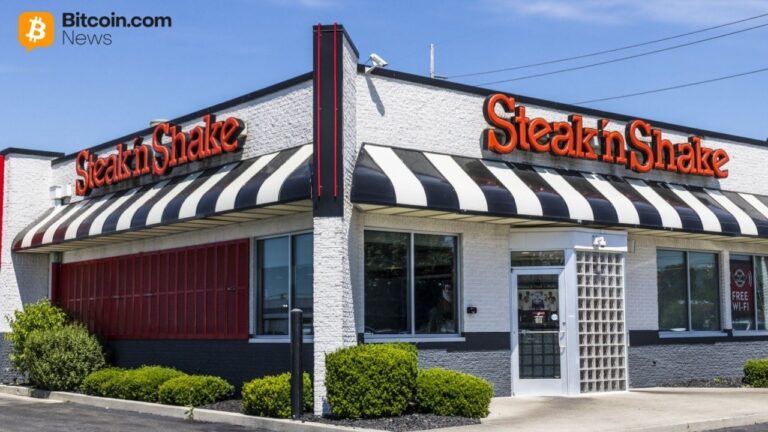
Steak ‘n Shake Increases Bitcoin Exposure to $10M, Expands Strategic Reserve

0

Steak ‘n Shake adds $10,000,000 in BTC to its Strategic Bitcoin Reserve while reporting higher same‑store sales. Steak n Shake announced on 16 January 2026 that it has increased its bitcoin exposure by $10,000,000 in notional value, continuing a program begun eight months earlier when the company started accepting bitcoin payments and directing all bitcoin […]

Crypto Bank Anchorage Digital Targets $400M Funding Ahead Of IPO

0

Trusted Editorial content, reviewed by leading industry experts and seasoned editors. Ad Disclosure

Anchorage Digital, a New York–based crypto bank, is moving to raise fresh capital as it prepares to enter public markets. According to Bloomberg, people familiar with the matter say the firm is looking to secure between $200 million and $400 million in new funding.

Anchorage Seeks Major Funding

Reports say the Firm is exploring a $200M–$400 million round to strengthen its business before a possible public listing. The plan would put Anchorage among a small group of crypto-native companies that have tried to list on stock markets after building regulated services for institutions.

The company’s bank affiliate holds a federal charter, a status that gives it a different footing compared with many crypto firms. That federal backing is often cited by investors as a reason Anchorage can offer custody and other services seen as safer by big clients.

Based on reports, Anchorage last raised capital in a previous round that valued the business at over $3 billion, and the fresh funding is viewed as a runway toward a public debut.

Regulatory Edge And Product Push

Some reports say the bank is also growing teams tied to stablecoin work and exploring partnerships that would widen its product set for large customers. These moves appear aimed at making the company more attractive to public investors.

Market observers note that crypto firms have been considering public listings more often as regulation clears up in certain areas and as institutional demand for custody and regulated rails grows.

BTCUSD trading at $95,149 on the 24-hour chart: TradingView

Anchorage’s timing comes while other custody and asset firms weigh similar steps, a trend that could reshape how big investors access crypto services. The atmosphere is cautious, but there is clear interest in regulated players.

Market Reaction And IPO Timing

According to market chatter, the bank could seek a listing as soon as next year, although some coverage says 2027 is also possible. Sources quoted by Bloomberg gave a range of potential timing, and Anchorage has not provided a public comment on the plans.

If Anchorage completes a successful raise and goes public, the event would signal confidence in firms that combine crypto services with bank-style oversight.

Investors will be watching how the company uses the proceeds — whether to build new products, hire staff, or boost its balance sheet ahead of scrutiny that comes with public ownership. The next few months are likely to reveal more details as underwriting and investor talks advance.

Featured image from Yellow, chart from TradingView

Editorial Process for bitcoinist is centered on delivering thoroughly researched, accurate, and unbiased content. We uphold strict sourcing standards, and each page undergoes diligent review by our team of top technology experts and seasoned editors. This process ensures the integrity, relevance, and value of our content for our readers.

USDT on Tron central to $1 billion money laundering scheme, feds say – DL News

0

  • A Venezuelan national allegedly laundered around $1 billion for crooks, feds say.
  • He used a number of crypto wallets to do so.
  • The alleged criminal transactions were made using Tether’s USDT on Tron.

The US Department of Justice has charged a man for allegedly laundering $1 billion in criminal funds, using USDT on the Tron blockchain to help him do so.

Feds said in a statement that Venezuelan national Jorge Figueira, 59, allegedly made the transactions in “a scale of criminal conduct that poses a profound threat to financial systems and public safety.”

Court documents unsealed this month allege that Figueira’s cryptocurrency of choice was Tether’s USDT stablecoin, which he used to receive huge payments in digital tokens before converting them via liquidity providers into US dollars.

“Let me be clear with you, [USDT] is used a lot for laundering money,” Feds quoted Figueira saying in a phone call.

“It is used for what we are doing,” he continued. “It is used to transfer money in a quick way, even to make it get to jurisdictions that have some type of issues, etcetera,” he added, using China as an example.

Tron’s blockchain

Feds allege in court documents that blockchain analysts found the illicit money movements were made using the Tron blockchain — the crypto network founded by entrepreneur Justin Sun.

USDT, the most-traded digital asset, runs on a number of blockchains but transactions on Tron are faster and cheaper than other networks.

Figueira allegedly made many transactions to a number of crypto wallets before using liquidity providers to then convert the crypto to cash for American bank accounts.

But using USDT or other cryptocurrencies to launder money is nothing new, FBI Special Agent Stephen A. Walker said in the affidavit.

“The cryptocurrency ecosystem is often used by money launderers to receive money, and to launder it quickly, anonymously, and at scale,” Walker testified.

Walker added that “a series of convoluted transactions and quick swaps between financial accounts, whether traditional bank accounts or cryptocurrency wallets” often shows that money movements are being obfuscated.

Big transfers

Figueira allegedly received huge transfers for crooks, with feds quoting him boasting that he and his associates would manage sometimes up to $700 million per month, sending funds all over the world — from Colombia to China.

Court documents added Figueira allegedly said he could receive $100 million in a single transaction with his digital wallet.

The Justice Department said it had identified approximately $1 billion that moved through digital wallets used by Figueira and his operation to individuals and businesses throughout the world.

Figueira now faces up to 20 years in prison if convicted of conspiracy to launder money, the Justice Department said.

The Justice Department did not immediately respond to further questions from DL News.

DL News reached out to Tron’s press department for comment.

Mathew Di Salvo is a news correspondent with DL News. Got a tip? Email at mdisalvo@dlnews.com.

Galaxy CEO predicts imminent crypto bill passage with compromise on stablecoins

0

Key Takeaways

  • Galaxy CEO Mike Novogratz predicts a crypto bill will pass in weeks, thanks to bipartisan interest despite disagreements over stablecoin provisions.
  • A compromise on stablecoins is expected, which may not fully satisfy the crypto industry but would enable the sector’s growth.

Share this article

Galaxy CEO Mike Novogratz expects the crypto market structure bill to pass within weeks, with a compromise on stablecoins that may not fully satisfy the crypto industry but would allow the sector to progress and grow under regulatory clarity.

Speaking on CNBC’s ‘Squawk Box‘ this morning, Novogratz said that despite ongoing disagreements over stablecoin provisions, there is genuine bipartisan interest in reaching a deal from both Democratic and Republican senators.

“I fundamentally think a bill is going to get done in the next few weeks,” Novogratz said during the interview. “The Democratic senators in earnest want to get something done. The Republican senators in earnest want to get something done.”

The Galaxy founder identified stablecoin interest payments as a central sticking point, with banks lobbying against provisions that could trigger deposit flight.

“If you go to J.P. Morgan right now or Bank of America or any of the big banks, you put money in a savings account, you get about 11 basis points or one basis point,” Novogratz said. “They worry that stablecoins could have deposit flight.”

He argued banks are using community banks as a shield to protect their margins, noting consumers could already move to neobanks offering better rates if deposit flight were a genuine concern.

Novogratz noted that overly restrictive rules could entrench existing monopolies, making it difficult for new, compliant stablecoins to compete, and emphasized that some incentives or yields would be necessary to foster innovation and global adoption.

“If you don’t allow some interest or some mechanism to generate interest on stablecoins, you’re going to continue with this monopoly where Tether has the majority of overseas stablecoins,” Novogratz noted.

“I do think that there will be a compromise on this. I don’t think it will be great for crypto, but I think it’ll be fine,” he said. “We’ve got to get this bill passed so we can move on, and the industry can start growing.”

Banks and crypto firms clash over stablecoin rewards as Senate crypto bill hits obstacles

The bill, intended to set rules for the crypto industry and provide clarity on market structure, was scheduled for a Senate Banking Committee markup this week. However, the hearing was canceled at the last minute after some lawmakers opposed key provisions, and Coinbase withdrew its support.

Coinbase CEO Brian Armstrong cited concerns with the latest draft, including a reduced role for the CFTC and limitations on crypto companies offering interest-like rewards on stablecoins.

Following the cancellation of the markup, Senate Democrats are set to resume talks with the crypto industry on Friday to address unresolved issues.

Banks are worried that allowing stablecoin rewards could divert hundreds of billions from deposits.

Bank of America CEO Brian Moynihan warned on this week’s earnings call that up to $6 trillion could leave the US banking system if stablecoin issuers pay interest.

SIMIT vs RUNT by License Plate in Colombia: Complete Guide [2026]

0

In Colombia, vehicle owners, buyers, and drivers must ensure their vehicles are legally compliant. Two official systems—SIMIT and RUNT—provide important information about vehicles, but they serve different purposes. Understanding the difference is crucial to avoid fines, prevent fraud, and verify vehicle legality. This guide explains both systems, how to use them, and their benefits.

1.What is SIMIT?

SIMIT (Sistema Integrado de Información sobre Multas y Sanciones por Infracciones de Tránsito) is the national registry of traffic fines and penalties in Colombia. Managed by the Federation of Municipalities of Colombia, it collects data on traffic violations, unpaid fines, and related penalties for all registered vehicles.

Key Features of SIMIT:

  • Provides current fines and penaltiesby vehicle license plate.
  • Tracks payment statusof fines (paid or pending).
  • Helps drivers avoid legal complicationsand late fees.

SIMIT is primarily a driver-focused tool, designed to keep individuals informed about their traffic obligations.

2.What is RUNT?

RUNT (Registro Único Nacional de Tránsito) is the national vehicle registry in Colombia. Managed by the government, it provides a full legal and administrative record for vehicles. Unlike SIMIT, RUNT is not focused on fines; instead, it gives detailed vehicle and ownership data.

Key Features of RUNT:

  • Records vehicle registration details.
  • Tracks current and previous owners.
  • Shows SOAT insurance
  • Displays Tecnomecánica inspection
  • Provides VIN and technical specifications.

RUNT is particularly important for buyers, sellers, and authorities, as it ensures that a vehicle’s legal and administrative records are accurate.

3.Information Provided: SIMIT vs RUNT

Feature SIMIT RUNT
Traffic fines ✅ Yes ❌ No
Vehicle registration ❌ No ✅ Yes
Owner details ❌ No ✅ Yes
SOAT insurance ❌ No ✅ Yes
Tecnomecánica inspection ❌ No ✅ Yes
Legal history for sales ❌ No ✅ Yes

Summary:

  • Use SIMITif your main concern is traffic fines.
  • Use RUNTfor legal verification, buying/selling vehicles, or checking compliance with insurance and inspections.

4.How to Check SIMIT by License Plate

Checking SIMIT by plate is fast and free. Follow these steps:

  1. Visit SIMIT official site.
  2. Click “Consulta por Placa”(Check by Plate).
  3. Enter your vehicle’s license plate.
  4. Complete security verification (captcha).
  5. Click “Consultar”(Check).

The portal displays:

  • Pending fines.
  • Fine amounts and dates.
  • Payment status.

Tips:

  • Double-check the plate number to avoid errors.
  • If fines do not appear, contact your local traffic authority.

5.How to Check RUNT by License Plate

RUNT provides a complete legal overview. Here’s how:

  1. Go to RUNT official portal.
  2. Select “Consulta por Placa”.
  3. Enter the vehicle’s license plate number.
  4. Complete the captcha or security check.
  5. Submit the query.

You will see:

  • Vehicle registration details.
  • Owner history.
  • SOAT insurance and Tecnomecánica inspection status.
  • VIN and technical specifications.

Tips:

  • Basic reports are free, but detailed reports may require a fee.
  • Always use the official RUNT website to avoid scams.

Benefits of Using SIMIT

  • Avoid fines:Keep track of unpaid traffic tickets.
  • Prevent extra charges:Pay fines before late fees increase.
  • Legal compliance:Ensure you are up to date with traffic obligations.
  • Peace of mind:Check fines before purchasing a used vehicle.

SIMIT is primarily driver-focused, helping individuals manage their traffic responsibilities.

  1. Benefits of Using RUNT
  • Vehicle verification:Ensure the vehicle is legally registered.
  • Fraud prevention:Avoid buying stolen or illegally registered vehicles.
  • Insurance compliance:Verify SOAT insurance is valid.
  • Inspection compliance:Check Tecnomecánica inspection status.
  • Ownership history:Know previous owners before buying a used vehicle.

RUNT is buyer and seller-focused, providing a complete vehicle legal overview.

  1. Common Use Cases: SIMIT vs RUNT
Scenario SIMIT RUNT
Paying traffic fines ✅ ❌
Checking ownership history ❌ ✅
Buying a used car ⚠️ (partial) ✅ (full legal record)
Verifying insurance ❌ ✅
Avoiding legal complications ✅ ✅ (administrative compliance)

Example:
Before purchasing a second-hand car, a buyer should check RUNT to verify registration, owner history, and insurance. They should check SIMIT separately to see if there are unpaid fines that could affect ownership transfer.

  1. Frequently Asked Questions

Q1: Are SIMIT and RUNT free?

  • SIMIT is completely free for all users.
  • RUNT offers free basic checks; detailed reports may require payment.

Q2: Can SIMIT replace RUNT?

  • SIMIT only tracks fines; RUNT provides a full legal record.

Q3: Can RUNT show traffic fines?

  • For fines, always check SIMIT.

Q4: How often is the data updated?

  • Both systems update regularly, but some fines or registrations may take a few days to appear.

Q5: Are these official sources?

  • Yes, both SIMIT and RUNT are government-managedand reliable.
  1. Conclusion: Which One to Use?

Both SIMIT and RUNT are essential for vehicle owners in Colombia, but their purposes differ:

For full compliance, many vehicle owners check both systems before buying, selling, or managing their vehicles. Using the official portals ensures accuracy, security, and peace of mind.


Industry Expert Predicts Complete Bitcoin Collapse, Here’s The Timeframe

0

Trusted Editorial content, reviewed by leading industry experts and seasoned editors. Ad Disclosure

Justin Bons, the founder and CIO of CyberCapital, has laid out a blunt and unsettling view of where Bitcoin could be headed over the next decade. In a detailed note shared on X, Bons noted that Bitcoin is moving toward total collapse within the next seven to 11 years, which is going to be caused by the way the network pays for its security and the continued fall of block rewards.

Reduced Miner Payouts To Cause Complete Bitcoin Collapse?

Bitcoin is known for its halving cycle, which reduces the block rewards given to miners by about 50% every 210,000 blocks, which comes up to about roughly four years. Bons’ critique focuses on this event as the reason why Bitcoin’s network security will finally fail and cause a complete collapse of the leading cryptocurrency.

As each halving cuts the block rewards further, Bons believes Bitcoin is drifting toward a point where it can no longer reliably fund the miners who protect the network, setting off a chain of risks that become harder to ignore with every cycle. 

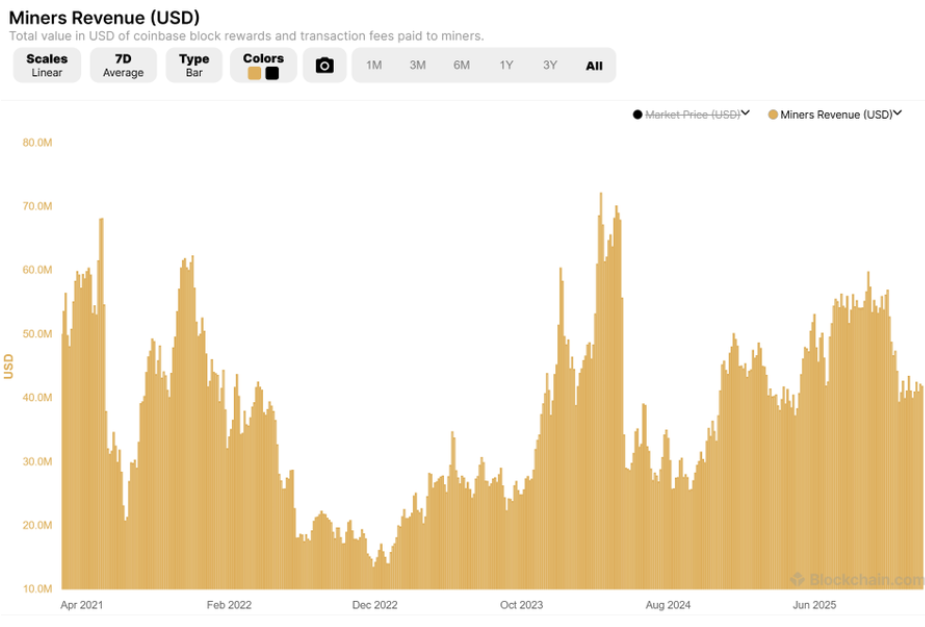
Many Bitcoin proponents will argue that the Bitcoin network is still highly secure due to the rising hashrate. However, according to Justin Bons, hashrate can rise even while real security is weakening because advances in mining hardware reduce the cost of producing hashes. The most important thing is how much money is actually being made by miners, since that figure represents the profitability and the cost an attacker would have to match or exceed.

Charts tracking block rewards and miner revenue show that, in economic terms, Bitcoin’s security is already lower than it was several years ago. Keeping security at current levels, he says, would require either transaction fees so high that users would simply stop using the network or the price of Bitcoin to double every four years at a pace that would quickly outpace the size of the global economy.

Bitcoin Miner Revenue. Source: @Justin_Bons on X

Prediction: Bitcoin To Plunge In Two To Three Halvings

The seven to 11-year timeframe Bons outlined for Bitcoin’s collapse is tied directly to its halving schedule. According to the industry expert, the cost of attacking the Bitcoin network for a sustained period could fall into territory that makes such attacks financially attractive within two to three more halvings.

If miner payouts are low enough, Bons believes the potential rewards from hitting multiple exchanges or protocols could outweigh the cost of carrying out the attack. The most realistic scenario for this to happen is through double-spend attacks against exchanges. 

Bitcoin is now trading at $95,270. Chart: TradingView

An attacker controlling 51% of the entire mining power could deposit Bitcoin, trade it for another asset, withdraw those funds, and then roll back the blockchain to reclaim the original coins.

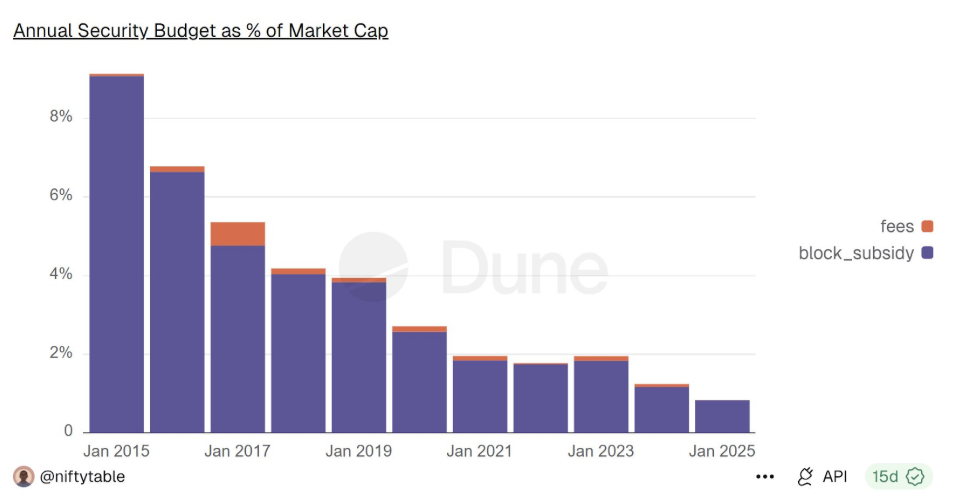
He also highlights data showing that Bitcoin’s security budget relative to its total market value has been trending downward for years. This means Bitcoin does not automatically become safer as it grows larger.

Bitcoin Security Budget as % of Market Cap. Source: @Justin_Bons

This leaves Bitcoin facing an eventual breaking point. From here, it is either the network increases its fixed 21 million supply cap to restore miner incentives, a move that would likely split the chain, or the entire Bitcoin ecosystem accepts the risk of double-spend attacks.

Featured image from Unsplash, chart from TradingView

Editorial Process for bitcoinist is centered on delivering thoroughly researched, accurate, and unbiased content. We uphold strict sourcing standards, and each page undergoes diligent review by our team of top technology experts and seasoned editors. This process ensures the integrity, relevance, and value of our content for our readers.

Bitcoin-loving burger joint Steak ‘n Shake adds $10m to crypto treasury – DL News

0

  • Burger chain Steak ‘n Shake has added $10 million in Bitcoin to its strategic reserve.
  • The restaurant franchise last year started accepting Bitcoin payments.
  • Steak ‘n Shake claims sales have increased since it started accepting crypto.

Another day, another crypto treasury buy.

Popular US burger restaurant franchise Steak ‘n Shake said on Friday that it had added $10 million in Bitcoin to its strategic reserve.

“We have created a self-sustaining system — growing same-store sales that grow the [strategic Bitcoin reserve],” the Indianapolis, Indiana-based company wrote on X.

“Improving food quality expands Steak n Shake’s reach and leverages Bitcoin into a new and delicious dimension.”

The move comes after the firm last year started accepting Bitcoin payments, claiming that any crypto it received for payments would be added to its balance sheet.

Friday’s statement is the first time the company has announced a Bitcoin buy following its 2025 crypto pivot.

Lightning fast

Steak ‘n Shake first started accepting Bitcoin payments in May 2025. The chain said it was using the Lightning Network — a second network built on top of Bitcoin designed to speed up transactions and cut costs — to receive digital payments.

“Eight months ago today, Steak ‘n Shake launched its burger-to-Bitcoin transformation when we started accepting Bitcoin payments,” the company said, adding that its same-store sales have “risen dramatically ever since.”

Steak ‘n Shake did not say how much Bitcoin it had received since 2025 in Bitcoin from customers and did not immediately respond to DL News’ questions.

DAT boom

2025 was the year digital asset treasuries — or DATs — became mainstream. There are currently 263 companies, public and private, holding Bitcoin, according to data from BitcoinTreasuries.net.

Bitcoin is down from this time last year. Source: CoinGecko.

The model is the brainchild of Strategy (formerly MicroStrategy) co-founder Michael Saylor, who transformed his sleepy Nasdaq-listed software company into a Bitcoin juggernaut in 2020.

The idea is that companies buy Bitcoin — or other cryptocurrencies — to get shareholders better value for money as cash depreciates but digital assets go up in value.

Private companies like Steak ‘n Shake hold the cryptocurrency in the hope it’ll appreciate over cash.

But the idea has been criticised by those who claim the model is unsustainable if Bitcoin’s price falls.

Bitcoin as everyday money?

Bitcoin was created to cut middlemen like banks out of Internet payments. But since the crypto network went live in 2009, it’s still difficult to actually find retailers that accept the digital coin.

Companies like Steak ‘n Shake — as rare as they are — are pushing Bitcoin to be used for transactions rather than just as a store-of-value investment.

Twitter co-founder and Block CEO Jack Dorsey, whose payment products Square and Cash App are Bitcoin-friendly, has repeatedly said that in order for the leading cryptocurrency to succeed, it must be used like cash.