The Fintech Times is the world’s first and only newspaper dedicated to fintech.
Published Bimonthly, the Fintech Times explores the explosive world of financial technology, blending first hand insight, opinion and expertise with observational journalism to provide a balanced and comprehensive perspective of this rapidly evolving industry.
Crypto investment products posted significant outflows last week, with a four-day run of withdrawals erasing part of the $1.5 billion in inflows seen during the first two trading days of 2026.
Crypto exchange-traded products (ETPs) saw $454 million in outflows last week, European crypto asset manager CoinShares reported on Monday.
“This turnaround in sentiment appears to stem mainly from investor worries over the diminishing prospects of a Federal Reserve interest rate cut in March following recent macro data releases,” CoinShares’ head of research, James Butterfill, said in the update.
Despite last week’s outflows, month-to-date flows remained positive at $229 million, following $582 million of inflows the previous week.
Bitcoin leads the negative sentiment with $405 million outflows
Major cryptocurrency Bitcoin (BTC) drove the negative sentiment in crypto ETPs last week, posting outflows of $405 million. Short-BTC funds saw minor outflows of $9 million, leaving overall market sentiment for the asset mixed, Butterfill noted.
On the other hand, altcoin funds for assets such as XRP (XRP), Solana (SOL) and Sui (SUI) saw a persisting positive trend, with inflows totaling around $46 million, $33 million and $8 million, respectively.
Weekly crypto ETP flows by asset as of Friday (in millions of US dollars). Source: CoinShares
Ether (ETH) funds saw $116 million outflows, while multi-asset altcoin products also posted combined outflows of $21 million.
US the only market to bear major losses
Geographically, the United States was the only market to show negative sentiment, with outflows reaching $569 million.
By contrast, several countries, including Germany, Canada and Switzerland, saw inflows of $59 million, $25 million and $21 million, respectively.
Weekly crypto ETP flows by country as of Friday (in millions of US dollars). Source: CoinShares
By the end of last week, crypto ETP issuers held $181.9 billion in assets under management, slightly up from $181.3 billion the previous week.
Related: Spot Bitcoin ETFs lose $681M in first week of 2026 as risk appetite fades
BlackRock’s iShares products and Profunds Group led inflows with $181 million and $180 million, respectively, while Fidelity Investments and Grayscale Investments drove outflows, posting $454 million and $360 million, respectively.
Magazine: Meet the onchain crypto detectives fighting crime better than the cops
Cointelegraph is committed to independent, transparent journalism. This news article is produced in accordance with Cointelegraph’s Editorial Policy and aims to provide accurate and timely information. Readers are encouraged to verify information independently. Read our Editorial Policy https://cointelegraph.com/editorial-policy
They argue that cryptocurrency’s opacity and traceability issues make it a threat to democratic integrity, citing an intelligence report election interference.
Qashio, the MENA region’s leading spend management platform, has officially launched its European headquarters in Dublin, marking a significant milestone in its global expansion strategy.
The opening, announced on 18 December 2025, represents the company’s fifth office launch in just 12 months, following recent expansions into Saudi Arabia, Jordan, Dubai, and Abu Dhabi. While Qashio has been operating in the European market since 2024, the new headquarters establishes a permanent foothold to drive further growth across the continent.
High-level government backing
The launch event was held at Investopia and attended by top government officials from both nations, underscoring the strengthening economic ties between the UAE and Ireland.
Notable attendees included H.E. Abdullah Bin Touq Al Marri, UAE Minister of Economy and Tourism; H.E. Simon Harris, Ireland’s Deputy Prime Minister and Minister for Finance; and H.E. Mohammed Homod Hamad Rahmah Al Shamsi, the UAE Ambassador to Ireland. They were joined by Qashio’s leadership team, including Chairman Antoine Massad, CEO Armin Moradi, and Europe Expansion Manager Mohammed Noufal.
The move is supported by key entities including IDA Ireland, EMIR, the UAE Ministry of Economy, Dubai Chambers, and Investopia. It highlights the deepening relationship between the two countries, which currently sees bilateral trade nearing €8 billion.
Dublin as a strategic launchpad
With Dublin serving as its European hub, Qashio has announced plans to hire over 100 new team members across sales, marketing, product, engineering, and finance. These hires will support the creation of Qashio Labs, a state-of-the-art R&D facility designed to attract global talent to the tech hub.
Armin Moradi, founder and CEO of Qashio, commented on the company’s trajectory: “Qashio was founded in Dubai but built for the world we had from our early days the ambition to expand outside of the middle east and into the global markets, that ambition shaped how we think about scale, resilience, and real-world financial complexity.”.
He added: “Dublin now becomes our launchpad for Europe, where we aim to build deep local partnerships, attract global talent, and develop products that serve businesses operating across borders.”.
To support this international push, Qashio has completed technical developments to evolve its product beyond a standalone expense management tool. The company is advancing toward a “fully integrated fintech platform” offering seamless control over company spend, card issuance, rewards, and financial operations across multiple geographies.
The European expansion follows a year of aggressive growth for Qashio in its home region. In 2025, the company acquired Sanad Cash to enter the Saudi market and launched Qashio for Travel, a specialized platform for UAE-based travel agencies.
Qashio stated that the Irish capital was selected for its reputation as a home for global technology companies, its supportive regulatory environment, and access to world-class talent.
The timing of the headline-driven move immediately made traders suspicious. Bitcoin, they noted, tends to cancel out gains made before the start of a new TradFi trading week.
“Hopefully, like we’ve seen many weeks, we’ll get a scam-pump on Sunday so we can look for shorts early in the week. With the weak ~$87,600 monthly open as final target,” trader Lennaert Snyder told X followers in advance of the weekend.
“Needless to say with current headlines today is going to be super interesting,” trader Skew predicted Monday.
“Commodities as a whole are getting bid here including BTC with some spot buying lifting price here.”
On higher time frames, trader CrypNuevo focused on the 50-week exponential moving average (EMA) at $97,400 as a potential upside target before new lows.
“My main scenario over the past month is that price will revisit the range lows before it can go higher – I expect Bitcoin to go back to low $80’s,” he said.
CrypNuevo remained bullish on 2026 as a whole, considering optimal market entries and $73,000 as a “worst case scenario.”
BTC/USD one-day chart. Source: CrypNuevo/X
“Sudden squeezes” become standard
Multiple classic BTC price metrics are aligning to predict a fresh round of market volatility.
New findings from onchain analytics platform CryptoQuant put exchange order-book liquidity in the firing line.
“Liquidation spikes on both the long and short side align closely with sharp wicks and fast reversals. This behavior is typical of liquidity hunts, where overleveraged positions are forced out during periods of compressed price action,” contributor The Alchemist 9 wrote in a Quicktake blog post Sunday.
The post described BTC price action as “increasingly shaped by liquidation events rather than organic spot demand.”
Open interest, funding rates and the Bollinger Bands volatility indicator all point to “sudden squeezes” taking place on lower timeframes.
“Volatility here appears to be manufactured by leverage resets rather than sustained spot buying or selling,” The Alchemist 9 said.
BTC/USD one-hour chart with Bollinger Bands data. Source: Cointelegraph/TradingView
CryptoQuant acknowledged that liquidity hunts do not imply a strong upward or downward trend.
The latest liquidity data from monitoring resource CoinGlass shows a key area of interest at $90,000.
A big week for US inflation data could become even more volatile as geopolitics meets a showdown between the government and the Federal Reserve.
The latest releases of the Consumer Price Index (CPI) and Producer Price Index (PPI) come as markets assess the fallout from the US quasi-takeover of Venezuela and threats to intervene in Iran.
At the same time, the US Supreme Court is due to rule on the legality of the international trade tariffs imposed by President Donald Trump last year.
As Cointelegraph reported, crypto markets remain highly sensitive to any news events related to tariffs and their implications for liquidity trends.
“Early-January volatility has created some exceptional trading conditions for investors,” trading resource The Kobeissi Letter summarized on X.
A weekend curveball came in the form of Fed Chair Jerome Powell, who became the subject of a criminal investigation — allegedly over the handling of a renovation project.
In a statement, Powell openly suggested that the motives for the move by the Department of Justice (DOJ) lay elsewhere, specifically interest rates not falling as quickly as Trump wanted.
“This new threat is not about my testimony last June or about the renovation of the Federal Reserve buildings. It is not about Congress’s oversight role; the Fed through testimony and other public disclosures made every effort to keep Congress informed about the renovation project. Those are pretexts,” he said.
“The threat of criminal charges is a consequence of the Federal Reserve setting interest rates based on our best assessment of what will serve the public, rather than following the preferences of the President.”
Stock market futures fell immediately after the statement went public, while gold hit new all-time highs of $4,601 per ounce.
The timing of the debacle is notable, coming just weeks before the Fed is due to avoid another rate cut at its Jan. 28 meeting.
“Trump vs Powell will result in even more volatility,” Kobeissi added.
Multiple senior Fed officials are set to take to the stage for public speaking engagements this week.
Bitfinex whales’ Bitcoin longs roll over
Bitfinex whales continue to point the way forward when it comes to BTC price trends — if history is a guide.
Whales’ BTC long positions continue to shrink this week after reaching a local high near 73,000 BTC.
Bitfinex whale longs vs. BTC/USD one-week chart. Source: Cointelegraph/TradingView
Throughout much of the bull cycle, whales pivoting in this way preceded periods of price upside, and market participants are hoping that this time will be no different.
“From a long-term perspective, a bull market is already underway,” pseudonymous crypto investor and data analyst CW, a contributor to onchain analytics platform CryptoQuant, commented on the topic Monday.
“While the short-term may be confusing, the current situation is a little noise in the long run.”
Bitfinex whale data. Source: CWX
The last reversal from local highs came in April last year, around the time that BTC/USD saw long-term lows near $75,000. In the coming weeks, the pair gained 50%.
In his own analysis at the weekend, commentator MartyParty employed the Wyckoff method to predict history repeating, calling for a swing low, known as the “spring,” to emerge next.
“This precedes the Wyckoff Spring,” he told X followers.
Bitfinex longs currently total around 71,800 BTC, marking their lowest levels since Dec. 15.
Bear market still a 2026 reality
Bitcoin maturing as an asset has not made it immune from bear markets — and 2026 could easily prove that, new analysis says.
Related: Trump rules out SBF pardon, Bitcoin in ‘boring sideways’: Hodler’s Digest, Jan. 4 – 10
Updating followers on Bitcoin’s power law price model, Jurrien Timmer, director of global macro at Fidelity Investments, said that this year could end up as a giant consolidation period for BTC/USD, followed by a new bear market low.
“It’s interesting that a lot of Bitcoin folks are proclaiming that the four year cycle is dead and a new structural up wave is at hand,” he wrote.
“I’m skeptical, not about the waning power of the halving cycle (with which I agree), but the idea that bear markets are no longer going to happen.”
Power law trend lines currently envisage a battle taking place at $65,000 if the price consolidates.
Bitcoin power law data. Source: Jurrien Timmer/X
As Cointelegraph reported late last year, BTC price hugging its power law trend line for much of the bull market was already giving rise to calls for major upside.
Now, executive David Eng describes price as “coiling below” its long-term growth trajectory, with only one viable outcome.
“Bitcoin is Compressed Below Its Growth Law, and Compression Always Resolves Upward,” he summarized on X.
Eng added that “history says resolution comes by price catching up, not the law giving way.”
Bitcoin power law data. Source: David Eng/X
This article does not contain investment advice or recommendations. Every investment and trading move involves risk, and readers should conduct their own research when making a decision. While we strive to provide accurate and timely information, Cointelegraph does not guarantee the accuracy, completeness, or reliability of any information in this article. This article may contain forward-looking statements that are subject to risks and uncertainties. Cointelegraph will not be liable for any loss or damage arising from your reliance on this information.
As crypto markets entered 2026, one theme became increasingly clear: Last year was less about speculation and more about infrastructure, regulation and real-world use. Across jurisdictions, regulators and institutions moved from theory to implementation, reshaping how digital assets are supervised and used.
A defining feature of this shift was the rise of stablecoins. While Bitcoin (BTC) continues to dominate crypto market capitalization, stablecoins now account for more than half of all onchain transaction volumes globally. Their increasing role in payments, remittances, and trading has placed them firmly in the center of regulatory attention, particularly as governments grapple with financial stability and compliance risks.
In this week’s episode of Byte-Sized Insight, Cointelegraph explores how these changes played out in practice, drawing on insights from Matthias Bauer-Langgartner, head of policy for Europe at Chainalysis.
Stablecoins aren’t on the sidelines
Bauer-Langgartner said, “2025 has been a year of stablecoins.”
He began by highlighting that this isn’t particularly new, as their dominance has been building for years. According to Chainalysis data, stablecoins now “clearly dominate the crypto assets landscape with more than 50% of transactional volumes,” even as Bitcoin retains roughly half of total market capitalization.
That growth has made stablecoins attractive for legitimate use cases and for illicit ones.
“Stablecoins have [also] been dominating the crypto assets transactional volumes already for quite a while now, both in illicit usage and also in legitimate usage.”
He added that criminals favor stablecoins because they are liquid, globally accessible, and avoid volatility. Still, that same structure creates enforcement leverage.
“Centralized stablecoin issuers typically have the ability to freeze or even burn stablecoins,” he said, calling it “an extremely powerful tool to combat financial crime.”
Crypto crime turns geopolitical
Beyond individual scams and hacks, 2025 also marked a shift toward state-linked crypto activity.
Bauer-Langgartner said, “2025 has really been, in many, many instances, a record year also for crypto crime.” Chainalysis recorded $154 billion in illicit crypto flows, a 162% increase year-over-year.
Related: Tether’s role in Venezuela, Iran highlights the duality of stablecoins
Much of that growth was driven by nation-state actors, he said.
“Nation-state actors are facilitating crypto usage for illicit activity on a really professional level.”
In the episode, he also broke down specific sanctioned stablecoins and state-backed networks used for sanctions evasion.
Despite the surge, Bauer-Langgartner said illicit activity still represents a small share of overall usage. “Even with the increase we’ve seen, it’s still under 1% of overall activity,” he said, underscoring the challenge regulators face as adoption accelerates.
He also highlighted Europe’s ongoing implementation of the Markets in Crypto-Assets Regulation and how it, along with other global frameworks, is taking shape and creating a more structured industry.
Listen to the full episode on Cointelegraph’s Podcasts page, Apple Podcasts or Spotify. And remember to check out Cointelegraph’s full lineup of other shows!
Magazine: How crypto laws changed in 2025 — and how they’ll change in 2026
Cointelegraph is committed to independent, transparent journalism. This news article is produced in accordance with Cointelegraph’s Editorial Policy and aims to provide accurate and timely information. Readers are encouraged to verify information independently. Read our Editorial Policy https://cointelegraph.com/editorial-policy
Trusted Editorial content, reviewed by leading industry experts and seasoned editors. Ad Disclosure
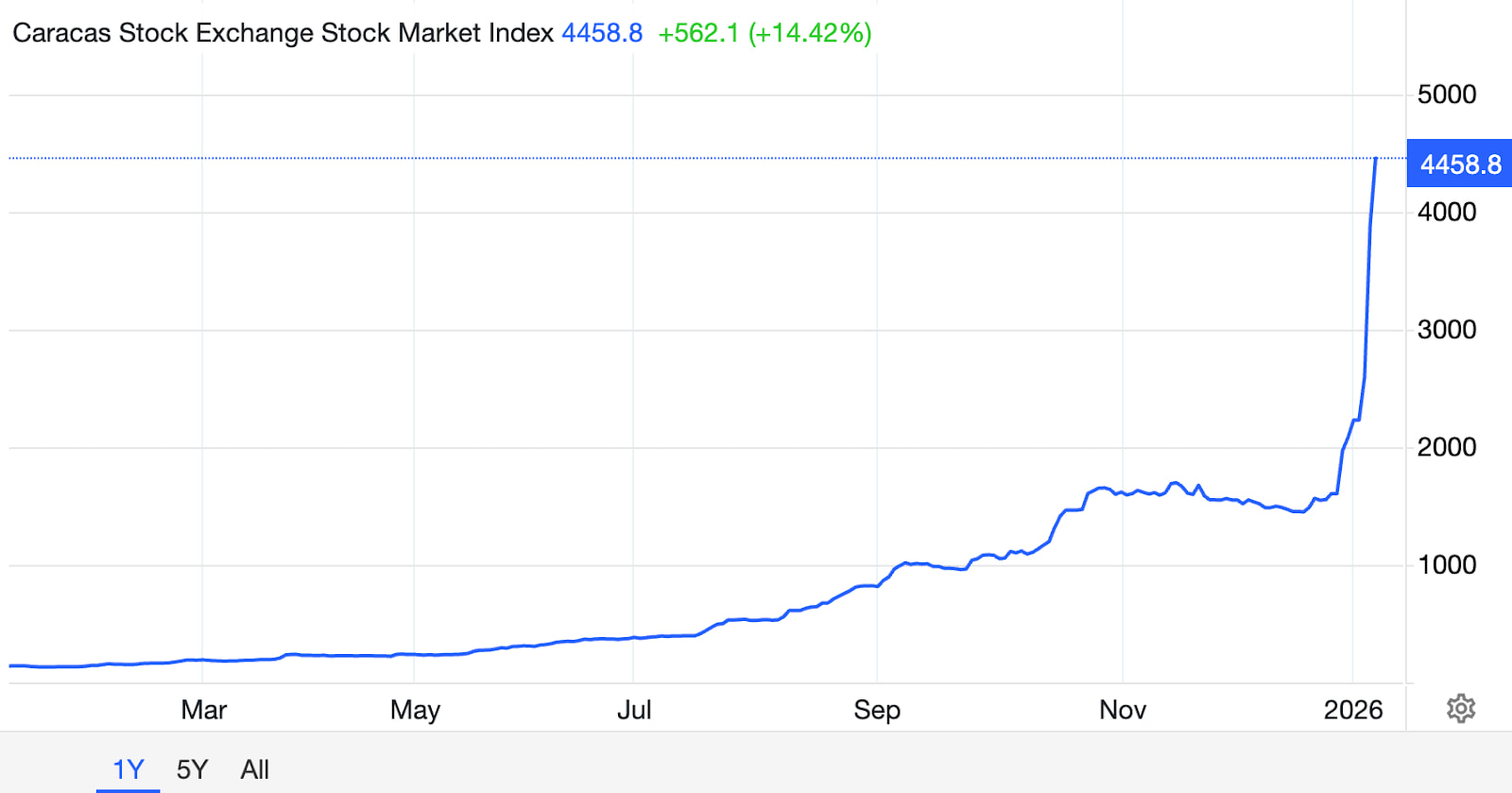
Thursday, 8 January 2026 – As 2026 kicks off at full throttle, it’s impossible to overlook the strong “risk-on” signals lighting up markets worldwide. Just look at the Caracas Stock Exchange: Venezuelan equities have gone parabolic, posting a 44x surge since 2024, driven by recent political turmoil and a full-scale market re-rating.
Investors are now chasing high-beta opportunities, but while legacy markets need years to pull off a 44x move, crypto can do it in moments. For those searching for pure, high-octane upside, Maxi Doge (MAXI) is the one project to watch.
Maxi Doge can be viewed as Dogecoin (DOGE) multiplied by 1,000. It represents the most aggressive, most jacked evolution of the original meme coin to date – quite literally. This Shiba Inu isn’t just lifting weights; it’s aiming for a near-vertical move on the charts.
And this isn’t a launch fueled by hype alone. The project runs on the combined conviction of seasoned players who dominate this space. It’s a direct call to every hardcore bro who lives by the code and understands that stocks are simply stonks waiting for ignition.
Time is limited, however. In the next 15 hours, the current MAXI price of $0.0002765 will disappear. The upcoming funding phase sets a higher buy-in, so anyone looking to secure a position before the increase needs to act now.
Venezuelan Stocks Rally, While Meme Coins Show Big Gains Can Come Quicker
Venezuela’s main equity benchmark, the Caracas Stock Exchange, has climbed 172.3% since the start of the year, with momentum accelerating after Venezuelan President Nicolás Maduro was captured by U.S. forces.
Gains in Venezuelan equities have been building since 2024, with some stocks rising as much as 44x. Put into perspective, a $1,000 investment in the index two years ago would now be worth $44,000.
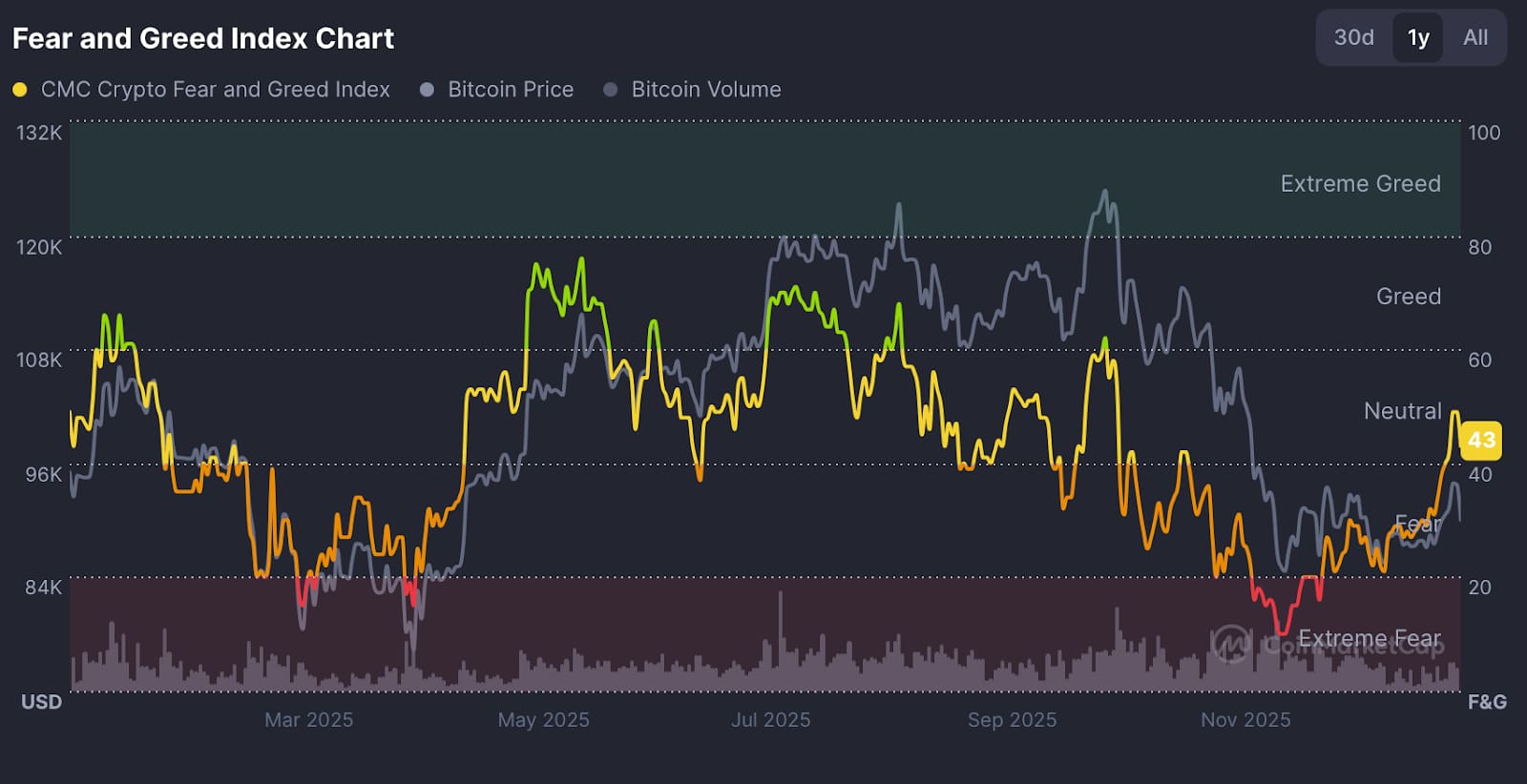
As markets move back into a clear “risk-on” phase, sentiment has shifted sharply. The Fear and Greed Index jumped from extreme fear in December to a neutral reading, signaling that investors are once again actively seeking opportunities across markets to boost returns.
Although a 44x move in equities is uncommon, the crypto market has delivered similar results far more frequently. Consider the original meme coin, Dogecoin (DOGE): from its early January 2021 price to its peak four to five months later, DOGE surged 73.76x, a move achieved 81.5% faster than the recent run of the Caracas Stock Exchange.
DOGE is only one case. Other leading meme coins, including Pepe (PEPE), have also recorded explosive rallies. There are even historical reports of a trader turning $27 into $52 million, representing a 192,592,811.85% return, or a 1,925,926x gain.
Despite their potential for outsized returns, these tokens share common characteristics: strong meme appeal and highly engaged communities that drive momentum. Still, it’s important to note that expecting a repeat of past performance may not be realistic. Many of today’s top meme coins now carry multi-billion-dollar valuations. While upside remains possible, the scale of earlier gains is unlikely to be repeated.
This is where the real opportunity in meme coin hunting emerges. There are still undervalued projects, or tokens that are not yet broadly available to investors, which display similar traits to established names.
One such example is Maxi Doge, currently in presale. Its core DNA closely mirrors that of Dogecoin, but with a key difference: it brings 1,000x more attitude and a far louder, more aggressive presence than the original.
The Evolution of the Beast
Maxi Doge contains all the fundamental ingredients needed for a meme coin with breakout potential. It is upfront about its role as an unrestrained market disruptor, intentionally distancing itself from the rigid, traditional assets typically preferred by conventional investors.
In many respects, it mirrors Dogecoin in its early days, when the original pup openly mocked Bitcoin by poking fun at the very principles its most devoted supporters held dear. Maxi Doge, however, isn’t directing its humor at Bitcoin or even its own predecessor.
Instead, it represents a high-energy extension of the foundation Dogecoin created, redesigned to fit today’s fast-moving, ultra-aggressive crypto environment.
Think of this built-up pup as the released form of a Dogecoin that stayed dormant for too long. While the original remains iconic, MAXI is the product of endless late nights—investors fueled by Red Bulls and gym sessions until they brought to life an asset capable of pumping with the same intensity DOGE once delivered.
Operating on that shared, rapid-fire mindset, they’ve produced a new version of the OG that loudly signals 1,000x potential to anyone paying attention.
The market response is already evident. While meme coins are driven by memetics, they endure through community strength, and Maxi Doge has quickly assembled a sizable reserve, with investors contributing more than $4.4 million to its presale so far.
The project is fully committed to broad exposure. This phase is only the beginning; with 65% of the total marketing budget allocated to amplifying its presence, it’s only a matter of time before every bro in the crypto space hears the message.
How to Buy MAXI
As Venezuelan oil stocks rally following the recent change in regime, meme coins such as MAXI highlight just how quickly the crypto market can deliver results that take traditional equities years to achieve.
If Venezuelan assets represent the high-beta opportunity within TradFi, then a heavily rebuilt, muscle-packed version of DOGE stands as the nuclear-level alternative for crypto investors.
To take part, join the presale by visiting the official presale page. MAXI can be purchased using ETH, BNB, USDT, or USDC, and buyers also have the option to pay with a bank card.
For storage, Maxi Doge recommends Best Wallet, widely regarded as one of the top crypto wallets available. It’s free to download on both Google Play and the Apple App Store.
Newly acquired MAXI tokens are eligible for a dynamic 70% APY.
Security is also covered. The Maxi Doge smart contract has been fully audited by Coinsult and SOLIDProof, confirming the absence of security issues.
To keep up with announcements and discussions, follow the community on X and Telegram, or visit the Maxi Doge Token website.
Editorial Process for bitcoinist is centered on delivering thoroughly researched, accurate, and unbiased content. We uphold strict sourcing standards, and each page undergoes diligent review by our team of top technology experts and seasoned editors. This process ensures the integrity, relevance, and value of our content for our readers.
Vitalik Buterin said privacy tools are a human right and that he has personally used Roman Storm’s software.
Storm was partially convicted in 2025 over coin mixer Tornado Cash, but is seeking relief from the courts.
The case has become a global test case for open-source developers.
Ethereum co-founder Vitalik Buterin has thrown his public support behind Tornado Cash developer Roman Storm—who was convicted last August of a money transmitting charge—arguing that privacy-preserving software is a fundamental human right, and that Storm’s work should not be criminalized simply because it can be misused.
“I have supported Roman Storm’s work from the beginning both as a strong believer in the importance of privacy, and as an active user of privacy tools, including those developed by Roman,” Buterin wrote on X on Friday, sharing a letter of support he had written for Storm.
“In the 21st century, we are all faced with risks from all corners of the world, both online and offline. If someone has information about you, they have the [ability to] exploit you—socially, commercially, or even physically,” Buterin continued. “Being able to choose with whom we share information about our personal lives, our communications with friends and colleagues, our whereabouts and our finances, is an essential protection against this.”
Tornado Cash, a crypto mixer that helps obscure the path of transactions, was placed on the U.S. Treasury’s sanctions list in 2022 after officials said it had been used by North Korea’s Lazarus Group and other criminals to launder billions of dollars in stolen digital assets.
Tornado Cash was used to wash proceeds from major hacks, including the $622 million Ronin Bridge exploit and a $100 million theft from Harmony Bridge, with blockchain analytics firm Elliptic estimating that more than $1.5 billion in illicit crypto flowed through the mixer before it was sanctioned. Around $7 billion in total assets went through the platform.
The Office of Foreign Assets Control barred Americans from using the service, though the sanctions were lifted in March 2025.
Storm was charged in 2023 with conspiracy to commit money laundering, conspiracy to violate sanctions, and conspiracy to operate an unlicensed money transmitting business. Last August, a Manhattan jury convicted him on the unlicensed money transmitting count, but deadlocked on the others.
Several weeks later, Matthew Galeotti, head of the DOJ’s criminal division, said software developers would no longer be convicted under the charge for which Storm had been convicted.
Storm has not yet been sentenced and has filed a motion for an acquittal, which prosecutors have opposed. He faces up to five years in prison.
Another Tornado Cash developer, Alexey Pertsev, also faced criminal proceedings. Dutch authorities arrested the Russian national in 2022, and a court later found him guilty of laundering $1.2 billion in illicit assets through the mixer, sentencing him to more than five years in prison. Pertsev has since been released to house arrest while he appeals.
The Ethereum Foundation pledged $1.25 million toward Pertsev’s legal defense.
In Storm’s case, Buterin added that privacy is necessary for many parts of our society—including culture and politics—to function without devolving into social games or outright coercion.
“Many have the implicit viewpoint that privacy from the public is fine, but surely governments and police and intelligence agencies should be able to see everyone’s information to ensure safety,” he said.
Buterin said he strongly disagreed with this approach, as government databases can be hacked and information lands in the hands of foreign adversarial actors.
“Agencies routinely outsource their work to private corporations, who sell the data behind everyone’s back. Cell phone companies, who have everyone’s location data, often casually sell it to anyone who asks, which often leads it to end up in the hands of hostile foreign governments,” he explained.
“Roman, and I, want to see a world where basic protections of our rights, that were an unquestioned default in the previous millennium, stay with us in the next,” he added. “And for that, I support him.”
Daily Debrief Newsletter
Start every day with the top news stories right now, plus original features, a podcast, videos and more.
TRM’s 2026 Crypto Crime Report shows illicit crypto volume hit a record $158 billion in 2025, reversing a multi‑year decline. On January 10, TRM released key insights from its upcoming 2026 Crypto Crime Report, revealing that illicit cryptocurrency inflows reached an all‑time high of $158 billion in 2025, a 145% increase from the previous year. The […]