BitGo shares dropped nearly 22% on the second trading day after Thursday’s IPO debut raised over $212 million.
The crypto custody provider’s opening price exceeded its $15-$17 marketed range at a roughly $2 billion valuation.
A Kraken-linked blank check company is preparing its own IPO with 25 million shares at $10 each.
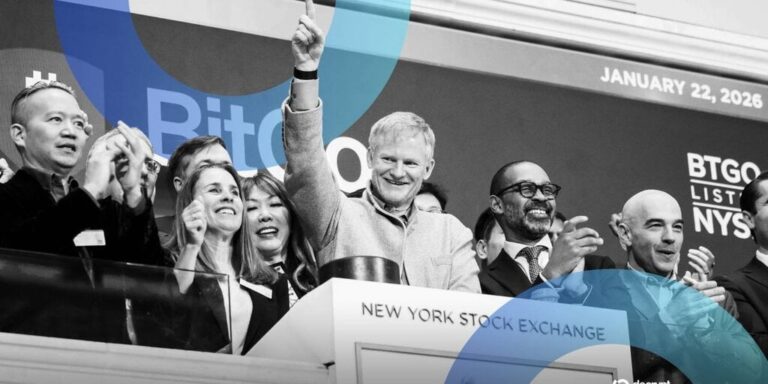
Crypto firm BitGo, the industry’s first initial public offering of 2026, saw its share price drop nearly 22% on its second day of trading on the New York Stock Exchange, dropping below the offering price.
BitGo, which trades under the BTGO ticker, closed the week at $14.50 after making its debut on Thursday for $18 per share. The opening price was above the marketed range of $15 to $17 per share. The company raised more than $212 million at a valuation of just over $2 billion.
The second-day drop for BTGO comes amid a rosier performance for broader equities. The S&P 500 gained 0.03% and the Nasdaq rose by 0.28% on Friday, as of the closing bell.
BitGo did not immediately respond to a request for comment from Decrypt.
The digital asset infrastructure and crypto custody provider was founded in 2013 by CEO Mike Belshe and CTO Ben Davenport. It was originally headquartered in Palo Alto, California, but recently relocated to Sioux Falls, South Dakota.
“It’s just so humbling to see that crowd of great people, better team than we’ve ever had, constantly growing and turning this into something out of nothing. It’s amazing,” Belshe said on Thursday while at a New York Stock Exchange bell to ring the opening bell.
BitGo was instrumental in launching Wrapped Bitcoin, or WBTC, in 2019. It is an ERC-20 token that allows traders to bring Bitcoin liquidity onto the Ethereum network.
In October 2025, Wrapped Bitcoin’s market capitalization was hovering near its all-time high of $15 billion. It has since receded to about $11 billion, according to crypto price aggregator CoinGecko.
Meanwhile, there are already other crypto companies preparing to make an IPO. A blank check company linked to crypto exchange Kraken, KRAKacquisition Corp., said recently that it’s aiming to offer 25 million Class A shares at $10 per share.
KRAKacquisition said in its SEC filing that it may pursue a merger with “any business or industry,” without having selected a target yet. Still, the company’s sponsor was formed in partnership with Kraken and venture capital firms Tribe Capital and Natural Capital.
Daily Debrief Newsletter
Start every day with the top news stories right now, plus original features, a podcast, videos and more.
The latest draft of the major crypto legislation has begun to be targeted with amendments as the Senate Agriculture Committee approaches its hearing next week.
The U.S. caught a top-ten most-wanted fugitive when they arrested Ryan Wedding, a former top snowboarder who’s said to have used digital assets in his crimes.
The Central Bank of Brazil issued new rules for banking institutions and brokers operating with crypto assets in the country. IN 701/2026 establishes that these will have to be certified by an independent company to comply with established requirements, including asset segregation. Central Bank of Brazil Pushes New Institutional Rules For Crypto Brokers Brazil is […]
The OCC says the trust-bank application tied to President Donald Trump-connected World Liberty Financial will move ahead without the senator’s requested pause.
The US Senate Banking Committee has postponed its markup of the Digital Asset Market Clarity Act following a withdrawal of support from major industry players and intensifying debates over stablecoin interest.
Washington’s efforts to establish a comprehensive crypto regulatory framework have hit a major roadblock as the US Senate Committee on Banking, Housing, and Urban Affairs postpones its markup of the Digital Asset Market Clarity Act. The delay follows a high-profile withdrawal of support from industry leaders, including Brian Armstrong, CEO of Coinbase, who described the current draft as “materially worse than the status quo”.
A primary point of contention is a proposed amendment to the Guiding and Establishing National Innovation for US Stablecoins (GENIUS) Act. This provision would effectively prevent exchanges and other digital asset platforms from paying interest or yield to customers holding stablecoins, even if the platform is not the token’s issuer. Anil Oncu, CEO of Bitpace, explained that while the act correctly focuses on legal certainty, an absolute prohibition on earning interest would put digital money at a structural disadvantage to traditional banking and push users toward less transparent offshore alternatives.
The banking lobby has remained a vocal proponent of these restrictions, citing concerns that yield-bearing stablecoins could trigger a “deposit flight” from community banks. However, Luke Youngblood, founder of Moonwell, noted that the banking lobby’s influence is problematic for the bill’s prospects. He said community banks claim yield-bearing stablecoins would make their savings accounts uncompetitive, which is ironic given they spent decades lobbying for the right to pay interest on deposits themselves. Youngblood also pointed to unrealistic ethics provisions as a threat that could kill the legislation entirely.
While the CLARITY Act faces friction, the industry has welcomed the reintroduction of HR 8378, the Securities Clarity Act, by Representative Tom Emmer, Representative Darren Soto, and Representative Ro Khanna. The Global Digital Finance (GDF) industry body supports this technology-neutral legislation because it provides regulatory certainty by excluding “investment contract assets” from the definition of a security, provided they meet certain conditions. Carl Schonander, Head of Americas Regulatory Affairs at GDF, said the bipartisan initiative shows it is possible to promote the digital assets industry while simultaneously protecting consumers.
The draft bill’s handling of decentralised finance (DeFi) has also drawn criticism. Jerome de Tychey, President of Ethereum France, explained that the bill’s DeFi provisions remain incomplete, lacking a clear legal definition of “decentralisation”. He added that banking lobbyists have secured their position while DeFi-specific questions get pushed to future rulemaking, which risks codifying ambiguity. Vincent Chok, founder and CEO at First Digital, commented that a blanket restriction on rewards fails to account for the growing complexity of finance where assets converge into new use cases, such as settlement assets for agentic payments.
Despite the domestic stalemate, global hubs continue to advance their own digital strategies. Islam Shawky, co-founder and CEO of Paymob, which recently secured a full operating licence in the UAE, noted that government initiatives in the Emirates are aiming to boost the digital economy through highly connected systems. He explained that the UAE is at an inflection point of digitisation, leveraging instant payment platforms like Aani to overcome traditional digital payment delays.
The Senate Banking Committee now faces the challenge of brokering a compromise that satisfies the crypto industry’s need for operational flexibility and the traditional banking sector’s desire to protect its deposit base.
Bloomberg commodity strategist Mike McGlone explains his bearish turn on Bitcoin outlook and broader market expectations for 2026.
Bloomberg Intelligence strategist Mike McGlone said he has reversed his long-term outlook on Bitcoin and the broader crypto market, arguing that investors should “sell the rallies” across risk assets in 2026.
In McGlone’s view, the conditions that once made Bitcoin (BTC) compelling have changed fundamentally. What began as a scarce, disruptive asset has become part of a crowded and highly speculative ecosystem, increasingly correlated with equities and vulnerable to the same macro forces that drive traditional markets.
He draws parallels with past market peaks, pointing to excessive speculation, the approval of exchange-traded funds (ETFs) and historically low volatility as warning signs. Bitcoin, he argues, has gone from being a hedge against the system to being firmly inside it, and that changes everything.
The conversation goes well beyond crypto. McGlone lays out a stark macro outlook for stocks, commodities and precious metals, noting that gold’s explosive rally may be less a sign of strength than a signal of deeper instability.
In McGlone’s words, when “the stupid rock” starts outperforming everything else, investors should pay attention.
Watch the full interview on Cointelegraph’s official YouTube channel for McGlone’s view on how low Bitcoin could fall, and which signals he is watching instead.
Related: Bitcoin rolls over as gold gets huge $23K price target by 2034
This interview has been edited and condensed for clarity.
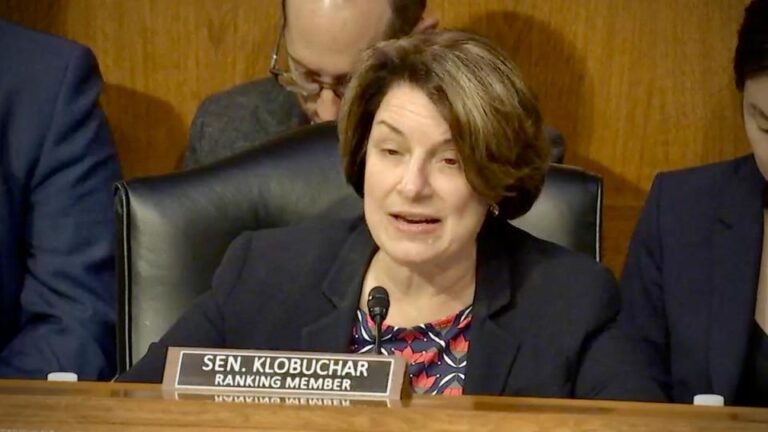
United States lawmakers postponed a planned markup of the Digital Asset Market Clarity Act (CLARITY), delaying progress on a bill intended to define how cryptocurrencies and decentralized finance (DeFi) platforms are regulated and prompting renewed pushback from DeFi leaders who say the bill still fails to adequately protect developers.
Industry groups and crypto venture firms warned that proposed amendments could impose requirements that are not suitable for decentralized systems. Representatives from Paradigm and Variant said the current draft leaves unresolved ambiguity over whether DeFi developers and infrastructure providers could be forced to implement Know Your Customer (KYC), register with financial regulators or comply with rules designed for centralized platforms.
The delay follows mounting criticism from across the crypto sector, including public opposition from Coinbase CEO Brian Armstrong, which led Senate Banking Committee Chair Tim Scott to announce a “brief pause.”
Continue reading
Vitalik Buterin calls for a new DAO design for onchain disputes and governance
Ethereum co-founder Vitalik Buterin called for a rethink of how decentralized autonomous organizations (DAOs) are designed, arguing that most DAOs have become little more than token-voting treasuries.
Buterin said that this model is inefficient, vulnerable and fails to improve on traditional governance systems. He added that DAOs should be purpose-built to support core infrastructure like oracles, onchain dispute resolution, insurance decisions and long-term project stewardship.
Source: Vitalik Buterin
He also outlined how different governance issues require different structures, distinguishing between cases that benefit from decisive leadership and broad compromise.
Buterin warned that low participation, whale dominance and decision fatigue remain major challenges, and said that privacy tools, limited AI assistance and better governance design are crucial to DAOs.
DeFi protocol Pendle is revamping its governance model by phasing out its vePENDLE token and introducing a new liquid staking and governance token, sPENDLE.
The team said vePENDLE’s long lock-up periods, lack of transferability and complex voting mechanics limited participation, even as the protocol grew to nearly $3.5 billion in total value locked (TVL).
Source: Pendle
The new token aims to lower the barriers by allowing withdrawals after a 14-day unwinding period, enabling integrations across other DeFi platforms and simplifying governance participation.
Pendle is also streamlining requirements for voting and plans to use up to 80% of protocol revenue for governance rewards and token buybacks.
Continue reading
New SEC submissions press on self-custody and DeFi regulation
Two new submissions to the US Securities and Exchange Commission’s crypto task force are adding pressure on regulators to clarify how self-custody rights and DeFi activity should be treated under upcoming market structure rules.
A filing referencing Louisiana law that protects retail users’ right to self-custody warned that overly broad exemptions in federal proposals can weaken investor protections and increase risks of fraud.
Another submission from the Blockchain Association argued that companies trading tokenized equities or DeFi assets from their own accounts should not automatically be classified as regulated dealers.
The filings come as negotiations continue in Congress, with policymakers and industry figures pushing for a compromise.
Continue reading
Aave refocuses on DeFi, hands Lens stewardship to Mask Network
Lending protocol Aave handed stewardship of Lens Protocol to Mask Network, narrowing its role to technical advisory support as it refocuses on DeFi.
Under the transition, Mask Network will lead consumer-facing development and product execution for Lens-based social applications, while the protocol’s core infrastructure remains permissionless and open-source.
Source: Stani Kulechov
Ethereum co-founder Vitalik Buterin welcomed the move and commented that decentralized social networks built on shared data layers are essential for fostering competition and improving online discourse.
Continue reading
DeFi market overview
According to data from Cointelegraph Markets Pro and TradingView, most of the 100 largest cryptocurrencies by market capitalization ended the week in the red.
The White Whale (WHITEWHALE) token fell by over 57% throughout the week, marking the biggest drop in the last seven days. This was followed by a token called Merlin Chain (MERL), which dropped 48% last week.
Total value locked in DeFi. Source: DefiLlama
Thanks for reading our summary of this week’s most impactful DeFi developments. Join us next Friday for more stories, insights and education regarding this dynamically advancing space.
Cointelegraph is committed to independent, transparent journalism. This news article is produced in accordance with Cointelegraph’s Editorial Policy and aims to provide accurate and timely information. Readers are encouraged to verify information independently. Read our Editorial Policy https://cointelegraph.com/editorial-policy