
Ethereum scaling firm Polygon Labs disputed reports of a 30% workforce reduction, saying role overlaps from acquisitions drove the changes while its headcount remains the same.
DTCC ‘Not Building Walled Gardens’ for Tokenization, Says Digital Assets Head

In brief
Daily Debrief Newsletter
Start every day with the top news stories right now, plus original features, a podcast, videos and more.
Senate Democrats serious about crypto bill reboot, they said in call with industry
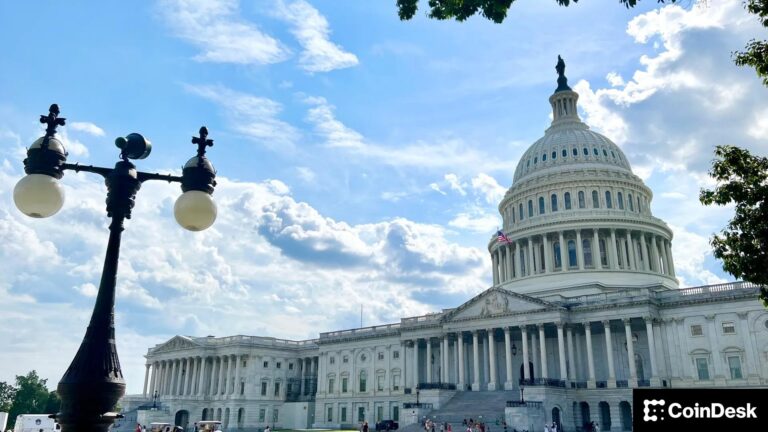
The Democratic contingent in negotiations over U.S. crypto market structure got back into the talks over the bill, though they sought to keep details private.
Gemini Can Scour Apps to Deliver ‘Personal Intelligence’

Google is launching a major upgrade to Gemini that allows greater personalization for users by giving it access to the entire ecosystem.
Personal Intelligence can utilize information contained in Gmail, Photos, YouTube and Search to better deal with a user’s queries.
While Gemini already references information from a user’s apps, the latest update marks a step forward in that it is able to reason across complex sources and take specific details from, for example, an email or photo to answer a question. Indeed, it can even combine these to provide “uniquely tailored” answers, according to a blog post.
Josh Woodward, vice president of Google Labs and Google Gemini, explained in a blog post how he used it to buy tires for his minivan as he waited in line at a store, with Gemini providing his vehicle’s license plate number via a picture in Photos, details of its specification by searching Gmail and even suggesting all-weather tire options based on more images found in Photos of a family trip to Oklahoma.
Personal Intelligence will include sourcing, but it’s also possible to request responses that have no element of personalization, with guardrails applied to sensitive topics such as healthcare, according to the company.
While some might balk at the idea of giving Google access to this level of data, Woodward said the feature was developed with privacy in mind. “Connecting your apps is off by default: you choose to turn it on, decide exactly which apps to connect to, and can turn it off anytime,” he said.
He also pointed out that the feature is not trained directly on a user’s data but on specific prompts and Gemini’s response. “In short, we don’t train our systems to learn your license plate number; we train them to understand that when you ask for one, we can locate it,” he explained.
Like other agentic AI products, the feature has the potential to produce errors via connections inadvertently being made between unrelated topics or Gemini’s difficulty in understanding nuance or context. To that end, user feedback in the form of a “thumbs down” is encouraged.
Personal Intelligence is available in beta to eligible Google AI Pro and AI Ultra subscribers in the U.S. Expansion to more countries and the free tier is coming soon.
The tool works across the web, Android and iOS operating systems and with all of the models in the Gemini model picker, but is only being offered for personal Google accounts.
Functionality in AI Mode in Search is also promised soon.
This Analyst Is Dumping Bitcoin Over Quantum Computing Fears

Christopher Wood, global head of equity strategy at Jefferies, has eliminated Bitcoin from his flagship Greed & Fear model portfolio, citing concerns that developments in quantum computing could pose an existential threat to the cryptocurrency’s cryptographic foundations.
In the latest edition of the widely followed newsletter, Wood confirmed that Jefferies has removed its entire 10% Bitcoin allocation, replacing it with a split allocation of 5% to physical gold and 5% to gold-mining equities, according to Bloomberg.
The strategist said the move reflects rising uncertainty over whether Bitcoin can maintain its role as a long-term store of value in the face of accelerating technological change.
“While Greed & Fear does not believe that the quantum issue is about to hit the Bitcoin price dramatically in the near term, the store-of-value concept is clearly on less solid foundation from the standpoint of a long-term pension portfolio,” Wood wrote.
Wood was an early institutional supporter of Bitcoin, first adding it to the model portfolio in December 2020 amid pandemic-era stimulus and fears of fiat currency debasement. He later increased the allocation to 10% in 2021.
Since that initial inclusion, Bitcoin has risen approximately 325%, compared with a 145% gain in gold over the same period.
Quantum computing presents structural risks to Bitcoin
Despite the strong performance, Wood argues that quantum computing presents a structural risk that cannot be ignored. Bitcoin’s security relies on cryptographic algorithms that are effectively unbreakable using classical computers.
However, sufficiently powerful quantum machines could theoretically derive private keys from public keys, enabling unauthorized transfers and undermining confidence in the network.
Security researchers estimate that roughly 20% to 50% of Bitcoin’s total supply — between 4 million and 10 million BTC — could be vulnerable under certain conditions.
Coinbase researchers have identified approximately 6.5 million BTC held in older wallet formats where public keys are already exposed on-chain, making them susceptible to so-called long-range quantum attacks.
The issue has sparked a growing divide within the Bitcoin ecosystem. Some think that developers are underestimating the risk. Others, including Blockstream CEO Adam Back, maintain that the threat remains distant and that quiet preparatory work toward quantum-resistant signatures is preferable to alarming investors.
The debate has also begun to reach mainstream finance. BlackRock has listed quantum computing as a potential long-term risk in its spot Bitcoin ETF disclosures, while Solana co-founder Anatoly Yakovenko recently suggested there is a 50% chance of a meaningful quantum breakthrough within five years.
For Wood, the uncertainty itself strengthens the case for gold.
He described the metal as a historically tested hedge in an increasingly volatile geopolitical and technological landscape, concluding that the long-term questions raised by quantum computing are “only positive for gold.”
Gold climbed to record highs this month, topping $4,600 per ounce, as investors piled into the safe-haven asset amid escalating geopolitical tensions involving Iran and growing expectations that the Federal Reserve will cut interest rates following softer U.S. inflation and labor market data.
CLARITY Act ‘Has a Long Way to Go‘

David Solomon, CEO of banking giant Goldman Sachs, has weighed in on the pending digital asset market structure legislation, action on which was recently postponed by the US Senate Banking Committee.
In a Thursday earnings call discussing the company’s fourth quarter results for 2025, Solomon said many people at Goldman Sachs were “extremely focused” on issues including the Digital Asset Market Clarity (CLARITY) Act in the US Congress due to its potential impact on tokenization and stablecoins.
A markup of the bill scheduled for Thursday was postponed after Coinbase said it would no longer support the legislation as written. In a markup session, a congressional committee debates a bill and proposes amendments while considering whether it should advance to the full chamber for a vote.
“That bill, based on the news over the last 24 hours, has a long way to go before that bill is gonna progress,” said Solomon. “But I do think these innovations are important.”
The CEO’s remarks come amid pressure from many banks, cryptocurrency exchanges and companies involved in decentralized finance pushing for amendments in the CLARITY Act to suit their interests and those of their users. Among the issues over which they have voiced concerns include how the US Securities and Exchange Commission (SEC) will handle tokenized equities and stablecoin rewards.
Related: Coinbase rallies 8% after Goldman Sachs upgrades stock to ‘buy’
Solomon also signaled that Goldman Sachs was considering business opportunities for prediction markets, saying that he met with representatives in the previous two weeks. Polymarket and Kalshi are popular prediction markets among crypto users.
Banks targeting stablecoin rewards in GENIUS Act, and now CLARITY?
Other industry leaders are anticipating that it could be weeks or months before the Banking Committee schedules another markup. Congress also needs to pass another funding bill before the end of January to avoid a government shutdown after the longest one in the country’s history delayed consideration of the CLARITY Act in 2025.
Some interest groups representing banks have lobbied for the bill to prohibit interest-bearing stablecoins. The most recent draft in the Banking Committee, before the markup was postponed, suggested that lawmakers were looking to ban passive returns on stablecoin balances, but not completely rule out rewards on the digital assets.
As of Thursday, no markup appeared on the Banking Committee’s calendar. However, the Senate Agriculture Committee is scheduled to hold a markup on its version of the market structure bill on Jan. 27.
Magazine: Big questions: Would Bitcoin survive a 10-year power outage?
Cointelegraph is committed to independent, transparent journalism. This news article is produced in accordance with Cointelegraph’s Editorial Policy and aims to provide accurate and timely information. Readers are encouraged to verify information independently. Read our Editorial Policy https://cointelegraph.com/editorial-policy
Crypto developer protections don't belong in market structure bill, senators say
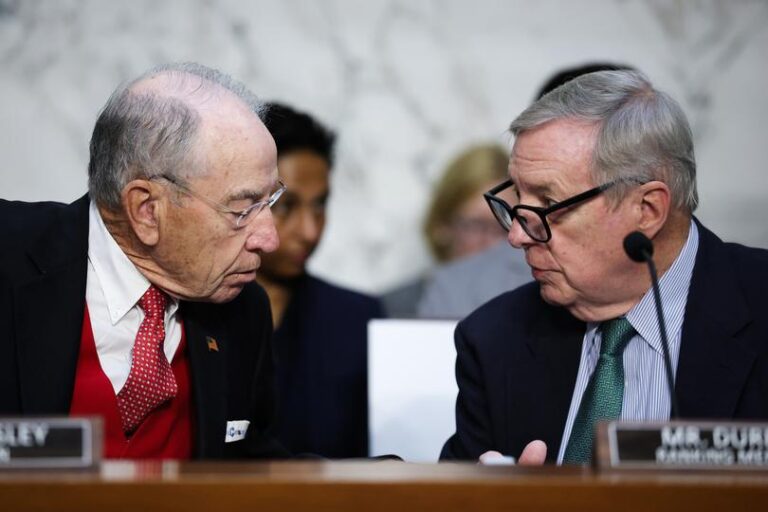
Legislative language which would grant some legal protections to crypto software developers, falls under the Senate Judiciary Committee, its leaders said.
Riot Platforms Shares Jump on Bitcoin Sale, Texas Expansion

Today in Crypto: Shares of Riot Platforms climbed after the Bitcoin miner said it sold BTC to fund a Texas expansion. Meanwhile, Belgian bank KBC plans to launch Bitcoin and Ether trading for retail customers in February and crypto market sentiment weakened amid uncertainty over delays to a US crypto bill.
Riot Platforms shares jump 11% after Bitcoin sale funds Texas deal
Shares of Riot Platforms jumped more than 11% after the crypto miner said it sold Bitcoin to help finance a land acquisition in Texas.
In a Friday notice, Riot said the $96 million deal for 200 acres of land in Rockdale, Texas was funded entirely by the sale of about 1,080 Bitcoin (BTC). The miner also signed a data center lease and services agreement with semiconductor company Advanced Micro Devices (AMD), initially deploying 25 megawatts (MW) of “critical IT load capacity.”
“These results mark a pivotal moment that cements Riot’s position as a leading data center developer, less than twelve months since the launch of our formal process to evaluate our assets for AI/HPC use,” said Riot CEO Jason Les.
Riot said the agreement for an initial 10-year term could generate about $311 million in revenue for the company, with the potential for $1 billion if three five-year extensions were exercised. The company’s shares on the Nasdaq under the ticker symbol RIOT surged to $18.80 amid the announcement, marking an 11% increase in early trading Friday.
The Texas deal followed Riot announcing last week that it had sold 1,818 BTC in December as part of a strategy shift from mining the cryptocurrency to using its data center infrastructure for other applications, including artificial intelligence. The company reported holding 18,005 BTC as of Dec. 31, worth more than $17 billion at the time of publication.
KBC Bank to launch Bitcoin and Ether trading in Belgium under MiCA
KBC, one of Belgium’s largest banks, is set to roll out Bitcoin and Ether trading to retail investors next month via its own custodial solution and investment platform.
From Feb. 16, KBC customers will be able to buy and sell crypto assets through the online investment platform Bolero, the bank announced Thursday.
“This will enable self-directed investors in Belgium to invest in cryptocurrencies within a secure and fully regulated environment, a first in Belgium,” KBC said.
Launched in compliance with the European Union’s Markets in Crypto-Assets Regulation (MiCA), KBC’s crypto trading will operate on the bank’s proprietary custodial architecture, the announcement said.
KBC said it would be the first Belgian bank to meet MiCA requirements. The company has submitted a full crypto asset service provider (CASP) notification to the competent authority, the National Bank of Belgium (NBB), a spokesperson at KBC told Cointelegraph.
“KBC is an authorized CASP, as it has received approval from the Belgian supervisory authorities to offer crypto services,” the bank’s representative noted, adding: “We comply with all legal obligations, including the reporting of crypto‑assets to the competent authorities.”
KBC initially announced plans to offer Bitcoin (BTC) and Ether (ETH) trading via Bolero in July 2025, pending regulatory approval that was expected by the end of the year.
Crypto sentiment drops amid market structure bill unease
The market sentiment-tracking Crypto Fear & Greed Index dropped on Friday after hitting a multi-month high, as the crypto industry in the US is divided over a Senate version of a highly-awaited crypto market structure bill.
The index slid by 12 points on Friday to a “neutral” score of 49 out of 100, dropping from its score of 61, indicating “greed” on Thursday, its highest score recorded since it hit 64 out of 100 on Oct. 10, the same day the crypto market massively crashed and saw $19 billion in liquidations.

Crypto sentiment platform Santiment said on Thursday that Bitcoin’s (BTC) 5% gain that day to $97,870 “appeared more than justified based on continued smart money accumulation, and retail traders dumping.”
However, crypto sentiment has wavered as several executives aired concerns about crypto market structure legislation, a markup of which was due to be marked up on Thursday before being cancelled by the US Senate.
Cointelegraph is committed to independent, transparent journalism. This news article is produced in accordance with Cointelegraph’s Editorial Policy and aims to provide accurate and timely information. Readers are encouraged to verify information independently. Read our Editorial Policy https://cointelegraph.com/editorial-policy
DeFi Leaders Voice Concerns amid Market Structure Bill‘s Uncertain Future

With a markup of the Digital Asset Market Clarity Act (CLARITY) in the US Senate Banking Committee postponed indefinitely, leaders in decentralized finance are using the delay to press lawmakers on concerns with the bill.
Before Republican leaders on the Banking Committee moved late Wednesday to postpone the markup, crypto industry groups had raised concerns about provisions related to tokenized equities, stablecoin rewards and their potential impact on DeFi platforms. The DeFi Education Fund said on Wednesday that some proposed amendments could “seriously harm DeFi technology and/or make market structure legislation worse for software developers.”
Crypto venture capital companies said the legislation would need revisions to address concerns around DeFi and developer protections.
Alexander Grieve, vice president of government affairs at crypto investment company Paradigm, said the highest priority was protecting developers and DeFi, adding there needed to be “significant edits” to the bill. Jake Chervinsky, chief legal officer of Variant, said on Thursday that his “top concern” was DeFi, noting that the bill fell short of standards.
“The last draft leaves ambiguity about whether all sorts of developers and infrastructure providers could be forced to KYC users, register with SEC, or comply with other rules that don’t fit DeFi,” Chervinsky said on X.
Related: Goldman Sachs CEO says CLARITY Act ‘has a long way to go‘
The bill had been scheduled for markup after months of delays tied to lawmakers’ debates over decentralized finance, potential conflicts of interest and stablecoin provisions. However, Tim Scott, chair of the US Senate Banking Committee, announced a “brief pause” after Brian Armstrong, the CEO of Coinbase, said on X that the exchange could not support the bill as written.
What’s the DeFi fight in the bill about?
In contrast to banks lobbying for CLARITY to ban interest-bearing stablecoins, many industry advocates, including Armstrong, said the current version of the bill would restrict DeFi platforms’ activities, potentially moving companies outside of the US.
“I feel confident that we can get some of the DeFi issues resolved,” Cody Carbone, CEO of crypto advocacy organization The Digital Chamber, told Cointelegraph. “I think right now some of the [focus is] on narrowing certain definitions. But I do feel confident that over the next two weeks or at least leading up to the next markup, we can get to a good place with DeFi.”
“[DeFi and crypto developers] do not really care about the yield fight,” said Todd Phillips, an assistant professor of law in the Robinson College of Business at Georgia State University, in a Friday X post. “They care about having a robust market structure that allows crypto markets to grow, not whether customers keep their funds in banks or stablecoins, as what matters is their willingness to invest in new tokens.”
Some Senate Democrats have reportedly raised concerns about the draft bill allowing DeFi platforms to facilitate illicit transactions, pushing for restrictions in amendments, including those that the DeFi Education Fund flagged.
As of Friday, no new date for the markup had been scheduled.
Magazine: How crypto laws changed in 2025 — and how they’ll change in 2026
Cointelegraph is committed to independent, transparent journalism. This news article is produced in accordance with Cointelegraph’s Editorial Policy and aims to provide accurate and timely information. Readers are encouraged to verify information independently. Read our Editorial Policy https://cointelegraph.com/editorial-policy
Bull, base or bear? Three possible paths for crypto in 2026

In a recent interview, Aaron Arnold of Altcoin Daily broke down his crypto market outlook for 2026, drawing parallels with past market cycles and outlining bull, base and bear scenarios.
Bitcoin’s price outlook for 2026 is coming into focus as investors weigh tightening supply against macroeconomic and market risks that could shape the next phase of the cycle. In a recent interview with Cointelegraph, crypto market commentator Aaron Arnold outlined bull, base and bear cases for Bitcoin in 2026, identifying the conditions that could drive prices higher or cap further gains.
One major takeaway is that Bitcoin (BTC) may no longer need retail participation to move higher, signaling a sharp contrast to previous cycles.
The interview also dives into Ether’s (ETH) evolving role in crypto markets. With stablecoins, tokenized assets and institutional adoption accelerating, Ether’s fundamentals are increasingly being evaluated through a traditional financial lens.
At the same time, the future of altcoins is addressed head-on, including why broad “altcoin seasons” may be a thing of the past and why selectivity now matters more than ever.
Beyond price targets, the conversation explores broader narratives shaping crypto’s next phase, such as regulatory clarity in the United States, shifting US Federal Reserve policy and geopolitical risks. Aaron also makes the case that crypto is entering its “1996 internet moment,” referring to a period of favorable regulation that should boost mainstream adoption.
For anyone trying to understand how Bitcoin, Ether and the wider crypto market may evolve in 2026, watch the full interview now on Cointelegraph’s official YouTube channel.
Related: Bitcoin is now most undervalued versus gold: Will BTC price rebound?
This interview has been edited and condensed for clarity.