
Home Blog Page 1167

Ethereum’s “Walkaway Test”: Why Quantum Readiness Matters

0

What is the “walkaway test?”

Vitalik Buterin’s “walkaway test” is a way to assess Ethereum’s long-term credibility. The network is intended to remain secure and functional even if its core developers were to stop actively upgrading it.

In a recent analogy, Buterin suggested that a protocol should resemble a tool you own, such as a hammer, rather than a service that gradually degrades if the “vendor” loses interest or becomes constrained by external pressures.

The end state he points to is an Ethereum that could “ossify if we want to,” where its value proposition does not depend on promised features that have yet to be delivered.

In the same post, Buterin outlines a detailed checklist of “boxes” Ethereum needs to tick to make ossification a more plausible long-term option:

  • Full quantum resistance (the focus of this article)

  • A scalability architecture capable of expanding to thousands of transactions per second (TPS), such as zero-knowledge Ethereum Virtual Machine validation combined with PeerDAS, with additional scaling achieved through parameter changes

  • A state architecture designed to last for decades, including partial statelessness, state expiry and future-proof storage structures

  • A general-purpose account model, often described as full account abstraction, moving away from the Elliptic Curve Digital Signature Algorithm (ECDSA)

  • A gas schedule hardened against denial-of-service risks, covering both execution and zero-knowledge proving

  • Proof-of-stake economics structured to remain decentralized over the long term, while keeping Ether (ETH) useful as trustless collateral

  • Block-building mechanisms that resist centralization and preserve censorship resistance under adverse future conditions.

What the walkaway test is measuring

Buterin’s walkaway test is simple. Can Ethereum continue delivering its core promise as a platform for trustless and trust-minimized applications without relying primarily on ongoing, high-stakes protocol changes to remain viable?

In his framing, the protocol should eventually function more like a tool than a service. Once the “base” is done, Ethereum should be able to “ossify if we want to,” with most progress coming from client optimizations and safer parameter tuning rather than repeated redesigns.

This is why he draws a clear line between features that already exist and those that are still only promised. The goal, as he put it, is to reach a point where Ethereum’s value proposition “does not strictly depend on any features that are not in the protocol already.”

Did you know? Protocol ossification is a term from network engineering. As a protocol becomes widely adopted, coordinating meaningful changes becomes harder, and its evolution naturally slows, often because the surrounding ecosystem grows heavier and more difficult to move.

Why quantum changes the risk model

When people talk about quantum risk, the key uncertainty is timing. Even the NIST emphasizes that it is not possible to predict exactly when, or even if, quantum computers will be able to break today’s widely used public-key cryptography at scale.

The reason quantum risk still appears in long-horizon security planning is that cryptographic transitions are typically slow. The National Institute of Standards and Technology (NIST) notes that moving from a standardized algorithm to broad real-world deployment can take 10-20 years, as products and infrastructure must be redesigned and rolled out.

There is also a separate risk that does not depend on a near-term breakthrough: the “harvest now, decrypt later” model, in which encrypted data is collected today in case it becomes readable in the future.

That risk is why many standards bodies have begun moving from research toward implementation, with the NIST finalizing its first set of post-quantum cryptography standards in 2024 and explicitly encouraging early transition efforts.

Did you know? The UK’s National Cyber Security Centre (NCSC) now treats post-quantum cryptography migration as a deadline-driven project. Its guidance sets clear milestones: 2028 for discovery and planning, 2031 for priority migration and 2035 for complete migration.

What “quantum readiness” means for Ether in practice

For Ethereum, quantum readiness is about whether the network can migrate away from today’s signature assumptions without breaking usability.

In the walkaway test thread, Buterin explicitly lists full quantum resistance as a goal and links it to the need for a more general-purpose account model for signature validation.

That is where account abstraction comes in. Rather than Ethereum being locked to a single signature algorithm indefinitely, a more flexible account model can allow accounts to validate transactions using different rules. In theory, this enables a gradual adoption of post-quantum signatures without forcing a single “flag day” migration across the network.

Research discussions have explored what it might look like to use post-quantum schemes such as Falcon for Ethereum-style transaction signatures, along with the practical trade-offs involved, including added complexity and performance costs.

Crucially, this work remains ongoing. Ethereum’s roadmap includes quantum-resistance efforts, often grouped under the Splurge, but no solution has been fully rolled out yet.

Did you know? Account abstraction is already live at scale on mainnet. Ethereum.org notes that the Ethereum Improvement Proposal 4337 EntryPoint contract was deployed on March 1, 2023, and, as of its October 2025 update, has enabled more than 26 million smart wallets and over 170 million UserOperations.

A protocol-surface problem for Ethereum

A more technical way to view the walkaway test is to ask whether Ethereum can change its cryptographic primitives without relying on emergency coordination.

Today, Ethereum has multiple signature surfaces. User transactions from externally owned accounts rely on recoverable ECDSA over secp256k1 at the execution layer, while proof-of-stake validators use BLS12-381 keys and signatures at the consensus layer.

In practice, post-quantum migration would likely involve:

  • Introducing and standardizing new verification paths

  • Enabling safe key and signature scheme rotation for both accounts and validators

  • Doing so without breaking the user experience assumptions that wallets and infrastructure rely on.

Again, account abstraction is central to making signature validation more flexible, such as by delegating validation logic. It can make cryptographic agility less dependent on one-off rescue upgrades.

Designing for long-term Ethereum resilience

Buterin’s walkaway test is ultimately a demand for credibility. Ethereum should aim for a state where it could “ossify if we want to,” and where its value proposition does not depend on features that are not already part of the protocol.

Quantum readiness fits within this frame because it is a long-transition problem, not a switch that can simply be flipped. The NIST has explicitly treated post-quantum migration as something organizations should begin preparing for early, even amid uncertainty about exact timelines.

The broader question is whether Ethereum can evolve its security assumptions without becoming a system that only works if a small group continually steps in to rescue it.
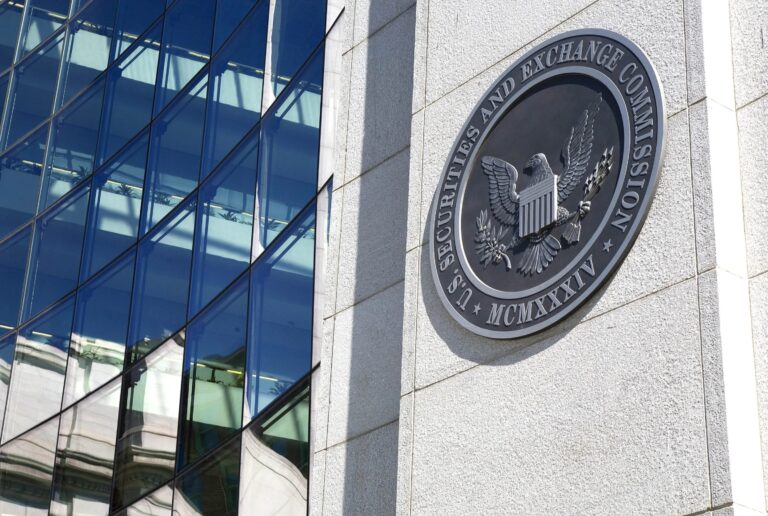
House Democrats Blast SEC Over Dropped Crypto Cases, Ripple Lawsuit Talk Resurfaces

0

Trusted Editorial content, reviewed by leading industry experts and seasoned editors. Ad Disclosure

House Democrats have accused the SEC of abandoning many high-profile investigations, including its legal battle with Ripple, which has brought attention back to the agency’s handling of crypto enforcement. 

The claims, which were outlined in a January 15 letter to SEC Chair Paul Atkins, raised questions about why several cases were dropped after favorable court rulings and whether political relationships played any role in those decisions. However, according to crypto attorney Bill Morgan, these cases are wrapped up, done, and dusted.

Lawmakers Say SEC Walked Away From Major Crypto Cases

In a January 15, 2026 letter addressed to Atkins, House Democrats accused the agency of dramatically scaling back crypto enforcement since early 2025. The lawmakers claimed the SEC has dismissed or closed more than a dozen major crypto-related cases, including actions against Binance, Coinbase, Kraken, and Ripple, despite having received favorable court rulings in some of those matters. 

According to the letter, companies whose cases or investigations were dismissed donated at least $1 million each to Trump’s inauguration. This raises concerns about an unmistakable inference of a pay-to-play scheme, investor protection and market integrity at a time when digital assets are starting to become deeply intertwined with capital markets.

BTCUSD now trading at $95,116. Chart: TradingView

Much of the letter’s criticism was focused on the SEC’s decision to seek and maintain a stay in its case against Justin Sun, which has now been in place for about 11 months now. Unlike all the other cases, the SEC’s case against Justin Sun has not yet been dismissed. Democratic Lawmakers claimed this move sends a dangerous signal that political connections may influence enforcement outcomes. 

The letter explicitly referenced Sun’s reported financial ties to businesses linked to Donald Trump. One of which was Sun’s reveal in September 2025 that he was purchasing an additional $10 million worth of $WLFI tokens from World Liberty Financial (WLFI), a Trump family business. 

According to the democrats, such circumstances could undermine public trust in the SEC’s independence. The Letter also seeks information related to the SEC’s knowledge of Sun’s ties to the People’s Republic of China and any CCP-affiliated persons or entities.

Crypto Lawyer Pushes Back On Ripple Lawsuit Talk

The letter by House Democrats brings into focus whether political pressure could lead to a new action against Ripple and other firms. However, according to Morgan, this is not possible.

Morgan dismissed the idea that the SEC could simply relaunch cases it has already litigated or closed on the same grounds, pointing to the legal doctrine of res judicata. Under that principle, once a matter has been conclusively decided between the same parties, it cannot be retried on identical issues.

“Too bad the SEC can’t go against those companies again on the same matters. Res Judicata baby. Live with it fools,” he said.

Still, one unresolved question hangs over the broader controversy. Unlike the other crypto cases cited in the lawmakers’ letter, the SEC’s action against Justin Sun has not been formally dismissed and can be revisited anytime.

Featured image from Getty Images, chart from TradingView

Editorial Process for bitcoinist is centered on delivering thoroughly researched, accurate, and unbiased content. We uphold strict sourcing standards, and each page undergoes diligent review by our team of top technology experts and seasoned editors. This process ensures the integrity, relevance, and value of our content for our readers.

Hyperliquid surges ahead in decentralized futures race as rivals fade

0

Hyperliquid is consolidating its lead in on-chain derivatives, even as falling volumes elsewhere highlight the limits of incentive-driven growth.

Polymarket trader nets $233,000 from XRP markets in a daring weekend move, outsmarting bots

0

A trader exploited thin weekend liquidity and automated market-making bots on Polymarket to lock in a $233,000 profit, sparking debate over whether the strategy crossed the line into market manipulation.

Coinbase CEO Denies Rift With White House Over Crypto Market Bill – Details

0

Trusted Editorial content, reviewed by leading industry experts and seasoned editors. Ad Disclosure

Coinbase CEO Brian Armstrong has denied existing tension between the exchange and the White House over the content of the crypto market structure bill, i.e., the Digital Asset Market Clarity Act. This development follows a series of contentious moments surrounding the highly anticipated crypto market structure bill, beginning with Armstrong raising concerns over its provisions, which the crypto exchange would rather protest than support.

Crypto Market Bill Still On, Bank Negotiations Ongoing — Coinbase CEO

In a surprising move on January 15, Armstrong announced a public support withdrawal for the Clarity Act. The key crypto figure argued that the current content of proposed legislation was introducing a regulatory structure that would produce a net negative effect on the crypto industry. In particular, Armstrong raised alarm on opposition to stablecoin yield sharing, among other issues, before emphasizing the preference of “no bill than a bad bill.”

Following this event, journalist Eleanor Terrett reported that the White House became furious over Armstrong and Coinbase’s public criticism, which they described as a “rug pull”. In particular, she claimed the Donald Trump-led administration has threatened to withdraw support for the Clarity Act if the crypto exchange fails to return to the negotiation table with satisfactory solutions to the stablecoin yield dilemma. 

However, Armstrong has come out to counter this narrative of a potential fallout between Coinbase and the US government. Rather, Armstrong stated the crypto exchange has only directed to negotiate a deal with banks on how stablecoin yield sharing can fit with the present financial system. 

Notably, the US banking industry has pushed against allowing stablecoin operators to share yield with users, which they project could potentially cause a deposit flight even at interest rates as low as 5%. Armstrong states Coinbase is now exploring a potential deal that could benefit all entities involved following what he described as a “super constructive” meeting with the White House, thereby countering the report of escalating tensions.

Terrett Fires Back At Coinbase Boss

In another X post, Terrett hit back at the Coinbase CEO, claiming her initial report remains accurate. The renowned journalist explains that Armstrong’s rebuttal on supports her earlier claim that the White House has now hinged their support of the Clarity Act to Coinbase’s ability to secure a deal with the banks on the implementation of stablecoin yield sharing.

For context, the Clarity Act is designed to clearly define how digital assets are regulated in the United States and which agencies oversee different parts of the crypto market. It is a crucial piece of legislation, the approval of which is expected to improve investor protection and encourage adoption.

Coinbase
Total crypto market cap valued at $3.19 trillion on the daily chart | Source: TOTAL chart on Tradingview.com

Featured image from Forbes, chart from Tradingview

Editorial Process for bitcoinist is centered on delivering thoroughly researched, accurate, and unbiased content. We uphold strict sourcing standards, and each page undergoes diligent review by our team of top technology experts and seasoned editors. This process ensures the integrity, relevance, and value of our content for our readers.

How Evil Twin WiFi Attacks Trick Crypto Users Into Losing Funds

0

Imagine you’ve just gotten off a 16-hour flight. You’re red-eyed and irritable, but you need to shift some crypto funds in a hurry. The SIM-card shops are closed, so you use the provided “free airport WiFi” to get connected. 

Hours later, your crypto has shifted to an unidentified wallet. Unfortunately, you may have been hit with an “Evil Twin” WiFi attack.

Evil Twins clone legitimate WiFi networks

It’s an often-overlooked attack vector, security experts told Cointelegraph. The process involves bad actors cloning legitimate WiFi networks, tricking devices into connecting, and allowing the hacker to intercept network traffic or steal sensitive data.

The Australian Federal police charged a man last year for allegedly establishing fake free WiFi access points at an airport, which mimicked legitimate networks, to capture personal data from unsuspecting victims. 

Speaking to Cointelegraph, Steven Walbroehl, co-founder of cybersecurity firm, Halborn said “Evil Twins” are most common at airports, cafes, hotels, transit hubs, conference venues, and high-traffic tourist areas, where many people look for free WiFi.

23pds, the chief information security officer at SlowMist, said Evil Twins are “more common than people think,” and there are still plenty of people who “absolutely fall for it.”

Source: Winston Ighodaro

An Evil Twin network alone won’t drain crypto 

However, Walbroehl said just joining a fraudulent WiFi network doesn’t always mean losing crypto, provided a user doesn’t send their private key, seed phrase, or sensitive information while connected.

“Even if someone doesn’t see your private key, capturing your exchange credentials, email, or 2FA codes can let attackers drain centralized crypto accounts quickly,” he added.

Beware of fake login pages and prompts

23pds said this type of attack will nudge victims to reveal their information after joining the network through fake login pages, updates, prompts to install a helper tool, or “worse case, tricked into typing their seed phrase,” which “still happens way too often.”

“If you remember one thing: Evil Twin attacks win by getting you to make a mistake — not by magically breaking encryption. So the real danger is less about deep hacking, and more about phishing + social engineering at the perfect moment.”

23pds said the most practical ways to stay safe are by avoiding high-risk crypto actions like transfers, changing security settings, or connecting to new dApps while on public WiFi.

Related: Social engineering cost crypto billions in 2025: How to protect yourself

It’s also best practice to never enter a seed phrase even when asked and to use bookmarks for exchanges or type the domain manually, avoid clicking search ads and manually check all addresses rather than just copying and pasting, they added.

Using your own mobile hotspot, private networks, and disabling auto-connect on devices can help avoid falling prey to an Evil Twin attack, according to Walbroehl.

However, if there is no other option but to use public WiFi, a trusted VPN should be used to encrypt traffic, while one should only join networks verbally confirmed by a venue staff member as being legitimate.

In January, an X user with the handle The Smart Ape revealed that their crypto wallet was drained after using a public WiFi network at a hotel and a series of “stupid mistakes.”

While the attack didn’t involve an “Evil Twin” network, it did show how bad actors can use a public network to trick users and steal crypto using similar tactics.

Source: The Smart Ape

Other security tips for crypto while traveling

Kraken’s security chief, Nick Percoco, sounded the alarm in June about the lack of security awareness at crypto events such as conferences.