
XRP is flashing a familiar onchain warning as quiet consolidation masks rising holder stress, with Glassnode data showing mounting psychological pressure that has historically preceded major XRP market moves. XRP Enters a High-Pressure Zone as History Starts to Rhyme XRP’s price behavior can appear calm even as underlying stress builds within its holder base. Blockchain […]
Bridging AI Safety and Agile Development From Code to Clarity

The relentless pace of Agile development, with its sprints and continuous deployment, has long been the engine of digital innovation. Yet, as this engine is increasingly fueled by complex artificial intelligence, a critical question emerges: how can we move fast without breaking things we can no longer see? The integration of AI, particularly opaque “black box” models, into mission-critical applications introduces unprecedented risks, where a single inscrutable decision can cascade into systemic failure.
The New Frontier: Interpretable AI as a Development Imperative
Guru’s recent focus stems from a clear-eyed observation: you cannot secure what you do not understand. In Agile teams racing to integrate AI features, the complexity of models often forces a trade-off. Developers and product managers, under pressure to deliver, may treat AI components as opaque third-party libraries—functioning magically until they fail unpredictably. This creates a fundamental vulnerability, not just in code, but in the very architecture of trust.
Her solution is to champion Interpretable Machine Learning (IML) not as an academic niche, but as a core Agile practice. “The principles of Agile—transparency, inspection, and adaptation—are completely at odds with deploying black-box models,” Guru argues. “We need tools and workflows that make model behavior as reviewable as a peer’s code commit.”
Her research involves developing frameworks that integrate interpretability checks directly into the CI/CD pipeline. Imagine a sprint where, alongside unit tests for a new recommendation algorithm, automated audits generate plain-English explanations for the model’s key decisions, flagging potential biases or unstable logic before deployment. This shifts AI safety “left” in the development cycle, transforming it from a post-hoc audit into a continuous, integrated dialogue.
Industry Recognition: A Landmark Award for Pioneering Work
The significance of this approach has resonated powerfully within the global technical community. In 2025, Dhivya Guru was honored with the Outstanding AI Achievement Award from the IEEE Eastern North Carolina Section (ENCS), a recognition open to the entire membership of one of IEEE’s active regional hubs. This award specifically cited her “contributions to the advancement of Interpretable Machine Learning Models,” highlighting her work in translating theoretical IML concepts into practical tools for development teams.
This accolade is particularly meaningful as it comes from IEEE, the world’s largest technical professional organization dedicated to advancing technology for humanity. Selection from a broad, competitive pool of members underscores that her work is not only innovative but also addresses a critical, industry-wide priority. It marks her as a leader whose research has a tangible impact on the trajectory of responsible AI integration.
Forging a Resilient Future: Culture, Code, and Comprehension
Guru’s vision extends beyond tools. Just as she gamified security training, she is now focused on fostering an “interpretability mindset.” This means training Agile teams to ask the right questions of their AI components: What data influenced this output? Where are the model’s confidence boundaries? Can we explain this result to a stakeholder or an end-user?
“The goal,” she explains, “is to move from simply using AI to collaborating with it. That requires a shared language of understanding, built directly into our development rituals.”
Looking ahead, the confluence of Agile methodologies and advanced AI defines the next era of software. The organizations that will thrive are those that build resilience into their culture and their codebase simultaneously. Dhivya Guru’s work provides a critical blueprint for this synthesis. By making the invisible workings of AI inspectable and its safety a natural part of the developer’s daily flow, she is helping ensure that the software of tomorrow is not only powerful and fast but also trustworthy and secure by design.
Her trajectory—from human-centric security to award-winning AI interpretability research—charts a consistent course: the most sophisticated technological challenges are ultimately solved by designing for human intelligence first. In doing so, she is not just writing code; she is helping write the playbook for a new generation of responsible innovation.
All Seized Bitcoin To Join Strategic Reserve
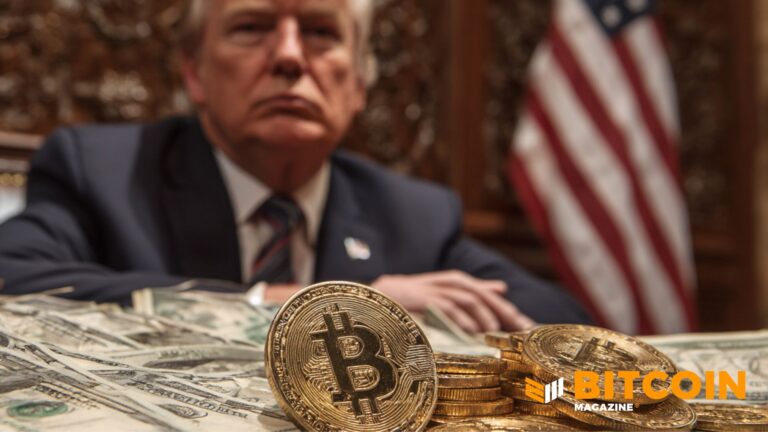
When asked about the U.S. government’s approach to Bitcoin and recent BTC seizures, U.S. Treasury Secretary Scott Bessent re-affirmed that the administration will halt all sales of seized BTC and instead add it to the Strategic Bitcoin Reserve (SBR).
At the World Economic Forum in Davos, Bessent told journalist Christine Lee that the initiative is part of a larger effort to bring digital-asset innovation onto U.S. soil while keeping federal oversight of seized cryptocurrency
This sentiment comes from questions about the government’s handling of BTC seized from developers linked to Tornado Cash in the Southern District of New York as well as the handling of bitcoin from Samourai Wallet developers.
While Bessent declined to comment on ongoing litigation, he emphasized that any seized BTC would be retained by the federal government after legal damages are resolved, rather than being sold at auction as in prior years.
“This administration’s policy is to add seized Bitcoin to our digital asset reserve,” Bessent said, highlighting the first step in implementing the SBR: stopping all sales.
The reserve, established under a March 2025 executive order, treats Bitcoin as a long-term strategic asset, akin to gold or petroleum stockpiles.
Bessent also seemed to frame the broader strategy of this current innovation as a pro-innovation, pro-onshore.
The Treasury wants to make the U.S. the “best regulatory regime for digital assets,” citing bipartisan legislation such as the Genius Act, which codifies stablecoin rules at the federal level.
The U.S. government says they didn’t sell any Samourai Wallet bitcoin
Last week, U.S. officials denied reports that BTC forfeited by Samourai Wallet developers had been sold, confirming the assets will remain part of the Strategic Bitcoin Reserve (SBR) under Executive Order 14233.
Patrick Witt of the President’s Council of Advisors for Digital Assets stated that the Department of Justice confirmed the 57.55 BTC, worth roughly $6.3 million, has not and will not be liquidated.
The clarification came after earlier reports suggested the U.S. Marshals Service may have transferred the BTC to Coinbase Prime, fueling speculation of a sale that would have violated the executive order.
Journalist Frank Corva reported that the U.S. Marshals Service appears to have sent the 57.55 BTC forfeited by Samourai Wallet developers directly to a Coinbase Prime address, which showed a zero balance, suggesting the BTC may have already been sold.
If true, this selling would contradict Executive Order 14233, which requires forfeited bitcoin to be held in the U.S. Strategic Bitcoin Reserve rather than liquidated.
Solayer unveils $35 million fund for real-time DeFi, AI and tokenization apps on infiniSVM
Funded by Solayer Labs and Solayer Foundation, the effort targets onchain apps with revenue and high usage potential.
Will Traders Buy The Dip?

ETH sold off at the weekly open, but its net taker volume metric turned positive for the first time in years. Will bulls take notice of the signal and attempt to press Ether price higher?
Ether (ETH) derivatives data has begun to highlight a structural shift. After nearly three years of sell-side dominance, ETH’s net taker volume has turned positive, possibly pointing to renewed interest from futures traders.
Key takeaways:
-
ETH Net Taker volume reached $390 million since Jan. 6, the largest buy imbalance since January 2023.
-
Since 2023, positive taker volume has aligned with range bottoms and the continuation of uptrends.
-
ETH holds above the $3,000 support level despite a negative CVD, indicating absorption by larger players.
ETH Net Taker volume highlights a rare trend shift
Ethereum’s Net Taker Volume has registered roughly $390 million in positive imbalance since Jan. 6, marking its strongest buy-side dominance since January 2023. The metric tracks whether traders are aggressively buying at market prices or selling into bids. A positive reading indicates conviction among traders over the long term.
Historically, strong positive flips in Net Taker Volume since 2020 have aligned with bottoming ranges or early-stage uptrends, rather than local tops. Sustained positivity typically reflects leveraged participants’ positioning for continuation, often before the broader trend becomes visible.
This shift follows years of persistent sell-side pressure, suggesting a change in futures demand rather than a short-lived squeeze. In past cycles, similar transitions preceded multi-week trend expansions.
Related: Ethereum activity surge could be linked to dusting attacks: Researcher
ETH chases underlying liquidity
Data from CryptoQuant noted that while ETH traded near $3,000, cumulative volume delta (CVD) remains negative at -3,676 ETH on Jan. 19, showing short-term selling pressure. Despite this, the 30-day correlation between price and CVD stands near 0.62, indicating price action is still partially supported by the available liquidity.
This divergence points to a corrective phase, and short-term traders appear to be taking profits. Data shows larger participants gradually repositioning, keeping ETH stable above $3,000.

From a technical standpoint, ETH has reverted to its five-month point of control between $3,050 and $3,140, in line with last week’s Cointelegraph forecast. The broader uptrend remains intact as long as daily closes hold above $3,000. A break below that level would signal a bearish shift in structure.
Hyblock data also shows roughly $540 million in net long positions near $3,100, with another $500 million liquidity cluster below $3,000. This positioning suggests ETH price may continue to fluctuate within this range as the liquidity rebalances.

Related: Ethereum L2 MegaETH peaks at 47K TPS ahead of ‘global stress test’
This article does not contain investment advice or recommendations. Every investment and trading move involves risk, and readers should conduct their own research when making a decision. While we strive to provide accurate and timely information, Cointelegraph does not guarantee the accuracy, completeness, or reliability of any information in this article. This article may contain forward-looking statements that are subject to risks and uncertainties. Cointelegraph will not be liable for any loss or damage arising from your reliance on this information.
ME Token Slumps After Magic Eden Announces Buybacks, Staking Rewards

The former NFT marketplace said it will allocate revenue to the ME ecosystem, including USDC rewards paid out to stakers.
On-chain trading platform Magic Eden, previously known as the largest Solana NFT marketplace, said it will begin directing 15% of all platform revenue into the ME token ecosystem, starting on Feb. 1.
“The goal is simple. When Magic Eden wins, the ecosystem wins too,” the project wrote in an X post on Monday, Jan. 19. The team said the revenue allocation will be split evenly between token buybacks and monthly USDC payouts to ME stakers. Buybacks are often implemented by projects to boost the token price, as buybacks imply that circulating token supply is reduced.
Despite the news, ME is trading about 6.5% lower over the past 24 hours, and remains over 95% down since its launch in December 2024, according to CoinGecko data.
Magic Eden clarified that USDC rewards will be distributed “based on staking power,” which depends on both how much ME is staked and how long it is locked. Stakers must claim their rewards within 90 days, per the announcement.
In a separate X post on Monday, Magic Eden CEO Jack Lu said the marketplace generated about $24 million in revenue in 2025, despite a prolonged downturn in the NFT market. At a 15% allocation rate, that would translate to roughly $3.6 million flowing into the ME ecosystem each year, if revenue holds at similar levels.
If half of that were set aside for USDC rewards, a total of roughly $1.8 million could be available as rewards for stakers, though individual payouts will vary
Magic Eden’s Pivot
Lu says the change better ties the token to Magic Eden’s broader push into entertainment, arguing that the market is entering a “speculation supercycle — where finance merges with entertainment.”
The former NFT marketplace announced its pivot into broader crypto trading, specifically memecoins, in April of last year when it acquired on-chain trading platform Slingshot. The same month, fellow leading NFT marketplace OpenSea made a similar move, launching Solana token trading.
Checkpoint #8: Jan 2026 | Ethereum Foundation Blog

Ethereum’s All Core Developer calls are a lot to keep up with, so this “Checkpoint” series aims for high-level updates roughly every 4-8 weeks, depending on what’s happening in core development. See the previous update here.
If you enjoy reading core development updates, you may also be keen to learn that Forkcast now publishes call summaries, chats and transcripts for each All Core Dev (ACD) call and some breakout calls, usually available within a couple hours of the call.
tl;dr:
The Fusaka upgrade shipped alongside the ability to adjust blob parameters independently from fork cycles. The next upgrade, Glamsterdam, is fully scoped and progress is underway while the major feature(s) of the following upgrade, Hegotá, are now being proposed, with a proposal deadline of February 4th.
Fusaka
Since the last Checkpoint, the Fusaka upgrade went live, bringing scaling in the form of Data Availability Sampling to Ethereum.
Both the @ethereum and Vitalik took to Twitter to explain PeerDAS, why scaling securely matters, and how these improvements fit in the grander scheme of things.
BPO forks
Blob Parameter Only forks are now a reality – Ethereum now can and has already increased the blob count without having to wait through an entire fork cycle, scaling as needed for L2 usage. The first two BPO forks were stress-tested successfully and baked into Fusaka, with the first going live a few days after Fusaka and the second in the beginning of January. Ethereum now targets 14 blobs per block and allows a maximum of 21 – a 2.3x increase for L2 data space compared to pre-Fusaka!

Developers spoke about what was needed to be ready for a third BPO fork but agreed that it’s not a priority until blob usage ticks up to use the existing increases.
Glamsterdam
Progress on Glamsterdam’s two headliners, enshrined Proposer Builder Separation (ePBS) and Block-level Access Lists (BALs) is moving along but ePBS is a much more complex change than BALs so while the latter already has devnets, it’ll be a bit longer before we see a devnet for ePBS.
Timeline
As with every fork, headliners will need to be brought to a stable place on devnets before beginning to add in variables in the form of more EIPs. As developers have finally whittled the list of proposed non-headlining features down from 50 to a more manageable set of 17 necessary and high-impact features, they’ll be adding these features to devnets in small sets until the fork is ready. If some prove to be problematic or could result in too much delay of the overall fork, they may choose to remove them from the “Considered” set. The full list of Considered features is:
- EIP-2780: Reduce intrinsic transaction gas
- EIP-7688: Forward compatible consensus data structures
- EIP-7708: ETH transfers emit a log
- EIP-7778: Block Gas Accounting without Refunds
- EIP-7843: SLOTNUM opcode
- EIP-7904: General Repricing
- EIP-7954: Increase Maximum Contract Size
- EIP-7976: Increase Calldata Floor Cost
- EIP-7981: Increase Access List Cost
- EIP-7997: Deterministic Factory Predeploy
- EIP-8024: Backward compatible SWAPN, DUPN, EXCHANGE
- EIP-8037: State Creation Gas Cost Increase
- EIP-8038: State-access gas cost increase
- EIP-8045: Exclude slashed validators from proposing
- EIP-8061: Increase exit and consolidation churn
- EIP-8070: Sparse Blobpool
- EIP-8080: Let exits use the consolidation queue
Expect a better timeline once we’ve had a stable first ePBS devnet, and then even more clarity once every EIP has been tested in a devnet.

Hegota
A quick note on the name change: the original H-star name, Heka, was replaced with Heze after a community developer noted that “Heka” is not in the International Astronomers Union catalog, which all previous chosen star names have been. The fork name is Heze + Bogotá: Hegotá.
FOCIL
Fork-choice Inclusion Lists (FOCIL), a censorship resistance mechanism, was moved out of Glamsterdam to cut down on fork scope. Given its strong support among core devs and the general Ethereum community alike, it was moved to Considered status for Hegotá and will be evaluated alongside any other headliner proposals – as of this post, there is only one competing proposal.
See an overview of FOCIL and its readiness for Hegotá here.
Timeline
Anyone can propose a headlining feature for Hegotá before the February 4th deadline using the template on the Ethereum Magicians forum.
The proposals will then be presented on ACD calls by the proposer and community feedback will be solicited. The goal is to decide on Hegota’s headlining features by February 26th. Following that decision, minor (non-headlining) features can be proposed – a deadline for these proposals will be given, so be sure to keep up with Checkpoint. Like the headliner proposals, anyone can propose a non-headliner – they just should be willing to see it through.
Jan 8th – Feb 4th: Headliner proposals [ NOW ]
Feb 5th – Feb 26th: Headliner discussion & finalization
30 days following headliner decision, deadline TBD: Non-headliner EIP proposals
Process
If you’ve ever wondered how a person gets a feature they want into Ethereum, there’s a 2026 guide to shepherding a feature into a fork here. A proposed feature for Ethereum, called an Ethereum Improvement Proposal (EIP), is first specified using the very first EIP as a guide: EIP-1, then proposed during a designated window, and championed through the process by a technical point-of-contact.
Getting through the 50 proposed non-headliner features for Glamsterdam was an absolute beast and everybody felt it. This fork having so many proposals may be a result of increased high-context participants or a result of the process being a little clearer – devs now know when and how to propose their features. Because client and testing teams are the ones actually doing the work to implement these changes, they have to familiarize themselves with proposals and make recommendations on the most urgent and high-impact changes – going through 50 specs to make informed recommendations is a lot of homework!
I do expect more Hegotá headliner proposals to compete with FOCIL and encrypted mempools. FOCIL is a cross-layer EIP, meaning it touches both the consensus and execution layers and in particular the engine API, which all makes it somewhat complicated to pair with another complex feature change. There’s been some conversation around 6-second slots but it’s unclear whether it will be proposed for Hegotá or wait for I-star. Whichever major feature is your preference, I do suggest actively showing your support for it during the February discussion period.
Relevant ACD calls:
[ November 14th – January 19th ]
ACDT: 66, 65, 64, 63, 62
ACDC: 172, 171, 170
ACDE: 228, 227, 226, 225

Mastercard Eyes Zerohash Investment After Talks Fall Through

Mastercard is reportedly considering a strategic investment in blockchain infrastructure firm Zerohash after the company rejected an outright acquisition, sources familiar with the matter told CoinDesk reporters.
Late last year, Mastercard was reportedly in advanced talks to buy the infrastructure company for up to $2 billion. The company offers custody, settlement, and fiat on- and off-ramps, enabling fintechs and brokerages to offer digital assets without building the underlying infrastructure. Ultimately, Zerohash chose to remain independent.
“We are not entertaining an acquisition by Mastercard. We respect the Mastercard team and look forward to scaling commercial partnerships,” a Zerohash spokesperson said, according to CoinDesk. “Remaining independent best positions Zerohash to continue innovating for our customers.”
While the acquisition is off the table, discussions about a strategic investment are ongoing.
Such a stake would allow Mastercard to gain exposure to Zerohash’s technology and client base without taking full control, aligning with a broader push by traditional finance into digital assets. Mastercard declined to comment.
Zerohash’s influence in the crypto space
The move comes as crypto merger and acquisition activity ramps up. Industry insiders note that investors now favor established infrastructure companies over speculative tokens.
Recent deals include CoinGecko exploring a $500 million sale and other fintech firms offering custody, staking, or instant market access.
Morgan Stanley also has a partnership with Zerohash giving the bank direct access to crypto market infrastructure, including liquidity, custody, and settlement services.
By investing in the company, which recently achieved a $1 billion valuation, Morgan Stanley also secured a strategic foothold in the backend of digital asset markets.
Mastercard has also been linked to potential acquisitions in the crypto sector, including BVNK, a London-based stablecoin payments platform.
For Zerohash, retaining independence while potentially securing a strategic investment from a global payments giant could provide capital and credibility while preserving some independence.
Last April, Mastercard announced a major partnership with Kraken to enable Bitcoin and crypto payments at scale across the UK and Europe.
The collaboration allows Kraken users to spend digital assets at over 150 million Mastercard-accepting merchants via physical and digital debit cards. Kraken’s recent feature, Kraken Pay, has already seen over 200,000 users activate their “Kraktag” for fast, borderless payments in crypto and fiat.
Representatives from either company have yet to publicly comment on this reported news.
Prediction Markets Must Use KYC To Curb Insider Trades: Messari

Concerns over insider trading on prediction markets have intensified after a series of high-profile bets on geopolitical events, prompting fresh questions over whether it’s even feasible to curb such practices in the growing industry sector.
Preventing insider trading is realistically possible only on prediction markets applying Know Your Customer (KYC) measures, according to Austin Weiler, a research analyst at the blockchain intelligence firm Messari.
“For KYC’d platforms, the most effective mechanism is to restrict access upfront for users to specific markets,” Weiler told Cointelegraph, adding that state actors could be restricted from political or geopolitical markets.
“This does not fully eliminate abuse, since insiders can still share information with third parties, but it adds an important obstacle and raises enforcement standards,” he noted.
The problem with non-KYC prediction markets
For non-KYC, or fully onchain prediction markets, enforcement is extremely challenging and, in some cases, “nearly impossible,” Weiler said.
When wallets are not linked to real-world identities, there is no reliable way to identify traders or determine whether they have access to material non-public information (MPNI), he said.
“Prediction markets can attempt to monitor unusual trading behavior, cap trade sizes, or slow trading during sensitive geopolitical periods. However, these measures are easily bypassed,” Weiler said, adding:
“Bans targeting government officials are only realistically enforceable in KYC-based systems. While all onchain activity is transparent, transparency alone does not solve the attribution problem. Without identity verification, it is extremely difficult to link an onchain wallet to a specific official, state actor, or insider with confidence.”
Kalshi, Polymarket, Opinion: Who requires KYC and how?
At the time of writing, KYC requirements vary widely across established prediction platforms such as Kalshi and Polymarket, while decentralized alternatives do not appear to require identity checks, or cannot technically support them.
Kalshi enforces KYC requirements as part of its regulated model under the authority of the US Commodity Futures Trading Commission. On its sign-up page, Kalshi states that it requires basic personal information from users and may request further verification using an identification document.

Polymarket applies KYC to its US-based users, while non-US versions of the platform operate without mandatory identity checks, with access reportedly available via VPN, according to social media reports. The platform does not publicly confirm this in its user guide.
Opinion, a decentralized prediction market backed by YZi Labs, a company linked to the former Binance CEO Changpeng Zhao, provides no public information on KYC requirements.
Cointelegraph approached Kalshi, Polymarket and Opinion for comment regarding KYC requirements but had not received any response at the time of publication.
Related: Tennessee sends cease-and-desist letters to Kalshi, Polymarket, Crypto.com
The news comes amid intense scrutiny of major prediction market platforms following high-profile bets tied to geopolitical events in Venezuela, including reports of an anonymous trader turning $30,000 into more than $400,000 just hours before US forces captured former Venezuelan President Nicolás Maduro.
Some US lawmakers, including Representative Ritchie Torres, have backed legislation including the Public Integrity in Financial Prediction Markets Act of 2026, aimed at barring government officials from trading on prediction markets when they hold material nonpublic information.
Magazine: How crypto laws changed in 2025 — and how they’ll change in 2026
Cointelegraph is committed to independent, transparent journalism. This news article is produced in accordance with Cointelegraph’s Editorial Policy and aims to provide accurate and timely information. Readers are encouraged to verify information independently. Read our Editorial Policy https://cointelegraph.com/editorial-policy
Strategy Buys $2.13B In Bitcoin, Holdings Surpass 700K

Michael Saylor’s Strategy, the world’s largest public Bitcoin holder, blasted past 700,000 BTC in holdings with its latest large-scale purchase.
Strategy bought 22,305 Bitcoin (BTC) for $2.13 billion last week, according to a US Securities and Exchange Commission filing on Monday.
The purchases were made at an average price of $95,284 per BTC, with Bitcoin briefly rising past $97,000 on Wednesday, according to CoinGecko data.
The acquisition brought Strategy’s total Bitcoin holdings to 709,715 BTC, purchased for about $53.92 billion at an average price of $75,979 per coin.
Strategy’s biggest Bitcoin buy since February 2025
Strategy’s latest Bitcoin acquisition marks a sharp acceleration in buying pace compared with most of 2025, and is the company’s largest purchase since February last year, when it bought 20,356 BTC for around $2 billion.
The company announced a 13,627 BTC ($1.3 billion) purchase on Jan. 12, which had been its largest Bitcoin acquisition since July last year.
The purchase came amid a slight uptick in Strategy shares (MSTR), with the stock surging past $185 on Wednesday, coinciding with Bitcoin’s multi-month high of above $97,000, according to TradingView data.
The surge also followed Morgan Stanley Capital International’s (MSCI) decision not to exclude digital treasury companies from its market index in early January.

In acquiring 709,715 BTC, Strategy now holds about 3.37% of the total 21 million BTC supply, and 3.55% of the 19.98 million BTC currently in circulation, according to data from Blockchain.com.
The accelerated buying by Strategy comes after a period of uncertainty for digital asset treasuries (DATs) following a summer 2025 rally that many described as a bubble.
Related: Michael Saylor pushes back on criticism of Bitcoin treasury companies
James Butterfill, head of research at CoinShares, said the market is now set to re-evaluate which DATs will survive by genuinely fitting the accumulation model.
“The future of DATs lies in returning to fundamentals: disciplined treasury management, credible business models, and realistic expectations about the role of digital assets on corporate balance sheets,” he said in a December 2025 update.
Magazine: How crypto laws changed in 2025 — and how they’ll change in 2026
Cointelegraph is committed to independent, transparent journalism. This news article is produced in accordance with Cointelegraph’s Editorial Policy and aims to provide accurate and timely information. Readers are encouraged to verify information independently. Read our Editorial Policy https://cointelegraph.com/editorial-policy