
Crypto prices stabilized after Wednesday’s tariff-driven volatility, with bitcoin reclaiming $90,000 as equities rebounded and traders rotated back into risk assets.
Is It Ethereum? BlackRock CEO Wants ‘One Blockchain’ For Tokenization
Trusted Editorial content, reviewed by leading industry experts and seasoned editors. Ad Disclosure
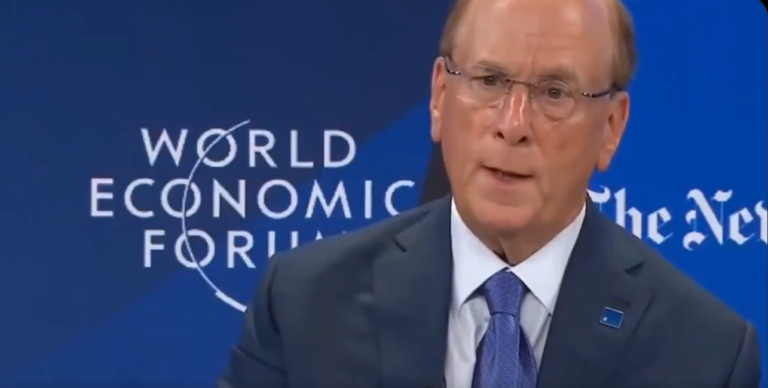
BlackRock CEO Larry Fink used the World Economic Forum stage to argue that tokenization needs to move from pilot programs to market plumbing and suggested that a shared blockchain standard could cut costs and even “reduce corruption,” a framing that immediately reignited the “which chain?” debate across crypto and specifically inside the Ethereum community.
Fink didn’t name a network. But the combination of BlackRock’s onchain product footprint and its own research positioning makes Ethereum the most natural candidate for the “one common blockchain” he alluded to, even if he kept it implicit.
Fink’s remarks, delivered in the language of infrastructure rather than crypto evangelism, leaned heavily on the operational case for digitized assets and interoperable settlement rails.
“I think the movement towards tokenization, decimalization is necessary. It’s ironic that we see two emerging countries leading the world in the tokenization and digitization of their currency, that’s Brazil and India. I think we need to move very rapidly to doing that.”
He then pushed the argument beyond payments and into capital markets: “We would be reducing fees, we would do more democratization by reducing more fees if we had all investments on a tokenized platform that can move from a tokenized money market fund to equities and bonds and back and forth.”
The most provocative line was his call for standardization and the trade-off he implied comes with it. “[If] we have one common blockchain, we could reduce corruption. So I would argue that, yes, we have more dependencies on maybe one blockchain, which we could all talk about, but that being said, the activities are probably processed and more secure than ever before.”
BlackRock CEO Larry Fink told the World Economic Forum he thinks the movement toward tokenization and digitization is necessary. We need to move very rapidly to doing that. With one common blockchain, we can reduce corruption.
The “one common blockchain” Larry Fink referenced… https://t.co/sMMcg4oyN1 pic.twitter.com/VhRvuwCx00
— Ethereum Daily (@ETH_Daily) January 22, 2026
Why Ethereum Is Coming Up
In the abstract, “one common blockchain” could be read as a generic appeal for shared rails. In practice, BlackRock’s public-market crypto lineup and its tokenization work have concentrated around Bitcoin and Ethereum.
On the ETF side, BlackRock’s flagship US spot products track bitcoin and ether — iShares Bitcoin Trust (IBIT) and iShares Ethereum Trust (ETHA) — with ETHA launching in 2024 and now sitting in the center of the firm’s public-facing Ethereum exposure.
On the tokenization side, BlackRock’s first tokenized fund, the BlackRock USD Institutional Digital Liquidity Fund (BUIDL), debuted on Ethereum via Securitize in March 2024, making Ethereum the original issuance network for what has become one of the market’s most closely watched institutional RWAs.
While BUIDL has expanded across multiple networks over time, the key point for Fink’s “common blockchain” framing is that Ethereum has been BlackRock’s default starting point for public-chain issuance, a meaningful signal in a market where “standards” tend to follow whoever already has the deepest liquidity, the broadest integration surface, and the most conservative counterparties.
The stronger tell came this week from BlackRock research rather than Davos soundbites. In its 2026 thematic outlook, BlackRock explicitly floats the idea of Ethereum as the infrastructure layer that collects the “toll” as tokenization scales. One slide asks: “Could Ethereum represent the ‘toll road’ to tokenization?” and adds that stablecoin adoption may be an early proxy for tokenization “in action,” with “blockchains like Ethereum” positioned to benefit.
In the same section, BlackRock cites RWA data “as of 1/5/2026” and notes that “of tokenized assets 65%+ are on Ethereum,” underscoring the network’s lead in today’s tokenized-asset stack.
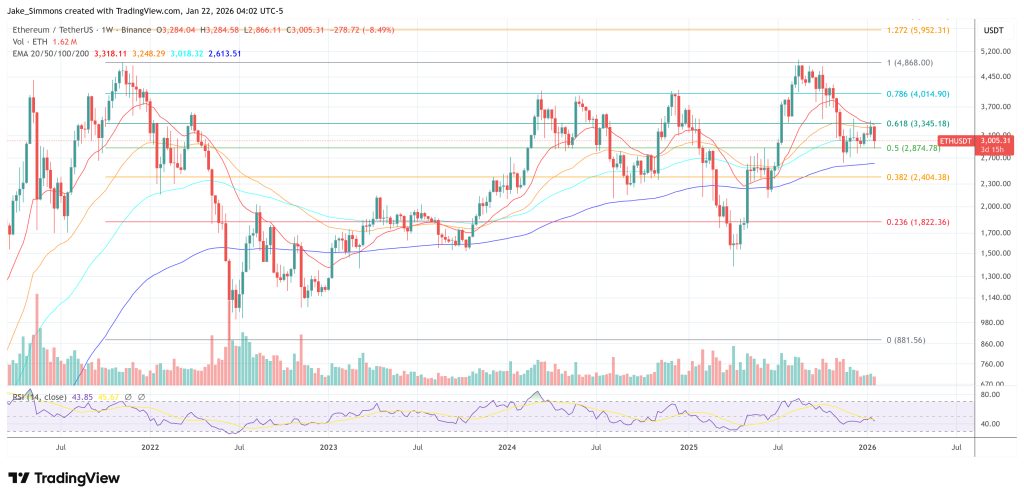
At press time, ETH traded at $3,005.
Featured image created with DALL.E, chart from TradingView.com

Editorial Process for bitcoinist is centered on delivering thoroughly researched, accurate, and unbiased content. We uphold strict sourcing standards, and each page undergoes diligent review by our team of top technology experts and seasoned editors. This process ensures the integrity, relevance, and value of our content for our readers.
Circle Foundation Funds United Nations Digital Hub to Scale Regulated Stablecoins for Aid
Circle Foundation grants support UN Digital Hub to use regulated stablecoins for faster, transparent humanitarian payments. Circle Foundation announced at the World Economic Forum in Davos on January 21, 2026 a first international grant to UNHCR’s Digital Hub of Treasury Solutions (DHoTS) to help integrate regulated stablecoins and next‑generation digital financial infrastructure across 15 UN […]
Vitalik Buterin Says He Will Return Fully to Decentralized Social in 2026

Ethereum co-founder Vitalik Buterin said he plans to fully recommit to decentralized social media in 2026, arguing that only platforms built on shared, decentralized data layers can foster real competition and support mass communication systems aligned with users’ interests rather than engagement metrics.
In a Wednesday post on X, Buterin said he has shifted his activity toward decentralized social platforms this year, noting that every post he has written or read so far in 2026 has been accessed through Firefly, a multi-client interface that supports X, Lens, Farcaster and Bluesky.
“If we want a better society, we need better mass communication tools,” Buterin said, arguing that decentralization enables competition by allowing multiple clients to operate on a shared social data layer.
Buterin criticized many crypto-native social projects for relying on speculative tokens as a substitute for meaningful innovation, arguing that SocialFi experiments have repeatedly failed by rewarding pre-existing social capital and short-term price speculation instead of content quality and constructive discourse.
He contrasted these efforts with creator-subscription models such as Substack, which he said better align incentives around high-quality content.
Calling for broader community participation, Buterin urged users and builders to spend more time in decentralized social ecosystems, saying the industry must move beyond a single centralized “info warzone” and toward a more competitive frontier where new forms of online interaction can emerge.
Related: Vitalik Buterin calls for a new DAO design for onchain disputes and governance
The state of decentralized social media
Decentralized social media, or SocialFi, refers to platforms built on open or blockchain-based networks where user identities, content and social graphs are not controlled by a single company. While protocols such as Lens and Farcaster have gained early traction, the sector has so far struggled to convert that momentum into sustained mass-market adoption.
On Wednesday, core infrastructure provider Neynar acquired Farcaster from Merkle. Farcaster co-founder Dan Romero announced the news, saying that “after five years, it’s clear Farcaster needs a new approach and leadership to reach its full potential.”
Lens also underwent a leadership transition this week, as Aave transferred stewardship of the open-source social protocol to Mask Network, tasking the Web3 social company with advancing consumer-ready, onchain social applications.
Farcaster features more than two million total registered users and hundreds of thousands of daily interactions, measured by posts and reactions. Lens has accumulated about 506,000 users, according to Dune Analytics data.


Magazine: Here’s why crypto is moving to Dubai and Abu Dhabi
Cointelegraph is committed to independent, transparent journalism. This news article is produced in accordance with Cointelegraph’s Editorial Policy and aims to provide accurate and timely information. Readers are encouraged to verify information independently. Read our Editorial Policy https://cointelegraph.com/editorial-policy
AmplifiX Releases Comprehensive Sector Report on the Rapid Acceleration of Real-World Asset (RWA) Tokenization

DAVOS, SWITZERLAND, Jan 21, 2026 – (ACN Newswire) – AmplifiX today announced the public release of its newest sector intelligence report, Tokenization of Real-World Assets (RWA): Sector Analysis Deep Dive, a detailed examination of the technological, regulatory, and market forces driving what many now call the next major evolution in global finance. The full report is now available at no cost to readers.
As highlighted in the research, tokenization is rapidly shifting from experimentation to early commercialization, with “cash and collateral” instruments—particularly tokenized U.S. Treasuries and money-market products—emerging as the dominant early use case. This new programmable settlement layer is beginning to power workflows across payments, trading, collateralization, financing, and asset servicing, forming the foundation for a more efficient and interoperable financial system.
The report outlines the market’s accelerating momentum, including institutional clarity around stablecoin legislation, maturing compliance infrastructure, and the growing presence of qualified custody and lifecycle administration platforms. It also underscores that near-term sector leadership will be defined not by L1 blockchain throughput, but by who delivers regulatory-grade issuance, institutional custody controls, credible distribution channels, and cross-chain interoperability frameworks.
In addition to macro framing, the report provides a comprehensive landscape review across the entire tokenization value chain—issuance, custody, wallet governance, distribution, and data layers. It features comparative valuation benchmarks across leading private companies, public-market analogs, and crypto-native RWA protocols. The analysis also expands the private-company universe to include OpenWorld, a full-stack tokenization and public-market structuring platform, along with updated operating metrics from Securitize, Fireblocks, Taurus, Anchorage Digital, and others.
Citing recent forecasts from BCG, Standard Chartered, and global regulators, AmplifiX notes that credible estimates place the tokenization opportunity between $16 trillion and $30 trillion over the next decade. Yet the report also emphasizes the importance of diligence, highlighting legal enforceability, custody/segregation requirements, operational resilience, and cross-border regulatory alignment as central pillars for sustainable global adoption.
“With regulatory clarity increasing and institutional infrastructure finally reaching maturity, tokenization is entering a transformational phase,” an AmplifiX spokesperson said. “Our goal is to provide the market with unbiased intelligence that helps investors, institutions, and policymakers navigate this rapidly evolving domain with confidence.”
The full report is available for free and across 35 languages at: https://www.amplifix.net/intel/rwa-tokenization-article
Disclaimer
This report and press release are for informational and educational purposes only and do not constitute investment, legal, or financial advice. Readers should conduct their own due diligence and consult licensed professionals before making any financial decisions.
Bitcoin Price Shows ‘Fragility’ as Consolidation Looms: New Research

Bitcoin (BTC) price could be in for another prolonged period of consolidation if key support levels are not reclaimed, a new analysis reveals.
Key takeaways:
-
Bitcoin is stuck between key cost-basis levels, predicting 2022-type consolidation unless key support levels are reclaimed.
-
Spot Bitcoin ETFs recorded a net outflow of $708.7 million, their fifth-largest since launch, signaling institutional caution.
Bitcoin’s “supply overhang” persists
In the Jan. 21 edition of its regular newsletter, The Week Onchain, onchain data provider Glassnode confirmed key areas of resistance “constraining upside follow-through and keeping rallies vulnerable to distribution.”
The BTC/USD pair has been oscillating within a wide range defined by the True Market Mean at $81,100 and the short-term holder (STH) cost-basis at $98,400.
Related: Bitcoin eyes $90K as Trump sees crypto bill signing ‘very soon’
According to Glassnode, the recent rejection near the STH cost basis at $98,400 “mirrors the market structure observed in Q1 2022, where repeated failures to reclaim recent buyers’ cost basis prolonged consolidation.”
“This similarity reinforces the fragility of the current recovery attempt.”
The chart above shows that Bitcoin price spent the period between February 2022 and July 2022 trapped between the STH cost basis and the True Market mean before entering an extended bear market, bottoming around $15,000 in November 2022.
Glassnode’s Entity-Adjusted UTXO Realized Price Distribution (URPD), a metric that shows at which prices the current set of Bitcoin UTXOs were created, also revealed a wide and dense supply zone above $100,000 that has been gradually maturing into the long-term holder cohort.
“This unresolved supply overhang remains a persistent source of sell pressure, likely to cap attempts above the $98.4K STH cost basis and the $100K level,” Glassnode wrote, adding
“A clean breakout would therefore require a meaningful and sustained acceleration in demand momentum.”

The Bitcoin “Risk Index has climbed to 21, hovering just below the High Risk zone (25),” said private wealth manager Swissblock in a recent X post, adding:
“This uptick suggests a likely continuation of the consolidation phase triggered by the ‘Massive High Risk’ environment we faced over the past few months.”

As Cointelegraph reported, Bitcoin must take out resistance at $98,000-$100,000 to revive the bull market cycle.
Bitcoin ETFs record their fifth-largest outflows
On Wednesday, US-based spot Bitcoin ETFs recorded outflows for a third consecutive day, totaling $708.7 million, according to data from CoinGlass.
This marked their largest single-day exit in two months and the fifth-largest withdrawal from these investment products since their launch in January 2024, as shown in the chart below.
BlackRock’s Bitcoin ETF, IBIT, posted the biggest outflows of $356.6 million. Fidelity’s FBTC followed with $287.7 million, alongside four other funds that saw outflows.

Meanwhile, spot Ethereum ETFs recorded a combined net outflow of $286.9 million on Wednesday across five funds.
The last three days saw a “historic $1.58B exit from Bitcoin ETFs. BlackRock and Fidelity are leading the charge in heavy institutional de-risking,” said analyst NekoZ in a reaction to the outflows.
The selling pressure from spot BTC ETFs coincided with the rejection at $90,000 on Wednesday amid growing macroeconomic uncertainty, which increased the probability of rangebound price action or further downside if the support at $84,000 breaks.
This article does not contain investment advice or recommendations. Every investment and trading move involves risk, and readers should conduct their own research when making a decision. While we strive to provide accurate and timely information, Cointelegraph does not guarantee the accuracy, completeness, or reliability of any information in this article. This article may contain forward-looking statements that are subject to risks and uncertainties. Cointelegraph will not be liable for any loss or damage arising from your reliance on this information.
TACO Thursday? Bitcoin price recovers to $90,000 after Trump walks back threats at Davos – DL News
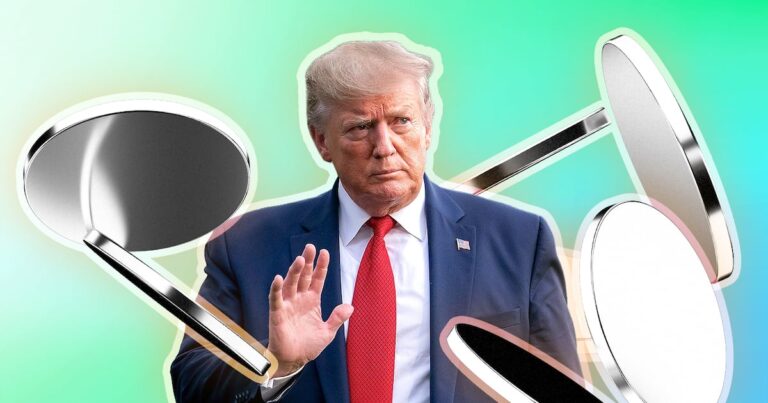
- Bitcoin and US stocks post price recovery after Trump said there is a “concept of a deal.”
- Gold, silver prices are still near record highs as investors fear turbulence.
- US economic growth is stronger than expected.
Bitcoin jumped 3% to $90,000 after US President Donald Trump walked back tariff threats on eight European countries in his pursuit of Greenland.
On Wednesday, Trump said at his World Economic Forum keynote at Davos that he also ruled out the use of force and reached a “framework of a future deal” regarding the Arctic island with NATO Secretary General Mark Rutte.
“When Trump ruled out taking Greenland by force, volume spiked and Bitcoin pushed higher, briefly pushing towards $90,000 as traders reacted to reduced near-term risk,” Matt Howells-Barby, VP of growth at crypto exchange Kraken, told DL News.
Bitcoin’s recovery comes as global stocks staged a dramatic rebound from their worst performance day since October. They’re now continuing their push near record highs.
The S&P 500 jumped 1.2%, followed by the Dow Jones Industrial Average by 1.2% and the tech-heavy Nasdaq by 1.2%. That is the biggest daily gain for the S&P 500 since November.
Meanwhile, fresh economic data shows that the US economy is roaring, according to Ed Yardeni, president of Yardeni Research. He cited 5.4% growth in the fourth quarter of 2025, beating expectations.
Howells-Barby told DL News on Wednesday that asset pricing showed there’re plenty of investors leaning into the so-called “TACO” trade, an acronym for “Trump always chickens out.”
The idea is that Trump always backs down on his threats and the world returns to a state of business-as-usual, like what happened between the US and China in 2025.
“The fact the pullback hasn’t been so severe leads me to believe that the market is potentially pricing in another TACO trade opportunity,” Howells-Barby said.
Still, investors aren’t too comfortable with Trump’s aggressive rhetoric.
The price of gold barely budged at $4,836 an ounce on Thursday. Gold is seen as a safe-haven amid market turbulence and currency debasement. Silver is also trading near its all-time high as investors ditch fiat currencies.
The transatlantic tensions drove Bitcoin down by almost 10% over the past week to as low as $87,600. The dip followed Trump’s threat to slam NATO allies with sweeping tariffs over control of Greenland and EU leaders’ vow to retaliate with the “trade Bazooka” anti-coercion tool.
Crypto market movers
- Bitcoin is up 1% over the past 24 hours, trading at $89,968.
- Ethereum is up 1.8% past 24 hours at $3,011.
What we’re reading
Lance Datskoluo is DL News’ Europe-based markets correspondent. Got a tip? Email at lance@dlnews.com.
F/m Investments Files First-of-Its-Kind SEC Application for Tokenized ETF Shares

WASHINGTON–(BUSINESS WIRE)–F/m Investments (“F/m”), an $18 billion investment firm, today filed an exemptive application with the U.S. Securities and Exchange Commission (the “SEC”) seeking permission to record ownership of tokenized shares in the F/m US Treasury 3 Month Bill ETF (TBIL) on a permissioned blockchain ledger.
The application is believed to be the first filed by an ETF issuer seeking SEC relief specifically for tokenized shares of a registered investment company.
“Tokenization is coming to securities markets whether we file this application or not,” said Alexander Morris, CEO of F/m Investments. “The question is whether it happens inside the regulatory framework investors have relied on for 85 years, or without that set of protections for investors. We’d rather build an on-ramp that marries technological innovation and investor protection than watch from the sidelines.”
If granted, the requested relief would allow TBIL’s existing ETF shares to be represented on a permissioned ledger under the same CUSIP, with the same rights, fees, voting rights, and economic terms as TBIL shares today. The filing is intended to provide a regulated pathway for token-enabled ownership recording and settlement workflows while remaining within the Investment Company Act of 1940 and Rule 6c-11.
The filing comes as major exchanges announce competing tokenization initiatives, underscoring the industry’s rapid move toward blockchain-based infrastructure.
Unlike stablecoins or unregistered digital tokens—which generally cannot guarantee backing by traditional assets—F/m’s approach keeps tokenized shares firmly within the Investment Company Act of 1940. This means independent Board oversight, daily transparency, third-party custody and audit, and the full weight of 85 years of securities regulation—protections that investors holding “in the wild” tokens simply do not have.
If the SEC grants the requested relief, this approach will allow TBIL to support traditional brokerage rails and digital-native, token-aware platforms through a single share class. TBIL’s investment objective, portfolio, index, or exchange-traded mechanics would not change.
The filing was made in collaboration with The RBB Fund, Inc., F/m’s multi-series trust, which has supported governance-led innovation within the ETF framework.
“RBB’s governance-first platform supports responsible innovation within established operational standards,” said David Littleton, Co-Founder and President of F/m Investments. “Our aim is for TBIL to operate as a standard Rule 6c-11 Treasury ETF while giving institutions a regulated way to move between traditional and token-aware settlement workflows.”
About F/m Investments
F/m Investments, founded in 2018, is an independent asset management firm and a recognized innovator in exchange-traded funds (ETFs). The Firm offers a growing suite of ETFs, as well as mutual funds and separately managed account strategies, designed to meet the evolving needs of financial advisors, institutions, and individual investors. For more information, please visit www.fminvest.com.
Investors should consider the investment objectives, risks, charges, and expenses before investing. For a prospectus or summary prospectus with this and other information about the Fund, please call 1-800-617-0004 or visit our website at www.fminvest.com. Read the prospectus or summary prospectus carefully before investing.
Investments involve risk. Principal loss is possible. Distributed by Quasar Distributors, LLC.
About The RBB Fund Complex
The RBB Fund, Inc. and The RBB Fund Trust, together, are a turnkey ETF and mutual fund solution that permits an investment adviser to focus on asset management and distribution, while RBB facilitates the establishment, servicing, and governance of funds. RBB oversees approximately $40 billion in assets, supporting 20 separate investment advisers, over 20 unaffiliated sub-advisers, and over 70 mutual fund or ETF offerings. For more information, please visit www.rbbfund.com.
Bitcoin and ether fall, then rebound as Trump retreats from Greenland tariffs
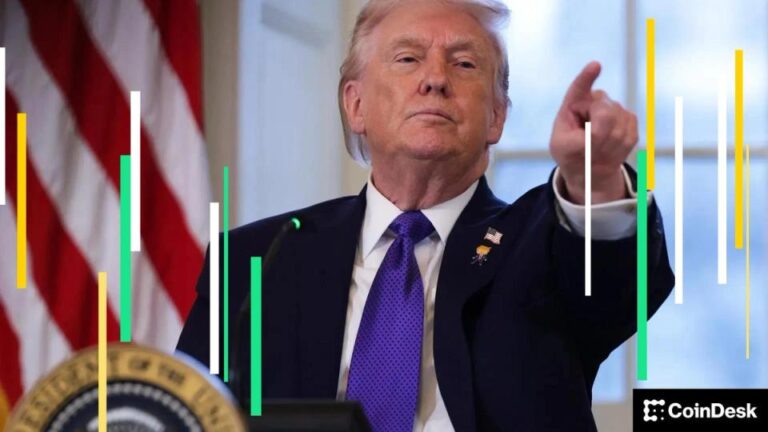
The sharp reversal showed how closely crypto prices remain tethered to macro headlines. Solana, XRP, Cardano and dogecoin followed a similar pattern of quick losses and partial recoveries
What Ripple CEO Garlinghouse Said At WEF Davos 2026
Trusted Editorial content, reviewed by leading industry experts and seasoned editors. Ad Disclosure
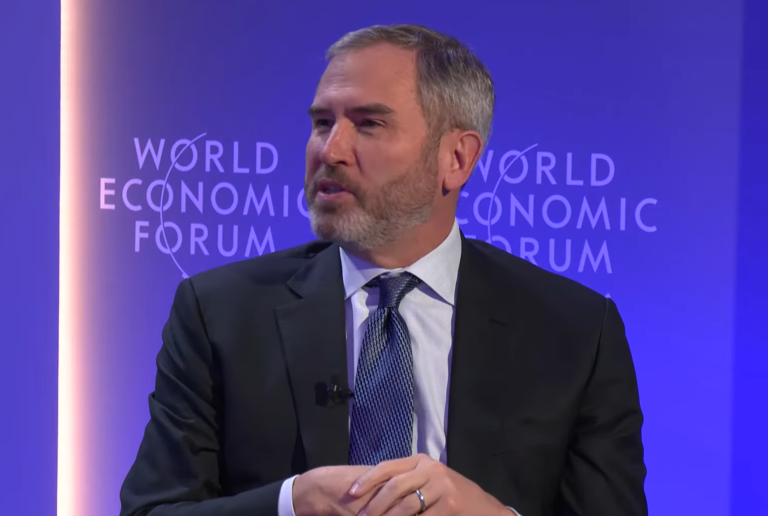
Ripple CEO Brad Garlinghouse used a Davos stage at the World Economic Forum’s 2026 annual meeting to make a pragmatic case for tokenization: stablecoins are already the lead use case, momentum has shifted sharply in the US, and the industry’s job now is to deliver measurable benefits rather than tokenize assets for novelty.
Why Ripple Is Building Bridges Between TradFi and DeFi
Garlinghouse’s remarks came on a panel titled “Is Tokenization the Future?” after the moderator cited Ripple-linked traction: tokenized assets on the XRP Ledger surged more than 2,200% last year. From there, Garlinghouse largely aligned with the panel’s theme that tokenization is moving from pilots toward mainstream financial plumbing, while drawing a clear boundary around monetary sovereignty.
“I do think the first poster child of tokenization is really stablecoins,” Garlinghouse said, arguing that usage growth has been decisive. He cited stablecoin transaction volumes rising from “$19 trillion of transactions on stablecoins in 2024” to “33 trillion in 2025,” describing that as “about 75% growth” and adding that “many in our industry would say that’s going to continue.”
Where the discussion turned to a “Bitcoin standard” framing, Garlinghouse emphasized the political reality of state money. “Sovereignty of fiat currencies, I believe, is for many countries sacrosanct,” he said, before invoking a line he attributed to Ben Bernanke from a prior Ripple event: “Governments will roll tanks into the street before giving up monetary supply, giving up the control of monetary supply, which stuck with me as yeah, that makes sense.”
That worldview shaped how Garlinghouse positioned Ripple’s strategy. “At Ripple, we very much focused on building the bridges between traditional finance and decentralized finance,” he said, describing work “with a lot of the banks around the world” as the practical path to scale rather than attempting to displace existing monetary regimes.
Garlinghouse also framed 2026 as a momentum year, not just a technology year. He argued that the political climate in the US has turned materially more constructive after a period he described as open hostility. “The US, the largest economy in the world, has been pretty openly hostile towards facets of crypto and blockchain technologies,” he said. “And that has shifted dramatically, you know, starting with the White House… [and] helped elect a much more pro-crypto pro-innovation Congress, and you’re seeing that play out.”
But the Ripple CEO repeatedly cautioned that narrative tailwinds are not enough. “Part of the tokenization topic […] is like we shouldn’t tokenize everything just to tokenize something,” Garlinghouse said. “There has to be a positive outcome of efficiency or transparency […] otherwise it’s just like okay it’s a nice science experiment.”
On regulation, Garlinghouse reiterated his pragmatic tone, arguing that the push for US crypto legislation should prioritize workable clarity over theoretical perfection. “What’s going on in the US right now is a classic dynamic of when you create new law, it’s never going to be perfect,” he said. “I subscribe to the idea that perfection is the enemy of good.”
He pointed to Ripple’s own history: “a five-year battle with the US government being sued because of the lack of clarity” to underline the stakes, adding: “We are very much an advocate of clarity is better than chaos.”
When pressed on whether stablecoins should pay rewards, one of the live fault lines in US policy debate, Garlinghouse positioned Ripple as less directly exposed than some peers, while still endorsing competitive symmetry. “Ripple doesn’t have as much of a dog in that fight as others in the industry,” he said, but added that a “level playing field goes two ways,” arguing that crypto firms and banks should face comparable standards when competing for the same activity.
Garlinghouse also addressed energy concerns around blockchain-based infrastructure, pushing back on a one-size-fits-all critique. “Not all layer 1 blockchains are created equal,” he said, contrasting proof-of-work systems with proof of stake and other consensus models, and arguing that stablecoin activity is already skewing toward “more power efficient blockchains.”
Spirited dialogue during today’s WEF session (to say the least), but one important point of agreement across the panelists was that innovation and regulation aren’t on opposite sides.
I firmly believe this is THE moment to use crypto and blockchain technology to enable economic… https://t.co/4d3jNeNC4h
— Brad Garlinghouse (@bgarlinghouse) January 21, 2026
On tokenization’s social and market impact, Garlinghouse reframed a question about speculation as a question about access. He said he sees the opportunity in “the democratization of access to investment less so on the speculation side,” pointing to the idea that smaller investors could gain exposure to assets that are effectively inaccessible at modest ticket sizes today.
At press time, XRP traded at $1.9554.
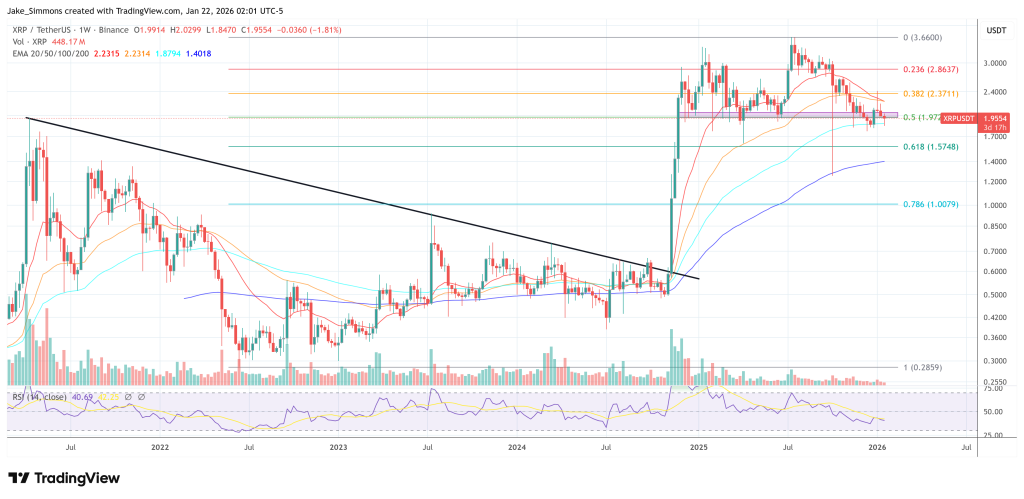
Featured image created with DALL.E, chart from TradingView.com
Editorial Process for bitcoinist is centered on delivering thoroughly researched, accurate, and unbiased content. We uphold strict sourcing standards, and each page undergoes diligent review by our team of top technology experts and seasoned editors. This process ensures the integrity, relevance, and value of our content for our readers.