Home Blog Page 1096

HYPE Jumps as TradeXYZ Hits Record Volume Following Silver Rally

0

The surging activity in silver and tokenized markets has driven more than $1 billion in daily volume on the HIP-3 platform.

Hyperliquid’s native token HYPE rebounded sharply on Tuesday, Jan. 27, as trading activity across the decentralized perpetual exchange’s ecosystem accelerated, driven by record volumes and open interest on TradeXYZ, a permissionless markets provider focused on real-world assets like stocks and commodities.

HYPE climbed more than 24% on the day and is trading at around $27.90 at the time of publishing, according to CoinGecko.

HYPE Chart

The rally came as onchain derivatives activity picked up across Hyperliquid, particularly in tokenized equity and commodity markets. TradeXYZ, which runs on Hyperliquid’s HIP-3 framework, crossed $1 billion in 24-hour trading volume on Monday and reached a new all-time high of about $790 million in open interest, up around 200% over the past month, The Defiant previously reported.

A lot of this recent activity was driven by silver perpetual contracts, which recorded a spike in volume and liquidations as precious metals continue to rally. On Tuesday, the SILVER-USDC market on TradeXYZ recorded more than $1.3 billion in 24-hour trading volume and roughly $142 million in open interest, according to onchain data.

Spot silver is currently trading around $106.89, up about 12% over the past week, after recently breaking above $100 for the first time.

The move in HYPE also underscores growing demand for decentralized perpetuals, which allow traders to access traditional markets around the clock. Unlike centralized exchanges (CEXs), platforms built on Hyperliquid let users trade products onchain without relying on market hours or intermediaries.

Hyperliquid remains one of the most active onchain perpetuals platforms in crypto. The protocol in recent months introduced Growth Mode, an upgrade designed to lower trading costs and attract liquidity to permissionless perpetuals launched under its HIP-3 framework. As previously reported by The Defiant, HIP-3 allows anyone staking 500,000 HYPE tokens to launch their own perpetual futures markets on Hyperliquid.

Citrea Mainnet Goes Live, Bringing Bitcoin-Native Lending and Trading Online

0

Citrea’s mainnet went live on Tuesday, marking the launch of a new Bitcoin-focused application layer designed to support lending, trading, and settlement linked directly to the Bitcoin network. Citrea Goes Live With Mainnet Focused on Bitcoin Utility The project aims to broaden how Bitcoin is used beyond long-term holding by introducing a programmable environment that […]

Transforming EDI with AI: Faster, Smarter, Scalable

0

Electronic data interchange (EDI), the long-standing standard for digital document exchange between businesses, is entering a new phase. While traditional EDI systems have reliably supported business processes for decades, they often suffer from slow processing speeds, rigid formats, and limited error-handling capabilities. The emergence of AI offers an opportunity to modernize these systems – making them faster, smarter, and more adaptable.

Understanding EDI and AI

Electronic data interchange (EDI) is a system that enables companies to electronically exchange structured business documents such as invoices, orders, and shipment notices. Beyond document transmission, it encompasses standardized formats and communication protocols that support interoperability across different systems and platforms—from ERP and warehouse management to financial software.

Meanwhile, Artificial Intelligence refers to the development of computer systems capable of mimicking human cognitive functions. This includes learning from data, identifying patterns, and making decisions. AI uses technologies such as machine learning (ML), which can analyze large datasets and natural language processing (NLP) that enables computers to understand and generate human language.

Why AI Is Essential for the Evolution of EDI

Since the 1970s, EDI has evolved from a proprietary tool for internal communication to a standardized system for automating transactions between businesses.

While it has significantly improved efficiency compared to paper-based processes, legacy EDI platforms face critical limitations, such as rigid document formats, manual error corrections, complex data mapping, time-consuming partner onboarding, or difficulty scaling with high transaction volumes.

Incorporating technologies like artificial intelligence (AI) and machine learning (ML) can help EDI systems overcome these limitations and adapt to the demands of modern business environments, while gaining access to capabilities such as:

  • Real-time data exchange and processing
  • Automated document validation and error correction
  • Compatibility with flexible data formats like JSON and XML
  • Improved user access via APIs and mobile interfaces
Integrating AI and ML in EDI systems

Solutions such as Comarch EDI demonstrate how AI can transform data exchange workflows by:

  • Automated Data Validation: AI acts as a first layer of error detection, identifying format issues, missing values, or invalid entries before a document is sent. ML algorithms can detect recurring patterns of errors based on historical data, helping to avoid costly disruptions downstream.
  • Smarter Data Mapping: AI and ML reduce the complexity of mapping internal systems to standardized EDI formats by suggesting field matches based on past patterns.
  • Improved Document Matching: Intelligent models can accurately link related documents like invoices and orders, surpassing traditional keyword-based systems.
  • Predictive Analytics: AI can analyze historical and real-time data to predict sales trends, purchasing needs, and delivery performance, allowing businesses to proactively manage supply chains and optimize inventory.
Key Benefits of AI-Powered EDI
  • Operational Efficiency: By automating time-consuming tasks like data mapping and error handling, businesses can streamline processes and allocate resources to more strategic activities.
  • Better Accuracy: AI identifies patterns in historical data to catch errors and inconsistencies early, resulting in more reliable data and fewer transactional issues.
  • Faster Partner Onboarding: AI streamlines the setup process for new trading partners by recommending configurations based on previous mappings, reducing onboarding time and minimizing manual effort.
  • Increased Scalability: As transaction volumes grow, AI-powered EDI handles increased loads effortlessly, ensuring consistent performance without the need for significant system adjustments.
  • Improved Security: Anomaly and suspicious activity detection strengthen data protection and support compliance with regulatory standards.
  • Cost Optimization: Automation reduces errors, delays, and manual rework, lowering the overall cost of EDI operations.
  • Data-Driven Decision-Making: By turning raw data into actionable insights, AI helps businesses make smarter decisions across supply chains and operations.
What’s Next for EDI

The integration of AI into EDI systems is not a futuristic concept—it is already reshaping how businesses exchange information. With features such as predictive analytics, intelligent workflows, and real-time insights, AI-powered EDI platforms are enhancing collaboration and efficiency across supply chains. By adopting solutions that incorporate these innovations, organizations can stay competitive and resilient in an increasingly digital business landscape.

US Probes $40M Crypto Heist By Federal Contractor’s Son

0

Members of the U.S. government are investigating allegations that tens of millions of dollars in cryptocurrency seized by law enforcement were stolen through insider access via a federal contractor, according to public statements from officials.

The U.S. Marshals Service (USMS) confirmed to CoinDesk that it is investigating claims that more than $40 million in confiscated digital assets were siphoned from government-linked wallets. 

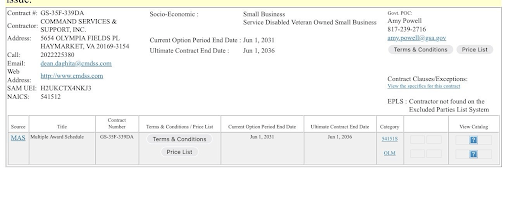
The allegations center on Command Services & Support (CMDSS), a Virginia-based technology firm contracted by the USMS to manage and dispose of certain categories of seized cryptocurrency.

Blockchain investigator ZachXBT alleged that John “Lick” Daghita — the son of CMDSS president and chief executive Dean Daghita — gained unauthorized access to crypto wallets holding government-seized digital assets and diverted funds for personal use. 

ZachXBT said he reported the alleged activity to authorities and linked multiple wallet addresses to assets controlled by or associated with the USMS.

Brady McCarron, chief of public affairs for the USMS, told CoinDesk that the agency could not comment further on the case because investigations were underway.

Details of the digital asset theft fraud

The allegations first surfaced after a dispute in a private Telegram chat was recorded and later circulated online. According to ZachXBT, the individual identified as “Lick” appeared to screen-share a wallet holding millions of dollars in cryptocurrency and demonstrated the ability to move funds in real time. 

Subsequent on-chain analysis linked those wallets to addresses known to hold government-seized assets, including funds associated with prior high-profile law enforcement seizures.

“Meet the threat actor John (Lick), who was caught flexing $23M in a wallet address directly tied to $90M+ in suspected thefts from the US Government in 2024 and multiple other unidentified victims from Nov 2025 to Dec 2025,” ZachXBT wrote on X over the weekend.

ZachXBT later identified the individual as John Daghita, alleging that he is the son of CMDSS’s president and that CMDSS currently holds an active federal IT contract. 

CMDSS was awarded a contract in October 2024 to assist the USMS in managing and disposing of seized and forfeited digital assets, including crypto not supported by major exchanges and assets tied to complex criminal cases.

Those crypto assets reportedly include funds seized from the 2016 Bitfinex hack, one of the largest cryptocurrency thefts on record.

ZachXBT has said it remains unclear how John Daghita allegedly obtained access to the wallets, including whether that access was facilitated through his father or CMDSS’s internal systems. 

According to ZachXBT, one wallet he attributed to Daghita held 12,540 ether — worth roughly $36 million at recent prices. He also alleged that Daghita sent him 0.6767 ETH, which the investigator said he would forward to a U.S. government seizure address. 

ZachXBT further claimed that transaction trails suggest approximately $20 million was removed from USMS-linked wallets in October 2024, most of which was returned within a day, though roughly $700,000 routed through instant exchanges was not recovered.

In additional posts, ZachXBT estimated that total suspected thefts could exceed $90 million in various crypto when accounting for other wallet activity observed in late 2025, some of which he said remains in compromised wallets.

United States’s bitcoin security under scrutiny 

The allegations have raised valid concerns over how the U.S. government safeguards its growing stockpile of seized bitcoin and other digital assets. The federal government may control between roughly 198,000 BTC and more than 300,000 BTC, worth tens of billions of dollars at current market prices. 

According to bitcointreasuries.net, the U.S. government holds 328,372 bitcoin worth roughly $29 billion. 

The controversy comes amid heightened scrutiny of how seized bitcoin is handled following reports earlier this year questioning whether forfeited assets tied to the Samourai Wallet case were improperly sold despite executive orders directing that seized bitcoin be retained as part of a U.S. Strategic Bitcoin Reserve. 

While U.S. officials later denied that any sale took place, the lack of on-chain evidence provided publicly has continued to fuel skepticism.

UK Avoids ‘US Malaise’ as FCA Finalizes Rules

0

The UK’s top financial regulator is finalizing its framework for the crypto industry. The rulemaking process has been long, but industry observers note that the country has avoided the political tit-for-tat that is hampering the US CLARITY Act.

On Jan. 23, the Financial Conduct Authority (FCA) released its final consultation. The public may now comment on its suggested framework, consisting of 10 regulatory proposals. The three-year process is expected to reach a conclusion in March, with full implementation by October 2027.

The proposed rules have gone through multiple iterations since 2023, as some observers expressed concern that the UK would fall too far behind other countries in the crypto regulatory race.

With the UK poised to have a solid framework for crypto by the end of Q1, it appears to have caught up, at least in part, to the US.

FCA centralization a key difference with US CLARITY Act

Over the last six years, major economies around the world have raced to form legal frameworks for crypto. In the United States, Congress has passed a stablecoin law, the GENIUS Act, and attempted to pass a crypto framework bill. However, lawmakers hit a snag with the CLARITY Act when major crypto exchange and crypto lobby contributor Coinbase pulled its support.

Law, United States, United Kingdom, Stablecoin, Features
Source: Brian Armstrong

Nick Jones, CEO and founder of UK-based digital assets platform Zumo, told Cointelegraph that the UK has largely avoided this kind of hiccup, thanks to the FCA’s consultation processes. The timeline has delivered a regulatory regime “that takes all stakeholders’ concerns into account.”

“It should help us to avoid the current malaise seen in the US, where Coinbase’s decision to withdraw support for the CLARITY Act sent shockwaves through the digital assets sector and risks derailing market structure reform.”

There are notable differences between the US’ proposed CLARITY Act and the FCA’s proposed policies. One prominent example is the UK’s centralized approach to crypto regulation. The UK only has one securities and commodities regulator, the FCA. In its framework, the FCA has set out which assets are subject to which rules.

In the US, there is still some discussion over which agency will regulate certain parts of the crypto sector: the Commodity Futures Trading Commission or the Securities and Exchange Commission. States also have their own financial enforcement agencies and requirements, like New York’s BitLicense regime.

This particularly holds true for stablecoins. Partners at Morrison and Forrester noted, “The UK regulatory regime for stablecoins is centralized, with a single national regime integrating stablecoins into financial services law.”

The US, by contrast, “creates a federal and state licensing regime for stablecoins issuers, involving participation by multiple states, federal banking regulators, and the U.S. Treasury.” The firm said that these differences could end up creating interoperability issues and “compliance friction across markets.”

Related: US crypto market structure bill in limbo as industry pulls support

UK crypto rules differ from Europe’s MiCA, too

From 2020 to 2024, the European Union worked to develop its Markets in Crypto-Assets (MiCA) framework, which regulates the crypto market across the 27 member states.

Law, United States, United Kingdom, Stablecoin, Features

Jones stated that the FCA rules differ significantly from the continental approach and send a message that “digital assets can successfully coexist in a reimagined future financial system. That’s a strong statement of intent.”

They’ve done so by “legislating to extend existing financial regulation to companies involved in crypto, rather than producing complicated rules tailored to the industry as seen with [MiCA],” said Jones.

Marcus Bagnall, a partner at law firm Wiggin, wrote that the proposed FCA framework avoids grafting a “light-touch, ‘MiCA-style’ wrapper on to an unregulated sector.” He said that the result is a costlier and heavier regulatory regime, but one that is “more due-diligence-ready for institutional money than MiCA.”

Luigi Cantisani of Futura Law said, “Services that are currently unregulated under MiCA but brought into scope in the UK could significantly increase the regulatory burden for firms seeking to serve UK clients.”

FCA integrates crypto with wider financial system

In 2020, the FCA began a years-long process of forming crypto regulations when it became the Anti-Money Laundering and Counter-Terrorism Financing adviser for the UK’s crypto industry.

Three years later, in September 2023, it took steps to enforce the controversial Travel Rule. This requires crypto service providers to collect and share user and transaction data with authorities.

Two months later, in November, policy-making began in earnest when the FCA published a discussion paper on stablecoins. Since then, it has released several more on topics that include crypto custody, disclosures and market abuse.

UK crypto hub ambitions are back

Jones said that many in the industry have been “loudly lobbying for the appropriate regulatory framework that will facilitate new avenues of economic growth.”

In April 2022, Prime Minister Boris Johnson launched a strategy to make the country a “crypto hub.” Soon after, the market crashed, and the project was put on the backburner.

Related: UK crypto hopes stall, but ‘encouraging signs’ are there

“The industry has been waiting for some time for the UK to make good on its ‘UK Crypto Hub’ ambitions,” Jones explained. “The main ask has been for operational clarity that will allow crypto asset businesses to develop in the UK at scale.”

With clear rules on the horizon, the UK’s “crypto hub” may finally get a new start. Jones said the FCA’s new framework will put an end to off-shoring and unregulated business models.

“There has never been a better time for crypto asset businesses to realize UK opportunities at scale.”

He claimed that the benefits will be felt by retail customers, who will now have “specific assurances related to how their assets are held, as well as a tangible set of investor protections and the assurance of interfacing with regulated businesses held to the stringent standard of UK financial services.”

Magazine: A ‘tsunami’ of wealth is headed for crypto: Nansen’s Alex Svanevik