Trusted Editorial content, reviewed by leading industry experts and seasoned editors. Ad Disclosure
Bitcoin is moving into mainstream banking in small, steady steps. What once seemed unlikely is becoming routine as traditional banks test ways to hold, trade, or lend against Bitcoin. Reports say a sizable slice of the biggest US banks are now planning real customer offerings.
60% Of Top Banks Preparing Bitcoin Products: River Study
A study conducted by Bitcoin financial services firm River shows about 60% of the top 25 US banks are at some stage of building Bitcoin services, from custody to trading and client-facing products. This shift is not just talk; it shows up in boardroom plans and pilot projects across several large lenders.
Banks Moving From Caution To Practical Steps
For years, many banks kept their distance. But change came fast after clearer rules and big exchange-traded funds put Bitcoin on more mainstream radars. Spot ETF approvals and rising demand from big investors nudged banks to revisit their stance and to test practical, compliant ways to serve customers interested in digital assets.
Some major names are already on the record with pilot projects or new services. Reports mention that JPMorgan Chase is looking at crypto trading, Wells Fargo has rolled out credit and custody-linked offerings to institutional clients, and Citigroup is exploring custody and payments tied to tokenized assets. Those moves signal a shift from theory to products customers can use.
How This Changes The Picture For Clients
Customers could get simpler access to Bitcoin without needing separate crypto accounts. That means an investor might see Bitcoin as another line on a bank statement, with custody and reporting wrapped into services they already use. Some banks plan to partner with specialists to avoid taking on all the technical work themselves, keeping risk and compliance squarely in focus.
BTCUSD now trading at 87,925. Chart: TradingView
Regulation, Risk, And The Role Of Policy
Regulatory moves earlier in the year reopened options that were closed when tight capital rules made custody costly. Reports note that a change in guidance helped some banks resume or rethink custody services, and that the current political climate under US President Donald Trump has been described as more favorable to broader crypto adoption. These shifts are nudging banks to act where they had hesitated.
Expect more pilot announcements and a slow roll of services into client offerings. Not every bank will move at the same speed. Some will stay cautious, others will move sooner. The practical test will be whether banks can offer secure custody, clear accounting, and easy reporting without taking on outsized risk.
Featured image from Pexels, chart from TradingView
Editorial Process for bitcoinist is centered on delivering thoroughly researched, accurate, and unbiased content. We uphold strict sourcing standards, and each page undergoes diligent review by our team of top technology experts and seasoned editors. This process ensures the integrity, relevance, and value of our content for our readers.
Morgan Stanley has tapped veteran executive Amy Oldenburg to lead the investment bank’s new crypto unit, just weeks after announcing plans to launch three crypto exchange-traded funds and a crypto wallet.
Oldenburg will transition to head of digital asset strategy after working in Morgan Stanley’s emerging markets equity team since 2001, Bloomberg reported on Tuesday.
Oldenburg has been leading the emerging markets team since November 2021, where she was tasked with driving the division’s digital asset strategy.
Job listings on LinkedIn show the $2 trillion investment bank is also looking to expand its crypto team, listing positions for digital assets strategy director, digital assets strategist and digital assets product lead.
Morgan Stanley digital asset job postings. Source: LinkedIn
Morgan Stanley filed to launch spot Bitcoin (BTC) and Solana (SOL) exchange-traded funds in the first week of 2025 — its first major move in the crypto space after largely sitting out the first wave of institutional adoption over the past two years.
Later that week, Morgan Stanley filed for a staked Ether (ETH) ETF that seeks to hold ETH while staking an undisclosed amount to earn staking income.
If approved, the funds could bring new inflows to BTC, ETH, and SOL from Morgan Stanley’s 19 million clients served through its wealth management division.
It is also looking to launch a crypto wallet that would support cryptocurrencies and tokenized real-world assets, including stocks, bonds and real estate.
Oldenburg advocates for crypto self-custody
In past public appearances, Oldenburg has stressed the importance of the “Not your keys, not your coins” concept and the need to build out better self-custody infrastructure, particularly for those in emerging markets. She also stated in March last year that she was “against ETFs” as they didn’t provide staking at the time.
Related: South Dakota lawmaker takes another run at Bitcoin reserve bill
“I want my liquidity 24/7, and also we have clients that want to move assets that they have and potentially bank them with us and be able to leverage all of the features that the digital assets space allows you,” Oldenburg said at the Digital Assets Summit 2025.
Oldenburg was referring to the limitations of ETFs with crypto staking and yield-bearing products at the time; however, the Paul Atkins-led Securities and Exchange Commission has since demonstrated an openness to a broader range of crypto products.
Magazine: One metric shows crypto is now in a bear market: Carl ‘The Moon’
Cointelegraph is committed to independent, transparent journalism. This news article is produced in accordance with Cointelegraph’s Editorial Policy and aims to provide accurate and timely information. Readers are encouraged to verify information independently. Read our Editorial Policy https://cointelegraph.com/editorial-policy
The new product offers exposure to spot gold while generating yield.
Theo, a real-world asset (RWA) tokenization platform, has launched thGOLD, a tokenized gold product.
The token not only provides exposure to spot gold prices but also generates yield, according to a press release viewed by The Defiant. This differs from most other tokenized gold products, which typically only track spot prices. Theo said thGOLD is expected to be available across decentralized finance (DeFi) venues, including Hyperliquid, Uniswap, Morpho, and Pendle.
The launch comes as gold prices reached a new all-time high this week, rising above $5,100 per ounce amid strong demand for safe-haven assets. Last week, tokenized gold surpassed $4 billion in market value, The Defiant reported. Tether Gold (XAUT) and Paxos Gold (PAXG) accounted for most of this growth, according to DeFiLlama data.
It also comes as investors continue to look for ways to make idle assets like gold more productive within the DeFi landscape, especially as interest in tokenized real-world assets (RWAs) continues to grow.
Currently, the tokenized RWA sector boasts over $23 billion in Distributed Asset Value, up 12% over the past month, per RWAxyz. Meanwhile, the tokenized commodities market stands at $5.14 billion, up more than 28% over the past 30 days
thGOLD is built on the MG999 On-Chain Gold Fund, a tokenized private credit fund managed by FundBridge Capital, the release explained. The fund generates yield by lending to gold retailers, starting with Singapore-based Mustafa Gold. Libeara, a tokenization platform incubated by Standard Chartered Ventures, provides the underlying infrastructure.
Theo said the structure could later be expanded to incorporate additional sources of yield, including bank gold lending rates.
“Most tokenized gold today is just a wrapper. You’re paying fees to hold an asset that does nothing,” said Ari Pingle, co-founder of Theo. “We built thGOLD to actually work in DeFi: it earns yield, it trades on real venues, and you can use it as collateral. That’s what tokenization should deliver.”
The release notes that gold rose 64% in 2025, its strongest annual performance in decades, driven by central bank purchases and increased demand for safe-haven assets amid geopolitical uncertainty.
The launch follows Theo’s earlier tokenized Treasury product, thBILL, which reached more than $200 million in total value locked (TVL) within four months of launch. thGOLD will initially be available through a capped rollout as the underlying fund scales.
Antonio Sanso, cryptography researcher at the Ethereum Foundation, is confident the blockchain will be quantum secure long before a quantum attack is even possible.
”We as the Ethereum Foundation (EF) and Ethereum community are working massively on this topic,” he told Cointelegraph.
“The research part is probably the part that has been already figured out. And we are starting with the execution phase of it. And we’re really confident we’re gonna meet the timeline and the deadline.”
The EF has declared post-quantum (PQ) security a top strategic priority. On Jan. 24, it announced the formation of a Post Quantum team led by Thomas Coratger. Sanso is leading its new biweekly All Core Devs calls on post-quantum security from Feb. 4.
It’s a massive undertaking. He explained that Ethereum’s execution, consensus and data availability layers all need to be upgraded.
”When we talk about having a post-quantum solution, we are not talking about one part — there are all the different big macro areas of Ethereum that need to be migrated,” he said.
“The good thing is that we have been working on it for many months, if not years. So, we have a clear plan in mind, and we are probably going to execute in the next years.”
One-fifth of the way to the finish line
Asked to put a figure on how far work has progressed to date, Sanso said solutions for the different layers are progressing at different rates, “so there is not one percentage for all three. But we are like, ballpark, probably 20%.”
The new biweekly call will discuss the benefits and trade-offs of different approaches. Multi-client post-quantum devnets are now live, and a PQ roadmap will be released soon, targeting what EF researcher Justin Drake calls “a full transition in coming years with zero loss of funds and zero downtime.”
Making Ethereum quantum-resilient is just one part of a complete overhaul of the entire blockchain as part of Lean Ethereum. The aim is to make Ethereum faster, simpler and more decentralized using zero-knowledge (ZK) technology, while also making it resistant to quantum attacks.
Comparison to Bitcoin
The enthusiasm for quantum proofing Ethereum is in stark contrast to Bitcoin, where leaders from Adam Back to Michael Saylor have played down the need for change, pointing to estimates that suggest a quantum computer might be many years or decades away.
Post-quantum Vitalik Buterin at DevConnect. Source: Screengrab
Which is true, but with caveats. At DevConnect in Buenos Aires, co-founder Vitalik Buterin noted the median prediction for a quantum computer to break cryptography was 2040, but there was still a 20% chance it could happen by 2030.
But as it happens, less Bitcoin (BTC) is actually vulnerable to quantum attacks, with estimates suggesting around 6 million BTC, mostly in older addresses with public keys exposed, is currently at risk.
Related: Bitcoin doesn’t have 20 years because the quantum threat is already here
However, the vast majority of Ethereum is vulnerable — and all of Solana. The proposed fixes for Bitcoin are simpler as well, even if much larger PQ signatures remain a big problem.
“From the technical perspective, it’s simpler to migrate,” Sanso explained. “But they probably will have an issue at the human level … finding an agreement on what to do.”
“Ethereum, we don’t have this problem, but… technologically, we have more stuff to migrate,” he said. “We share the same fact that we need to change execution transaction signatures, but of the problems we have — between execution layer, consensus and data availability — the execution layer is the easiest. So, then the other two are a bit more complicated.”
What happens if quantum computers arrive early?
Sanso’s own best guess for the quantum computer deadline is the mid-2030s. He expects Lean Ethereum to be complete sometime between 2028 and 2032.
Given how suddenly large language models and ZK-proofs arrived (in the latter case, well ahead of estimates), it’s possible quantum computers may be able to crack blockchains before they’re completely finished.
You can increase protection for your Ether (ETH) right now by sending it to a new, unused address, as the public keys will not be exposed (quantum computers work backwards to derive the private keys from the public ones using Shor’s algorithm).
In the future, smart wallets using a combination of account abstraction and post-quantum signatures will protect your ETH.
“The idea is to have a new algorithm that is post-quantum, probably lattice- or hash-based. And basically, we’ll integrate with account abstraction.”
PQ signatures are much larger
At DevConnect in November, Zknox demonstrated a hardware wallet with a post-quantum Dilithium signature that’s compatible with Ethereum’s existing infrastructure.
Source: Zknox
However, post-quantum signatures are massive, and the lightest one, called Falcon, is still 10 times larger than the current Elliptic Curve Digital Signature Algorithm (ECDSA) ones.
Sanso explained that coding the lattice solution in Solidity costs a fortune in gas. There’s an Ethereum Improvement Proposal (EIP) for a precompile to handle this automatically outside of the core protocol, which would speed things up and reduce costs.
The wider issue of incorporating signatures 10 times bigger than the current ones into the chain will likely require a range of different measures, including the use of ZK-STARKs to compress down the size.
Emergency quantum upgrade
But Buterin also developed an emergency plan in March 2024 to deal with a quantum attack, which involves a hard fork and a method for ETH owners to prove they are the legit owners of a particular address before being transitioned to PQ addresses holding the equivalent balance.
Sanso said this plan has progressed, and they’ve been working on a way for ETH owners to use ZK-proofs to safely prove they have the correct seed for an address.
”It’s something we have been actively working on. Hopefully, it’s going to be one project that will show this, either at EthCC Cannes or Devcon in India.”
Depending on which EIPs are approved, this system might also be used as part of the planned switch to PQ signatures. Individuals could prove ownership of an address and would then be able to switch off the existing quantum-vulnerable ECDSA part of an account.
”We have this EIP that you can enable yourself, and say, I will kill the elliptic curve part on my EOAs. So, you keep the same address, and the only way for you to move out stuff from your address is a combination of account abstraction and this proof of seeds.”
“Probably, it’s going to be discussed in the next forks, and I think it’s in the right direction if you ask me.”
Sanso pointed out that choosing which EIPs to include will be a long process and ultimately decided by the community.
He said the first All Core Devs PQ “breakout room” call is scheduled for Feb. 4, 2026.
According to Drake, the biweekly sessions will “focus on user-facing security, covering dedicated precompiles, account abstraction and longer-term transaction signature aggregation with leanVM.”
Magazine: Bitcoin vs. the quantum computer threat — Timeline and solutions (2025-2035)
Cointelegraph Features and Cointelegraph Magazine publish long-form journalism, analysis and narrative reporting produced by Cointelegraph’s in-house editorial team and selected external contributors with subject-matter expertise. All articles are edited and reviewed by Cointelegraph editors in line with our editorial standards. Contributions from external writers are commissioned for their experience, research or perspective and do not reflect the views of Cointelegraph as a company unless explicitly stated. Content published in Features and Magazine does not constitute financial, legal or investment advice. Readers should conduct their own research and consult qualified professionals where appropriate. Cointelegraph maintains full editorial independence. The selection, commissioning and publication of Features and Magazine content are not influenced by advertisers, partners or commercial relationships.
Online flea market eBay has thrown a spanner into the works of the emerging agentic commerce movement by banning third party AI agents from shopping on its site.
Editorial
This content has been selected, created and edited by the Finextra editorial team based upon its relevance and interest to our community.
The ban effectively creates a closed-loop ecosystem that locks out independent bots from companies like Amazon and Google while keeping the door open for approved partners like OpenAI.
In early 2025, eBay became a launch partner of OpenAI’s ‘Operator’, an AI agent that is permitted to interact directly with users wanting to make purchases from eBay listings.
The ban comes into efffect next month, targeting bots that can search for items, negotiate prices, and complete transactions, often bypassing traditional user interactions.
EBay says the aim of the prohibition is to prevent instances where bots could outpace human buyers in purchasing, or engage in manipulative practices such as scalping.
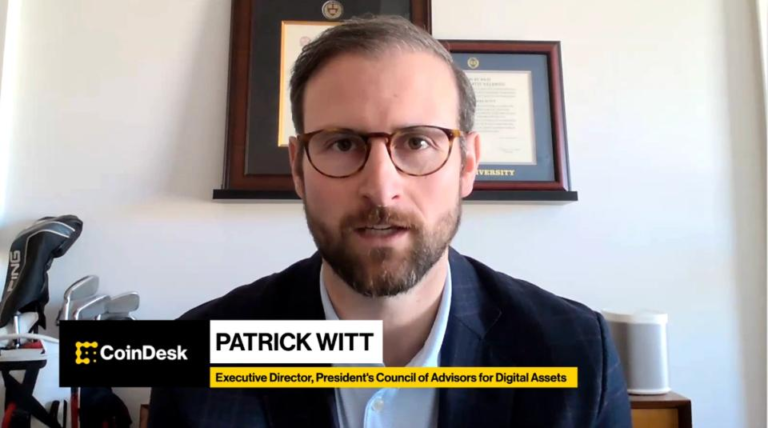
White House crypto advisor Patrick Witt said stablecoins are the “gateway drug” for global finance and that Washington is racing to deliver regulatory clarity.
South Dakota Republican Rep. Logan Manhart has introduced House Bill 1155, a proposal that would permit the state to invest public funds in Bitcoin.
The legislation, formally filed in the 101st Legislative Session, allows the State Investment Council to allocate up to 10% of state funds available for investment to BTC, marking a potential first for the state in adopting crypto as part of its investment strategy.
The bill outlines multiple options for holding BTC safely. State funds could be held directly by the Investment Council through a secure custody solution, entrusted to a qualified custodian, or acquired in the form of exchange-traded products (ETPs) issued by registered investment companies.
Security is a central focus of the proposal. Any BTC held by the state would require a private key exclusively controlled by the Investment Council, stored in encrypted, hardware-secured environments across at least two geographically separated, secure locations.
Transaction approvals would require multi-party governance, and systems would enforce user access controls and maintain detailed audit logs.
Additionally, the bill mandates regular code audits, penetration testing, and disaster recovery protocols to ensure state assets remain secure and accessible even in the event of system failures.
In announcing the bill on X, Manhart said, “I am proud to say I have released my bill that would allow the State of South Dakota to invest in Bitcoin. Strong money. Strong state.”
U.S. states are starting to love bitcoin
The proposal comes amid growing interest from U.S. states and municipalities in incorporating digital assets into public portfolios, reflecting broader trends in cryptocurrency adoption and financial innovation.
Earlier this month, Rhode Island lawmakers introduced Senate Bill S2021 to temporarily exempt small Bitcoin transactions from state income and capital gains taxes, with a $5,000 monthly and $20,000 annual cap.
The bill treats Bitcoin as a “digital, decentralized currency” and allows residents and Rhode Island–based businesses to self-certify eligibility while keeping simple records.
The exemption would take effect January 1, 2027, and expire January 1, 2028, as a pilot program to reduce tax friction on everyday Bitcoin use.
New Hampshire is another state actively championing Bitcoin. In May 2025, New Hampshire became the first U.S. state to allow its treasury to invest in Bitcoin and other large-cap digital assets, authorizing up to 5% of certain public funds to be allocated into crypto under House Bill 302. BTC currently qualifies under the market-cap rule.
A drug trafficker imported fentanyl and other drugs into the US from China.
He bought the drugs using Bitcoin.
The criminal was sentenced to 12 years in prison last week.
A drug trafficker used Bitcoin to buy fentanyl from China and import it into the US, according to federal prosecutors.
William Panzera, 51, was sentenced to 12 years in prison this week after being convicted last year on charges of drug trafficking conspiracy and international promotional money laundering conspiracy.
Court documents and a statement from the US Department of Justice show that from 2014 to 2020, Panzera paid hundreds of thousands of dollars in wire transfers and crypto — specifically Bitcoin — to import the drugs.
“In total, they imported over a metric ton of fentanyl-related substances and other drugs into the United States,” the Department of Justice said of Panzera and his criminal partners on January 22.
Earlier this month, the US feds charged a Venezuelan man with using crypto to launder money for criminals, including drug traffickers.
Court documents quoted an FBI Special Agent saying the stablecoin USDT on the Tron network is a crypto of choice for crooks wanting to make fast money movements.
A lot of drugs
Feds said that Panzera, of North Haledon, New Jersey, didn’t just import the highly dangerous opioid fentanyl into the US but also fentanyl analogues and party drugs such as MDMA, methylone, and ketamine.
“The conspirators distributed the substances throughout New Jersey in bulk and in the form of counterfeit pharmaceutical pills that actually contained fentanyl analogues,” the DOJ said in an earlier statement after Panzera was convicted last year.
Eight other defendants pleaded guilty in the case.
Why choose Bitcoin?
Why, then, did Panzera rely on the largest and oldest cryptocurrency network to pay for the drugs, even as other cryptocurrencies have become the preferred tools of criminal groups?
Top privacy coin Monero has in the past been used by drug traffickers and other criminals to launder funds, and hackers have used assets like stablecoins to quickly move funds.
Bitcoin, a highly transparent payment method, has been dropped by criminals seeking to cover their tracks. Authorities in the past have even caught criminals who have used Bitcoin’s blockchain: Last year, an undercover FBI agent tricked a cybercriminal into using Bitcoin over Monero, leading to his arrest.
But Panzera’s preferred crypto of choice is likely down to when he got involved in crime — over a decade ago. More convenient digital assets such as Tether’s USDT debuted the year Panzera started his crimes and took years to reach the huge trading volume they have now.
Using Monero is also harder for criminals than before, Ari Redbord, global head of policy for TRM Labs, told DL News, as regulators and exchanges crack down on the coin.
“Monero is used, but it’s difficult to acquire and cash out at scale, with limited liquidity and many major exchanges having delisted it, which makes it impractical for large trafficking networks,” he said.
Another popular choice, Redbord said, is Tether’s dollar stablecoin USDT on the TRON blockchain.
“Traffickers often prefer stablecoins like USDT on TRON because they are fast, cheap, widely accessible, and easy to move and convert across borders,” he told DL News.
But unlike Monero, USDT is a centralised stablecoin, meaning the assets can be frozen by the company that issues it.
Tether in recent years has strengthened its ties to law enforcement; in 2023 it started freezing wallets connected with sanctioned entities on the Office of Foreign Assets Control Specially Designated Nationals List.
It has also worked with crypto exchanges and law enforcement to freeze stolen tokens tied to pig butchering scams.
Tron, too, has worked with blockchain forensic firms and police to identify and blacklist wallets associated with criminals.
Mathew Di Salvo is a news correspondent with DL News. Got a tip? Email at mdisalvo@dlnews.com.
The Australian Federal Court fined BPS Financial $9.7 million for operating its Qoin Wallet without a license and making misleading claims about its functionality. Permanent Ban on Qoin Promotion The Australian Federal Court has ordered digital currency payments provider BPS Financial to pay total pecuniary penalties of $9.7 million (AUD$14 million) following a lengthy legal […]
A California-based startup that aims to build an AI system to transform AI chip development and production has confirmed $300 million Series A funding at a $4 billion valuation — a mere 55 days after the company launched.
On Dec. 2, Ricursive Intelligence, a frontier lab based in Silicon Valley, announced its arrival via a press release that revealed a $35 million seed round led by Sequoia Capital at a $750 million valuation.
Now, less than two months later, interest in the company is rocketing, with new investment from DST Global, Nvidia’s venture capital arm NVentures, Felicis Ventures, 49 Palms Ventures and Radical AI.
Much of the enthusiasm is centered around the past work of company founders Anna Goldie and Azalia Mirhoseini, former Google researchers who pioneered AI-driven semiconductor design. Their methods have subsequently been adopted across four generations of Google’s tensor processing units and deployed by other semiconductor companies.
The goal of Ricursive Intelligence could have far-reaching consequences: create a platform that uses AI to optimize every step of the AI chip design process.
This forms a “recursive feedback loop,” whereby AI models design the next generation of chips and those chips, in turn, train more advanced AI models, addressing what the startup described as a “primary bottleneck” to AI progress: The slow pace and high cost of semiconductor design.
Related:Synopsys Targets Automotive With AI, Software Push at CES
“The pace of AI progress is dictated by hardware,” Goldie said in a press release. “Ricursive’s mission is … ultimately to use AI to design its own silicon substrate.” This, Mirhoseini added, would represent a “paradigm shift” that will unlock “significant gains in performance and energy efficiency.”
Their ambition has convinced investors, with Stephanie Zhan, partner at Sequoia, hailing the pair as “visionaries” whose work will revolutionize the chip design process that can typically take up to three years and costs hundreds of millions of dollars. “We envision a world where Ricursive helps any company design chips for its own workloads faster, more efficiently and more creatively than is possible today,” she said.
The company currently has fewer than 10 employees but will use the latest funding to beef up its infrastructure and add to its expert team, having already recruited from Anthropic, Apple and Cadence.
Somewhat confusingly, as Ricursive celebrates its investment success, another startup — the similarly named, but entirely different, Recursive — is also making waves with its own plan to develop AI superintelligence that is able to improve itself over time. Bloomberg reported that it is in talks to raise hundreds of million dollars.
Related:Hyundai Reveals AI Robotics Roadmap at CES