Home Blog Page 1054

When Should Founders Scale Secondaries Across Rounds?

0

Startup founders often face a financial challenge. They have a lot of equity value but struggle with cash flow. Secondary stock sales can help solve this problem.

Understanding secondaries for founders is key. It’s different from selling stocks the usual way. It lets entrepreneurs get some of their company’s value without waiting for a big exit.

Most successful tech entrepreneurs know keeping their finances stable is important. Secondary sales help reduce financial stress. This way, founders can stay focused on their startup’s goals.

This guide will look at when to do secondary sales during funding rounds. We’ll explore strategies for using startup equity wisely. This can help founders get financial relief when they need it.

Grasping secondary stock sales can help founders grow, not just survive. By the end of this article, you’ll know how to handle founder liquidity with confidence and strategy.

Understanding the Secondary Market Landscape for Startup Founders

The world of private stock sales has changed a lot in recent years. Startup founders now have many ways to use secondary transactions. This gives them more financial freedom than ever before.

Direct secondary sales have become more advanced. Sites like Forge Global and Nasdaq Private Market make it easier for founders to find investors. This way, founders can sell some of their shares without leaving their company.

Tender offers are another smart move for founders in the secondary market. These deals let shareholders sell a set amount of stock at a fixed price. Special platforms help make these transactions clear and fair.

Venture capitalists now see the value in controlled secondary sales. They help reduce stress for founders and keep them focused on growing the company. This approach benefits everyone involved.

Knowing how secondary transactions work helps founders make better financial choices. Today’s secondary market offers options that didn’t exist before. This gives startup leaders more control over their finances.

The Strategic Timing of Secondary Sales in Your Fundraising Journey

Secondary sales in venture capital rounds need careful planning. Founders must know that the timing of early liquidity events affects their startup’s image and future investment chances. Series A secondaries are rare because investors usually want founders fully dedicated to growing the company.

Growth stage startups have more room for secondary sales in Series B and Series C rounds. At these times, founders can get 10-20% liquidity without showing the company is in trouble. It’s important to show strong performance, proven revenue, and clear market position before a secondary sale.

When considering secondary sales, founders should look at product-market fit, revenue, and profit potential. They should check if their company is mature enough and if the market is right for a secondary transaction. Investors look for alignment with the company’s strategic goals, not just financial needs.

Good secondary sales strategies involve clear talks with current investors. Founders need to explain why they want partial liquidity and how it helps the company’s long-term goals. Knowing what investors think helps create a strong case for secondary transactions.

Why Secondaries for Founders Matter More Than Ever

The startup world has changed a lot lately. Founders now face a long wait, often 10-15 years, before they can sell their companies. This wait is tough for entrepreneurs who need financial stability while they work on their big ideas.

Getting money before a company goes public is key for founders. They use secondary sales to spread out their wealth. This way, they can handle personal money worries without giving up on their business dreams. Funding rounds at the late stages often let founders get some cash, easing their financial stress and helping them grow their company.

Valuing startups has become more complicated, making exit plans harder. But smart founders know that getting some money early doesn’t mean they’re not committed. It’s actually a smart way to manage risks. These deals let entrepreneurs meet their personal money needs while still pushing their company’s goals.

Today’s startups need to think smart about money. Founders who plan well for their wealth can do great, balancing their personal money with their business dreams.

Evaluating Your Company’s Stage and Secondary Sale Readiness

Figuring out the best time for a startup equity sale needs careful thought. Founders must check if their business is ready for a secondary shares sale. They should look at growth, investor connections, and market standing.

Assessing your company’s stage involves several key points. Your startup should have reached a Series B funding round with a value over $100 million. Also, look at revenue growth, user numbers, and milestones achieved. These signs show investors might approve of selling founder shares.

Investors look closely at your company’s performance before agreeing to secondary deals. A clean cap table, steady growth, and respected investors boost your chances. Companies with predictable income and a strong market position are most appealing.

Being honest with yourself is key. If your startup is not meeting goals or saw a valuation drop, selling might not be wise. But, if you’re doing well and investors want more, you’re in a good spot to get good deals.

Getting ready professionally can turn secondary sales into smart financial moves. Knowing your company’s true readiness helps founders make smart equity choices.

Key Factors That Influence Secondary Transaction Size

Secondary sales need careful planning for startup founders. Managing dilution is key in setting the right equity transaction size. Experts suggest selling 10-30% of your shares at once. The exact amount depends on your company’s stage and ownership structure.

Your share of the company affects your sale decision. Owning 40% is different from owning 8%. Your personal financial goals, like paying off debt or making a big purchase, also play a role.

Investor relations are important in secondary transactions. The size of your primary fundraising round matters a lot. Getting $2 million in a $50 million raise looks different than in a $10 million round. Founders must balance their need for cash with keeping investors happy and the company’s long-term goals.

The time to your exit affects your sale strategy. Companies near an IPO might plan differently than those far from it. Knowing these details helps founders make smart equity decisions.

Investor Perspectives on Founder Secondary Sales

Understanding investor psychology is key when dealing with secondary sales. Top venture capital rounds have changed how they view founder liquidity. They now see that allowing some secondary sales can help a startup grow by easing financial stress for founders.

Investors look at secondary sales from different angles. They search for signs that show the founder believes in the company’s future. Small sales that are tied to performance can be a good sign. But big sales too early might worry them about the founder’s confidence.

Getting investor approval is crucial for secondary sales to work. Most smart investors want a balanced approach. They expect secondary sales to be a small part of the main funding and tied to company goals. Having a right of first refusal (ROFR) helps investors control these sales.

When negotiating, being open and strategic is important. Founders should explain that secondary sales help them focus on the company. Consistent performance builds trust, making investors more likely to support these sales.

Relationships are also key. Investors who trust the founders and see good results are more open to secondary sales. It’s about showing that these sales are a team effort that benefits everyone in the long run.

Tax Implications and Financial Planning for Secondary Proceeds

Dealing with taxes on secondary stock sales can be complex for startup founders. It’s important to plan for capital gains taxes carefully. When you sell your founder shares, you’ll pay taxes on the profit made.

Capital gains tax rates vary from 0% to 20%, based on your income. If you hold shares for over a year, you might pay less in taxes. The alternative minimum tax (AMT) also adds complexity, especially for those with incentive stock options.

Financial advisors suggest planning your taxes before selling shares. Selling in different years can help manage your taxes and reduce your overall tax bill. Some founders might get tax breaks from qualified small business stock (QSBS).

Getting advice from a tax expert who knows startups is key. They can explain the tax details and create a plan that lowers your taxes while following the law.

Common Mistakes Founders Make When Scaling Secondaries

Secondary stock sales can be challenging for startup founders. Many entrepreneurs fall into common traps. These can harm their financial strategy and relationships with investors.

One big mistake is selling too much equity too early. Founders often pick the wrong time for secondary sales. Selling a lot of shares during Series B might seem good, but it can backfire if the company’s value goes up later.

This approach can show a lack of confidence to investors. It can also create tension in investor relations.

Communication breakdowns are another big problem. Surprising your board with a secondary sale request can cause friction. It can also damage trust. Founders should talk about liquidity needs early and explain why they need to sell shares.

Tax planning is also a common mistake. Unexpected tax bills can eat up a lot of the money from secondary sales. Founders need to understand tax implications and lockup periods to make smart financial choices.

Finally, lifestyle inflation is a big risk. Some founders spend the money on luxury right away. But smart founders use it for long-term financial stability, to reinvest in the company, or to create a safety net.

Successful secondary sales need careful planning, open communication, and a good understanding of financial dynamics. By avoiding these common mistakes, founders can make the most of their secondary transactions.

Best Practices for Negotiating Secondary Terms with Investors

Negotiating secondary sales needs careful planning and clear talks with investors. Timing is everything. The best time to talk about a secondary sale is when your company is doing well, especially during venture capital rounds.

First, know your right of first refusal (ROFR) rules. Most investors have rules for secondary deals. Make a detailed plan that shows you’re committed to the company and need the sale for personal reasons.

Being open is crucial when asking for investor approval for secondary sales. Explain how much you want to sell and why. Look at similar deals in your field to set a fair price. Think about using SPVs to make deals work for everyone involved.

Stay open and professional during talks. Be ready to talk about goals or selling part of your shares. Always get a lawyer to check the deal and protect your and the company’s interests.

Good secondary negotiations build trust. Show investors you’re thinking ahead about your money while still caring about the company’s growth.

Real-World Examples of Successful Secondary Strategies

Successful founders have turned pre-IPO liquidity into smart financial moves. Brian Chesky and Joe Gebbia from Airbnb showed how to handle secondary sales well. They took small amounts of money, keeping most of their company’s value.

Stripe and SpaceX are great examples of smart exit planning. They used special sales methods that let founders and early team members cash in without going public. This balance is key to keeping everyone on the same page.

Databricks is another example of how secondary sales can help. They let some team members cash in during big funding rounds. This way, everyone wins, both financially and for the company’s growth.

The best secondary strategies have a few things in common. They involve selling 10-20% of shares, timing sales right, and keeping investors happy. Founders who do this right can have financial freedom without hurting their company’s future.

Conclusion

Founder liquidity is more than just making money. It’s about smart financial planning. Successful startup leaders see secondaries as a way to keep their vision alive while also securing their finances.

By planning carefully, founders can ease their financial worries. This doesn’t mean they’re giving up on their company’s future. It’s about keeping their focus on growth.

Wealth diversification is key for entrepreneurs in the startup world. Strategic sales help founders manage risk without losing control. The right timing and clear talks with investors are crucial.

Financial advisors can make a big difference for founders. They help understand the market, taxes, and how to sell shares wisely. This advice is tailored to each startup’s needs.

Smart secondary planning shows a leader’s financial wisdom. It’s not just about making money. It’s about building a strong business that lasts. The best leaders know how to manage finances for the future.

Read More From Techbullion


Hong Kong is positioning itself as crypto’s global connector, says lawmaker Johnny Ng

0

Johnny Ng is not interested in zero-sum crypto politics.

As regulators in Washington, Beijing and elsewhere in Asia chart their own paths for digital assets, the Hong Kong legislator is focused on something else entirely: building connective tissue between markets, technologies, and jurisdictions that rarely move in sync.

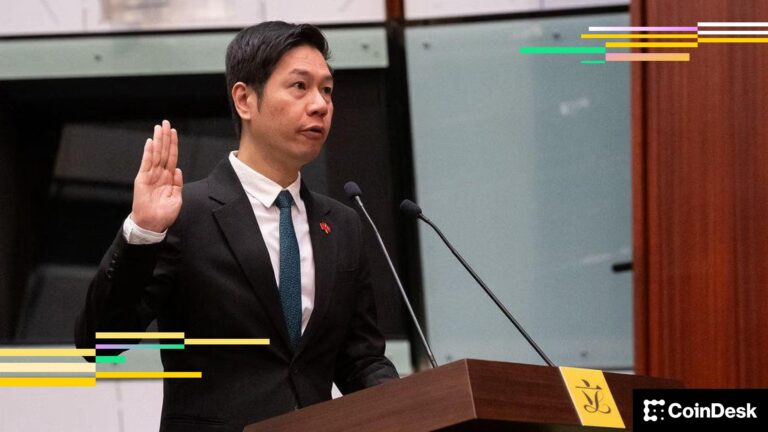
Representing the technology sector in Hong Kong’s Legislative Council – the city’s parliament – Ng, who will be speaking at CoinDesk’s Consensus Hong Kong conference next month, has emerged as one of the city’s most vocal advocates for Web3 and digital assets.

Over the past two years, he has pushed through stablecoin legislation, backed crypto exchange licensing and helped position Hong Kong as an early mover in regulated crypto finance. But he said his broader ambition is structural. He sees Hong Kong as a bridge, not a battleground, between East and West, and between traditional finance and crypto-native innovation.

“Crypto and Web3 are really highly linked with the traditional financial system,” Ng said in an interview with CoinDesk at his legislative office in Hong Kong.

Hong Kong’s role, in his view, starts with its existing strengths: easily understood common law, English language courts, free capital flows, and a dense concentration of global banks, asset managers, lawyers, and auditors.

“Hong Kong is one of the largest international finance centers,” he said, arguing that this foundation allows the city to build a crypto hub that is “safe, secure and moving along the way.”

That positioning becomes more powerful when viewed through the lens of the Greater Bay Area, an initiative by the government of Hong Kong to increase trade among it, major hubs in neighboring Shenzhen and Macau – the other Special Administrative Region of China, he said.

While Shenzhen is best known as the workshop of the world, with factories that churn out the latest electronics, Ng repeatedly returned to the idea that Hong Kong does not need to replicate Shenzhen or Guangzhou’s engineering culture. It needs to connect to it.

Hong Kong brings Common Law and open capital markets. Mainland cities bring scale, manufacturing depth, and a young, technically skilled workforce.

“In Shenzhen, the average age of the people is really young, under 30,” Ng said, describing a city of engineers and technologists with the capacity to turn ideas into products.

“Hong Kong can be a bridge,” he said, explaining how capital, legal structure and global market access can link up with mainland innovation. “We can think something, and then we realize something by their human capital.”

Ng even points to crypto history to make the case. Ethereum founder Vitalik Buterin was frequently in Zhuhai, Shenzhen and Hong Kong during the early years of the Ethereum blockchain. The region, Ng argues, has long been fertile ground for protocol-level experimentation. What Hong Kong adds is regulatory clarity and financial credibility.

That bridge-building mindset also shapes Ng’s global outlook. In 2023, during a period of aggressive enforcement actions against crypto companies by U.S. regulators, Ng made international headlines by publicly inviting Coinbase and other exchanges to consider Hong Kong.

At the time, the move was widely read as competitive signaling. Ng now frames it differently.

“I’m not going to see the competition with any countries,” he said. “Crypto cannot be easily divided by country or economy. It is one world.”

Rather than rivalry, Ng argued that the industry needs regulatory coordination and predictability across jurisdictions.

“I want the Hong Kong government to make more connections with different jurisdictions, the governing bodies together,” he said, pointing to the need for clearer standards that allow crypto to link more directly with real-world economic activity.

It’s a new year, and the Legislative Council of Hong Kong is beginning another session, reconvening after the fall election. Looking ahead, Ng said the next phase is about plumbing. Custody and OTC regulations are coming this year, along with potential changes that could allow higher-volume trading for professional investors.

Ng also sees convergence coming from another direction: artificial intelligence. Hong Kong, he argued, occupies a unique position, able to work with both Western and Chinese datasets and be a place where AI companies from around the world work together.

For Ng, Hong Kong’s bet is not that it can outbuild or outmuscle other crypto or AI hubs. It is that, by staying open, regulated and connected, it can sit at the center of a system that is still very much under construction.

Hashprice Near Yearly Lows Puts Bitcoin Miners Under Heavy Pressure

0

Bitcoin miners are kicking off February on shaky ground, with revenue slipping hard since mid-January and sitting well below July’s 12-month peak. On top of that, the U.S. winter storm has kept the hashrate stuck far beneath the lofty levels seen back in October. Bitcoin Miners Start February With Revenue Metrics Flashing Red Most people […]

Elizabeth Warren is sounding the alarm on Trump’s ‘spy sheikh’ crypto deal

0

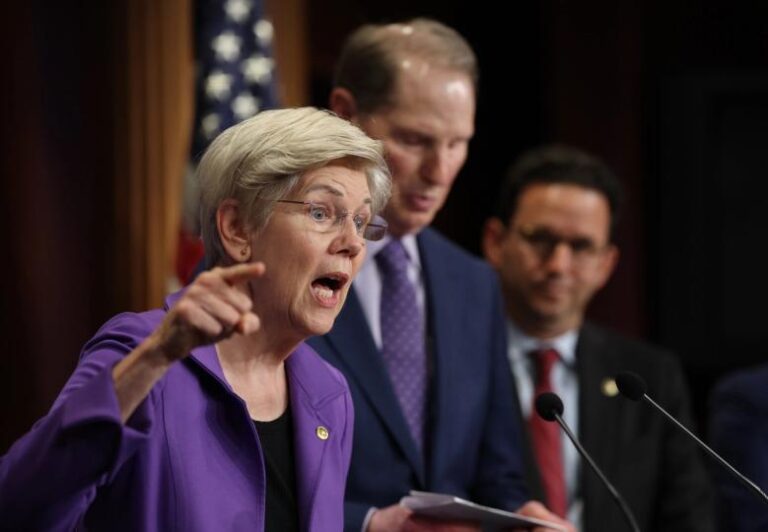
Senator Elizabeth Warren is calling for congressional hearings after new reporting revealed that the United Arab Emirates’ top intelligence official secretly took a nearly 50% stake in a Trump-era crypto company.

According to a Wall Street Journal investigation, an entity backed by Sheikh Tahnoon bin Zayed Al Nahyan—the United Arab Emirates’ national security adviser and a key power broker known as the “Spy Sheikh”—quietly purchased a 49% stake in World Liberty Financial for $500 million just days before Donald Trump’s inauguration last year.

The deal, signed by Eric Trump, reportedly funneled $187 million directly to Trump family entities, and at least $31 million to entities tied to Trump ally Steve Witkoff, who had recently been appointed Middle East envoy.

The Journal noted that the deal came months before the Trump administration approved the sale of advanced U.S. AI chips to the UAE—technology the Biden administration had restricted due to national security concerns tied to Tahnoon’s AI firm, G42.

Senator Warren, ranking member of the Senate Banking Committee, issued a statement following the report:

“This is corruption, plain and simple. The Trump Administration must reverse its decision to sell sensitive AI chips to the United Arab Emirates. Steve Witkoff, David Sacks, Secretary of Commerce Howard Lutnick, and other Trump Administration officials must testify in front of Congress on mounting evidence that they sold out American national security in order to benefit the President’s crypto company – and about whether any officials lined their own pockets in the process. Congress needs to grow a spine and put a stop to Trump’s crypto corruption.”

Warren and Rep. Elissa Slotkin (D-MI) previously called for an investigation into whether Donald Trump, his family, and senior officials were profiting from foreign crypto deals linked to U.S. tech access.

“President Trump only acts in the best interests of the American public,” White House spokeswoman Anna Kelly told WSJ, who said his assets are in a trust managed by his children. “There are no conflicts of interest.” She said Witkoff is working to “advance President Trump’s goals of peace around the world.”

White House counsel David Warrington also told WSJ that “The President has no involvement in business deals that would implicate his constitutional responsibilities.” He added that Witkoff takes his compliance with government ethics rules seriously. “He has not and does not participate in any official matters that could impact his financial interests,” he said, noting that Witkoff has “divested from World Liberty Financial.”

Read more: U.S. Senate’s Warren asks for Trump-tied crypto probe as market structure bill drags

Stablecoin Market Cools After $311B Peak as $6.2B Slips Away in 2 Weeks

0

Over the past two weeks, the stablecoin economy trimmed $6.22 billion after topping out at an all-time high of $311.333 billion. Just this past week, the sector edged lower by 1.21%, shaving off another $3.748 billion. Stablecoin Sector Trims Billions The stablecoin, or fiat-pegged token economy, according to defillama.com stats, is in the red this […]

How Quantum Computing Is Playing a Game-Changing Role in Fighting Credit Card Fraud

0

Credit cards are an essential part of our everyday lives; they are used all around the globe to make payments online and in stores. While being almost identical to debit cards, the way credit cards work is much different. The key difference between the two is that credit cards use money from banking institutions, whereas debit cards withdraw funds from your own bank account. Another advantage that credit cards have over debit cards is improved fraud protection, but that doesn’t mean they are immune to it. Here’s where the new advancements in quantum computing are helping us combat various types of payment-related fraud that occur in the digital world.

Quantum computers function on a whole new level. To put it in perspective, a quantum computer can solve computational problems that an ordinary computer may take decades to solve. Fraud detection technology has existed even before the advent of new quantum computers, and it has worked to a certain degree. However, the application of quantum computing will change this sector forever. Datasets of colossal size can be instantly crunched with the help of quantum technology; this ability is very useful for financial institutions, as the banking industry’s performance relies on how effectively it can manage millions of transactions every day.

In 2020, Multiverse Computing, a Spanish quantum technology startup, found out that their quantum algorithm was 2% more accurate in detecting fraud than existing AI technologies that are predominately used by most banking institutions. On paper, 2% might not sound like much, but that number translates to millions of dollars saved from fraud. The company tested its algorithm on real credit card payments across the EU using an IBM quantum computer. Analyzing almost 300,000 credit-card payments, the company identified over 200 fraudulent transactions.

What is exactly is a quantum computer?

A quantum computer is a machine that uses quantum physics to perform computer operations. To be specific, these computers use the quantum states of subatomic particles to store information. Unlike classical computers that use binary “bits” (0s and 1s) to store information, quantum computers use qubits as a basic unit of memory. Physicists and Scientists have always turned to supercomputers to solve extremely complex problems, but here’s where most of these computers fail: they still use classical computer technology.

When phenomena described in quantum physics, such as quantum entanglement, are used to solve complex problems, they offer a drastic speed boost over classical computers. Since qubits can be entangled, revealing information about one qubit will reveal information about all the paired qubits. As a result, these qubits can represent different things simultaneously, allowing computers to solve a large number of problems quickly.

However, one of the significant challenges in quantum computing is the occurrence of quantum errors. Qubits are highly sensitive to environmental disturbances like temperature fluctuations, electromagnetic waves, and other forms of quantum noise. These disturbances can cause qubits to lose their quantum state through a process called decoherence, leading to errors in computations. To overcome this, researchers are developing quantum error correction codes and fault-tolerant quantum computing methods to detect and correct quantum errors, ensuring more reliable and accurate processing in quantum computers.

Applications of quantum computers in payments industry

Since quantum computers process large amounts of data at much greater speeds than classical computers, they can detect patterns of fraud extremely quickly. Aside from speed, these computers also offer greater accuracy. All of which is essential for the banking industry to function steadily, and this helps both consumers and merchants. For instance, classical computers face the challenge of “false positives.” This occurs when a computer algorithm incorrectly marks valid payment transactions as fraud. For merchants, this disturbs their business, and the card issuers deal with unhappy customers as well as weight of investigating these matters. By optimizing fraud detection algorithms with quantum computing, all these problems can be nearly eliminated.

Global credit card fraud trends & existing security systems 

Many online platforms today employ various preventative measures to flag fraudulent transactions. These classical machine learning algorithms and behavioral analysis minimize the risk of fraud. Popular e-commerce websites like Amazon, eBay, and many other online sites. This also includes online casinos Canada that employ blockchain tech in order to facilitate secure, cryptocurrency transactions. By incorporating increasingly sophisticated algorithms, the fraud prevention systems found at online casinos ensure a seamless experience for their customers.

That said, due to the limitations of classical computers, they are bound to make some errors and are not always able to catch attackers, who are also innovating ways to commit fraud. E-commerce credit card fraud in the US alone is up by 140% in the past three years, making online sellers the main target of credit card fraudsters. It is projected that credit card fraud worldwide will surpass the mark of $46 billion. And this projected number is, of course, without taking the application of quantum computing into consideration.

Conclusion

The technology of quantum computing, despite still being in its infancy, far surpasses the effectiveness of the most powerful classical computers. Today, mega corporations are extensively researching quantum computing and how its widespread applications can transform various sectors, not just the banking industry. Tech behemoths that are investing in this technology include IBM, Microsoft, Amazon, Intel, Alphabet, and Nvidia, just to name a few. This shows a promising future, and it will be a force to be reckoned with in fintech.

Bitcoin isn’t competing with gold, but rather prediction markets and ultra-short options

0

Bitcoin is suffering from an identity crisis that has nothing to do with fundamentals and everything to do with shrinking attention spans.

While gold rallied more than 12% and the S&P 500 ticked higher in the past 30 days, bitcoin slid more than 10% in a market that appeared to pose no reason to shock the largest cryptocurrency. The real story, according to NYDIG’s global head of research, Greg Cipolaro, is what he calls speculative cannibalization.

That is, the buzz of short-term speculation is creating a capital shortfall. The kind of instantly gratified, high-risk investment that once fueled bitcoin rallies is now moving to flashier alternatives like online sports betting, prediction markets and zero-day stock options that settle before the sun sets, Cipolaro said in NYDIG’s latest weekly bitcoin update.

As Cipolaro outlines, three long-building trends — expanding access to speculative markets, rising demand for fast, lottery-style payoffs and the increasing speed of financial feedback — are converging to create an environment where slower, long-duration assets like bitcoin are at a disadvantage.

The capital isn’t leaving risk entirely; it’s just reallocating to platforms that deliver immediate stimulation.

Over the past decade, markets have grown to include a wide variety of high-frequency, high-volatility venues, from sports betting apps and in-game gambling to ultra-leveraged exchange-traded funds (ETFs) and equity options that expire within the day.

These arenas offer the kind of instant gratification that appeals to speculators looking for asymmetric upside without the burden of patience, Cipolaro noted. Within crypto itself, that trend saw activity in high-beta, or fast moving, segments like memecoin trading and leveraged perpetual swaps increase.

But even these crypto-native forms of speculation are losing out to markets that offer even faster feedback loops. This drains liquidity and reflexivity from the broader crypto ecosystem, softening price discovery and diminishing the impact of speculative flows that once lifted assets like bitcoin, Cipolaro wrote.

The problem isn’t unique to crypto, it’s indicative of a growing societal preference for winner-take-most environments.

Bitcoin, in contrast, increasingly resembles a slow asset in a fast market. While its long-term performance remains strong — historically, five-year holders have never realized a loss — its short-term appeal has faded for many who prefer the emotional loop of rapid bets and instant results.

Cipolaro argued that this doesn’t undercut bitcoin’s investment case, but does create headwinds in attracting marginal capital during periods of relative apathy or distraction.

“These dynamics disadvantage assets like bitcoin that, while capable of being traded at high frequency, are best suited to be held over long periods of time,” he wrote. “As attention and capital increasingly gravitate toward faster, more reactive markets, slower-moving investment theses struggle to compete for mindshare, even when their long-term return characteristics remain intact.”

The rise of spot crypto ETFs was expected to help reignite retail interest, but that thesis now appears complicated by this simple behavioral constraint.

“Markets that offer continuous engagement and immediate feedback attract speculative participation, even when expected returns are unfavorable,” Cipolaro wrote. “As a result, marginal risk-seeking capital is increasingly absorbed by faster, more reactive venues, reducing participation in long-term investments such as bitcoin.”

Binance is stuck in the middle of a $19 billion conspiracy theory—and it’s killing bitcoin’s momentum

0

At first glance, the $19 billion liquidity wipeout on Oct. 10 looked routine: a rapid chain of liquidations, or forced closures of trading positions, across major exchanges as bitcoin , the largest cryptocurrency, tumbled.

It’s what followed, and the lack of transparency over the day’s events, that’s made the largest single-day liquidation by dollar value in crypto history frustrating for traders and changed crypto trading fundamentally.

And one name has everyone’s attention: Binance.

The world’s largest crypto exchange has, for many, become the face of the crash, which saw bitcoin drop as much as 12.5%, the most in 14 months. That forced exchanges to close or liquidate leveraged positions that had run out of funds to remain open.

Whether because of Binance’s scale, its dominance in derivatives trading or the lack of clarity about exactly what happened, on any given day, social media sports multiple accusations claiming the exchange was the biggest reason Oct. 10 (now known to many as 10/10) occurred.

Binance maintains to this day that the closures weren’t the exchange’s fault. The company did not respond to a CoinDesk request for comment on this article.

Still, without someone owning the narrative, it’s easy to see why such an event has traders on edge.

In the months since the crash, liquidity across much of the market has remained noticeably thinner. Order books have not been fully rebuilt. Market depth (the ability to sustain relatively large market orders without significantly impacting the price) is patchier, while the spread between buyers’ and sellers’ pricing is wider. Many traders say the bruised market structure contributed to bitcoin’s decline from $124,800 to $80,000 and eroded traders’ trust.

Now, Ark Invest CEO Cathie Wood has added her voice to the clamor, attributing bitcoin’s weakness to “a Binance software glitch.”

Why Binance is back at the center of the debate

Wood spoke on Fox Business in late January, saying the glitch triggered roughly $28 billion in deleveraging.

Binance co-founder He Yi responded online, noting that Binance does not serve U.S. individuals, though the post was later deleted.

Competitors seized the opening. Star Xu, the founder of rival exchange OXK, wrote that Oct. 10 caused “real and lasting damage to the industry.” While he didn’t refer to Binance, his comments were widely interpreted as a pointed critique of his rival’s role.

Meanwhile, challengers such as decentralized exchange Hyperliquid highlighted gains in derivatives volume and liquidity depth, positioning themselves as alternatives as Binance faces reputational drag.

Binance maintains that Oct. 10 was not the result of an internal systems issue.

During an ask-me-anything event on Friday, co-founder and former CEO Changpeng “CZ” Zhao said suggestions that Binance caused the crash were “far-fetched.”

The company described the event as driven by “market factors,” citing macroeconomic pressure, high leverage, illiquid conditions and congestion on the Ethereum network. Binance said its core systems remained operational and it paid roughly $283 million in compensation to affected users.

‘Spitting in our faces’

For some, that explanation isn’t enough, particularly given the scale of liquidations, and the $19 billion figure has taken on an outsized symbolic weight. Binance’s compensation figure is frequently framed less as restitution than as a fraction of the damage.

“This is a f***ing joke,” wrote the pseudonymous Bitcoin Realist on X. “You…liquidated 19 billion on 10/10 alone… This is like spitting in our faces.”

The anger reflects something broader than a single volatility event. For many, Oct. 10 has become a proxy for distrust in crypto market structure.

Not everyone agrees Binance deserves the role of villain, however.

“10/10 was very obviously not a ‘software glitch,’” Evgeny Gaevoy, CEO of market maker Wintermute, wrote on X. “It was a flash crash on mega leveraged market on illiquid Friday night driven by macro news.”

He added: “Finding a scapegoat is comfy, but blaming this on one exchange is intellectually dishonest.”

The argument is straightforward: Crypto remains structurally leverage-heavy, and liquidity is often conditional. Market makers widen spreads or step back entirely during stress. In thin conditions, liquidations accelerate.

Binance may have been the largest venue where the crash played out, but it wasn’t necessarily the source of the shock.

The transparency gap keeps speculation alive

What’s missing is a public review and official narrative. Critics argue that the absence of a detailed inquiry leaves room for speculation to snowball.

Salman Banaei, a former regulator at the U.S.’s Commodity Futures Trading Commission (CFTC), suggested Oct. 10 warrants investigation, even without alleging wrongdoing.

“Whether you love or hate crypto, there should be an investigation by regulators into Oct 10, 2025,” Banaei wrote, comparing it to the May 6, 2010, stock market flash crash. “A benefit of regulation is that the risk of such investigations deters manipulation.”

He was careful to note he was not claiming manipulation occurred. But the broader point is that crypto markets lack the formal post-mortems that traditional finance relies on after systemic shocks.

One trader, known as Flood, insinuated that a major exchange had been “relentlessly selling altcoins since 10/10,” feeding conspiracy theories about inventory overhang.

Whether true or not, such claims tend to flourish when liquidity disappears and confidence erodes.

The deeper issue is market depth, not one exchange

Oct. 10 may ultimately be remembered less for the liquidation number than for what it revealed about market structure.

In a bull market, order books are thick, leverage builds quietly, and liquidity is abundant.

Bear markets expose the opposite. Liquidity thins, market makers retreat, volatility concentrates, and the next shock breaks through faster than expected.

Referring to the collapse of crypto exchange FTX in 2022, Ether.fi CEO Mike Silagadze wrote on X that “this seems so much worse than the post FTX landscape. The fundamentals in some ways are stronger than ever, but price action has zero bids.”

Binance is the easiest scapegoat because it’s the largest exchange and thus the most visible venue and obvious target.

But the deeper issue is structural. Crypto liquidity remains dependent on leverage, conditional market making and confidence, all of which have been lost in a void over the past four months.

“I don’t know if Binance played a role in deliberately ruining the market in October, I would probably veer more towards the obvious which is; high amounts of leverage, low amounts of liquidity, generally useless or unwanted altcoin “technologies” is a recipe for a massacre and thats exactly what happened,” said Eric Crown, former options trader at NYSE Arca.

“It was always a question of when, not if.”

Alternative Inflation Data Shows Sharp Cooling in US CPI

0

Alternative inflation data is pointing to a sharp cooling in US prices, reinforcing the case for interest rate cuts and carrying broader implications for risk assets, including cryptocurrencies.

After the Federal Reserve paused rate cuts last week and signaled no clear path to near-term cuts, real-time inflation data suggest policymakers may be out of sync with rapidly improving price conditions.

Truflation, an alternative inflation tracker that aggregates millions of daily price points from tens of independent data providers, showed broad-based cooling across its US inflation indexes.

As of Sunday, Truflation’s US Consumer Price Index (CPI) stood at 0.86% year over year, down from 1.24% the previous day.

The platform’s reading of core personal consumption expenditures (PCE), the Fed’s preferred inflation gauge, came in at 1.38%, well below the central bank’s 2% target.

Source: Truflation

“All our indexes are calculated daily as a year-over-year percentage rate, using millions of data points from tens of data providers,” Truflation said Sunday.

The figures stand in sharp contrast to official government data, which showed annual CPI at 2.7% in December and core PCE at 2.8% in November.

As Cointelegraph recently reported, the Fed’s interest rate trajectory has significant implications for the US dollar, global liquidity conditions and financial markets. Rate cuts are widely viewed as a headwind for the dollar, a dynamic that has historically supported risk assets such as Bitcoin (BTC) and the broader crypto market.

Related: Crypto’s 2026 investment playbook: Bitcoin, stablecoin infrastructure, tokenized assets

US dollar hangs in the balance

Recent market signals suggest the US dollar may be approaching a turning point, with technical and structural factors increasingly shaping its trajectory beyond Fed policy alone.

The US Dollar Index, which tracks the dollar’s performance against a basket of six major currencies, recently posted a weekly close below a long-term support level that had held for more than a decade, according to data from Barchart. The move could signal further downside risk if the breakdown is sustained.

Source: Barchart

Macro investors have long argued that a weaker dollar is not only tolerable but desirable under current conditions. Raoul Pal, founder of Real Vision, has previously noted that “everyone needs and wants a weaker dollar to service their dollar debts,” particularly in a global system heavily reliant on dollar-denominated liabilities.

Pal has also argued that a softer dollar aligns with the Trump administration’s broader growth objectives, including those tied to fiscal and industrial policy, as it tends to ease financial conditions and support global liquidity.

Related: Gold is acting like the hedge Bitcoin promised to be